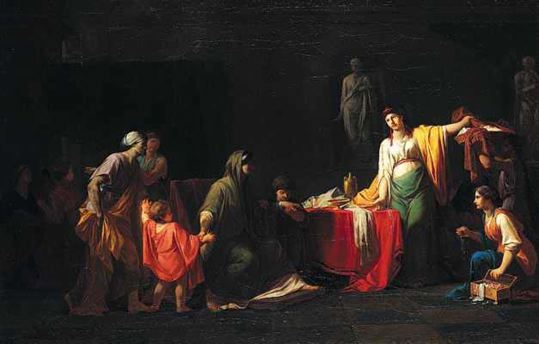
Being Awake in The Shared World

Plutarch, On Superstition [Moralia 166c]

“Heraclitus says the universe is singular and shared for those who are awake, but each of us returns to our own world when we are sleeping. The superstitious person lacks the shared world. When they are awake they fail to use their thoughts and when they are asleep they are not freed from trouble, since their power of reasoning is dreamed away and fear is always awake. There’s no way to escape or place to move.”

ὁ Ἡράκλειτός φησι τοῖς ἐγρηγορόσιν ἕνα καὶ κοινὸν κόσμον εἶναι, τῶν δὲ κοιμωμένων ἕκαστον εἰς ἴδιον ἀναστρέφεσθαι. τῷ δὲ δεισιδαίμονι κοινὸς οὐδείς ἐστι κόσμος· οὔτε γὰρ ἐγρηγορὼς τῷ φρονοῦντι χρῆται οὔτε κοιμώμενος ἀπαλλάττεται τοῦ ταράττοντος, ἀλλ᾿ ὀνειρώττει μὲν ὁ λογισμός, ἐγρήγορε δ᾿ ὁ φόβος ἀεί, φυγὴ δ᾿ οὐκ ἔστιν οὐδὲ μετάστασις.

This passage’s emphasis on our shared reality being dependent on using reason may seem super stoic, but it reminds me of Epicurean doctrine too: the notion that what is real is not readily available to individuals, but only comes from sharing experiences and knowledge with others. Those who rail against “wokeness” are like Heraclitean sleepers, refusing to acknowledge that their definitions and interpretations are creations of their own, set apart from the shared universe of human experience by their own arrogance and fear. Dreaming, of course, lets us explore those other worlds of our creation, to compare them for better or worse to the one we make together.

Diogenes Laertius, Epicurus 31

“[Epicureans] dismiss dialectic as being unnecessary—they believe that it is enough for natural scientists to employ the normal words for things. In his Canon, Epicurus asserts that our sensory perceptions and prior experiences and conceptions are the criteria of the truth; and Epicureans also believe that the imagined movements of thoughts are the same. He articulates his own beliefs in his Brief to Herodotus and in his Kurian Beliefs. He says, “Every perception is free of thought and receptive to no memory. Because does not move under its own power or another’s, it cannot add anything or take it away. And there is nothing capable of refuting the senses. For one related perception cannot countermand another because of their equal power nor can inequivalent senses undermine those of a different capacity, since they are not judging the same domains.

Reason depends entirely on perceptions. Different kinds of senses cannot undermine each other, since we use them all. The interdependence of the senses ensures the truth of what we perceive. Our ability to see and hear is just like our ability to feel pain. This is why we must strive to make meaning about unclear things from what actually appears before us.”

Τὴν διαλεκτικὴν ὡς παρέλκουσαν ἀποδοκιμάζουσιν· ἀρκεῖν γὰρ τοὺς φυσικοὺς χωρεῖν κατὰ τοὺς τῶν πραγμάτων φθόγγους. ἐν τοίνυν τῷ Κανόνι λέγων ἐστὶν ὁ Ἐπίκουρος κριτήρια τῆς ἀληθείας εἶναι τὰς αἰσθήσεις καὶ προλήψεις καὶ τὰ πάθη, οἱ δ᾿ Ἐπικούρειοι καὶ τὰς φανταστικὰς ἐπιβολὰς τῆς διανοίας. λέγει δὲ καὶ ἐν τῇ πρὸς Ἡρόδοτον ἐπιτομῇ καὶ ἐν ταῖς Κυρίαις δόξαις. “πᾶσα γάρ,” φησίν, “αἴσθησις ἄλογός ἐστι καὶ μνήμης οὐδεμιᾶς δεκτική· οὔτε γὰρ ὑφ᾿ αὑτῆς οὔτε ὑφ᾿ ἑτέρου κινηθεῖσα δύναταί τι προσθεῖναι ἢ ἀφελεῖν· οὐδὲ ἔστι τὸ δυνάμενον αὐτὰς διελέγξαι. οὔτε γὰρ ἡ ὁμογένεια αἴσθησις τὴν ὁμογενῆ διὰ τὴν ἰσοσθένειαν, οὔθ᾿ ἡ ἀνομογένεια τὴν ἀνομογένειαν, οὐ γὰρ τῶν αὐτῶν εἰσι κριτικαί· οὔτε μὴν λόγος, πᾶς γὰρ λόγος ἀπὸ τῶν αἰσθήσεων ἤρτηται. οὔθ᾿ ἡ ἑτέρα τὴν ἑτέραν, πάσαις γὰρ προσέχομεν. καὶ τὸ τὰ ἐπαισθήματα δ᾿ ὑφεστάναι πιστοῦται τὴν τῶν αἰσθήσεων ἀλήθειαν. ὑφέστηκε δὲ τό τε ὁρᾶν ἡμᾶς καὶ ἀκούειν, ὥσπερ τὸ ἀλγεῖν· ὅθεν καὶ περὶ τῶν ἀδήλων ἀπὸ τῶν φαινομένων χρὴ σημειοῦσθαι.

John Singer Sargent “Lady and Child asleep in a punter under the willows ” 1887

Don’t Stop Thinking about…Tomorrow?

Simonides, Fr. 20

“As long as any person holds on to the beloved flower of youth,
Their heart is light, because they imagine many things are endless.
No one young thinks they will grow old and die.
The healthy person doesn’t spare a thought for sickness either.

Fools have minds like this, because they don’t understand
That mortals have only a short time for youth and life too.
You, learn these things and hold on to the end of your time,
Taking pleasure in the good things in your mind.”

θνητῶ⎦ν δ’ ὄ⎣φρα τις⎦ ἄνθος ἔχη⎣ι πολυήρατον ἥβης,
κοῦφο⎦ν ἔχω⎣ν θυμ⎦ὸν πόλλ’ ἀτέλεσ⎣τα νοεῖ·
οὔ⎦τε γὰρ ἐλπ⎣ίδ’ ἔχ⎦ει γηρασέμεν ⎣οὔτε θανεῖσθαι,
οὐδ’, ὑ⎦γιὴς ὅτα⎣ν ἦι, φ⎦ροντίδ’ ἔχει κ⎣αμάτου.
νή⎦πιοι, οἷς ταύ⎣τηι⎦ κεῖται νόος, ο⎣ὐδὲ ἴσασιν
ὡς χρό⎦νος ἔ⎣σθ’ ἥβη⎦ς καὶ βιότου ὀλ⎣ίγος
θνη⎦τοῖς. ἀλλὰ ⎣σὺ⎦ ταῦτα μαθὼν ⎣βιότου ποτὶ τέρμα
ψυχῆι τῶν⎦ ἀγαθῶν τλῆθι χα⎣ριζόμενος.

A cleaner version of the text:

θνητῶν δ’ ὄφρα τις ἄνθος ἔχῃ πολυήρατον ἥβης,
κοῦφον ἔχων θυμὸν πόλλ’ ἀτέλεστα νοεῖ.
οὔτε γὰρ ἐλπίδ’ ἔχει γηρασέμεν οὐδὲ θανεῖσθαι,
οὐδ’ ὑγιὴς ὅταν ᾖ, φροντίδ’ ἔχει καμάτου.
νήπιοι, οἷς ταύτῃ κεῖται νόος· οὐδὲ ἴσασιν
ὡς χρόνος ἔσθ’ ἥβης καὶ βιότοι’ ὀλίγος
θνητοῖς· ἀλλὰ σὺ ταῦτα μαθὼν βιότου ποτὶ τέρμα
ψυχῇ τῶν ἀγαθῶν τλῆθι χαριζόμενος.

N.B.This fragment is preserved in Stobaeus’ Extracts, under a section entitled “Concerning life, that it is brief and cheap and full of worry” ΠΕΡΙ ΤΟΥ ΒΙΟΥ, ΟΤΙ ΒΡΑΧΥΣ ΚΑΙ ΕΥΤΕΛΗΣ ΚΑΙ ΦΡΟΝΤΙΔΩΝ ΑΝΑΜΕΣΤΟΣ.

Edvard Munch, “Old age” 1908

Legislation, For Drunks

Aristophanes, Acharnians 532-534

“[Perikles] used to make laws written like drinking songs:
That the Megarians were not to stay in the market
Nor the sea nor the beach in between”

ἐτίθει νόμους ὥσπερ σκόλια γεγραμμένους,
ὡς χρὴ Μεγαρέας μήτε γῇ μήτ’ ἐν ἀγορᾷ
μήτ’ ἐν θαλάττῃ μήτ’ ἐν ἠπείρῳ μένειν.

Schol. Ar. Ach. 532 

“[Perikles] used to make laws written like drinking songs”:

Timokreon of Rhodes, the lyric poet, wrote a drinking song like this against Wealth, which begins:

“Blind Wealth, I wish you had shown yourself
Neither on land nor on sea
Nor the beach in between.

You should have stayed underneath
living in Hell—thanks to you
all these evils for humans never cease.”

ἐτίθει νόμους· μιμούμενος τὸν τῶν σκολίων ποιητήν. Τιμοκρέων δὲ ὁ Ῥόδιος μελοποιὸς τοιοῦτον ἔγραψε σκόλιον κατὰ τοῦ Πλούτου, οὗ ἡ ἀρχή·

ὤφελέν σ᾿ ὦ τυφλὲ Πλοῦτε
μήτε γῇ μήτ᾿ ἐν θαλάσσῃ
μήτ᾿ ἐν ἠπείρῳ φανῆμεν,
ἀλλὰ Τάρταρόν τε ναίειν
κ᾿ Αχέροντα· διὰ σὲ γὰρ πάντ᾿
αἰὲν ἀνθρώποις κακά.

Mihály Zichy, “Drinking Song” 1874

A Bad End

Euripides. Bacchae. 1114-1136

His priestess-mother got the killing going,
attacking him. He tore off his headdress
so she would know him and not kill him,
poor Agave. Touching her face, he said:
“It’s me, mother. Your son, Pentheus.
You bore me in Echion’s house.
O mother, have mercy on me.
Don’t kill your son over his mistake.”

Foaming at the mouth and wild eyes whirling,
she did not think as thinking requires:
in thrall to Bacchus, she was unmoved.
She gripped his left arm below the elbow,
jammed her foot against the poor man’s ribs,
then ripped arm from shoulder with strength not her own.
The god had made it easy for her hands.

Ino all the while worked his other arm,
ripping flesh. Autone and the Bacchic pack
grabbed at him too, screaming in unison.
While he groaned (all that his breathing allowed)
theirs were shouts of joy. One left with his arm;
one his foot, the shoe still on. The mauling
exposed his ribs. And then, with hands blood stained,
as they would a ball, they tossed around his flesh.

πρώτη δὲ μήτηρ ἦρξεν ἱερέα φόνου
καὶ προσπίτνει νιν: ὃ δὲ μίτραν κόμης ἄπο
ἔρριψεν, ὥς νιν γνωρίσασα μὴ κτάνοι
τλήμων Ἀγαύη, καὶ λέγει, παρηίδος
ψαύων: Ἐγώ τοι, μῆτερ, εἰμί, παῖς σέθεν
Πενθεύς, ὃν ἔτεκες ἐν δόμοις Ἐχίονος:
οἴκτιρε δ᾽ ὦ μῆτέρ με, μηδὲ ταῖς ἐμαῖς
ἁμαρτίαισι παῖδα σὸν κατακτάνῃς.
ἣ δ᾽ ἀφρὸν ἐξιεῖσα καὶ διαστρόφους
κόρας ἑλίσσουσ᾽, οὐ φρονοῦσ᾽ ἃ χρὴ φρονεῖν,
ἐκ Βακχίου κατείχετ᾽, οὐδ᾽ ἔπειθέ νιν.
λαβοῦσα δ᾽ ὠλένης ἀριστερὰν χέρα,
πλευραῖσιν ἀντιβᾶσα τοῦ δυσδαίμονος
ἀπεσπάραξεν ὦμον, οὐχ ὑπὸ σθένους,
ἀλλ᾽ ὁ θεὸς εὐμάρειαν ἐπεδίδου χεροῖν:
Ἰνὼ δὲ τἀπὶ θάτερ᾽ ἐξειργάζετο,
ῥηγνῦσα σάρκας, Αὐτονόη τ᾽ ὄχλος τε πᾶς
ἐπεῖχε βακχῶν: ἦν δὲ πᾶσ᾽ ὁμοῦ βοή,
ὃ μὲν στενάζων ὅσον ἐτύγχαν᾽ ἐμπνέων,
αἳ δ᾽ ἠλάλαζον. ἔφερε δ᾽ ἣ μὲν ὠλένην,
ἣ δ᾽ ἴχνος αὐταῖς ἀρβύλαις: γυμνοῦντο δὲ
πλευραὶ σπαραγμοῖς: πᾶσα δ᾽ ᾑματωμένη
χεῖρας διεσφαίριζε σάρκα Πενθέως.

Hans Bellmer. La Poupee. c.1938

Larry Benn has a B.A. in English Literature from Harvard College, an M.Phil in English Literature from Oxford University, and a J.D. from Yale Law School. Making amends for a working life misspent in finance, he’s now a hobbyist in ancient languages and blogs at featsofgreek.blogspot.com.

Gellius, Totally Understanding Oral Traditions

Gellius, Attic Nights, 3.11.2-5

“Some report that Homer was older by birth than Hesiod—among this number are Philochorus and Xenophanes. But others say he was younger, including the poet Lucius Accius and Ephorus the historian. In the first book of On Images, however, Marcus Varro says that there is little agreement about which was born first, but that what is not in bout is that they lived at the same time. Evidence from this comes from the inscription on the tripod which was allegedly put on Mt. Helikon.

Accius, still, in book one of the Didasalica uses somewhat superficial arguments…he continues ‘since Homer, when he recounts at the start of his poem that Achilles is the son of Peleus and does not add who Peleus is—which is something he would have added if he had not seen it already explained by Hesiod (Fr. 211). Similarly, when it comes to the Cyclops’ Accius says, ‘Homer would have highlighted the fact that he was one-eyed and would not have passed over such a marvelous detail if it had not already been popularized in the older poems of Hesiod.”

(2) alii Homerum quam Hesiodum maiorem natu fuisse scripserunt, in quis Philochorus et Xenophanes; alii minorem, in quis L. Accius poeta et Ephorus historiae scriptor. (3) M. autem Varro in primo De imaginibus, uter prior sit natus, parum constare dicit, sed non esse dubium, quin aliquo tempore eodem vixerint; idque ex epigrammate ostendi, quod in tripode scriptum est, qui in monte Helikone ab Hesiodo positus traditur. (4) Accius autem in primo didascalico levibus admodum argumentis utitur … (5) quod Homerus, inquit, cum in principio carminis Achillem esse filium Pelei diceret, quis esset Peleus, non addidit; quam rem procul, inquit, dubio dixisset, nisi ab Hesiodo iam dictum videret. de Cyclope itidem, inquit, vel maxime quod unoculus fuit, rem tam insignem non praeterisset, nisi aeque prioris Hesiodi carminibus involgatum esset.

Image result for hesiod
This is a mood.

Lyric Aging and Philosophical Relief

Mimnermus fr. 1

“What is life? What enjoyment is there without golden Aphrodite?
May I die when these things no longer interest me:
Secret sex and its moving gifts in bed,
Those blossoms of youth that tug
At men and women alike.

                                              …But then painful old age
Presses down and makes a man ugly and embarrassing.
Cruel thoughts are always wearing down his mind
And he takes no pleasure seeing the sunrise.
No, he’s disgusting to boys and a joke to women too.
That the hard old age god makes for us.”

τίς δὲ βίος, τί δὲ τερπνὸν ἄτερ χρυσῆς ᾿Αφροδίτης;
τεθναίην, ὅτε μοι μηκέτι ταῦτα μέλοι,
κρυπταδίη φιλότης καὶ μείλιχα δῶρα καὶ εὐνή,
οἷ’ ἥβης ἄνθεα γίνεται ἁρπαλέα
ἀνδράσιν ἠδὲ γυναιξίν· ἐπεὶ δ’ ὀδυνηρὸν ἐπέλθηι
γῆρας, ὅ τ’ αἰσχρὸν ὁμῶς καὶ κακὸν ἄνδρα τιθεῖ,
αἰεί μιν φρένας ἀμφὶ κακαὶ τείρουσι μέριμναι,
οὐδ’ αὐγὰς προσορῶν τέρπεται ἠελίου,
ἀλλ’ ἐχθρὸς μὲν παισίν, ἀτίμαστος δὲ γυναιξίν·
οὕτως ἀργαλέον γῆρας ἔθηκε θεός.

Counterpoint

Plato, Republic 329:

“I was once with Sophocles when someone asked him, ‘O Sophocles, how do things stand with you in the old love-making line? Can you still lie with a woman?’ Sophocles responded, ‘Ah man, you should sing a song of triumph for me – for indeed, I have most gladly fled from love as though I had gotten away from a cruel and raving master.’

It seemed to me at the time that he had spoken well on the subject, and I think so no less even today. Indeed, we are granted a certain peace and freedom from such concerns in old age. When our desires relent and finally cease to draw us out, then indeed does Sophocles’ saying come true, and we are entirely freed from many a raving master.

But respecting these things, and our relationships with our friends, my dear Socrates, there is one cause to consider – not old age, but rather the person’s character. If they have their lives well-ordered and are easily contented, then old age is a moderate burden. But to a man of the opposite character, both old age and youth happen to be burdensome affairs.

καὶ δὴ καὶ Σοφοκλεῖ ποτε τῷ ποιητῇ παρεγενόμην ἐρωτωμένῳ ὑπό τινος· “Πῶς,” ἔφη, “ὦ Σοφόκλεις, ἔχεις πρὸς τἀφροδίσια; ἔτι οἷός τε εἶ γυναικὶ συγγίγνεσθαι”; καὶ ὅς, “Εὐφήμει,” ἔφη, “ὦ ἄνθρωπε· ἁσμενέστατα μέντοι αὐτὸ ἀπέφυγον, ὥσπερ λυττῶντά τινα καὶ ἄγριον δεσπότην ἀποδράς.” εὖ οὖν μοι καὶ τότε ἔδοξεν ἐκεῖνος εἰπεῖν, καὶ νῦν οὐχ ἧττον. παντάπασι γὰρ τῶν γε τοιούτων ἐν τῷ γήρᾳ πολλὴ εἰρήνη γίγνεται καὶ ἐλευθερία· ἐπειδὰν αἱ ἐπιθυμίαι παύσωνται κατατείνουσαι καὶ χαλάσωσιν, παντάπασιν τὸ τοῦ Σοφοκλέους γίγνεται, δεσποτῶν πάνυ πολλῶν ἐστι καὶ μαινομένων ἀπηλλάχθαι. ἀλλὰ καὶ τούτων πέρι καὶ τῶν γε πρὸς τοὺς οἰκείους μία τις αἰτία ἐστίν, οὐ τὸ γῆρας, ὦ Σώκρατες, ἀλλ’ ὁ τρόπος τῶν ἀνθρώπων. ἂν μὲν γὰρ κόσμιοι καὶ εὔκολοι ὦσιν, καὶ τὸ γῆρας μετρίως ἐστὶν ἐπίπονον· εἰ δὲ μή, καὶ γῆρας, ὦ Σώκρατες, καὶ νεότης χαλεπὴ τῷ τοιούτῳ συμβαίνει.

Evict the Rich, Feed Everyone?

Cicero, Pro Sestio 103

“The people were certain that their freedom was at risk. Their leaders did not agree. As far as a matter concerned the safety of the aristocrats, they were afraid of the rashness of the masses and the liberty in the vote. Tiberius Gracchus was introducing his agrarian law. It was welcomed by the people since it appeared to firm up the fortunes of the lower classes. The aristocrats were against it because they believed it created unrest and imagined that the State would be disarmed of its greatest protectors once the rich were evicted from their long-term holdings. Gaius Gracchus was introducing a grain law. It was also welcome to the people for it provided plentiful food without labor. The Nobles were aghast because they believed that such a law disincentivized work in favor of laziness and that it would drain the treasury.”

Populus libertatem agi putabat suam. Dissentiebant principes et in salute optimatium temeritatem multitudinis et tabellae licentiam pertimescebant. Agrariam Ti. Gracchus legem ferebat. Grata erat populo; fortunae constitui tenuiorum videbantur. Nitebantur contra optimates, quod et discordiam excitari videbant et, cum locupletes possessionibus diuturnis moverentur, spoliari rem publicam propugnatoribus arbitrabantur. Frumentariam legem C. Gracchus ferebat. Iucunda res plebei; victus enim suppeditabatur large sine labore. Repugnabant boni, quod et ab industria plebem ad desidiam avocari putabant et aerarium exhauriri videbant.

Agrarian Law: Tiberius Gracchus  introduced a law in 133 BCE that no holder of public land (ager publicus populi Romani) should have more than 500 iugera and that land should be re-distributed to the poor.

Not to ruin it, but things did not turn out well for the Gracchi

Cornelia, Mother of the Gracchi

The Elder Pliny on The Greatest Happiness

Pliny the Elder, Natural History 35.9-12

“It would be wrong to ignore the new invention in which, if not from gold then surely from bronze, images of those immortal spirits are set up in libraries, or even more those who did not exist are given shape and they produce glances which are not traditional, as has happened with Homer.

As it goes though, I believe that there is no greater kind of happiness that if everyone should forever desire to know what kind of person someone was. In Rome this was the innovation of Asinius Pollio who first established a library by declaring works of genius a public good. Whether they kinds of Alexandria or Pergamum began this earlier—those men who built their libraries in a great contest—I couldn’t decide easily. But that friend of Cicero, Atticus, is a witness that a certain passion for images burned in earlier days in the volume he published on the topic…

Non est praetereundum et novicium inventum, siquidem non ex auro argentove, at  certe ex aere in bibliothecis dicantur illis, quorum immortales animae in locis iisdem loquuntur, quin immo etiam quae non sunt finguntur, pariuntque desideria non traditos vultus, sicut in Homero evenit. utique maius, ut equidem arbitror, nullum est felicitatis specimen quam semper omnes scire cupere, qualis fuerit aliquis. Asini Pollionis hoc Romae inventum, qui primus bibliothecam dicando ingenia hominum rem publicam fecit. an priores coeperint Alexandreae et Pergami reges, qui bibliothecas magno certamine instituere, non facile dixerim. imaginum amorem flagrasse quondam testes sunt Atticus ille Ciceronis edito de iis volumine…

Image result for Roman imagines
Pssst…Do you want to know what we were like?

Poets and Audiences, Some Pithy Sayings

The following anecdotes are taken from the Gnomologium Vaticanum

106

“When Antagoras the poet had a performance at Thebes and obtained no honor, he said “Thebans, Odysseus screwed up when he covered his companions’ ears as he was sailing by the Sirens. It would have been right for him to hire you as sailors.”

᾿Ανταγόρας ὁ ποιητὴς ἀκρόασιν παρέχων ἐν Θήβαις καὶ μηδεμιᾶς τυγχάνων τιμῆς εἶπεν· „ὦ ἄνδρες Θηβαῖοι· ἥμαρτεν ᾿Οδυσσεὺς ἐμφράξας τῶν ἑταίρων τὰς ἀκοάς, ὅτε τὰς Σειρῆνας παρέπλει· ἔδει γὰρ αὐτὸν ὑμᾶς ναύτας μισθώσασθαι.”


109

“When Antagoras the Rhodian epic poet was reading his composition the Thebais in Thebes and no one was applauding him, he took the book and said, “You are rightly called Boiotians, for you all have cows’ ears!”

᾿Ανταγόρας ὁ ῾Ρόδιος ἐποποιὸς ἐν Θήβαις ἀναγινώσκων τὸ τῆς Θηβαΐδος σύγγραμμα, ὡς οὐδεὶς ἐπεσημαίνετο, εἱλήσας τὸ βιβλίον εἶπεν· „δικαίως καλεῖσθε Βοιωτοί· βοῶν γὰρ ὦτα ἔχετε.”


454

“When Persinos the poet was asked who the best poet is he says “each poet is to himself, but Homer to everyone else.”

Περσῖνος ὁ ποιητὴς ἐρωτηθεὶς τίς ἄριστός ἐστι ποιητὴς „παρ’ ἑαυτῷ μὲν ἕκαστος”, <εἶπε>, „παρὰ δὲ τοῖς ἄλλοις ῞Ομηρος”.


468

“Protagoras, when he was slandered by some poet because he didn’t welcome his poems, said “Wretch—it’s better for me to be slandered by you than to listen to your poems.”

Πρωταγόρας ἐποποιοῦ τινος αὐτὸν βλασφημοῦντος ἐπὶ τῷ μὴ ἀποδέχεσθαι τὰ ποιήματα αὐτοῦ „ὦ τάν”, ἔφη· „κρεῖττόν μοι ἐστι κακῶς ἀκούειν ὑπό σου ἢ τῶν σῶν ποιημάτων ἀκούειν”.


Color photograph of an oil painting of the bust and head of a clown. The clown has a striped white and red shirt, a red nose, and somewhat discolored makeup.
Joseph Kutter, “Tête de clown / Head of a Clown” 1937

News of the Achaeans

Homer, Iliad, 11.218-231.

Tell me now, Olympus-dwelling Muses,
who first confronted Agamemnon,
an actual Trojan or famed ally?
Iphidamas, Antinor’s son, bold and burly
and reared in rich-soiled Thrace, mother of flocks.
Cisses raised him as a child in his halls,
the father of his mother, sweet-cheeked Theano.

When the splendid youth reached maturity,
to keep him there Cisses offered him his daughter.
He wed, but quit his bridal chamber when news came
of the Achaeans. Twelve ships went with him.
He left the balanced ships at Percote
and made his way on foot to Ilium.
This is who confronted Atreus’s son, Agamemnon.

ἔσπετε νῦν μοι Μοῦσαι Ὀλύμπια δώματʼ ἔχουσαι
ὅς τις δὴ πρῶτος Ἀγαμέμνονος ἀντίον ἦλθεν
ἢ αὐτῶν Τρώων ἠὲ κλειτῶν ἐπικούρων.
Ἰφιδάμας Ἀντηνορίδης ἠΰς τε μέγας τε
ὃς τράφη ἐν Θρῄκῃ ἐριβώλακι μητέρι μήλων·
Κισσῆς τόν γʼ ἔθρεψε δόμοις ἔνι τυτθὸν ἐόντα
μητροπάτωρ, ὃς τίκτε Θεανὼ καλλιπάρῃον·
αὐτὰρ ἐπεί ῥʼ ἥβης ἐρικυδέος ἵκετο μέτρον,
αὐτοῦ μιν κατέρυκε, δίδου δʼ ὅ γε θυγατέρα ἥν·
γήμας δʼ ἐκ θαλάμοιο μετὰ κλέος ἵκετʼ Ἀχαιῶν
σὺν δυοκαίδεκα νηυσὶ κορωνίσιν, αἵ οἱ ἕποντο.
τὰς μὲν ἔπειτʼ ἐν Περκώτῃ λίπε νῆας ἐΐσας,
αὐτὰρ ὃ πεζὸς ἐὼν ἐς Ἴλιον εἰληλούθει·
ὅς ῥα τότʼ Ἀτρεΐδεω Ἀγαμέμνονος ἀντίον ἦλθεν.

[1] What does μετὰ κλέος mean in this passage? 

11.227: . . . μετὰ κλέος ἵκετʼ Ἀχαιῶν (“when news came of the Achaeans”)

Is the preposition μετὰ temporal (“after,” “when”), as I have translated it, or is it purposive (“in pursuit of”)? 

How you interpret μετὰ dictates how you interpret κλέος:

Temporal μετὰ should mean that κλέος is “news” (“he left when news came . . .”). 

But purposive μετὰ should mean that κλέος is “glory” (“he went in pursuit of glory”). 

The temptation to translate μετὰ κλέος as “in pursuit of glory” is understandable: preoccupation with glory is, after all, central to the epic, and men die in their quest for it.  

In this particular passage, however, I believe the understandable temptation leads to error. 


[2] What have the translators said?  

There are those who interpret μετὰ in this passage as temporal: for example, Robert Fitzgerald, Robert Fagles, Edward McCorie, and more recently Caroline Alexander.  

There are those who interpret it as purposive: for example, E.V. Rieu, Richard Lattimore, Peter Green, and more recently Stephen Mitchell and Barry Powell.  

Then there’s Stanley Lombardo who manages to treat μετὰ as both temporal and purposive: “[he] went chasing after glory when he heard/The Achaeans were coming.” 

This might be the place to point out that Iliad.13.363-366 (and perhaps others too) show the sketch of Iphidamas to be essentially formular. And for our purposes, what matters most is the reappearance of μετὰ κλέος in this later passage: 

For he killed Orthryoneus who was there from Cabesus.
He’d recently come, after news [μετὰ κλέος] of the war.
He had begged Priam for his finest daughter,
Cassandra, and without a bride-price.

πέφνε γὰρ Ὀθρυονῆα Καβησόθεν ἔνδον ἐόντα,
ὅς ῥα νέον πολέμοιο μετὰ κλέος εἰληλούθει,
ᾔτεε δὲ Πριάμοιο θυγατρῶν εἶδος ἀρίστην
Κασσάνδρην ἀνάεδνον . . .

Are the translators consistent in their handling of μετὰ κλέος across the two passages? Some are, some aren’t. 

I’ll only point out that Powell who treats the prepositional phrase as temporal in Iliad 11 treats it as purposive in Iliad 13. And Lombardo who would have it both ways in Iliad 11 interprets the phrase as unambiguously purposive in Iliad 13. 

Judging from the split among translators, just what μετὰ κλέος means in 11.227 is controversial.


[3] The Scholia: Modest support for purposive μετὰ?  

A single scholiast glosses μετὰ κλέος ἵκετʼ Ἀχαιῶν in a way which implies a stance on whether μετὰ is here temporal or purposive.  The scholion reads: 

“For this man’s undoing, there came the glory of the Greeks” 

(ή γαρ ήττα τούτου δόξα τών ‘Ελλήνων έγίνετο [Erbse.II.167.227d]) 

The word I’m rendering as “glory” is δόξα (“glory,” “splendor,” “repute”). The word I’m rendering as “there came” is “έγίνετο” (“it came into being,” “there was,” etc). 

I find it plausible that the scholiast is treating δόξα and  κλέος as synonyms, and έγίνετο and ἵκετʼ (“it came,” 3rd person aorist of ἱκέσθαι) as synonyms too.  

As such, I take the phrase “there came the glory of the Greeks” (δόξα τών ‘Ελλήνων έγίνετο) to mean something like “an opportunity came to win glory from the Greeks” (τών ‘Ελλήνων as an objective genitive). There’s the purposive preposition at work. 

Let me admit that this interpretation of the scholion might be strained, and this scholiast, like the others who commented on the line, does not help us. 


[4] A hint from the Hexameter: μετὰ is temporal. 

I’m going to suggest that Iliad.11.21-22, which tells why Cinyras gifted Agamemnon an elaborate corslet, supports interpreting μετὰ κλέος in 11.227 temporally.  

The Cinyras passage (11.21-22) reads:

For he heard, from far-off Cyprus, the big news [μέγα κλέος]:
Achaeans were about to sail to Troy in their ships.

πεύθετο γὰρ Κύπρονδὲ μέγα κλέος οὕνεκʼ Ἀχαιοὶ
ἐς Τροίην νήεσσιν ἀναπλεύσεσθαι ἔμελλον·

Cinyras acted when he heard “μέγα κλέος,” “the big news,” just as Iphidamas acted “μετὰ κλέος,” “after the news.” That’s the common theme. 

Now the prosody. μέγα κλέος and μετὰ κλέος are structurally identical: In both passages, the phrases come directly after the caesura (the word break in the third dactylic foot). The first syllable of both μέγα and μετὰ contributes the final syllable of the third foot (short); and their second syllable contributes the long syllable which combines with the long first syllable of κλέος to form the fourth foot. 

Simply put: Verses 11.21 and 11.227 have a common theme which is reinforced by common prosody. And the common theme is that of men acting on news.  

photograph of old style newspaper with giant banner headline that says "WAR"

Larry Benn has a B.A. in English Literature from Harvard College, an M.Phil in English Literature from Oxford University, and a J.D. from Yale Law School. Making amends for a working life misspent in finance, he’s now a hobbyist in ancient languages and blogs at featsofgreek.blogspot.com.