Lyric Aging and Philosophical Relief

Mimnermus fr. 1

“What is life? What enjoyment is there without golden Aphrodite?
May I die when these things no longer interest me:
Secret sex and its moving gifts in bed,
Those blossoms of youth that tug
At men and women alike.

                                              …But then painful old age
Presses down and makes a man ugly and embarrassing.
Cruel thoughts are always wearing down his mind
And he takes no pleasure seeing the sunrise.
No, he’s disgusting to boys and a joke to women too.
That the hard old age god makes for us.”

τίς δὲ βίος, τί δὲ τερπνὸν ἄτερ χρυσῆς ᾿Αφροδίτης;
τεθναίην, ὅτε μοι μηκέτι ταῦτα μέλοι,
κρυπταδίη φιλότης καὶ μείλιχα δῶρα καὶ εὐνή,
οἷ’ ἥβης ἄνθεα γίνεται ἁρπαλέα
ἀνδράσιν ἠδὲ γυναιξίν· ἐπεὶ δ’ ὀδυνηρὸν ἐπέλθηι
γῆρας, ὅ τ’ αἰσχρὸν ὁμῶς καὶ κακὸν ἄνδρα τιθεῖ,
αἰεί μιν φρένας ἀμφὶ κακαὶ τείρουσι μέριμναι,
οὐδ’ αὐγὰς προσορῶν τέρπεται ἠελίου,
ἀλλ’ ἐχθρὸς μὲν παισίν, ἀτίμαστος δὲ γυναιξίν·
οὕτως ἀργαλέον γῆρας ἔθηκε θεός.

Counterpoint

Plato, Republic 329:

“I was once with Sophocles when someone asked him, ‘O Sophocles, how do things stand with you in the old love-making line? Can you still lie with a woman?’ Sophocles responded, ‘Ah man, you should sing a song of triumph for me – for indeed, I have most gladly fled from love as though I had gotten away from a cruel and raving master.’

It seemed to me at the time that he had spoken well on the subject, and I think so no less even today. Indeed, we are granted a certain peace and freedom from such concerns in old age. When our desires relent and finally cease to draw us out, then indeed does Sophocles’ saying come true, and we are entirely freed from many a raving master.

But respecting these things, and our relationships with our friends, my dear Socrates, there is one cause to consider – not old age, but rather the person’s character. If they have their lives well-ordered and are easily contented, then old age is a moderate burden. But to a man of the opposite character, both old age and youth happen to be burdensome affairs.

καὶ δὴ καὶ Σοφοκλεῖ ποτε τῷ ποιητῇ παρεγενόμην ἐρωτωμένῳ ὑπό τινος· “Πῶς,” ἔφη, “ὦ Σοφόκλεις, ἔχεις πρὸς τἀφροδίσια; ἔτι οἷός τε εἶ γυναικὶ συγγίγνεσθαι”; καὶ ὅς, “Εὐφήμει,” ἔφη, “ὦ ἄνθρωπε· ἁσμενέστατα μέντοι αὐτὸ ἀπέφυγον, ὥσπερ λυττῶντά τινα καὶ ἄγριον δεσπότην ἀποδράς.” εὖ οὖν μοι καὶ τότε ἔδοξεν ἐκεῖνος εἰπεῖν, καὶ νῦν οὐχ ἧττον. παντάπασι γὰρ τῶν γε τοιούτων ἐν τῷ γήρᾳ πολλὴ εἰρήνη γίγνεται καὶ ἐλευθερία· ἐπειδὰν αἱ ἐπιθυμίαι παύσωνται κατατείνουσαι καὶ χαλάσωσιν, παντάπασιν τὸ τοῦ Σοφοκλέους γίγνεται, δεσποτῶν πάνυ πολλῶν ἐστι καὶ μαινομένων ἀπηλλάχθαι. ἀλλὰ καὶ τούτων πέρι καὶ τῶν γε πρὸς τοὺς οἰκείους μία τις αἰτία ἐστίν, οὐ τὸ γῆρας, ὦ Σώκρατες, ἀλλ’ ὁ τρόπος τῶν ἀνθρώπων. ἂν μὲν γὰρ κόσμιοι καὶ εὔκολοι ὦσιν, καὶ τὸ γῆρας μετρίως ἐστὶν ἐπίπονον· εἰ δὲ μή, καὶ γῆρας, ὦ Σώκρατες, καὶ νεότης χαλεπὴ τῷ τοιούτῳ συμβαίνει.

Evict the Rich, Feed Everyone?

Cicero, Pro Sestio 103

“The people were certain that their freedom was at risk. Their leaders did not agree. As far as a matter concerned the safety of the aristocrats, they were afraid of the rashness of the masses and the liberty in the vote. Tiberius Gracchus was introducing his agrarian law. It was welcomed by the people since it appeared to firm up the fortunes of the lower classes. The aristocrats were against it because they believed it created unrest and imagined that the State would be disarmed of its greatest protectors once the rich were evicted from their long-term holdings. Gaius Gracchus was introducing a grain law. It was also welcome to the people for it provided plentiful food without labor. The Nobles were aghast because they believed that such a law disincentivized work in favor of laziness and that it would drain the treasury.”

Populus libertatem agi putabat suam. Dissentiebant principes et in salute optimatium temeritatem multitudinis et tabellae licentiam pertimescebant. Agrariam Ti. Gracchus legem ferebat. Grata erat populo; fortunae constitui tenuiorum videbantur. Nitebantur contra optimates, quod et discordiam excitari videbant et, cum locupletes possessionibus diuturnis moverentur, spoliari rem publicam propugnatoribus arbitrabantur. Frumentariam legem C. Gracchus ferebat. Iucunda res plebei; victus enim suppeditabatur large sine labore. Repugnabant boni, quod et ab industria plebem ad desidiam avocari putabant et aerarium exhauriri videbant.

Agrarian Law: Tiberius Gracchus  introduced a law in 133 BCE that no holder of public land (ager publicus populi Romani) should have more than 500 iugera and that land should be re-distributed to the poor.

Not to ruin it, but things did not turn out well for the Gracchi

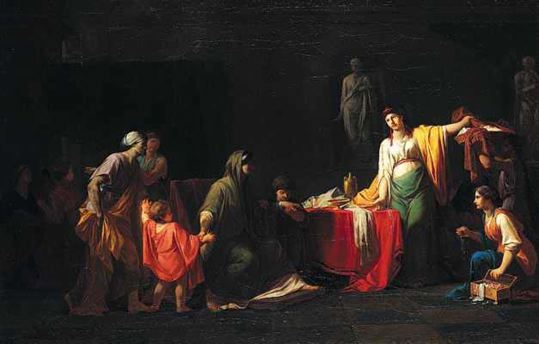
Cornelia, Mother of the Gracchi

The Elder Pliny on The Greatest Happiness

Pliny the Elder, Natural History 35.9-12

“It would be wrong to ignore the new invention in which, if not from gold then surely from bronze, images of those immortal spirits are set up in libraries, or even more those who did not exist are given shape and they produce glances which are not traditional, as has happened with Homer.

As it goes though, I believe that there is no greater kind of happiness that if everyone should forever desire to know what kind of person someone was. In Rome this was the innovation of Asinius Pollio who first established a library by declaring works of genius a public good. Whether they kinds of Alexandria or Pergamum began this earlier—those men who built their libraries in a great contest—I couldn’t decide easily. But that friend of Cicero, Atticus, is a witness that a certain passion for images burned in earlier days in the volume he published on the topic…

Non est praetereundum et novicium inventum, siquidem non ex auro argentove, at  certe ex aere in bibliothecis dicantur illis, quorum immortales animae in locis iisdem loquuntur, quin immo etiam quae non sunt finguntur, pariuntque desideria non traditos vultus, sicut in Homero evenit. utique maius, ut equidem arbitror, nullum est felicitatis specimen quam semper omnes scire cupere, qualis fuerit aliquis. Asini Pollionis hoc Romae inventum, qui primus bibliothecam dicando ingenia hominum rem publicam fecit. an priores coeperint Alexandreae et Pergami reges, qui bibliothecas magno certamine instituere, non facile dixerim. imaginum amorem flagrasse quondam testes sunt Atticus ille Ciceronis edito de iis volumine…

Image result for Roman imagines
Pssst…Do you want to know what we were like?

Poets and Audiences, Some Pithy Sayings

The following anecdotes are taken from the Gnomologium Vaticanum

106

“When Antagoras the poet had a performance at Thebes and obtained no honor, he said “Thebans, Odysseus screwed up when he covered his companions’ ears as he was sailing by the Sirens. It would have been right for him to hire you as sailors.”

᾿Ανταγόρας ὁ ποιητὴς ἀκρόασιν παρέχων ἐν Θήβαις καὶ μηδεμιᾶς τυγχάνων τιμῆς εἶπεν· „ὦ ἄνδρες Θηβαῖοι· ἥμαρτεν ᾿Οδυσσεὺς ἐμφράξας τῶν ἑταίρων τὰς ἀκοάς, ὅτε τὰς Σειρῆνας παρέπλει· ἔδει γὰρ αὐτὸν ὑμᾶς ναύτας μισθώσασθαι.”


109

“When Antagoras the Rhodian epic poet was reading his composition the Thebais in Thebes and no one was applauding him, he took the book and said, “You are rightly called Boiotians, for you all have cows’ ears!”

᾿Ανταγόρας ὁ ῾Ρόδιος ἐποποιὸς ἐν Θήβαις ἀναγινώσκων τὸ τῆς Θηβαΐδος σύγγραμμα, ὡς οὐδεὶς ἐπεσημαίνετο, εἱλήσας τὸ βιβλίον εἶπεν· „δικαίως καλεῖσθε Βοιωτοί· βοῶν γὰρ ὦτα ἔχετε.”


454

“When Persinos the poet was asked who the best poet is he says “each poet is to himself, but Homer to everyone else.”

Περσῖνος ὁ ποιητὴς ἐρωτηθεὶς τίς ἄριστός ἐστι ποιητὴς „παρ’ ἑαυτῷ μὲν ἕκαστος”, <εἶπε>, „παρὰ δὲ τοῖς ἄλλοις ῞Ομηρος”.


468

“Protagoras, when he was slandered by some poet because he didn’t welcome his poems, said “Wretch—it’s better for me to be slandered by you than to listen to your poems.”

Πρωταγόρας ἐποποιοῦ τινος αὐτὸν βλασφημοῦντος ἐπὶ τῷ μὴ ἀποδέχεσθαι τὰ ποιήματα αὐτοῦ „ὦ τάν”, ἔφη· „κρεῖττόν μοι ἐστι κακῶς ἀκούειν ὑπό σου ἢ τῶν σῶν ποιημάτων ἀκούειν”.


Color photograph of an oil painting of the bust and head of a clown. The clown has a striped white and red shirt, a red nose, and somewhat discolored makeup.
Joseph Kutter, “Tête de clown / Head of a Clown” 1937

News of the Achaeans

Homer, Iliad, 11.218-231.

Tell me now, Olympus-dwelling Muses,
who first confronted Agamemnon,
an actual Trojan or famed ally?
Iphidamas, Antinor’s son, bold and burly
and reared in rich-soiled Thrace, mother of flocks.
Cisses raised him as a child in his halls,
the father of his mother, sweet-cheeked Theano.

When the splendid youth reached maturity,
to keep him there Cisses offered him his daughter.
He wed, but quit his bridal chamber when news came
of the Achaeans. Twelve ships went with him.
He left the balanced ships at Percote
and made his way on foot to Ilium.
This is who confronted Atreus’s son, Agamemnon.

ἔσπετε νῦν μοι Μοῦσαι Ὀλύμπια δώματʼ ἔχουσαι
ὅς τις δὴ πρῶτος Ἀγαμέμνονος ἀντίον ἦλθεν
ἢ αὐτῶν Τρώων ἠὲ κλειτῶν ἐπικούρων.
Ἰφιδάμας Ἀντηνορίδης ἠΰς τε μέγας τε
ὃς τράφη ἐν Θρῄκῃ ἐριβώλακι μητέρι μήλων·
Κισσῆς τόν γʼ ἔθρεψε δόμοις ἔνι τυτθὸν ἐόντα
μητροπάτωρ, ὃς τίκτε Θεανὼ καλλιπάρῃον·
αὐτὰρ ἐπεί ῥʼ ἥβης ἐρικυδέος ἵκετο μέτρον,
αὐτοῦ μιν κατέρυκε, δίδου δʼ ὅ γε θυγατέρα ἥν·
γήμας δʼ ἐκ θαλάμοιο μετὰ κλέος ἵκετʼ Ἀχαιῶν
σὺν δυοκαίδεκα νηυσὶ κορωνίσιν, αἵ οἱ ἕποντο.
τὰς μὲν ἔπειτʼ ἐν Περκώτῃ λίπε νῆας ἐΐσας,
αὐτὰρ ὃ πεζὸς ἐὼν ἐς Ἴλιον εἰληλούθει·
ὅς ῥα τότʼ Ἀτρεΐδεω Ἀγαμέμνονος ἀντίον ἦλθεν.

[1] What does μετὰ κλέος mean in this passage? 

11.227: . . . μετὰ κλέος ἵκετʼ Ἀχαιῶν (“when news came of the Achaeans”)

Is the preposition μετὰ temporal (“after,” “when”), as I have translated it, or is it purposive (“in pursuit of”)? 

How you interpret μετὰ dictates how you interpret κλέος:

Temporal μετὰ should mean that κλέος is “news” (“he left when news came . . .”). 

But purposive μετὰ should mean that κλέος is “glory” (“he went in pursuit of glory”). 

The temptation to translate μετὰ κλέος as “in pursuit of glory” is understandable: preoccupation with glory is, after all, central to the epic, and men die in their quest for it.  

In this particular passage, however, I believe the understandable temptation leads to error. 


[2] What have the translators said?  

There are those who interpret μετὰ in this passage as temporal: for example, Robert Fitzgerald, Robert Fagles, Edward McCorie, and more recently Caroline Alexander.  

There are those who interpret it as purposive: for example, E.V. Rieu, Richard Lattimore, Peter Green, and more recently Stephen Mitchell and Barry Powell.  

Then there’s Stanley Lombardo who manages to treat μετὰ as both temporal and purposive: “[he] went chasing after glory when he heard/The Achaeans were coming.” 

This might be the place to point out that Iliad.13.363-366 (and perhaps others too) show the sketch of Iphidamas to be essentially formular. And for our purposes, what matters most is the reappearance of μετὰ κλέος in this later passage: 

For he killed Orthryoneus who was there from Cabesus.
He’d recently come, after news [μετὰ κλέος] of the war.
He had begged Priam for his finest daughter,
Cassandra, and without a bride-price.

πέφνε γὰρ Ὀθρυονῆα Καβησόθεν ἔνδον ἐόντα,
ὅς ῥα νέον πολέμοιο μετὰ κλέος εἰληλούθει,
ᾔτεε δὲ Πριάμοιο θυγατρῶν εἶδος ἀρίστην
Κασσάνδρην ἀνάεδνον . . .

Are the translators consistent in their handling of μετὰ κλέος across the two passages? Some are, some aren’t. 

I’ll only point out that Powell who treats the prepositional phrase as temporal in Iliad 11 treats it as purposive in Iliad 13. And Lombardo who would have it both ways in Iliad 11 interprets the phrase as unambiguously purposive in Iliad 13. 

Judging from the split among translators, just what μετὰ κλέος means in 11.227 is controversial.


[3] The Scholia: Modest support for purposive μετὰ?  

A single scholiast glosses μετὰ κλέος ἵκετʼ Ἀχαιῶν in a way which implies a stance on whether μετὰ is here temporal or purposive.  The scholion reads: 

“For this man’s undoing, there came the glory of the Greeks” 

(ή γαρ ήττα τούτου δόξα τών ‘Ελλήνων έγίνετο [Erbse.II.167.227d]) 

The word I’m rendering as “glory” is δόξα (“glory,” “splendor,” “repute”). The word I’m rendering as “there came” is “έγίνετο” (“it came into being,” “there was,” etc). 

I find it plausible that the scholiast is treating δόξα and  κλέος as synonyms, and έγίνετο and ἵκετʼ (“it came,” 3rd person aorist of ἱκέσθαι) as synonyms too.  

As such, I take the phrase “there came the glory of the Greeks” (δόξα τών ‘Ελλήνων έγίνετο) to mean something like “an opportunity came to win glory from the Greeks” (τών ‘Ελλήνων as an objective genitive). There’s the purposive preposition at work. 

Let me admit that this interpretation of the scholion might be strained, and this scholiast, like the others who commented on the line, does not help us. 


[4] A hint from the Hexameter: μετὰ is temporal. 

I’m going to suggest that Iliad.11.21-22, which tells why Cinyras gifted Agamemnon an elaborate corslet, supports interpreting μετὰ κλέος in 11.227 temporally.  

The Cinyras passage (11.21-22) reads:

For he heard, from far-off Cyprus, the big news [μέγα κλέος]:
Achaeans were about to sail to Troy in their ships.

πεύθετο γὰρ Κύπρονδὲ μέγα κλέος οὕνεκʼ Ἀχαιοὶ
ἐς Τροίην νήεσσιν ἀναπλεύσεσθαι ἔμελλον·

Cinyras acted when he heard “μέγα κλέος,” “the big news,” just as Iphidamas acted “μετὰ κλέος,” “after the news.” That’s the common theme. 

Now the prosody. μέγα κλέος and μετὰ κλέος are structurally identical: In both passages, the phrases come directly after the caesura (the word break in the third dactylic foot). The first syllable of both μέγα and μετὰ contributes the final syllable of the third foot (short); and their second syllable contributes the long syllable which combines with the long first syllable of κλέος to form the fourth foot. 

Simply put: Verses 11.21 and 11.227 have a common theme which is reinforced by common prosody. And the common theme is that of men acting on news.  

photograph of old style newspaper with giant banner headline that says "WAR"

Larry Benn has a B.A. in English Literature from Harvard College, an M.Phil in English Literature from Oxford University, and a J.D. from Yale Law School. Making amends for a working life misspent in finance, he’s now a hobbyist in ancient languages and blogs at featsofgreek.blogspot.com.

Money, Wealth and Greed

These sayings come from the Gnomologium Vaticanum

29 “He [Aristippos] said it was right to learn to live with a little so that we might do nothing shameful for money”

῾Ο αὐτὸς ἔφη δεῖν ἐθίζειν ἀπὸ ὀλίγων ζῆν, ἵνα μηδὲν αἰσχρὸν χρημάτων ἕνεκεν πράττωμεν.

120 “Aristôn the philosopher used to say that wealthy people who are cheap are like mules who carry gold and silver but eat straw.”

᾿Αρίστων ὁ φιλόσοφος τοὺς πλουσίους καὶ φειδωλοὺς ὁμοίους ἔφησεν εἶναι τοῖς ἡμιόνοις, οἵτινες χρυσὸν καὶ ἄργυρον φέροντες χόρτον ἐσθίουσιν.

265 “Democritus used to say that greed is the mother-city of every wickedness”

Δημόκριτος τὴν φιλαργυρίαν ἔλεγε μητρόπολιν πάσης κακίας.

pile of gold old coins


Bad Witnesses: Some Apocryphal Sayings of Heraclitus

These sayings come from the Gnomologium Vaticanum

310 “Heraclitus the natural philosopher said that he was wisest of all when he was young because he didn’t think that he knew anything.”

῾Ηράκλειτος ὁ φυσικὸς ἔφησε σοφώτατος γεγονέναι πάντων νέος ὤν, ὅτι ᾔδει ἑαυτὸν μηδὲν εἰδότα.

311 “Heraclitus used to say “The ears and eyes of foolish people are terrible witnesses.”

῾Ο αὐτὸς ἔφη· „κακοὶ μάρτυρες ὦτα καὶ ὀφθαλμοὶ ἀφρόνων ἀνθρώπων”.

312 “Heraclitus used to say “Honors enslave gods and men”

῾Ο αὐτὸς ἔφη· „τιμαὶ θεοὺς καὶ ἀνθρώπους καταδουλοῦνται”.

313 “Heraclitus said “people are terrible judges of the truth”

<῾Ο> αὐτὸς εἶπεν· „ἄνθρωποι κακοὶ ἀληθινῶν ἀντίδικοι”

Some words on the benefits of philosophy:


36 “When [Aristippos] was asked what benefit had come to him from philosophy he said “being able to engage pleasantly with the people I meet.”

῾Ο αὐτὸς ἐρωτηθείς, τί αὐτῷ περιγέγονεν ἐκ φιλοσοφίας, ἔφη· „τὸ ἀδεῶς τοῖς ἐντυγχάνουσιν ὁμιλεῖν”.

162 “Biôn used to say that thought was the procurer of all good things but prudence is the master.”

῾Ο αὐτὸς τὴν μὲν φρόνησιν ἔφη παντοπώλιον εἶναι τῶν ἀγαθῶν, τὴν δὲ σωφροσύνην στρατουργίαν.

182 “When Diogenes was asked by Aristippos what benefit he gained from philosophy he said “Being wealthy without having a cent”

῾Ο αὐτὸς ἐρωτηθεὶς ὑπὸ ᾿Αριστίππου τί αὐτῷ περιεγένετο ἐκ φιλοσοφίας εἶπε· „τὸ πλουτεῖν μηδὲ ὀβολὸν ἔχοντα.”


Futurama take my money meme with the word philosophy at the top

X Is Boring–Claudius Gave us the Anti-Sigma!

Suetonius, Divius Claudius 41-42

“[The emperor Claudius] wrote an eight-volume autobiography, rather gauche in character instead of poorly written. He also wrote a defense of Cicero against Asinius Gallus, a book of sufficient erudition. In addition to this, he added three new letters to the old alphabet because he believed they were really needed. He wrote about about this when he was still a private citizen. Once he was princeps, he found it was no challenge to encourage their common use. Many of examples of theses can still be scene in books, in annals of the time, and on public works.

Well, he also pursued Greek studies with no minor zeal, confessing his love for the language and its superiority at every opportunity.”

Composuit et de vita sua octo volumina, magis inepte quam ineleganter; item Ciceronis defensionem adversus Asini Galli libros satis eruditam. Novas etiam commentus est litteras tres ac numero veterum quasi maxime necessarias addidit; de quarum ratione cum privatus adhuc volumen edidisset, mox princeps non difficulter optinuit ut in usu quoque promiscuo essent. Exstat talis scriptura in plerisque libris ac diurnis titulisque operum.Nec minore cura Graeca studia secutus est, amorem praestantiamque linguae occasione omni professus.
  •  or ↃϹ/X (antisigma) to replace BS and PS, much as X stood in for CS and GS.
  • , a turned F or digamma (digamma inversum) to be used instead of the letter V when denoting the consonantal u
  • , a half H. The value of this letter is unclear, but perhaps it represented the so-called sonus medius, a short vowel sound (likely /ɨ/ or /ʉ/). to represent the sound value between u and i .

from wikipedia

Color photograph of an inscription with claudian letters on it. Claudian pomerium marker, where written words ampliavit and terminavit use turned digamma (highlighted in red)

Suffering for a Lack of the Latin Language

Seneca the Elder, Controversiae 7.72

“I used to tell you that Cestius, because he was Greek, suffered because of a lack of Latin words though he had an abundance of ideas. Thus, whenever he dared to describe something more broadly, he often stalled especially when he attempted to imitate some great genius.

This is the issue in this controversy. For, in his story, when he was telling about how his brother was given to him, he was pleased by this lonely and sad description: “night was laid out, and everything, judges, was singing under silent stars.” Julius Montanus, who was a companion of Tiberius and an exceptional poet, was claiming that he wanted to imitate Vergil’s line: ‘it was night and all the tired animals over the earth, the races of birds and beasts, were held by a deep sleep.’ “

Soleo dicere vobis Cestium Latinorum verborum inopia hominem Graecum laborasse, sensibus abundasse; itaque, quotiens latius aliquid describere ausus est, totiens substitit, utique cum se ad imitationem magni alicuius ingeni derexerat, sicut in hac controversia fecit. Nam in narratione, cum fratrem traditum sibi describeret, placuit sibi in hac explicatione una et infelici: nox erat concubia, et omnia, iudices, canentia sideribus muta erant. Montanus Iulius, qui comes fuit , egregius poeta, aiebat illum imitari voluisse Vergili descriptionem:

nox erat et terras animalia fessa per omnis,alituum pecudumque genus, sopor altus habebat

Despite All Our Rage, We Are Still Just #Birds in a Cage

(Scholars hating scholars. And themselves)


Athenaeus, Deipnosophistae 1.22

“You know that somewhere Timo the Philasian calls the Museum a birdcage as he mocks the scholars who are supported there because they were fed like the priciest birds in a big cage:

Many are fed in many-peopled Egypt,
The paper-pushers closed up waging endless war
in the bird-cage of the Muses.

ὅτι τὸ Μουσεῖον ὁ Φιλιάσιος Τίμων ὁ σιλλογράφος (fr. 60 W) τάλαρόν πού φησιν ἐπισκώπτων τοὺς ἐν αὐτῷ τρεφομένους φιλοσόφους, ὅτι ὥσπερ ἐν  πανάγρῳ τινὶ σιτοῦνται καθάπερ οἱ πολυτιμότατοι ὄρνιθες·

πολλοὶ μὲν βόσκονται ἐν Αἰγύπτῳ πολυφύλῳ
βιβλιακοὶ χαρακῖται ἀπείριτα δηριόωντες
Μουσέων ἐν ταλάρῳ.

 Pausanias, 9.30.3

“It would not be sweet for me to write about the relative age of Homer and Hesiod, even though I have worked on the problem as closely as possible. This is because I am familiar with the fault-finding character of others and not the least of those who dominate the study of epic poetry in my time.”

περὶ δὲ ῾Ησιόδου τε ἡλικίας καὶ ῾Ομήρου πολυπραγμονήσαντι ἐς τὸ ἀκριβέστατον οὔ μοι γράφειν ἡδὺ ἦν, ἐπισταμένῳ τὸ φιλαίτιον ἄλλων τε καὶ οὐχ ἥκιστα ὅσοι κατ’ ἐμὲ ἐπὶ ποιήσει τῶν ἐπῶν καθεστήκεσαν.


From Athenaeus’ Deipnosophists, Book 5 222a-b

“And, you, my grammarians who do not inquire into these sorts of things, I quote from Herodicus the Babylonian:

Flee, Aristarcheans, over the wide back of the sea
Flee Greece, men more frightened than the brown deer,
Corner-buzzers, monosyllabists, men who care about
Sphin and sphoin and whether its min or nin*.
This is what I would have for you storm-drowned men:
But may Greece and God-born Babylon always wait for Herodicus.

And, to add another, the words of the comic poet Anaxandrides:

…It brings pleasure
Whenever someone discovers some new notion,
To share it with everyone. But those who at first
Keep it to themselves have no judge for their skill
And are later despised. For it is right to offer the mob
Everything anyone might think is brand-new.

The majority of them departed at these words and slowly the party disbanded.”


‘ὑμεῖς οὖν, ὦ γραμματικοί, κατὰ τὸν Βαβυλώνιον ῾Ηρόδικον, μηδὲν τῶν τοιού-
των ἱστοροῦντες,

φεύγετ’, ᾿Αριστάρχειοι, ἐπ’ εὐρέα νῶτα θαλάττης
῾Ελλάδα, τῆς ξουθῆς δειλότεροι κεμάδος,
γωνιοβόμβυκες, μονοσύλλαβοι, οἷσι μέμηλε
τὸ σφὶν καὶ σφῶιν καὶ τὸ μὶν ἠδὲ τὸ νίν.
τοῦθ’ ὑμῖν εἴη δυσπέμφελον· ῾Ηροδίκῳ δὲ
῾Ελλὰς ἀεὶ μίμνοι καὶ θεόπαις Βαβυλών.’
κατὰ γὰρ τὸν κωμῳδιοποιὸν ᾿Αναξανδρίδην (II 159 K)·

ἡδονὴν ἔχει,
ὅταν τις εὕρῃ καινὸν ἐνθύμημά τι,
δηλοῦν ἅπασιν· οἱ δ’ ἑαυτοῖσιν σοφοὶ
πρῶτον μὲν οὐκ ἔχουσι τῆς τέχνης κριτήν,
εἶτα φθονοῦνται. χρὴ γὰρ εἰς ὄχλον φέρειν
ἅπανθ’ ὅσ’ ἄν τις καινότητ’ ἔχειν δοκῇ.

ἐπὶ τούτοις τοῖς λόγοις ἀναχωροῦντες οἱ πολλοὶ λεληθότως διέλυσαν τὴν συνουσίαν.

*Alternative pronoun forms found in manuscripts.

Seneca, of course, gets in on the game:

Seneca, De Brevitate Vitae 13

“It would be annoying to list all the people who spent their lives pursuing board games, ball games, or sunbathing. Men whose pleasures are so busy are not at leisure. For example, no one will be surprised that those occupied by useless literary studies work strenuously—and there is great band of these in Rome now too. This sickness used to just afflict the Greeks, to discover the number of oars Odysseus possessed, whether the Iliad was written before theOdyssey, whether the poems belong to the same author, and other matters like this which, if you keep them to yourself, cannot please your private mind; but if you publish them, you seem less learned than annoying.”

Persequi singulos longum est, quorum aut latrunculi aut pila aut excoquendi in sole corporis cura consumpsere vitam. Non sunt otiosi, quorum voluptates multum negotii habent. Nam de illis nemo dubitabit, quin operose nihil agant, qui litterarum inutilium studiis detinentur, quae iam apud Romanos quoque magna manus est. Graecorum iste morbus fuit quaerere, quem numerum Ulixes remigum habuisset, prior scripta esset Ilias an Odyssia, praeterea an eiusdem essent auctoris, alia deinceps huius notae, quae sive contineas, nihil tacitam conscientiam iuvant sive proferas, non doctior videaris sed molestior.


And self loathing eventually takes over.

Palladas of Alexandria, Greek Anthology 9.169


“The wrath of Achilles has become for me, as a grammarian, the cause of my destructive poverty. I wish that that wrath would have killed me along with the Danaans, before the bitter poverty of scholarship put me to death. But instead, so that Agamemnon could take Briseis and Paris make off with Helen, I have become a beggar.”

Μῆνις ᾿Αχιλλῆος καὶ ἐμοὶ πρόφασις γεγένηται
οὐλομένης πενίης γραμματικευσαμένῳ.
εἴθε δὲ σὺν Δαναοῖς με κατέκτανε μῆνις ἐκείνη,
πρὶν χαλεπὸς λιμὸς γραμματικῆς ὀλέσει.
ἀλλ’ ἵν’ ἀφαρπάξῃ Βρισηίδα πρὶν ᾿Αγαμέμνων,
τὴν ῾Ελένην δ’ ὁ Πάρις, πτωχὸς ἐγὼ γενόμην.