All Unhappy Families….

Homer, Iliad 9. 447-461

. . . I first fled Hellas famed for fine women
after rows with my father, Amuntor, son of Ormenus.
He was enraged with me over his well-coiffed mistress.
He loved this woman and he disgraced his wife,
my mother. She pleaded with me all the time
to screw the mistress–make her rebuff the old man.
Persuaded, I did it. But my father found out,
cursed me bitterly, called on the hated Furies
that he never hold a dear son of mine
on his knees. The gods fulfilled the curse,
chthonian Zeus and dread Persephone.

I planned to cut him down with my sharp sword,
but a god checked my rage–he showed my heart
what folks would say, people’s bitter insults–
so I wouldn’t be “father-killer” among Achaeans.

***The final 4 lines are recorded by Plutarch but do not appear in manuscripts or papyri of the epic. Plutarch claims without evidence Aristarchus excised the lines.

οἷον ὅτε πρῶτον λίπον Ἑλλάδα καλλιγύναικα
φεύγων νείκεα πατρὸς Ἀμύντορος Ὀρμενίδαο,
ὅς μοι παλλακίδος περιχώσατο καλλικόμοιο,
τὴν αὐτὸς φιλέεσκεν, ἀτιμάζεσκε δʼ ἄκοιτιν
μητέρʼ ἐμήν· ἣ δʼ αἰὲν ἐμὲ λισσέσκετο γούνων
παλλακίδι προμιγῆναι, ἵνʼ ἐχθήρειε γέροντα.
τῇ πιθόμην καὶ ἔρεξα· πατὴρ δʼ ἐμὸς αὐτίκʼ ὀϊσθεὶς
πολλὰ κατηρᾶτο, στυγερὰς δʼ ἐπεκέκλετʼ Ἐρινῦς,
μή ποτε γούνασιν οἷσιν ἐφέσσεσθαι φίλον υἱὸν
ἐξ ἐμέθεν γεγαῶτα· θεοὶ δʼ ἐτέλειον ἐπαρὰς

τὸν μὲν ἐγὼ βούλευσα κατακτάμεν ὀξέϊ χαλκῷ:
ἀλλά τις ἀθανάτων παῦσεν χόλον, ὅς ῥ’ ἐνὶ θυμῷ
δήμου θῆκε φάτιν καὶ ὀνείδεα πόλλ’ ἀνθρώπων,
ὡς μὴ πατροφόνος μετ’ Ἀχαιοῖσιν καλεοίμην.

Ingmar Bergman. Scenes from a Marriage.

Larry Benn has a B.A. in English Literature from Harvard College, an M.Phil in English Literature from Oxford University, and a J.D. from Yale Law School. Making amends for a working life misspent in finance, he’s now a hobbyist in ancient languages and blogs at featsofgreek.blogspot.com.

Homer’s Lyre and the Lyric Muse

Anacreonta 2

“Give me Homer’s lyre
Without its bloody strings–
Hand me cups of laws
mixed with rules for things.

That way, I will dance when I’m drunk
wisely out of my mind,
I will sing to the fingers playing
And shout the songs for drinking
Just give me Homer’s lyre
Without its bloody strings.”

δότε μοι λύρην Ὁμήρου
φονίης ἄνευθε χορδῆς,
φέρε μοι κύπελλα θεσμῶν,
φέρε μοι νόμους κεράσσας,

μεθύων ὅπως χορεύσω,
ὑπὸ σώφρονος δὲ λύσσης
μετὰ βαρβίτων ἀείδων
τὸ παροίνιον βοήσω.
δότε μοι λύρην Ὁμήρου
φονίης ἄνευθε χορδῆς.

Anacreonta 3

“Come here, best of painters
Listen to the Lyric muse!
Paint cities first
Happy ones, laughing ones,
And Bacchantes at play,
Breathing into their double pipes.
Then if the wax can manage,
Trace out the lovers’ ways.”

ἄγε, ζωγράφων ἄριστε,
λυρικῆς ἄκουε Μούσης·
γράφε τὰς πόλεις τὸ πρῶτον
ἱλαράς τε καὶ γελώσας,
φιλοπαίγμονάς τε Βάκχας
†ἑτεροπνόους ἐναύλους·†
ὁ δὲ κηρὸς ἂν δύναιτο,
γράφε καὶ νόμους φιλούντων.

Peter Paul Reubens “Minerva protects Pax from Mars” 1629/30

The Dream of Love that Lingers

Anacreonta, 1

“That Teian singer, Anacreon,
saw me in a dream
as I was running to kiss and embrace him,
He spoke to me.

He was an old man, but still fine,
Fine and loving still,
His lips scented with wine.
And as he trembled, Love

Led him by the hand.
He lifted the flowers from his crown
And gave them to me–
Oh, they smelled of Anacreon!

Just like the fool I am, I took them
And placed them on my brow
And thanks to that, I never stopped loving
right up to now.”

Ἀνακρέων ἰδών με
ὁ Τήιος μελῳδὸς
ὄναρ λέγων προσεῖπεν,
κἀγὼ δραμὼν πρὸς αὐτὸν

περιπλάκην φιλήσας.
γέρων μὲν ἦν, καλὸς δέ,
καλὸς δὲ καὶ φίλευνος·
τὸ χεῖλος ὦζεν οἴνου,
τρέμοντα δ᾿ αὐτὸν ἤδη

Ἔρως ἐχειραγώγει.
ὁ δ᾿ ἐξελὼν καρήνου
ἐμοὶ στέφος δίδωσι·
τὸ δ᾿ ὦζ᾿ Ἀνακρέοντος.
ἐγὼ δ᾿ ὁ μωρὸς ἄρας

ἐδησάμην μετώπῳ·
καὶ δῆθεν ἄχρι καὶ νῦν
ἔρωτος οὐ πέπαυμαι.

Henri Rousseau. The Dream. 1910. MOMA

The Travails of an Untimely Tongue

A greek proverb, ascribed to an unknown poet

Strabo, Geography 1.14

“It certainly wasn’t proper for Hesiod to never speak nonsense but to pursue
Established opinions while Homer “sang whatever occurred to an untimely tongue”

ἢ καὶ Ἡσιόδῳ μὲν ἔπρεπε μὴ φλυαρεῖν ἀλλὰ ταῖς κατεχούσαις δόξαις ἀκολουθεῖν, Ὁμήρῳ δὲ
πᾶν ὅττι κεν ἐπ᾿ ἀκαιρίμαν
γλῶσσαν ἴῃ κελαδεῖν;

Athenaeus, Deipnosophists 5.217c

“Plato clearly makes a lot of chronological errors in many examples. For, in the words of the poet, “he follows an untimely tongue” and writes things down without discrimination.”

ὁ Πλάτων παρὰ τοὺς χρόνους ἁμαρτάνει δῆλόν ἐστιν ἐκ πολλῶν· κατὰ γὰρ τὸν εἰπόντα ποιητήν
ὅττι κεν ἐπ᾿ ἀκαιρίμαν
γλῶτταν ἔλθῃ,
τοῦτο μὴ διακρίνας γράφει. οὐ γὰρ ἀγράφως τι ἔλεγεν,

Dionysus of Halicarnassus, On Literary Composition 1

“Students need a great deal of thoughtful oversight and instruction if they are going to avoid writing “whatever word comes to an untimely tongue” and composing randomly any sudden thoughts, instead selecting words that are clear and sophisticated, fitting them together in a way that mixes pleasure with pride.”

οἷς πολλῆς πάνυ καὶ ἔμφρονος δεῖ τῆς πρώτης ἐπιστάσεώς τε καὶ ἀγωγῆς, εἰ μέλλουσι μὴ πᾶν ‘ὅ τι κεν ἐπ’ ἀκαιρίμαν γλῶσσαν ἔπος ἔλθῃ᾿ λέγειν μηδ᾿ εἰκῇ συνθήσειν τὰ προστυχόντα ἀλλήλοις, ἀλλ᾿ ἐκλογῇ τε χρήσεσθαι καθαρῶν ἅμα καὶ γενναίων ὀνομάτων καὶ συνθέσει ταῦτα κοσμήσειν μεμιγμένον ἐχούσῃ τῷ σεμνῷ τὸ ἡδύ.

Lucian, A Professor of Public Speaking 18

“Whenever someone also asks you to speak and others present propose some topics and starting points for the conversation, complain about the difficult ones and mock them as wholly unmanly. When the conversation has started, don’t delay in saying “whatever comes to your untimely tongue…”

“Ἐπειδὰν δὲ καὶ δέῃ λέγειν καὶ οἱ παρόντες ὑποβάλωσί τινας ὑποθέσεις καὶ ἀφορμὰς τῶν λόγων, ἅπαντα μὲν ὁπόσα ἂν ᾖ δυσχερῆ, ψεγέσθω καὶ ἐκφαυλιζέσθω ὡς οὐδὲν ὅλως ἀνδρῶδες αὐτῶν. ἑλομένων δέ, μὴ μελλήσας λέγε ὅττι κεν ἐπ᾿ ἀκαιρίμαν γλῶτταν ἔλθῃ,

Gnomologium Vaticanum 382

“[Kratês] the Cynic used to say that it is better to slip with your foot than your tongue.”

῾Ο αὐτὸς ἔφη κρεῖττον εἶναι τῷ ποδὶ ὀλισθῆσαι ἢ τῇ γλώττῃ.

Life & Death at the Tip of the Tongue (painting) by Omer Toledano, 2001

Are You Down with O.P.P. (Other Peoples’ Pimples)?

Seneca, De Vita Beata 27

“You have the free time to track down everyone else’s faults and pass judgment on anyone you please? ‘Why does this philosopher have such a big home? Why does that one eat so richly?’ These are the things you say. You stare at other people’s pimples when you’re afflicted with oozing sores!

This is the same thing as if someone who is covered by a gross disease points and laughs at blemishes and warts on the most beautiful bodies. Attack Plato because he looked for money, Aristotle because he took it, Democritus because he ignored it, and Epicurus because he spent it all!

Sure, yell at me about Alcibiades and Phaedrus even though it would be the happiest day in your life if you copied my vices!”

Vobis autem vacat aliena scrutari mala et sententias ferre de quoquam? “Quare hic philosophus laxius habitat? Quare hic lautius cenat?” Papulas observatis alienas, obsiti plurimis ulceribus. Hoc tale est, quale si quis pulcherrimorum corporum naevos aut verrucas derideat, quem foeda scabies 5depascitur. Obicite Platoni, quod petierit pecuniam Aristoteli, quod acceperit, Democrito, quod neglexerit, Epicuro, quod consumpserit; mihi ipsi Alcibiadem et Phaedrum obiectate, evasuri maxime felices, cum primum vobis imitari vitia nostra contigerit!

Paolo Veronese, “Young Man between Vice and Virtue” c. 1581

All the Simons You’ll Ever Need

Diogenes Laertius, Lives of the Eminent Philosophers 2.13: Simon

“Simon was an Athenian and a leather-worker. Socrates used to go to his workshop and talk to him and he wrote down everything he remembered. This is why people call his dialogues “leathered”. There are thirty of them in one book.

[list of dialogues]

People say that Simon was the first person to have dialogues in the Socratic fashion. When Pericles said he would fund him and asked him to join his side, Simon said “I would never sell my freedom of speech”. Another Simon composed speeches On Rhetoric; a second was a doctor around the time of Seleukos Nicanor; a third was a sculptor.”

Σίμων Ἀθηναῖος, σκυτοτόμος. οὗτος ἐρχομένου Σωκράτους ἐπὶ τὸ ἐργαστήριον καὶ διαλεγομένου τινά, ὧν ἐμνημόνευεν ὑποσημειώσεις ἐποιεῖτο· ὅθεν σκυτικοὺς αὐτοῦ τοὺς διαλόγους καλοῦσιν. εἰσὶ δὲ τρεῖς καὶ τριάκοντα ἐν ἑνὶ φερόμενοι βιβλίῳ·

Οὗτος, φασί, πρῶτος διελέχθη τοὺς λόγους τοὺς Σωκρατικούς. ἐπαγγειλαμένου δὲ Περικλέους θρέψειν αὐτὸν καὶ κελεύοντος ἀπιέναι πρὸς αὐτόν, οὐκ ἂν ἔφη τὴν παρρησίαν ἀποδόσθαι.

Γέγονε δὲ καὶ ἄλλος Σίμων ῥητορικὰς τέχνας γεγραφώς· καὶ ἕτερος ἰατρὸς κατὰ Σέλευκον τὸν Νικάνορα· καί τις ἀνδριαντοποιός.

From Michael Apostolios, Paroemiographer

“I know Simôn and Simôn knows me.” There were two leaders, Nikôn and Simôn. Simon overpowered him because he was a man of the worst ways and it is said that he erased all memory of Nikôn. This proverb is used for people who recognize the evil in one another.”

Οἶδα Σίμωνα καὶ Σίμων ἐμέ: δύο ἐγένοντο ἡγεμόνες, Νίκων καὶ Σίμων. ὑπερίσχυσε δὲ ὁ Σίμων κακοτροπώτατος ὢν, ὥστε καὶ τὴν ἐπὶ Νίκωνα φήμην ἀπαλεῖψαι. λεχθείη δ’ ἂν ἡ παροιμία ἐπὶ τῶν ἀλλήλους ἐπὶ κακίᾳ γινωσκόντων.

From the Suda,  tau 293

“Telkhines: evil gods. Or jealous and harmful humans. There were two Telkhines, Simôn and Nikôn. Nikôn overpowered and erase dthe memory of Simôn. So, there is the proverb, “I know Simon and Simon knows me. This is used for those who recognize evil in one another.”

Τελχῖνες: πονηροὶ δαίμονες. ἢ ἄνθρωποι φθονεροὶ καὶ βάσκανοι. δύο ἐγένοντο Τελχῖνες, Σίμων καὶ Νίκων. ὑπερίσχυσε δὲ ὁ Νίκων τὴν ἐπὶ Σίμωνι φήμην ἀπαλεῖψαι. καὶ παροιμία· οἶδα Σίμωνα καὶ Σίμων ἐμέ. ἐπὶ τῶν ἀλλήλους ἐπὶ κακίᾳ γινωσκόντων.

Zenobius explains it all

“I know Simôn and Simôn knows me”: There were two leaders who were evil Telkhinians by birth—for they were making the land infertile by spraying it with water from the Styx. They were Simôn and Nikôn. Simon overpowered because he was the most evil in his ways with the result that he erased any memory of Nikôn. For this reason in the proverb they only name Simôn. The proverb is applied to those who recognize the evil in one another.”

Οἶδα Σίμωνα καὶ Σίμων ἐμέ: Τελχίνων φύσει βασκάνων ὄντων, (καὶ γὰρ τῷ τῆς Στυγὸς ὕδατι τὴν  γῆν καταῤῥαίνοντες ἄγονον ἐποίουν,) δύο ἐγένοντο ἡγεμόνες, Σίμων καὶ Νίκων. ῾Υπερίσχυε δὲ ὁ Σίμων κακοτροπώτατος ὢν, ὥστε τὴν ἐπὶ Νίκωνι φήμην ἀπαλεῖψαι. Διόπερ οἱ παροιμιαζόμενοι μόνον τὸν Σίμωνα ὀνομάζουσι. Λεχθείη δ’ ἂν ἡ παροιμία ἐπὶ τῶν ἀλλήλους ἐπὶ κακίᾳ γινωσκόντων.

Sigma 447 [A completely different Simon]

“Simôn, Simonos: a proper name and also a proverb: “No one is more thieving than Simôn.” And Aristophanes adds that whenever [people] see Simôn, they immediately turn into wolves. He was a Sophist who took public property for his own. Simôn and Theoros and Kleonymos are perjurers. Aristophanes has, “if a thunderbolt hits perjurers, how did it not burn Simôn, or Kleônumos or Theôros?”

Σίμων, Σίμωνος: ὄνομα κύριον. καὶ παροιμία· Σίμωνος ἁρπακτικώτερος. ᾿Αριστοφάνης· ὅταν ἴδωσι Σίμωνα, λύκοι ἐξαίφνης γίνονται. σοφιστὴς δὲ ἦν, ὃς τῶν δημοσίων ἐνοσφίζετο. Σίμων καὶ Θέωρος καὶ Κλεώνυμος, οὗτοι ἐπίορκοι. ᾿Αριστοφάνης· εἴπερ βάλλει τοὺς ἐπιόρκους ὁ κεραυνός, πῶς δῆτ’ οὐχὶ Σίμων’ ἐνέπρησεν οὐδὲ Κλεώνυμον οὐδὲ Θέωρον; καί τοι σφόδρα γ’ εἰσὶν ἐπίορκοι.

Plato Says It’s Like We’re Drunk All The Time

Plato Phadeo 79c2-c8

“Therefore, weren’t we saying this long before that the mind, whenever it uses the body for examining anything—either through seeing or hearing or any other kind of perception, since examining a thing through the body is to examine it through the senses—at that moment the mind is dragged down by body towards things that never exist in the same way and it wanders and is troubled and gets dizzy as if it’s drunk, since it has been contaminated by those sorts of things.”

Οὐκοῦν καὶ τόδε πάλαι ἐλέγομεν, ὅτι ἡ ψυχή, ὅταν μὲν τῷ σώματι προσχρῆται εἰς τὸ σκοπεῖν τι ἢ διὰ τοῦ ὁρᾶν ἢ διὰ τοῦ ἀκούειν ἢ δι’ ἄλλης τινὸς αἰσθήσεως—τοῦτο γάρ ἐστιν τὸ διὰ τοῦ σώματος, τὸ δι’ αἰσθήσεως σκοπεῖν τι—τότε μὲν ἕλκεται ὑπὸ τοῦ σώματος εἰς τὰ οὐδέποτε κατὰ ταὐτὰ ἔχοντα, καὶ αὐτὴ πλανᾶται καὶ ταράττεται καὶ εἰλιγγιᾷ ὥσπερ μεθύουσα, ἅτε τοιούτων ἐφαπτομένη;

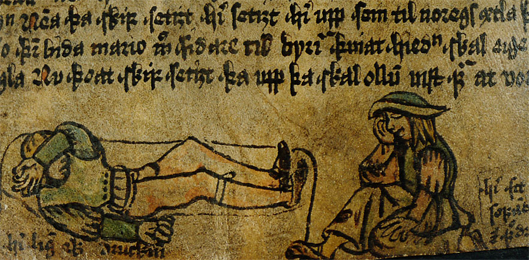
Illumination from AM 147 4to of two intoxicated 15th century Icelanders

Leaders, Corrupting the State for their Own Profit

Theognis, Elegies 39–52

“Kyrnos, this city is pregnant and I am afraid she will bear a man
Meant to correct our evil arrogance.
The citizens are still sane, but the leaders have changed
And have fallen into great evil.

Good people, Kyrnos, have never yet destroyed a city,
But whenever it pleases wicked men to commit outrage,
They corrupt the people and issue legal judgment in favor of the unjust,
For the sake of their own private profit and power.

Don’t expect this city to stay peaceful for very long
Even if it is not at a moment of great peace now,
When these deeds are dear to evil men,
As their profit accrues with public harm.

Civil conflicts and murder of kin comes from this,
And tyrants do too: may this never bring our city pleasure.”

Κύρνε, κύει πόλις ἥδε, δέδοικα δὲ μὴ τέκηι ἄνδρα
εὐθυντῆρα κακῆς ὕβριος ἡμετέρης.
ἀστοὶ μὲν γὰρ ἔθ’ οἵδε σαόφρονες, ἡγεμόνες δέ
τετράφαται πολλὴν εἰς κακότητα πεσεῖν.
οὐδεμίαν πω, Κύρν’, ἀγαθοὶ πόλιν ὤλεσαν ἄνδρες,
ἀλλ’ ὅταν ὑβρίζειν τοῖσι κακοῖσιν ἅδηι
δῆμόν τε φθείρουσι δίκας τ’ ἀδίκοισι διδοῦσιν
οἰκείων κερδέων εἵνεκα καὶ κράτεος·
ἔλπεο μὴ δηρὸν κείνην πόλιν ἀτρεμέ’ ἧσθαι,
μηδ’ εἰ νῦν κεῖται πολλῆι ἐν ἡσυχίηι,
εὖτ’ ἂν τοῖσι κακοῖσι φίλ’ ἀνδράσι ταῦτα γένηται,
κέρδεα δημοσίωι σὺν κακῶι ἐρχόμενα.
ἐκ τῶν γὰρ στάσιές τε καὶ ἔμφυλοι φόνοι ἀνδρῶν·
μούναρχοι δὲ πόλει μήποτε τῆιδε ἅδοι.

Image result for ancient greece megara ruins

Goodbye Heroes!

Anacreonta 23

“I want to speak of the Atreides,
And I am willing to sing about Kadmos
But the sound of my strings
Echoes only with Love.

Just yesterday I changed my strings,
And then the whole lyre,
And I was trying to sing
The labors of Herakles.
But the lyre returned
Only the sound of Love.

So, Goodbye, heroes,
For the rest of my life.
My lyre sings only tales of Love”

θέλω λέγειν Ἀτρείδας,
θέλω δὲ Κάδμον ᾄδειν,
ἁ βάρβιτος δὲ χορδαῖς
Ἔρωτα μοῦνον ἠχεῖ.

ἤμειψα νεῦρα πρώην
καὶ τὴν λύρην ἅπασαν·
κἀγὼ μὲν ᾖδον ἄθλους
Ἡρακλέους· λύρη δὲ
Ἔρωτας ἀντεφώνει.

χαίροιτε λοιπὸν ἡμῖν,
ἥρωες· ἡ λύρη γὰρ
μόνους Ἔρωτας ᾄδει.

Pietro Perugino, “Fortitude and Temperance with Six Antique Heroes” c. 1497-1500 [fresco]
https://youtu.be/1O22YHDDAys

Cicero Says August Is the Start of a Whole New Year!

Cicero, Letters to Atticus, 5.15 [=LCL 108]

“I made it to Laodicea on July 31st: you will start the reckoning of the year from this day. Nothing was lacking or unexpected in my arrival, but it is amazing how much this work wears me out. It provides me far too little space for my intellectual curiosity and the work for which I have earned my position.”

Laodiceam veni prid. Kal. Sext.; ex hoc die clavum anni movebis. nihil exoptatius adventu meo, nihil c<>arius; sed est incredibile quam me negoti taedeat, non habeat satis magnum campum ille tibi non ignotus cursus animi et industriae meae, praeclara opera cesset.

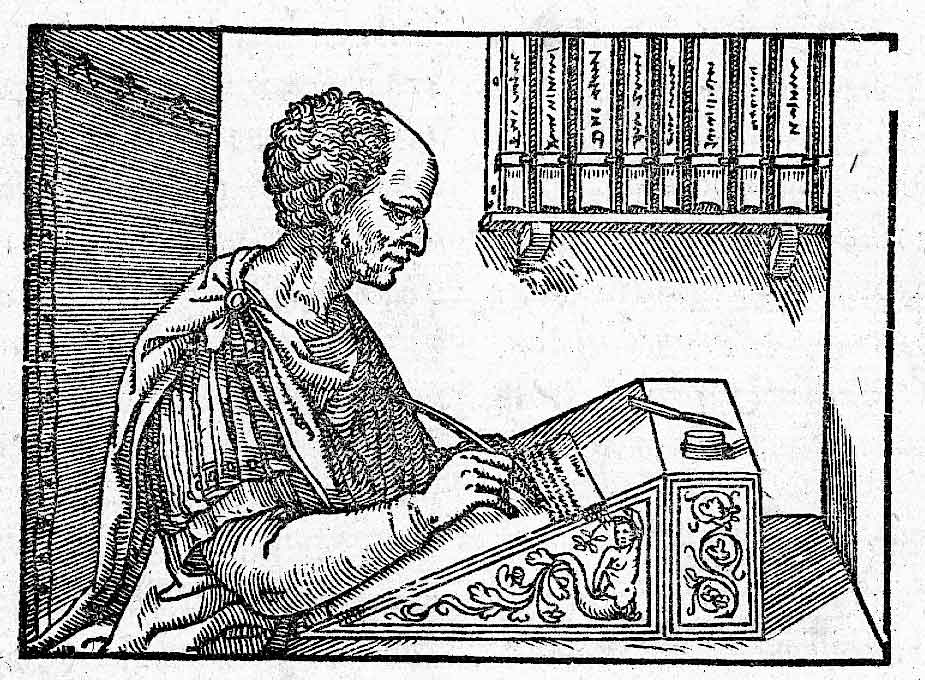
Cicero writing his letters, woodcut 1547