Another Casualty of Childbirth

Amyntas, Lit. Pap. 107 = P.Oxy iv.1904

Tell me, woman, who you are, who is your father, and your country.
What kind of great sickness did you die from?

“Stranger, my name is Praksô, and I am Samian
My father was Calliteles and I died giving birth”

Who provided for your tomb? “Theocritus, the man
To whom they married me.” What age did you reach?

“I was three-times-seven plus one.” Were you then childless”
“No, but I left a three year-old child in my home.”

φράζε, γύναι, τίς ἐοῦσα καὶ ἐκ τίνος, εἰπέ τε πάτρην,
καὶ ποίας ἔθανες νούσου ὑπ᾿ ἀργαλέης.
οὔνομα μὲν Πραξὼ Σαμίη, ξένε, ἐκ δὲ γονῆος
Καλλιτέλευς γενόμαν, ἀλλ᾿ ἔθανον τοκετῶι.
τίς δὲ τάφον στάλωσε; Θεόκριτος, ὧι με σύνευνον
ἀνδρὶ δόσαν. ποίην δ᾿ ἦλθες ἐς ἡλικίην;
ἑπταέτις τρὶς ἑνὸς γενόμαν ἔτι. ἦ ῥά γ᾿ἄτεκνος;
οὔκ, ἀλλὰ τριετῆ παῖδα δόμωι λιπόμαν.

Image result for medieval manuscript childbirth
Royal_ms_16_g_viii_f032r_detail

Audiobooks and the Merciless March of Time

Joel and I, like much of the literate and bibliomaniac world which feels pressed by the brutal exigencies of mundane tasks in our increasingly routinized and mechanized lives, have been listening to audiobooks for some years now. This morning, Joel sent me a text and asked whether I thought that his stats represented “too much or too little”:

image0000001.jpg
Joel’s listening time

When I received the message, I was impressed but also had no idea about my own total listening time, and was surprised to see that it far outstripped his:

IMG_4818.PNG
Erik’s listening time

Surely, these would represent Achillean feats of heroism if they were statistics recording solid (i.e. continuous) listening or – even better – reading time, but while I know that Joel will listen to audiobooks as he is running, and I will typically listen to them as I walk the dogs, most of our listening is nevertheless done while driving to work or completing the various mindless tasks and chores which take us away from the real business of life. Our conversation reminded me immediately of the scene at the beginning of the Trimalchio episode in Petronius’ Satyricon:

“He has a clock and a trumpeter supplied in his dining room so that he can know from them how much of his life he has wasted.” [Petronius, Satyricon 26]

Horologium in triclinio et bucinatorem habet subornatum, ut subinde sciat quantum de vita perdiderit!”

That is, even though much of the commuting and chore time represented by these statistics has been considerably enriched and enlivened by these audiobooks, it nevertheless represents time which is, in a very meaningful sense, wasted. Time spent doing things which require some distraction or entertainment as a palliative to make them endurable. To be sure, I feel that I live a happy and productive life, but few things can cast a shade of gloom over lived experience quite like the information derived from the merciless and automatic collection of information, and the reduction of one’s life to a series of marketable data points. Between the two of us, we have spent nearly five solid months distracting ourselves from one task or the other – how much of life has slipped away!

“As we speak, spiteful time will have fled from us…” [Horace, Odes 1.11]

Dum loquimur, fugerit invida aetas

Easier to Make Something Bad From Something Good

Theognis, Elegies 567-570

“I play, taking pleasure in youth—for I will lie
A long time under the earth once I die,
Like a voiceless stone, when I leave the sun’s lovely light.
No matter how good I was, I will see nothing again.”

ἥβῃ τερπόμενος παίζω· δηρὸν γὰρ ἔνερθεν
γῆς ὀλέσας ψυχὴν κείσομαι ὥστε λίθος
ἄφθογγος, λείψω δ᾿ ἐρατὸν φάος ἠελίοιο·
ἔμπης δ᾿ ἐσθλὸς ἐὼν ὄψομαι οὐδὲν ἔτι.

571-572

“A reputation alone is a great evil for people—an investigation is best.
Many who are unexamined have a reputation for good deeds.”

δόξα μὲν ἀνθρώποισι κακὸν μέγα, πεῖρα δ᾿ἄριστον·
πολλοὶ ἀπείρητοι δόξαν ἔχουσ᾿ ἀγαθῶν.

577-578

“It is easier to make something bad from good than good from bad.
Stop trying to teach me. I am not the right age to learn.”

“ῥήιον ἐξ ἀγαθοῦ θεῖναι κακὸν ἢ ᾿κ κακοῦ ἐσθλόν.”
—μή με δίδασκ᾿· οὔτοι τηλίκος εἰμὶ μαθεῖν.

583-584

“It is impossible to undo the things that have past
Let your worry be guarding what happens next.”

ἀλλὰ τὰ μὲν προβέβηκεν, ἀμήχανόν ἐστι γενέσθαι
ἀργά· τὰ δ᾿ ἐξοπίσω, τῶν φυλακὴ μελέτω.

Royal MS 16 F II

The Antiquity and Morality of Homer

Thomas Paine, The Age of Reason 2.8:

“Those who have superstitiously boasted of the antiquity of the Bible, and particularly of the books ascribed to Moses, have done it without examination, and without any authority than that of one credulous man telling it to another; for so far as historical and chronological evidence applies, the very first book in the Bible is not so ancient as the book of Homer by more then three hundred years, and is about the same age with Aesop’s Fables.

I am not contending for the morality of Homer; on the contrary, I think it a book of false glory, tending to inspire immoral and mischievous notions of honor; and with respect to Aesop, though the moral is in general just, the fable is often cruel; and the cruelty of the fable does more injury to the heart, especially in a child, than the moral does good to the judgment.”

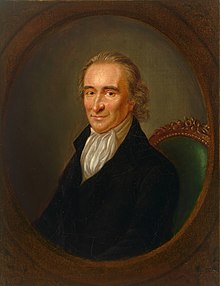
Image result for thomas paine

Email to Class: Instructor is Sick; Aurelius: I’m Dying

Marcus Aurelius to Fronto, Lorium 145-7 CE

“My teacher,

You must be messing with me, but you have sent me extraordinary worry and egregious anguish, the most severe pain and the hottest fever with your letter, so that I cannot eat, sleep or even study.

While you might find some relief in your speech today, what can I do when I have lost the pleasure of hearing it and I fear that you may come a bit late to Lorium and I am in pain because you are in pain?

Farewell my teacher, whose health makes my health untroubled and secure.”

| Magistro meo.

Ludis tu quidem, at mihi peramplam anxietatem et summam aegritudinem, <acerbissimum> dolorem, et ignem flagrantissimum litteris his tuis misisti, ne cenare, ne dormire, ne denique studere libeat. Verum tu orationis hodiernae tuae habeas aliquod solacium; at | ego quid faciam? qui et auditionis iam voluptatem consumpsi, et metuo ne Lorium tardiuscule venias, et doleo quod interim doles. Vale, mi magister, cuius salus meam salutem inlibatam et incolumem facit.

Image result for medieval manuscript sick teacher
c. 1480, Yates Thompson 7, f. 174r

A Most Important Foundation For Thought: Student Proverbs

Literary Papyri 115 (LCL360 Collart, Les Papyrus Bouriant, Paris, 1926, no. 1, p. 17) This is from a list of proverbs copied over in a student’s hand.

“Letters are the most important foundation for thought.”
(1) ἀρχὴ μεγίστη τοῦ φρονεῖν τὰ γράμματα.

“Respect the elder, an image of a god.”
(2) γέροντα τίμα τοῦ θεοῦ τὴν εἰκόνα.

“Lust is the most ancient of all the gods.”
(3) ἔρως ἁπάντων τῶν θεῶν παλαίτατος.

“I say that possessions are the most beautiful of all things.”
(4) κάλλιστά φημι χρημάτων τὰ κτήματα.

“Give in return when you have received so that you may take whenever you want.”
(5) λαβὼν πάλιν δός, ἵνα λάβηις ὅταν θέληις.

“The mind in us is the most prophetic god.”
(6) ὁ νοῦς ἐν ἡμῖν μαντικώτατος θεός.

“Your father is the one who raised you not the one who gave you life.”
(7) πατὴρ ὁ θρέψας κοὐχ ὁ γεννήσας πατήρ.

“Rescue yourself from wicked affairs.”
(8) σῶσον σεαυτὸν ἐκ πονηρῶν πραγμάτω(ν).

“Return a favor to friends in a timely fashion.”
(9) χάριν φίλοις εὔκαιρον ἀπόδος ἐν μέρει.

“Gratitude, you are the greatest of all riches!”
(10) ὦ τῶν ἁπάντων χρημάτων πλείστη χάρις.

Manuscript illustration depicts King Henry II of England demanding that the Arthurian romances be written down. It is taken from the beginning of La mort au Roy Artus, in a 13th-century manuscript of Arthurian romances (Yale ms. 229, f. 272v, Beinecke Rare Book & Manuscript Library, Yale University
Image taken from here

The Infantile Mind: Pliny on Where Amber Comes From

Pliny, NH 37 40-42

“[Sophocles] has described how [amber] is made on the other side of India from the tears of the birds called the “daughters of Meleager” as they weep for Meleager. Who doesn’t wonder at the fact that he believed this or expected to convince others to do so. What mind is so infantile or foolish that it could believe that there are birds who weep every year and shed such large tears or that they left Greece where Meleager perished and went to weep for him in India?

What, then? Don’t the poets offer us many tales equally fantastic? Indeed they do, but when it comes to this substance, which is imported daily and fills the market revealing the poet’s lie, this is a grave offense to human intelligence and and unendurable misuse of our ability to lie.

It is known that amber comes from islands in the Northern Oceans and that the Germans call it glaesum and, as a result of this, one of the islands which the natives called Austeravia was named Glaesariam by us when Caesar Germanicus was on campaign there with his fleet [16 CE]. Amber is created, moreover, as the pitch of a particular type of pine drips down in the same way as gum from cherry trees or resin in local pines bursts out because of an excess of liquid.”

hic ultra Indiam fieri dixit e lacrimis meleagridum avium Meleagrum deflentium. quod credidisse eum aut sperasse aliis persuaderi posse quis non miretur? quamve pueritiam tam inperitam posse reperiri, quae avium ploratus annuos credat lacrimasve tam grandes avesve, quae a Graecia, ubi Meleager periit, ploratum adierint Indos? quid ergo? non multa aeque fabulosa produnt poetae? sed hoc in ea re, quae cotidie invehatur atque abundet ac mendacium coarguat, serio quemquam dixisse summa hominum contemptio est et intoleranda mendaciorum inpunitas.

Certum est gigni in insulis septentrionalis oceani et ab Germanis appellari glaesum, itaque et ab nostris ob id unam insularum Glaesariam appellatam, Germanico Caesare res ibi gerente classibus, Austeraviam a barbaris dictam. nascitur autem defluente medulla pinei generis arboribus, ut cummis in cerasis, resina in pinis erumpit umoris abundantia.

British Library, Royal MS 12 F. xiii, Folio 10v

A Real Plato Quotation: Or, I Called Something Fake Too Fast

Yesterday I called the following quote fake too quickly.

This is the Paul Shorey translation available on Perseus. Here’s my translation and a bit more of the context:

Plato, Republic 347c-d

“….For they are not desirous of honors. It is indeed necessary to add some compulsion and penalty on them if they are intending to be willing to rule. This is likely the reason that a willingness to go to office without facing compulsion is considered shameful.

But the greatest penalty is to be ruled by someone worse if a person is not willing to hold office himself. It seems to me that people of propriety hold office (when they do) because they fear that outcome and that they enter into power not because they are going after something good or because they enjoy it, but because it is necessary and they are not able to entrust it to those better than themselves or their equals.”

. οὐδ’ αὖ τιμῆς ἕνεκα· οὐ γάρ εἰσι φιλότιμοι. δεῖ δὴ  αὐτοῖς ἀνάγκην προσεῖναι καὶ ζημίαν, εἰ μέλλουσιν ἐθέλειν ἄρχειν—ὅθεν κινδυνεύει τὸ ἑκόντα ἐπὶ τὸ ἄρχειν ἰέναι ἀλλὰ μὴ ἀνάγκην περιμένειν αἰσχρὸν νενομίσθαι—τῆς δὲ ζημίας μεγίστη τὸ ὑπὸ πονηροτέρου ἄρχεσθαι, ἐὰν μὴ αὐτὸς ἐθέλῃ ἄρχειν· ἣν δείσαντές μοι φαίνονται ἄρχειν, ὅταν ἄρχωσιν, οἱ ἐπιεικεῖς, καὶ τότε ἔρχονται ἐπὶ τὸ ἄρχειν οὐχ ὡς ἐπ’ ἀγαθόν τι ἰόντες οὐδ’ ὡς εὐπαθήσοντες ἐν αὐτῷ, ἀλλ’ ὡς ἐπ’ ἀναγκαῖον καὶ οὐκ ἔχοντες ἑαυτῶν βελτίοσιν ἐπιτρέψαι οὐδὲ ὁμοίοις.

The earliest instance of this I can find online is from 1963,  in Proceedings and Debates of the Congress, 109, part 29. If you search google books, you will find this quote is really popular in management leadership books where it debuts in the early 2000s and finds steady, unattributed representation.

Wikiquote.com notes that this is an “unsourced quotation”. It should not be considered so, but its use might receive a little more nuanced: this passage is about how ‘good’ people should not be interested in power and enter into it not for profit or possible self-interest, but to prevent lesser people from ruling and harming the state. This is an old-fashioned Greek noblesse oblige. But it is not a fake quote.

Thanks to those who called me out on the tweet. And to those who didn’t: call me out when I am wrong and I will fix it! As Cicero says: “All men make mistakes; but it is fools who persist in them” cuiusvis hominis est errare; nullius nisi insipientis perseverare in errore (Philippics 12.5). Or, as I prefer it: “any person can fuck up: but only fools keep fucking up in the same way.”

He Knew Nothing of Real Textual Criticism

Ulrich von Wilamowitz-Moellendorff,

History of Classical Scholarship (trans. Alan Harris):

“His [Nicholas Heinsius’] labours were confined almost entirely to Latin poetry, from Catullus to Prudentius. Apart from his numerous editions he left a great deal of material on which later scholars relied for their own publications. It is hard to believe that anybody ever had such an intuitive understanding of what these poets, especially Ovid, were trying to say and how they expressed themselves, or to doubt that, so far from rejecting what he put into their mouths as unworthy of them, they would sometimes have admitted that he had even improved on them; for, diligent as he was in consulting manuscripts and though his flair for the true reading served him well, he knew nothing of real textual criticism. He emended, as was customary, codicum et ingenii ope, thereby setting an example that was only too widely followed by people who possessed neither his feeling for style nor his ingenium. But our abhorrence of inept conjecture must not lessen our admiration for the genius of Heinsius.”

Image result for nicolaas heinsius

Now is the time

ὡς ἐνταῦθ᾽ †ἐμέν
ἵν᾽ οὐκέτ᾽ ὀκνεῖν καιρός, ἀλλ᾽ ἔργων ἀκμή. (Sophocles, Electra 21-22)

We’re at the point
where it’s no longer the time to shrink back, but the moment for action.

Thus the Paidagogus, the nameless “Tutor” in Sophocles’s play, ends his introductory address to Orestes (and to us, the audience) in the prologue to Electra. It sets the tone for the play. Soon after we hear Orestes—the ever willing student out to impress—repeat back his tutor’s language, as he brings his own opening declaration to an end with the words: “The two of us will go; for it is the time, which is for men the greatest leader of every action” (νὼ δ᾽ ἔξιμεν· καιρὸς γάρ, ὅσπερ ἀνδράσιν / μέγιστος ἔργου παντός ἐστ᾽ ἐπιστάτης, 75-76).

And shortly after this, when Orestes is yet moved to shrink back as he hears the offstage cries of his sister, the Paidagogus urges him on, ventriloquizing Aeschylus’s Pylades in his injunction to obey Apollo’s commands: for Orestes there are libations to be poured to his father, victory and power to be won. (80-85). No communal libation here, as in Aeschylus’s Choephoroi; here Electra and the chorus enter, only after Orestes and his support team have already departed. These men are doers. The women follow in their wake.

3_Electra+chorus

I watched a performance of Sophocles’s tragedy this summer in Greece’s second city, Thessaloniki (all photographs are taken from the production stills). It was the second time that I had seen the play, after the 2001 Cambridge Greek play (co-starring a pre-Loki Tom Hiddleston) which was memorable for creating a stage like a petri dish, as if the actors were under a microscope, their actions and arguments open for dissection. Aristotle famously relegates spectacle, or opsis (ὄψις), to the least important of the six component parts of a tragedy (after plot, character, diction, thought and song: Poetics 1450a9-10). “Spectacle”, he writes, “while highly seductive, is the least technical [of the parts] and the one that is least to do with poetry” (ἡ δὲ ὄψις ψυχαγωγικὸν μέν, ἀτεχνότατον δὲ καὶ ἥκιστα οἰκεῖον τῆς ποιητικῆς, 1450b18-20).

Aristotle’s terms of reference here (his emphasis on poetry) must play a role in the downgrading of spectacle, as too must his concern to recoup tragedy from Plato’s criticism of the art form as leading aside the soul (cf. ψυχαγωγικὸν). And spectacle, arguably, still continues to attract less comment, even though reception studies and the use of performance theory (as in Rush Rehm’s Play of Space) have gone some way to refocusing attention on to the play in (as) action.

It was the spectacle of the Greek national theatre company’s Electra (under the direction of Thanos Papakonstantinos) that took my breath away. On the surface it appeared quite a traditional adaptation: it wasn’t located in a contemporary setting; the costumes were simple, bordering on the stylised; it used music throughout; the chorus sung *and* danced; the text wasn’t excised or adapted in any way (other than it being a modern Greek translation). But it was like no other adaptation of Greek tragedy that I had seen. The director’s vision of the tragedy drew on elements that are only ever hinted at in the text, and showed to me, a textual scholar, the life and power of a play beyond the text. Let me give two examples that go back to that opening scene I discussed above.

Papakonstantinos’s play began before the first lines of Sophocles’s script were even delivered. Out came the musicians, the chorus, and two actors (Orestes and Pylades), who proceeded to parade sombrely around the stage to a funereal drumbeat, led by the Paidagogus, who all the time very slowly, and very deliberately, turned his head this way and that to glare at the audience seated in the theatre, challenging us to hold his gaze (or to look away). We immediately fell under the thrall of this imposing figure, as Orestes does in Sophocles’s play. As for Orestes: when the musicians and chorus had taken up their positions, Pylades (notably mute again after his brief, but momentous, pronouncement of Apollo’s command in Aeschylus’s Choephoroi) makes a performance of binding the hero and blindfolding him. All this before the play (as in Sophocles’s text of the play) had actually begun!

1_Beginning_Paidagogus+Orestes

Even after this point, the director’s “extra-textual” imagination continued to frame our response to the events on stage: for, rather than disappearing from view as in Sophocles’s play (when the actor would have had to play another role) Orestes, still blindfolded and bound, is led back around the stage by Pylades to that same funereal beat, while the action unfolds around them. It was only when meeting his sister, some two thirds of the way through the play that his bonds and blindfold are removed, as if offering a very concrete instantiation of his psychology: he has been trained (blinded and bound) to kill his mother; these bonds fall from him as meeting his sister reveals repressed ties of affection for her.

But this is only a fleeting glimpse of his humanity, as the Paidagogus suddenly reappears to berate the two “stupid unthinking children” (ὦ πλεῖστα μῶροι καὶ φρενῶν τητώμενοι, 1326), for talking a lot (τῶν μακρῶν λόγων, 1335) when “it is the moment to be delivered from these matters” (ἀπηλλάχθαι δ᾽ ἀκμή, 1338). As Electra desperately tries to engage in dialogue also with him, the Paidagogus firmly slaps her down: “That’s enough, I think” (ἀρκεῖν δοκεῖ μοι, 1364). In our performance, his reappearance at the top of the stage encapsulated once again his dominance over, and orchestration of, the proceedings.

As you’ll see from the photographs, the stage was stark in its simplicity, an effect that was further amplified by the simple, almost abstract costuming of all the actors. Not only did this help focus attention on the gestures, movement and interactions of the actors; it also helped to defamiliarise the action and detach it from any particular setting, whether classical (as when actors wear chitons) or modern. This is something, I think, that Greek tragedy generally manages to do: that is, to speak to audiences not bound by a particular place or time. But one costume did possibly have a contemporary resonance: the clothing of the chorus seemed to me, at least, to be a pristine white version of the clothing worn by the handmaids in the renowned TV adaptation of Margaret Atwood’s Handmaid’s Tale.

The chorus were the other significant reason for the impact of this drama. Controlled and in control, this was a chorus of and for our time, gaining power through their collective action. Unlike every other chorus I’ve ever seen, this chorus sung and chanted in metre throughout in unison. They spoke, as it were, with one voice, though that voice sometimes seemed to be stretched to the absolute limit, to the point of almost fracturing, using the technique of close dissonant harmonies familiar from Balkan singing. They also moved as one, like polished mannequins, often with minimal gesture of forefinger touching the thumb, as if a Greek orthodox Christ were blessing his congregation. Then, as the play hurtles towards its terrifying climax (the matricide; the forever deferred murder of Aegisthus), they transform, as Electra’s hatred and bitterness finally comes to affect and infect them. A *spoiler alert* #metoo movement with bite.

2_Electra+Chrysothemis_chorus

I had always read the chorus in the final scenes of the play as providing the only lingering vestige of empathy in an increasingly desperate and hateful (hate-filled) world. As Orestes does his thing (murdering his mother) offstage, and Electra comments on, and incites, the violence onstage in shockingly impersonal terms (“someone shouts within… someone screams”, 1406, 1409: the someone in question being her mother), it’s the chorus who remind us of what’s at stake: “I heard a cry that shouldn’t have been heard, enough to make me shiver” (1407); “o city, o wretched family” (1414). They sum up this fractured replaying of Aeschylus’s trilogy (Sophocles’s Clytemnestra “quotes” Aeschylus’s Agamemnon as she is struck, and struck again: ὤμοι πέπληγμαι / ὤμοι μάλʼ αὖθις, 1415-1417; cf. Aesch. Ag. 1343-45), by recalling the curses of those previously murdered (1419-21):

τελοῦσʼ ἀραί· ζῶσιν οἱ γᾶς ὑπαὶ κείμενοι.
παλίρρυτον γὰρ αἷμʼ ὑπεξαιροῦσι τῶν
κτανόντων οἱ πάλαι θανόντες.
The curses are working out. They who lie under the earth live.
For those who died long ago are draining the blood
—blood that flows in recompense—from their killers.

In a manner that again strongly evokes Aeschylus, this time the sarcastic reply by the Choephoroi Orestes’s to his mother: “I think that the dead are killing the living” (Aesch. Cho. 886), the chorus’s mention of curses reworks the language of generational violence and familial revenge that dominates that trilogy. Those earlier plays culminate in the instantiation of the curses in the form of the Furies/Erinyes of the Eumenides. One of the insoluble problems of Sophocles’s Electra is, precisely, the absence of the Erinyes from the drama. Although they are mentioned on four occasions (112, 276, 491, 1080) and alluded to once (1388), the fact that they don’t seem to appear after Clytemnestra’s murder has led many critics to conclude that Sophocles sanctions the matricide (as if it’s ever ok to kill your mother).

The masterstroke of Thanos Papakonstantinos in his direction of the play was, again, to make real what is only ever hinted at in the text. Thus, as the chorus attempt to make sense of the matricide and Electra’s conducting of the events offstage, they transform into the very curses to which they refer. At this very moment in the performance, they discarded their pristine white cloaks and began to writhe on the ground before Electra, sullying their inner garments on a stage that was slowly filling up with a viscous oily liquid—a black blood slick. They became in appearance like Electra herself, dreadful and deranged. They became, in essence, the Erinyes.

4_Orestes+Aegisthus+chorus

This transformation of the chorus into Sophocles’s missing Furies—as if the Eumenides‘s chorus had been invoked and brought back on stage by the constant incantations of Aeschylus’s earlier plays—was both utterly mesmeric and breathtakingly terrifying. It reminded me more of a horror film than a conventional tragedy, and it struck me that horror, too, must have played a role in these plays’ impact. And it wasn’t only a gut reaction; the horror-inflected climax got me thinking a lot harder about what *was* in the text. And, reading the play again at home, I noticed how the chorus from this point on assume a far more active role, first warning the siblings of Aegisthus’s arrival (1429), and then offering advice how to get him to drop his guard (1439-41). Even in their customarily generic last words, the chorus evoke the urgency (τῇ νῦν ὁρμῇ τελεωθέν, 1510) on which the Paidagogus has constantly insisted.

But—and this is important—their cue came not from him but from Electra. It’s when the men go off stage to do their thing and leave the women shut out onstage that they—the women—take control. It’s Electra’s commentary on the matricide that is the focus, not the event itself. It’s the sister, so long left home alone and shut off from the plot as soon as the play begins, who, forced to testify about her experience, her suffering before a (hostile?) hearing of male judges (us, the audience), dominates the play. And she dominates its ending with a group of women whose furious shedding of their demure costumes presages their transformation into curses, as if she, and not the Paidagogus, were now the orchestrator of the action.

Beware all transgressors. #wetoo are coming for you.

chorus+orestes