A Ghost Story from Petronius for Werewolf Week

Earlier  we saw how Plato makes being a tyrant equivalent to a type of lycanthropy. The Romans were also into that kind of thing. One of our oldest werewolf tales comes from Petronius’ Satyricon (61-62):

“Trimalchio turned to Niceros and said: “You used to be more pleasant company—I don’t know why you are now so quiet and subdued. If you want to make me happy, please tell us what happened to you.

Niceros, excited at his friend’s request, replied: “May all profit escape me, if I cannot deflate your joy—when I see how you are. Nevertheless, may happiness be ours, even if I am afraid that these scholars will laugh at me. Let them look on: I will tell the story nonetheless, what difference is it to me? It is better to tell a joke than be one.”
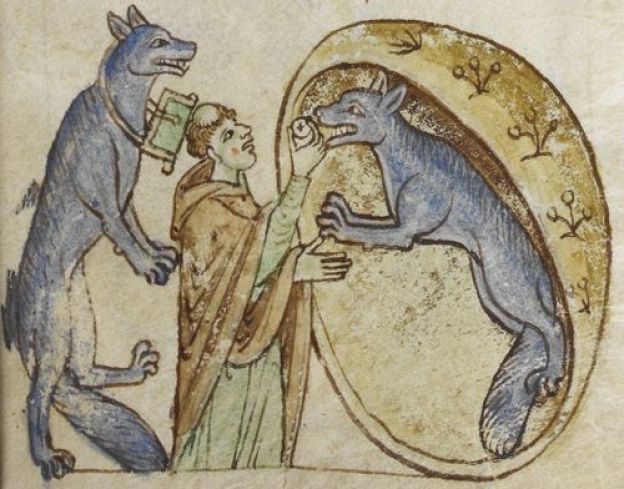
werewolf

Once he had uttered these words, he began the following tale:

‘When I was a slave, we were living in a narrow street where the home of Gavus is now. There is was where the gods decided I would fall in love with the wife of Terence the Innkeeper. You do remember Melissa from Tarentum—that most beautiful little package? By god, I loved her less for her body and sexcapades than I did for her fine morals. She didn’t deny me anything I sought. She made a penny, I got half! I put everything I had into her lap, and I was never cheated.

Her husband passed away at the inn one day. As you can imagine, I risked Skylla and Charybdis so I could get to her: for, as they say, Friends are present in times of need.

By chance, my master was visiting Capua in pursuit of some business. I took my chance and compelled a guest to accompany me to the fifth milestone. He was a soldier and as strong as Orcus. We blundered off around the time of the cock’s crow while the moon was shining as bright as midday. We went among the graves and my friend went among the stones to defecate. I sat singing and counting gravemarkers. And then, as I looked for my companion, he appeared and placed all his clothes near the road.

My breath nearly jumped out my nose—I was standing like a corpse. But he pissed around his clothes and suddenly became a wolf! Don’t you dare imagine I am joking, that I am lying. I make up nothing for such an inheritance as this! But, back to what I started to say, after he turned into a wolf, he began to howl and fled into the forest. At first, I didn’t remember where I was: then I went to gather up his clothes, but they had transformed into stones! What could I do but die from fear?

I drew my sword and struck all the shadows before me until I made it to my girlfriend’s home. I entered as pale as a ghost with sweat rushing down to my groin, my eyes nearly dead. I could hardly regain myself. My Melissa was at first surprised because I had gone out so late. And then she said “I wish you had come earlier, you could have helped us: a wolf entered the house and loosed more blood from the ship than a butcher! He escaped, but he didn’t laugh: an older slave tore his throat with a spear.”

Once I heard these words, I could not sleep any longer. At first light I fled the home of Gaius like an angry landlord. But once I came to the place where his clothing had turned into stone, I found nothing but blood. Honestly, I went home and my soldier was lying like a bull on his bed as a doctor was tending to his neck. I knew that he was a shapeshifter* then, and I wouldn’t have been able to share a meal with him even if you threatened to kill me. Let these men believe what they want about this, but if I am lying, let the gods hate me.”

*”shapeshifter”: Latin, versipellis (lit. “pelt-changer”) is used several times for form-changing in Latin literature. Often, this example and that of Pliny EN 8.80 (cf. LSJ s.v.) are translated as “werewolf”. I chose the more general sense.

[LXI] … Trimalchio ad Nicerotem respexit et: “Solebas, inquit, suavius esse in convictu; nescio quid nunc taces nec muttis. Oro te, sic felicem me videas, narra illud quod tibi usu venit.” Niceros delectatus affabilitate amici: “Omne me, inquit, lucrum transeat, nisi iam dudum gaudimonio dissilio, quod te talem video. Itaque hilaria mera sint, etsi timeo istos scolasticos ne me rideant. Viderint: narrabo tamen, quid enim mihi aufert, qui ridet? satius est rideri quam derideri.”

Haec ubi dicta dedit talem fabulam exorsus est:

“Cum adhuc servirem, habitabamus in vico angusto; nunc Gavillae domus est. Ibi, quomodo dii volunt, amare coepi uxorem Terentii coponis: noveratis Melissam Tarentinam, pulcherrimum bacciballum. Sed ego non mehercules corporaliter aut propter res venerias curavi, sed magis quod benemoria fuit. Si quid ab illa petii, nunquam mihi negatum; fecit assem, semissem habui; in illius sinum demandavi, nec unquam fefellitus sum. Huius contubernalis ad villam supremum diem obiit. Itaque per scutum per ocream egi aginavi, quemadmodum ad illam pervenirem: nam, ut aiunt, in angustiis amici apparent.

[LXII] “Forte dominus Capuae exierat ad scruta scita expedienda. Nactus ego occasionem persuadeo hospitem nostrum, ut mecum ad quintum miliarium veniat. Erat autem miles, fortis tanquam Orcus. Apoculamus nos circa gallicinia; luna lucebat tanquam meridie. Venimus inter monimenta: homo meus coepit ad stelas facere; sedeo ego cantabundus et stelas numero. Deinde ut respexi ad comitem, ille exuit se et omnia vestimenta secundum viam posuit. Mihi anima in naso esse; stabam tanquam mortuus. At ille circumminxit vestimenta sua, et subito lupus factus est. Nolite me iocari putare; ut mentiar, nullius patrimonium tanti facio. Sed, quod coeperam dicere, postquam lupus factus est, ululare coepit et in silvas fugit. Ego primitus nesciebam ubi essem; deinde accessi, ut vestimenta eius tollerem: illa autem lapidea facta sunt. Qui mori timore nisi ego? Gladium tamen strinxi et umbras cecidi, donec ad villam amicae meae pervenirem. In larvam intravi, paene animam ebullivi, sudor mihi per bifurcum volabat, oculi mortui; vix unquam refectus sum. Melissa mea mirari coepit, quod tam sero ambularem, et: ‘Si ante, inquit, venisses, saltem nobis adiutasses; lupus enim villam intravit et omnia pecora tanquam lanius sanguinem illis misit. Nec tamen derisit, etiamsi fugit; senius enim noster lancea collum eius traiecit’. Haec ut audivi, operire oculos amplius non potui, sed luce clara Gai nostri domum fugi tanquam copo compilatus; et postquam veni in illum locum, in quo lapidea vestimenta erant facta, nihil inveni nisi sanguinem. Vt vero domum veni, iacebat miles meus in lecto tanquam bovis, et collum illius medicus curabat. Intellexi illum versipellem esse, nec postea cum illo panem gustare potui, non si me occidisses. Viderint quid de hoc alii exopinissent; ego si mentior, genios vestros iratos habeam.”

Werewolf Week, JAMA Edition: Diagnosis and Therapy

This week in honor of Halloween we are returning to an obsession with lycanthropy. There is a trove of ancient Greek medical treatises on the diagnosing and treatment of the disease.

wolfbyz

Oribasius (Pergamum, c. 4th Century CE)

Oribasius is said to have studied medicine in Alexandria; he later served as the court doctor to Julian the Apostate. He wrote several encyclopedic summaries of medical knowledge at the time. The text produced for a friend’s son (Synopsis ad Eustathium) is identical to that attributed to Paulus of Aegina and seems to form the core of medical treatises on lycanthropy.

On Lycanthropy:

“Men who are afflicted with lycanthropy go out at night and imitate wolves in every way, spending time until daybreak among the gravestones. You will recognize that someone is suffering from this by the following symptoms. They appear pale and look weak; they have dry eyes and cannot cry. You may observe that their eyes are hollow and their tongue is especially dry: they cannot really produce saliva. They are thus thirsty and in addition they have wounded shins from scraping the ground frequently.

These are the symptoms; for treatment it is important to recognize that this is a type of melancholy which you may treat at the time the disease is noticed by cutting open the veins and draining blood until the patient almost passes out. Let him be washed in a sweet bath. After rubbing him down with milk-whey for three days, apply a pumpkin salve* to him on the second and third day. Following these cleansings, anoint him with the antidote for viper-venom and do the rest of the things prescribed for melancholy. When they disease has already come over those who are accustomed to sleepwalk, anoint them with lotion. And rub opium on their ears and nostrils when they are ready to sleep.”

Περὶ λυκανθρωπίας.

Οἱ τῇ λυκανθρωπίᾳ κατεχόμενοι νυκτὸς ἐξίασι τὰ πάντα λύκους μιμούμενοι καὶ μέχρις ἡμέρας περὶ μνήματα διατρίβουσιν. γνωριεῖς δὲ τὸν οὕτω πάσχοντα διὰ τῶνδε· ὠχροὶ τυγχάνουσι καὶ ὁρῶσιν ἀδρανὲς καὶ ξηροὺς τοὺς ὀφθαλμοὺς ἔχουσι καὶ οὐδὲ δακρύουσιν· θεάσῃ δ’αὐτῶν κοίλους τοὺς ὀφθαλμοὺς καὶ τὴν γλῶσσαν ξηροτάτην, καὶ σίελον οὐδ’ ὅλως προχωροῦν αὐτοῖς· εἰσὶ δὲ καὶ διψώδεις καὶ τὰς κνήμας διὰ τὸ πολλάκις προσπταίειν ἀνιάτως ἡλκωμένας ἴσχουσιν.

τοιαῦτα μὲν αὐτῶν τὰ γνωρίσματα· γινώσκειν δὲ χρὴ εἶδος μελαγχολίας εἶναι τὴν λυκανθρωπίαν, ἣν θεραπεύσεις κατὰ τὸν χρόνον τῆς ἐπισημασίας τέμνων φλέβα καὶ κενῶν τοῦ αἵματος ἄχρι λειποθυμίας καὶ διαιτῶν τὸν κάμνοντα εὐχύμοις τροφαῖς. κεχρήσθω δὲ τοῖς λουτροῖς γλυκέσιν· εἶτ’ ὀρῷ γάλακτος χρησάμενος ἐπὶ τρεῖς ἡμέρας κάθαιρε τῇ διὰ τῆς κολοκυνθίδος ἱερᾷ, καὶ δεύτερον καὶ τρίτον· μετὰ δὲ τὰς καθάρσεις καὶ τῇ διὰ τῶν ἐχιδνῶν θηριακῇ χρήσῃ καὶ τὰ ἄλλα παραλήψῃ ὅσα ἐπὶ τῆς μελαγχολίας εἴρηται. ἐπερχομένης δ’ ἤδη τῆς νόσου τοῖς ὕπνους ἐμποιεῖν εἰωθόσιν ἐπιβρέγμασι χρήσῃ· καὶ ὀπίῳ δὲ χρῖσον ὦτα καὶ μυκτῆρας εἰς ὕπνον τρεπομένοις.

* The pumpkin or gourd (Gr. kolokunthos) was associated with life and health due to its “juicy nature”; see LSJ s.v. This may explain its ritual/therapeutic use both in cleansing an association with death and with treating a patient exhibiting extreme symptoms of dryness.

Dolon the Trojan Wears a Wolf Skin on a Red Figure Vase...His 'treatment' was less than therapeutic...
Dolon the Trojan Wears a Wolf Skin on a Red Figure Vase…His ‘treatment’ was less than therapeutic…


Aëtius (Amida, 6th Century CE)


Aetius was a Byzantine doctor and writer who may have lived as early as the fifth century CE.He also studied at Alexandria and collated sixteen books of medicine—much of which was drawn from Galen and Oribasius. His indebtedness to the latter is clear from his passage on lycanthropy, but there are interesting additions. I have marked the significant additions in bold.

On Lykanthropy or Kynanthropy, following Marcellus*

Those who are afflicted by the disease once-called kynanthropy or lycanthropy go out at night during the month Pheurouarion** and imitate wolves or dogs in every way as they spend time until daybreak around gravestones especially. You will recognize people who suffer in this way from the following symptoms: They are pale, they look weak, they have dry eyes and a dry tongue and they don’t completely secrete saliva. They are thirsty and they have festering wounds on their shins from falling continuously and from dog bites.

Such are the symptoms. For treatment, you need to understand that lycanthropy is a type of melancholy. You treat it at the time the disease is noticed by cutting open the veins and draining the blood until the point when the patient passes out, then treat the sick with well-flavored food. Let him be washed in a sweet bath, and after rubbing him with milk-whey for three days, apply a pumpkin salve to him from [Rouphos, Archigenos, or Ioustos]. After these cleansings, anoint him with the viper-venom antidote. Also do all the other things that are prescribed earlier for melancholy.

When the disease comes on in the evening, rub down the heads of those who tend to sleepwalk with a lotion and for those who hunt by scent, smear some opium on their nostrils. Sometimes it is also necessary to administer a sleeping medicine.”

Περὶ λυκανθρωπίαϲ ἤτοι κυνανθρωπίαϲ Μαρκέλλου.

οἱ τῇ λεγοένῃ κυνανθρωπίᾳ ἤτοι λυκανθρωπίᾳ νόϲῳ κατεχόμενοι κατὰ τὸν Φευρουάριον μῆνα νυκτὸϲ ἐξίαϲι τὰ πάντα μιμούμενοι λύκουϲ ἢ κύναϲ καὶ μέχριϲ ἡμέραϲ περὶ τὰ μνήματα μάλιϲτα διατρίβουϲι. γνωρίϲειϲ δὲ τοὺϲ οὕτω πάϲχονταϲ διὰ τῶνδε· ὠχροὶ τυγχάνουϲι καὶ ὁρῶϲιν ἀδρανὲϲ καὶ ξηροὺϲ τοὺϲ ὀφθαλμοὺϲ ἔχουϲι καὶ οὐδὲν δακρύουϲι. θεάϲῃ δὲ αὐτῶν καὶ κοίλουϲ τοὺϲ ὀφθαλμοὺϲ καὶ γλῶϲϲαν ξηρὰν καὶ οὐδὲ ὅλωϲ ϲίελον προχέουϲιν. εἰϲὶ δὲ καὶ διψώδειϲ καὶ τὰϲ κνήμαϲ ἔχουϲιν ἡλκωμέναϲ ἀνιάτωϲ διὰ τὰ ϲυνεχῆ πτώματα καὶ τῶν κυνῶν τὰ δήγματα.

τοιαῦτα μὲν αὐτῶν τὰ γνωρίϲματα· γινώϲκειν δὲ χρὴ μελαγχολίαϲ εἶδοϲ εἶναι τὴν λυκανθρωπίαν, ἣν θεραπεύϲειϲ κατὰ τὸν χρόνον τῆϲ ἐπιϲημαϲίαϲ τέμνων φλέβα καὶ κενῶν τοῦ αἵματοϲ ἄχρι λειποθυμίαϲ καὶ διαιτῶν τὸν κάμνοντα ταῖϲ εὐχύμοιϲ τροφαῖϲ. κεχρήϲθω δὲ λουτροῖϲ γλυκέϲιν, εἶτα ὀρρῷ γάλακτοϲ χρηϲάμενοϲ ἐπὶ τρεῖϲ ἡμέραϲ κάθαιρε τῇ διὰ τῆϲ κολυκυνθίδοϲ ἱερᾷ ῾Ρούφου ἢ ᾿Αρχιγένουϲ ἢ ᾿Ιούϲτου, δεύτερον καὶ τρίτον παρέχων ἐκ διαϲτημάτων. μετὰ δὲ τὰϲ καθάρϲειϲ καὶ τῇ διὰ τῶν ἐχιδνῶν θηριακῇ χρηϲτέον. καὶ τὰ ἄλλα παραληπτέον ὅϲα ἐπὶ τῆϲ μελαγχολίαϲ προείρηται. εἰϲ ἑϲπέραν δὲ ἐπερχομένηϲ ἤδη τῆϲ νόϲου τοῖϲ ὕπνον εἰωθόϲιν ἐμποιεῖν ἐπιβρέγμαϲι τῆϲ κεφαλῆϲ χρῆϲθαι καὶ ὀϲφραντοῖϲ τοιούτοιϲ καὶ ὀπίῳ διαχρίειν τοὺϲ μυκτῆραϲ, ἐνίοτε δὲ καὶ ποτίζειν τινὰ τῶν ὑπνωτικῶν.

*According to the Suda, Marcellus was a doctor of Marcus Aurelius (2nd Century) who wrote two books on medicine in dactylic hexameter.

**Presumably this coincides with the month February and may have a special connection with Lycanthropy due to the Lupercalia.


Paulus (of Aegina, c. 7th Century CE)
A 7th Century CE Byzantine Physician who wrote De Re Medica Libri Septem) The Suda (s.v. Paulus) writes: Παῦλος, Αἰγινήτης, ἰατρός. ἔγραψεν ἰατρικὰ βιβλία διάφορα (“Paulos, from Aeigina, a doctor. He wrote various medical books”).

The text below is identical to that attributed to Oribasius:

“Men who are afflicted with lycanthropy go out at night and imitate wolves in every way, spending time until daybreak among gravestones. You will recognize that someone is suffering from this by the following symptoms. They appear pale and look weak; they have dry eyes and cannot cry. You may observe that their eyes are hollow and their tongue is especially dry: they cannot really produce saliva. They are thus thirsty and in addition they have wounded shins from scraping the ground frequently.

These are the symptoms; for treatment it is important to recognize that this is a type of melancholy, which you may treat at the time the disease is noticed by cutting open the veins and draining blood almost until the patient passes out. Let him be washed in a sweet bath. After rubbing him down with milk-whey for three days, apply a pumpkin salve to him on the second and third day. Following these cleansings, anoint him with the antidote for viper-venom and do the rest of the things prescribed for melancholy. When the disease has already come over those who are accustomed to sleepwalk, anoint them with lotion. And rub opium on the ears and nostrils of those preparing to sleep.”

Περὶ λυκάονοϲ ἢ λυκανθρώπου.

Οἱ τῇ λυκανθρωπίᾳ κατεχόμενοι νυκτὸϲ ἐξίαϲι τὰ πάντα λύκουϲ μιμούμενοι καὶ μέχριϲ ἡμέραϲ περὶ τὰ μνήματα διατρίβουϲι. γνωριεῖϲ δὲ τὸν οὕτω πάϲχοντα διὰ τῶνδε· ὠχροὶ τυγχάνουϲι καὶ ὁρῶϲιν ἀδρανὲϲ καὶ ξηροὺϲ τοὺϲ ὀφθαλμοὺϲ ἔχουϲι καὶ τὴν γλῶϲϲαν ξηροτάτην, καὶ ϲίελον οὐδ’ ὅλωϲ προχωροῦν αὐτοῖϲ· εἰϲὶ δὲ καὶ διψώδειϲ, καὶ τὰϲ κνήμαϲ διὰ τὸ πολλάκιϲ προϲπταίειν ἀνιάτωϲ ἡλκωμέναϲ ἴϲχουϲιν. τοιαῦτα μὲν τὰ γνωρίϲματα·

γινώϲκειν δὲ χρὴ εἶδοϲ μελαγχολίαϲ εἶναι τὴν λυκανθρωπίαν, ἣν θεραπεύϲειϲ κατὰ τὸν χρόνον τῆϲ ἐπιϲημαϲίαϲ τέμνων φλέβα καὶ κενῶν τοῦ αἵματοϲ ἄχρι λειποθυμίαϲ καὶ διαιτῶν τὸν κάμνοντα ταῖϲ εὐχύμοιϲ τροφαῖϲ· κεχρήϲθω δὲ τοῖϲ λουτροῖϲ γλυ-κέϲιν. εἶτα ὀρῷ γάλακτοϲ χρηϲάμενοϲ ἐπὶ τρεῖϲ ἡμέραϲ κάθαιρε τῇ διὰ τῆϲ κολοκυνθίδοϲ ἱερᾷ καὶ δεύτερον καὶ τρίτον· μετὰ δὲ τὰϲ καθάρϲειϲ καὶ τῇ διὰ τῶν ἐχιδνῶν θηριακῇ χρήϲῃ καὶ τὰ ἄλλα παραλήψῃ, ὅϲα ἐπὶ τῆϲ μελαγχολίαϲ εἴρηται. ἐπερχομένηϲ δὲ ἤδη τῆϲ νόϲου τοῖϲ ὑπνοποιεῖν εἰωθόϲιν ἐπιβρέγμαϲι χρήϲῃ· καὶ ὀπίῳ δὲ χρῖϲον τοὺϲ μυκτῆραϲ εἰϲ ὕπνον τρεπομένοιϲ.

Joannes Actuarius, De Diagnosi (Constantinople 13th to 14th Century)

Johannes Zacharias Actuarius was also a Byzantine doctor. He composed many works on medicine that drew on Galen, Aëtius and Paulus—which is clear from his text on lycanthropy. Significant differences from Aëtius’ text are in bold.

De Diagnosi 1.34.24

A type of this madness is called lycanthropy—it convinces those so afflicted to go outside in the middle of the night, among the graves and desolate places, like wolves and to return at night, to become themselves again, and to remain at home. But some of them have feet and shins marked up from touching stones and thorns and they have dry eyes and tongue. They are thirsty, and they look weak. I will pass over how much the others suffer—but some of them die after fearing death for long while others desire it fiercely. In the same way, some avoid large groups of people and maintain the strictest silence, while the others, if they are not among a crowd where they remain calm, they make a racket and seem out of their minds. These things happen when some kind of humor is imbalanced, and the place which reddens when it comes to the surface and returns energy to the person’s spirit.”

Ταύτης δέ γε εἶδος καὶ ἡ λυκανθρωπία καλουμένη, ἀναπείθουσα τοὺς ἁλόντας μέσον νυκτῶν ὧδε κἀκεῖσε περιϊέναι, ἔν τε μνήμασι καὶ ἐρημίαις κατὰ τοὺς λύκους, μεθ’ ἡμέραν δὲ ἐπιστρέφειν τε καὶ πρὸς ἑαυτοὺς γίνεσθαι, καὶ οἴκοι διατρίβειν. ἀλλ’ οἵδε μέν, τούς τε πόδας καὶ τὰς κνήμας ἔχουσιν ἡμαγμένους τῷ προσπταίειν τοῖς λίθοις καὶ ταῖς ἀκάνθαις, καὶ ξηροὶ τοὺς ὀφθαλμοὺς καὶ τὴν γλῶτταν καὶ διψώδεις, καὶ ἀδρανὲς βλέπουσιν. ἐῶ δὲ λέγειν ὅσα πάσχουσιν ἕτεροι, ὧν οἱ μὲν ἀεὶ τὸν θάνατον φοβούμενοι διατελοῦσιν, οἱ δ’ αὖ τούτου ἐπιθυμοῦντες, ὥσπερ ἕτεροι τὰς τῶν πολλῶν ὁμιλίας φεύγουσι, καὶ ἄκραν σιωπὴν ἀσκοῦσιν, αὖθις δὲ ἕτεροι, ἢν μὴ ὁμιλῶσιν ἄλλοις καὶ διαχεόμενοι ὦσι, θορυβούμενοί τε καὶ ἐκθαμβούμενοι. καὶ ταῦτα γίνεται παρὰ τὸ ποιὸν τοῦ ἐνοχλοῦντος χυμοῦ, ἔτι τε τὸν τόπον, ὃν ἐγγίσας ἐρεθίζει καὶ διανιστᾷ τὴν κατ’ ἐκείνον τῆς ψυχῆς ἐνέργειαν.

Anonymi Medici, A Collection of ancient treatises on disease and treatments. Some tracts are dated to the first century CE. There are some textual issues I have only barely tried to solve. The additions and differences seem to imply a text later than Paulus or Aëtius.

“Lycanthropy is a type of madness when people go out at night and spend time among graves. You will recognize those who suffer from it thus. Their skin is pale and they appear weak. They have dry eyes and they neither cry nor produce moisture. You may note that their eyes are hollow and their forehead is damp; they may have an extremely dry tongue and may not completely produce saliva. They are thirsty and they have open wounds on their shins from striking them frequently. Their body bears the particular marks of melancholy sometimes, since this is melancholic in nature, and they have been afflicted [with this] by some thought or sleeplessness, or spoiled food, or contact with birth fluids [?], bloody discharge, or menstrual blood. These are the indications and signs of lycanthropy.

This is how you treat it: I cut the veins at the elbows and I drain blood almost until the patient passes out then treat the sick with well-flavored food. Let him be washed in a sweet bath. After rubbing him down with milk-whey for three days, apply pumpkin salve to him on the second and third day. After running him down with milk-whey for three days, apply a pumpkin salve to him on the second and third day. After these cleansings, I would anoint him with the antidote for viper-venom and do the rest of the things prescribed for melancholy. In addition, I would suggest draining off any bloody discharge and avoiding any menstrual blood in order to stop the conditions that created the disease. Also commendable is furnishing diuretics and cleaning any pustules.”

Εἶδος μανίας ἐστὶν ἡ λυκανθρωπία, καὶ νυκτὸς ἐξίασι τὰ πάντα καὶ τάφους διατρίβουσι. γνωριεῖς δὲ τοὺς οὕτω πάσχοντας. τοῖς δὲ ὠχροὶ τυγχάνουσιν καὶ ὁρῶσιν ἁδρανὲς καὶ ξηροὺς τοὺς ὀφθαλμοὺς ἔχουσι, οὔτε δακρύουσιν

οὔτε ὑγραίνονται. θεάσῃ δὲ αὐτῶν καὶ κοίλους τοὺς ὀφθαλμοὺς καὶ τὸ πρόσωπον ὑγρὸν καὶ τὴν γλῶτταν ξηροτάτην καὶ σιέλον οὐδ’ ὅλως προχωρῶν αὐτοῖς. εἰσὶ δὲ καὶ διψώδεις ξηροὶ καὶ τὰς κνήμας, διὰ τὸ πολλάκις προςπίπτειν ἀνία αὐτοὺς καὶ ἑλκομένας ἔχουσιν. ἴδια δὲ σημεῖα τῶν μελαγχολικῶν τότε κατισχναίνειν τὸ σῶμα καὶ μελαγχολικὸν εἶναι τῇ φύσει, ἢ καὶ ἐξεπήκτη [?] τὸν διά τινος φροντίδος ἢ ἀγρυπνίας ἢ μοχθηρῶν σιτίων ἢ προφορᾶς ἢ ἐπίσχεσιν αἱμορροΐδων καὶ καταμηνίων γυναικῶν. τοιαῦτα μὲν δεῖ συμβαίνειν καὶ τὰ τῆς λυκανθρωπίας σημεῖα.

Πῶς οὖν θεραπεύσεις. Κατὰ μὲν οὖν τὸν πρῶτον χρόνον τῆς ἐπισημασίας τέμνω φλέβα τὴν ἐξ ἀγκώνων καὶ κενῶ τοῦ αἵματος ἄχρι λειποθυμίας καὶ διαίτησιν τὸν κάμνοντα ταῖς εὐχύμοις τροφαῖς· καὶ χρῆσθαι λουτροῖς γλυκέσι ἢ ὀρρῷ γάλακτος χρησάμενος ἐπὶ τρίτην ἡμέραν. καὶ καθαίρων δὲ τῇ διὰ τῆς κολοκυνθίδος ἱερᾷ καὶ β′ καὶ γ′ καὶ μετὰ τὰς καθάρσεις τῇ διὰ τῶν ἐχιδνῶν θηριακῇ χρήσομαι καὶ τὰ ἄλλα παραλήψομαι ὅσα ἐπὶ τῆς μελαγχολίας εἴρηται καὶ τὰς αἰμορροΐδας ἀναστομῶσαι καὶ καταμήνια γυναικῶν προπέσθαι κελεύω διὰ τὴν τούτων ἐπίσχεσιν, τὴν γεγενημένην εἰς τὸ πάθος· ἀγαθὰ δὲ καὶ αἱ διουρητικαὶ δυνάμεις καὶ τῶν ἱδρώτων κάθαρσις.

“In Geneva a man killed 16 children when he had changed himself into a wolf; he was executed on 15 October 1580”. Coloured pen drawing, Johann Jakob Wick, Sammlung von Nachrichten zur Zeitgeschichte aus den Jahren 1560–1587, ms. F 29, fol. 167v. From the Zentral Bibliothek Zürich.

Lingering problems:

As a Homerist, my experience in late Greek prose is limited; my experience in medical terminology is worse. I believe I have made sense of all of this, but I am happy to have suggestions or additions.

  1. τῇ διὰ τῆς κολοκυνθίδος ἱερᾷ: This phrase has given me fits. I at first made the mistake of taking ἱερᾷ to mean something sacred (e.g. rite, but not “shrine”, because that would be neuter!). But the LSJ lists ἱερὰ ἡ: a kind of serpent adding “II. A name for many medicines in the Greek pharmacopia…of a plaster; esp. of aloes.” So, since it does not seem likely that the treatment being prescribed is a “snake through a pumpkin”. In addition, later Greek prose uses dia + genitive to denote the thing from which something was made (LSJ s.v. dia A.III.c.2). So, I have settled on a “pumpkin salve”
  1. τῇ διὰ τῆϲ κολυκυνθίδοϲ ἱερᾷ ῾Ρούφου ἢ ᾿Αρχιγένουϲ ἢ ᾿Ιούϲτου: I have no idea what is going on with the three proper names here: are these places or people that produce the pumpkin poultice?

Politics is Horrifying: Plato on Lykanthropy

Werewolf week continues

From Plato’s Republic, Book 8 (565d)

“What is the beginning of the change from guardian to tyrant? Isn’t clear when the guardian begins to do that very thing which myth says happened at the shrine of Lykaion Zeus in Arcadia?

Which is? He said.

That once someone tastes a bit of human innards mixed up with the other sacrifices he becomes a wolf by necessity? Haven’t you heard this tale?

I have.

Is it not something the same with a protector of the people? Once he controls a mob that obeys him, he cannot restrain himself from tribal blood, but he prosecutes unjustly, the sorts of things men love to do, and brings a man into court for murder, eliminating the life of a man—and with tongue and unholy mouth that have tasted the murder of his kind, he exiles, kills, and promises the cutting of debts and the redistribution of land. Is it not by necessity that such a man is fated either to be killed by his enemies or to become a tyrant, to turn into a wolf from a man?”

werewolf-1

Τίς ἀρχὴ οὖν μεταβολῆς ἐκ προστάτου ἐπὶ τύραννον; ἢ δῆλον ὅτι ἐπειδὰν ταὐτὸν ἄρξηται δρᾶν ὁ προστάτης τῷ ἐν τῷ μύθῳ ὃς περὶ τὸ ἐν ᾿Αρκαδίᾳ τὸ τοῦ Διὸς τοῦ Λυκαίου ἱερὸν λέγεται;

Τίς; ἔφη.

῾Ως ἄρα ὁ γευσάμενος τοῦ ἀνθρωπίνου σπλάγχνου, ἐν ἄλλοις ἄλλων ἱερείων ἑνὸς ἐγκατατετμημένου, ἀνάγκη δὴ τούτῳ λύκῳ γενέσθαι. ἢ οὐκ ἀκήκοας τὸν λόγον;

῎Εγωγε.

῏Αρ’ οὖν οὕτω καὶ ὃς ἂν δήμου προεστώς, λαβὼν σφόδρα πειθόμενον ὄχλον, μὴ ἀπόσχηται ἐμφυλίου αἵματος, ἀλλ’ ἀδίκως ἐπαιτιώμενος, οἷα δὴ φιλοῦσιν, εἰς δικαστήρια ἄγων μιαιφονῇ, βίον ἀνδρὸς ἀφανίζων, γλώττῃ τε καὶ στόματι ἀνοσίῳ γευόμενος φόνου συγγενοῦς, καὶ ἀνδρηλατῇ καὶ ἀποκτεινύῃ καὶ ὑποσημαίνῃ χρεῶν τε ἀποκοπὰς καὶ γῆς ἀναδασμόν, ἆρα τῷ τοιούτῳ ἀνάγκη δὴ τὸ μετὰ τοῦτο καὶ εἵμαρται ἢ ἀπολωλέναι ὑπὸ τῶν ἐχθρῶν ἢ τυραννεῖν καὶ λύκῳ ἐξ ἀνθρώπου γενέσθαι;

In ancient Greek myth, Lykaon (Lycaon, related to lúkos, “wolf”) was a king of Arcadia. According to Pausanias (8.31-5) , Lykaon sacrificed a newborn child to Zeus. In other sources he offers the infant mixed up with other food to test Zeus’ divinity (although some attribute the deed to his sons, see Apollodorus, 3.8.1). Zeus killed the sons with lightning; Lykaon was transformed into a wolf. Stay tuned for more of this in coming days.

There may actually be physical evidence of human sacrifice in Arcadia now.

Hesiod’s House of Horrors

Hesiod: Theogony 720-744

. . . As far as heaven is from earth
Just as far is earth from gloomy Tartarus.
Bronze space junk would tumble through the sky
Nine nights and days, reaching earth on the tenth;
And so a bronze anvil tumbling from earth would fall
Nine nights and days, reaching Tartarus on the tenth.

A bronze wall was thrown up around Tartarus.
Triple-layered night was poured around its neck,
And the roots of earth and barren sea grew above it.
It’s there the Titan gods were locked away
—the will of Zeus, cloud gatherer—
In gloomy darkness, damp musty place
At the vast earth’s distant end.

They cannot leave.
Poseidon set bronze doors in place,
And a wall encircled the whole.
There Gyes and Cottus established themselves,
And great-hearted Obriareus did too,
Trusted watchmen for aegis-bearing Zeus.

The source and limit of everything
Line up there: that of dark earth,
Gloomy Tartarus, the barren sea,
And the star-studded sky.
Horrid damp musty—even the gods detest it.

A huge pit, this: you couldn’t reach bottom
in a year, assuming you got within its gates.
No, bruising squall after squall would carry you
This way and that. A Terrible monstrosity,
Even to the deathless gods.

. . . ὅσον οὐρανός ἐστ᾽ ἀπὸ γαίης:
τόσσον γάρ τ᾽ ἀπὸ γῆς ἐς Τάρταρον ἠερόεντα.
ἐννέα γὰρ νύκτας τε καὶ ἤματα χάλκεος ἄκμων
οὐρανόθεν κατιὼν δεκάτῃ κ᾽ ἐς γαῖαν ἵκοιτο:
ἐννέα δ᾽ αὖ νύκτας τε καὶ ἤματα χάλκεος ἄκμων
ἐκ γαίης κατιὼν δεκάτῃ κ᾽ ἐς Τάρταρον ἵκοι.
τὸν πέρι χάλκεον ἕρκος ἐλήλαται: ἀμφὶ δέ μιν νὺξ
τριστοιχεὶ κέχυται περὶ δειρήν: αὐτὰρ ὕπερθεν
γῆς ῥίζαι πεφύασι καὶ ἀτρυγέτοιο θαλάσσης.
ἔνθα θεοὶ Τιτῆνες ὑπὸ ζόφῳ ἠερόεντι
κεκρύφαται βουλῇσι Διὸς νεφεληγερέταο
χώρῳ ἐν εὐρώεντι, πελώρης ἔσχατα γαίης.
τοῖς οὐκ ἐξιτόν ἐστι. θύρας δ᾽ ἐπέθηκε Ποσειδέων
χαλκείας, τεῖχος δὲ περοίχεται ἀμφοτέρωθεν.
ἔνθα Γύης Κόττος τε καὶ Ὀβριάρεως μεγάθυμος
ναίουσιν, φύλακες πιστοὶ Διὸς αἰγιόχοιο.
ἔνθα δὲ γῆς δνοφερῆς καὶ Ταρτάρου ἠερόεντος
πόντου τ᾽ ἀτρυγέτοιο καὶ οὐρανοῦ ἀστερόεντος
ἑξείης πάντων πηγαὶ καὶ πείρατ᾽ ἔασιν
ἀργαλέ᾽ εὐρώεντα, τά τε στυγέουσι θεοί περ,
χάσμα μέγ᾽, οὐδέ κε πάντα τελεσφόρον εἰς ἐνιαυτὸν
οὖδας ἵκοιτ᾽, εἰ πρῶτα πυλέων ἔντοσθε γένοιτο,
ἀλλά κεν ἔνθα καὶ ἔνθα φέροι πρὸ θύελλα θυέλλῃ
ἀργαλέη: δεινὸν δὲ καὶ ἀθανάτοισι θεοῖσι
τοῦτο τέρας. . . .

Ancient sources attest that this sign was prominently displayed on the gates of Tartarus.

Larry Benn has a B.A. in English Literature from Harvard College, an M.Phil in English Literature from Oxford University, and a J.D. from Yale Law School. Making amends for a working life misspent in finance, he’s now a hobbyist in ancient languages and blogs at featsofgreek.blogspot.com.

Heroic Appearances

Or, What Did Helen Look Like?

Helen ‘appears’ for the first time in the Iliad in book 3. What does she look like?

A few years ago there was a bit of a to-do about the ethnicity of Homeric heroes. While some sketchy applications of DNA testing are eager to establish continuity between the people of antiquity and modern populations, others rightly argue that so many of our ideas about race, color, and identity have little to do with the ancient world and everything to do with our own. (See also the discussion on Pharos.)

Within this debate is the important realization that ancient concepts of hue and color-representation may have been altogether different from our own. In addition to Tim Whitmarsh’s essay (cited above), Maria Michel Sassi’s  essay does well to explore gaps between how we conceive of color and how the ancients may have.

But questions about DNA and color concepts are separate issues from myth and epic. Sure, the images and values of the ‘real’ world shape fantasy, but there is no direct accord cross-culturally between what people look like and how they imagine their heroes. Consider, e.g., the over-representation of blonde characters in American media in comparison to actual culture or the difference in skin tones in Bollywood from the general population. Racism and colorism shape representation, rendering the reality of genetics and appearance less important than the grammar of idealized bodies.

Full photograph of a black figure vase with Menelaos reclaiming Helen. She is not veiled.
MET 56.171.18 black-figure amphora with Menelaos reclaiming Helen. c. 540 BCE

How did the Greeks imagine their heroes? This is nearly unsolvable because who the Greeks are and what their heroes do for them changes by time and location. We can start, though by looking at some of the language. Greek poetry describes Helen as xanthê and kuanopis. An insensitive and simplistic reading of these facts might claim that she was “blonde” with “blue eyes”. Not only is the situation far more interesting and complicated than this, but I am pretty sure that even if we accept these two words as applying to Helen they would not be equivalent to the appearance these two terms denote in modern English.

Let’s start with the barest fact. What Helen actually looks like is never stated in Homer. When the Trojans look at her, they say she has the “terrible appearance of goddesses” (αἰνῶς ἀθανάτῃσι θεῇς εἰς ὦπα ἔοικεν). This, of course, is not terribly specific.

Elsewhere, she is “argive Helen, for whom many Achaeans [struggled]” (᾿Αργείην ῾Ελένην, ἧς εἵνεκα πολλοὶ ᾿Αχαιῶν, Il. 2.161) she has “smooth” or “pale/white” arms (῏Ιρις δ’ αὖθ’ ῾Ελένῃ λευκωλένῳ ἄγγελος ἦλθεν, 3.121), but this likely has to do with a typical depiction of women in Archaic Greece (they are lighter in tone than men because they don’t work outside) or because of women’s clothing (arms may have been visible). Beyond that? In the Odyssey, she has “beautiful hair” (῾Ελένης πάρα καλλικόμοιο, 15.58) and a long robe (τανύπεπλος, 4.305).

Photograph of a black figure vase with two warriors around a veiled woman
Black-figure Belly Amphora with the Reclamation of Helen and Herakles and Kerberos. c 540 BCE; Walters Art Museum

If anyone is looking for a hint of the ideal of beauty from the legend who launched a thousand ships, they will be sorely disappointed. Why? I think the answer to this partly has to do with the nature of Homeric poetry and with good art in general. Homeric poetry developed over a long duration of time and appealed to many different peoples. To over-determine Helen’s beauty by describing it would necessarily adhere to some standards of beauty while alienating others.

In addition, why describe her beauty at all when the audience members themselves can craft an ideal in their mind? As a student of mine said while I mused over this, Helen “cannot have descriptors because she is a floating signifier”. She is a blank symbol for desire upon which all audience members (ancient and modern, male and female) project their own (often ambiguous) notions of beauty. To stay with the ancient world, think of that seminal first stanza in Sappho fr. 16:

Some say a force of horsemen, some say infantry
and others say a fleet of ships is the loveliest
thing on the dark earth, but I say it is
[whatever] you love

Οἰ μὲν ἰππήων στρότον, οἰ δὲ πέσδων,
οἰ δὲ νάων φαῖσ’ ἐπὶ γᾶν μέλαιναν
ἔμμεναι κάλλιστον, ἐγὼ δὲ κῆν’ ὄτ-
τω τις ἔραται

As long as beauty is relative and in the eye of the beholder, any time we disambiguate it by saying that it is one thing and not another we depart from an abstract timeless idea and create something more bounded and less open to audience engagement. I think that part of what makes Homeric poetry work so well is that it combines a maximum amount of specificity within a maximized amount of ambiguity.

Outside of Homer, Helen is described with a little more detail, but in each case the significance of the signifier is less than it appears. In Hesiod, she has nice hair again (῾Ελένης ἕνεκ’ ἠυκόμοιο, Works and Days 165; this is repeated a lot in the fragmentary Hesiodic Catalogue). In fr. 9 of the Cypria she is merely a “Wonder for mortals” (θαῦμα βροτοῖσι·). Much later she has “spiraling eyebrows/lashes” (῾Ελένης ἑλικοβλεφάροιο, Quintus Smyrnaeus, 13.470). (N.b. there is a scholion glossing heliko- as “dark-eyed” when it is used in the Iliad).

If we want to learn more about Helen, she has additional features outside of epic poetry in lyric. I would be bold enough to claim that the more personal and erotic character of the genre is a better explanation for this specificity than anything else.

In lyric (e.g. Mesomedes, κυανῶπι θεά, θύγατερ Δίκας,) Helen is “cyan-eyed”, but if we look at the semantic range of this nominal root—which describes dark stones and eyes of water divinities—I think we can argue fairly that this indicates a dark and shiny, even watery texture (like lapis lazuli). I suspect this is about the sheen of eyes rather than their hue.

Eustathius remarks that the epithet κυανώπιδα is common (κατὰ κοινὸν ἐπίθετον) and is often used for dark sea creatures, describing as well his hair (Ποσειδῶνα κυανοχαίτην, Ad Hom. Il 1.555.23). Indeed, nymphs in general are “dark-eyed” in lyric (καὶ Νύμφαι κυανώπιδες, Anacr. fr. 12.2) and water deities remain so in Homer (κῦμα μέγα ῥοχθεῖ κυανώπιδος ᾿Αμφιτρίτης, Il. 12.60). Outside of Homer marriageable women also receive this epithet, including Helen’s sister Klytemnestra (Hes. Fr. 23a κού[ρην Τυνδαρέοιο Κλυταιμήσ]τρην κυανῶπ[ιν· cf. fr. 23.27 and for Althaia, 25.14, Elektra (169).

From Robert Beekes. Etymological Dictionary of Greek. Leiden: Brill, 2010

kuane

So, in lyric, Helen has dark pools for eyes. But what about her hair? At Sappho fr. 23 Helen is described as “xanthai” ([ ] ξάνθαι δ’ ᾿Ελέναι σ’ ἐίσ[κ]ην; cf. Stesichorus Fr. S103: [ξ]α̣νθὰ δ’ ῾Ελένα̣ π̣ρ[ ; Ibycus, fr. 1a.5: ξα]νθᾶς ῾Ελένας περὶ εἴδει ). But it is important to note that in this context there is a first-person narrator speaking (“I liken you to fair Helen…”). Note as well that there is something formulaic in these lyric lines: the epithet seems to begin the phrase each time.

When it comes to Hair color, xanthus is used in Homer to describe heroes, but not Helen (Menelaos is Xanthus, for example). A byzantine etymological dictionary suggests that the core meaning of this root has something to do with fire (Ξανθὴν, πυῤῥοειδῆ) and argues that the hair “symbolizes the heat and irascibility of the hero” (αἰνίττεται, τὸ θερμὸν καὶ ὀργίλον τοῦ ἥρωος, Etym. Gud, s.v.). But outside the Iliad and Odyssey the adjective is applied to goddesses: both Demeter (H. Dem. 302) and Aphrodite (Soph. fr. 255) are called Xanthê. Modern etymology sees this as anywhere from yellow to brown. But this is altogether relative again. “Light hair” in a group of people who are blond is almost white; among black/brown haired people, light hair can merely be a different shade of brown.

Again, from Beekes 2010:

xanthe

In the second book of Liu Cixin’s “Three Body Problem Trilogy” The Dark Forest, one of the main characters Luo Ji creates an ideal woman to love in his mind and goes so far as to converse with her, to leave his actual girlfriend for her, and then to go on a trip with her. When he consults a psychologist about this, his doctor tells him his is lucky because everyone is in love with an idea–where the rest of the world will inevitably be disillusioned when they realize this, Luo Ji will never suffer this loss.

Trying to make Helen look like an actual person is not only impossible, but it is something which Homeric epic avoids for good reason.

Image result for ancient greek helen

As a reminder, these posts will remain free, but there is an option to be a financial supporter. All proceeds from the substack are donated to classics adjacent non-profits on a monthly basis.

Ancient Vampires 2: What’s Really Scary is Misogyny

This is the second post about ancient Greek Vampires. The first looked at the Empousa. 

Lucian, Lover of Lies 2

“…these are various and disturbing tales, able to rattle the minds of children who still fear Mormo and Lamia.”

πάνυ ἀλλόκοτα καὶ τεράστια μυθίδια παίδων ψυχὰς κηλεῖν δυνάμενα ἔτι τὴν Μορμὼ καὶ τὴν Λάμιαν δεδιότων.

The Lamia (or, just Lamia to her friends) is one of the figures from Greek myth who seems like a frightening monster but really is a particular distillation of misogyny. She is often called a Greek ‘vampire’ along with Empousa. Unlike the latter, however, Lamia is specifically associated with killing children.

Diodorus Siculus, 20.40

“At the rock’s root there was a very large cave which was roofed with ivy and bryony in which the myths say the queen Lamia, exceptional for her beauty, was born. But, because of the beastliness of her soul, they say that her appearance has become more monstrous in the time since then.

For, when all her children who were born died, she was overwhelmed by her suffering and envied all the women who were luckier with their children. So she ordered that the infants be snatched from their arms and killed immediately. For this reason, even in our lifetime, the story of that women has lingered among children and the mention of her name is most horrifying to them.

But, whenever she was getting drunk, she would allow people to do whatever pleased them without observation. Because she was not closely watching everything at that time, the people in that land imagined that she could not see. This is why the myth developed that she put her eyes into a bottle, using this story a metaphor for the carelessness she enacted in wine, since that deprived her of sight.”

 περὶ δὲ τὴν ῥίζαν αὐτῆς ἄντρον ἦν εὐμέγεθες, κιττῷ καὶ σμίλακι συνηρεφές, ἐν ᾧ μυθεύουσι γεγονέναι βασίλισσαν Λάμιαν τῷ κάλλει διαφέρουσαν· διὰ δὲ τὴν τῆς ψυχῆς ἀγριότητα διατυπῶσαί φασι τὴν ὄψιν αὐτῆς τὸν μετὰ ταῦτα χρόνον θηριώδη. τῶν γὰρ γινομένων αὐτῇ παίδων ἁπάντων τελευτώντων βαρυθυμοῦσαν ἐπὶ τῷ πάθει καὶ φθονοῦσαν ταῖς τῶν ἄλλων γυναικῶν εὐτεκνίαις κελεύειν ἐκ τῶν ἀγκαλῶν ἐξαρπάζεσθαι τὰ βρέφη καὶ παραχρῆμα ἀποκτέννειν. διὸ καὶ καθ᾿ ἡμᾶς μέχρι τοῦ νῦν βίου παρὰ τοῖς νηπίοις διαμένειν τὴν περὶ τῆς γυναικὸς ταύτης φήμην καὶ φοβερωτάτην αὐτοῖς εἶναι τὴν ταύτης προσηγορίαν. ὅτε δὲ μεθύσκοιτο, τὴν ἄδειαν διδόναι πᾶσιν ἃ βούλοιντο ποιεῖν ἀπαρατηρήτως. μὴ πολυπραγμονούσης οὖν αὐτῆς κατ᾿ ἐκεῖνον τὸν χρόνον τὰ γινόμενα τοὺς κατὰ τὴν χώραν ὑπολαμβάνειν μὴ βλέπειν αὐτήν· καὶ διὰ τοῦτ᾿ ἐμυθολόγησάν τινες ὡς εἰς ἄρσιχον ἐμβάλοι τοὺς ὀφθαλμούς, τὴν ἐν οἴνῳ συντελουμένην ὀλιγωρίαν εἰς τὸ προειρημένον μέτρον μεταφέροντες, ὡς τούτου παρῃρημένου τὴν ὅρασιν.

Euripides, fr. 472m (=Diodorus Siculus 20.41.6)

“Who does not know my name, most hateful to men,
The Lamia, a Libyan by birth?”

τίς τοὐ<μὸν ὄ>νομα τοὐπονείδιστον βροτοῖς
οὐκ οἶδε Λαμίας τῆς Λιβυστικῆς γένος;

The story of why Lamia killed children gets a little more depressing in the Fragments of the Greek Historians

Duris, BNJ 76 F17 [= Photios s.v. Lamia]

“In the second book of his Libyan History, Duris reports that Lamia was a fine looking woman but after Zeus had sex with her, Hera killed the children she bore because she was envious. As a result she was disfigured by grief and would seize and kill the children of others.”

ταύτην ἐν τῆι Λιβύηι Δοῦρις ἐν δευτέρωι Λιβυκῶν ἱστορεῖ γυναῖκα καλὴν γενέσθαι, μιχθέντος δ᾽ αὐτῆι Διὸς ὑφ᾽ ῞Ηρας ζηλοτυπουμένην ἃ ἔτικτεν ἀπολλύναι· διόπερ ἀπὸ τῆς λύπης δύσμορφον γεγονέναι καὶ τὰ τῶν ἄλλων παιδία ἀναρπάζουσαν διαφθείρειν.

Elsewhere, the evidence of narratives about Lamia are rather limited. She becomes just another negative, female monster.

Suda, Lambda 85

“Lamia: a monster. The name comes from having a gaping throat, laimia and lamia. Aristophanes: “It has the smell of a seal, the unwashed balls of a Lamia.” For testicles are active—and he is making a fantasy image of Lamia’s balls, since she is female.”

Λάμια: θηρίον. ἀπὸ τοῦ ἔχειν μέγαν λαιμόν, λαίμια καὶ λάμια. ᾿Αριστοφάνης· φώκης δ’ εἶχεν ὀσμήν, λαμίας ὄρχεις ἀπολύτους. δραστικοὶ γὰρ οἱ ὄρχεις. εἰδωλοποιεῖ δέ τινας ὄρχεις λαμίας· θῆλυ γάρ.

Unlike Empousa and some others, Lamia is interestingly integrated in some other genealogical traditions.

Schol. G ad Ap. Rhodes 4.825-831

“Stesichorus says in his Skylla, regarding her form, that Skylla is the daughter of Lamia.”

Στησίχορος δὲ ἐν τῇ Σκύλλῃ †εἶδός τινος† Λαμίας τὴν Σκύλλαν φησὶ θυγατέρα εἶναι.

Pausanias on Phocis, 12

“There is a crag rising up over the ground on which the Delphians claim that a woman stood singing oracles, named Hêrophilê but known as Sibyl. There is the earlier Sibyl, the one I have found to be equally as old as the others, whom the Greeks claim is the daughter of Zeus and Lamia, the daughter of Poseidon. She was the first woman to sing oracles and they say that she was named Sibyl by the Libyans. Hêrophilê was younger than here, but she was obviously born before the Trojan War since she predicted Helen in her oracles, that was raised up in Sparta as the destruction for Asia and Europe and that Troy would be taken by the Greeks because of her.”

XII. Πέτρα δέ ἐστιν ἀνίσχουσα ὑπὲρ τῆς γῆς· ἐπὶ ταύτῃ Δελφοὶ στᾶσάν φασιν ᾆσαι τοὺς χρησμοὺς γυναῖκα ὄνομα Ἡροφίλην, Σίβυλλαν δὲ ἐπίκλησιν. τὴν δὲ πρότερον γενομένην, ταύτην ταῖς μάλιστα ὁμοίως οὖσαν ἀρχαίαν εὕρισκον, ἣν θυγατέρα Ἕλληνες Διὸς καὶ Λαμίας τῆς Ποσειδῶνός φασιν εἶναι, καὶ χρησμούς τε αὐτὴν γυναικῶν πρώτην ᾆσαι καὶ ὑπὸ τῶν Λιβύων Σίβυλλαν λέγουσιν ὀνομασθῆναι. ἡ δὲ Ἡροφίλη νεωτέρα μὲν ἐκείνης, φαίνεται δὲ ὅμως πρὸ τοῦ πολέμου γεγονυῖα καὶ αὕτη τοῦ Τρωικοῦ, καὶ Ἑλένην τε προεδήλωσεν ἐν τοῖς χρησμοῖς, ὡς ἐπ᾿ ὀλέθρῳ τῆς Ἀσίας καὶ Εὐρώπης τραφήσοιτο ἐν Σπάρτῃ, καὶ ὡς Ἴλιον ἁλώσεται δι᾿ αὐτὴν ὑπὸ Ἑλλήνων.

Dionysus of Halicarnassus, On Thucydides 6

“Foremost he differed from previous authors in this, by which I mean how he took on a subject that was not a single thread nor one divided in many different and also disconnected parts. And then, because did not include mythical material in his work and he did not use his writing for the deception and bewitchment of many, as every author before him did when they told the stories of certain Lamiai rising up from the earth in groves and glens and of amphibious Naiads rushing out of Tartaros, half-beasts swimming through the seas and then joining together in groups among humans, and producing offspring of mortals and gods, demigods—and other stories which seem extremely unbelievable and untrustworthy to us now.”

πρῶτον μὲν δὴ κατὰ τοῦτο διήλλαξε τῶν πρὸ αὐτοῦ συγγραφέων, λέγω δὲ κατὰ τὸ λαβεῖν ὑπόθεσιν μήτε μονόκωλον παντάπασι μήτ᾿ εἰς πολλὰ μεμερισμένην καὶ ἀσυνάρτητα κεφάλαια· ἔπειτα κατὰ τὸ μηδὲν αὐτῇ μυθῶδες προσάψαι, μηδ᾿ εἰς ἀπάτην καὶ γοητείαν τῶν πολλῶν ἐκτρέψαι τὴν γραφήν, ὡς οἱ πρὸ αὐτοῦ πάντες ἐποίησαν, Λαμίας τινὰς ἱστοροῦντες ἐν ὕλαις καὶ νάπαις ἐκ γῆς ἀνιεμένας, καὶ Ναΐδας ἀμφιβίους ἐκ Ταρτάρων ἐξιούσας καὶ διὰ πελάγους νηχομένας καὶ μιξόθηρας, καὶ ταύτας εἰς ὁμιλίαν ἀνθρώποις συνερχομένας, καὶ ἐκ θνητῶν καὶ θείων συνουσιῶν γονὰς ἡμιθέους, καὶ ἄλλας τινὰς ἀπίστους τῷ καθ᾿ ἡμᾶς βίῳ καὶ πολὺ τὸ ἀνόητον ἔχειν δοκούσας ἱστορίας.

There is another variant name–she might get her own entry some day

Suda, s.v.Μορμώ 

Mormô, in the genitive Mormous, declined like Sappho. There is also the form Mormôn, genitive Mormonos. Aristophanes says “I ask you, take this Mormo away from me”. This meant to dispel frightening things. For Mormo is frightening. And again in Aristophanes: “A Mormo for courage”. There is also a mormalukeion which they also call a Lamia. They were also saying frightening things like this.”

Μορμώ: λέγεται καὶ Μορμώ, Μορμοῦς, ὡς Σαπφώ. καὶ Μορμών, Μορμόνος. Ἀριστοφάνης: ἀντιβολῶ σ’, ἀπένεγκέ μου τὴν Μορμόνα. ἄπο τὰ φοβερά: φοβερὰ γὰρ ὑπῆρχεν ἡ Μορμώ. καὶ αὖθις Ἀριστοφάνης: Μορμὼ τοῦ θράσους. μορμολύκειον, ἣν λέγουσι Λαμίαν: ἔλεγον δὲ οὕτω καὶ τὰ φοβερά.

 In some traditions, Lamia became proverbial

Plutarch, De Curiositate [On Being a Busybod y] 516a

“Now, just as in the myth they say that Lamia sleeps at home, putting her eyes set aside in some jar, but when she goes out she puts them back in and peers around, in the same way each of us puts his curiosity, as if fitting in an eye, into meanness towards others. But we often stumble over our own mistakes and faults because of ignorance, since we fail to secure sight or light for them.

For this reason, a busybody is rather useful to his enemies, since he rebukes and emphasizes their faults and shows them what they should guard and correct, even as he overlooks most of his own issues thanks to his obsession with everyone else. This is why Odysseus did not stop to speak with his mother before he inquired from the seer about those things for which he had come to Hades. Once he had made his inquiry, he turned to his own mother and also the other women, asking who Tyro was, who beautiful Khloris was, and why Epikaste had died.”

Lamia is not well-attested in art and myth

νῦν δ’ ὥσπερ ἐν τῷ μύθῳ τὴν Λάμιαν λέγουσιν οἴκοι μὲν εὕδειν τυφλήν, ἐν ἀγγείῳ τινὶ τοὺς ὀφθαλμοὺς ἔχουσαν ἀποκειμένους, | ἔξω δὲ προϊοῦσαν ἐντίθεσθαι καὶ βλέπειν, οὕτως ἡμῶν ἕκαστος ἔξω καὶ πρὸς ἑτέρους τῇ κακονοίᾳ τὴν περιεργίαν ὥσπερ ὀφθαλμὸν ἐντίθησι, τοῖς δ’ ἑαυτῶν ἁμαρτήμασι καὶ κακοῖς πολλάκις περιπταίομεν ὑπ’ ἀγνοίας, ὄψιν ἐπ’ αὐτὰ καὶ φῶς οὐ ποριζόμενοι. διὸ καὶ τοῖς ἐχθροῖς ὠφελιμώτερός ἐστιν ὁ πολυπραγμονῶν· τὰ γὰρ ἐκείνων ἐλέγχει καὶ προφέρεται καὶ δείκνυσιν αὐτοῖς ἃ δεῖ φυλάξασθαι καὶ διορθῶσαι, τῶν δ’ οἴκοι τὰ πλεῖστα παρορᾷ διὰ τὴν περὶ τὰ ἔξω πτόησιν. ὁ μὲν γὰρ ᾿Οδυσσεὺς (λ 84 sqq.) οὐδὲ τῇ μητρὶ διαλεχθῆναι πρότε- ρον ὑπέμεινεν ἢ πυθέσθαι παρὰ τοῦ μάντεως, ὧν ἕνεκ’ ἦλθεν εἰς ῞Αιδου, πυθόμενος δὲ οὕτω πρός τε ταύτην ἔτρεψεν αὑτόν, καὶ τὰς ἄλλας γυναῖκας ἀνέκρινε, τίς ἡ Τυρὼ καὶ τίς ἡ καλὴ Χλωρὶς καὶ διὰ τί ἡ ᾿Επικάστη ἀπέθανεν…

Image result for Ancient Greek Lamia vase
Skylla, relative of Lamia. More Misogyny.

Some other misogynistic tales from myth with telling variants

The Lemnian Women and their Terrible Smell

The Privileging of Klytemnestra’s Infamy

The Terrible Tale of Asclepius’ Two Mothers

Pretty Much Everything about Medea

Kassandra’s Prophecy and Life

Kassandra’s Children

The Death of Hecuba

Helen and Iphigenia

Don’t Eat Brains: Zombie-Tydeus for Werewolf Week

In the spirit of the week before Halloween, below are the major accounts of Diomedes’ father, Tydeus, who was rejected by Athena after eating brains. 

Hom. Il. 5.801

“Tydeus was a little man, but a fighter.”

Τυδεύς τοι μικρὸς μὲν ἔην δέμας, ἀλλὰ μαχητής·

Schol. AbT ad Il. 5.126

“They say that when Tydeus was wounded by Melanippos Astakos’ son, he got pretty upset. And Amphiarus, after he killed Melanippus, gave his head to Tydeus. Like a beast, Tydeus ripped it open and slurped up his brains to his fill. Athena happened to be there at that time, bringing some immortal medicine to him from heaven, and she turned back out of disgust. When he saw her, he asked that she favor his son with the divine favor. That’s Pherecydes’ story.”

Τυδέα τρωθέντα ὑπὸ Μελανίππου τοῦ ᾿Αστακοῦ σφόδρα ἀγανακτῆσαι. ᾿Αμφιάρεων δὲ κτείναντα τὸν Μελάνιππον δοῦναι τὴν κεφαλὴν Τυδεῖ. τὸν δὲ δίκην θηρὸς ἀναπτύξαντα ῥοφᾶν τὸν ἐγκέφαλον ἀπὸ θυμοῦ. κατ’ ἐκεῖνο δὲ καιροῦ παρεῖναι ᾿Αθηνᾶν ἀθανασίαν αὐτῷ φέρουσαν ἐξ οὐρανοῦ καὶ διὰ τὸ μύσος ἀπεστράφθαι. τὸν δὲ θεασάμενον παρακαλέσαι κἂν τῷ παιδὶ αὐτοῦ χαρίσασθαι τὴν ἀθανασίαν. ἱστορεῖ Φερεκύδης (FGrHist 3, 97). A b (BC) T

Schol. in Pind. Nem. 11.43b

“That Melanippos was Theban and stood in battle against Tydeus. It seems that Tydeus took his head in rage, smashed it, and gulped up his brains. For this reason, Athena turned back even though she was bringing him a revitalizing drug.”

(FHG I O M, I 117 J). ὁ δὲ Μελάνιππος οὗτος Θηβαῖος ἦν ἐπὶ τοῦ πολέμου συστὰς τῷ Τυδεῖ. τούτου δοκεῖ διὰ τὴν ὀργὴν λαβὼν ὁ Τυδεὺς τὴν κεφαλὴν καὶ ῥήξας ἐκροφῆσαι τὸν ἐγκέφαλον· διὸ καὶ ἀπεστράφη ἡ ᾿Αθηνᾶ τότε κομίζουσα αὐτῷ
τὴν ἀθανασίαν…

Schol. in Theoc. Proleg. 15-18b

“From man-eating Tydeus: For that Tydeus ate Melannipus’ brains down to the marrow.”

Τυδέως τοῦ ἀνδροβρῶτος—ἔφαγε γὰρ οὗτος ὁ Τυδεὺς τὴν κεφαλὴν τοῦ Μελανίππου καταρροφήσας τὸν ἐν αὐτῇ μυελόν.

Schol ad. Lyk. 1066 1-7

“Of the head-munching Tydeus: the story goes that during the Theban war, Tydeus ate up Melanippus’ head. Thus, Tydeus is called “head-muncher” and his child is Diomedes.”

τοῦ κρατοβρῶτος
τοῦ Τυδέως, ἐπειδὴ ἐν τῷ
Θηβαϊκῷ πολέμῳ λέγεται ὁ
Τυδεὺς τὴν κεφαλὴν τοῦ Μελα-
νίππου κατεδηδοκέναι. κρα-
τοβρῶτος οὖν ὁ Τυδεύς,
παῖς δὲ αὐτοῦ ὁ Διομήδης.

Kallierges (Etym. Magn.)

“Tydeus, from tuthon (“a little”); for he was small for his age group.”

Τυδεύς: Παρὰ τὸ τυτθόν· μικρὸς γὰρ ἦν τῇ ἡλικίᾳ.

Note the variations in the narrative Apollodorus introduces by bringing all the details together: Amphiarus becomes the villain here!

Apollodorus, 3.76-77

“Melanippus, the last of Astacus’ children, wounded Tydeus in the stomach. While he was lying there half-dead, Athena brought him medicine she had begged from Zeus in order to make him immortal. But when Amphiarus perceived this, because he hated Tydeus for persuading the Argives to march against Thebes against his own judgment, he cut off Melanippus’ head and gave it to him (Tydeus killed him when he was wounded). He drew out the brains and gobbled them up. When Athena saw him, she was disturbed, and withheld and kept the medicine.”

Μελάνιππος δὲ ὁ λοιπὸς τῶν ᾿Αστακοῦ παίδων εἰς τὴν γαστέρα Τυδέα τιτρώσκει.
ἡμιθνῆτος δὲ αὐτοῦ κειμένου παρὰ Διὸς αἰτησαμένη ᾿Αθηνᾶ φάρμακον ἤνεγκε, δι’ οὗ ποιεῖν ἔμελλεν ἀθάνατον αὐτόν. ᾿Αμφιάραος δὲ αἰσθόμενος τοῦτο, μισῶνΤυδέα ὅτι παρὰ τὴν ἐκείνου γνώμην εἰς Θήβας ἔπεισε τοὺς ᾿Αργείους στρατεύεσθαι, τὴν Μελανίππου κεφαλὴν ἀποτεμὼν ἔδωκεν αὐτῷ (τιτρωσκόμενος δὲ Τυδεὺς ἔκτεινεν αὐτόν). ὁ δὲ διελὼν τὸν ἐγκέφαλον ἐξερρόφησεν. ὡς δὲ εἶδεν ᾿Αθηνᾶ, μυσαχθεῖσα τὴν εὐεργεσίαν ἐπέσχε τε καὶ ἐφθόνησεν.

temple-relief-from-pyrgi-b

Sextus Empiricus, Pyrrhoniae Hypotyposes 3.208

“We consider eating human flesh to be wrong; but it is a matter of ambivalence among the barbarians. But why should we even speak of ‘barbarians’ when Tydeus is said to have eaten an enemy’s brains and when the Stoics claim it is not strange for someone to eat another’s flesh or his own?”

ἀγαθῷ τινι τούτῳ χρῆσθαι τῷ κακῷ πυνθανόμεθα. ἀλλὰ καὶ τὸ ἀνθρωπείων γεύεσθαι σαρκῶν παρ’ ἡμῖν μὲν ἄθεσμον, παρ’ ὅλοις δὲ βαρβάροις ἔθνεσιν ἀδιάφορόν ἐστιν.

καὶ τί δεῖ τοὺς βαρβάρους λέγειν, ὅπου καὶ ὁ Τυδεὺς τὸν ἐγκέφαλον τοῦ πολεμίου λέγεται φαγεῖν, καὶ οἱ ἀπὸ τῆς Στοᾶς οὐκ ἄτοπον εἶναί φασι τὸ σάρκας τινὰ ἐσθίειν ἄλλων τε ἀνθρώπων καὶ ἑαυτοῦ;

Ancient Greek Vampires 1: Empousa

The classic Transylvanian-style vampire—male, nocturnal, fanged—is really a product of folklore and gothic horror after the middle ages (with garlic, mirrors, crosses and stakes coming at various times from various places). But human blood-eating creatures of pleasure were present in ancient folktales as well. They are not prominent, but the Lamia and the Empousa, both female creatures of death who live off the life-force of the young, are attested as early as the 5th century BCE. Our best references, however, come from later antiquity. For ease, I am just going to translate them both as ‘vampire’. (There will be a second post about Lamia.) Here are some facts about Empousa.

Vampires live in the East. They can be Frightened off with mockery.

Eusebius, Contra Hieroclem 382.11 4th Century CE 

“These things are from the first book. Let us move on to the material in the second. The story picks up and follows the journey from Persia to India—there, they experienced something surprising—he says that [Apollodorus] saw something paranormal, what he calls a vampire [empousa], on the road and that they drove it away with mockery

Καὶ ταῦτα μὲν ἀπὸ τοῦ πρώτου συγγράμματος, ἐπίωμεν δὲ καὶ τὰ ἐκ τοῦ δευτέρου. τὴν ἀπὸ Περσίδος ἐπ᾿ Ἰνδοὺς πορείαν ἄγει παραλαβὼν αὐτὸν ὁ λόγος. εἶτά τι πεπονθὼς ἀπειρόκαλον, ὥσπερ τι παράδοξον, δαιμόνιόν τι, ὃ καὶ ἔμπουσαν ὀνομάζει, κατὰ τὴν ὁδὸν ἰδόντα λοιδορίαις ἅμα τοῖς ἀμφ᾿ αὐτὸν ἀπελάσαι φησί,

Vampires are Shapeshifters

Philostratus, Apollonius of Tyana II, 4 2nd Century CE 

“After they went over the Caucasus they saw people who were four-lengths tall and who already dark-skinned. Once they crossed the river into India, they saw others who were five lengths tall. In the journey up to this river, I have picked out these things as worthy of investigation. For they were traveling in the clear moonlight when a phantom of a vampire [empousa] met them, changing into this scary thing and then another and then nothing! Apollonius understood what thing it was and mocked the vampire himself and ordered his companions—for this is the response to this kind of attack. The apparition went into flight like a ghost.”

Παραμείψαντες δὲ τὸν Καύκασον τετραπήχεις ἀνθρώπους ἰδεῖν φασιν, οὓς ἤδη μελαίνεσθαι, καὶ πεντεπήχεις δὲ ἑτέρους ὑπὲρ τὸν Ἰνδὸν ποταμὸν ἐλθόντες. ἐν δὲ τῇ μέχρι τοῦ ποταμοῦ τούτου ὁδοιπορίᾳ τάδε εὗρον ἀφηγήσεως ἄξια· ἐπορεύοντο μὲν γὰρ ἐν σελήνῃ λαμπρᾷ, φάσμα δὲ αὐτοῖς ἐμπούσης ἐνέπεσε τὸ δεῖνα γινομένη καὶ τὸ δεῖνα αὖ καὶ οὐδὲν εἶναι, ὁ δὲ Ἀπολλώνιος ξυνῆκεν, ὅ τι εἴη, καὶ αὐτός τε ἐλοιδορεῖτο τῇ ἐμπούσῃ, τοῖς τε ἀμφ᾿ αὑτὸν προσέταξε ταὐτὸ πράττειν, τουτὶ γὰρ ἄκος εἶναι τῆς προσβολῆς ταύτης· καὶ τὸ φάσμα φυγῇ ᾤχετο τετριγός ὥσπερ τὰ εἴδωλα.

Vampires like to eat the young (their blood is better)

4.5-6 “She said “be quiet and go away” and seemed to be disgusted at what she heard. And, I think, she was mocking philosophers for always talking nonsense. When, afterward, the golden bowls and what seemed to be silver was shown to be unreal—when everything flew from our eyes as the cup-bearers, the cooks, and every kind of servant disappeared as they were cross-examined by Apollonios—then the apparition seemed to be crying and was pleading that he not test her or compel her to agree what kind of thing she was. But when Apollonius laid on the pressure, she confessed that she was a vampire [empousa] who had been fattening Menippus with delights to eat on his body since she typically ate fine young bodies because their blood was more vital.

I have drawn out this tale, which happens to be the best known concerning Apollonius, out of necessity—most know that it occurred somewhere in the middle of Greece, but they have acquired only a summary account of how he once trapped a Lamia in Korinth. They don’t know what she was doing and that it was for Melanippus. The story is told by Damis and now by me from his records.”

Ἡ δὲ “εὐφήμει” ἔλεγε “καὶ ἄπαγε,” καὶ μυσάττεσθαι ἐδόκει, ἃ ἤκουε, καί που καὶ ἀπέσκωπτε τοὺς φιλοσόφους, ὡς ἀεὶ ληροῦντας. ἐπεὶ μέντοι τὰ ἐκπώματα τὰ χρυσᾶ καὶ ὁ δοκῶν ἄργυρος ἀνεμιαῖα ἠλέγχθη, καὶ διέπτη τῶν ὀφθαλμῶν ἅπαντα, οἰνοχόοι τε καὶ ὀψοποιοὶ καὶ ἡ τοιαύτη θεραπεία πᾶσα ἠφανίσθησαν, ἐλεγχόμενοι ὑπὸ τοῦ Ἀπολλωνίου, δακρύοντι ἐῴκει τὸ φάσμα καὶ ἐδεῖτο μὴ βασανίζειν αὐτό, μηδὲ ἀναγκάζειν ὁμολογεῖν, ὅ τι εἴη, ἐπικειμένου δὲ καὶ μὴ ἀνιέντος ἔμπουσά τε εἶναι ἔφη καὶ πιαίνειν ἡδοναῖς τὸν Μένιππον ἐς βρῶσιν τοῦ σώματος, τὰ γὰρ καλὰ τῶν σωμάτων καὶ νέα σιτεῖσθαι ἐνόμιζεν, ἐπειδὴ ἀκραιφνὲς αὐτοῖς τὸ αἷμα.

Τοῦτον τὸν λόγον γνωριμώτατον τῶν Ἀπολλωνίου τυγχάνοντα ἐξ ἀνάγκης ἐμήκυνα, γιγνώσκουσι μὲν γὰρ πλείους αὐτόν, ἅτε καθ᾿ Ἑλλάδα μέσην πραχθέντα, ξυλλήβδην δὲ αὐτὸν παρειλήφασιν, ὅτι ἕλοι ποτὲ ἐν Κορίνθῳ λάμιαν, ὅ τι μέντοι πράττουσαν καὶ ὅτι ὑπὲρ Μενίππου, οὔπω γιγνώσκουσιν, ἀλλὰ Δάμιδί τε καὶ ἐκ τῶν ἐκείνου λόγων ἐμοὶ εἴρηται.

Vampires like to have sex with mortals and then eat them

4.4 “What I was saying is that this woman is one of the vampires [empousai], whom most people think are the same as Lamiae or werewolves. Vampires feel desire, but they long for human sex and flesh most of all. They use sex to catch the ones they want to eat.”

ὃ λέγω, ἡ χρηστὴ νύμφη μία τῶν ἐμπουσῶν ἐστιν, ἃς λαμίας τε καὶ μορμολυκεῖα οἱ πολλοὶ ἡγοῦνται. ἐρῶσι δ᾿ αὗται καὶ ἀφροδισίων μέν, σαρκῶν δὲ μάλιστα ἀνθρωπείων ἐρῶσι καὶ παλεύουσι τοῖς ἀφροδισίοις, οὓς ἂν ἐθέλωσι δαίσασθαι.”

7.29 “King, would someone who is covetous enough of honor to appear to be a sorcerer seem to credit to a god what he had done himself? What awestruck audiences for his skill would there be if he were to hand the wonder to a god? What kind of a sorcerer would pray to Herakles? These wicked devils credit their kinds of acts to ditches and underworld gods from whom Herakles must be separated since he is cleansed and it good to people. I prayed to him at some point in the Peloponnese for there was some apparition of a vampire [lamia] there too eating the fine forms of young men….”

“Τίς ἂν οὖν σοι, βασιλεῦ, δοκεῖ φιλοτιμούμενος γόης φαίνεσθαι θεῷ ἀναθεῖναι, ὃ αὐτὸς εἴργαστο; τίνας δ᾿ ἂν κτήσασθαι θαυμαστὰς τῆς τέχνης θεῷ παρεὶς τὸ θαυμάζεσθαι; τίς δ᾿ ἂν Ἡρακλεῖ εὔξασθαι γόης ὤν; τὰ γὰρ τοιαῦτα οἱ κακοδαίμονες βόθροις ἀνατιθέασι καὶ χθονίοις θεοῖς, ὧν τὸν Ἡρακλέα ἀποτακτέον, καθαρὸς γὰρ καὶ τοῖς ἀνθρώποις εὔνους. ηὐξάμην αὐτῷ καὶ ἐν Πελοποννήσῳ ποτέ, λαμίας γάρ τι φάσμα κἀκεῖ περὶ τὴν Κόρινθον ἤλυε σιτούμενον τῶν νέων τοὺς καλούς…”


Suda, Epsilon 1049 [=Hesychius in the beginning]

Empousa: A devilish apparition sent by Hekate and appearing to the unlucky. It seems to take on many different forms. In the Frogs, Aristophanes [mentions this]. The name Empousa comes from that fact that it goes on one leg [hen podizein]—for people think that the other one is bronze. Or, because she used to appear [eph-aineto] to the those initiated in the mysteries [muomenois]. She was also named Oinopôlê. But some say that she changed her form [to get this name]. She seems to appear in the middle of the day as people offer sacrifices to those who have died. Others claim that she is Hekate. There is also the name Onokôle because she has a donkey leg which they refer to as bolitinon because that is donkey-manure. Bolitos is the specific name for donkey feces.

Ἔμπουσα: φάντασμα δαιμονιῶδες ὑπὸ τῆς Ἑκάτης ἐπιπεμπόμενον καὶ φαινόμενον τοῖς δυστυχοῦσιν. ὃ δοκεῖ πολλὰς μορφὰς ἀλλάσσειν. Ἀριστοφάνης Βατράχοις. Ἔμπουσα δὲ παρὰ τὸ ἑνὶ ποδίζειν, ἤγουν τοῦ τὸν ἕτερον πόδα χαλκοῦν ἔχειν. ἢ ὅτι ἀπὸ σκοτεινῶν τόπων ἐφαίνετο τοῖς μυουμένοις. ἐκαλεῖτο δὲ αὕτη καὶ Οἰνοπώλη. οἱ δέ, ὅτι ἐξηλλάττετο τὴν μορφήν. δοκεῖ δὲ καὶ ταῖς μεσημβρίαις φαντάζεσθαι, ὅταν τοῖς κατοιχομένοις ἐναγίζωσιν. ἔνιοι δὲ τὴν αὐτὴν τῇ Ἑκάτῃ. Ὀνοκώλη δέ, ὅτι ὄνου πόδα ἔχει: ὃ λέγουσι βολίτινον, τουτέστιν ὄνειον. βόλιτος γὰρ κυρίως τῶν ὄνων τὸ ἀποπάτημα.

Cf. Aristoph. Frogs 285-295; Assemblywomen 1056.

Beekes on the uncertain etymology of both Empousa and Lamia:

Empousa

Lamia is associated more frequently with attacking children. This, of course, merits a separate post.

Lamia

Image result for Ancient Greek Lamia
Lamia, carrying off infant

We get by with a little help from our friends

Werewolf Week In Rome: Don’t Look a Wolf in the Eyes!

Here is the rather famous account of Werewolves from Pliny the Elder’s Natural History 8.34) (for the full text: see Perseus). The Latin text on Perseus is incorrect, but fortunately Lacus Curtius is there to save the day.

wolfboys

Pliny, NH 8.34 80-83

“But in Italy they also believe that the gaze of a wolf is harmful—specifically that it will take the voice from any man they see first. Africa and Egypt have wolves that are slow and small, while the colder climates produce fierce and wild animals. We ought to believe with certainty that accounts of men turning into wolves and then back to themselves again are false; or we should be prepared  to believe all the tales that are fantastic from as many generations.

Nevertheless, since the tale is popular enough that it has earned the curse-term “versepellis”, I will explain its origin. Euanthes, not unknown among Greek authors, reports that the Arcadians hold that a member of a family of a certain Anthus is selected by lot, transported to a certain lake in the region, and, after he hangs his clothes on an oak tree, he crosses the lake and enters the desert where he turns into a wolf and joins with others of his kind for nine years.

If he keeps himself from humans for this period of time, he returns to the same lake and once he has crossed it regains his form, except that nine years of age have accumulated. Fabius adds to this tale that he also regains his clothing. It is amazing how far Greek gullibility will go! There is no lie so shameful that it will lack partisans.

Similarly, the author Apollas who wrote the Olympionics, claims that Demaenetus of Parrhasia, when the Arcadians were still performing human sacrifices to Jupiter Lycaeus, sampled the entrails of a child who had been sacrificed, and transformed into a wolf. That same man transformed back 10 years later, became an athlete, and returned to the Olympic games as a victor.

It is also believed that there is a thin tip of hair on the tail of this animal which acts as an aphrodisiac—when the animal is caught, it has no force unless it is plucked while the animal is still alive.”

Sed in Italia quoque creditur luporum visus esse noxius vocemque homini, quem priores contemplentur, adimere ad praesens. inertes hos parvosque Africa et Aegyptus gignunt, asperos trucesque frigidior plaga. homines in lupos verti rursusque restitui sibi falsum esse confidenter existimare debemus aut credere omnia quae fabulosa tot saeculis conperimus. unde tamen ista vulgo infixa sit fama in tantum, ut in maledictis versipelles habeat, indicabitur.

Euanthes, inter auctores Graeciae non spretus, scribit Arcadas tradere ex gente Anthi cuiusdam sorte familiae lectum ad stagnum quoddam regionis eius duci vestituque in quercu suspenso tranare atque abire in deserta transfigurarique in lupum et cum ceteris eiusdem generis congregari per annos VIIII. quo in tempore si homine se abstinuerit, reverti ad idem stagnum et, cum tranaverit, effigiem recipere, ad pristinum habitum addito novem annorum senio. id quoque adicit, eandem recipere vestem.

mirum est quo procedat Graeca credulitas! nullum tam inpudens mendacium est, ut teste careat. item Apollas, qui Olympionicas scripsit, narrat Demaenetum Parrhasium in sacrificio, quod Arcades Iovi Lycaeo humana etiamtum hostia facebant, immolati pueri exta degustasse et in lupum se convertisse, eundem X anno restitutum athleticae se exercuisse in pugilatu victoremque Olympia reversum.

quin et caudae huius animalis creditur vulgo inesse amatorium virus exiguo in villo eumque, cum capiatur, abici nec idem pollere nisi viventi dereptum.

The Kind of Monster Story We Need: Cyrene the Lion-Slayer

Akesandros of Cyrene (Jacoby 469) F4

“Akesandros tells the story in his Concerning Cyrene that when Eurypylos was king in Libya, Cyrene was taken by Apollo because there was a lion plaguing the land. Eurypylos put his kingship up as a prize for anyone who could kill a lion—and Cyrene killed the lion and gained the kingdom. Her children were Autoukhos and Aristaios. Phularkhos says that she came to Libya with a group, and when they went on a hunting expedition, she joined them too.”

᾽Ακέσανδρος δὲ ἐν τοῖς Περὶ Κυρήνης ἱστορεῖ, ἐπ᾽ Εὐρυπύλου βασιλεύοντος ἐν Λιβύηι ὡς ὑπὸ ᾽Απόλλωνος διακομισθείη ἡ Κυρήνη, λέοντος δὲ τὴν χώραν λυμαινομένου προθείη τὴν βασιλείαν ὁ Εὐρύπυλος ἆθλον τῶι ἀποκτενοῦντι τὸν λέοντα, τὴν δὲ(?) διαχρήσασθαι αὐτόν καὶ τὴν βασιλείαν λαβεῖν· παῖδας δὲ αὐτῆς γενέσθαι Αὐτοῦχον καὶ ᾽Αρισταῖον. φησὶ δὲ αὐτὴν Φύλαρχος (81 F 16) ἐλθεῖν μετὰ πλειόνων εἰς Λιβύην, τούτων δὲ ἐκπεμφθέντων ἐπὶ τὴν κυνηγίαν, τούτοις καὶ αὐτὴν συνεξελθεῖν.

This story is really exceptional in Greek myth and history for a couple of reasons. First, here we have a female beast-slayer who follows the classic pattern of killing a monster and gaining a kingdom. Second, while her children are mentioned–following a typical pattern of defining women by their offspring–her mate is not. There are some other sources on this figure.

Nonnos, Dionys. 13.300-301

“Cyrene, another deer-pursuing Artemis,
The lion-slaying nymph bore him, after sex with Phoibos.”

τόν ποτε Κυρήνη, κεμαδοσσόος ῎Αρτεμις ἄλλη,
Φοιβείῃ φιλότητι λεοντοφόνος τέκε νύμφη…

Related image