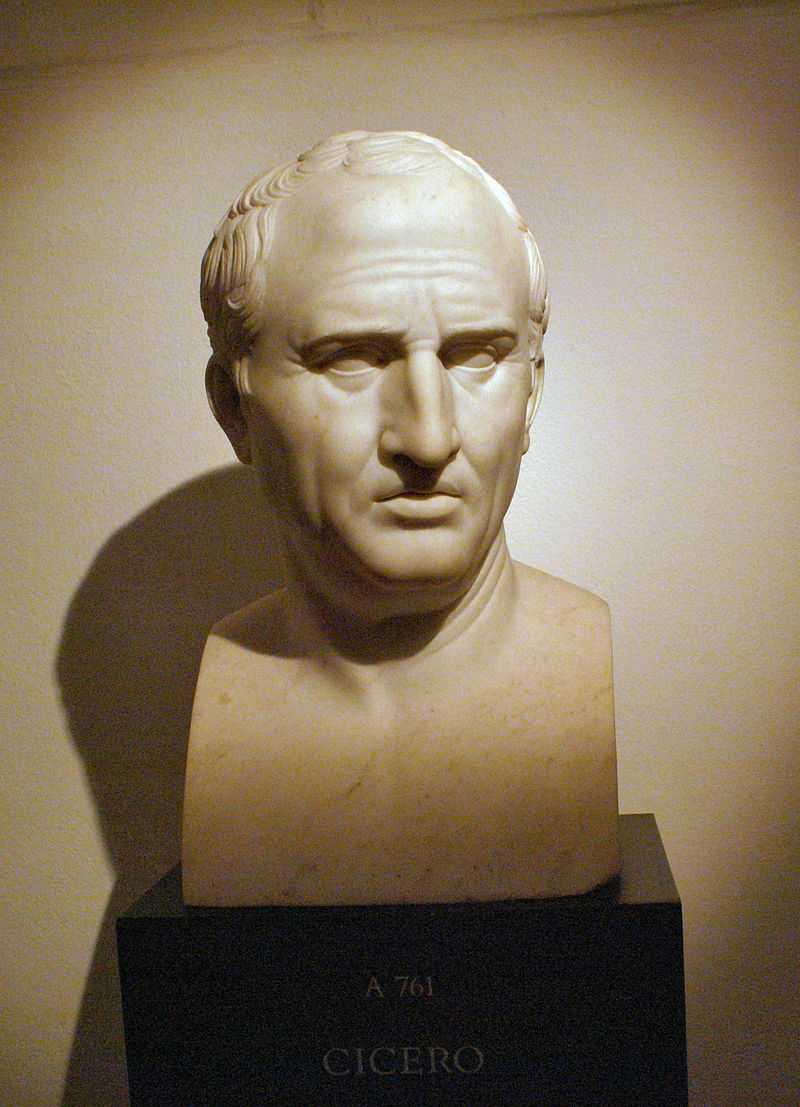
“For this reason we must examine whether or not it is possible for the study of the philosophers to bring us [happiness].”
Quare hoc videndum est, possitne nobis hoc ratio philosophorum dare.
Aristotle, Eudemian Ethics, 2.1 (1219a25)
“Let the work of the mind be the performance of life—and what this means is using life and being awake (for sleep is some kind of a rest and cessation of life). As a result, since the work of the mind and its virtue are identical, then the work of virtue is an earnest life.
This, then, is the complete good, which is itself happiness. For it is clear from what we have argued—as we said that happiness was the best thing; the goals and the greatest of the goods are in the mind, but aspects of the mind are either a state of being or an action—it is clear that, since an action is better than a state and the best action is better than the best state, that the performance of virtue is the greatest good of the mind. Happiness, then, is the action of a good mind.”
ψυχή: can be translated into English as “spirit” or “soul” instead of “mind”. I avoided the former to sidestep the implication that Aristotle is making some kind of a mystical argument; I avoided the latter because it has such strong religious associations in English.
Seneca De Beneficiis 22
“A just reason for happiness is seeing that a friend is happy—even better, is to make a friend happy.”
iusta enim causa laetitiae est laetum amicum videre, iustior fecisse
Cicero, Paradoxa Stoicorum: paradox 2: That having virtue is enough for being happy
“No one can be really happy if they rely wholly on themselves and value everything with themselves alone. But those whose reasoning and hope depend entirely on fortune cannot have anything certain—nothing possessed can be expected to last for more than a solitary day.
Threaten that kind of person, should you find one, with these threats of death and exile. In truth, whatever will happen in so thankless a state will happen whether I am protesting or resisting or not. What have I labored over or what have I done or what of my worries and thoughts passing throughout the night, If I have actually accomplished or pursued nothing to put me in a state that rashness of fate or injuries to my friends cannot weaken? Do you threaten death so that I will completely withdraw from humankind or exile so I may abandon the wicked? Death is terrible to those who lose everything along with life but not for those whose praise can never die. Exile is dreadful to those whose home is a mere boundary line but not to those who think that the whole world is one city.”
Nemo potest non beatissimus esse qui est totus aptus ex sese quique in se uno sua ponit omnia; cui spes omnis et ratio et cogitatio pendet ex fortuna, huic nihil potest esse certi, nihil quod exploratum habeat permansurum sibi unum diem. Eum tu hominem terreto, si quem eris nactus, istis mortis aut exilii minis; mihi vero quidquid acciderit in tam ingrata civitate ne recusanti quidem evenerit, non modo non repugnanti, Quid enim ego laboravi aut quid egi aut in quo evigilaverunt curae et cogitationes meae, si quidem nihil peperi tale nihil consecutus sum ut in eo statu essem quem neque fortunae temeritas neque inimicorum labefactaret iniuria? Mortemne mihi minitaris ut omnino ab hominibus, an exilium ut ab improbis demigrandum sit? Mors terribilis est eis quorum cum vita omnia exstinguuntur, non eis quorum laus emori non potest, exilium autem illis quibus quasi circumscriptus est habitandi locus, non eis qui omnem orbem terrarum unam urbem esse ducunt.
“Against those in power, no one has enough defense
If a wicked adviser also enters the scene
His power and malice ruins their opposition.
An eagle carried a tortoise on high,
When he pulled his body in his armored home to hide,
And rested hidden untouched by any attack,
A crow came on a breeze flying near them:
“You have well seized a precious prize with your talons,
But, if I don’t show what you need to do,
It will pointlessly wear you out with its heavy weight.”
Promised a portion, the crow instructs the eagle to drop
The hard shell from the stars upon a cliff’s rock.
It would be easy to feed on the broken flesh!
The eagle followed up these wicked instructions
And also split the feast with her teacher.
Just so, the tortoise who was safe by nature’s gift.
Was ill-matched to those two and died a sad death.”
Contra potentes nemo est munitus satis;
si vero accessit consiliator maleficus,
vis et nequitia quicquid oppugnant, ruit.
Aquila in sublime sustulit testudinem:
quae cum abdidisset cornea corpus domo,
nec ullo pacto laedi posset condita,
venit per auras cornix, et propter volans
“Opimam sane praedam rapuisti unguibus;
sed, nisi monstraro quid sit faciendum tibi,
gravi nequiquam te lassabit pondere.”
promissa parte suadet ut scopulum super
altis ab astris duram inlidat corticem,
qua comminuta facile vescatur cibo.
inducta vafris aquila monitis paruit,
simul et magistrae large divisit dapem.
sic tuta quae naturae fuerat munere,
impar duabus, occidit tristi nece.
“Citizens, it is always right to hate and hinder traitors and corrupt people, but at this current moment, this would be necessary help to all humankind. For a terrible and harsh sickness has come over our country, one which needs great luck and your constant attention.”
“I said, well, these minor crimes are small in comparison to serious ones but all of these are not one step in the direction—as the proverb goes—to the evil and suffering a tyrant introduces. For whenever there are many people like this and others who follow them and they sense how large their followers are, then these are the people who produce a tyrant with the ignorance of the people, a man who has the biggest and most tyrant-like nature in his soul.”
“A politician’s speech should not be childish and dramatic, as if he were playing out some skit in public and weaving together a garland of sensitive and florid words. But, in turn, it should also not smell like midnight oil and academic excess, as Pytheas characterized Demosthenes’ speech, made up with sharp points and phrases marked out with a ruler and a compass.
Instead, such as musicians think that the touch on the strings should demonstrate emotion and not just technique, so too the speech of a politician, a councilperson, or a leader should not exhibit cleverness or the ability to do anything and should not be marked out for its fluency, artistry, or arrangement, but instead it should indicate a direct character, true intelligence, a paternal directness, forethought, and real concern for other people. In addition to nobility of spirit, a leader’s speech should have the charm that comes from appropriate language and decent and persuasive thoughts.”
When they had begun to punish lowly and base born people with this penalty, they finally stopped and ostracized Hyperbolus last. It is said that Hyperbolus was ostracized for this reason: Alcibiades and Nicias, then at the height of their power in the city, were at odds with each other. When the people were about to conduct the ostracism, and it was clear that it would vote to banish either Alcibiades or Nicias, they reached an understanding with each other and, mustering each of their factions to the same purpose, effected the ostracism of Hyperbolus. The people, upset by this outcome as an insult to the practice, abandoned it and got rid of it entirely.
“They deny that Diodorus, the Epicurean philosopher who in the last few days ended his life with his own hand was acting according to the law of Epicurus when he cut his own throat. Some want his deed to be seen as insanity; others consider it impulsive.
But at the time he was happy and filled with good cheer and made his own testimony as he left life. He praised the hears he spent in port and at anchor and pronounced those words which you would have heard unwillingly as if you must do the same thing: “I have lived and I have completed the journey life gave to me.”
Diodorum, Epicureum philosophum, qui intra paucos dies finem vitae suae manu sua imposuit, negant ex decreto Epicuri fecisse, quod sibi gulam praesecuit. Alii dementiam videri volunt factum hoc eius, alii temeritatem; ille interim beatus ac plenus bona conscientia reddidit sibi testimonium vita excedens laudavitque aetatis in portu et ad ancoram actae quietem et dixit, quod vos inviti audistis, quasi vobis quoque faciendum sit:
“But they say that Chrysippus claims that the decision for leaving should be based not on how many good things or bad things there are in life but whether the things in between the extremes are natural—this is why it happens sometimes that happy people commit suicide and the unlucky decide to remain alive.”
If you or someone you know feel alone, uncertain, depressed or for any reason cannot find enough joy and hope to think life is worth it, please reach out to someone. The suicide prevention hotline has a website, a phone number (1-800-273-8255), and a chat line. And if we can help you find some tether to the continuity of human experience through the Classics or a word, please don’t hesitate to ask.
Johnson’s penchant for the Classics and his ability to recite Greek are often mentioned either to illustrate that he might actually be intelligent or to furnish some additional evidence for his winsome quirkiness. This quotation of Simonides is not only not impressive but it is entirely predictable and tiresome.
Sure, memorizing stuff isn’t easy, but it doesn’t mean you understand it or are noble at all. It means you come from a place of privilege where you were given the time and instruction to memorize it.
There’s a lot more to Simonides’ poetry than the muscular epigram in praise of Sparta little BoJo managed to keep in his head when he was failing to learn empathy and how to tell the truth. Memorizing a key bit about Thermopylae just shows you drank int he canon at Boarding school deep and full and you have been trading on shared delirium in your charlatan’s career.
Here are some of our favorites:
Fr. 14
“Weakness is the mortal’s lot,
nor yet does grief avail –
in such truncated time there’s naught
but toil heaped on travail.”
“Human strength is meager
Our plains incomplete
Toil follows toil in our short lives.
Death looms inescapable for all—
Men who are good and bad draw
of that an equal portion.”
“Since you are human, never say what will come tomorrow.
Nor, if you see a fortunate man, how long it will last.
For not even the time of a tender-winged fly
Is not as fast.”
As Sarah Bond makes clear, there is more behind the choice of this Simonides: it is about claiming the ever so muscular Spartan mystique. This is all nonsense of course.
“But I now, since I ruined our people because of my own recklessness,
I am ashamed to face the Trojans and Trojan-women with their trailing robes,
That some other person who is worse than me will say
Hektor ruined the people because he believed too much in his own strength.”
“The insult “people-devouring king” is aimed especially at moving the people and provoking Agamemnon to Anger. Just as the term “gift-devourer” emphasizes the evil of taking bribes, just so here the term dêmoboros highlights the injustice which is more subtly announced in the phrase “deprive one of gifts”. Note as well that Agamemnon is maligned not just for drinking [being “wine-heavy”] but also for eating.”
“For the allies of the Trojans eat the public goods of the people and the leaders of the Argives drink the public goods. It has already been shown that, when a division of spoils was made, some portion was granted from the common shares to the king and for the symposia of the best men—the misuse of this makes the king a “people-eater”—by which this means a “consumer of the people’s things. For to claim that dêmoboros is the same as cannibalism [anthropo-phagy], that he eats the people, is both bitter to the thought and harmful to the sense. For it is clear that this is not what is being criticized, because it is not the people [demos] rather than the things of the people, the public goods, as is clear from other compounds like demiopratôn, which Kômikos brings up, or also from the Homeric dêmioergôn.”
“Kyrnus, revere and fear the gods. For this restrains a man
From doing or saying anything sinful.
Put a people-eating tyrant to rest however you want—
No criticism will come from the gods for that.”
“Oath runs immediately from crooked judgments.
And a roar rises from wounded Justice where men strike, Bribe-eating men who apply the law with crooked judgments.
“Guard against these things, kings, and straighten your stories, Bribe-eaters, forget about your crooked rulings completely.
Who fashions evil for another man brings it on himself.
The vilest end comes for the man who has made evil plans.”
“He says this educationally, answering to the kings who should make a great effort to make people prosperous even though some of them take bribes. Not only this, he says clearly that if the kingly right is bestowed by the gods to do good, then it is right that kingly men be givers of wealth, and to expunge wrong doing, including a desire for money, for which they should be leaders for others according to the will of the gods.”
Petrarch, de sua ipsius multorumque ignorantia (III):
So things go: my studies, labors, and late nights have come to this point, that I who as a young man was accustomed to be called learned by some people, shall be found by deeper judgment to be an idiot as an old man. Perhaps I should grieve about it – but I must bear it. Perhaps I shouldn’t grieve about it, but I nevertheless must bear it, as one must bear everything which happens in human life: loss, poverty, labor, sorrow, tedium, death, exile, disgrace. Which, if it be false, is to be condemned: for it will find people to contradict it, and will fail as it goes. If however the disgrace is true, it should not be refused, as are other punishments invented for human faults. Indeed, I for my part will laugh if the true ornament of knowledge is taken away from me with words. But if the glory is false, I will not only bear the loss, but rejoice in it, being freed from my baggage and the laborious preservation of undeserved fame. It is better with the robber, when he puts off his unjust spoils, than when he enjoys his theft unpunished. One who deprives others of unjust possession can be more unjust, even if the repossession itself is just. As I said, for what bears on me, I approve not only the just sentence but also the unjust one, nor do I refuse any judge or thief.
Fame is a laborious and difficult thing, especially in literature. Everyone is vigilant and armed against it. Even those who are unable to hope for it themselves strive to take it away from others who possess it. One must ever have a pen in one’s hands. One must ever stand with an intent mind and erect ears. Whoever liberates me from this cares and this office with any proposition will earn my gratitude as my champion. Gratefully do I set aside the title of man of letters, whether it be true or false (certainly it was laborious and full of anxiety), because I remember the words of Seneca: this praise is garnered from a great expense of time and the horrible vexation of others’ ears: ‘O, man of letters!’ I should instead be content with this slightly more rustic title: ‘O, good man!’
Sic res eunt: huc et studia, et labores nostri, nostreque vigilie pervenere, ut qui iuvenis doctus a quibusdam dici soleo, profundiore iudicio senex ydiota reperiar. Dolendum forsitan, sed ferendum; forsitan nec dolendum, ferendum sane, ut reliqua omnia que hominibus accidunt: damnum, pauperies, labor, dolor, tedium, mors, exilium, infamia. Que si falsa est, spernenda est; nam et contradictores inveniet, et eundo deficiet; si vera autem, recusanda non est, ut nec alia culpis hominum inventa supplitia. Equidem, si scientie verum decus michi verbis eripitur, ridebo. At si falsum, non feram modo, sed gaudebo, non meis sarcinis excussus et indebite fame laboriosa custodia liberatus. Melius cum predone agitur, dum iniustis spoliis exuitur, quam dum impune furto utitur. Iniusti possessoris exclusor iniustius esse potest, at exclusio utique iusta est. Quod ad me attinet, ut dixi, non iustam modo sententiam, sed iniustam probo, nec iudicem quemlibet nec raptorem renuo. Operosa ac difficilis res est fama, et precipue literarum. Omnes in eam vigiles atque armati sunt; etiam qui sperare illam nequeunt habentibus nituntur eripere; habendus calamus semper in manibus; intento animo erectisque auribus semper in acie standum est. Quisquis quocunque proposito me his curis atque hoc fasce liberaverit, assertori meo gratiam habeo, et seu falsum seu verum, certe laboriosum ac solicitum literati nomen, quietis atque otii avidus, libens pono, memorans illud Annei: magno impendio temporum, magna alienarum aurium molestia laudatio hec constat. O hominem literatum! simus hoc titulo rusticiore contenti: o virum bonum!