The Cause of All Great Wars

To follow up yesterday’s post about Helen’s Consent

Athenaios, Deipnosophists, 13, 10, 560b

“[It is clear] that the greatest wars also happened because of women. The Trojan War happened because of Helen; the Plague because of Chryseis; Achilles’ rage because of Briseis; and the War called the Sacred War, as Duris claims in the second book of his histories, by another married woman from Thebes who was kidnapped by some Phocian. This war also lasted ten years and in the tenth when Philip allied himself with the Thebes it ended. Then the Thebans took and held Phokis.”

… ὅτι καὶ οἱ μέγιστοι πόλεμοι διὰ γυναῖκας ἐγένοντο· ὁ ᾽Ιλιακὸς δι᾽ ῾Ελένην, ὁ λοιμὸς διὰ Χρυσηίδα, ᾽Αχιλλέως μῆνις διὰ Βρισηίδα· καὶ ὁ ἱερὸς δὲ καλούμενος πόλεμος δι᾽ ἑτέραν γαμετήν, φησὶν Δοῦρις ἐν δευτέραι ῾Ιστοριῶν, Θηβαίαν γένος, ὄνομα Θεανώ, ἁρπασθεῖσαν ὑπὸ Φωκέως τινός. δεκαετὴς δὲ καὶ οὗτος γενόμενος τῶι δεκάτωι ἔτει Φιλίππου συμμαχήσαντος πέρας ἐσχεν· τότε γὰρ εἷλον οἱ Θηβαῖοι τὴν Φωκίδα.

Herodotus, 1.2-4

“This is how the Persians say that Io came to Egypt—and not the story the Greeks tell—and this was the first transgression. After that, they claim some Greeks—and they can’t name them—went to Tyre and kidnapped Europê, the daughter of the king. These men would have been Cretans. At this point, the score was even. But then the Greeks were at fault for a second crime. For the Greeks sailed in a great ship to Aia, the Kolkhian, city and to the river Phasis.

Once they finished why they went there, they left, but they also kidnapped Medea, the king’s daughter. When the king sent a herald to Greece demanding recompense for the abduction and asking for his daughter to be returned, the Greeks answered that they would give nothing to the Kolhkians since they had not received anything for the abduction of Io.

In the next generation after that, they say that Priam’s son Alexandros, once he heard about these things, wanted to steal a wife for himself from Greece because he was absolutely certain he would face no penalties since the earlier men hadn’t. When he kidnapped Helen as he did, it seemed right at first for the Greeks to send messengers to demand her return and recompense for the abduction. When the Greeks made these demands, the Trojans brought up the abduction of Medeia and the fact that the Greeks were demanding from others the very things they themselves were not willing to give or repay.

Up to that point of time, the whole matter was only kidnapping on either side. But the Greeks were more to blame after this since they were the first to lead an army to Asia before anyone led one against Europe. As the Persians claim, they believe it is the work of unjust men to kidnap women, but the act of fools to rush off to avenge women who have been abducted. Wise men have no time for raped women, since it is clear they they would not have been abducted if they had not been willing themselves.

They claim that the men of Asia make no big deal when women are abducted while the Greeks, all because of one Lakedaimonian woman, raised a great army, went to Asia, and destroyed Priam’s power. Since that time, they consider Greece their enemy.”

οὕτω μὲν Ἰοῦν ἐς Αἴγυπτον ἀπικέσθαι λέγουσι Πέρσαι, οὐκ ὡς Ἕλληνές, καὶ τῶν ἀδικημάτων πρῶτον τοῦτο ἄρξαι. μετὰ δὲ ταῦτα Ἑλλήνων τινάς οὐ γὰρ ἔχουσι τοὔνομα ἀπηγήσασθαι φασὶ τῆς Φοινίκης ἐς Τύρονπροσσχόντας ἁρπάσαι τοῦ βασιλέος τὴν θυγατέρα Εὐρώπην. εἴησαν δ᾽ ἄνοὗτοι Κρῆτες. ταῦτα μὲν δὴ ἴσα πρὸς ἴσα σφι γενέσθαι, μετὰ δὲ ταῦτα Ἕλληνας αἰτίους τῆς δευτέρης ἀδικίης γενέσθαι: [2] καταπλώσαντας γὰρμακρῇ νηί ἐς Αἶαν τε τὴν Κολχίδα καὶ ἐπὶ Φᾶσιν ποταμόν, ἐνθεῦτεν, διαπρηξαμένους καὶ τἄλλα τῶν εἵνεκεν ἀπίκατο, ἁρπάσαι τοῦ βασιλέος τὴν θυγατέρα Μηδείην. [3] πέμψαντά δὲ τὸν Κόλχων βασιλέα ἐς τὴν Ἑλλάδα κήρυκα αἰτέειν τε δίκας τῆς ἁρπαγῆς καὶ ἀπαιτέειν τὴν θυγατέρα.τοὺς δὲ ὑποκρίνασθαι ὡς οὐδὲ ἐκεῖνοι Ἰοῦς τῆς Ἀργείης ἔδοσάν σφι δίκαςτῆς ἁρπαγῆς: οὐδὲ ὤν αὐτοὶ δώσειν ἐκείνοισι.

δευτέρῃ δὲ λέγουσι γενεῇ μετὰ ταῦτα Ἀλέξανδρον τὸν Πριάμου, ἀκηκοόταταῦτα, ἐθελῆσαί οἱ ἐκ τῆς Ἑλλάδος δι᾽ ἁρπαγῆς γενέσθαι γυναῖκα, ἐπιστάμενον πάντως ὅτι οὐ δώσει δίκας. οὐδὲ γὰρ ἐκείνους διδόναι. [2]οὕτω δὴ ἁρπάσαντος αὐτοῦ Ἑλένην, τοῖσι Ἕλλησι δόξαι πρῶτὸνπέμψαντας ἀγγέλους ἀπαιτέειν τε Ἑλένην καὶ δίκας τῆς ἁρπαγῆς αἰτέειν. τοὺς δέ, προϊσχομένων ταῦτα, προφέρειν σφι Μηδείης τὴν ἁρπαγήν, ὡς οὐδόντες αὐτοὶ δίκας οὐδὲ ἐκδόντες ἀπαιτεόντων βουλοίατό σφι παρ᾽ ἄλλωνδίκας γίνεσθαι.

μέχρι μὲν ὤν τούτου ἁρπαγάς μούνας εἶναι παρ᾽ ἀλλήλων, τὸ δὲ ἀπὸτούτου Ἕλληνας δὴ μεγάλως αἰτίους γενέσθαι: προτέρους γὰρ ἄρξαι στρατεύεσθαι ἐς τὴν Ἀσίην ἢ σφέας ἐς τὴν Εὐρώπην. [2] τὸ μέν νυνἁρπάζειν γυναῖκας ἀνδρῶν ἀδίκων νομίζειν ἔργον εἶναι, τὸ δὲἁρπασθεισέων σπουδήν ποιήσασθαι τιμωρέειν ἀνοήτων, τὸ δὲ μηδεμίανὤρην ἔχειν ἁρπασθεισέων σωφρόνων: δῆλα γὰρ δὴ ὅτι, εἰ μὴ αὐταὶἐβούλοντο, οὐκ ἂν ἡρπάζοντο. [3] σφέας μὲν δὴ τοὺς ἐκ τῆς Ἀσίης λέγουσιΠέρσαι ἁρπαζομενέων τῶν γυναικῶν λόγον οὐδένα ποιήσασθαι, Ἕλληναςδὲ Λακεδαιμονίης εἵνεκεν γυναικὸς στόλον μέγαν συναγεῖραι καὶ ἔπειταἐλθόντας ἐς τὴν Ἀσίην τὴν Πριάμου δύναμιν κατελεῖν. [4] ἀπὸ τούτου αἰεὶἡγήσασθαι τὸ Ἑλληνικὸν σφίσι εἶναι πολέμιον.

Note: much of the language in this passage referring to abduction and kidnapping could also be translated as rape. I left the language more anodyne to reflect what seems to be Herodotus’ own dismissal or ignorance of the women’s experience.

File:Helen of Sparta boards a ship for Troy fresco from the House of the Tragic Poet in Pompeii.jpg
Helen boards a boat: House of the Tragic Poet, Pompei

Keeping Annals and Founding Rome

Servius Danielis, Aeneid, 1, 373

“The Annals were gathered in this way: the pontifex had a whitened tablet for each year on which he kept written the names of the consul and the rest of the magistrates and below which he typically kept notes of anything worthy of remembering which happened at home or abroad and at sea or on land on a daily basis. Ancient authorities edited the annual records kept with this care and they named them after the pontifices who assembled them, the Annales Maximi.”

ita autem annales conficiebantur: tabulam dealbatam quotannis pontifex maximus habuit, in qua praescriptis consulum nominibus et aliorum magistratuum digna memoratu notare consueverat domi militiaeque terra marique gesta per singulos dies. cuius diligentiae annuos commentarios in octoginta libros veteres rettulerunt eosque a pontificibus maximis, a quibus fiebant, Annales Maximos appellarunt.

Festus, Sextus Pompeius, On the Meaning of Words, p. 266 M. (= p. 326, 35 L.)

“Alcimus says that Romulus was the son born to Tyrrhenia and Aeneas and that Alba was Aeneas’ granddaughter from her, whose son, named Rhodius, founded the city of Rome.”

Alcimus ait, Tyrrhenia Aeneae natum filium Romulum fuisse, atque eo ortam Albam Aeneae neptem, cuius filius nomine Rhodius condiderit urbem Romam.

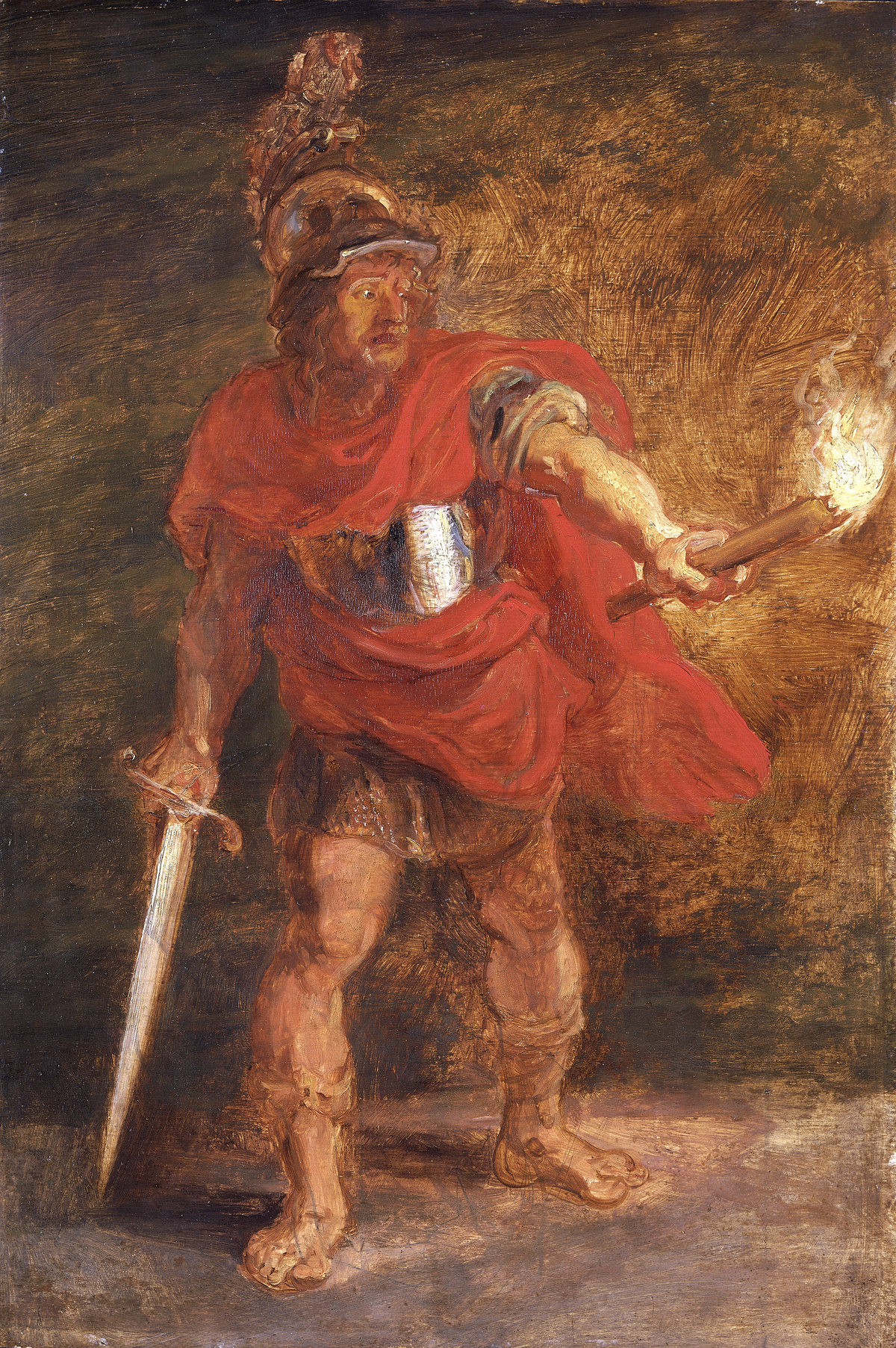
Peter Paul Rubens - Aeneas in the Underworld.jpg
Peter Paul Reubens “Aeneas in the Underworld”

Politian on Polishing Tully’s Turds

Politian, Letter to Paolo Cortesi

I am sending back the letters collected by your diligence, in reading which (if I may speak freely) I am ashamed to have wasted some good hours. For, excepting just a few of them, they are hardly worth being said to have been read by a learned person or collected by you. I won’t explain which I approve and which I find fault with. I do not wish for anyone to be satisfied with himself or displeased with himself in these because of me. Yet, there is something in the style in which I must dissent from you. For, you are not (as far as I can tell) accustomed to approve of anyone unless they copy out Cicero’s path. But to me, the face of the bull or the lion seems far nobler than that of the ape, which is yet closer to that of the human. Nor, as Seneca has suggested, are those who are thought to have held the chief place of eloquence similar to each other. Quintilian mocks those who think that they are the brothers of Cicero because they close every period with these words: esse videatur. Horace inveighs against imitators who do nothing but imitate. In my opinion, those who only compose from imitation seem similar to parrots or magpies, which repeat things which they do not understand. The things which those authors write lack strength and vitality; they lack action, emotion, talent; their writings lie down, sleep, and snore. Nothing in them is true, solid, or effective. Someone tells me, You don’t express Cicero. So what? I’m not Cicero. Nevertheless, as I think, I express myself.

El Humanista Angelo Poliziano (1454-1494) - Literatura

Remitto epistolas diligentia tua collectas, in quibus legendis, ut libere dicam, pudet bonas horas male collocasse. Nam praeter omnino paucas, minime dignae sunt quae vel a docto aliquo lectae vel a te collectae dicantur. Quas probem, quas rursus improbem, non explico. Nolo sibi quisquam vel placeat in his, auctore me, vel displiceat. Est in quo tamen a te dissentiam de stylo nonnihil. Non enim probare soles, ut accepi, nisi qui lineamenta Ciceronis effingat. Mihi vero longe honestior tauri facies aut item leonis quam simiae videtur, quae tamen homini similior est. Nec ii, qui principatum tenuisse creduntur eloquentiae, similes inter se, quod Seneca prodidit. Ridentur a Quintiliano qui se germanos Ciceronis putabant esse, quod his verbis periodum clauderent: esse videatur. Inclamat Horatius imitatores, ac nihil aliud quam imitatores. Mihi certe quicumque tantum componunt ex imitatione, similes esse vel psittaco vel picae videntur, proferentibus quae nec intelligunt. Carent enim quae scribunt isti viribus et vita; carent actu, carent affectu, carent indole, iacent, dormiunt, stertunt. Nihil ibi verum, nihil solidum, nihil efficax. Non exprimis, inquit aliquis, Ciceronem. Quid tum? non enim sum Cicero; me tamen, ut opinor, exprimo.

Children, Education, and Open Doors: More Greek Proverbs

Go here for more information about Ancient Greek collections of proverbs.

Arsenius 15.19a

“Milk nourishes infants and conscious children, milk fattens like wisdom”

Γάλα τρέφει νήπια, παῖδα δ’ ἔμφρονα, γάλα πιαίνει σωφροσύνη καθάπερ.

[I want the last phrase to go the other way, e.g. “wisdom fattens like milk” but I can’t justify it completely]

12.42a

“Whatever love you bear for your parents expect the same kind in old age from your children”

Οἵους ἂν ἐράνους ἐνέγκῃς τοῖς γονεῦσι, τούτους αὐτοὺς ἐν τῷ γήρᾳ παρὰ τῶν παίδων προσδέχου Πιττακοῦ.

Zenobius 1.89

“The doors of the muses are open”: a proverb applied to those readily acquiring the best things in their education.”

᾿Ανεῳγμέναι Μουσῶν θύραι: ἐπὶ τῶν ἐξ ἑτοίμου λαμβανόντων τὰ κάλλιστα τῶν ἐν παιδείᾳ.

3.30

“Teaching dolphins to swim: [this proverb] is applied to those who are teaching something among people who are already well versed in it.”

Δελφῖνα νήχεσθαι διδάσκεις: ἐπὶ τῶν ἐν ἐκείνοις τινὰ παιδοτριβούντων, ἐν οἷς ἤσκηται.

Michael Apostolios 6.27

“Old men are children twice: A proverb used for those who seem rather simple as they approach old age.”

Δὶς παῖδες οἱ γέροντες: ἐπὶ τῶν πρὸς τὸ γῆρας εὐηθεστέρων εἶναι δοκούντων.

Diogenianus 3.18

“Neither swimming nor letters: thus proverb is applied to those who are unlearned in all regards. For the Athenians were taught swimming and reading from childhood.”

Μήτε νεῖν μήτε γράμματα: ἡ παροιμία ἐπὶ τῶν τὰ πάντα ἀμαθῶν· οἱ γὰρ ᾿Αθηναῖοι εὐθὺς ἐκ παίδων κολυμβᾶν καὶ γράμματα ἐδιδάσκοντο.

Image result for medieval manuscript children
Ms. Ludwig IX 2, fol. 142

Helen’s Consent: A Scholion on the Difference between the Iliad and the Odyssey

Homer, Iliad 2.350–356

“I say that the over-powering son of Kronos assented
On that day when the Argives took to the fast-faring ships
Bringing murder and death to the Trojans,
Showing clear and favorable signs by flashing lightning.
So let no one be compelled to return home,
Before each one has taken a Trojan wife to bed
As payback for the struggles and moans of Helen”

φημὶ γὰρ οὖν κατανεῦσαι ὑπερμενέα Κρονίωνα
ἤματι τῷ ὅτε νηυσὶν ἐν ὠκυπόροισιν ἔβαινον
᾿Αργεῖοι Τρώεσσι φόνον καὶ κῆρα φέροντες
ἀστράπτων ἐπιδέξι’ ἐναίσιμα σήματα φαίνων.
τὼ μή τις πρὶν ἐπειγέσθω οἶκον δὲ νέεσθαι
πρίν τινα πὰρ Τρώων ἀλόχῳ κατακοιμηθῆναι,
τίσασθαι δ’ ῾Ελένης ὁρμήματά τε στοναχάς τε.

Schol. A ad Hom. Il. 2.356ex

[To pay back the struggles and moans of Helen]: “The separatists say that the poet of the Iliad presents Helen as enduring it badly and groaning because of the trauma of rape by Alexander while the poet of the Odyssey presents her as willing.

This is because they do not understand that the account is not from her perspective, but that we need to understand that it is from outside her perspective, that she is the object. So, there is the interpretation that it is is necessary to take vengeance in exchange for how we have groaned and suffered about Helen.”

τίσασθαι δ’ ῾Ελένης <ὁρμήματά τε στοναχάς τε>: πρὸς τοὺς Χωρίζοντας· ἔφασαν (fr. 1 K.) γὰρ τὸν μὲν τῆς ᾿Ιλιάδος ποιητὴν δυσανασχετοῦσαν συνιστάνειν καὶ στένουσαν διὰ τὸ βίᾳ  ἀπῆχθαι ὑπὸ τοῦ ᾿Αλεξάνδρου, τὸν δὲ τῆς ᾿Οδυσσείας ἑκοῦσαν, οὐ νοοῦντες ὅτι οὐκ ἔστιν ἐπ’ αὐτῆς ὁ λόγος, ἀλλ’ ἔξωθεν πρόθεσιν τὴν περί δεῖ λαβεῖν, ἵν’ ᾖ περὶ ῾Ελένης. καὶ ἔστιν ὁ λόγος, τιμωρίαν λαβεῖν ἀνθ’ ὧν ἐστενάξαμεν καὶ ἐμεριμνήσαμεν περὶ ῾Ελένης· παραλειπτικὸς γὰρ προθέσεών ἐστιν ὁ ποιητής.

The debate here, then, seems to be whether Helen is the actor behind the ὁρμήματά τε στοναχάς τε or the reason the ὁρμήματά τε στοναχάς τε are experienced by others. What I find more interesting in this passage is the assertion that ancient scholars split the authorship of the epics based on whether Helen seems a willing participant or not. Also not to be overlooked here: Nestor is rallying the troops by telling them they won’t go home until each of them “lies alongside” (κατακοιμηθῆναι) a wife of a Trojan.

(Most of our information about the separatists comes from scholia attributed to Aristarchus. There are eleven direct mentions of the scholiasts in Erbse’s edition.)

File:Helen of Sparta boards a ship for Troy fresco from the House of the Tragic Poet in Pompeii.jpg
Fresco from Pompeii, Helen Boards the Ship to Troy

Unicorns: Where they Come From, What They’re Good For

Aelian, On The Nature of Animals 3.41

“India gives birth to single-horned horses, people say, and the same land feeds single-horned asses too. They get drinking cups from these horns. And if anyone puts fatal poison inside of them, when someone drinks from them, the conspiracy won’t hurt him at all. It seems that the horn of both the horse and the ass is a ward against evil.”

Ἵππους μονόκερως γῆ Ἰνδικὴ τίκτει, φασί, καὶ ὄνους μονόκερως ἡ αὐτὴ τρέφει, καὶ γίνεταί γε ἐκ τῶν κεράτων τῶνδε ἐκπώματα. καὶ εἴ τις ἐς αὐτὰ ἐμβάλοι φάρμακον θανατηφόρον, ὁ πιών, οὐδὲν ἡ ἐπιβουλὴ λυπήσει αὐτόν· ἔοικε γὰρ ἀμυντήριον τοῦ κακοῦ τὸ κέρας καὶ τοῦ ἵππου καὶ τοῦ ὄνου εἶναι.

Bodleian Library, MS. Douce 132, Folio 70r

Cock and Bull Etymology

Isidore of Seville, Etymologies 12.7:

The cock [gallus] is named after castration; for among other birds, it alone has its testicles removed, and the ancients used to call eunuchs cocks [galli]. Just as lioness is derived from lion, serpetness from serpent, so too is hen (gallina) derived from cock (gallus). Certain people say that if its limbs are mixed with molten gold, they are consumed entirely.

Fighting roosters on a Roman mosaic

Gallus a castratione vocatus; inter ceteras enim aves huic solo testiculi adimuntur. Veteres enim abscisos gallos vocabant. Sicut autem a leone leaena et a dracone dracaena, ita a gallo gallina. Cuius membra, ut ferunt quidam, si auro liquescenti misceantur, consumi.

The Gift of the Briefest of Lives

Aelian, On the Nature of Animals 2.4

“Some animals are called Ephemera and they take their name from the length of their life. For they are born in wine and when the container is opened they fly out, they see the light, and they die. Therefore, nature has granted that they come into life but it has also rescued them from the evils in life, since they neither experience any suffering of their own and they know nothing of others’ misfortunes.”

Ζῷα ἐφήμερα οὕτω κέκληται, λαβόντα τὸ ὄνομα ἐκ τοῦ μέτρου τοῦ κατὰ τὸν βίον· τίκτεται γὰρ5ἐν τῷ οἴνῳ, καὶ ἀνοιχθέντος τοῦ σκεύους τὰ δὲ ἐξέπτη καὶ εἶδε τὸ φῶς καὶ τέθνηκεν. οὐκοῦν παρελθεῖν μὲν αὐτοῖς ἐς τὸν βίον ἔδωκεν ἡ φύσις, τῶν δὲ ἐν αὐτῷ κακῶν ἐρρύσατο τὴν ταχίστην, μήτε τι τῶν ἰδίων συμφορῶν ᾐσθημένοις μήτε μήν τινος τῶν ἀλλοτρίων μάρτυσι γεγενημένοις.

Cricket in a cage

Oxen, Horses, and Priam Are Not Happy

Aristotle, Nicomachean Ethics 1100a

“We would not rightly say that an ox or a horse or any other animal is happy. For it is not possible for any of these to have a common share of ennobling work. This is the reason a child is not happy—they are not yet capable of ennobling actions because of their age. When children are called this, they are being blessed because of their hope for future nobility. There is a need yet, as we said, for complete excellence and a full lifetime.

There are certainly many changes and fortunes of every sort throughout life. It is possible for someone who is extremely fortunate to meet great troubles in old age, just as the story is told about Priam in the heroic epics. No one considers someone who faces these kinds of misfortunes and then dies terribly happy.

But if we then believe that no human being should be considered happy while they live, according to that Solonic saying, “look to the end”—if indeed it must mean this—is it really the case that a person is happy when they’re dead? Well, that would be really strange, right, for us to say others size that this is a kind of obvious happiness? Unless we mean that that dead person is happy, not in the way that Solon wants, but that someone can only say that someone is happy safely when he is out of the way of evils and misfortune.

Even this interpretation has some controversy. For then evil and good seem to be possible for the dead, even as it is for the living even when they do not perceive it, as in the case of honors, and dishonors or the noble or ignoble deeds of children and all of their descendants.

These things are a problem too. For it is possible that someone has lived a rather blessed life up to old age and died in the same way, he could still experience many troubles because of his descendants—some of whom are good and received a life worthy of this, and others who were opposite. It is clear that it is possible for them to be different in every way from their forebears. It would be strange if the dead man would change along with them and become wretched when he was blessed before. But it would also be strange if the affairs of descendants had no impact on their ancestors at all.”

ἰκότως οὖν οὔτε βοῦν οὔτε ἵππον οὔτε ἄλλο τῶν ζῴων οὐδὲν εὔδαιμον λέγομεν· οὐδὲν γὰρ αὐτῶν οἷόν τε κοινωνῆσαι νωνῆσαι τοιαύτης ἐνεργείας. διὰ ταύτην δὲ τὴν αἰτίαν οὐδὲ παῖς εὐδαίμων ἐστίν· οὔπω γὰρ πρακτικὸς τῶν τοιούτων διὰ τὴν ἡλικίαν· οἱ δὲ λεγόμενοι διὰ τὴν ἐλπίδα μακαρίζονται. δεῖ γάρ, ὥσπερ εἴπομεν, καὶ ἀρετῆς τελείας καὶ βίου τελείου. πολλαὶ γὰρ μεταβολαὶ γίνονται καὶ παντοῖαι τύχαι κατὰ τὸν βίον, καὶ ἐνδέχεται τὸν μάλιστ᾿ εὐθενοῦντα μεγάλαις συμφοραῖς περιπεσεῖν ἐπὶ γήρως, καθάπερ ἐν τοῖς ἡρωϊκοῖς περὶ Πριάμου μυθεύεται· τὸν δὲ τοιαύταις χρησάμενον τύχαις καὶ τελευτήσαντα ἀθλίως οὐδεὶς εὐδαιμονίζει.

Πότερον οὖν οὐδ᾿ ἄλλον οὐδένα ἀνθρώπων εὐδαιμονιστέον ἕως ἂν ζῇ, κατὰ Σόλωνα δὲ χρεὼν “τέλος ὁρᾶν”; εἰ δὲ δὴ καὶ θετέον οὕτως, ἆρά γε καὶ ἔστιν εὐδαίμων τότε ἐπειδὰν ἀποθάνῃ; ἢ τοῦτό γε παντελῶς ἄτοπον, ἄλλως τε καὶ τοῖς λέγουσιν ἡμῖν ἐνέργειάν τινα τὴν εὐδαιμονίαν; εἰ δὲ μὴ λέγομεν τὸν τεθνεῶτα εὐδαίμονα, μηδὲ Σόλων τοῦτο βούλεται, ἀλλ᾿ ὅτι τηνικαῦτα ἄν τις ἀσφαλῶς μακαρίσειεν ἄνθρωπον ὡς ἐκτὸς ἤδη τῶν κακῶν ὄντα καὶ τῶν δυστυχημάτων, ἔχει μὲν καὶ τοῦτ᾿ ἀμφισβήτησίν τινα· δοκεῖ γὰρ εἶναί τι τῷ τεθνεῶτι καὶ κακὸν καὶ ἀγαθόν, εἴπερ καὶ τῷ ζῶντι <μὲν> μὴ αἰσθανομένῳ δέ, οἷον τιμαὶ καὶ ἀτιμίαι καὶ τέκνων καὶ ὅλως ἀπογόνων εὐπραξίαι τε καὶ δυστυχίαι. ἀπορίαν δὲ καὶ ταῦτα παρέχει· τῷ γὰρ μακαρίως βεβιωκότι μέχρι γήρως καὶ τελευτήσαντι κατὰ λόγον ἐνδέχεται πολλὰς μεταβολὰς συμβαίνειν περὶ τοὺς ἐκγόνους, καὶ τοὺς μὲν αὐτῶν ἀγαθοὺς εἶναι καὶ τυχεῖν βίου τοῦ κατ᾿ ἀξίαν, τοὺς δ᾿ ἐξ ἐναντίας· δῆλον δ᾿ ὅτι καὶ τοῖς ἀποστήμασι πρὸς τοὺς γονεῖς παντοδαπῶς ἔχειν αὐτοὺς ἐνδέχεται. ἄτοπον δὴ γίνοιτ᾿ ἂν εἰ συμμεταβάλλοι καὶ ὁ τεθνεὼς καὶ γίνοιτο ὁτὲ μὲν εὐδαίμων πάλιν δ᾿ ἄθλιος· ἄτοπον δὲ καὶ τὸ μηδὲν μηδ᾿ ἐπί τινα χρόνον συνικνεῖσθαι τὰ τῶν ἐκγόνων τοῖς γονεῦσιν.

Don’t we look happy? From Bestiary.ca

Heraclitan Horror Show

“You cannot step into the same river twice.”

δὶς ἐς τὸν αὐτὸν ποταμὸν οὐκ ἂν ἐμβαίης.

Heraclitus

There is an old anecdote about John Dryden, illustrating both his bookish ways and his casual and malicious disregard for his wife:

Dryden himself told us that he was of a grave cast and did not much excel in sallies of humour. One of his bon mots, however, has been preserved. He does not seem to have lived on very amicable terms with his wife, Lady Elizabeth, whom, if we may believe the lampoons of the time, he was compelled by one of her brothers to marry. Thinking herself neglected by the bard, and that he spent too much time in his study, she one day exclaimed, ‘Lord, Mr. Dryden, how can you always be poring over those musty books? I wish I were a book, and then I should have more of your company.’ ‘Pray, my dear,’ replied old John, ‘if you do become a book let it be an almanack, for then I shall change you every year.’ [Oxford Book of Literary Anecdotes, p.49]

As I considered telling my students this anecdote, I realized that while the reference to Dryden was likely to be incomprehensible to them, the joke itself would fall flat because they likely do not know what an almanac is. (Lest this seem too much of a stretch for my readers who do not work with teenagers, many of these students cannot tell time on an analog clock, have no knowledge of Roman numerals, and get entirely stumped by lexical curiosities such as pejorative or gubernatorial.)

The almanac is today both charmingly obsolete and quaint to the point of absurdity. To be sure, I have seen The Old Farmer’s Almanac for sale in the check-out lane at the hardware store every year, but I could not imagine people purchasing them for serious consultation. Nevertheless, I find that a fair number of online reviews for the 2020 edition of The Old Farmer’s Almanac combine a curious enthusiasm for its outmoded practicality with a sentimental nostalgia about the publication’s venerable old age.

Obsolescence occurs in two ways. The first may be readily observed in the world of classical scholarship by the rapid obsolescence of traditional dictionaries. Though I wrote before of my own tendency to fetishize the dictionary as a physical object, I nevertheless rarely use a physical lexicon anymore because I find Logeion so powerful and effective. But electronic lexical resources have not made dictionaries themselves obsolete – merely their physical forms. An online dictionary may aggregate entries from various lexica, but the basic premise of recording the definitions and uses of individual words in one place, used as a reference, remains fundamentally the same.

A more profound form of obsolescence occurs when the world itself changes in such a way as to make something wholly irrelevant or useless. Phone books, and even publicly available phone directories, are no longer necessary in an age of cheap web hosting, constant internet access, and efficient search engines; moreover, the evanescence and rapid mutability of cell phone numbers would render such a directory entirely unmanageable. Indeed, one need not be surprised that the Terminator, in the 1984 film of that name, was unable to kill Sara Connor – it looked her up in a phone book. Did the AI which orchestrated human extinction really have no better way of seeking her out? At any rate, it is clear enough that our timeline diverged sharply from that imagined future, since we have been treated to an endless string of increasingly horrible sequels, revealing that Skynet’s plan was actually just to bore us to death.

Phonebook Terminator

Occasionally I hear authors and critics speculate (usually with some show of ambivalent feeling) about the end of literary fiction. Closer to home, I know that it is fashionable to speculate about the end of Classics. The sense, in both cases, is that neither of these disciplines is particularly suited to a rapidly changing world, in which the memeification of culture has rendered attention, critical thought, and even history itself apparently irrelevant. My own students have told me that they would much rather spend ten seconds fully absorbing a post on Instagram than reading a book, because it is so “short and to the point.” I suppose that one cannot blame them, considering that the orange, suppurating mass which currently fills out a suit and a chair in the White House has bragged about his entire estrangement from books, which he thinks could be much more readily digested as sound-bite summaries.

Tweets and Instagram posts may be “short and to the point,” but so are aphorisms and epigrams. Nevertheless, I don’t see that anyone is lining up to buy copies of Martial. The appeal of these social media is not their brevity, as is made clear by the fact that no one reads old posts with any enthusiasm or fervor. Rather, social media creates a kind of Heraclitean horror show – an ever fluid and dynamic present in which we cannot even step into the same river once. In truth, nothing good actually happens on the internet, but I like many people often find myself transfixed, refreshing for the latest updates, most of which I gloss over entirely. This frenzied update and consumption cycle not only produces the impression that events in our world are occurring more rapidly than they used to, but also causes them to occur at a more rapid rate. News does not become obsolete because a story has been fully investigated or dealt with. Rather, it becomes obsolete because the very act of engaging with the news on social media (especially if it is powerful people who are engaging with it) in itself triggers more news. Even apparently “timeless” content like photos of cute dogs or silly cats has an internet shelf life of a day at the most. All of those dog videos just washed along by the endless stream of other dog videos.

To return to the outmoded almanac. While it would be tempting to say that these manuals have undergone the first kind of obsolescence thanks to real-time weather updates accessible on the internet, it is unfortunately the case that they have fallen victim just as much to the second form of obsolescence, in which the rapidly changing patterns of our planet’s climate have rendered traditional wisdom and climactic prognostication largely futile. Much the same can be said of traditional punditry. In an age of chaos, it seems frightfully masturbatory and absurd to sit behind a glass desk and deliver Pythian proclamations about the political landscape of next year when the entire geopolitical landscape is drastically altered every few hours, usually in response to something posted on a certain someone’s social media feed.

An old friend of mine used to say that he considered all literature published before the 20th century irrelevant. As repugnant as I found the notion, I could see that he had some point. Virginia Woolf once observed that, ”on or about December 1910 human character changed,” and a facile reading of the classics (whether construed as the Greek and Roman canon or old books more generally) may suggest that they have little to offer to someone after trench warfare, the Holocaust, the nuclear arms race, or any of the other horrors of the 20th century. If some of the horrors of the 21st seem less blatantly aggressive and horrific than those of the 20th, it may be because our passive acceptance of and complicity in them renders them so much harder to confront honestly. Yet it is perhaps because of the new existential horror of these two centuries that our older literature will not be rendered obsolete. As a classic example, Jonathan Shay’s Achilles in Vietnam draws on Homer to make sense of PTSD. One of my professors once sold his Greek and Roman civilization courses by arguing that anyone who had read ancient history could open the newspaper any day and say, “I’ve seen this bullshit before.”

But the chief value of literature (old and new) is its ability to allow us to engage with what is human. Ostensibly, social media presents us with our most human selves, but really it just aggregates a pullulating mass of swollen id shouting into the vacuous ether of a present which has already been lost. In a curious way, constant engagement with the present is the firmest assurance that we will never experience the present at all. Rather, a meaningful engagement with all of human experience – including its past, even or especially when mediated through the artificiality of literature – is essential to making sense of an accelerating and vanishing present.

People used to change their almanacs out every year, and the malice of Dryden’s joke is his suggestion that he would do the same to a person. Yet this is, in effect, what we do both to our culture and the people with whom we interact. I have inadvertently jettisoned a number of friends from my life by first turning them into social media correspondents and then simply forgetting to put in the minimal and largely passive effort of “keeping in touch.” So, too, relating with people personally or “IRL” has in some sense degenerated to friends asking each other whether they had seen the latest thing online. From Descartes on, philosophers were terrified by the fact that we have no immediate access to reality; in the 21st century, we have responded to this terror by adding new layers of mediation to it, which may explain why it all feels so unreal.

This is not meant as a manifesto, or a rallying cry for Classics, or even for literature more generally. Despite the apparently strident and indignant tone of what may be observed above, this screed ends with something in the old confessional mode. I find myself every day drawn more and more by the Siren song of nostalgia. Indeed, I find the continued viability of a published Farmer’s Almanac not just charming, but somehow deeply comforting. Reading actual books feels better as media update faster; older films and even old television attract me far more as YouTube gets better at predicting what kinds of mindless and insipid trash might seize my attention for a few minutes; and as the very idea of civilization seems to be collapsing into the dark and abysmal nullity of hypercapitalist moral and intellectual corruption, it is nice to remember that human civilization was once a thing, and that for all of its problems it occasionally produced things which were poignant or profound or beautiful. By the time we feel it, our step into the river has already been taken, but we can pause for a moment and watch as the water rushes on.

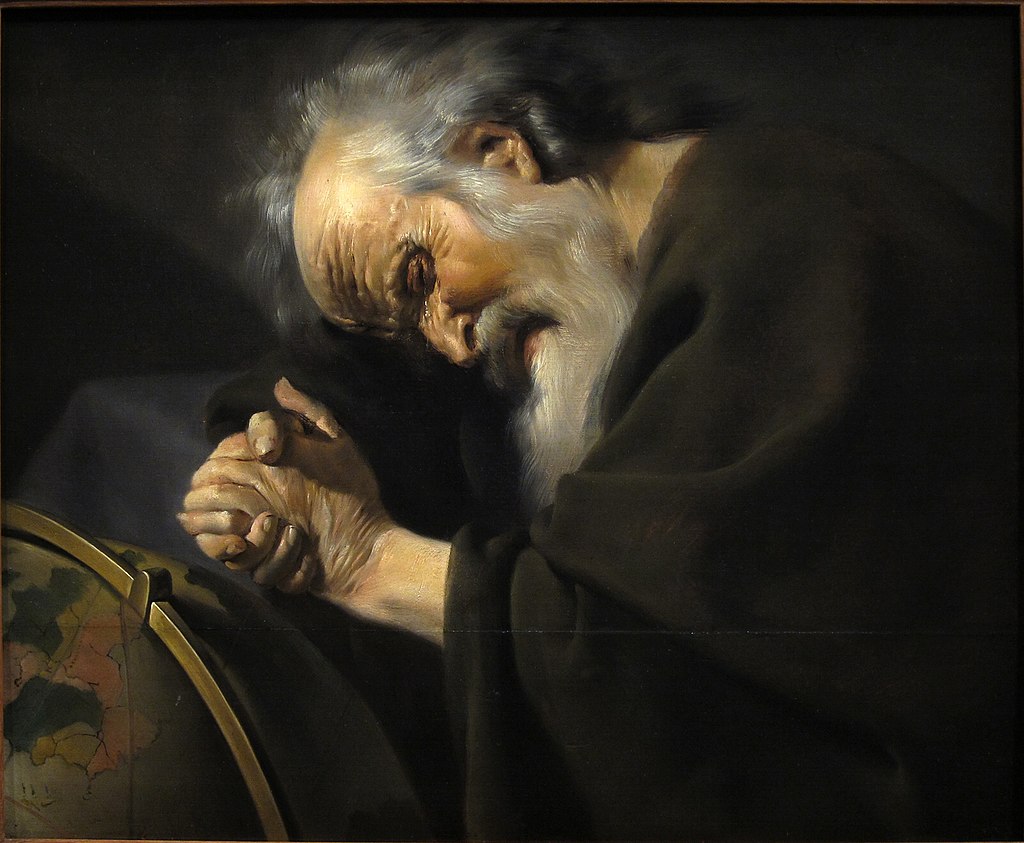
Johannes Paulus Moreelse, Heracltus