Ancient Vampires 2: What’s Really Scary is Misogyny

This is the second post about ancient Greek Vampires. The first looked at the Empousa. 

Lucian, Lover of Lies 2

“…these are various and disturbing tales, able to rattle the minds of children who still fear Mormo and Lamia.”

πάνυ ἀλλόκοτα καὶ τεράστια μυθίδια παίδων ψυχὰς κηλεῖν δυνάμενα ἔτι τὴν Μορμὼ καὶ τὴν Λάμιαν δεδιότων.

The Lamia (or, just Lamia to her friends) is one of the figures from Greek myth who seems like a frightening monster but really is a particular distillation of misogyny. She is often called a Greek ‘vampire’ along with Empousa. Unlike the latter, however, Lamia is specifically associated with killing children.

Diodorus Siculus, 20.40

“At the rock’s root there was a very large cave which was roofed with ivy and bryony in which the myths say the queen Lamia, exceptional for her beauty, was born. But, because of the beastliness of her soul, they say that her appearance has become more monstrous in the time since then.

For, when all her children who were born died, she was overwhelmed by her suffering and envied all the women who were luckier with their children. So she ordered that the infants be snatched from their arms and killed immediately. For this reason, even in our lifetime, the story of that women has lingered among children and the mention of her name is most horrifying to them.

But, whenever she was getting drunk, she would allow people to do whatever pleased them without observation. Because she was not closely watching everything at that time, the people in that land imagined that she could not see. This is why the myth developed that she put her eyes into a bottle, using this story a metaphor for the carelessness she enacted in wine, since that deprived her of sight.”

 περὶ δὲ τὴν ῥίζαν αὐτῆς ἄντρον ἦν εὐμέγεθες, κιττῷ καὶ σμίλακι συνηρεφές, ἐν ᾧ μυθεύουσι γεγονέναι βασίλισσαν Λάμιαν τῷ κάλλει διαφέρουσαν· διὰ δὲ τὴν τῆς ψυχῆς ἀγριότητα διατυπῶσαί φασι τὴν ὄψιν αὐτῆς τὸν μετὰ ταῦτα χρόνον θηριώδη. τῶν γὰρ γινομένων αὐτῇ παίδων ἁπάντων τελευτώντων βαρυθυμοῦσαν ἐπὶ τῷ πάθει καὶ φθονοῦσαν ταῖς τῶν ἄλλων γυναικῶν εὐτεκνίαις κελεύειν ἐκ τῶν ἀγκαλῶν ἐξαρπάζεσθαι τὰ βρέφη καὶ παραχρῆμα ἀποκτέννειν. διὸ καὶ καθ᾿ ἡμᾶς μέχρι τοῦ νῦν βίου παρὰ τοῖς νηπίοις διαμένειν τὴν περὶ τῆς γυναικὸς ταύτης φήμην καὶ φοβερωτάτην αὐτοῖς εἶναι τὴν ταύτης προσηγορίαν. ὅτε δὲ μεθύσκοιτο, τὴν ἄδειαν διδόναι πᾶσιν ἃ βούλοιντο ποιεῖν ἀπαρατηρήτως. μὴ πολυπραγμονούσης οὖν αὐτῆς κατ᾿ ἐκεῖνον τὸν χρόνον τὰ γινόμενα τοὺς κατὰ τὴν χώραν ὑπολαμβάνειν μὴ βλέπειν αὐτήν· καὶ διὰ τοῦτ᾿ ἐμυθολόγησάν τινες ὡς εἰς ἄρσιχον ἐμβάλοι τοὺς ὀφθαλμούς, τὴν ἐν οἴνῳ συντελουμένην ὀλιγωρίαν εἰς τὸ προειρημένον μέτρον μεταφέροντες, ὡς τούτου παρῃρημένου τὴν ὅρασιν.

Euripides, fr. 472m (=Diodorus Siculus 20.41.6)

“Who does not know my name, most hateful to men,
The Lamia, a Libyan by birth?”

τίς τοὐ<μὸν ὄ>νομα τοὐπονείδιστον βροτοῖς
οὐκ οἶδε Λαμίας τῆς Λιβυστικῆς γένος;

The story of why Lamia killed children gets a little more depressing in the Fragments of the Greek Historians

Duris, BNJ 76 F17 [= Photios s.v. Lamia]

“In the second book of his Libyan History, Duris reports that Lamia was a fine looking woman but after Zeus had sex with her, Hera killed the children she bore because she was envious. As a result she was disfigured by grief and would seize and kill the children of others.”

ταύτην ἐν τῆι Λιβύηι Δοῦρις ἐν δευτέρωι Λιβυκῶν ἱστορεῖ γυναῖκα καλὴν γενέσθαι, μιχθέντος δ᾽ αὐτῆι Διὸς ὑφ᾽ ῞Ηρας ζηλοτυπουμένην ἃ ἔτικτεν ἀπολλύναι· διόπερ ἀπὸ τῆς λύπης δύσμορφον γεγονέναι καὶ τὰ τῶν ἄλλων παιδία ἀναρπάζουσαν διαφθείρειν.

Elsewhere, the evidence of narratives about Lamia are rather limited. She becomes just another negative, female monster.

Suda, Lambda 85

“Lamia: a monster. The name comes from having a gaping throat, laimia and lamia. Aristophanes: “It has the smell of a seal, the unwashed balls of a Lamia.” For testicles are active—and he is making a fantasy image of Lamia’s balls, since she is female.”

Λάμια: θηρίον. ἀπὸ τοῦ ἔχειν μέγαν λαιμόν, λαίμια καὶ λάμια. ᾿Αριστοφάνης· φώκης δ’ εἶχεν ὀσμήν, λαμίας ὄρχεις ἀπολύτους. δραστικοὶ γὰρ οἱ ὄρχεις. εἰδωλοποιεῖ δέ τινας ὄρχεις λαμίας· θῆλυ γάρ.

Unlike Empousa and some others, Lamia is interestingly integrated in some other genealogical traditions.

Schol. G ad Ap. Rhodes 4.825-831

“Stesichorus says in his Skylla, regarding her form, that Skylla is the daughter of Lamia.”

Στησίχορος δὲ ἐν τῇ Σκύλλῃ †εἶδός τινος† Λαμίας τὴν Σκύλλαν φησὶ θυγατέρα εἶναι.

Pausanias on Phocis, 12

“There is a crag rising up over the ground on which the Delphians claim that a woman stood singing oracles, named Hêrophilê but known as Sibyl. There is the earlier Sibyl, the one I have found to be equally as old as the others, whom the Greeks claim is the daughter of Zeus and Lamia, the daughter of Poseidon. She was the first woman to sing oracles and they say that she was named Sibyl by the Libyans. Hêrophilê was younger than here, but she was obviously born before the Trojan War since she predicted Helen in her oracles, that was raised up in Sparta as the destruction for Asia and Europe and that Troy would be taken by the Greeks because of her.”

XII. Πέτρα δέ ἐστιν ἀνίσχουσα ὑπὲρ τῆς γῆς· ἐπὶ ταύτῃ Δελφοὶ στᾶσάν φασιν ᾆσαι τοὺς χρησμοὺς γυναῖκα ὄνομα Ἡροφίλην, Σίβυλλαν δὲ ἐπίκλησιν. τὴν δὲ πρότερον γενομένην, ταύτην ταῖς μάλιστα ὁμοίως οὖσαν ἀρχαίαν εὕρισκον, ἣν θυγατέρα Ἕλληνες Διὸς καὶ Λαμίας τῆς Ποσειδῶνός φασιν εἶναι, καὶ χρησμούς τε αὐτὴν γυναικῶν πρώτην ᾆσαι καὶ ὑπὸ τῶν Λιβύων Σίβυλλαν λέγουσιν ὀνομασθῆναι. ἡ δὲ Ἡροφίλη νεωτέρα μὲν ἐκείνης, φαίνεται δὲ ὅμως πρὸ τοῦ πολέμου γεγονυῖα καὶ αὕτη τοῦ Τρωικοῦ, καὶ Ἑλένην τε προεδήλωσεν ἐν τοῖς χρησμοῖς, ὡς ἐπ᾿ ὀλέθρῳ τῆς Ἀσίας καὶ Εὐρώπης τραφήσοιτο ἐν Σπάρτῃ, καὶ ὡς Ἴλιον ἁλώσεται δι᾿ αὐτὴν ὑπὸ Ἑλλήνων.

Dionysus of Halicarnassus, On Thucydides 6

“Foremost he differed from previous authors in this, by which I mean how he took on a subject that was not a single thread nor one divided in many different and also disconnected parts. And then, because did not include mythical material in his work and he did not use his writing for the deception and bewitchment of many, as every author before him did when they told the stories of certain Lamiai rising up from the earth in groves and glens and of amphibious Naiads rushing out of Tartaros, half-beasts swimming through the seas and then joining together in groups among humans, and producing offspring of mortals and gods, demigods—and other stories which seem extremely unbelievable and untrustworthy to us now.”

πρῶτον μὲν δὴ κατὰ τοῦτο διήλλαξε τῶν πρὸ αὐτοῦ συγγραφέων, λέγω δὲ κατὰ τὸ λαβεῖν ὑπόθεσιν μήτε μονόκωλον παντάπασι μήτ᾿ εἰς πολλὰ μεμερισμένην καὶ ἀσυνάρτητα κεφάλαια· ἔπειτα κατὰ τὸ μηδὲν αὐτῇ μυθῶδες προσάψαι, μηδ᾿ εἰς ἀπάτην καὶ γοητείαν τῶν πολλῶν ἐκτρέψαι τὴν γραφήν, ὡς οἱ πρὸ αὐτοῦ πάντες ἐποίησαν, Λαμίας τινὰς ἱστοροῦντες ἐν ὕλαις καὶ νάπαις ἐκ γῆς ἀνιεμένας, καὶ Ναΐδας ἀμφιβίους ἐκ Ταρτάρων ἐξιούσας καὶ διὰ πελάγους νηχομένας καὶ μιξόθηρας, καὶ ταύτας εἰς ὁμιλίαν ἀνθρώποις συνερχομένας, καὶ ἐκ θνητῶν καὶ θείων συνουσιῶν γονὰς ἡμιθέους, καὶ ἄλλας τινὰς ἀπίστους τῷ καθ᾿ ἡμᾶς βίῳ καὶ πολὺ τὸ ἀνόητον ἔχειν δοκούσας ἱστορίας.

There is another variant name–she might get her own entry some day

Suda, s.v.Μορμώ 

Mormô, in the genitive Mormous, declined like Sappho. There is also the form Mormôn, genitive Mormonos. Aristophanes says “I ask you, take this Mormo away from me”. This meant to dispel frightening things. For Mormo is frightening. And again in Aristophanes: “A Mormo for courage”. There is also a mormalukeion which they also call a Lamia. They were also saying frightening things like this.”

Μορμώ: λέγεται καὶ Μορμώ, Μορμοῦς, ὡς Σαπφώ. καὶ Μορμών, Μορμόνος. Ἀριστοφάνης: ἀντιβολῶ σ’, ἀπένεγκέ μου τὴν Μορμόνα. ἄπο τὰ φοβερά: φοβερὰ γὰρ ὑπῆρχεν ἡ Μορμώ. καὶ αὖθις Ἀριστοφάνης: Μορμὼ τοῦ θράσους. μορμολύκειον, ἣν λέγουσι Λαμίαν: ἔλεγον δὲ οὕτω καὶ τὰ φοβερά.

 In some traditions, Lamia became proverbial

Plutarch, De Curiositate [On Being a Busybod y] 516a

“Now, just as in the myth they say that Lamia sleeps at home, putting her eyes set aside in some jar, but when she goes out she puts them back in and peers around, in the same way each of us puts his curiosity, as if fitting in an eye, into meanness towards others. But we often stumble over our own mistakes and faults because of ignorance, since we fail to secure sight or light for them.

For this reason, a busybody is rather useful to his enemies, since he rebukes and emphasizes their faults and shows them what they should guard and correct, even as he overlooks most of his own issues thanks to his obsession with everyone else. This is why Odysseus did not stop to speak with his mother before he inquired from the seer about those things for which he had come to Hades. Once he had made his inquiry, he turned to his own mother and also the other women, asking who Tyro was, who beautiful Khloris was, and why Epikaste had died.”

Lamia is not well-attested in art and myth

νῦν δ’ ὥσπερ ἐν τῷ μύθῳ τὴν Λάμιαν λέγουσιν οἴκοι μὲν εὕδειν τυφλήν, ἐν ἀγγείῳ τινὶ τοὺς ὀφθαλμοὺς ἔχουσαν ἀποκειμένους, | ἔξω δὲ προϊοῦσαν ἐντίθεσθαι καὶ βλέπειν, οὕτως ἡμῶν ἕκαστος ἔξω καὶ πρὸς ἑτέρους τῇ κακονοίᾳ τὴν περιεργίαν ὥσπερ ὀφθαλμὸν ἐντίθησι, τοῖς δ’ ἑαυτῶν ἁμαρτήμασι καὶ κακοῖς πολλάκις περιπταίομεν ὑπ’ ἀγνοίας, ὄψιν ἐπ’ αὐτὰ καὶ φῶς οὐ ποριζόμενοι. διὸ καὶ τοῖς ἐχθροῖς ὠφελιμώτερός ἐστιν ὁ πολυπραγμονῶν· τὰ γὰρ ἐκείνων ἐλέγχει καὶ προφέρεται καὶ δείκνυσιν αὐτοῖς ἃ δεῖ φυλάξασθαι καὶ διορθῶσαι, τῶν δ’ οἴκοι τὰ πλεῖστα παρορᾷ διὰ τὴν περὶ τὰ ἔξω πτόησιν. ὁ μὲν γὰρ ᾿Οδυσσεὺς (λ 84 sqq.) οὐδὲ τῇ μητρὶ διαλεχθῆναι πρότε- ρον ὑπέμεινεν ἢ πυθέσθαι παρὰ τοῦ μάντεως, ὧν ἕνεκ’ ἦλθεν εἰς ῞Αιδου, πυθόμενος δὲ οὕτω πρός τε ταύτην ἔτρεψεν αὑτόν, καὶ τὰς ἄλλας γυναῖκας ἀνέκρινε, τίς ἡ Τυρὼ καὶ τίς ἡ καλὴ Χλωρὶς καὶ διὰ τί ἡ ᾿Επικάστη ἀπέθανεν…

Image result for Ancient Greek Lamia vase
Skylla, relative of Lamia. More Misogyny.

Some other misogynistic tales from myth with telling variants

The Lemnian Women and their Terrible Smell

The Privileging of Klytemnestra’s Infamy

The Terrible Tale of Asclepius’ Two Mothers

Pretty Much Everything about Medea

Kassandra’s Prophecy and Life

Kassandra’s Children

The Death of Hecuba

Helen and Iphigenia

Don’t Eat Brains: Zombie-Tydeus for Werewolf Week

In the spirit of the week before Halloween, below are the major accounts of Diomedes’ father, Tydeus, who was rejected by Athena after eating brains. 

Hom. Il. 5.801

“Tydeus was a little man, but a fighter.”

Τυδεύς τοι μικρὸς μὲν ἔην δέμας, ἀλλὰ μαχητής·

Schol. AbT ad Il. 5.126

“They say that when Tydeus was wounded by Melanippos Astakos’ son, he got pretty upset. And Amphiarus, after he killed Melanippus, gave his head to Tydeus. Like a beast, Tydeus ripped it open and slurped up his brains to his fill. Athena happened to be there at that time, bringing some immortal medicine to him from heaven, and she turned back out of disgust. When he saw her, he asked that she favor his son with the divine favor. That’s Pherecydes’ story.”

Τυδέα τρωθέντα ὑπὸ Μελανίππου τοῦ ᾿Αστακοῦ σφόδρα ἀγανακτῆσαι. ᾿Αμφιάρεων δὲ κτείναντα τὸν Μελάνιππον δοῦναι τὴν κεφαλὴν Τυδεῖ. τὸν δὲ δίκην θηρὸς ἀναπτύξαντα ῥοφᾶν τὸν ἐγκέφαλον ἀπὸ θυμοῦ. κατ’ ἐκεῖνο δὲ καιροῦ παρεῖναι ᾿Αθηνᾶν ἀθανασίαν αὐτῷ φέρουσαν ἐξ οὐρανοῦ καὶ διὰ τὸ μύσος ἀπεστράφθαι. τὸν δὲ θεασάμενον παρακαλέσαι κἂν τῷ παιδὶ αὐτοῦ χαρίσασθαι τὴν ἀθανασίαν. ἱστορεῖ Φερεκύδης (FGrHist 3, 97). A b (BC) T

Schol. in Pind. Nem. 11.43b

“That Melanippos was Theban and stood in battle against Tydeus. It seems that Tydeus took his head in rage, smashed it, and gulped up his brains. For this reason, Athena turned back even though she was bringing him a revitalizing drug.”

(FHG I O M, I 117 J). ὁ δὲ Μελάνιππος οὗτος Θηβαῖος ἦν ἐπὶ τοῦ πολέμου συστὰς τῷ Τυδεῖ. τούτου δοκεῖ διὰ τὴν ὀργὴν λαβὼν ὁ Τυδεὺς τὴν κεφαλὴν καὶ ῥήξας ἐκροφῆσαι τὸν ἐγκέφαλον· διὸ καὶ ἀπεστράφη ἡ ᾿Αθηνᾶ τότε κομίζουσα αὐτῷ
τὴν ἀθανασίαν…

Schol. in Theoc. Proleg. 15-18b

“From man-eating Tydeus: For that Tydeus ate Melannipus’ brains down to the marrow.”

Τυδέως τοῦ ἀνδροβρῶτος—ἔφαγε γὰρ οὗτος ὁ Τυδεὺς τὴν κεφαλὴν τοῦ Μελανίππου καταρροφήσας τὸν ἐν αὐτῇ μυελόν.

Schol ad. Lyk. 1066 1-7

“Of the head-munching Tydeus: the story goes that during the Theban war, Tydeus ate up Melanippus’ head. Thus, Tydeus is called “head-muncher” and his child is Diomedes.”

τοῦ κρατοβρῶτος
τοῦ Τυδέως, ἐπειδὴ ἐν τῷ
Θηβαϊκῷ πολέμῳ λέγεται ὁ
Τυδεὺς τὴν κεφαλὴν τοῦ Μελα-
νίππου κατεδηδοκέναι. κρα-
τοβρῶτος οὖν ὁ Τυδεύς,
παῖς δὲ αὐτοῦ ὁ Διομήδης.

Kallierges (Etym. Magn.)

“Tydeus, from tuthon (“a little”); for he was small for his age group.”

Τυδεύς: Παρὰ τὸ τυτθόν· μικρὸς γὰρ ἦν τῇ ἡλικίᾳ.

Note the variations in the narrative Apollodorus introduces by bringing all the details together: Amphiarus becomes the villain here!

Apollodorus, 3.76-77

“Melanippus, the last of Astacus’ children, wounded Tydeus in the stomach. While he was lying there half-dead, Athena brought him medicine she had begged from Zeus in order to make him immortal. But when Amphiarus perceived this, because he hated Tydeus for persuading the Argives to march against Thebes against his own judgment, he cut off Melanippus’ head and gave it to him (Tydeus killed him when he was wounded). He drew out the brains and gobbled them up. When Athena saw him, she was disturbed, and withheld and kept the medicine.”

Μελάνιππος δὲ ὁ λοιπὸς τῶν ᾿Αστακοῦ παίδων εἰς τὴν γαστέρα Τυδέα τιτρώσκει.
ἡμιθνῆτος δὲ αὐτοῦ κειμένου παρὰ Διὸς αἰτησαμένη ᾿Αθηνᾶ φάρμακον ἤνεγκε, δι’ οὗ ποιεῖν ἔμελλεν ἀθάνατον αὐτόν. ᾿Αμφιάραος δὲ αἰσθόμενος τοῦτο, μισῶνΤυδέα ὅτι παρὰ τὴν ἐκείνου γνώμην εἰς Θήβας ἔπεισε τοὺς ᾿Αργείους στρατεύεσθαι, τὴν Μελανίππου κεφαλὴν ἀποτεμὼν ἔδωκεν αὐτῷ (τιτρωσκόμενος δὲ Τυδεὺς ἔκτεινεν αὐτόν). ὁ δὲ διελὼν τὸν ἐγκέφαλον ἐξερρόφησεν. ὡς δὲ εἶδεν ᾿Αθηνᾶ, μυσαχθεῖσα τὴν εὐεργεσίαν ἐπέσχε τε καὶ ἐφθόνησεν.

temple-relief-from-pyrgi-b

Sextus Empiricus, Pyrrhoniae Hypotyposes 3.208

“We consider eating human flesh to be wrong; but it is a matter of ambivalence among the barbarians. But why should we even speak of ‘barbarians’ when Tydeus is said to have eaten an enemy’s brains and when the Stoics claim it is not strange for someone to eat another’s flesh or his own?”

ἀγαθῷ τινι τούτῳ χρῆσθαι τῷ κακῷ πυνθανόμεθα. ἀλλὰ καὶ τὸ ἀνθρωπείων γεύεσθαι σαρκῶν παρ’ ἡμῖν μὲν ἄθεσμον, παρ’ ὅλοις δὲ βαρβάροις ἔθνεσιν ἀδιάφορόν ἐστιν.

καὶ τί δεῖ τοὺς βαρβάρους λέγειν, ὅπου καὶ ὁ Τυδεὺς τὸν ἐγκέφαλον τοῦ πολεμίου λέγεται φαγεῖν, καὶ οἱ ἀπὸ τῆς Στοᾶς οὐκ ἄτοπον εἶναί φασι τὸ σάρκας τινὰ ἐσθίειν ἄλλων τε ἀνθρώπων καὶ ἑαυτοῦ;

Homer Mocks His Age

Henry Fielding, Tom Jones (8.1):

“First, then, I think it may very reasonably be required of every writer, that he keeps within the bounds of possibility; and still remembers that what it is not possible for man to perform, it is scarce possible for man to believe he did perform. This conviction perhaps gave birth to many stories of the antient heathen deities (for most of them are of poetical original). The poet, being desirous to indulge a wanton and extravagant imagination, took refuge in that power, of the extent of which his readers were no judges, or rather which they imagined to be infinite, and consequently they could not be shocked at any prodigies related of it. This hath been strongly urged in defence of Homer’s miracles; and it is perhaps a defence; not, as Mr Pope would have it, because Ulysses told a set of foolish lies to the Phaeacians, who were a very dull nation; but because the poet himself wrote to heathens, to whom poetical fables were articles of faith.

For my own part, I must confess, so compassionate is my temper, I wish Polypheme had confined himself to his milk diet, and preserved his eye; nor could Ulysses be much more concerned than myself, when his companions were turned into swine by Circe, who showed, I think, afterwards, too much regard for man’s flesh to be supposed capable of converting it into bacon. I wish, likewise, with all my heart, that Homer could have known the rule prescribed by Horace, to introduce supernatural agents as seldom as possible. We should not then have seen his gods coming on trivial errands, and often behaving themselves so as not only to forfeit all title to respect, but to become the objects of scorn and derision. A conduct which must have shocked the credulity of a pious and sagacious heathen; and which could never have been defended, unless by agreeing with a supposition to which I have been sometimes almost inclined, that this most glorious poet, as he certainly was, had an intent to burlesque the superstitious faith of his own age and country.”

Memes, 🤖, and Simpson: Oh, no? Well. If Homer Simpson
 wants his
 10-year-old on working in a burlesque
 house
 then Homer
 S 10-y
 son
 Simpson's year-old work in a
 burlesque house
 is going to

Bad Manners, Worse Quotations: Some More Fake Socrates

In this week’s Globe Magazine piece “Why Kids Today are So Rude…” by Nicole Graev Lipson, we find a pretty piquant line uncritically attributed to Socrates.socrates (2)

Surprise! This does not actually come from ancient Greece.

The earliest attestation of this quotation I could find with a google search appears in The Massachusetts Teacher, volume 3 (1923), but quote investigator traces this back to 1907.

Luxury 1923

After this, it begins to appear widely in educational writing after the 1950s. The phrase certainly has words that occur in English translations of Plato with some frequency (“tyrant, Luxury” etc.). But essential ideas of disrespect in the passage such as crossing legs or not rising to greet  parents are wholly modern.

I searched a bit through Plato and there is a chance that something like this is somewhere, but for now this seems to be total nonsense. Bartleby got to that point, but buried the lede.

luxury 2

It is disappointing that there was no fact-checking on this one. The Boston area just might host the greatest density of Classicists in the United States. How hard would it be to reach out to someone about Classical quotations?


h/t to the peerless .@professormortis for pointing this out

Ancient Greek Vampires 1: Empousa

The classic Transylvanian-style vampire—male, nocturnal, fanged—is really a product of folklore and gothic horror after the middle ages (with garlic, mirrors, crosses and stakes coming at various times from various places). But human blood-eating creatures of pleasure were present in ancient folktales as well. They are not prominent, but the Lamia and the Empousa, both female creatures of death who live off the life-force of the young, are attested as early as the 5th century BCE. Our best references, however, come from later antiquity. For ease, I am just going to translate them both as ‘vampire’. (There will be a second post about Lamia.) Here are some facts about Empousa.

Vampires live in the East. They can be Frightened off with mockery.

Eusebius, Contra Hieroclem 382.11 4th Century CE 

“These things are from the first book. Let us move on to the material in the second. The story picks up and follows the journey from Persia to India—there, they experienced something surprising—he says that [Apollodorus] saw something paranormal, what he calls a vampire [empousa], on the road and that they drove it away with mockery

Καὶ ταῦτα μὲν ἀπὸ τοῦ πρώτου συγγράμματος, ἐπίωμεν δὲ καὶ τὰ ἐκ τοῦ δευτέρου. τὴν ἀπὸ Περσίδος ἐπ᾿ Ἰνδοὺς πορείαν ἄγει παραλαβὼν αὐτὸν ὁ λόγος. εἶτά τι πεπονθὼς ἀπειρόκαλον, ὥσπερ τι παράδοξον, δαιμόνιόν τι, ὃ καὶ ἔμπουσαν ὀνομάζει, κατὰ τὴν ὁδὸν ἰδόντα λοιδορίαις ἅμα τοῖς ἀμφ᾿ αὐτὸν ἀπελάσαι φησί,

Vampires are Shapeshifters

Philostratus, Apollonius of Tyana II, 4 2nd Century CE 

“After they went over the Caucasus they saw people who were four-lengths tall and who already dark-skinned. Once they crossed the river into India, they saw others who were five lengths tall. In the journey up to this river, I have picked out these things as worthy of investigation. For they were traveling in the clear moonlight when a phantom of a vampire [empousa] met them, changing into this scary thing and then another and then nothing! Apollonius understood what thing it was and mocked the vampire himself and ordered his companions—for this is the response to this kind of attack. The apparition went into flight like a ghost.”

Παραμείψαντες δὲ τὸν Καύκασον τετραπήχεις ἀνθρώπους ἰδεῖν φασιν, οὓς ἤδη μελαίνεσθαι, καὶ πεντεπήχεις δὲ ἑτέρους ὑπὲρ τὸν Ἰνδὸν ποταμὸν ἐλθόντες. ἐν δὲ τῇ μέχρι τοῦ ποταμοῦ τούτου ὁδοιπορίᾳ τάδε εὗρον ἀφηγήσεως ἄξια· ἐπορεύοντο μὲν γὰρ ἐν σελήνῃ λαμπρᾷ, φάσμα δὲ αὐτοῖς ἐμπούσης ἐνέπεσε τὸ δεῖνα γινομένη καὶ τὸ δεῖνα αὖ καὶ οὐδὲν εἶναι, ὁ δὲ Ἀπολλώνιος ξυνῆκεν, ὅ τι εἴη, καὶ αὐτός τε ἐλοιδορεῖτο τῇ ἐμπούσῃ, τοῖς τε ἀμφ᾿ αὑτὸν προσέταξε ταὐτὸ πράττειν, τουτὶ γὰρ ἄκος εἶναι τῆς προσβολῆς ταύτης· καὶ τὸ φάσμα φυγῇ ᾤχετο τετριγός ὥσπερ τὰ εἴδωλα.

Vampires like to eat the young (their blood is better)

4.5-6 “She said “be quiet and go away” and seemed to be disgusted at what she heard. And, I think, she was mocking philosophers for always talking nonsense. When, afterward, the golden bowls and what seemed to be silver was shown to be unreal—when everything flew from our eyes as the cup-bearers, the cooks, and every kind of servant disappeared as they were cross-examined by Apollonios—then the apparition seemed to be crying and was pleading that he not test her or compel her to agree what kind of thing she was. But when Apollonius laid on the pressure, she confessed that she was a vampire [empousa] who had been fattening Menippus with delights to eat on his body since she typically ate fine young bodies because their blood was more vital.

I have drawn out this tale, which happens to be the best known concerning Apollonius, out of necessity—most know that it occurred somewhere in the middle of Greece, but they have acquired only a summary account of how he once trapped a Lamia in Korinth. They don’t know what she was doing and that it was for Melanippus. The story is told by Damis and now by me from his records.”

Ἡ δὲ “εὐφήμει” ἔλεγε “καὶ ἄπαγε,” καὶ μυσάττεσθαι ἐδόκει, ἃ ἤκουε, καί που καὶ ἀπέσκωπτε τοὺς φιλοσόφους, ὡς ἀεὶ ληροῦντας. ἐπεὶ μέντοι τὰ ἐκπώματα τὰ χρυσᾶ καὶ ὁ δοκῶν ἄργυρος ἀνεμιαῖα ἠλέγχθη, καὶ διέπτη τῶν ὀφθαλμῶν ἅπαντα, οἰνοχόοι τε καὶ ὀψοποιοὶ καὶ ἡ τοιαύτη θεραπεία πᾶσα ἠφανίσθησαν, ἐλεγχόμενοι ὑπὸ τοῦ Ἀπολλωνίου, δακρύοντι ἐῴκει τὸ φάσμα καὶ ἐδεῖτο μὴ βασανίζειν αὐτό, μηδὲ ἀναγκάζειν ὁμολογεῖν, ὅ τι εἴη, ἐπικειμένου δὲ καὶ μὴ ἀνιέντος ἔμπουσά τε εἶναι ἔφη καὶ πιαίνειν ἡδοναῖς τὸν Μένιππον ἐς βρῶσιν τοῦ σώματος, τὰ γὰρ καλὰ τῶν σωμάτων καὶ νέα σιτεῖσθαι ἐνόμιζεν, ἐπειδὴ ἀκραιφνὲς αὐτοῖς τὸ αἷμα.

Τοῦτον τὸν λόγον γνωριμώτατον τῶν Ἀπολλωνίου τυγχάνοντα ἐξ ἀνάγκης ἐμήκυνα, γιγνώσκουσι μὲν γὰρ πλείους αὐτόν, ἅτε καθ᾿ Ἑλλάδα μέσην πραχθέντα, ξυλλήβδην δὲ αὐτὸν παρειλήφασιν, ὅτι ἕλοι ποτὲ ἐν Κορίνθῳ λάμιαν, ὅ τι μέντοι πράττουσαν καὶ ὅτι ὑπὲρ Μενίππου, οὔπω γιγνώσκουσιν, ἀλλὰ Δάμιδί τε καὶ ἐκ τῶν ἐκείνου λόγων ἐμοὶ εἴρηται.

Vampires like to have sex with mortals and then eat them

4.4 “What I was saying is that this woman is one of the vampires [empousai], whom most people think are the same as Lamiae or werewolves. Vampires feel desire, but they long for human sex and flesh most of all. They use sex to catch the ones they want to eat.”

ὃ λέγω, ἡ χρηστὴ νύμφη μία τῶν ἐμπουσῶν ἐστιν, ἃς λαμίας τε καὶ μορμολυκεῖα οἱ πολλοὶ ἡγοῦνται. ἐρῶσι δ᾿ αὗται καὶ ἀφροδισίων μέν, σαρκῶν δὲ μάλιστα ἀνθρωπείων ἐρῶσι καὶ παλεύουσι τοῖς ἀφροδισίοις, οὓς ἂν ἐθέλωσι δαίσασθαι.”

7.29 “King, would someone who is covetous enough of honor to appear to be a sorcerer seem to credit to a god what he had done himself? What awestruck audiences for his skill would there be if he were to hand the wonder to a god? What kind of a sorcerer would pray to Herakles? These wicked devils credit their kinds of acts to ditches and underworld gods from whom Herakles must be separated since he is cleansed and it good to people. I prayed to him at some point in the Peloponnese for there was some apparition of a vampire [lamia] there too eating the fine forms of young men….”

“Τίς ἂν οὖν σοι, βασιλεῦ, δοκεῖ φιλοτιμούμενος γόης φαίνεσθαι θεῷ ἀναθεῖναι, ὃ αὐτὸς εἴργαστο; τίνας δ᾿ ἂν κτήσασθαι θαυμαστὰς τῆς τέχνης θεῷ παρεὶς τὸ θαυμάζεσθαι; τίς δ᾿ ἂν Ἡρακλεῖ εὔξασθαι γόης ὤν; τὰ γὰρ τοιαῦτα οἱ κακοδαίμονες βόθροις ἀνατιθέασι καὶ χθονίοις θεοῖς, ὧν τὸν Ἡρακλέα ἀποτακτέον, καθαρὸς γὰρ καὶ τοῖς ἀνθρώποις εὔνους. ηὐξάμην αὐτῷ καὶ ἐν Πελοποννήσῳ ποτέ, λαμίας γάρ τι φάσμα κἀκεῖ περὶ τὴν Κόρινθον ἤλυε σιτούμενον τῶν νέων τοὺς καλούς…”


Suda, Epsilon 1049 [=Hesychius in the beginning]

Empousa: A devilish apparition sent by Hekate and appearing to the unlucky. It seems to take on many different forms. In the Frogs, Aristophanes [mentions this]. The name Empousa comes from that fact that it goes on one leg [hen podizein]—for people think that the other one is bronze. Or, because she used to appear [eph-aineto] to the those initiated in the mysteries [muomenois]. She was also named Oinopôlê. But some say that she changed her form [to get this name]. She seems to appear in the middle of the day as people offer sacrifices to those who have died. Others claim that she is Hekate. There is also the name Onokôle because she has a donkey leg which they refer to as bolitinon because that is donkey-manure. Bolitos is the specific name for donkey feces.

Ἔμπουσα: φάντασμα δαιμονιῶδες ὑπὸ τῆς Ἑκάτης ἐπιπεμπόμενον καὶ φαινόμενον τοῖς δυστυχοῦσιν. ὃ δοκεῖ πολλὰς μορφὰς ἀλλάσσειν. Ἀριστοφάνης Βατράχοις. Ἔμπουσα δὲ παρὰ τὸ ἑνὶ ποδίζειν, ἤγουν τοῦ τὸν ἕτερον πόδα χαλκοῦν ἔχειν. ἢ ὅτι ἀπὸ σκοτεινῶν τόπων ἐφαίνετο τοῖς μυουμένοις. ἐκαλεῖτο δὲ αὕτη καὶ Οἰνοπώλη. οἱ δέ, ὅτι ἐξηλλάττετο τὴν μορφήν. δοκεῖ δὲ καὶ ταῖς μεσημβρίαις φαντάζεσθαι, ὅταν τοῖς κατοιχομένοις ἐναγίζωσιν. ἔνιοι δὲ τὴν αὐτὴν τῇ Ἑκάτῃ. Ὀνοκώλη δέ, ὅτι ὄνου πόδα ἔχει: ὃ λέγουσι βολίτινον, τουτέστιν ὄνειον. βόλιτος γὰρ κυρίως τῶν ὄνων τὸ ἀποπάτημα.

Cf. Aristoph. Frogs 285-295; Assemblywomen 1056.

Beekes on the uncertain etymology of both Empousa and Lamia:

Empousa

Lamia is associated more frequently with attacking children. This, of course, merits a separate post.

Lamia

Image result for Ancient Greek Lamia
Lamia, carrying off infant

We get by with a little help from our friends

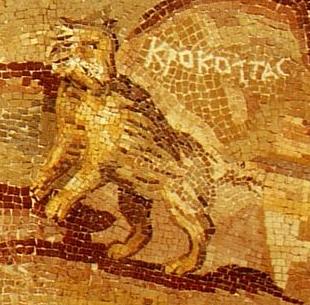
Krokotta: A Classics Beast Costume Inspiration

Paradoxographus Vaticanus 2

2 “Daliôn says in the first book of his Ethiopian Matters that there is an animal in Ethiopia called a krokotta. When that creature goes near backyards it hears people chattering, and especially the words/names of children. But when it goes out at night, it speaks words/names and the children who come out are devoured by it”

Δαλίων φησίν, ἐν τῇ πρώτῃ τῶν Αἰθιοπικῶν ἐν τῇ Αἰθιοπίᾳ θηρίον γίνεσθαι κροκότταν καλούμενον· τοῦτο ἐρχόμενον πρὸς τὰς ἐπαύλεις κατακούειν τῶν λαλουμένων, καὶ μάλιστα τὰ ὀνόματα τῶν παιδίων. νυκτὸς δὲ ἐρχόμενον λαλεῖ τὰ ὀνόματα καὶ ἐξερχόμενα τὰ παιδία καταβιβρώσκονται ὑπ’ αὐτοῦ.

Photios adds the following horror:

“[We should note the fact that] there is a creature in Ethiopia which is named krokottas which is like a combination of wolf and a dog, but it is more savage than both and is heavier in its face and at the end of its feet. It is also amazing for its boldness, and it is extremely capable compared to the rest in its teeth and its belly. For they also tear to pieces easily every type of bone and whatever they take up is consumed easily and their digestion is indescribable.

In addition, while some of them have been described as imitating human language, we don’t believe it. Nevertheless, some have added that they call out people by name at night—and that they try to use a human voice in doing this—and then they gobble up whoever comes out as they fall upon them.”

     ῞Οτι ὁ κατὰ τὴν Αἰθιοπίαν ὀνομαζόμενος κροκόττας ἐστὶ μὲν ὡς ἐκ λύκου καὶ κυνὸς σύνθετον, ἀμφοῖν δὲ ἀγριώτερον καὶ πολλῷ βαρύτερον ἀπό τε τοῦ προσώπου καὶ τῶν ἄκρων ποδῶν, ἀλκῇ δὲ θαυμαστόν, ὀδοῦσι δὲ καὶ κοιλίᾳ δυνατώτατον τῶν ἄλλων. Καὶ γὰρ κατάγνυσιν εὐπόρως πᾶν ὀστοῦ γένος, καὶ τὸ διαιρεθὲν εὐθέως δεδαπάνηται, καὶ περὶ τὰς πέψεις ἀδιήγητον. Τοῦτο δὲ καὶ μιμεῖσθαί τινες τὴν ἀνθρωπίνην διάλεκτον διηγούμενοι ἡμᾶς μὲν οὐ πείθουσιν· ἐκεῖνοι δὲ καὶ τοῦτο προστιθέασιν, ὡς καὶ ἐξ ὀνόματος κατὰ τὰς νύκτας καλοῦντες, τοὺς δὲ ὡς ἐπ’ ἀνθρώπου φωνῇ προσιόντας, οἱ δὲ ἀθρόον ἐπεισπίπτοντες κατεσθίουσιν.

The crocotta shows up elsewhere as well (Pliny, Aelian, etc).

Multitudinous History

Ralph Waldo Emerson, History:

“The identity of history is equally intrinsic, the diversity equally obvious. There is at the surface infinite variety of things; at the centre there is simplicity of cause. How many are the acts of one man in which we recognize the same character! Observe the sources of our information in respect to the Greek genius. We have the civil history of that people, as Herodotus, Thucydides, Xenophon, and Plutarch have given it; a very sufficient account of what manner of persons they were, and what they did. We have the same national mind expressed for us again in their literature, in epic and lyric poems, drama, and philosophy; a very complete form. Then we have it once more in their architecture, a beauty as of temperance itself, limited to the straight line and the square,–a builded geometry. Then we have it once again in sculpture, the ‘tongue on the balance of expression,’ a multitude of forms in the utmost freedom of action, and never transgressing the ideal serenity; like votaries performing some religious dance before the gods, and, though in convulsive pain or mortal combat, never daring to break the figure and decorum of their dance. Thus, of the genius of one remarkable people, we have a fourfold representation: and to the senses what more unlike than an ode of Pindar, a marble centaur, the peristyle of the Parthenon, and the last actions of Phocion?”

Werewolf Week In Rome: Don’t Look a Wolf in the Eyes!

Here is the rather famous account of Werewolves from Pliny the Elder’s Natural History 8.34) (for the full text: see Perseus). The Latin text on Perseus is incorrect, but fortunately Lacus Curtius is there to save the day.

wolfboys

Pliny, NH 8.34 80-83

“But in Italy they also believe that the gaze of a wolf is harmful—specifically that it will take the voice from any man they see first. Africa and Egypt have wolves that are slow and small, while the colder climates produce fierce and wild animals. We ought to believe with certainty that accounts of men turning into wolves and then back to themselves again are false; or we should be prepared  to believe all the tales that are fantastic from as many generations.

Nevertheless, since the tale is popular enough that it has earned the curse-term “versepellis”, I will explain its origin. Euanthes, not unknown among Greek authors, reports that the Arcadians hold that a member of a family of a certain Anthus is selected by lot, transported to a certain lake in the region, and, after he hangs his clothes on an oak tree, he crosses the lake and enters the desert where he turns into a wolf and joins with others of his kind for nine years.

If he keeps himself from humans for this period of time, he returns to the same lake and once he has crossed it regains his form, except that nine years of age have accumulated. Fabius adds to this tale that he also regains his clothing. It is amazing how far Greek gullibility will go! There is no lie so shameful that it will lack partisans.

Similarly, the author Apollas who wrote the Olympionics, claims that Demaenetus of Parrhasia, when the Arcadians were still performing human sacrifices to Jupiter Lycaeus, sampled the entrails of a child who had been sacrificed, and transformed into a wolf. That same man transformed back 10 years later, became an athlete, and returned to the Olympic games as a victor.

It is also believed that there is a thin tip of hair on the tail of this animal which acts as an aphrodisiac—when the animal is caught, it has no force unless it is plucked while the animal is still alive.”

Sed in Italia quoque creditur luporum visus esse noxius vocemque homini, quem priores contemplentur, adimere ad praesens. inertes hos parvosque Africa et Aegyptus gignunt, asperos trucesque frigidior plaga. homines in lupos verti rursusque restitui sibi falsum esse confidenter existimare debemus aut credere omnia quae fabulosa tot saeculis conperimus. unde tamen ista vulgo infixa sit fama in tantum, ut in maledictis versipelles habeat, indicabitur.

Euanthes, inter auctores Graeciae non spretus, scribit Arcadas tradere ex gente Anthi cuiusdam sorte familiae lectum ad stagnum quoddam regionis eius duci vestituque in quercu suspenso tranare atque abire in deserta transfigurarique in lupum et cum ceteris eiusdem generis congregari per annos VIIII. quo in tempore si homine se abstinuerit, reverti ad idem stagnum et, cum tranaverit, effigiem recipere, ad pristinum habitum addito novem annorum senio. id quoque adicit, eandem recipere vestem.

mirum est quo procedat Graeca credulitas! nullum tam inpudens mendacium est, ut teste careat. item Apollas, qui Olympionicas scripsit, narrat Demaenetum Parrhasium in sacrificio, quod Arcades Iovi Lycaeo humana etiamtum hostia facebant, immolati pueri exta degustasse et in lupum se convertisse, eundem X anno restitutum athleticae se exercuisse in pugilatu victoremque Olympia reversum.

quin et caudae huius animalis creditur vulgo inesse amatorium virus exiguo in villo eumque, cum capiatur, abici nec idem pollere nisi viventi dereptum.

A Talking Head (Prophetic Zombie Corpses)

Psst…this is the worst story you will read this year….

Phlegon of Tralles, On Marvels 3

“Antisthenes, the peripatetic philosopher, also records that the consul Acilius Glabrio with the ambassadors Porcius Cato and Lucius Valerius Flaccus was stationed in war against Antiochus at Thermopylae and, after fighting well, compelled those on Antiochus’ side to throw down their weapons and the man himself to flee to Elataia with five hundred hypastists. From there, they compelled him to turn again to Thessaly. Acilius then sent Cato to Rome so he might announce the victory while he led the army himself against the Aitolians in Herakleia, which he took with ease.

In the action against Antiochus at Thermopylae, the Romans witnessed some shocking signs. After Antiochus turned and fled, on the next day the Romans turned to the gathering of those who died on the battle and a selection of weapons, war-spoils, and prisoners.

There was some man from the Syrian cavalry, named Bouplagos, who was honored by Antiochus but fell in battle even as he fought nobly. While the Romans were gathering up all the arms at midday, Bouplagos rose from the corpses even though he had twelve wounds. As he appeared to the army, he spoke the following verses in a soft voice:

Stop gathering booty from an army which has marched to Hades’ land—
For Kronos’ Son Zeus already feels anger as he watches your deeds.
He is raging at the murder of the army and your acts,
And he will send a bold-hearted race into your country
Who will end your empire and make you pay for what you’ve done.

Because they were troubled by these verses, the generals swiftly gathered the army in assembly and discussed the meaning of the omen. They thought it best to cremate and bury Bouplagos who had died right after he uttered these words. Then they performed a cleansing of the camp, made sacrifices to Zeus Apotropaios and sent a group to Delphi to ask the god what they should do.”

῾Ιστορεῖ δὲ καὶ ᾿Αντισθένης, ὁ περιπατητικὸς φιλόσοφος, ᾿Ακείλιον Γλαβρίωνα τὸν ὕπατον μετὰ πρεσβευτῶν Πορκίου Κάτωνος καὶ Λουκίου Οὐαλερίου Φλάκκου παραταξάμενον ᾿Αντιόχῳ ἐν Θερμοπύλαις γενναίως τε ἀγωνισάμενον βιάσασθαι ῥίψαι μὲν τὰ ὅπλα τοὺς μετ’ ᾿Αντιόχου, αὐτὸν δὲ τὰ μὲν πρῶτα εἰς ᾿Ελάτειαν μετὰ πεντακοσίων ὑπασπιστῶν φυγεῖν, ἐκεῖθεν δὲ πάλιν εἰς ῎Εφεσον ἀναγκάσαι ὑπεξελθεῖν. ὁ δὲ ᾿Ακείλιος Κάτωνα μὲν εἰς ῾Ρώμην ἀπέστειλεν ἀπαγγελοῦντα τὴν νίκην, αὐτὸς δὲ ἐπ’ Αἰτωλοὺς καθ’ ῾Ηράκλειαν ἐστράτευσεν, ἣν ἐξ εὐμαροῦς ἔλαβεν.

ἐν δὲ τῇ παρατάξει τῇ γενομένῃ πρὸς ᾿Αντίοχον ἐν Θερμοπύλαις ἐπιφανέστατα σημεῖα ἐγένετο ῾Ρωμαίοις. ἀποσφαλέντος γὰρ ᾿Αντιόχου καὶ φυγόντος τῇ ἐπιούσῃ ἡμέρᾳ ἐγίνοντο οἱ ῾Ρωμαῖοι περὶ ἀναίρεσιν τῶν ἐκ τῆς σφετέρας δυνάμεως πεπτωκότων καὶ περὶ συλλογὴν λαφύρων τε καὶ σκύλων καὶ αἰχμαλώτων.

Βούπλαγος δέ τις, τῶν ἀπὸ Συρίας ἱππάρχης, τιμώμενος παρὰ τῷ βασιλεῖ ᾿Αντιόχῳ, ἔπεσε καὶ αὐτὸς γενναίως ἀγωνισάμενος. ἀναιρουμένων δὲ τῶν ῾Ρωμαίων πάντα τὰ σκῦλα καὶ μεσούσης τῆς ἡμέρας ἀνέστη ὁ Βούπλαγος ἐκ τῶν νεκρῶν, ἔχων τραύματα δέκα δύο, καὶ παραγενόμενος εἰς τὸ στρατόπεδον αὐτῶν ἀνεῖπε λεπτῇ τῇ φωνῇ τούσδε τοὺς στίχους·

παῦσαι σκυλεύων στρατὸν ῎Αιδος εἰς χθόνα βάντα·
ἤδη γὰρ Κρονίδης νεμεσᾷ Ζεὺς μέρμερα λεύσσων,
μηνίει δὲ φόνῳ στρατιᾶς καὶ σοῖσιν ἐπ’ ἔργοις,
καὶ πέμψει φῦλον θρασυκάρδιον εἰς χθόνα τὴν σήν,
οἵ σ’ ἀρχῆς παύσουσιν, ἀμείψῃ δ’ οἷά γ’ ἔρεξας.

ταραχθέντες δὲ οἱ στρατηγοὶ ἐπὶ τοῖς ῥηθεῖσιν διὰ ταχέων συνήγαγον τὸ πλῆθος εἰς ἐκκλησίαν καὶ ἐβουλεύοντο περὶ τοῦ γεγονότος φάσματος. ἔδοξεν οὖν τὸν μὲν Βούπλαγον παραχρῆμα μετὰ τὰ λεχθέντα ἔπη ἀποπνεύσαντα κατακαύ-σαντας θάψαι, καθαρμὸν δὲ ποιήσαντας τοῦ στρατοπέδου θῦσαι Διὶ ᾿Αποτροπαίῳ καὶ πέμψαι εἰς Δελφοὺς ἐρωτήσοντας τὸν θεόν τί χρὴ ποιεῖν.

The story continues and only gets stranger. Part 2.

Walking corpses, from a marginalia depiction of ‘The Three Living and the Three Dead’. The Taymouth Hours (C14th), British Library, Yates Thompson MS 13, fol. 180r.
 The Taymouth Hours (C14th), British Library, Yates Thompson MS 13, fol. 180r.

Fear of Ghosts in Imperial Rome

Pliny, Natural History 27.98

“For treatment against night terrors and fear of ghosts it is suggested that a string of big teeth will help”

contra nocturnos pavores umbrarumque terrorem unus e magnis dentibus lino alligatus succurrere narratur.

Seneca, Moral Epistle 82.16

“Death should be hated more than it is customarily. For we believe many things about death. There has been a struggle among geniuses to increase its bad reputation. The world below is depicted as a prison and the region is oppressed by eternal night where:

“The huge guardian of death / laying upon half-eaten bones in his gory cave / horrifies the bloodless ghosts with eternal barking”*

Even if you can persuade someone that these are stories and that there is nothing there for the dead to fear, another fright comes over you. For they fear going to the underworld no less than they fear going nowhere.”

Mors contemni debet magis quam solet. Multa enim de illa credidimus. Multorum ingeniis certatum est ad augendam eius infamiam. Descriptus est carcer infernus et perpetua nocte oppressa regio, in qua

Ingens ianitor Orci

Ossa super recubans antro semesa cruento,

Aeternum latrans exsangues terreat umbras.

Etiam cum persuaseris istas fabulas esse nec quicquam defunctis superesse, quod timeant, subit alius metus. Aeque enim timent, ne apud inferos sint, quam ne nusquam.

*From Vergil’s Aeneid.

Image result for Ancient Roman Ghost