The Terrible Origin of Oedipus’ Family Curse

Scholion to Euripides’ Phoenician Women 1760 = FGrHist 16 F10

“Peisander records that the sphinx was sent to Thebes in accordance with Hera’s rage from the farthest parts of Aethiopia, because Laios had committed sacrilege in his abnormal lust for Khrusippos* whom he abducted from Pisa but they did not avenge. It was the sphinx, who, as it is written, had the tail of a dragon. She seized and gobbled up great and small men, among whom was Haimon, Kreon’s son and Hippion, the son of Eurunomos who had fought against the Kentaurs. (Eurunomos and Êioneus were sons of Magnêtês the son of Aolos and Phylodikê.) Then Hippios, who was a foreigner, was seized by the Sphinx; but Êioneus, the son by Oinomaus, was killed in the same way along with many suitors [i.e. men who came to solve the riddle].

Laios first conceived of this lawless lust. But Khrusyppos, out of shame, used his sword on himself. Then, Teiresias, because he was a prophet, knew that Laios was hated by the gods, and he sent him on the road to Apollo where it was proper to make sacrifices to the goddess Hera as the maker-of-marriages. He dishonored this. Then, when he was coming home, he was murdered in the narrowest part of the road along with his charioteer after he struck Oedipus with a goad. After killing them, Oedipus buried them with their clothing but stripped Laios’ belt and sword and took it with him. He collected up the chariot and gave it to Polybos. Then he married his mother after solving the riddle.

After that, once he had completed the sacrifices at Kithaira, he was coming home with Iokastê in his carriage. He remembered the place where the events had happened in the narrowest part of the road and he showed it to Iocasta and explained the event and showed her the belt. She handled it poorly but was silent. For she did not know he was her son. After that, an old horse-hand came from Sikyon and told Oedipus everyone: how he found him, took him, and gave him to Meropê. He also showed him the swaddling clothes and goad and asked for a reward for saving him. In this way, the whole truth was understood. They say that after Iokastê’s death and his blinding, he married Euruganeia, a virgin, and that the four children were born from her. Peisander records these things.”

*Khrusippos=Chrysippus, Pelop’s first child before Atreus and Thyestes

laiuschrysippuspelops

ὃς μόνος Σφιγγὸς κατέσχον: ἱστορεῖ Πείσανδρος ὅτι κατὰ χόλον τῆς ῞Ηρας ἐπέμφθη ἡ Σφὶγξ τοῖς Θηβαίοις ἀπὸ τῶν ἐσχάτων μερῶν τῆς Αἰθιοπίας, ὅτι τὸν Λάιον ἀσεβήσαντα εἰς τὸν παράνομον ἔρωτα τοῦ Χρυσίππου, ὃν ἥρπασεν ἀπὸ τῆς Πίσης, οὐκ ἐτιμωρήσαντο. ἦν δὲ ἡ Σφὶγξ, ὥσπερ γράφεται, τὴν οὐρὰν ἔχουσα δρακαίνης· ἀναρπάζουσα δὲ μικροὺς καὶ μεγάλους κατήσθιεν, ἐν οἷς καὶ Αἵμονα τὸν Κρέοντος παῖδα καὶ ῞Ιππιον τὸν Εὐρυνόμου τοῦ τοῖς Κενταύροις μαχεσαμένου. ἦσαν δὲ Εὐρύνομος καὶ ᾿Ηιονεὺς υἱοὶ Μάγνητος τοῦ Αἰολίδου καὶ Φυλοδίκης. ὁ μὲν οὖν ῞Ιππιος καὶ ξένος ὢν ὑπὸ τῆς Σφιγγὸς ἀνῃρέθη, ὁ δὲ ᾿Ηιονεὺς ὑπὸ τοῦ Οἰνομάου, ὃν τρόπον καὶ οἱ ἄλλοι μνηστῆρες. πρῶτος δὲ ὁ Λάιος τὸν ἀθέμιτον ἔρωτα τοῦτον ἔσχεν. ὁ δὲ Χρύσιππος ὑπὸ αἰσχύνης ἑαυτὸν διεχρήσατο τῷ ξίφει. τότε μὲν οὖν ὁ Τειρεσίας ὡς μάντις εἰδὼς ὅτι θεοστυγὴς ἦν ὁ Λάιος, ἀπέτρεπεν αὐτὸν τῆς ἐπὶ τὸν ᾿Απόλλωνα ὁδοῦ, τῇ δὲ ῞Ηρᾳ μᾶλλον τῇ γαμοστόλῳ θεᾷθύειν ἱερά. ὁ δὲ αὐτὸν ἐξεφαύλιζεν. ἀπελθὼν τοίνυν ἐφονεύθη ἐν τῇ σχιστῇ ὁδῷ αὐτὸς καὶ ὁ ἡνίοχος αὐτοῦ, ἐπειδὴ ἔτυψε τῇ μάστιγι τὸν Οἰδίποδα. κτείνας δὲ αὐτοὺς ἔθαψε παραυτίκα σὺν τοῖς ἱματίοις ἀποσπάσας τὸν ζωστῆρα καὶ τὸ ξίφος τοῦ Λαΐου καὶ φορῶν· τὸ δὲ ἅρμα ὑποστρέψας ἔδωκε τῷ Πολύβῳ, εἶτα ἔγημε τὴν μητέρα λύσας τὸ αἴνιγμα. μετὰ ταῦτα δὲ θυσίας τινὰς ἐπιτελέσας ἐν τῷ Κιθαιρῶνι κατήρχετο ἔχων καὶ τὴν ᾿Ιοκάστην ἐν τοῖς ὀχήμασι. καὶ γινομένων αὐτῶν περὶ τὸν τόπον ἐκεῖνον τῆς σχιστῆς ὁδοῦ ὑπομνησθεὶς ἐδείκνυε τῇ ᾿Ιοκάστῃ τὸν τόπον καὶ τὸ πρᾶγμα διηγήσατο καὶ τὸν ζωστῆρα ἔδειξεν. ἡ δὲ δεινῶς φέρουσα ὅμως ἐσιώπα· ἠγνόει γὰρ υἱὸν ὄντα. καὶ μετὰ ταῦτα ἦλθέ τις γέρων ἱπποβουκόλος ἀπὸ Σικυῶνος, ὃς εἶπεν αὐτῷ τὸ πᾶν ὅπως τε αὐτὸν εὗρε καὶ ἀνείλετο καὶ τῇ Μερόπῃ δέδωκε, καὶ ἅμα τὰ σπάργανα αὐτῷ ἐδείκνυε καὶ τὰ κέντρα ἀπῄτει τε αὐτὸν τὰ ζωάγρια· καὶ οὕτως ἐγνώσθη τὸ ὅλον. φασὶ δὲ ὅτι μετὰ τὸν θάνατον τῆς ᾿Ιοκάστης καὶ τὴν αὐτοῦ τύφλωσιν ἔγημεν Εὐρυγάνην παρθένον, ἐξ ἧς αὐτῷ γεγόνασιν οἱ τέσσαρες παῖδες. ταῦτά φησι Πείσανδρος:

There is a tradition that quotes the Sphinx’s riddle, but few accept it as ‘genuine’.

For a fine discussion of this, see Malcolm Davies’ piece on the Oidipodea.
Anti-Caesarianism with Breakfast

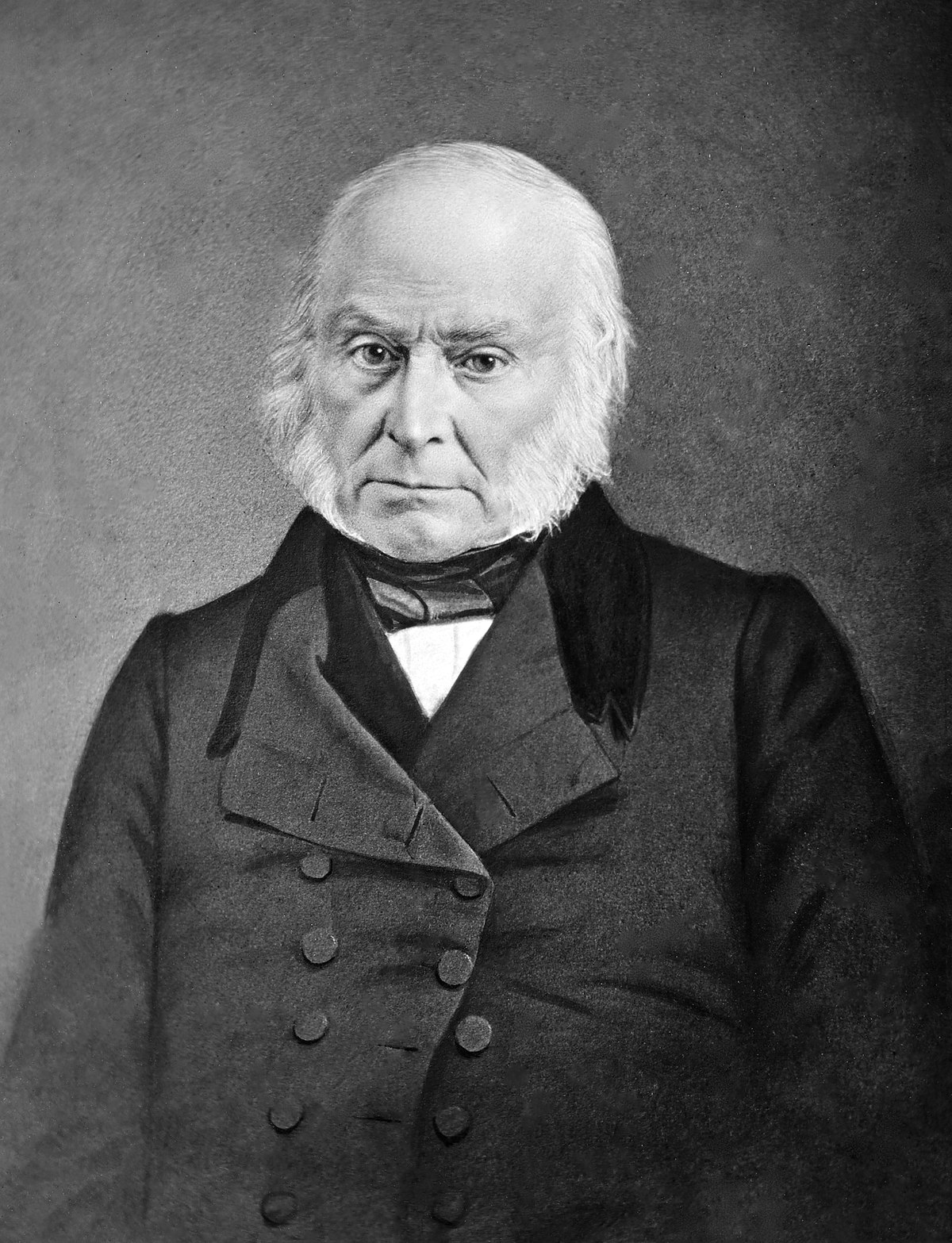
John Quincy Adams, Letter to Charles Francis Adams (February 21, 1830):

“Every one of the letters of Cicero is a picture of the state of the writer’s mind when it was written. It is like an invocation of shades to read them. I see him approach me like the image of a phantasmagoria. He seems opening his lips to speak to me and passes off, but his words as if they had fallen upon my ears are left deeply stamped upon the memory. I watch with his sleepless nights. I share his solitary sighs. I feel the agitation of his pulse, not for himself but for his son…for his country. There is sometimes so much in it of painful reality that I close the book. No tragedy was ever half so pathetic. My morning always ends with a hearty execration of Caesar, and with what is perhaps not so right, a sensation of relief at the 23 stabs of the Ides of March… Everything else in the story is afflicting and gloomy.” [Quoted in Fred Kaplan’s John Quincy Adams: American Visionary.]

John Quincy Adams - Wikipedia

Pythagorean Self-Invention

Scholion to Sophocles Electra 62.2

“Pythagoras shut himself in a hole in the ground and told his mother to tell people that he was dead. After that, once he reappeared again later, he was telling fantastic tales of reincarnation and the people of Hades, explaining to the living about the matters of the dead. From these stories, he created that kind of repute for himself that, before the Trojan War, he was Aithalidês the son of Hermes and then Euphorbos, and then Hermotimos of Samos, then Delian Pythios and after all of them, Pythagoras.”

…Πυθαγόρας καθείρξας ἑαυτὸν ἐν ὑπογείῳ λογοποιεῖν ἐκέλευσε τὴν μητέρα, ὡς ἄρα τεθνηκὼς εἴη. καὶ μετὰ ταῦτα ἐπιφανεὶς περὶ παλιγγενεσίας καὶ τῶν καθ’ ᾅδου τινὰ ἐτερατεύετο, διηγούμενος πρὸς τοὺς ζῶντας περὶ τῶν οἰκείων, οἷς ἐν ᾅδου συντετυχηκέναι ἔλεγεν. ἐξ ὧν τοιαύτην ἑαυτῷ δόξαν περιέθηκεν, ὡς πρὸ μὲν τῶν Τρωϊκῶν Αἰθαλίδης ὢν ὁ Ἑρμοῦ, εἶτα Εὔφορβος, εἶτα Ἑρμότιμος Σάμιος, εἶτα Πύθιος Δήλιος, εἶτα ἐπὶ πᾶσι Πυθαγόρας.Monday

“A Man Marries, a Woman Gets Married”

Or, how philology is not apolitical….

An Anonymous Grammarian, De Adfinium Vocabulorum Differentia (“On Similar but different words”) 120

“Marrying [gêmai] is different from ‘getting married’ [gêmasthai] in that a man marries but a woman gets married. Homer has made the difference between them clear when he said of getting married:  “once she [Epikastê] got married to her own son; and he married her / after killing his father.”

And Anakreon [demonstrates the distinction] when he mocks someone for being effeminate: “and the bedroom in which that guy didn’t marry but got married instead.”

Aeschylus too in his Amumône writes: “it is your fate to be married but it is mine to marry.”

γῆμαι τοῦ γήμασθαι διαφέρει, ὅτι γαμεῖ μὲν ὁ ἀνήρ, γαμεῖται δὲ ἡ γυνή. καὶ ῞Ομηρος τὴν διαφορὰν τετήρηκεν αὐτῶν, ἐπὶ τοῦ γήμασθαι εἰπών (λ 273 sq.)

     ‘γημαμένη ᾧ υἱῷ· ὁ δ’ ὃν πατέρ’ ἐξεναρίξας

    γῆμε’,

καὶ ᾿Ανακρέων (P.M.G. 424 Page = fr. 87 D.2) διασύρων τινὰ ἐπὶ θηλύτητι

     ‘καὶ †θαλάμοις† ἐν ᾧ κεῖνος οὐκ ἔγημεν ἀλλ’ ἐγήματο’,

καὶ Αἰσχύλος (fr. 131 Mette = fr. 13 N.2) ἐν ᾿Αμυμώνῃ

     ‘σοὶ μὲν γὰρ γαμεῖσθαι μόρσιμον, γαμεῖν δ᾿ ἐμοί

The distinction between gêmai [or gamein] and gêmasthai [gameisthai] is an important example of Greek active versus mediopassive voice. The active here means “to take a spouse”; while the mediopassive form [according to LSJ] means to “offer to have your child made a spouse” or, “to give oneself in marriage”. This is also a good example of how gendered difference in agency and personhood is structured into basic linguistic distinctions.

As I teach my students, the middle voice is often about indirect agency* (when the agent of an action is not the same as the grammatical subject of the sentence). So, with the verb luô, it means in the active “I release” and in the passive “I am released” but in the middle “ransom”, because in the background is the idea that “x arranges for y to release z”. (And this is a pretty ancient meaning: Chryses appears to the Achaeans in book 1 of the Iliad “for the purpose of ransoming his daughter” [λυσόμενός τε θύγατρα]).

In two examples cited by the anonymous grammarian above words are morphologically middle (γημαμένη and ἐγήματο are aorists, one of the two tenses that has distinct middle and passive morphology in Greek), but the semantics of the words seem less middle than passive to me. At the very least, we have Epikaste “[allowing herself] to be married” in the Homeric example. Anacreon’s joke emasculates the target by taking agency away from him and Aeschylus attests to a similar distinction in the fragment. But the point to take away is that it would be striking in ancient Greece to say that a woman marries someone else as an active agent.

*Often, but not always! The middle voice can be causative, alternate with the active for transitive/intransitive meanings, be quasi-reflexive, or just downright weird (‘idiomatic’!).

Here’s part of the LSJ Entry:

gameo lsj

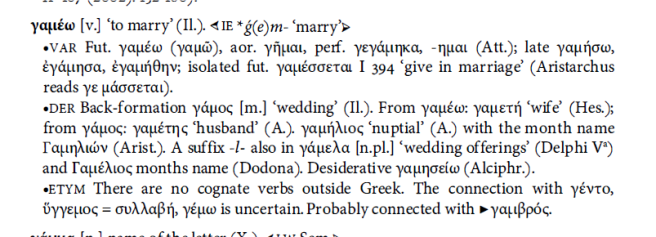
Here’s Beekes on the root:

gameo beekes

Greeks Don’t Ride Together

Peter Harvey, Reminiscences and Anecdotes of Daniel Webster (pp.47-48)

An able and forcible writer, N. P. Rogers, of Plymouth, N. H., who often assumed a rough, quaint style, was well acquainted with the Websters, and was in early life their warm and devoted friend. The following letter, which he contributed to the ” New York Tribune,” relates to Daniel Webster’s early appearance at the bar; and is worth inserting, both as giving a vivid picture of that period of the great statesman’s life, and as an amusing literary curiosity.

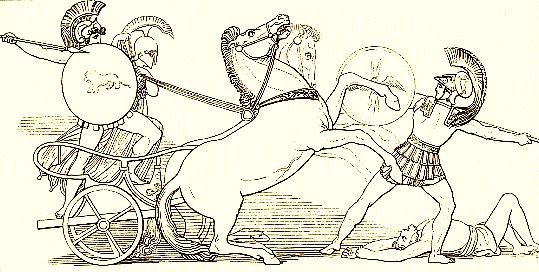
“There ‘s a town a little south of me, about thirty-five miles off, in plain sight, where they’ve held courts for the county. It’s the county of Grafton. They’ve held courts there these seventy years. Webster used to come to court there when he was a young lawyer. They say he went to his first court there. I don’t know how that is, but he went there when he was almost a boy. I could see him plainly from here. He was singular in his look. Him and his brother ‘Zeke’ used to come to court together after a year or two. Daniel came first, though ‘Zeke’ was the eldest. I can see them now, driving into that little village in their bellows-top chaise, — top thrown back, — driving like Jehu, the chaise bending under them like a close-top in a high wind. I had heard tell of Diomede and Ulysses, — a couple of old Greeks that used to ride in some such looking cars as they did, though I believe the Greeks don’t ride together. But Daniel and ‘Zekiel Webster made me think of them two Greeks. Daniel used to drive very fast. They ‘d come in as if they had started long before day; and it was a sight, in a small place, to see them two ride in together. I could have told either of them thirty miles among a thousand men.

Webster Says: “F**k All Your Proconsuls!”

Peter Harvey, Reminiscences and Anecdotes of Daniel Webster (pp.160-163)

Mr. Webster became Secretary of State under General Harrison, in 1841. They had no interview before he was appointed. It was done by correspondence; by an offer of the place on the part of General Harrison by letter, and acceptance by letter on that of Mr. Webster. They did not meet until eight or ten days previous to the inauguration. General Harrison arrived at Washington, from Cincinnati, about the time Mr. Webster arrived from Massachusetts. Mr. Webster was invited by Mr. Seaton, one of the editors of the “National Intelligencer,” and a very warm personal friend of his, to come to his house, as he would be more quiet there, and less exposed to intrusion than at a hotel; and to stay until he should get a house and move his family into it. He was constantly occupied with General Harrison on matters connected with the formation of the Cabinet, from early morning until the dinner hour, which was six o’clock. It seems that he had prepared an inaugural message for General Harrison. One day, among other arrangements, he suggested to the new President, in as delicate a way as he could, the fact that he had sketched an inaugural, knowing that General Harrison would be overwhelmed with calls and business after his election, and he himself having leisure to write. The General at once replied that it was not necessary; that he had prepared his own inaugural.

“Oh yes,” said he, ” I have got that all ready.”

“Will you allow me to take it home and read it to-night? ” asked Mr. Webster.

“Certainly,” the President replied;” and please to let me take yours.”

So they exchanged the documents; and the next morning, when they met, General Harrison said to Mr. Webster : —

“If I should read your inaugural instead of mine, everybody would know that you wrote it, and that I did not. Now, this is the only official paper which I propose to write, for I do not intend to interfere with my secretaries; but this is a sort of acknowledgment on my part to the American people of the great honor they have conferred upon me in elevating me to this high office; and although, of course, it is not so suitable as yours, still it is mine, and I propose to let the people have it just as I have written it. I must deliver my own instead of yours.”

Mr. Webster told me that he was a good deal annoyed; because the message was, according to his judgment and taste, so inappropriate. It entered largely into Roman history, and had a great deal to say about the States of antiquity and the Roman proconsuls, and various matters of that kind. Indeed, the word “proconsul” was repeated in it a great many times.

When he found that the President was bent upon using his own inaugural, Mr. Webster said that his desire was to modify it, and to get in some things that were not there, and get out some things that were there; for, as it then stood, he said, it had no more to do with the affairs of the American government and people than a chapter in the Koran. Mr. Webster suggested to General Harrison that he should like to put in some things, and General Harrison rather reluctantly consented to let him take it. Mr. Webster spent a portion of the next day in modifying the message. Mrs. Seaton remarked to him, when he came home rather late that day, that he looked fatigued and worried; but he replied that he was sorry that she had waited dinner for him.

“That is of no consequence at all, Mr. Webster,” said she; “but I am sorry to see you looking so worried and tired. I hope nothing has gone wrong. I really hope nothing has happened.”

“You would think that something had happened,” he replied, “if you knew what I have done. I have killed seventeen Roman proconsuls as dead as smelts, every one of them!”

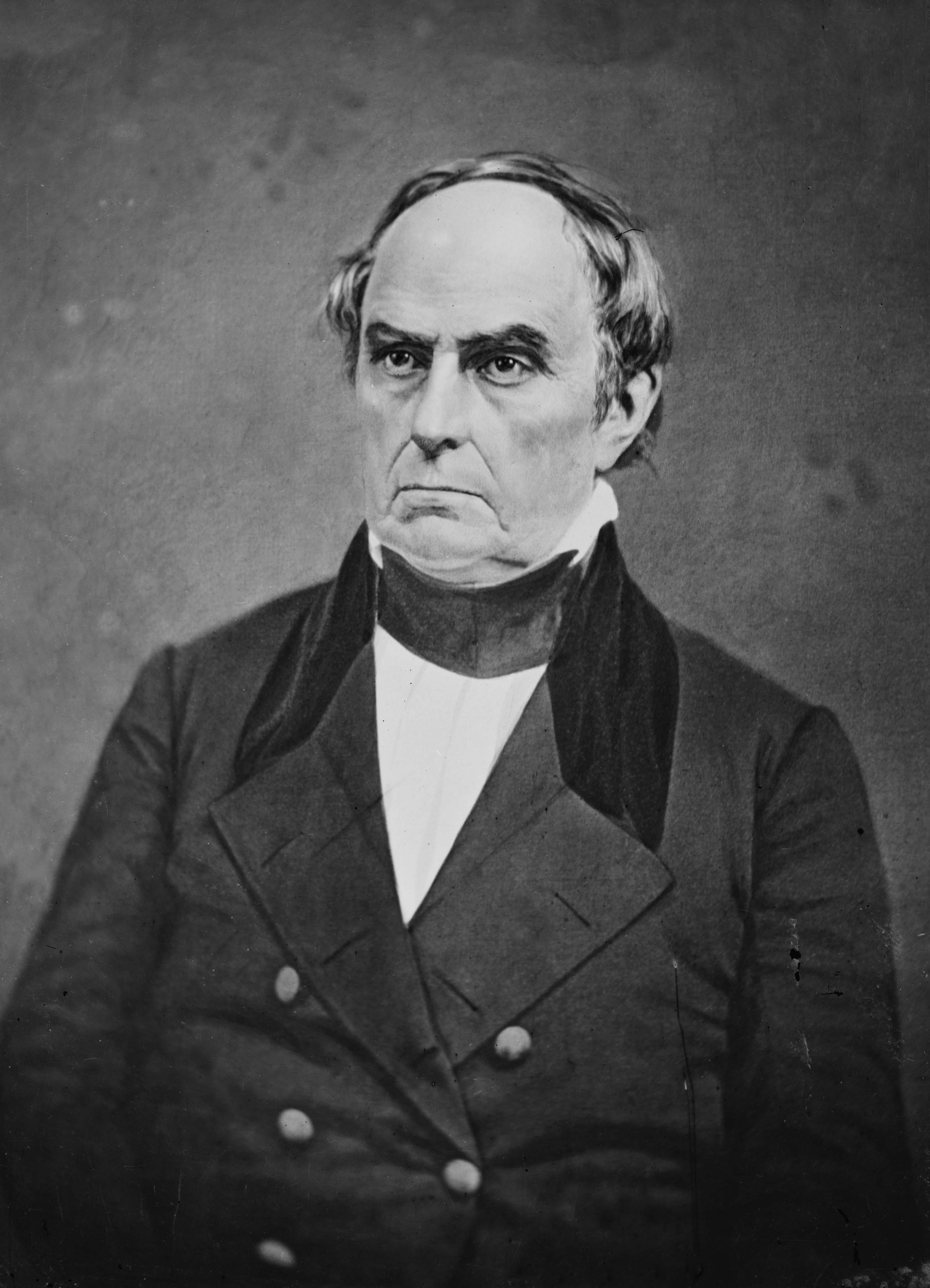
Daniel Webster - Wikipedia
Daniel Webster wants you to take proconsuls down to noconsuls.

Cicero’s Height and Demosthenes’ Lamp

John Adams, Draft of a Letter to Richard Cranch (October – December 1758):

Should a Student in History inquire chiefly of the Dress, Entertainments and Diversions, instead of the Arts, Characters, Virtues and Opinions of ancient Nations, and the Effects of these on their public and private Happiness would not you laugh? There was nothing in the Lamp, by which Demosthenes wrote his orations, that deserved the Attention of the present Race of men, more than there is in the Candle by which I write this Letter. And I would pay no more Admiration to a man who could tell me the exact Highth of Cicero, or the Number of Hairs that grew upon his Head, a Pi[e]ce of Knowledge that I cannot now attain, than I would to one who could tell me the exact Number of Letters, Comma’s and semicolons that are in all his Works, which have the means of knowing.

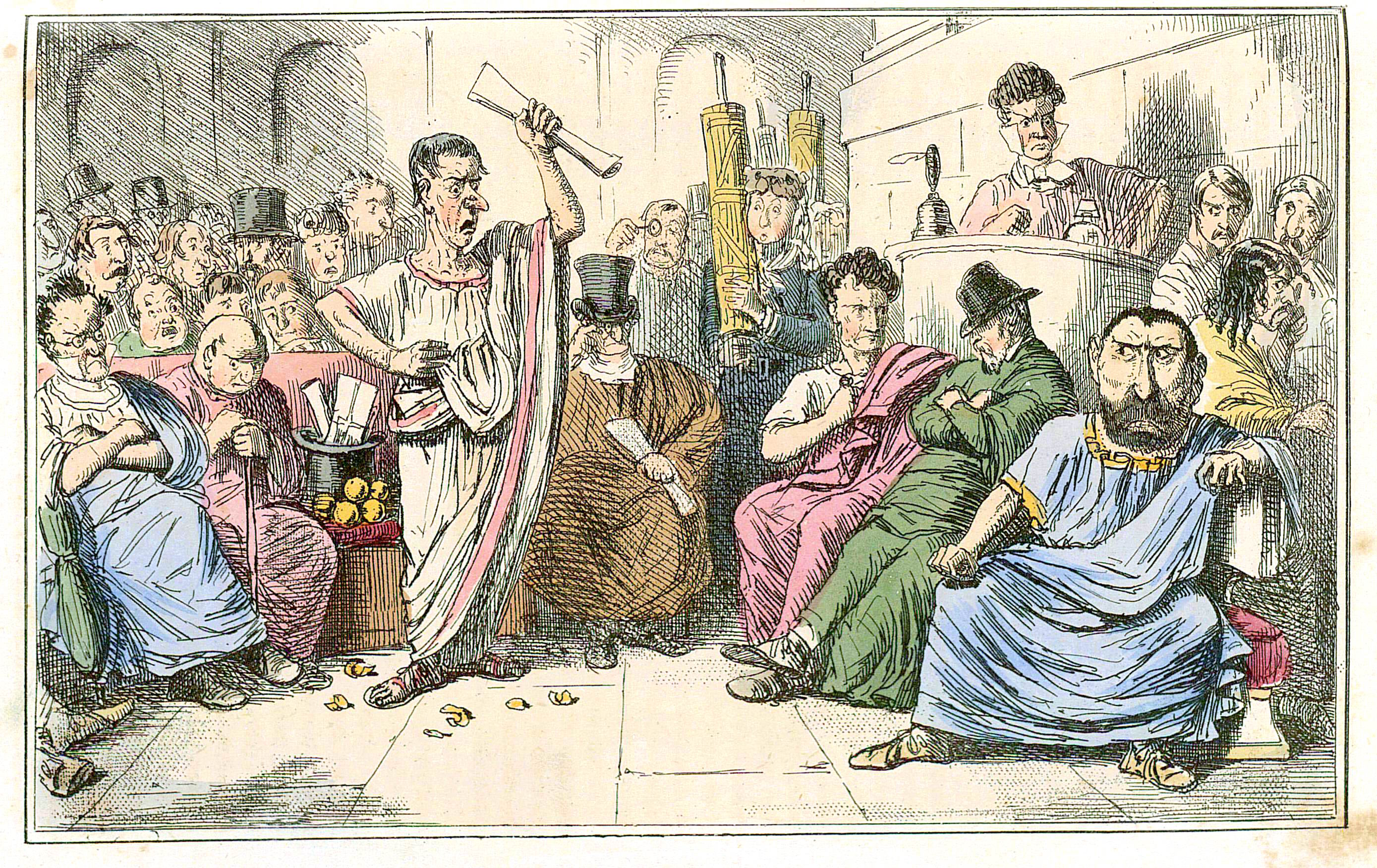
File:Comic History of Rome Table 10 Cicero denouncing Catiline.jpg -  Wikimedia Commons

“No Knife for A Child”: A Proverb

Michael Apostolios, Centuria 11.51

“No knife for a child: don’t delegate serious matters to the inexperienced, lest they somehow use them for their own advantage.”

Μὴ παιδὶ μάχαιραν: μὴ τοῖς ἀπείροις ἐγχειρίζειν πράγματα μεγάλα, μή πως καθ’ ἑαυτῶν χρήσωνται.

Suda

“No knife for a child: for those who entrust to the incompetent. Eupolis also writes in the Demes “public affairs are not for a child.”

Μὴ παιδὶ μάχαιραν: ἐπὶ τῶν εἰκῆ ἐγχειριζόντων. καὶ Εὔπολις Δήμοις· μὴ παιδὶ τὰ κοινά.

children

Different takes on the two proverbs:

“Don’t give children a knife”

“Public affairs aren’t child’s play”

The Dog and His Treasure: A Fable about Priorities

Phaedrus, 1.27

“This tale has something to say to the greedy
And those who want to be  rich, though born needy.

A dog was digging up human bones when he found
A treasure and, because he offended the gods in the ground,
He was struck by a love of riches he couldn’t forget
To pay sacred religion back this debt.

And so, the dog thought not of food as he guarded his gold
And he died from hunger, and as a vulture took hold
he reportedly said, “Dog, you deserve it—
To lie there when you wanted royal wealth
After you were born in a gutter and raised on shit!”

dog

I.27. Canis et Thesaurus

Haec res avaris esse conveniens potest,
et qui, humiles nati, dici locupletes student.
Humana effodiens ossa thesaurum canis
invenit, et, violarat quia Manes deos,
iniecta est illi divitiarum cupiditas,
poenas ut sanctae religioni penderet.
Itaque, aurum dum custodit oblitus cibi,
fame est consumptus. Quem stans vulturius super
fertur locutus “O canis, merito iaces,
qui concupisti subito regales opes,
trivio conceptus, educatus stercore”.

The Exploding Frog, A Fable

Phaedrus 1.24 The Exploding Frog

“A poor man, when he tries to imitate the powerful, dies.
Once in a meadow a frog saw a bull
Whose great size exerted on her such a pull
That she inflated her wrinkled skin and asked
Her children whether she was bigger than that.
They denied it and she puffed herself out self again
But when she asked who was bigger, they said “him”.
Finally angry, she didn’t want to blow it,
She puffed again and her body exploded.”

frog

I.24. Rana Rupta

Inops, potentem dum vult imitari, perit.
In prato quondam rana conspexit bovem,
et tacta invidia tantae magnitudinis
rugosam inflavit pellem. Tum natos suos
interrogavit an bove esset latior.
Illi negarunt. Rursus intendit cutem
maiore nisu, et simili quaesivit modo,
quis maior esset. Illi dixerunt “bovem”.
Novissime indignata, dum vult validius
inflare sese, rupto iacuit corpore.