Looking at the Reception of a Greek Myth in Edith Wharton’s Novel
Edith Wharton’s second novel, The House of Mirth, was published in 1905 and portrays New York high society in America’s Gilded Age. It focuses on the beautiful Lily Bart, a woman of birth but no money, who has been brought up by her mother to value luxury and to believe that her looks will make her fortune.
The novel takes place in her 29th year, and it becomes clear early on that she has balked at the chances of great marriages that have come her way in the past and now needs to take the plunge or face sliding into a ‘dingy’ spinsterhood. She is thwarted – or perhaps saved – in this by a chance meeting with Lawrence Selden at Grand Central Station.
As the novel progresses, her slender grasp on high society fails and she ends up destitute and lonely, dying from an overdose of chloral, but with her personal integrity in tact. Through Lily Bart’s story, Wharton explores, amongst other things, themes of love and marriage, gender, the individual and society and class. It is a powerful and heartbreakingly tragic read.
Well – what had brought him there but the quest of her? It was her element, not his. But he would lift her out of it, take her beyond. That Beyond! on her letter was like a cry for rescue. He knew that Perseus’s task is not done when he has loosed Andromeda’s chains, for her limbs are numb with bondage, and she cannot rise and walk, but clings to him with dragging arms as he beats back to land with his burden. Well, he had the strength for both – it has her weakness which had put the strength in him. It was not, alas, a clean rush of waves they had to win through, but a clogging morass of old associations and habits, and for the moment its vapours were in his throat. But he would see clearer, breathe freer in her presence: she was at once the dead weight at his breast and the spar which should float them to safety.
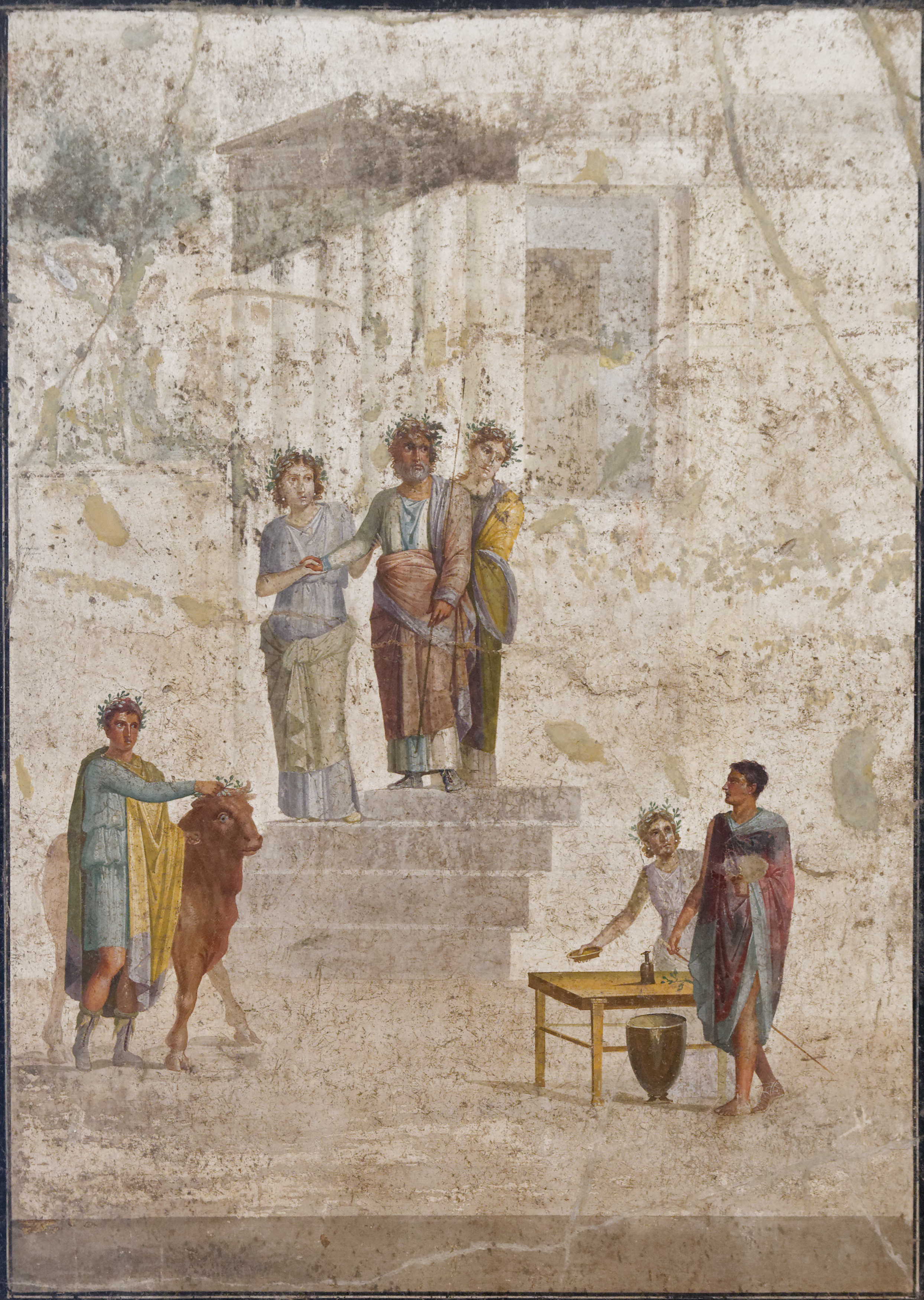
As Lawrence Selden resolves to marry Lily Bart, he pictures himself as the classical hero, Perseus, on a ‘quest’ and Lily as Andromeda, chained to a rock in the sea. As he perceives Lily, she is chained, by her upbringing, to the fate of marrying the highest bidder and living high in the shallow and corrupt world of New York’s one hundred families. This undoubtedly speaks to his masculine ideas of heroism and female vulnerability, but it is revealing to consider why Wharton reached for Perseus and Andromeda at this point, rather than any other classical couple. In this, my primary source is Ovid’s Metamorphoses, the Andromeda plays of Sophocles and Euripides being lost.[1]

Wharton establishes the trope of Lily as damsel in distress and Selden as her heroic rescuer from the very start of The House of Mirth, albeit in a gently ironic way. As Lily hails Selden at the station she says, ‘How nice of you to come to my rescue’, although he was unsure ‘what form the rescue was to take’. At this stage, the gallant hero merely has to provide cooler air, tea and a distraction for a while as Lily waits for her next train, but as Selden looks at Lily’s bracelets during that first encounter, it seems that the idea of Andromeda is already in his mind. Just as Ovid’s Perseus (and Euripides’s before him, as the fragments suggest) first perceives Andromeda as a statue until he notices the breeze in her hair, so Selden watches Lily’s hand, ‘polished as a bit of old ivory’.
Alongside this, he sees ‘the links of her bracelet’ as ‘manacles chaining her to her fate’, so much ‘a victim of the civilization which had produced her’ is she. Here the novel bears out her similarity with Andromeda: Andromeda is chained to the rock as a sacrifice, necessary because of ‘her mother’s tongue’ (Illic inmeritam maternae penderae linguae…) in boasting that Andromeda’s beauty outshone the Nereids’. Lily too is the victim of her mother’s belief in her beauty. After Mr. Bart’s bankruptcy and death, Mrs. Bart fetishizes Lily’s beauty, studying it ‘with a passion, as though it were some weapon she had slowly fashioned for her vengeance.’ She sees it as the means by which their fortunes would be rebuilt and inculcates Lily not only with her own horror of ‘dinginess’, but also with the belief that ‘only stupidity’ could induce anyone to marry for love, where there is no financial advantage. So, we might see Lily as ‘chained’ to this ambitious matrimonial path by her mother’s pride in her beauty.
As Lily and Selden’s relationship develops, Lily notices her chains to some degree. Though, when Selden arrives at Bellomont, Lily still means to marry Percy Gryce, Selden’s presence causes her to reevaluate the people around her and she becomes aware that this society represents a ‘great gilt cage… as she heard its door clang on her!’ Her stolen walk with Selden, on Sunday, is littered with the words ‘freedom’ and ‘emancipation’, as she rebels against the social expectations of ‘a jeune fille à marier’, and in Selden’s explanation of ‘the republic of the spirit’, she catches the glimpse of an alternate life which will change her view of the world forever.
It is when on this walk too that Lily starts to analyze her relationship with Selden and in this, her chains begin to be reconfigured. She says, ‘The peculiar charm of her feeling for Selden was that she understood it; she could put her finger on every link of the chain that was drawing them together.’ This comparison of the chains fettering the maiden, to the chains joining lovers, is one that again harks back to Ovid’s Perseus who exclaims on seeing Andromeda, ‘O fairest! whom these chains become not so, / But worthy are for links that lovers bind’ (Ut stetit, “o” dixit “non istis digna catenis / sed quibus inter se cupidi iunguntur amantes…”).
The power relationship implied by such chains is not one explored explicitly by either Ovid or Wharton although it is explored implicitly by both.[2] Though we hear that Perseus’s wings almost ‘forgot to wave’ (paene suas quatere est oblitus in aere pennas), so enamored was he of Andromeda’s beauty, we do not hear how Andromeda responded to him at all. Indeed, all she can do at this point is cry, and her marriage to Perseus is all fixed up with her parents before he goes on to fight the monster.[3] After the rescue, she is referred to, unnamed, as his pretium, meaning reward, with all of its financial connotations, a gesture which dehumanizes her.
Though Wharton’s treatment of the power relationship between Lily and Selden is more detailed and complex, Lily, as a single woman in late nineteenth-century high society, is also entirely vulnerable. Her beauty gives her a certain power over men, and over Selden specifically, but she quickly realizes its limits as her integrity begins to be questioned. Indeed, Selden himself cannot forgive her for what he is quick to perceive as her immoral relationship with Gus Trenor. As Mrs. Peniston’s free indirect narrative suggests, ‘however unfounded the charges’ against a young girl being ‘talked about’ by society, ‘she must be to blame for their having been made.’ This exemplifies women’s powerlessness and the need always for their behavior to be beyond reproach, particularly where there is no man, or no parent to defend their honor. Though Lily knows herself to have been compromised by her transaction with Trenor, and she is though innocent of the grosser charges, Wharton underlines the impossibly high and, simultaneously, morally corrupt standards governing women’s behavior in the scathing irony of such statements as Mrs. Peniston’s above, but also in the barefaced hypocrisy of married women like Bertha Dorset, whom society will not condemn for her ruinous affairs as long as her husband looks the other way. In this sense, Lily has almost as little power in her relationship with Selden, as Andromeda in hers with Perseus.
And so to Selden’s heroism. Both Ovid and Wharton portray their heroes with ambivalence. Although in the action of the rescue, Ovid’s description of Perseus slaying of the dragon is described in more conventionally heroic terms, there are suggestions elsewhere that he is less than heroic. When he first sees Andromeda and is captivated by her beauty, as she stands chained to the rock, he does not dive down immediately to rescue her, but first announces himself to her parents in boastful terms.
In the translation, Perseus repeats the word ‘I’, followed by the facts of his greatness, while in the Latin, he repeats his name: ‘I, who am the son of Regal Jove / And her whom he embraced in showers of gold … I, Perseus, who destroyed the Gorgon … I, who dared on waving wings / To cleave ethereal air’ (Hanc ego si peterem Perseus Iove natus … Gorgonis anguicomae Perseus superator et alis / aerias ausus iactatis ire per auras). This repetition together with the recital of his achievements, particularly at this time, augurs of something egotistical, even if it is done with the purpose of winning Andromeda’s hand in marriage. One might question, as Sarah Annes Brown does, why, when ‘Time waits / for tears, but flies the moment of our need’ (Lacrimarum longa manere / tempora vos poterunt), Perseus wastes it in ‘boasting of his manly prowess instead of getting on with the rescue’![4]

Similarly, in telling of his conquest of Medusa, Perseus seems oblivious to the tragedy of her story – details of which are thought to have been introduced by Ovid himself – her beauty which induced Poseidon to rape her in Athena’s temple, and Athena’s subsequent anger, not with Poseidon but with Medusa, which resulted in her metamorphosis to a gorgon. The ambiguity around Perseus’ heroism is something which has been portrayed in other depictions too, which might have influenced Wharton’s exploration of heroism. Burne-Jones’s The Rock of Doom, part of his Perseus series, was begun in 1875 and never finished, and while it is unknown whether Wharton saw the painting, it undoubtedly bears a resemblance to her representation of Lily and Selden.
In it, Perseus is an effeminate figure; though he is not as vulnerable and submissive as Andromeda, who is naked, his armor seems molded to his body, revealing every muscle of his androgynous body. Just as Andromeda’s head tilts bashfully in towards the rock, as she peers up at him, so Perseus peeks shyly around the side of the rock, looking at her out of the corners of his eyes. Though his hero’s sword is draped visibly at his front, his stance is scarcely one of strength: he is leaning on the rock with one hand while balanced on one leg, made buoyant by his winged feet, but in a position that denotes hesitancy or timidity. Similarly, when depicted fighting the monster in The Doom Fulfilled, he seems entangled in the monster’s serpentine tail. As I suggested in the last paragraph, about the power dynamic between the pair, it is complex, but Lily’s vulnerability, explored above, is mirrored in Andromeda’s nakedness. Chained and naked, her only power is in her beauty.
Selden, like Burne-Jones’s Perseus, is not domineeringly masculine or conventionally heroic. Early in the novel, the two of them teeter on the edge of commitment, one taking a step forward only for the other to draw back and vice versa, both afraid of the changes such a commitment would mean for the course of their lives, and each too proud to let the other see the depth of their feelings. At Bellomont, they accuse each other of cowardice in not wanting to go further and at the end of their walk, Selden judges Lily negatively when she reacts self-consciously to a passing car, knowing that she is worried her deception of Percy might be discovered, even though he has freely admitted that he has ‘nothing to give [her] instead.’ This is the pattern which continues throughout the novel: Selden pulls back from proposing to Lily after seeing her leaving the Trenors’, jumping to conclusions about her life without giving her the chance to explain; similarly, when he speaks with her after the crisis with the Dorsets, he knows that he has not supported her and that his ‘miserable silence’ speaks only of judgement but he feels the full weight of suspicion and cannot bring himself to speak.
Lily’s pride also holds her back, for example, when Selden visits her at the Emporium to try to persuade her to leave Mrs Hatch, she admits to herself that ‘she would rather persist in darkness than owe her enlightenment to Selden’ even though she knows that he is right. However, Selden is too forgiving of himself and perhaps Wharton is too forgiving of him too. At the very ending, in what is perhaps Selden’s free indirect narrative, or perhaps the narrative voice of the novel, Wharton writes that
It was this moment of love, this fleeting victory over themselves, which had kept them from atrophy and extinction; which, in her, had reached out to him in every struggle against the influence of her surroundings, and in him, had kept alive the faith that now drew him penitent and reconciled to her side.
According to this romantic vision of this victory of their love, Lily’s attempts to be worthy of his love are one with his dormant and now awakened belief in her. And yet, that ‘dormant belief’ caused him to condemn her and shun her, along with the rest of society, while she lost everything and died a miserable, lonely death, in poverty! When I read that he is ‘too honest to disown his cowardice now’, I cannot help feeling that this is too little too late.
Finally, it remains to deal with the matter of rescue – rescue from what? and in what sense we might speak of ‘rescue’ at all. While in all the previous depictions of Perseus and Andromeda, Perseus has had to fight a sea monster, in the quotation at the start of this post, Selden merely imagines battling the sea, and not a ‘clean rush of waves’ but a ‘morass’, or swamp, of social ties and expectations. Lily is united with him in seeing the sea as her enemy, with images of turbulent water and rising tides used at every moment of distress. Early on, dinginess is the foe and she pictures herself ‘dragging herself up again and again above its flood till she gained the bright pinnacles of success’, while after meeting Trenor, the enemy becomes her own guilty conscience as ‘Over and over her the sea of humiliation broke – wave crashing on wave so close that the mortal shame was one with the physical dread’.
On her last evening too, Lily reflects on the feeling of ‘being rootless and ephemeral … without anything to which the poor little tentacles of self could cling before the awful flood submerged them’, while after death, the tumult is pacified and Selden feels himself ‘drawn down into the strange mysterious depths of her tranquility.’ However, though Selden imagines himself as the active rescuer as he prepares to propose to Lily, removing her from the social ‘morass’ which is dragging her down, Lily looks to Selden for a more spiritual and less practical rescue. Even at the moment, when still reeling from the shame of her meeting with Trenor, she questions ‘Was there not a promise of rescue in his love?’ and brings herself to the brink of accepting his expected proposal, she also knows, ‘even in the full storm of her misery, that Selden’s love could not be her ultimate refuge’, and that she needs to find the means within herself to escape.
Like in The Age of Innocence, where Wharton makes it clear that the love between Ellen Olenska and Newland Archer is a product of the romantic need in each of them and could never work in reality, so, in The House of Mirth, even though the tragedy rests on Lily and Selden’s failure to realize in time the extent of their love for each other, we are made to question whether such a union was ever a real possibility. What is clear, is that Selden’s love, even in the past tense, represents a way for Lily to retain her integrity until the last. In her final meeting she says to him that the things he said to her at Bellomont ‘kept [her] from really becoming what many people have thought [her].’ And though he replies that this ‘difference’ came from her and not from him, she insists that ‘[she] needed the help of [his] belief in [her]’. So it is that though Selden does not provide much tangible help in his rescue of Lily – he does not stab and plunge his sword into the monster’s back and entrails like Ovid’s Perseus – it is the idea of him, the idea of his love and of the way in which he once saw her, that gives Lily the freedom to stay true to herself in the face of society’s temptations, even when confronted by the prospect of a fortune as vast as Rosedale’s. In another version of the Andromeda myth, she sees herself ‘chained’ to another, ‘abhorrent’, version of herself, instead of a rock, and Selden’s love gives her the strength to stop this other self from dragging her under. As she walks away from his flat for the last time, she feels herself ‘buoyant’ again, the same word used as when she is drawn towards him (and away from Gryce and church) at Bellomont, at the start of the novel.
Wharton’s reception of the myth of Perseus and Andromeda and its various literary and pictorial depictions – only very few of which I have explored here – open doors to thinking about women’s agency and late nineteenth-century masculinity as represented in The House of Mirth. This particular myth seems to resonate more, perhaps, than others because of the equivocal portrayal of Perseus in other classical and Victorian versions, and because Andromeda’s chains allow Wharton to reflect on the variety of ways in which women were constrained in high society at that time. Finally, the fact that Selden casts himself as the classical hero and Lily as the submissive damsel in need of his rescue speaks volumes.
Primarily, The House of Mirth is centred around Lily, the narrative closely focused around her consciousness, but it begins and ends with Selden’s perceptions of her, perceptions which surface at various points in between. Such narrative construction reminds us that though Wharton is presenting us with a novel about a single woman in late nineteenth-century America, such a woman could not exist independently, without being ‘read’ and construed by the male gaze. And as we read Selden, reading Lily, betraying his own limitations, prejudices and vanities, so we might consider what our own construction of her may reveal.
As you can see from the above conclusion, this mode of using classical reception in literary analysis is revealing of much more than an author’s, or character’s, interest in mythology; indeed, Selden’s slightly self-congratulatory bookishness in the face of society’s resolute ignorance is something I have not even addressed here! In a longer piece, I would have liked also to have explored Ovid’s Perseus, as a hero, in the context of the epic tradition, alongside Aeneas or Achilles, and to think about Selden and Lily too in the context of nineteenth-century novelistic heroes and heroines. Even as it stands though, the study of Perseus and Andromeda, for me, opens up the themes of masculinity and femininity in the novel, and offers a means to understand the characters and their tangled relationship, in a way that I had not before. This piece actually stands as a companion piece to one on Lily’s relationship with the Furies, and the reception of the Oresteia in the novel (published in the English and Media Centre magazine, emag, in December 2020), which, similarly, opens up themes of fate and free will and a more nuanced and multi-dimensional understanding of these.
This kind of reading is important to my high school English teaching, in which the exam criteria for students requires them to use the contexts of their texts in order to add depth to their interpretations. Frequently, socio-historical detail, while important, can lead to socio-historical, rather than literary, essays but using literary context requires students to focus further into the details of the text, rather than around it. Reception was also central to my own PhD thesis on memory and ancient Greek literature, in which literary memory – which might otherwise be understood as intertextuality – formed an important strand, in terms of casting new light on old debates.
Sophie Raudnitz teaches English at Oundle School in the UK. She has a degree in English and a PhD in Classics. Her thesis used modern memory theory to explore ancient Greek epic, tragedy and philosophy. Twitter @seraudnitz
[1] I am using the Brookes More translation on The Perseus Project website.
[2] As an aside, it is explored in Connie Rosen’s poem, ‘Andromeda’, in which she invites the reader to ‘consider the problem of chains’, and imagines the chains binding the woman to the rock disintegrating as a new chain between Andromeda and Perseus is forged.
[3] This is an interesting contrast to Euripides’ play in which Andromeda’s father, Cepheus, is against her marriage to Perseus. There, her duty as a daughter is pitted against her will to marry the hero.
[4] Sarah Annes Brown, Ovid: Myth and Metamorphosis (London: Bristol Classical Press, 2005), p.34.