Tellis BNJ 61 F 1a (=Eustathios Comm. Ad Hom. Od.11.538, p. 1696, 51)
“But Tellis records that Penthesileia killed Achilles and, after Thetis begged him, Zeus returned him to life and he killed her instead. Penthesileia’s father, Ares, took Thetis to court. Poseidon was the judge and he ruled against Ares.”
“The Sixth book has the following table of contents: how Achilles, killed by Penthesileia, returned to life after his mother made this request, and then returned to Hades after killing Penthesileia”
Many-minded immortal Aphrodite,
Child of Zeus, plot weaver, I implore you:
Don’t with vexations and frustrations break
My heart, O queen.
Instead, come here, if ever in past times
From far off you heard, and heeded, my calls;
And quitting your father’s golden palace,
You came,
After yoking the chariot. Small birds,
Handsome, swift, bore you across the black earth.
Their fast wings whirred from the upper heavens
down through the middle air.
Quick, their arrival. Then you, blessed one,
A smile on your immortal countenance,
Asked: what is it, this time, that’s happened to me;
Why, this time, do I call;
And what does my crazed heart most desire:
“Whom, this time, must I persuade—
Go out, that is, and bring into your arms?
O Sappho, who wrongs you?
Even if she’s fleeing, soon she’ll pursue.
If she’s refusing gifts, she’ll give them.
If she’s not in love, soon she’ll be in love—
Even if against her will.”
Come this time too. Release me from hard cares.
Whatever my heart wishes to see done,
Bring about. And you yourself, be my ally
In this fight.
In Archaic song, Aphrodite is perhaps most commonly represented as a goddess who sports with mortal hearts, disturbing their peace with amorous suffering. And so it should be something of a surprise when Sappho presents the “many-minded” (ποικιλόφρον’) “plot-weaver” (δολόπλοκε) goddess as genial and helpful.
The unusual picture begs the question, is the judgment of love-mad Sappho reliable?
I say that it is not, and suggest looking at the Sappho-Aphrodite relationship through the lens of the Ajax-Athena relationship in Sophocles’ tragedy, “Ajax.”
For our purposes, what matters in the tragedy is this: Ajax believes the goddess is helping him when in fact she is harming him. She distorts his thinking such that he mistakes heads of cattle for Achaeans who have slighted him, and he proceeds to abuse and kill the animals.
The word most strongly linking Sappho-Aphrodite with Ajax-Athena is “ally” (σύμμαχος). The final words of Sappho’s song is the plea to the goddess to “be an ally” (σύμμαχος ἔσσο) in the fight for love. Ajax himself, blind to the goddess’s deception, exhorts her to “always stand by me as an ally” (ἀεί μοι σύμμαχον παρεστάναι [Soph. Aj. 117]). Athena picks up the word: she tongue-in-cheek describes herself as his σύμμαχος (Soph. Aj.190) while working his ruin.
Ajax does not know that he’s suffered “a god-sent sickness” (θεία νόσος [Soph. Aj. 185]) until he’s humiliated himself. His mad actions, while he was engaged in them, appeared to him the god-assisted fulfilment of his wishes. Athena says, “That man, when he was subject to his sickness / Delighted in his troubles” (ἁνὴρ ἐκεῖνος, ἡνίκ᾽ ἦν ἐν τῇ νόσῳ / αὐτὸς μὲν ἥδεθ᾽ οἷσιν εἴχετ᾽ ἐν κακοῖς ([Soph. Aj. 271-272]). And she encouraged him in this: “I egged him on; cast him into my wicked trap” (ὤτρυνον, εἰσέβαλλον εἰς ἕρκη κακά [Soph Aj. 59-60]).
Sappho is trapped in an amorous cycle whose stations are desire, frustration, and satisfaction. And as the song emphasizes, the cycle repeats. Sappho pursues new loves, always with Aphrodite’s intervention. Sappho supposes the goddess helps her to satisfaction, but the traditions of Archaic song would have it that Aphrodite’s hand is in the animating desire and subsequent frustration too. Tellingly, Sappho does not pray for release from what Hegel might call “the bad infinite” of love. Rather, she prays for Aphrodite to keep her running on the track. Like Ajax, she delights in her troubles.
“I pity him his unfortunate condition” (ἐποικτίρω δέ νιν δύστηνον [Soph Aj. 121-122]), Odysseus says of Ajax. Perhaps that should be our emotional response to the speaker of Sappho 1.
Diogenes Laertius, Lives of the Eminent Philosophers: Thales 1.35-37
“These sayings are also attributed to him:
God is the oldest of all things in existence, since god* was never born.
The most beautiful thing is the universe, since it is god’s creation and it contains everything.
Mind is the fastest thing since it runs through everything.
Compulsion is the strongest thing, since it overpowers everything.
The wisest thing is time, since it uncovers all.
Thales claimed that there was no difference between death and being alive. When someone asked why he didn’t die then, he said “because it would make no difference.”
Nepos Cornelius also writes to the same Cicero thus: it is so far away from me thinking that philosophy is a teacher of life and the guardian of a happy life, that I do not believe that anyone needs teachers of living more than the many men who are dedicated to philosophical debate. I certainly see that a great number of those who rush into speeches about restraint and discipline in the classroom live amidst the desire for every kind of vice.”
Nepos quoque Cornelius ad eundem Ciceronem ita scribit: tantum abest ut ego magistram putem esse vitae philosophiam beataeque vitae perfectricem ut nullis magis existimem opus esse magistros vivendi quam plerisque qui in ea disputanda versantur. video enim magnam partem eorum qui in schola de pudore <et> continentia praecipiant argutissime eosdem in omnium libidinum cupiditatibus vivere. (Lactant. Div. inst. 3.5.10)
BNJ 769 F 2 Antoninos Liberalis, Metamorphoses, 35
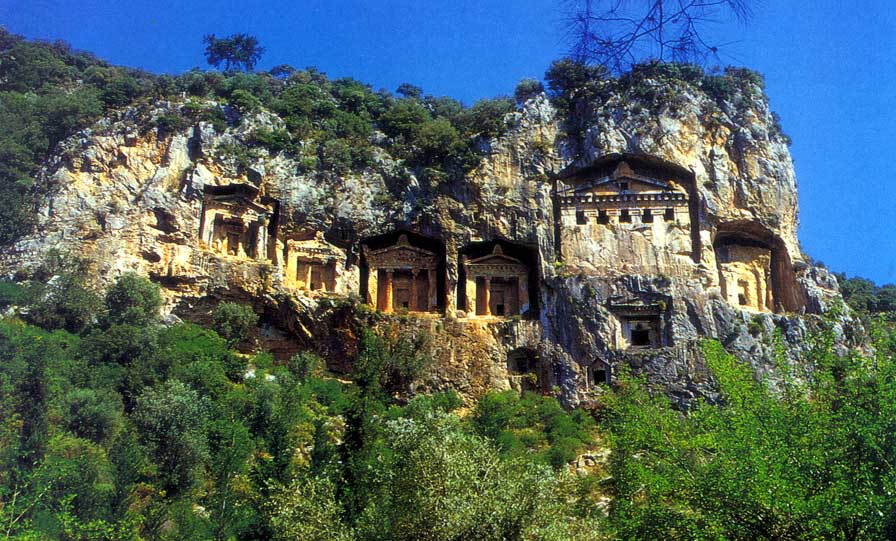
“Cowherds: Menekrates the Xanthian reports in his Lykian Matters and Nicander does as well. Once she gave birth to Apollo and Artemis on the island Asteria, Leto went to Lykia carrying the children to the baths of Xanthus. And as soon she she appeared in the land, she went to the Melitean spring where she wanted her children to drink before they went to the Xanthus.
But when some cowherds drove her away, so that their cattle might drink from the spring, Leto retreated, abandoning the Melitê, and wolves came to meet her, and they gave her directions and led her right up to the Xanthus itself while wagging their tails. She drank the water, bathed her children and made the Xanthus sacred to Apollo. She also changed the land’s name to Lykia—it was called Tremilis before—after the wolves who led her there.
Then she went again to the spring to bring punishment to the cowherds who drove her off. At they time they were washing their cattle near the spring. After she changed them all into frogs and struck their backs and shoulders with rough stones, she threw them all into the spring and granted them life in the water. In our time still, they shout out along the rivers and ponds.”
M. Cornelius Fronto to Marcus Aurelius (c. 139 CE)
“I believe that a lack of experience and learning is completely preferable in all arts to partial experience and incomplete education. For one who knows that he has no experience in an art tries less and fails less thanks to that. In fact, such hesitation limits arrogance. But whenever anyone uses knowing something lightly as expertise he makes many mistakes because of false confidence.
So, people claim that it is better to never taste Philosophy than to sample it lightly, as it is said, with just the lips. Those men turn out to be the most malicious kind, who travel to a discipline’s entrance and turn away rather than going completely inside. It is still possible in other arts that you can play a part for a while and seem experienced in what you do not know. But in how to choose and arrange words, one shines through immediately when he cannot provide any words but those that show his ignorance of them, that he judges them poorly, provides them rashly, and cannot know either their usage or their strength.”
1. Omnium artium, ut ego arbitror, imperitum et indoctum omnino esse praestat quam semiperitum ac semidoctum. Nam qui sibi conscius est artis expertem esse minus adtemptat, eoque minus praecipitat; diffidentia profecto audaciam prohibet. At ubi quis leviter quid cognitum pro comperto | ostentat, falsa fiducia multifariam labitur. Philosophiae quoque disciplinas aiunt satius esse numquam adtigisse quam leviter et primoribus, ut dicitur, labiis delibasse, eosque provenire malitiosissimos, qui in vestibulo artis obversati prius inde averterint quam penetraverint. Tamen est in aliis artibus ubi interdum delitescas et peritus paulisper habeare quod nescias. In verbis vero eligendis conlocandisque ilico dilucet, nec verba dare diu quis1 potest, quin se ipse indicet verborum ignarum esse, eaque male probare et temere existimare et inscie contrectare, neque modum neque pondus verbi internosse.
“I believe that these journeys which remove my languor are good for both my strength and my researches. How they profit my health is clear: my love of literature makes me lazy, neglectful of my body. On a journey, I may exercise incidentally.
I can show you how this helps my research too. But I in no way take a break from reading. My reading, I believe, is necessary: first, it ensures I will not be satisfied with myself as I am; second, once I have understood what others have learned, I may judge what has been discovered and what still must be thought out.
Reading feeds the mind and replenishes it when it is worn from studying—even though it is not without work itself. We should not restrict ourselves to writing or to reading: endless writing saps our strength and then exhausts it. Too much reading can puff up or dilute our ability. Most commendable is to take them in their turn, to mix one with the other, so that the seeds of one’s reading may be grown anew with the pen.”
Itinera ista, quae segnitiam mihi excutiunt, et valitudini meae prodesse iudico et studiis. Quare valitudinem adiuvent, vides: cum pigrum me et neglegentem corporis litterarum amor faciat, aliena opera exerceor; studio quare prosint, indicabo: a lectionibus nihil recessi. Sunt autem, ut existimo, necessariae, primum ne sim me uno contentus; deinde ut, cum ab aliis quaesita cognovero, tum et de inventis iudicem et cogitem de inveniendis. Alit lectio ingenium et studio fatigatum, non sine studio tamen, reficit. Nec scribere tantum nec tantum legere debemus; altera res contristabit vires et exhauriet, de stilo dico, altera solvet ac diluet. Invicem hoc et illo commeandum est et alterum altero temperandum, ut quicquid lectione collectum est, stilus redigat in corpus.
I was reminded of this passage while contemplating Paul Holdengraber’s regular injunction not to read bad writing:
Today is, according to many, the anniversary of the eruption of Vesuvius in the Bay of Naples in 79 CE. Pliny’s account is the most famous, but Martial had his say too (Epigrams, 4.4):
“Here is Vesuvius, recently verdant with shading vines–
here the noble grape weighed made filled deep pools:
these were the hills Bacchus loved more than Nysae–
On this mountain the Satyrs not so long ago led their dance.
Here was the home Venus considered more pleasing than Sparta.
This place was famous because of its Herculean name.
All of this lies covered in flames and sorrowful ash.
Not even the gods wished for this to be their right.”
Hic est pampineis uiridis modo Vesbius umbris,
presserat hic madidos nobilis uua lacus:
haec iuga quam Nysae colles plus Bacchus amauit;
hoc nuper Satyri monte dedere choros;
haec Veneris sedes, Lacedaemone gratior illi; 5
hic locus Herculeo nomine clarus erat.
Cuncta iacent flammis et tristi mersa fauilla:
nec superi uellent hoc licuisse sibi.
Mount Vesuvius is thought to have erupted #onthisday in AD 79. This fragment of a wall painting may depict the owners of a house in Pompeii pic.twitter.com/fMspVy8wXO
“The best kind of recognition of all comes from the plot events themselves when the surprise comes out of probable events. This is the case in Sophokles’ Oedipus or in Iphigenia. For only these kinds of recognitions can happen without manufactured signs and necklaces. The second best kinds are from logical reasoning.”
‘The study underscores “the sensitive side of the T. Rex.”’ Good to know Jocasta’s love for Oedipus was torrid and complex. @sentantiq @apistone https://t.co/V5LZprdUAp
So baby Oedisaurus Rex hatches in some alien land. Parents aren’t worried because they’re dinosaurs and they have lots of eggs. Shit, parents might not even know each other any way #DinoMythpic.twitter.com/IJytIKOnCW
Along the way, he kills another T-Rex in one-on-one combat. I mean, how would he know that it’s his father? I imagine T-Reges are territorial and mean to strangers. #Dinomythpic.twitter.com/oKjZ3bF7kV
“The city is simultaneously full of burning incense
Songs of prayer and lamentations.
Children: rather than unjustly hear this from someone else
I have come here to learn it my self,
The man named Oedipus, known to everyone.”
So we get back to home territory and it is T.Reges mating season, whatever that’s like. Is it more or less likely for a T-Rex to unknowingly know his mother biblically than a human?#Dinomythpic.twitter.com/sZIRM8Ekhk
“…I know this well
That you all are sick, and even though you’re sick
Not a one of you is as sick as I am.
For each of you must face up to a single share of pain
As it comes to you and not another.
But my soul groans for the city, for me, and you, at once.”
Ok, that’s slightly unhinged. My point is that the Oedipus tale is bonkers and more plausible in the non-human realm and perhaps less implausible for dinosaurs#Dinomythpic.twitter.com/dSRXkq7dsd
Aristotle writes in the poetics "“Narratives ought to prefer likely events, even if impossible, to improbable possible ones. Stories should not be made from illogical parts: in the best case, they should contain nothing illogical"https://t.co/8oA32gBEZypic.twitter.com/GXMzCsfqVi
One of the most iconic images of Oedipus in the 5th century BCE depicts the moment of his interview with the Sphinx. Here is a representative example (Beazley Archive 205372; Gregorian Etruscan Museum, Vatican City, Vat. 16541):
This is the moment when the Sphinx asks Oedipus her famous question. The iconic nature of this also makes it ripe for parody.
This is the best picture I could manage of the scene (if you are interested, see J. Boardman’s article in JHS 90 (1970) 194-195. This vase features the beast masturbating and ejaculating while the hero looks on and holds his sword. It is dated to the mid-fifth century BCE. (I found it in the LIMC, number 69).
There is a much more tame version of the later, which maintains the phallus, but skimps on the erections and ejaculations. This vase is in the Boston MFA, 01.8036.
“For what advantage is there of speaking about those falsely attributed works in which I am said to have agitated for Roman freedom? Their fakeness would have been obvious if it had been allowed for me to use the confession of those informers of mine, since this has the most potent influence in all of this business.
What freedom remains to be hoped for? If only some remained! I would have then responded in that phrase of Canius. When Caligula accused him of being aware of a conspiracy underway against him, Canius is reported to have said, “If I had known of it, you would not.”
Sorrow has so thoroughly weakened my senses in this matter that I complain that evil men have attempted to do evil, but I am in fact surprised that they have accomplished what they hoped to. For, while it is perhaps our special weakness as humans to desire to do the worse thing, it is nearly monstrous that whatever a criminal mind can conceive of he can do while God looks on.
This is why it is not surprising that one of your friends asked “If there is really a God, where does evil come from? Ah, but where is good from if there is not?”
Nam de compositis falso litteris quibus libertatem arguor sperasse Romanam quid attinet dicere? Quarum fraus aperta patuisset, si nobis ipsorum confessione delatorum, quod in omnibus negotiis maximas vires habet, uti licuisset. Nam quae sperari reliqua libertas potest? Atque utinam posset ulla! Respondissem Canii verbo, qui cum a Gaio Caesare Germanici filio conscius contra se factae coniurationis fuisse diceretur: ‘Si ego,’ inquit, ‘scissem, tu nescisses.’ Qua in re non ita sensus nostros maeror hebetavit ut impios scelerata contra virtutem querar molitos, sed quae speraverint effecisse vehementer admiror. Nam deteriora velle nostri fuerit fortasse defectus, posse contra innocentiam, quae sceleratus quisque conceperit inspectante deo, monstri simile est. Unde haud iniuria tuorum quidam familiarium quaesivit: ‘Si quidem deus,’ inquit, ‘est, unde mala? Bona vero unde, si non est?’