Choosing a Captain on the Ship of Fools

Plato, Republic 6 488a7-89a2

[This was inspired by a”Ship of Fools” post at LitKicks]

Consider this how this could turn out on many ships or even just one: there is a captain of some size and strength beyond the rest of the men in the ship, but he is deaf and similarly limited at seeing, and he knows as much about sailing as these qualities might imply. So, the sailors are struggling with one another about steering the ship, because each one believes that he should be in charge, even though he has learned nothing of the craft nor can indicate who his teacher was nor when he had the time to learn. Some of them are even saying that it is not teachable, and that they are ready to cut down the man who says it can be taught.

They are always hanging all over the captain asking him and making a big deal of the fact that he should entrust the rudder to them. There are times when some of them do not persuade him, and some of them kill others or kick them off the ship, and once they have overcome the noble captain through a mandrake, or drugs, or something else and run the ship, using up its contents drinking, and partying, and sailing just as such sort of men might. In addition to this, they praise as a fit sailor, and call a captain and knowledgeable at shipcraft the man who is cunning at convincing or forcing the captain that they should be in charge. And they rebuke as useless anyone who is not like this.

Such men are unaware what a true helmsman is like, that he must be concerned about the time of year, the seasons, the sky, the stars, the wind and everything that is appropriate to the art, if he is going to be a leader of a ship in reality, how he might steer the ship even if some desire it or not, when they believe that it is not possible to obtain art or practice about how to do this, something like an art of ship-steering. When these types of conflicts are occurring on a ship, don’t you think the one who is a true helmsman would be called a star-gazer, a blabber, or useless to them by the sailors in the ships organized in this way?


νόησον γὰρ τοιουτονὶ γενόμενον εἴτε πολλῶν νεῶν πέρι εἴτε μιᾶς· ναύκληρον μεγέθει μὲν καὶ ῥώμῃ ὑπὲρ τοὺς ἐν τῇ νηὶ πάντας, ὑπόκωφον δὲ καὶ ὁρῶντα ὡσαύτως βραχύ τι καὶ γιγνώσκοντα περὶ ναυτικῶν ἕτερα τοιαῦτα, τοὺς δὲ ναύτας στασιάζοντας πρὸς ἀλλήλους περὶ τῆς κυβερνήσεως, ἕκαστον οἰόμενον δεῖν κυβερνᾶν, μήτε μαθόντα πώποτε τὴν τέχνην μέτε ἔχοντα ἀποδεῖξαι διδάσκαλον ἑαυτοῦ μηδὲ χρόνον ἐν ᾧ ἐμάνθανεν, πρὸς δὲ τούτοις φάσκοντας μηδὲ διδακτὸν εἶναι, ἀλλὰ καὶ τὸν λέγοντα ὡς διδακτὸν ἑτοίμους κατατέμνειν, αὐτοὺς δὲ αὐτῷ ἀεὶ τῷ ναυκλήρῳ περικεχύσθαι δεομένους καὶ πάντα ποιοῦντας ὅπως ἂν σφίσι τὸ πηδάλιον ἐπιτρέψῃ, ἐνίοτε δ’ ἂν μὴ πείθωσιν ἀλλὰ ἄλλοι μᾶλλον, τοὺς μὲν ἄλλους ἢ ἀποκτεινύντας ἢ ἐκβάλλοντας ἐκ τῆς νεώς, τὸν δὲ γενναῖον ναύκληρον μανδραγόρᾳ ἢ μέθῃ ἤ τινι ἄλλῳ συμποδίσαντας τῆς νεὼς ἄρχειν χρωμένους τοῖς ἐνοῦσι, καὶ πίνοντάς τε καὶ εὐωχουμένους πλεῖν ὡς τὸ εἰκὸς τοὺς τοιούτους, πρὸς δὲ τούτοις ἐπαινοῦντας ναυτικὸν μὲν καλοῦντας καὶ κυβερνητικὸν καὶ ἐπιστάμενον τὰ κατὰ ναῦν, ὃς ἂν συλλαμβάνειν δεινὸς ᾖ ὅπως ἄρξουσιν ἢ πείθοντες ἢ βιαζόμενοι τὸν ναύκληρον, τὸν δὲ μὴ τοιοῦτον ψέγοντας ὡς ἄχρηστον, τοῦ δὲ ἀληθινοῦ κυβερνήτου πέρι μηδ’ ἐπαΐοντες, ὅτι ἀνάγκη αὐτῷ τὴν ἐπιμέλειαν ποιεῖσθαι ἐνιαυτοῦ καὶ ὡρῶν καὶ οὐρανοῦ καὶ ἄστρων καὶ πνευμάτων καὶ πάντων τῶν τῇ τέχνῃ προσηκόντων, εἰ μέλλει τῷ ὄντι νεὼς ἀρχικὸς ἔσεσθαι, ὅπως δὲ κυβερνήσει ἐάντε τινες βούλωνται ἐάντε μή, μήτε τέχνην τούτου μήτε μελέτην οἰόμενοι δυνατὸν εἶναι λαβεῖν ἅμα καὶ τὴν κυβερνητικήν. τοιούτων δὴ περὶ τὰς ναῦς γιγνομένων τὸν ὡς ἀληθῶς κυβερνητικὸν οὐχ ἡγῇ ἂν τῷ ὄντι μετεωροσκόπον τε καὶ ἀδολέσχην καὶ ἄχρηστόν σφισι καλεῖσθαι ὑπὸ τῶν ἐν ταῖς οὕτω κατεσκευασμέναις ναυσὶ πλωτήρων;
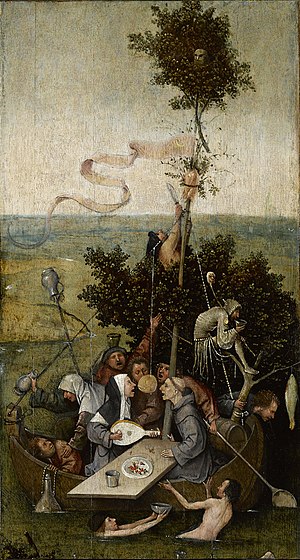
Image result for ship of fools
Hieronymus Bosch, “Ship of Fools”

O Yuck, Archilochus

The First Cologne Epode, the longest fragment attributed to the archaic poet Archilochus, offends modern sensibilities and no doubt it had something like shock value in the poet’s own time.

The opening lines are lost. There’s no consensus on how to fill the most meaningful of the text’s many lacunae. There are also colloquialisms, euphemisms, allusions and irresolvable ambiguities which challenge, and charm. (The “glossary” following the poem should answer a few questions.)

Nonetheless, we can discern enough to say: the poem takes the form of a carefully constructed dialogue in which an unmarried young woman tries to turn a sexually eager man’s attention to someone else–unsuccessfully.

Archilochus: fr. 196a West

“…while you abstain completely, wait for requited love.
But, if you’re in a rush, your passion in charge,
There’s someone in our house brimming with yearning,
A lovely virgin, and tender. Her figure’s flawless,
I would say. Make her your beloved.”

That’s what she said. And I replied with this:
“Daughter of Amphimedo, that noble woman
Whom the moldy earth now holds:
Young men have many pleasures from the goddess,
Beside the divine thing. One of them will do.

You and I will plan this calmly, with god’s help.
I’ll do what you say, eager as I am
To be first under your cornice and inside your gate.
Don’t begrudge me this, my dear,
For I’ll keep to your grassy meadow.

And know this: as for that Neoboule,
Another man can have her! She’s too ripe.
Her virgin bloom, her former loveliness,
Have fallen away. She’s not reined in her lust.
The raving woman’s shown the scale of her madness.

Damn her! May Zeus not make me a joke to my neighbors,
With such a wife. I prefer you: one not inconstant
or two-faced. She’s biting, and as for all her men…
I fear fathering blind, untimely children with her,
My zeal and rush to blame, just like the famed bitch.”

That’s what I said, and clutched the virgin girl—
Laid her down among the blooming flowers—
Covered her with my soft cloak—
Cradled her neck in my arms—
A girl as frightened as a fawn.

My hands gently clasped her breasts
And exposed youth’s fresh flesh.
As I felt up her gorgeous body
I discharged my white might,
Lightly touching her fair hair.

A glossary of archaic smut:

“Under your cornice and inside your gate”: Euphemism for sex.

“Pleasures from the goddess/Beside the divine thing”: Aphrodite’s gifts are the amorous pleasures, with intercoutse presumably the highest of them (“the divine thing”).

“I’ll keep to your grassy meadow”: Euphemism for a sex act short of penetration but involving the pubic area.

”I fear fathering blind, untimely children . . . like the famed bitch”: Allusion to what’s regarded as the world’s oldest proverb–“the hasty bitch [female dog] brings forth blind puppies.” The expression means something done without due care produces a bad result.

“πάμπαν ἀποσχόμενος· ἶσον δὲ τόλμ[ησον ποθεῖν.]
εἰ δ ̓ ὦν ἐπείγεαι καί σε θυμὸς ἰθύει,
ἔστιν ἐν ἡμετέρου, ἣ νῦν μέγ ̓ ἱμείρε[ι ]
καλὴ τέρεινα παρθένος· δοκέω δέ μι[ν]
εἶδος ἄμωμον ἔχειν τὴν δὴ σὺ ποίη[σαι φίλην.”] [5]
Tοσαῦτ ̓ ἐφώνει· τὴν δ ̓ἐγὼ ἀνταμει[βόμην·]
“Ἀμφιμεδοῦς θύγατερ, ἐσθλῆς τε καὶ [ ]
γυναικός, ἣν̣ νῦν γῆ κατ’ εὐρώεσσ’ ἔ[χει,]
[τ]έρψιές εἰσι θεῆς πολλαὶ νέοισιν ἀνδ[ράσιν]
π̣αρὲξ τὸ θεῖον χρῆμα· τῶν τ̣ι̣ς ἀρκέσε[ι.] [10]
τ]αῦτα δ’ ἐπ’ ἡσυχίης εὖτ’ ἂν μελανθη[ ]
[ἐ]γώ τε καὶ σὺ σὺν θεῷ βουλεύσομε[ν·]
[π]είσομαι ὣς με κέλεαι· πολλόν μ’ ἐ[ποτρύνει πόθος]
[θρ]ιγκοῦ δ’ ἔνερθε καί πυλέων ὑποφ[θάνειν]
[μ]ή τι μέγαιρε, φίλη· σχήσω γὰρ ἐς ποη[φόρους] [15]
κ]ήπους. τὸ δὴ νῦν γνῶθι· Νεοβούλη[ν μὲν ὦv]
[ἄ]λλος ἀνὴρ ἐχέτω· αἰαῖ, πέπειρα δ[ὴ πέλει,]
[ἄν]θος δ’ἀπερρύηκε παρθενήϊον
[κ]αὶ χάρις ἣ πρὶν ἐπῆν· κόρον γὰρ οὐ κ[ατέσχε πω],
[ατ]ης δὲ μέτρ’ ἔφηνε μαινόλ̣ι̣ς̣ γυνή·[20]
[ἐς] κόρακας ἄπεχε· μὴ τοῦτ’ ἐφεῖτ’ ἄν[αξ θεῶν]
[ὅπ]ως ἐγὼ γυναῖκα τ[ο]ιαύτην ἔχων
[γεί]τοσι χάρμ’ ἔσομαι· πολλὸν σὲ βούλο[μαι ]·
[σὺ] μὲν γὰρ οὔτ’ ἄπιστος οὔτε διπλόη,
[ἡ δ]ὲ μάλ ̓ ὀξυτέρη, πολλοὺς δὲ ποιεῖτα[ι ] [25]
[δέ]δοιχ ̓ ὅπως μὴ τυφλὰ κἀλιτήμερα
[σπ]ουδῇ ἐπειγόμενος τὼς ὤσπερ ἡ κ[ύων τέκω.”]
[τοσ]αῦτ ̓ ἐφώνεον· παρθένον δ ̓ ἐν ἄνθε[σιν]
[τηλ]εθάεσσι λαβὼν ἔκλινα· μαλθακῇ δ[έ μιν]
[χλαί]νῃ καλύψας, αὐχέν ̓ ἀγκάλῃς ἔχω[ν] [30]
[δεί]μ̣ατι πα[ ]μέ̣ν̣ην τὼς ὥστε νέβρ̣[ον ]
[μαζ]ῶν τε χ̣ερσὶν ἠπίως ἐφηψάμη̣ν
[ ]ρ̣ ἔφην̣ε νέον ἥβης ἐπήλυ̣σις χρόα·̣
[ τ]ε̣ σῶμ̣α καλὸν ἀμφαφώμενος
[λευκ]ὸν ἀφῆκα μένος, ξανθῆς ἐπιψαύ[ων τριχός.] [35]


Larry Benn has a B.A. in English Literature from Harvard College, an M.Phil in English Literature from Oxford University, and a J.D. from Yale Law School. Making amends for a working life misspent in finance, he’s now a hobbyist in ancient languages and blogs at featsofgreek.blogspot.com.

Make Up Words and Authorities Who Said Them!

Lucian, A Professor of Public Speaking, 17

“There are times when you yourself make up new and different words and decide to call one interpreter “fine-spoken”, another smart man “wise-brained”, or some dancer “hands-wise”.

Let shamelessness be the one medicine you use if you offer a solecism or barbarism: immediately offer up the name of someone who doesn’t exist and never did—some poet or scholar—a wise man who was expertly precise in his language and condoned speaking in this way.

But don’t read the classics at all, especially not the silly Isocrates, or the Demosthenes blessed with little skill, or the boring Plato. No! read only those speeches from those a little bit before our time and those things they call ‘practice-pieces” so you may have a supply of phrases you can use at the right time as if you were pulling something from a pantry.”

ἐνίοτε δὲ καὶ αὐτὸς ποίει καινὰ καὶ ἀλλόκοτα ὀνόματα καὶ νομοθέτει τὸν μὲν ἑρμηνεῦσαι δεινὸν “εὔλεξιν” καλεῖν, τὸν συνετὸν “σοφόνουν,” τὸν ὀρχηστὴν δὲ “χειρίσοφον.” ἂν σολοικίσῃς δὲ ἢ βαρβαρίσῃς, ἓν ἔστω φάρμακον ἡ ἀναισχυντία, καὶ πρόχειρον εὐθὺς ὄνομα οὔτε ὄντος τινὸς οὔτε γενομένου ποτέ, ἢ ποιητοῦ ἢ συγγραφέως, ὃς οὕτω λέγειν ἐδοκίμαζε σοφὸς ἀνὴρ καὶ τὴν φωνὴν εἰς τὸ ἀκρότατον ἀπηκριβωμένος. ἀλλὰ καὶ ἀναγίγνωσκε τὰ παλαιὰ μὲν μὴ σύ γε, μηδὲ εἴ τι ὁ λῆρος Ἰσοκράτης ἢ ὁ χαρίτων ἄμοιρος Δημοσθένης ἢ ὁ ψυχρὸς Πλάτων, ἀλλὰ τοὺς τῶν ὀλίγον πρὸ ἡμῶν λόγους καὶ ἅς φασι ταύτας μελέτας, ὡς ἔχῃς ἀπ᾿ ἐκείνων ἐπισιτισάμενος ἐν καιρῷ καταχρῆσθαι καθάπερ ἐκ ταμιείου προαιρῶν.

Illumination 1
Arrighi, Royal 12 C VIII f. 3v. Pandolfo Collenuccio of Pesaro (d. 1504), Lucian, Collenuccio’s Apologues

Empedocles Recognizes Genius

Empedocles Fr. 129

There was a man among them of unusual knowledge,
Who indeed possessed the greatest wealth of mind,
And was, most of all, master of all kinds of skillful works.
For whenever he exerted all of his mind,
He readily saw all that there is to see
In ten or twenty human lifetimes.

ἦν δέ τις ἐν κείνοισιν ἀνὴρ περιώσια εἰδώς,
ὃς δὴ μήκιστον πραπίδων ἐκτήσατο πλοῦτον
παντοίων τε μάλιστα σοφῶν ἐπιήρανος ἔργων·
ὁππότε γὰρ πάσῃσιν ὀρέξαιτο πραπίδεσσιν,
ῥεῖά γε τῶν ὄντων πάντων λεύσσεσκεν ἕκαστα
καί τε δέκ’ ἀνθρώπων καί τ’ εἴκοσιν αἰώνεσσιν.

Adam Sandler celebrates his 55th birthday today.

Larry Benn has a B.A. in English Literature from Harvard College, an M.Phil in English Literature from Oxford University, and a J.D. from Yale Law School. Making amends for a working life misspent in finance, he’s now a hobbyist in ancient languages and blogs at featsofgreek.blogspot.com.

A Brother or a Counterfeit: Theognis on Friendship

Theognis, 93-100

“If someone praises you for as long as you see him
But lashes you with an evil tongue when you are apart,
That kind of man is not a very good friend at all.
He’s the kind who speaks smoothly with his tongue, but harbors different thoughts.

Let me have that kind of friend who knows his companion
And puts up with him when he’s mean or in a rage,
Like a brother. But you, friend, keep these things your heart
And you will remember me in future days.”

ἄν τις ἐπαινήσῃ σε τόσον χρόνον ὅσσον ὁρῴης,
νοσφισθεὶς δ᾿ ἄλλῃ γλῶσσαν ἱῇσι κακήν,
τοιοῦτός τοι ἑταῖρος ἀνὴρ φίλος οὔ τι μάλ᾿ἐσθλός.
ὅς κ᾿ εἴπῃ γλώσσῃ λεῖα, φρονῇ δ᾿ ἕτερα.
ἀλλ᾿ εἴη τοιοῦτος ἐμοὶ φίλος, ὃς τὸν ἑταῖρον
γινώσκων ὀργὴν καὶ βαρὺν ὄντα φέρει
ἀντὶ κασιγνήτου. σὺ δέ μοι, φίλε, ταῦτ᾿ ἐνὶ θυμῷ
φράζεο, καί ποτέ μου μνήσεαι ἐξοπίσω.

117-118

“Nothing is harder than recognizing a counterfeit.
But, Kurnos, there is nothing more urgent than guarding against one.”

κιβδήλου δ᾿ ἀνδρὸς γνῶναι χαλεπώτερον οὐδέν,
Κύρν᾿, οὐδ᾿ εὐλαβίης ἐστὶ περὶ πλέονος.

119-128

“One can survive the ruin from counterfeit silver and gold
Kurnos—and a wise person can easily discover it.
But if a dear friend’s mind is hidden in his chest
When he is false and he has a deceptive heart,
Well this the most counterfeit thing god has made for mortals
And it is the most painful thing of all to recognize.
For you cannot know the mind of a man or a woman
Before you investigate them, like an animal under a yoke—
And you cannot imagine what they are like at the right time
Since the outer image often misleads your judgment.”

Χρυσοῦ κιβδήλοιο καὶ ἀργύρου ἀνσχετὸς ἄτη,
Κύρνε, καὶ ἐξευρεῖν ῥάιδιον ἀνδρὶ σοφῶι.
εἰ δὲ φίλου νόος ἀνδρὸς ἐνὶ στήθεσσι λελήθηι
ψυδρὸς ἐών, δόλιον δ’ ἐν φρεσὶν ἦτορ ἔχηι,
τοῦτο θεὸς κιβδηλότατον ποίησε βροτοῖσιν,
καὶ γνῶναι πάντων τοῦτ’ ἀνιηρότατον.
οὐδὲ γὰρ εἰδείης ἀνδρὸς νόον οὐδὲ γυναικός,
πρὶν πειρηθείης ὥσπερ ὑποζυγίου,
οὐδέ κεν εἰκάσσαις ὥσπερ ποτ’ ἐς ὥριον ἐλθών·
πολλάκι γὰρ γνώμην ἐξαπατῶσ’ ἰδέαι.

1318a-b

“Alas, I am a wretch: because of the terrors I have suffered
I bring pleasure to my enemies and toil to my friends”

῎Ωιμοι ἐγὼ δειλός· καὶ δὴ κατάχαρμα μὲν ἐχθροῖς,
τοῖσι φίλοις δὲ πόνος δεινὰ παθὼν γενόμην.

1079-80

“I’ll fault no enemy when he is noble,
nor will I praise a friend when he is wrong”

Οὐδένα τῶν ἐχθρῶν μωμήσομαι ἐσθλὸν ἐόντα,
οὐδὲ μὲν αἰνήσω δειλὸν ἐόντα φίλον.

1151–52

“Never dismiss a present friend and seek another
Because you are persuaded by the words of cowardly people.”

μήποτε τὸν παρεόντα μεθεὶς φίλον ἄλλον ἐρεύνα
δειλῶν ἀνθρώπων ῥήμασι πειθόμενος.

 595-598

“Dude, let’s be friends with each other at a distance.
With the exception of wealth, there’s too much of any good thing.
But we can be friends for a long time, just spend time with different men
Who have a better grasp of your mind.”

ἄνθρωπ᾿, ἀλλήλοισιν ἀπόπροθεν ὦμεν ἑταῖροι·
πλὴν πλούτου παντὸς χρήματός ἐστι κόρος.
δὴν δὴ καὶ φίλοι ὦμεν· ἀτάρ τ᾿ ἄλλοισιν ὁμίλει
ἀνδράσιν, οἳ τὸν σὸν μᾶλλον ἴσασι νόον.

1219-1220

“It is difficult for an enemy to deceive
But it is easy for a friend to fool a friend.”

᾿Εχθρὸν μὲν χαλεπὸν καὶ δυσμενεῖ ἐξαπατῆσαι,
Κύρνε· φίλον δὲ φίλωι ῥάιδιον ἐξαπατᾶν.

Friendship
Royal 19 C II  f. 59v

Have We All Forgotten that Life is Short?

We have a small group of fragments attributed to the Hellenistic poet Bion. Here are a few.

Bion, fr. 3 [- Stobaeus 1.9.3]

“Let love call the Muses; let the Muses carry love.
May the Muses always give me a song in my longing,
A sweet song—no treatment is more pleasing than this.”

Μοίσας Ἔρως καλέοι, Μοῖσαι τὸν Ἔρωτα φέροιεν.
μολπὰν ταὶ Μοῖσαί μοι ἀεὶ ποθέοντι διδοῖεν,
τὰν γλυκερὰν μολπάν, τᾶς φάρμακον ἅδιον οὐδέν.

Bion fr. 7 [=Stobaeus 4.16.14]

“I don’t know and it does not seem right to labor over things we haven’t learned”

Οὐκ οἶδ’, οὐδ’ ἐπέοικεν ἃ μὴ μάθομες πονέεσθαι.

Bion fr. 8 [=Stobaeus 4.16.15]

“If my songs are good, then these few
Fate has granted as a safeguard for what I have done.
If they are not pleasing, why should I toil any longer?
If Kronos’ son or devious Fate had granted to us
Two lifetimes, so that we could dedicate
The first to happiness and pleasure and the second to work,
Then it would be right to work first and sample happiness later.
But since the gods have decreed that one time come
For human life and that this is brief and minor too,
How long, wretches, should we toil tirelessly at work.
How long will we throw our soul and hearts into
Profit and skill, longing always for more and greater wealth?
Truly, have we all forgotten that we are mortal?
Have we all forgotten our lifetime is brief?”

Εἴ μευ καλὰ πέλει τὰ μελύδρια, καὶ τάδε μῶνα
κῦδος ἐμοὶ θήσοντι τά μοι πάρος ὤπασε Μοῖσα·
εἰ δ’ οὐχ ἁδέα ταῦτα, τί μοι πολὺ πλείονα μοχθεῖν;
εἰ μὲν γὰρ βιότω διπλόον χρόνον ἄμμιν ἔδωκεν
ἢ Κρονίδας ἢ Μοῖρα πολύτροπος, ὥστ’ ἀνύεσθαι
τὸν μὲν ἐς εὐφροσύναν καὶ χάρματα τὸν δ’ ἐπὶ μόχθῳ,
ἦν τάχα μοχθήσαντι ποθ’ ὕστερον ἐσθλὰ δέχεσθαι.
εἰ δὲ θεοὶ κατένευσαν ἕνα χρόνον ἐς βίον ἐλθεῖν
ἀνθρώποις, καὶ τόνδε βραχὺν καὶ μείονα πάντων,
ἐς πόσον, ἆ δειλοί, καμάτως κεἰς ἔργα πονεῦμες,
ψυχὰν δ’ ἄχρι τίνος ποτὶ κέρδεα καὶ ποτὶ τέχνας
βάλλομες ἱμείροντες ἀεὶ πολὺ πλείονος ὄλβω;
λαθόμεθ’ ἦ ἄρα πάντες ὅτι θνατοὶ γενόμεσθα,
χὠς βραχὺν ἐκ Μοίρας λάχομες χρόνον;

Bion, fr. 16 [=4.46.17]

“But I will take my own path down the hill
Toward the sandy shore, murmuring my song to
plead with harsh Galatea. I will not give up sweet hope
Even at the last steps of old age.”

Αὐτὰρ ἐγὼν βασεῦμαι ἐμὰν ὁδὸν ἐς τὸ κάταντες
τῆνο ποτὶ ψάμαθόν τε καὶ ἀιόνα ψιθυρίσδων,
λισσόμενος Γαλάτειαν ἀπηνέα· τὰς δὲ γλυκείας
ἐλπίδας ὑστατίω μέχρι γήραος οὐκ ἀπολειψῶ.


Image result for Ancient Greek Eros vase

Throwing Some Homeric Shade: Sparta is Teucer to an Athenian Ajax

Aelius Aristides, Panathenaic Oration, 282-285

“But [the Spartans] dealt with those who entrusted their safety to them so that they defended themselves best of all people against those charges which at certain times were brought against our city. The explanation for this is not their savagery nor any of those common things which one might easily say to fault them, but the basic failure of their nature to measure up to ours. While the Athenians, furthermore, were in control for more than 70 years, the Spartans could not even hold their empire for three Olympiads. And this would not have even been a true statement if they had not taken over while the first Olympiad period ongoing!

This is why I get annoyed at those who want to compare the two cities. I might in fact seem strange to some of you in criticizing them and then proceeding to do the same thing myself all while saying these things for the very same reasons that I claim they shouldn’t be said. But this illustrates clearly that whatever favor they believe they bestow on the city is not at all remarkable and that these sorts of arguments are not be made freely. So, if someone thinks that I should not have said these things, this is why I said them. In addition, these statements were made without personal attack and because of a pressing need—for there was no other way to show what I wanted to and I was compelled to say what I said for the very reasons I tried not to.

For the Spartans seem to me to have suffered in comparison to this city what Teucer did from Ajax at Homer’s hands. For Teucer retreats to Ajax when he risks his life in front of the rest and at the same time is famous and then sullied by this. In the same way, the Spartans, who stood in front and endangered themselves for the Greeks in a time of need, are still children when compared to our city.”

οἱ δ’ οὕτω τοὺς παραδόντας αὑτοὺς διέθηκαν ὥστε κάλλιστ’ ἀνθρώπων ἀπελογήσαντο ὑπὲρ τῶν κατὰ καιρούς τινας αἰτιῶν γενομένων παρ’ ἐνίων τῇ πόλει. αἴτιον δ’ οὐκ ὠμότης οὐδ’ ἅ τις ἂν φαίη τῶν ῥᾳδίως εἰωθότων ἐπιτιμᾶν, ἀλλὰ τὸ μὴ ἐξικνεῖσθαι τὰς φύσεις ἄχρι τοῦ ἴσου. καὶ μὴν οἱ μὲν πλέον ἢ ἑβδομήκοντα ἔτη κατέσχον, οἱ δ’ οὐδ’ εἰς τρεῖς Ὀλυμπιάδας διεφύλαξαν τὴν ἀρχήν. οὔκουν ὡς ἀληθῶς ἄλλως γε ἂν εἴη, εἰ μὴ τὸ πρῶτον Ὀλυμπίων προσαγόντων παρέλαβον.

ταῦτ’ ἐστὶν ἁγὼ τοῖς παρεξετάζειν βουλομένοις ἄχθομαι. ἴσως μὲν οὖν κἀγώ τισι ποιεῖν ἄτοπον δοκῶ, μεμφόμενος μὲν, αὐτὸς δ’ εἰς τοὺς ὁμοίους λόγους προεληλυθώς, καὶ δι’ αὐτά γε ταῦτ’ εἰρηκὼς αὐτοὺς δι’ ἅ φημι δεῖν μὴ λέγειν. οὐ μὴν ἀλλ’ ἐξ αὐτῶν τούτων καὶ μάλιστ’ ἄν τις κατίδοι ὡς οὔτε ἡ χάρις θαυμαστή, ἣν οἴονται τῇ πόλει κατατίθεσθαι, οὔτ’ ἐξεπίτηδες τά γε τοιαῦτα ἀγωνιστέον. ὥστ’ εἴ τις ἀξιοῖ καὶ ἡμῖν ἄρρητα ταῦτ’ εἶναι, σχεδὸν τούτου χάριν εἴρηται. χωρὶς δὲ τούτων ἄνευ βλασφημίας οἱ λόγοι γεγόνασι καὶ τῆς παραπεσούσης χρείας ἕνεκα. οὐ γὰρ ἦν ἄλλως ὃ προειλόμην ἀποδεῖξαι, ὥστ’ ἐξ ὧν ἔφευγον, ἐκ τούτων προήχθην εἰπεῖν.

δοκοῦσι γάρ μοι Λακεδαιμόνιοι τὸ τοῦ παρ’ Ὁμήρῳ Τεύκρου πρὸς τὸν Αἴαντα πεπονθέναι πρὸς τὴν πόλιν. καὶ γὰρ ἐκεῖνος τῶν ἄλλων προκινδυνεύων ὡς τὸν Αἴαντα ἀναχωρεῖ καὶ δι’ ἐκείνου φαίνεται, ὡς δ’ αὕτως καὶ κρύπτεται, καὶ Λακεδαιμόνιοι οἱ τῶν Ἑλλήνων προέχοντες καὶ προκινδυνεύοντες ἐν ταῖς χρείαις παῖδες τῇ πόλει παραβαλεῖν εἰσίν.

Image result for teucer and ajax
Statue of Teucer by Sir William Hamo Thornycroft

Diverting Strength to Arms: The Man-killing Women of the Sauromatae

Hippocrates of Cos, Airs, Waters, Places  17

“This is how things are for the people in Asia. In Europe, there’s a Skythian people which lives around the Maeotian lake and is different from other nations. They are called Sauromatae. While the women are still virgins, they ride, shoot bows, throw the javelin from horseback, and fight in battle against their enemies. They do not give up their virginity until they kill three of their enemies. Nor do they marry before they complete the traditional rites.

Once a woman accepts a husband, she stops riding unless a general expedition forces her. They do not have right breasts because, when they are still infants, their mothers heat a bronze instrument created for this purpose and use it to cauterize the right breast so that it cannot grow and all of its strength and size are given to the right shoulder and arm.”

XVII. Καὶ περὶ μὲν τῶν ἐν τῇ Ἀσίῃ οὕτως ἔχει. ἐν δὲ τῇ Εὐρώπῃ ἔστιν ἔθνος Σκυθικόν, ὃ περὶ τὴν λίμνην οἰκεῖ τὴν Μαιῶτιν διαφέρον τῶν ἐθνέων τῶν ἄλλων. Σαυρομάται καλεῦνται. τούτων αἱ γυναῖκες ἱππάζονταί τε καὶ τοξεύουσι καὶ ἀκοντίζουσιν ἀπὸ τῶν ἵππων καὶ μάχονται τοῖς πολεμίοις, ἕως ἂν παρθένοι ἔωσιν. οὐκ ἀποπαρθενεύονται δέ, μέχρι ἂν τῶν πολεμίων τρεῖς ἀποκτείνωσι, καὶ οὐ πρότερον συνοικέουσιν ἤπερ τὰ ἱερὰ θύσωσιν τὰ ἔννομα.

ἣ δ᾿ ἂν ἄνδρα ἑωυτῇ ἄρηται, παύεται ἱππαζομένη, ἕως ἂν μὴ ἀνάγκη καταλάβῃ παγκοίνου στρατείης. τὸν δεξιὸν δὲ μαζὸν οὐκ ἔχουσι. παιδίοις γὰρ ἐοῦσιν ἔτι νηπίοις αἱ μητέρες χαλκίον τετεχνημένον ἐπ᾿ αὐτῷ τούτῳ ιάπυρον ποιέουσαι πρὸς τὸν μαζὸν τιθέασι τὸν δεξιὸν καὶ ἐπικαίεται, ὥστε τὴν αὔξησιν φθείρεσθαι, ἐς δὲ τὸν δεξιὸν ὦμον καὶ βραχίονα πᾶσαν τὴν ἰσχὺν καὶ τὸ πλῆθος ἐκδιδόναι.

https://commons.wikimedia.org/wiki/File:Ancient_Greek_figurine_of_an_Amazon_on_horseback,_taken_at_Eskenazi_Museum_of_Art_on_3_December_2019_(2).jpg

Pliny Looks Up From His Desk to the Horizon….

Pliny to his Friend Caninius, 8

Are you studying, fishing, hunting, or everything at once? All of this can happen at the same time on the shores of Como. For, the lake has fish, the forests around the lake have beasts, and your most isolated retreat supplies constant opportunities for study. But whether you are doing it all at once or just one thing, I cannot say that “I hate you for it”, but I am still anguished that I can’t join in when I long for them the way a sick man desires wine, baths, and springs.

Ah! how shall I ever drop these tightest of bonds if there is no way to untie them? Never, I suspect. For new business grows on top of the old before what was there is handled. As many links as already exist are added anew each day as my chain extends ever on.

Goodbye.

Plinius Caninio Suo S.

1Studes an piscaris an venaris an simul omnia? Possunt enim omnia simul fieri ad Larium nostrum. Nam lacus piscem, feras silvae quibus lacus cingitur, studia altissimus iste secessus adfatim suggerunt. 2Sed sive omnia simul sive aliquid facis, non possum dicere “invideo”; angor tamen non et mihi licere, qui sic concupisco ut aegri vinum balinea fontes. Numquamne hos artissimos laqueos, si solvere negatur, abrumpam? Numquam, puto. Nam veteribus negotiis nova accrescunt, nec tamen priora peraguntur: tot nexibus, tot quasi catenis maius in dies occupationum agmen extenditur. Vale.

Image result for medieval manuscript businessman
Image from here

“No Mortal Could Rival Me In Work”: Some Greek Passages for Labor Day

Plutarch, Perikles 1.4 5-6

“Often and quite contrarily, we look down on a laborer while delighting in his work.”

πολλάκις δὲ καὶ τοὐναντίον χαίροντες τῷ ἔργῳ τοῦ δημιουργοῦ καταφρονοῦμεν

Xenophon, Memorabilia 1.56-57

“His accuser claimed that he selected the most wretched lines from the most famous poets and used them as proofs to teach his followers to be evildoers and tyrants. He is said to have used the line from Hesiod “there is nothing reproachable about work, but laziness is reproachable” (WD 311) to claim that the poet exhorted not to refrain from any work, unjust or shameful, but to do everything for profit.

Socrates, although he might agree that it is good and useful for a man to be a worker and harmful and bad for him to be lazy—that work is good and laziness is bad—he used to say that being a worker required people to do something good. Gambling or any other immortal occupation which takes from others he used to call laziness. Within these parameters, Hesiod’s claim that “there is nothing reproachable about work, but laziness is reproachable” holds true.

ἔφη δ᾿ αὐτὸν ὁ κατήγορος καὶ τῶν ἐνδοξοτάτων ποιητῶν ἐκλεγόμενον τὰ πονηρότατα καὶ τούτοις μαρτυρίοις χρώμενον διδάσκειν τοὺς συνόντας κακούργους τε εἶναι καὶ τυραννικούς, Ἡσιόδου μὲν τὸ: ἔργον δ᾿ οὐδὲν ὄνειδος, ἀεργίη δέ τ᾿ ὄνειδος·
τοῦτο δὴ λέγειν αὐτὸν ὡς ὁ ποιητὴς κελεύει μηδενὸς ἔργου μήτ᾿ ἀδίκου μήτ᾿ αἰσχροῦ ἀπέχεσθαι, ἀλλὰ καὶ ταῦτα ποιεῖν ἐπὶ τῷ κέρδει.

Σωκράτης δ᾿ ἐπεὶ διομολογήσαιτο τὸ μὲν ἐργάτην εἶναι ὠφέλιμόν τε ἀνθρώπῳ καὶ ἀγαθὸν εἶναι, τὸ δὲ ἀργὸν βλαβερόν τε καὶ κακόν, καὶ τὸ μὲν ἐργάζεσθαι ἀγαθόν, τὸ δ᾿ ἀργεῖν κακόν, τοὺς μὲν ἀγαθόν τι ποιοῦντας ἐργάζεσθαί τε ἔφη καὶ ἐργάτας εἶναι, τοὺς δὲ κυβεύοντας ἤ τι ἄλλο πονηρὸν καὶ ἐπιζήμιον ποιοῦντας ἀργοὺς ἀπεκάλει. ἐκ δὲ τούτων ὀρθῶς ἂν ἔχοι τὸ: ἔργον δ᾿ οὐδὲν ὄνειδος, ἀεργίη δέ τ᾿ ὄνειδος.

Hesiod Works and Days, 289-90

“The gods made sweat the price for virtue.”

τῆς δ’ ἀρετῆς ἱδρῶτα θεοὶ προπάροιθεν ἔθηκαν
ἀθάνατοι·

Image result for ancient greek harvest vase
The “Harvesters vase” from Agia Triada ( 1500-1400 BC). Heraklion Archaeological Museum

Xenophon, Oeconomicus 4.15-16

“Critoboulos, Some say that whenever the great king gives gifts, he calls in first those who proved their excellence at war because there is no advantage to plowing many fields unless they defend them. After them, he rewards those who prepare and work the land best, because brave men cannot survive unless someone works the land.”

Φασὶ δέ τινες, ἔφη ὁ Σωκράτης, ὦ Κριτόβουλε, καὶ ὅταν δῶρα διδῷ ὁ βασιλεύς, πρῶτον μὲν εἰσκαλεῖν τοὺς πολέμῳ ἀγαθοὺς γεγονότας, ὅτι οὐδὲν ὄφελος πολλὰ ἀροῦν, εἰ μὴ εἶεν οἱ ἀρήξοντες· δεύτερον δὲ τοὺς κατασκευάζοντας τὰς χώρας ἄριστα καὶ ἐνεργοὺς ποιοῦντας λέγοντα, ὅτι οὐδ᾿ ἂν οἱ ἄλκιμοι δύναιντο ζῆν, εἰ μὴ εἶεν οἱ ἐργαζόμενοι. λέγεται δὲ καὶ Κῦρός ποτε, ὅσπερ εὐδοκιμώτατος δὴ βασιλεὺς γεγένηται, εἰπεῖν τοῖς ἐπὶ τὰ δῶρα κεκλημένοις, ὅτι αὐτὸς ἂν δικαίως τὰ ἀμφοτέρων δῶρα λαμβάνοι· κατασκευάζειν τε γὰρ ἄριστος εἶναι ἔφη χώραν καὶ ἀρήγειν τοῖς κατεσκευασμένοις.

Plutarch, fr. 43

“Let no one find fault with this line because wealth is made to be much praised ahead of virtue. Know that wealth here is the product workers get from their labors—it is a just portion gathered from their personal toil.”

Μηδεὶς λοιδορείτω τὸν στίχον εἰς τὸν πολυάρατον πλοῦτον ὁρῶν τὸν πόρρω τῆς ἀρετῆς ἐσκηνημένον, ἀλλὰ πλοῦτον οἰέσθω νῦν λέγεσθαι τὴν ἀπὸ τῶν ἔργων πορισθεῖσαν ἀφθονίαν τοῖς ἐργαζομένοις δικαίαν οὖσαν καὶ ἀπὸ τῶν οἰκείων πόνων ἠθροισμένην.

Pindar, Isthmian 1.47

“Men find different payment sweet for different work.”

μισθὸς γὰρ ἄλλοις ἄλλος ἐπ’ ἔργμασιν ἀνθρώποις
γλυκύς

Hesiod, Works and Days, 303

“Gods and men alike dislike a lazy man.”

τῷ δὲ θεοὶ νεμεσῶσι καὶ ἀνέρες ὅς κεν ἀεργὸς.

Archilochus fr. 307

“The trap does the sleeping fisherman’s work”

εὕδοντι δ᾿ αἱρεῖ κύρτος

Euripides, Hippolytus 189-190

“The life of men is wholly grievous, nor is there any release from toil.”

πᾶς δ’ ὀδυνηρὸς βίος ἀνθρώπων
κοὐκ ἔστι πόνων ἀνάπαυσις.

Homer, Odyssey 15.321-324

“No mortal could rival me in work:
No one could best me at building a fire or heaping dry wood,
At serving at the table, cooking meat or serving wine–
All those tasks lesser men complete for their betters.”

δρηστοσύνῃ οὐκ ἄν μοι ἐρίσσειε βροτὸς ἄλλος,
πῦρ τ’ εὖ νηῆσαι διά τε ξύλα δανὰ κεάσσαι,
δαιτρεῦσαί τε καὶ ὀπτῆσαι καὶ οἰνοχοῆσαι,
οἷά τε τοῖς ἀγαθοῖσι παραδρώωσι χέρηες.”

Odyssey, 18.366-383

“Eurymachus: I wish the two of us could have a labor-contest
In the height of spring when the days are drawing longer,
In the thickening grass. I would grip the curved scythe
And you could hold the same thing, so we could test each other
At work, fasting right up to dusk where the grass was thick.
And then the next day we could drive the oxen, the strongest ones,
Bright and large, both stuffed full with their food,
A pair of the same age, equally burdened, their strength unwavering.
I’d wish for a four-acre parcel to put under the plow.
Then you’d see me, how I would cut a furrow straight from end to end.
Or if, instead, Kronos’ son would send me a war today,
And I would have a shield and two spears
Matched with a bronze helmet well-fit to my temples.
Then you’d see me mixing it up in the front lines
And you wouldn’t bawl about, belittling my hungry stomach.”

“Εὐρύμαχ’, εἰ γὰρ νῶϊν ἔρις ἔργοιο γένοιτο
ὥρῃ ἐν εἰαρινῇ, ὅτε τ’ ἤματα μακρὰ πέλονται,
ἐν ποίῃ, δρέπανον μὲν ἐγὼν εὐκαμπὲς ἔχοιμι,
καὶ δὲ σὺ τοῖον ἔχοις, ἵνα πειρησαίμεθα ἔργου
νήστιες ἄχρι μάλα κνέφαος, ποίη δὲ παρείη·
εἰ δ’ αὖ καὶ βόες εἶεν ἐλαυνέμεν, οἵ περ ἄριστοι,
αἴθωνες μεγάλοι, ἄμφω κεκορηότε ποίης,
ἥλικες ἰσοφόροι, τῶν τε σθένος οὐκ ἀλαπαδνόν,
τετράγυον δ’ εἴη, εἴκοι δ’ ὑπὸ βῶλος ἀρότρῳ·
τῶ κέ μ’ ἴδοις, εἰ ὦλκα διηνεκέα προταμοίμην.
εἰ δ’ αὖ καὶ πόλεμόν ποθεν ὁρμήσειε Κρονίων
σήμερον, αὐτὰρ ἐμοὶ σάκος εἴη καὶ δύο δοῦρε
καὶ κυνέη πάγχαλκος ἐπὶ κροτάφοισ’ ἀραρυῖα,
τῶ κέ μ’ ἴδοις πρώτοισιν ἐνὶ προμάχοισι μιγέντα,
οὐδ’ ἄν μοι τὴν γαστέρ’ ὀνειδίζων ἀγορεύοις.