The Envy and Spite of Intellectual Life

D.H. Lawrence, Lady Chatterley’s Lover

“There was a gorgeous talk on Sunday evening, when the conversation drifted again to love.

‘Blest be the tie that binds Our hearts in kindred something-or-other’

— said Tommy Dukes. ‘I’d like to know what the tie is…The tie that binds us just now is mental friction on one another. And, apart from that, there’s damned little tie between us. We bust apart, and say spiteful things about one another, like all the other damned intellectuals in the world. Damned everybodies, as far as that goes, for they all do it. Else we bust apart, and cover up the spiteful things we feel against one another by saying false sugaries. It’s a curious thing that the mental life seems to flourish with its roots in spite, ineffable and fathomless spite. Always has been so! Look at Socrates, in Plato, and his bunch round him! The sheer spite of it all, just sheer joy in pulling somebody else to bits…Protagoras, or whoever it was! And Alcibiades, and all the other little disciple dogs joining in the fray! I must say it makes one prefer Buddha, quietly sitting under a bo-tree, or Jesus, telling his disciples little Sunday stories, peacefully, and without any mental fireworks. No, there’s something wrong with the mental life, radically. It’s rooted in spite and envy, envy and spite. Ye shall know the tree by its fruit.'”

Image result for d.h. lawrence

On Leaving

I can remember almost exactly when I decided to stop pursuing a University job. It was sometime around 8am on a nondescript Thursday in February 2018 – and I was in the back of an ambulance. I didn’t know at the time, but the impact of a van driving into me while I was cycling to the station an hour earlier had broken my pelvis in several places, and was about to mean 10 days in hospital and another 3 months on crutches. It also made me realise that even thinking about turning down the full-time, well-paid, likely-to-go-permanent, school teaching job put on a plate in front of me just a few days earlier was sheer madness. 

All this sounds very melodramatic – but it is absolutely true. For all the brilliant things about the still very new job which I was commuting to when the accident happened, I really did think it might have been in my best interests not to stick with it, but to take an enormous gamble on a lectureship coming up for the following September. How had it taken something as serious as hospitalisation to make me realise I’d had a genuinely very good deal already land in my lap, and that it was OK to stop pursuing the Elusive Permanent Academic Job which everyone kept telling me was within my grasp eight years after being awarded my PhD? 

Marcus Aurelius, Meditations 7.8

Τὰ μέλλοντα μὴ ταρασσέτω· ἥξεις γὰρ ἐπ᾿ αὐτά, ἐὰν δεήσῃ, φέρων τὸν αὐτὸν λόγον, ᾧ νῦν πρὸς τὰ παρόντα χρᾷ.

Don’t let the future disturb you. You will meet it, if you have to, with the same weapons of reason which today arm you against the present.

Just one more application, one more term, one more year…  I spent the next couple of days (it might have been more, or less – blame the morphine or oxycodone) idly following the UCU strike on Twitter and pondering my life choices. Maybe all this was a sign.  I don’t want these reflections to be another sad tale of the woes of academia. There are enough of those, and many far sadder and more upsetting than mine. I’m not after pity in writing this. Instead this is a cathartic warts-and-all tale about my experiences of finding a life outside the Ivory Tower, a life that can be just as fulfilling intellectually – if you want it to be. 

On paper I’d had a pretty good run: in 2010 from the September straight after the PhD three years at one place (actually a succession of three one-year jobs, because the Faceless Uni will commit as little long-term cash as possible), then a prestigious post-doc for three years, then a single semester job that then gave me another semester part time. This last job was actually in the city where I had been building a life with my partner for the previous 10 years or so: prior to this a lengthy weekly commute had been the norm. 

Apart from getting a book out – that’s a whole other tale of woe, tardy reviewers, crying, and email-management ineptitude at an Unnamed Publisher – I felt like I’d done everything right. I was now getting shortlisted for the permanent posts I was applying for, but never quite making first choice. And by September 2017 I had had enough. I wasn’t about to apply for a(nother) temporary job 400 miles from home. I felt by this point I was worth more than this. As a former Head of School once said to me, ‘it’s a war of attrition’, before regaling me with tales of his back-to-back postdocs. And in this war my nameless enemies were starting to win. 

So in November 2017 I went for, and got, a temporary, part-time school teaching job a short commute from home. And after a very short time, this place really felt like home. Maybe part of it is down to size: there are some 100-ish teaching staff, and I know most of them by name. I know who Senior Leadership are, the people actually making the decisions which affect me and my life. They speak to the staff – their colleagues – at least once a week. I have even spoken to them socially. At all of my other institutions I wouldn’t have been able to pick those running the University out of a line up. There is also as much free tea and coffee as you can drink, in actual pottery mugs rather than immediate landfill, and in the halcyon pre-COVID days, free cake and cheese straws: this was all far better than a sad brew in a paper cup from a soulless, expensively-branded University outlet – and you didn’t have to pay £1.50 a pop for it out of your own pocket.  This job made me realise how utterly expendable I had been to my employers for most of the last decade. This school made enormous efforts to get me back after the accident when I was ready, rather than simply replacing me to suit their own needs because it would have been easier. That is not to say that my immediate colleagues in Uni Land had never fought tooth and nail to keep me at the end of my six separate contracts – I’m certain some of them really did – but in the end there is only so much academic departments can do in the face of The System, and the Giant Balance Sheet which must exist in all Higher Education Establishments.  I’d simply been a faceless figure in the expenditure column. Here, I was Dr Coker, valued and respected Teacher of Classics, the one who keeps introducing herself by accident to students with her first name because old habits die hard. 

And it’s not that I hadn’t felt good at my job before, but I was good at this job, and I enjoyed it. I even started to dare to have fun at work, discovering that there is almost nothing 15 year olds won’t do for a Party Ring (= type of cheap UK biscuit), and that there can be immense joy in teaching younger students. Nothing gives you more instant feedback than a room of teenagers, and nothing also says appreciation like a hand-made card with a drawing of a pelvis on it with a pink heart, seven weeks after you start your new job. Weird, absolutely, but also peculiarly endearing. It’s not that students of 18+ are incapable of such displays of affection – nor indeed those University staff who teach them  – but there is a genuine sense of community at my workplace which I had not realised I had been missing. I’m not in need of constant praise, but more positivity in the previous decade would have been nice.  I think of myself as mostly pretty emotionally robust, but my experience of academia is that it is fundamentally set up to make you feel like a failure, regardless of your status. Got a PhD? Well done, but you need to publish it.  Got a your first temp job? Great, but, you know, it finishes in 10 months so get writing that postdoc application, sort your publications out, and then get applying again. Finished that article and sent it off? Good news! If you are really lucky, you’ll get some feedback within a year, and Reviewer B won’t question the entirety of your knowledge base with his (and I think the pronoun is more likely correct there than not) anonymous acerbic vitriol. 

Four years on and for all the positive things about the now not-new job, the truth is I’ve only recently stopped feeling like a failure because I’m not in The Club any more. This change in status has been the hardest part of the transition, such is the way in which academia wraps up your own personal identity with that of your intellectual achievements.  I’m still invited to give papers or public talks from time to time, and do various kinds of reviewing for well-known journals which definitely helps me prove to myself I have what it would have taken. I submit the odd conference abstract, and am beavering away when time allows on various publications including The Thesis Book (a.k.a. The Millstone Round My Neck). I’m doing this now because I want to, because there is a reason I went back to Uni to do an MA, and then a PhD, which was because the Real Jobs I had in between my studies were boring and unfulfilling. 

But what am I now, what label do I put on myself? I have an Honorary Research Fellowship at my nearest University, which keeps me an academic email, unfettered library access and perhaps some small amount of kudos. ‘Independent Scholar’ sounds like I am deliberately claiming some kind of maverick autonomy which I’m not sure I am. ‘Gentleman Scholar’ of course is even worse, not least because I don’t define myself as a man, gentle or otherwise. I take heart from the acknowledgements which fill the early pages of LSJ (the big lexicon of ancient Greek) to all the ‘non-professional Classicists’ in non-University settings whose own expertise was invaluable to this monolith of scholarship. I’ll just have to be me, and pick my own way through this identity crisis. We’re beyond labels now, right…?

Marcus Aurelius, Meditations  8.16

Μέμνησο, ὅτι καὶ τὸ μετατίθεσθαι καὶ ἕπεσθαι τῷ διορθοῦντι ὁμοίως ἐλεύθερόν ἐστιν. σὴ γὰρ ἐνέργεια κατὰ τὴν σὴν ὁρμὴν καὶ κρίσιν καὶ δὴ καὶ κατὰ νοῦν τὸν σὸν περαινομένη.

Remember that to change your mind and to follow a new direction is not to sacrifice your independence. It’s your own action which brings this about, through your own impulse and judgement, and your own mind.

Most importantly, and this shouldn’t be unsurprising but somehow I feel I need to say it, loudly enough that those those who are thinking about jumping ship and doing something beyond academia can hear: I Am Ok. I haven’t lost all my intelligence and experience.  I still have Dr in front of my name, which perhaps ironically is used far more now I’ve left HE than when I was in it. My publications still count – though just for me and some higher ideal of the search for knowledge, not for any bureaucratic exercise (UK-based folks will know all about REF) or because I need them for a promotion.

My friends and family still love me, and am proud of me, even my friends who still work in the sector (of course!). Some of them are actually more proud of me now for having had the confidence of my convictions to decide to follow a different route than one which is, let’s face it, not always what it is cracked up to be.  What’s really empowering is that once you’ve escaped the Ivory Tower, you may well be invited back in from time time, but you don’t have to say yes unless you want to. Leaving academia teaches you that it’s ok to say no – and incidentally makes you realise how much of the academic discipline operates through good will and favours beyond formal contracts of employment. 

Four years on, do I regret any of my time in academia? Absolutely not. Do I think it’s a ‘waste’ not having ended up in Uni-world? No, no education or experience is a waste. And, I mean, it’s not like I didn’t try my best. If it is a waste, then that’s not on me. At the very least, those jobs all paid the rent ,then the mortgage, and led me to see places I would never otherwise have been. I’ve also picked up some wonderful people along the way, whom with any luck I will keep by my side for the rest of my life. 

But let’s not pretend academia is peopled entirely with the great and good, since we all know absolutely that it is not. There are plenty of low-level miscreants alongside the infamous headline cases. I’ve met some people who should never be in charge of anything, yet somehow are running the show, and regardless of this a few of these people will probably end up with buildings named after them.  I’ve sat in front of interviewers who were on their phones under the table (I’m pretty sure this guy does now have a building named after him, or at least moved on with a massive promotion), and others who genuinely nodded off during interviews.

I’m sorry, I’m really not that boring: if you have so much work to do that you can’t stay awake in my interview – and by the way, I’m sure that work didn’t involve reading the course materials you requested I painstakingly prepare for this interview which you clearly haven’t even bothered to open – then the system really is broken. And also, by the way, as someone in charge of that system or at the very least complicit in it, maybe you should try leading from the top and enacting change? Earn your massive salary by thinking about those who might need you to represent them for once. Has academia has left me bitter? Yes, and disappointed that my experience of working in it was not what I had hoped it would be. 

I still occasionally look at adverts for positions when they come round, but with an odd mixture of masochistic voyeurism and relief. The job market has only got worse in the last four years, compounded now of course by the uncertainties of Brexit and COVID-19, which in all honesty makes me realise that my decision in the back of that ambulance four years ago was undeniably the right one. Never say never, but at the moment I’m glad to be out of it all. 

As I sit here at my desk at home in my very comfortable study pondering the last decade or so, the story of the last decade doesn’t look like failure, even though from time to time the pangs of self-doubt whisper in my ear that it is. Carving your own path is hard, but untrodden ways can come with their own sometimes-unexpected rewards, and be absolutely worth it.

Amy Coker has a PhD in Classics from the University of Manchester, UK. She taught and held research positions in University-land for the best part of a decade after her PhD, before jumping ship to school teaching (11-18 year olds) in 2018. She still manages to find time to think and write about Ancient Greek offensive words, pragmatics, and historical linguistics, and to do what she can to make Classics a better place. She can be found on Twitter at @AECoker.

Tommy A, the Polonius of Medieval Churchmen

Thomas Aquinas, Letter on a Method of Study

Because you have asked me, Ioannes, my dearest companion in Christ, in what manner it is proper for you to study in acquiring a treasury of knowledge, such a plan is handed on from me to you: that you should choose to enter through little streams, and not suddenly into the sea, because it is proper that one come gradually through the easier things to the more difficult ones.

This is, therefore, my advice and your instruction. I order you to be slow in speech and slow in acceding to the mouthpiece. Embrace purity of conscience. Do not allow yourself to be free for speech. You should frequently esteem the wine cellar if you wish to be brought into it. Present yourself as lovable to everyone. Don’t look at all deeply into the deeds of others. Don’t show yourself as very familiar with anyone, because excessive familiarity breeds contempt and offers material for subtraction from study. Don’t in any way get yourself embroiled in secular words or deeds. Don’t forget to follow the footsteps of the holy and the good. Don’t consider from whom you are hearing something, but commend to memory whatever good is spoken.

Make sure that you understand what you read and hear. Make yourself certain about doubtful things. Try to store up whatever you can in the wardrobe of your mind as if you wanted to fill up a jar. Don’t seek things higher than your station. Following these steps, you will profer and lead forth the useful blooms and fruits on the vine of the God of Heavenly Hosts as long as you live. If you will have followed all of this eagerly, you will be able to attain what you affect.

St-thomas-aquinas.jpg

Quia quaesisti a me, in Christo mihi carissime Ioannes, qualiter te studere oporteat in thesauro scientiae acquirendo, tale a me tibi traditur consilium: ut per rivulos, non statim in mare, eligas introire, quia per faciliora ad difficiliora oportet devenire. Haec est ergo monitio mea et instructio tua. Tardiloquum te esse iubeo et tarde ad locutorium accedentem; conscientiae puritatem amplectere. Orationi vacare non desinas; cellam frequenter diligas si vis in cellam vinariam introduci. Omnibus te amabilem exhibe; nihil quaere penitus de factis aliorum; nemini te multum familiarem ostendas, quia nimia familiaritas parit contemptum et subtractionis a studio materiam subministrat; de verbis et factis saecularium nullatenus te intromittas; discursus super omnia fugias; sanctorum et bonorum imitari vestigia non omittas; non respicias a quo audias, sed quidquid boni dicatur, memoriae recommenda; ea quae legis et audis, fac ut intelligas; de dubiis te certifica; et quidquid poteris in armariolo mentis reponere satage, sicut cupiens vas implere; altiora te ne quaesieris. Illa sequens vestigia, frondes et fructus in vinea Domini Sabaoth utiles, quandiu vitam habueris, proferes et produces. Haec si sectatus fueris, ad id attingere poteris, quod affectas

The Sorrow of Times Like These

Lucretius, De Rerum Natura 6.1230-1251

“This thing alone had to be mourned the most,
This lamented: how when anyone would give up
when they realized they had contracted the disease
As condemned to die, they would stretch out with a sad heart,
Surrendering their spirit while considering the rites of the dead.

For the spread of that greedy sickness did not stop
Even for a single moment from one to another,
Thick together as woolly flocks and horned heads—
That’s the reason why grave was piling on grave.
Whoever was reluctant to see their own sick,
For this very excessive love of life and fear of death
They were punished eventually with a foul and evil end,
As deserters without help, paid back for their neglect.

But those who stayed to help faced contagion too,
And the suffering which shame compelled them to meet.
The pleading voice of the weary mixed with cries of complaint.
Well, the best kinds of souls met death like this.

…Then some falling upon others, fighting to bury their masses
Of dead, worn out by tears and grief as they returned.
They surrendered to their beds for the better part.

No one could be found anywhere who was untouched by the disease
By the death, by the sorrow of times like these.”

Illud in his rebus miserandum magnopere unum
aerumnabile erat, quod ubi se quisque videbat
implicitum morbo, morti damnatus ut esset,
deficiens animo maesto cum corde iacebat,
funera respectans animam amittebat ibidem.

quippe etenim nullo cessabant tempore apisci
ex aliis alios avidi contagia morbi,
lanigeras tamquam pecudes et bucera saecla;
idque vel in primis cumulabat funere funus.
nam quicumque suos fugitabant visere ad aegros,
vitai nimium cupidos mortisque timentis
poenibat paulo post turpi morte malaque,
desertos, opis expertis, incuria mactans.

qui fuerant autem praesto, contagibus ibant
atque labore, pudor quem tum cogebat obire
blandaque lassorum vox mixta voce querellae.
optimus hoc leti genus ergo quisque subibat.
. . . . . . .
inque aliis alium, populum sepelire suorum
certantes; lacrimis lassi luctuque redibant;
inde bonam partem in lectum maerore dabantur.
nec poterat quisquam reperiri, quem neque morbus
nec mors nec luctus temptaret tempore tali.


Palermo-trionfo-della-morte-bjs.jpg
Triumph of Death Fresco, Palermo
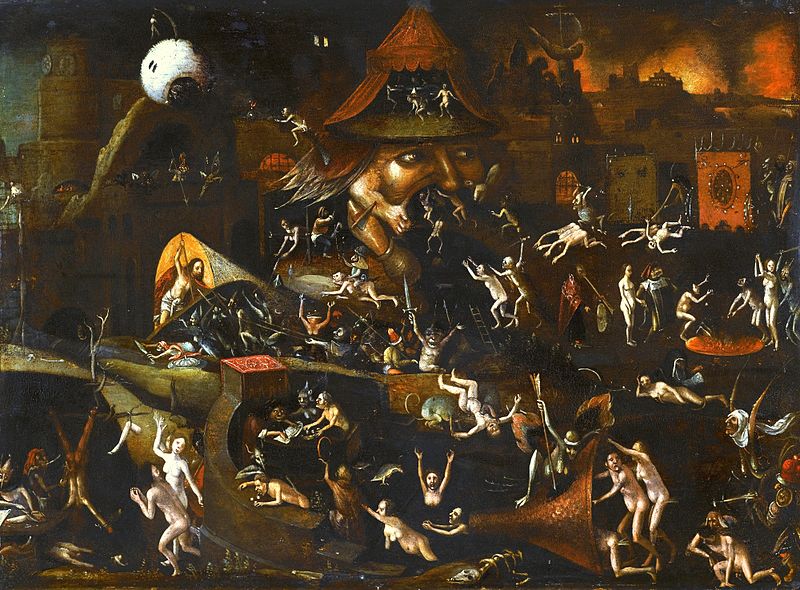
File:Follower of Jheronimus Bosch - The Harrowing of Hell.jpg
“The Harrowing of Hell” Hieronymus Bosch

Just Think Your Way Out of Sickness!

For more on plagues and leadership, see this post.

Aelian, Varia Historia 13.27

“Remember that Socrates’ body was thought to be orderly and in control of wisdom for this reason too. When the Athenians were suffering a pandemic and some were dying and others were near death, Socrates was the only one who was not sick. What mind do we think shared space with such a body?”

Ὅτι τὸ Σωκράτους σῶμα πεπίστευτο κόσμιον καὶ σωφροσύνης ἐγκρατὲς γεγονέναι καὶ ταύτῃ. ἐνόσουν Ἀθηναῖοι πανδημεί, καὶ οἱ μὲν ἀπέθνῃσκον, οἱ δὲ ἐπιθανατίως εἶχον, Σωκράτης δὲ μόνος οὐκ ἐνόσησε τὴν ἀρχήν. ὁ τοίνυν τοιούτῳ συνὼν σώματι τίνα ἡγούμεθα ἐσχηκέναι ψυχήν;

Apollonius of Tyana, 8.28

“Do these practices merely make a refinement of the senses or establish power over the greatest and most amazing forces? You need to see what I mean from different things, not the least of which were done during that epidemic in Ephesus.

When the disease was in the shape of an old beggar, I saw it and once I saw it I tackled it. I did not stop the disease but instead I destroyed it. The one I prayed to is clear as day in the temple which I built in thanks. It was for Herakles the Defender, the one I chose as a helper—because he is wise and brave, he once cleansed Elis of a plague and wiped away the waves of filth which the earth released when Augeas was tyrant.”

“Ἆρ᾿ οὖν τὸ οὕτως διαιτᾶσθαι λεπτότητα μόνον ἐργάζεται τῶν αἰσθήσεων ἢ ἰσχὺν ἐπὶ τὰ μέγιστά τε καὶ θαυμασιώτατα; θεωρεῖν δ᾿ ἔξεστιν ὃ λέγω καὶ ἀπ᾿ ἄλλων μέν, οὐχ ἥκιστα δὲ κἀκ τῶν ἐν Ἐφέσῳ περὶ τὴν νόσον ἐκείνην πραχθέντων· τὸ γὰρ τοῦ λοιμοῦ εἶδος, πτωχῷ δὲ γέροντι εἴκαστο, καὶ εἶδον καὶ ἰδὼν εἷλον, οὐ παύσας νόσον, ἀλλ᾿ ἐξελών, ὅτῳ δ᾿ εὐξάμενος, δηλοῖ τὸ ἱερόν, ὃ ἐν Ἐφέσῳ ὑπὲρ τούτου ἱδρυσάμην, Ἡρακλέους μὲν γὰρ Ἀποτροπαίου ἐστί, ξυνεργὸν δ᾿ αὐτὸν εἱλόμην, ἐπειδὴ σοφός τε καὶ ἀνδρεῖος ὢν ἐκάθηρέ ποτε λοιμοῦ τὴν Ἦλιν, τὰς ἀναθυμιάσεις ἀποκλύσας, ἃς παρεῖχεν ἡ γῆ κατ᾿ Αὐγέαν τυραννεύοντα.

File:Philosopher probably Apollonius of Tyana Heraklion museum original.jpg
Statue of a philosopher, probably Apollonius of Tyana. Late 2nd – 3rd century AD.

“You’re Too Keen On Dead Stuff”

Richard West to Thomas Gray, May 11, 1742:

Your fragment is in Aulus Gellius; and both it and your Greek delicious. But why are you thus melancholy? I am so sorry for it, that you see I cannot forbear writing again the very first opportunity; though I have little to say except to expostulate with you about it. I find you converse much with the dead, and I do not blame you for that; I converse with them too, though not indeed with the Greek. But I must condemn you for your longing to be with them. What, are there no joys among the living? I could almost cry out with Catullus, “Alphene immemor, atque unanimis false sodalibus!” But to turn an accusation thus upon another, is ungenerous; so I will take my leave of you for the present with a “Vale et vive paulisper cum vivis.”

Just a Lazy Sunday Morning Contemplating the Nature of Things

Cicero, Tusculan Disputations. 3.16

“To begin with, they wrongly reject prior meditation on future affairs. For there is nothing which works so well to calm or relieve anxiety as much as the thought throughout your life that there is nothing that is can’t happen; there’s no contemplation better for our human condition as the law of of life and learning obedience to it—this doesn’t make us sad all the time but keeps us from ever being so. For the person who reflects on the nature of things, on the variety of life, and the precarity of human existence is not sad in considering these things but is carrying out the duty of wisdom in the fullest way.

For they pursue both in enjoying the particular harvest of philosophy by considering what happens in human life and in suffering adverse outcomes by cleansning with a three-part solace. First, by previously accepting the possibility of misfortune—which is the most way of weakening and managing any annoyance and second, by learning that human events must be endured humanely; and third, by recognizing that there is nothing evil except for blame and there is no blame when the event is something against which no human can endure.”

Principio male reprehendunt praemeditationem rerum futurarum. Nihil est enim quod tam obtundat elevetque aegritudinem quam perpetua in omni vita cogitatio nihil esse, quod non accidere possit, quam meditatio condicionis humanae, quam vitae lex commentatioque parendi, quae non hoc adfert, ut semper maereamus, sed ut numquam. Neque enim qui rerum naturam, qui vitae varietatem, qui imbecillitatem generis humani cogitat, maeret, cum haec cogitat, sed tum vel maxime sapientiae fungitur munere. Utrumque enim consequitur, ut et considerandis rebus humanis proprio philosophiae fruatur officio et adversis casibus triplici consolatione sanetur: primum quod posse accidere diu cogitavit, quae cogitatio una maxime molestias omnes extenuat et diluit; deinde quod humana humane ferenda intelligit; postremo quod videt malum nullum esse nisi culpam, culpam autem nullam esse, cum id, quod ab homine non potuerit praestari, evenerit.


Lucretius, De Rerum Natura .540-147

“Unless matter itself had been eternal before our time
Everything would have already reverted to nothing
And whatever we see would also have come from nothing.
But since I have demonstrated that nothing can be made from nothing
And what has been made cannot be returned to nothing
There ought to be a primal creation for the immortal body
Where everything diffuses again at the final moment
to supply matter itself for the rebirth of things.”

raeterea nisi materies aeterna fuisset,
antehac ad nilum penitus res quaeque redissent,
de niloque renata forent quaecumque videmus.
at quoniam supra docui nil posse creari
de nilo neque quod genitum est ad nil revocari,
esse inmortali primordia corpore debent,
dissolui quo quaeque supremo tempore possint,
materies ut suppeditet rebus reparandis.

Pharmorphix, Cambridge
https://www.diamond.ac.uk/Home/News/LatestNews/14-11-14.html

When This is All Over, It Will Happen Again

Nemesius, De natura Hominis 37

“The stoics say that once the planets return into the same sign and location where each one was at the beginning when the universe first arose, in that appointed circuit of time there is a burning and purging of existence and everything returns necessarily to the same order. Each of the stars that travels again ends up indistinguishable from how they were in the previous cycle.

They say that Socrates will be there again along with Plato and each of the people with them and their friends, and their fellow citizens. They will experience the same things, do the same things, and try their hand at the same things; and every city, village, and field will be the same. This re-creation of everything happens not once but often

In the boundless space, the things turn out the same without this completion. The gods, because they do not submit to that destruction and have become away from just one cycle, know everything that is going to happen in subsequent eras from a single turn. There’s nothing different in what happens from before but everything is indistinguishable down to the smallest detail.”


οἱ δὲ Στωϊκοί φασιν ἀποκαθισταμένους τοὺς πλανήτας εἰς τὸ αὐτὸ σημεῖον κατά τε μῆκος καὶ πλάτος ἔνθα τὴν ἀρχὴν ἕκαστος ἦν ὅτε τὸ πρῶτον ὁ κόσμος συνέστη, ἐν ῥηταῖς χρόνων περιόδοις ἐκπύρωσιν καὶ φθορὰν τῶν ὄντων ἀπεργάζεσθαι, καὶ πάλιν ἐξ ὑπαρχῆς εἰς τὸ αὐτὸ τὸν κόσμον ἀποκαθίστασθαι, καὶ τῶν ἀστέρων ὁμοίως πάλιν φερομένων ἕκαστα τῶν ἐν τῇ προτέρᾳ περιόδῳ γενομένων ἀπαραλλάκτως ἀποτελεῖσθαι.

ἔσεσθαι γὰρ πάλιν Σωκράτην καὶ Πλάτωνα καὶ ἕκαστον τῶν ἀνθρώπων σὺν τοῖς αὐτοῖς καὶ φίλοις καὶ πολίταις, καὶ τὰ αὐτὰ πείσεσθαι, καὶ τοῖς αὐτοῖς συντεύξεσθαι καὶ τὰ αὐτὰ μεταχειριεῖσθαι, καὶ πᾶσαν πόλιν καὶ κώμην καὶ ἀγρὸν ὁμοίως ἀποκαθίστασθαι· γίνεσθαι δὲ τὴν ἀποκατάστασιν τοῦ παντὸς οὐχ ἅπαξ ἀλλὰ πολλάκις·

μᾶλλον δὲ εἰς ἄπειρον, καὶ ἀτελευτήτως τὰ αὐτὰ ἀποκαθίστασθαι· τοὺς δὲ θεοὺς τοὺς μὴ ὑποκειμένους τῇ φθορᾷ ταύτῃ, παρακολουθήσαντας μιᾷ περιόδῳ γινώσκειν ἐκ ταύ- πάντα τὰ μέλλοντα ἔσεσθαι ἐν ταῖς ἑξῆς περιόδοις·  οὐδὲν γὰρ ξένον ἔσεσθαι παρὰ τὰ γενόμενα πρότερον, ἀλλὰ πάντα ὡσαύτως ἀπαραλλάκτως ἄχρι καὶ τῶν ἐλαχίστων.

or

Renaissance Stagecoach Verse

Coleridge, Biographia Literaria  (XVI):

Not otherwise is it with the more polished poets of the fifteenth and sixteenth centuries, especially those of Italy. The imagery is almost always general: sun, moon, flowers, breezes, murmuring streams, warbling songsters, delicious shades, lovely damsels cruel as fair, nymphs, naiads, and goddesses, are the materials which are common to all, and which each shaped and arranged according to his judgment or fancy, little solicitous to add or to particularize. If we make an honourable exception in favour of some English poets, the thoughts too are as little novel as the images; and the fable of their narrative poems, for the most part drawn from mythology, or sources of equal notoriety, derive their chief attractions from the manner of treating them; from impassioned flow, or picturesque arrangement.

In opposition to the present age, and perhaps in as faulty an extreme, they placed the essence of poetry in the art. The excellence, at which they aimed, consisted in the exquisite polish of the diction, combined with perfect simplicity. This their prime object they attained by the avoidance of every word, which a gentleman would not use in dignified conversation, and of every word and phrase, which none but a learned man would use; by the studied position of words and phrases, so that not only each part should be melodious in itself, but contribute to the harmony of the whole, each note referring and conducting to the melody of all the foregoing and following words of the same period or stanza; and lastly with equal labour, the greater because unbetrayed, by the variation and various harmonies of their metrical movement.

Their measures, however, were not indebted for their variety to the introduction of new metres, such as have been attempted of late in the Alonzo and Imogen, and others borrowed from the German, having in their very mechanism a specific overpowering tune, to which the generous reader humours his voice and emphasis, with more indulgence to the author than attention to the meaning or quantity of the words; but which, to an ear familiar with the numerous sounds of the Greek and Roman poets, has an effect not unlike that of galloping over a paved road in a German stage-waggon without springs. On the contrary, the elder bards both of Italy and England produced a far greater as well as more charming variety by countless modifications, and subtle balances of sound in the common metres of their country. A lasting and enviable reputation awaits that man of genius, who should attempt and realize a union;—who should recall the high finish, the appropriateness, the facility, the delicate proportion, and above all, the perfusive and omnipresent grace, which have preserved, as in a shrine of precious amber, the Sparrow of Catullus, the Swallow, the Grasshopper, and all the other little loves of Anacreon; and which, with bright, though diminished glories, revisited the youth and early manhood of Christian Europe, in the vales of Arno, and the groves of Isis and of Cam; and who with these should combine the keener interest, deeper pathos, manlier reflection, and the fresher and more various imagery, which give a value and a name that will not pass away to the poets who have done honour to our own times, and to those of our immediate predecessors.

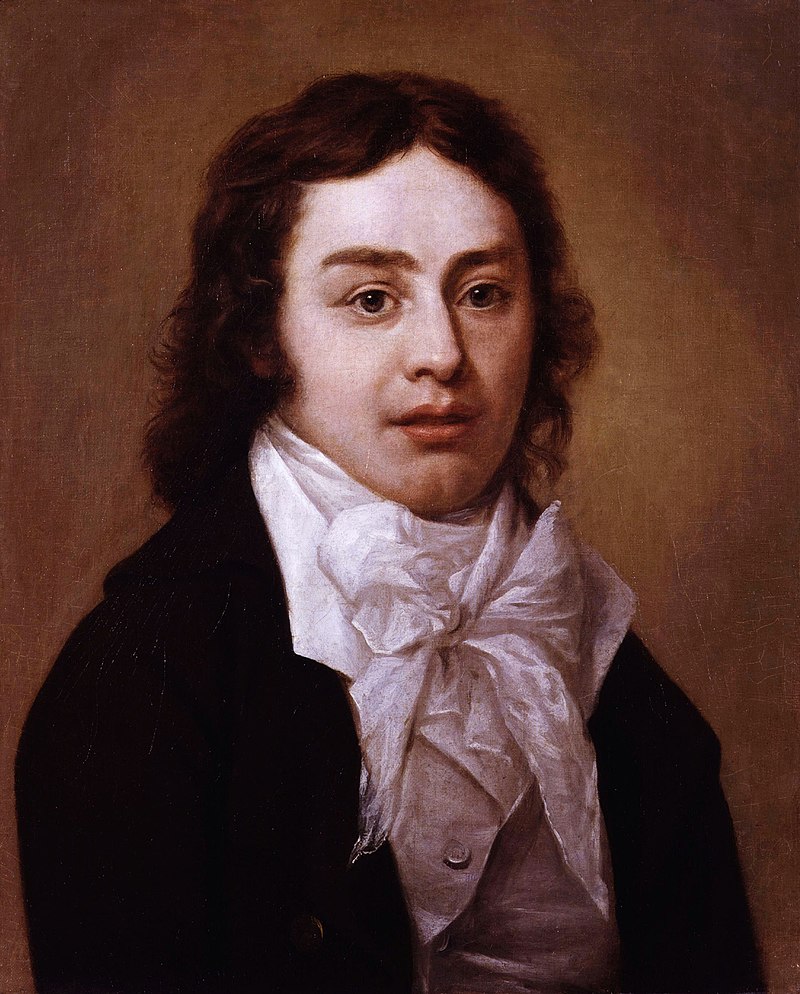
Coleridge in 1795

The Power of the Cold

Some sophistic considerations from Plutarch

On The Principle of Cold (Moralia 945)

“Is there truly some power of the cold, Favorinus, a principle and substantial thing, just as fire is the principle power of heat, by the presence of and through sharing of which each thing becomes cold? Or is coldness the subtraction of warmth just as people say that darkness is bereavement of life and stillness the absence of movement? Cold does seem to be still while warm has movement while the cooling of higher temperatures occurs by no presence of a force but instead thanks to the separation of heat. For heat appears to leave at the very same time that the rest of a substance cools. And steam, which water emits as it boils, escapes with the passing of the warmth. For this reason the larger amount loses mass when it cools as it loses the heat and nothing else replaces it.

As a starting point, shouldn’t someone be suspicious of this argument that it denies many types of forces by defining them not as characteristics or aspects but instead as the opposite of aspects and characteristics—for example, weight is the negation of lightness, hardness the absence of softness, black the opposite of whiteness, bitter of sweet, and of these rest of matters each develops an opposite force rather than mere negation….”

  1. Ἔστι τις ἄρα τοῦ ψυχροῦ δύναμις, ὦ Φαβωρῖνε, πρώτη καὶ οὐσία, καθάπερ τοῦ θερμοῦ τὸ πῦρ, ἧς παρουσίᾳ τινὶ καὶ μετοχῇ γίνεται τῶν ἄλλων ἕκαστον ψυχρόν· ἢ μᾶλλον ἡ ψυχρότης στέρησίς ἐστι θερμότητος, ὥσπερ τοῦ φωτὸς τὸ σκότος λέγουσι καὶ τῆς κινήσεως τὴν στάσιν; ἐπεὶ καὶ τὸ ψυχρὸν ἔοικε στάσιμον εἶναι, κινητικὸν δὲ τὸ θερμόν· αἵ τε τῶν θερμῶν καταψύξεις οὐδεμιᾶς παρουσίᾳ γίνονται δυνάμεως, ἀλλ᾿ ἐκστάσει θερμότητος· ἅμα γὰρ ἀπιοῦσ᾿ ὅλη2φαίνεται καὶ ψύχεται τὸ ὑπολειπόμενον· ὁ γὰρ ἀτμός, ὃν τὰ ζέοντα τῶν ὑδάτων μεθίησιν, ἀπιόντι τῷ θερμῷ συνεκπίπτει· διὸ καὶ μειοῖ τὸ πλῆθος ἡ περίψυξις ἐκκρίνουσα τὸ θερμόν, ἑτέρου μηδενὸς ἐπεισιόντος.
  2. Ἤ πρῶτον μὲν ἄν τις ὑπίδοιτο τοῦ λόγου τούτου τὸ πολλὰς τῶν ἐμφανῶν ἀναιρεῖν δυνάμεων, ὡς οὐ ποιότητας οὐδ᾿ ἕξεις, ἕξεων δὲ καὶ ποιοτήτων στερήσεις οὔσας,3βαρύτητα μὲν κουφότητος καὶ σκληρότητα μαλακότητος, τὸ μέλαν δὲ τοῦ λευκοῦ καὶ τὸ πικρὸν τοῦ γλυκέος, καὶ ὧν ἕκαστον ἑκάστῳ πέφυκεν ἀντικεῖσθαι κατὰ δύναμιν, οὐχ ὡς ἕξει στέρησις·

    Image result for ancient greek and roman cold
    Not dressed for this weather