Bypassing Treatment for Sorrow

Libanius, 6 6. Ἀρισταινέτῳ

“When I heard that your wife was sick, I felt compassion as I thought about how you probably felt about her condition. Then, when I learned that she died, I moaned out loud, taking it badly that Aristainetos, a man so naturally suited to celebrations, was in grief.

I was going to try to comfort you with a speech, but I restrained myself because I worried that even though I think I know you well I might be caught ignorant. For those passages I was about to use to relieve you–the bits from Pindar and Simonides and all those we are in the habit of using from the tragedians as a treatment for sorrow–I imagine that you knew them long ago and spoke them to others yourself.

So I figured that if these were the kinds of things to comfort your despair, then you could minister to yourself or, if not, it would be useless for someone else to recite them to you. So, I stopped that project and I offer instead a summary of everything that has happened during the winter.”

  1. Καὶ ὅτε ἀσθενεῖν σοι τὴν γυναῖκα ἠκούομεν, συνηλγοῦμεν ἐννοοῦντες ὡς εἰκός σε διακεῖσθαι καμνούσης, καὶ ἐπειδὴ τὴν τελευτὴν ἐπυθόμην, ἀνῴμωξα δεινόν τι ποιούμενος Ἀρισταίνετον εἶναι ἐν πένθει, οὗ τῇ φύσει πανηγύρεις πρέπουσιν.
  2. ὁρμήσας δὲ παραμυθεῖσθαι λόγοις ἀνέσχον δείσας μὴ πάνυ σε δοκῶν εἰδέναι ἔπειτα ἁλοίην ἀγνοῶν. οἷς γὰρ ἔμελλόν σε κουφιεῖν, τούτοις δὴ τοῖς Πινδάρου καὶ Σιμωνίδου, καὶ ὅσα ἐκ τραγῳδιῶν εἰώθαμεν φάρμακα λύπῃ προσάγειν, πάντα ἐδόκεις μοι πάλαι τε εἰδέναι κἂν πρὸς ἄλλους εἰπεῖν.
  3. ἐλογιζόμην οὖν ὅτι, εἰ μὲν οἷά τε κατακοιμίζειν ἀθυμίαν, αὐτὸς ἰάσῃ σαυτόν, εἰ δ᾿ οὐχ οἷά τε, καὶ παρ᾿ ἄλλου μάτην ἂν λέγοιτο. διὰ ταῦτα τοῦ μὲν ἀφίσταμαι, τὴν διήγησιν δέ σοι τῶν πραγμάτων ἀποδίδωμι, ἃ τοῦ χειμῶνος συνέβη.
David Teniers The Younger “Man of Sorrow”

Lies About Etymology and Etymological Lies

Plato, Cratylus 421b

“It seems that the word onoma [name] is made up from a phrase which means that “this is what we happen to be searching for, the word”. You can recognize this very thing better when we say onomaston, for this clearly reflects that it is about “that which is search” [hon hou masma estin].

Truth [alêtheia] is similar to the rest in this: for the divine movement of existnence seems to be expressed by this utterance—a-lê-theia—as if it were divine wandering, theia – ousa – alê. But pseudos—fallacy—is the opposite of movement. For, in turn, when something is criticized and is held back and is compelled to be silent, then it is like people who are asleep, or those who kath – eudousi. The psi which is added to the beginning of the word hides the true meaning of the name.

 Ἔοικε τοίνυν ἐκ λόγου ὀνόματι συγκεκροτημένῳ, λέγοντος ὅτι τοῦτ᾿ ἔστιν ὄν, οὗ τυγχάνει ζήτημα ὄν, τὸ ὄνομα. μᾶλλον δὲ ἂν αὐτὸ γνοίης ἐν ᾧ λέγομεν τὸ ὀνομαστόν· ἐνταῦθα γὰρ σαφῶς λέγει τοῦτο εἶναι ὂν οὗ μάσμα ἐστίν. ἡ δ᾿ ἀλήθεια, καὶ τοῦτο τοῖς ἄλλοις ἔοικε· ἡ γὰρ θεία τοῦ ὄντος φορὰ ἔοικε προσειρῆσθαι τούτῳ τῷ ῥήματι, τῇ ἀληθείᾳ, ὡς θεία οὖσα ἄλη. τὸ δὲ ψεῦδος τοὐναντίον τῇ φορᾷ· πάλιν γὰρ αὖ λοιδορούμενον ἥκει τὸ ἰσχόμενον καὶ τὸ ἀναγκαζόμενον ἡσυχάζειν, ἀπείκασται δὲ τοῖς καθεύδουσι· τὸ ψῖ δὲ προσγενόμενον ἐπικρύπτει τὴν βούλησιν τοῦ ὀνόματος·

Plato, Cratylus 421d

“Say that if we do not recognize a word then it is foreign in origin. This is perhaps mostly true for some of them, and it may be impossible to discover the first words because of their antiquity. For this reason it would not at all be surprising, when words are twisted in every which way, if a really ancient Greek word would be no different from a current foreign one.”

Φάναι, ὃ ἂν μὴ γιγνώσκωμεν, βαρβαρικόν τι τοῦτ᾿ εἶναι. εἴη μὲν οὖν ἴσως ἄν τι τῇ ἀληθείᾳ καὶ τοιοῦτον αὐτῶν, εἴη δὲ κἂν ὑπὸ παλαιότητος τὰ πρῶτα τῶν ὀνομάτων ἀνεύρετα εἶναι· διὰ γὰρ τὸ πανταχῇ στρέφεσθαι τὰ ὀνόματα οὐδὲν θαυμαστὸν ἂν εἴη, εἰ ἡ παλαιὰ φωνὴ πρὸς τὴν νυνὶ βαρβαρικῆς μηδὲν διαφέρει.

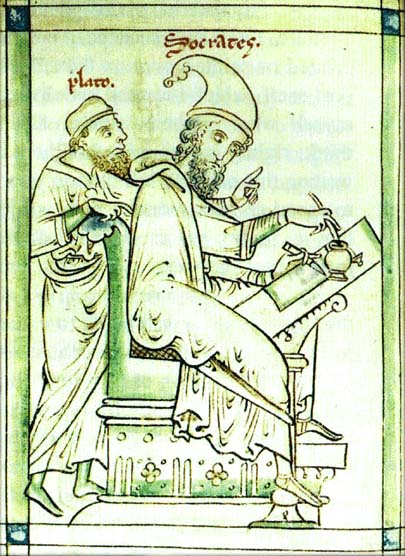
Plato and Socrates

The Rumble of War

Homer, Iliad 4.440-456

Ares whipped up the Trojans, Athena the Achaeans,
and with her were Terror, Rout, and ravenous Strife,
the sister-comrade of man-murdering Ares.
Strife is small when she first lifts her head. But then
her head towers into heaven, and she roams the earth.
And now she’s tossed the same warring spirit into two armies,
and she moves through the crush of men, multiplying their woes.

When the Trojans and Achaeans came together,
Shields and spears and bronze-armored men collided.
Bossed shields clanged against bossed shields.
There men cried and men exulted.
Men killed and men were killed.
And the earth flowed with blood.

Just as when swollen rivers rush down a mountain,
their mighty waters, torrents from huge springs,
hurl themselves together where they meet,
and some shepherd in the mountain hears the distant rumble–
just so, when the armies met in battle,
came the shouts and exertions of men.

ὄρσε δὲ τοὺς μὲν Ἄρης, τοὺς δὲ γλαυκῶπις Ἀθήνη
Δεῖμός τʼ ἠδὲ Φόβος καὶ Ἔρις ἄμοτον μεμαυῖα,
Ἄρεος ἀνδροφόνοιο κασιγνήτη ἑτάρη τε,
ἥ τʼ ὀλίγη μὲν πρῶτα κορύσσεται, αὐτὰρ ἔπειτα
οὐρανῷ ἐστήριξε κάρη καὶ ἐπὶ χθονὶ βαίνει·
ἥ σφιν καὶ τότε νεῖκος ὁμοίϊον ἔμβαλε μέσσῳ
ἐρχομένη καθʼ ὅμιλον ὀφέλλουσα στόνον ἀνδρῶν.

οἳ δʼ ὅτε δή ῥʼ ἐς χῶρον ἕνα ξυνιόντες ἵκοντο,
σύν ῥʼ ἔβαλον ῥινούς, σὺν δʼ ἔγχεα καὶ μένεʼ ἀνδρῶν
χαλκεοθωρήκων· ἀτὰρ ἀσπίδες ὀμφαλόεσσαι
ἔπληντʼ ἀλλήλῃσι, πολὺς δʼ ὀρυμαγδὸς ὀρώρει.
ἔνθα δʼ ἅμʼ οἰμωγή τε καὶ εὐχωλὴ πέλεν ἀνδρῶν
ὀλλύντων τε καὶ ὀλλυμένων, ῥέε δʼ αἵματι γαῖα.

ὡς δʼ ὅτε χείμαρροι ποταμοὶ κατʼ ὄρεσφι ῥέοντες
ἐς μισγάγκειαν συμβάλλετον ὄβριμον ὕδωρ
κρουνῶν ἐκ μεγάλων κοίλης ἔντοσθε χαράδρης,
τῶν δέ τε τηλόσε δοῦπον ἐν οὔρεσιν ἔκλυε ποιμήν·
ὣς τῶν μισγομένων γένετο ἰαχή τε πόνος τε.

Russian war games

Larry Benn has a B.A. in English Literature from Harvard College, an M.Phil in English Literature from Oxford University, and a J.D. from Yale Law School. Making amends for a working life misspent in finance, he’s now a hobbyist in ancient languages and blogs at featsofgreek.blogspot.com.

Overpowering the Truth

Sophocles, fr. 86.3

“What is believed overpowers the truth.”

τό τοι νομισθὲν τῆς ἀληθείας κρατεῖ.

Stobaeus, 3.1.154

“Truth is victorious within itself, but belief wins over those without.”

῾Η ἀλήθεια παρ’ αὑτῇ νικᾷ, ἡ δὲ δόξα παρὰ τοῖς ἔξω.

Plato, Phaedrus, 272-273 [cf. Philebus on difference between truth and opinion]

“In the courts, no one has any concern for the truth of matters at all, but only for that which persuades, this is what is probable. For this reason, to speak artfully one must pay attention to probability. Sometimes it is not possible to say what was done in both the accusation and the defense, even if it was unlikely to have happened, but only what was probable. So, a speaker must always pursue what is probable, saying many things to bid farewell to the truth. For this, when it happens for the entire speech, provides furnishes the whole craft of speaking.”

τὸ παράπαν γὰρ οὐδὲν ἐν τοῖς δικαστηρίοις τούτων ἀληθείας μέλειν οὐδενί, ἀλλὰ τοῦ πιθανοῦ· τοῦτο δ᾿ εἶναι τὸ εἰκός, ᾧ δεῖν προσέχειν τὸν μέλλοντα τέχνῃ ἐρεῖν. οὐδὲ γὰρ αὐτὰ τὰ πραχθέντα δεῖν λέγειν ἐνίοτε, ἐὰν μὴ εἰκότως ᾖ πεπραγμένα, ἀλλὰ τὰ εἰκότα, ἔν τε κατηγορίᾳ καὶ ἀπολογίᾳ· καὶ πάντως λέγοντα τὸ δὴ εἰκὸς διωκτέον εἶναι, πολλὰ εἰπόντα χαίρειν τῷ ἀληθεῖ· τοῦτο γὰρ διὰ παντὸς τοῦ λόγου γιγνόμενον τὴν ἅπασαν τέχνην πορίζειν.

Harmonika, 18.4

“The truth is simple and clean, a lie is the opposite.”

ἁπλοῦν γὰρ ἡ ἀλήθεια καὶ καθαρόν, τὸ δὲ ψεῦδος τοὐναντίον.

Cf. Aesch. fr. 288 “True words are simple ones.” ‘ἁπλᾶ γάρ ἐστι τῆς ἀληθείας ἔπη’

Crispin van den Broeck, 1523, “An Allegory of Truth and Deception”

The Truth Beyond Mortal Minds

Stobaeus 2.1.1

“Concerning those who interpret divine matters, the truth of these thoughts in reality is beyond comprehension for mortals.”

Περὶ τῶν τὰ θεῖα ἑρμηνευόντων, καὶ ὡς εἴη ἀνθρώποις ἀκατάληπτος ἡ τῶν νοητῶν κατὰ τὴν οὐσίαν ἀλήθεια.

Plato, Timaeus 71e-72a

“In remembering the missive of their father, those who made us when he ordered them to make a mortal race as good as they were able, purified the base part of us in such a way by establishing the power of divination so that we might approach the truth. A sufficient sign that god granted the power of divination to balance human foolishness is this: no one approaches inspired and true divination when they are in their right mind but only when his intelligence is compromised in sleep or sickness or set aside by some divine possession.

Instead, when someone is rational they need to reconsider and remember what was said in a dream or vision under the influence of divination and the nature of divine inspiration, to analyze however many visions were seen and to use reason to figure out what they mean for good or for ill in the future, the past, or the present. It is not the job of someone who is in a manic state still to judge what is seen or what they said. It was well insisted in ancient times that to know one’s own matters and one’s self is proper only to the rational mind.”

Μεμνημένοι γὰρ τῆς τοῦ πατρὸς ἐπιστολῆς οἱ ξυστήσαντες ἡμᾶς, ὅτε τὸ θνητὸν ἐπέστελλε γένος ὡς ἄριστον εἰς δύναμιν ποιεῖν, οὕτω δὴ κατορθοῦντες καὶ τὸ φαῦλον ἡμῶν, ἵνα ἀληθείας πῃ προσάπτοιτο, κατέστησαν ἐν τούτῳ τὸ μαντεῖον. ἱκανὸν δὲ σημεῖον ὡς μαντικὴν ἀφροσύνῃ θεὸς ἀνθρωπίνῃ δέδωκεν· οὐδεὶς γὰρ ἔννους ἐφάπτεται μαντικῆς ἐνθέου καὶ ἀληθοῦς, ἀλλ᾿ ἢ καθ᾿ ὕπνον τὴν τῆς φρονήσεως πεδηθεὶς δύναμιν ἢ διὰ νόσον ἢ διά τινα ἐνθουσιασμὸν παραλλάξας. ἀλλὰ ξυννοῆσαι μὲν ἔμφρονος τά τε ῥηθέντα ἀναμνησθέντα ὄναρ ἢ ὕπαρ ὑπὸ τῆς μαντικῆς τε καὶ ἐνθουσιαστικῆς φύσεως, καὶ ὅσα ἂν φαντάσματα ὀφθῇ, πάντα λογισμῷ διελέσθαι, ὅπῃ τι σημαίνει καὶ ὅτῳ μέλλοντος ἢ παρελθόντος ἢ παρόντος κακοῦ ἢ ἀγαθοῦ· τοῦ δὲ μανέντος ἔτι τε ἐν τούτῳ μένοντος οὐκ ἔργον τὰ φανέντα καὶ φωνηθέντα ὑφ᾿ ἑαυτοῦ κρίνειν, ἀλλ᾿ εὖ καὶ πάλαι λέγεται τὸ πράττειν καὶ γνῶναι τά τε αὑτοῦ καὶ ἑαυτὸν σώφρονι μόνῳ προσήκειν.

Porphyry, Ad Marcella 24

“Let four elements rule chiefly when it comes to god: belief, truth, desire, and hope. For it is right to believe that the only safety is cleaving to god and having faith that must be eager to learn the truth about him and knowing how to desire what is known and once desired to nourish the mind on good hopes throughout your life. For good people supersede base ones thanks to good hopes. Hence, let these elements and this many rule.”

Τέσσαρα στοιχεῖα μάλιστα κεκρατύνθω περὶ θεοῦ· πίστις, ἀλήθεια, ἔρως, ἐλπίς. πιστεῦσαι γὰρ δεῖ ὅτι μόνη σωτηρία ἡ πρὸς τὸν θεὸν ἐπιστροφή, καὶ πιστεύσαντα ὡς ἔνι μάλιστα σπουδάσαι τἀληθῆ γνῶναι περὶ αὐτοῦ, καὶ γνόντα ἐρασθῆναι τοῦ γνωσθέντος, ἐρασθέντα δὲ ἐλπίσιν ἀγαθαῖς τρέφειν τὴν ψυχὴν διὰ τοῦ βίου. ἐλπίσι γὰρ ἀγαθαῖς οἱ ἀγαθοὶ τῶν φαύλων ὑπερέχουσι. στοιχεῖα μὲν οὖν ταῦτα καὶ τοσαῦτα κεκρατύνθω.

Iamblichus, Protrepticus 42.2

“If a human being, then, is some kind of a simple creature and its essence is structured according to reason and thought, then it has no other work than the most precise truth alone and telling the truth about reality. But if a human being is a composite of many abilities, it is clear that it will function because it is created from more, always it is the best of these actions, for instance the health of a doctor or the preservation provided by a ship’s captain.”

εἰ μὲν οὖν ἁπλοῦν τι ζῷόν ἐστιν ὁ ἄνθρωπος καὶ κατὰ λόγον καὶ νοῦν τέτακται αὐτοῦ ἡ οὐσία, οὐκ ἄλλο ἐστὶν αὐτοῦ ἔργον ἢ μόνη ἡ ἀκριβεστάτη ἀλή-
θεια καὶ τὸ περὶ τῶν ὄντων ἀληθεύειν· εἰ δ’ ἐστὶν ἐκ πλειόνων δυνάμεων συμπεφυκός, δῆλόν ἐστιν ὡς ἀφ’ οὗ πλείω πέφυκεν ἀποτελεῖσθαι, ἀεὶ τούτων τὸ βέλτιστον ἔργον ἐστίν, οἷον ἰατρικοῦ ὑγεία καὶ κυβερνήτου σωτηρία. βέλτιον δὲ οὐδὲν ἔχομεν λέγειν ἔργον

The Delphic Priestess, Romeyn de Hooghe, 1687

The Need for a Serious Friend or a Committed Enemy

Plutarch, Progress in Virtue 81f-82b

“When they need healing, people who have tooth pain or a stubbed toe go to doctors while those who have a fever ask them to come to their homes and help them. But people who fall into melancholy or a frenzy or hallucinations often cannot handle doctors visiting them and either urge them to leave or chase them off because they do not perceive that they are sick thanks to the severity of their sickness.

This is true as well of those who seriously fuck up. The people who cannot be cured are those who behave hatefully and cruelly and turn mean to those who try to correct them or help them. Those who endure and even welcome help do better. It is no small sign of progress when someone who is screwing up listens to those who try to correct them, to explain what the problem is, to reveal weakness and not to take pleasure in hiding mistakes or in them not being known but to admit them and the need to be held and advised by someone else. 

That’s why Diogenes says somewhere that for the sake of safety a person should be concerned about finding either a serious friend or a committed enemy, to escape wickedness either through direct critique or kind assistance.”

Τῶν τοίνυν δεομένων ἰατρείας οἱ μὲν ὀδόντα πονοῦντες ἢ δακτυλον αὐτόθεν βαδίζουσι παρὰ τοὺς θεραπεύοντας, οἱ δὲ πυρέττοντες οἴκαδε καλοῦσι καὶ δέονται βοηθεῖν, οἱ δ᾿ εἰς μελαγχολίαν ἢ φρενῖτιν ἢ παρακοπὴν ἥκοντες οὐδὲ φοιτῶντας ἐνιαχοῦ πρὸς αὐτοὺς ἀνέχονται, ἀλλ᾿ ἐξελαύνουσιν ἢ φεύγουσιν, μηδ᾿ ὅτι νοσοῦσιν ὑπὸ τοῦ σφόδρα νοσεῖν αἰσθανόμενοι. οὕτω δὴ καὶ τῶν ἁμαρτανόντων ἀνήκεστοι μέν εἰσιν οἱ πρὸς τοὺς ἐλέγχοντας καὶ νουθετοῦντας ἐχθρῶς καὶ ἀγρίως διατιθέμενοι καὶ χαλεπαίνοντες· οἱ δ᾿ ὑπομένοντες καὶ προσιέμενοι πραότερον ἔχουσι. τὸ δ᾿ ἑαυτὸν ἁμαρτάνοντα παρέχειν τοῖς ἐλέγχουσι καὶ τὸ πάθος λέγειν καὶ τὴν μοχθηρίαν ἀποκαλύπτειν καὶ μὴ χαίρειν λανθάνοντα μηδ᾿ ἀγαπᾶν ἀγνοούμενον ἀλλ᾿ ὁμολογεῖν καὶ δεῖσθαι τοῦ ἁπτομένου καὶ νουθετοῦντος οὐ φαῦλον ἂν εἴη προκοπῆς σημεῖον. ὥς που Διογένης ἔλεγε τῷ σωτηρίας δεομένῳ ζητεῖν προσήκειν ἢ φίλον σπουδαῖον ἢ διάπυρον ἐχθρόν, ὅπως ἐλεγχόμενος ἢ θεραπευόμενος ἐκφεύγοι τὴν κακίαν. 

Joseph Stevens, “Enemies” 1854

The Evidence from Madness: Aristotle on the Mind-Body Problem

Aristotle, Physiognomics 808b

“[in this case] the soul and the body would experience things together, but they would not have the same reactions as one another. But, now, it is entirely clear that one follows another. This is especially obvious from the following. For madness seems to be a matter of the mind; doctors, however, respond to it by cleansing the body with medicines and also by telling them to pursue certain habits in life which may relieve the mind of madness.

So, the form of the body is relieved by treatments to the body at the very same time that the soul is freed from madness. Since they are both relieved together, it is clear that their reactions are in synchrony. It is also clear from this that the forms special to the body are similar to the capabilities of the mind, with the result that all similarities in living things are clear signs of some kind of sameness.”

ἡ ψυχή τε καὶ τὸ σῶμα συμπαθῆ, οὐ μέντοι συνδιατελοῦντα ἀλλήλοις. νῦν δὲ καταφανὲς ὅτι ἑκάτερον ἑκατέρῳ ἕπεται. μάλιστα μέντοι ἐκ τοῦδε δῆλον γένοιτο. μανία γὰρ δοκεῖ εἶναι περὶ ψυχήν, καὶ οἱ ἰατροὶ φαρμάκοις καθαίροντες τὸ σῶμα καὶ διαίταις τισὶ πρὸς αὐτοῖς χρησάμενοι ἀπαλλάττουσι τὴν ψυχὴν τῆς μανίας. ταῖς δὴ τοῦ σώματος θεραπείαις καὶ ἅμα ἥ τε τοῦ σώματος μορφὴ λέλυται καὶ ἡ ψυχὴ μανίας ἀπήλλακται. ἐπειδὴ οὖν ἅμα ἀμφότερα λύονται, δῆλον ὅτι συνδιατελοῦσιν ἀλλήλοις. συμφανὲς δὲ καὶ ὅτι ταῖς δυνάμεσι τῆς ψυχῆς ὅμοιαι αἱ μορφαὶ τοῖς σώμασιν ἐπιγίνονται, ὥστ᾿ ἐστὶν ἅπαντα ὅμοια ἐν τοῖς ζῴοις τοῦ αὐτοῦ τινὸς δηλωτικά.

Epictetus, Fr. 26

“Epictetus used to say, ‘you’re a tiny soul lugging around a corpse’.”

Ψυχάριον εἶ βαστάζον νεκρόν, ὡς Ἐπίκτητος ἔλεγεν.

Add_ms_37049_f038v
London, British Library, MS Additional 37049, f. 38v

Are You Awkward Or Do You Just Have Bad Taste?

Theophrastus, Characters: Bad Taste

“Bad taste, to give a simple definition, is a kind of action which causes grief but not harm. A person with bad taste is the kind…

Who barges in and wakes someone who is sleeping just to chat;

Or who slows people down when they are about to leave;

Or he demands someone waits before they take a walk

Or, when he takes a baby from his nurse, chews his food himself, coos and makes baby-sounds, saying, “you’re more wicked than your father”

Or, while he eats, relates that he’s all cleaned out inside because he drank some hellebore and that his bile was darker than the food on their plates.

Or he is likely to ask in front of the whole household, “Tell me, momma, what day was it when you went into labor and had me?

Or, he talks about how sweet she is and complains that it is not easy to find someone to have both of them.

Or, he has a cold water cistern in his home and a garden with many vegetables, and he has a cook who prepares dishes and his house is like a hotel, since it is always full and his friends are like a vase full of holes since he is never able to fill them even trying hard.

When he is entertaining he demonstrates to his guest what kind of a person his toady is. Over drinks he challenges him by saying, “The pleasure has been prepared for the guests” and then, when they ask, “The servant will go and get her now from the pimp so she can play the flute until we’re happy.”

(1) ἔστι δὲ ἡ ἀηδία, ὡς ὅρῳ περιλαβεῖν, ἔντευξις λύπης ποιητικὴ ἄνευ βλάβης, ὁ δὲ ἀηδὴς τοιοῦτός τις,
(2) οἷος ἐγείρειν ἄρτι καθεύδοντα εἰσελθών, ἵνα αὐτῷ λαλῇ.
(3) καὶ ἀνάγεσθαι δὴ μέλλοντας κωλύειν,
(4) καὶ προσελθὼν δεῖσθαι ἐπισχεῖν, ἕως ἂν περιπατήσῃ.
(5) καὶ τὸ παιδίον τῆς τίτθης ἀφελόμενος, μασώμενος σιτίζειν αὐτὸς καὶ ὑποκορίζεσθαι ποππύζων καὶ πανουργότερον τοῦ πάππου καλῶν.
(6) καὶ ἐσθίων δὲ ἅμα διηγεῖσθαι ὡς ἐλλέβορον πιὼν ἄνω καὶ κάτω καθαρθείη καὶ ζωμοῦ τοῦ παρακειμένου ἐν τοῖς ὑποχωρήμασιν αὑτῷ μελαντέρα <εἴη> ἡ χολή.
(7) καὶ ἐρωτῆσαι δὲ δεινὸς ἐναντίον τῶν οἰκείων· “εἴπ᾿, ὦ μάμμη, ὅτ᾿ ὤδινες καὶ ἔτικτές με, τίς ἡμέρα;”
(8) †καὶ ὑπὲρ αὐτῆς δὲ λέγειν ὡς ἡδύ ἐστι, καὶ ἀμφότερα δὲ οὐκ ἔχοντα οὐ ῥᾴδιον ἄνθρωπον λαβεῖν,†
(9) καὶ ὅτι ψυχρὸν ὕδωρ ἐστὶ παρ᾿ αὐτῷ λακκαῖον, καὶ ὡς κῆπος λάχανα πολλὰ ἔχων καὶ ἁπαλὰ [ὥστε εἶναι ψυχρὸν] καὶ μάγειρος εὖ τὸ ὄψον σκευάζων, καὶ ὅτι ἡ οἰκία αὐτοῦ πανδοκεῖόν ἐστι· μεστὴ γὰρ ἀεί· καὶ τοὺς φίλους αὐτοῦ εἶναι τὸν τετρημένον πίθον· εὖ ποιῶν γὰρ αὐτοὺς οὐ δύνασθαι ἐμπλῆσαι.

(10) καὶ ξενίζων δὲ δεῖξαι τὸν παράσιτον αὑτοῦ ποῖός τίς ἐστι τῷ συνδειπνοῦντι· καὶ παρακαλῶν δὲ ἐπὶ τοῦ ποτηρίου εἰπεῖν, ὅτι “τὸ τέρψον τοὺς παρόντας παρεσκεύασται,” καὶ ὅτι “αὐτήν,” ἐὰν κελεύσωσιν, “ὁ παῖς μέτεισι παρὰ τοῦ πορνοβοσκοῦ ἤδη, ὅπως πάντες ὑπ᾿ αὐτῆς αὐλώμεθα καὶ εὐφραινώμεθα.”

Image result for muppet with bad taste
If you don’t know Peter Jackson’s Meet the Feebles, well, you’re probably just fine. But, still.

Image result for muppet with bad taste

Lucretius Tries to Write a Sex Scene: An ‘Epic’ Tawdry Tuesday

Lucretius, De Rerum Natura 4.1105-1120

“And then when they consume the flower of their age
As their limbs are laced together, just when the body senses delight
And that Venus is about to sow the furrows of the feminine field,
They press their bodies together greedily and join their wet mouths
Trying to breathe each other in as they press lips into teeth—
All pointlessly, since they can’t rub anything from there,
Nor can they truly enter each other or leave for a single body.

For this is what they often seem to want and try to do.
That’s how eagerly they cleave to Venus’s re-combinations of flesh
While their limbs become liquid under pleasure’s force.
Finally, once the lust which has amassed in their veins erupts,
Then, for a moment, there is a brief lull in the violent fire.

But soon the rabid hunger and the same madness returns,
And they quest to fulfill what they desire,
But they cannot discover any trick to overcome the pain,
And they remain uncertain, wasting away from a hidden wound.”

denique cum membris conlatis flore fruuntur
aetatis, iam cum praesagit gaudia corpus
atque in eost Venus ut muliebria conserat arva,
adfigunt avide corpus iunguntque salivas
oris et inspirant pressantes dentibus ora—
nequiquam, quoniam nil inde abradere possunt
nec penetrare et abire in corpus corpore toto;
nam facere interdum velle et certare videntur:
usque adeo cupide in Veneris compagibus haerent,
membra voluptatis dum vi labefacta liquescunt.
tandem ubi se erupit nervis conlecta cupido,
parva fit ardoris violenti pausa parumper.
inde redit rabies eadem et furor ille revisit,
cum sibi quod cupiunt ipsi contingere quaerunt,
nec reperire malum id possunt quae machina vincat:
usque adeo incerti tabescunt volnere caeco.

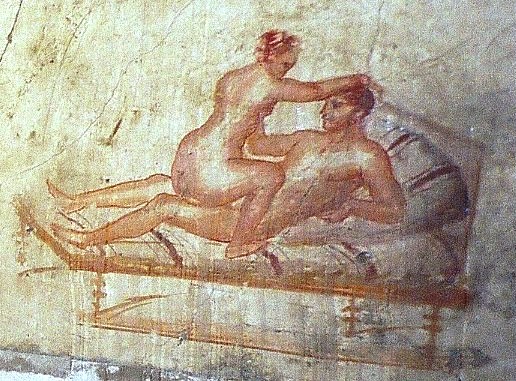
“This is how humans do it. I think.” Pompeii, House of Veii

Absentmindedness is…uh, What?

I lose my campus ID every 6 months or so; each morning, finding my keys is a wild adventure even though they are almost always in the same place…

Theophrastus, Characters: Absentmindedness

“To give it a definition, absent-mindedness, is a slowness of mind in speech and actions. An absent-minded person is the kind of person who:

Even after making a calculation with counters and coming to a sum asks the person sitting next to him, “What’s this”?

If he is called to court and meant to go, forgets and goes to the country;

If he is watching something at the theater, he is left alone when he falls a sleep;

When he eats too much he gets up at night for the bathroom and is bitten by the neighbor’s dog.

When he gets something and puts it away, is not able to find it when he looks for it;

When he learns that one of his friends has died and he should attend the funeral, he frowns and cries but says “it’s for the best”

When he gets money paid back to him he is sure to ask for proof of receipt.

He fights with his slave because he didn’t buy cucumbers even though it is winter.

He makes his children practice wrestling and running until they are exhausted.

When he is cooking bean soup in the country, he salts the pan twice, ruining the food.”

(1) ἔστι δὲ ἡ ἀναισθησία, ὡς ὅρῳ εἰπεῖν, βραδυτὴς ψυχῆς ἐν λόγοις καὶ πράξεσιν, ὁ δὲ ἀναίσθητος τοιοῦτός τις,

(2) οἷος λογισάμενος ταῖς ψήφοις καὶ κεφάλαιον ποιήσας ἐρωτᾶν τὸν παρακαθήμενον· “τί γίνεται;”

(3) καὶ δίκην φεύγων καὶ ταύτην εἰσιέναι μέλλων ἐπιλαθόμενος εἰς ἀγρὸν πορεύεσθαι.

(4) καὶ θεωρῶν ἐν τῷ θεάτρῳ μόνος καταλείπεσθαι καθεύδων.

(5) καὶ πολλὰ φαγὼν καὶ τῆς νυκτὸς ἐπὶ θάκου ἀνιστάμενος ὑπὸ κυνὸς τῆς τοῦ γείτονος δηχθῆναι.

(6) καὶ λαβών <τι> καὶ ἀποθεὶς αὐτός, τοῦτο ζητεῖν καὶ μὴ δύνασθαι εὑρεῖν.

(7) καὶ ἀπαγγέλλοντος αὐτῷ ὅτι τετελεύτηκέ τις αὐτοῦ τῶν φίλων, ἵνα παραγένηται, σκυθρωπάσας καὶ δακρύσας εἰπεῖν· “ἀγαθῇ τύχῃ.”

(8) δεινὸς δὲ καὶ ἀπολαμβάνων ἀργύριον ὀφειλόμενον μάρτυρας παραλαβεῖν.

(9) καὶ χειμῶνος ὄντος μάχεσθαι τῷ παιδὶ ὅτι σικύους οὐκ ἠγόρασεν.

(10) καὶ τὰ παιδία ἑαυτοῦ παλαίειν ἀναγκάζων καὶ τροχάζειν εἰς κόπον ἐμβάλλειν.

(11) καὶ ἐν ἀγρῷ αὐτὸς φακῆν ἕψων δὶς ἅλας εἰς τὴν χύτραν ἐμβαλὼν ἄβρωτον ποιῆσαι..

Forgetfuljones01
Forgetful Jones, a Muppet you have likely forgotten.