A Woman’s Party Invitation and a Girl’s Epitaph: Some Documentary Latin

Some more non-elite Latin provided by Brandon Conley.

A birthday invitation, excerpt (Vindolanda, Britain, 1st cent. CE)

Claudia Severa invites her friend Sulpicia Lepidina (wife of the prefect at Vindolanda) to a birthday party. Despite the use of soror, the two women are not believed to be sisters. With part of the document written by Severa herself, this (and the accompanying notes) is believed to be the earliest-known Latin written by a woman.

Side I

Cl(audia) · Seuerá Lepidinae [suae
[sa]l[u]tem
iii Idus Septembr[e]s soror ad diem
sollemnem natalem meum rogó
libenter faciás ut uenias
ad nos iucundiorem mihi

Side II

[diem] interuentú tuo facturá si
…s
Cerial[em t]uum salutá Aelius meus .[
et filiolus salutant …
… sperabo te soror
uale soror anima
mea ita ualeam
karissima et haue
 

(The italicized text was written by Severa herself)

“Claudia Severa to her Lepidina, greetings. On September 11, sister, for my birthday celebration, I ask you sincerely to make sure you come to (join) us, to make the day more fun for me by your arrival…Say hello to your Cerialis. My Aelius and little boy say hello. I await you, sister. Be well, sister, my dearest soul, so I may be well too. Hail.”

A Jewish child at Rome (Rome, c. 400 CE)

A sad text. Also a good one to use in class, it utilizes both Latin and Hebrew, and goes well with a discussion of diversity in the city and empire. It is also one of the latest dated texts in this document.

(H)Ic iacet Gaudi=
osa infantula
qui bissit annoru=
m plus minu(s) tre=
s requiebit in
pacem. שלום

“Here lies the child Gaudiosa, who lived around three years. She will rest in peace. Shalom (in Hebrew)

Tablet 291 leaf 1 (front) - click to launch image zooming viewer

A Pause in the War

In Book 7 of the Iliad, the Achaeans and Trojans agree to a pause in the war. The respite allows each side to collect and cremate the bodies of its dead fighters. The armies converge on the plain at daybreak to carry out the unhappy work: 

Homer, Iliad.7.421-432.

When the sun had only just struck the fields on its skyward climb
from Ocean’s deep and gentle streams, the armies met on the plain.
Out there, it was hard to tell if a dead man were Trojan
or Achaean. But, after washing bloody gore from each one,
the men, shedding hot tears, hoisted their dead onto wagons.
Great Priam did not permit wailing. So, it was in silence
Trojans piled their dead on the pyre, as they grieved in their hearts.
When the corpses were burned, these men went back to Ilium.
Things were much the same on the Achaean side:
they piled their dead on the pyre, as they grieved in their hearts.
And when the corpses were burned, these men went back to their ships.

Ἠέλιος μὲν ἔπειτα νέον προσέβαλλεν ἀρούρας
ἐξ ἀκαλαρρείταο βαθυρρόου Ὠκεανοῖο
οὐρανὸν εἰσανιών· οἳ δʼ ἤντεον ἀλλήλοισιν.
ἔνθα διαγνῶναι χαλεπῶς ἦν ἄνδρα ἕκαστον·
ἀλλʼ ὕδατι νίζοντες ἄπο βρότον αἱματόεντα
δάκρυα θερμὰ χέοντες ἀμαξάων ἐπάειραν.
οὐδʼ εἴα κλαίειν Πρίαμος μέγας· οἳ δὲ σιωπῇ
νεκροὺς πυρκαϊῆς ἐπινήνεον ἀχνύμενοι κῆρ,
ἐν δὲ πυρὶ πρήσαντες ἔβαν προτὶ Ἴλιον ἱρήν.
ὣς δʼ αὔτως ἑτέρωθεν ἐϋκνήμιδες Ἀχαιοὶ
νεκροὺς πυρκαϊῆς ἐπινήνεον ἀχνύμενοι κῆρ,
ἐν δὲ πυρὶ πρήσαντες ἔβαν κοίλας ἐπὶ νῆας.

Russian soldiers in WWI collecting the remains of
fallen comrades from the battlefield.

Larry Benn has a B.A. in English Literature from Harvard College, an M.Phil in English Literature from Oxford University, and a J.D. from Yale Law School. Making amends for a working life misspent in finance, he’s now a hobbyist in ancient languages and blogs at featsofgreek.blogspot.com.

Gifts of Chicks and Shells: The Fragment of the Poet Hedyle

Antiquity has left us only one fragment of the iambic poet Hedyle. It is not iambic!

Athenaeus 7.297b

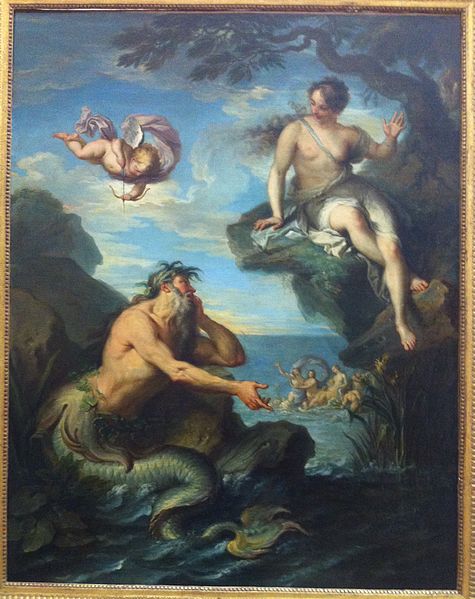
“Hêdulos, the Samian or Athenian, says that Glaukos threw himself in the sea after he fell in love with Melicertes. Hêdulê, his mother and the daughter of the Athenian Moskhinê, was a composer of iambic lines. In her poem called “Skylla”, she records that Glaukos went into his own cave after he fell in love with Skylla

“Either carrying shells as gifts
From the Erythaian cliff
Or halcyon chicks still unwinged
Presents for the girl from an anxious man.
His Siren girl neighbor felt pity
For he was swimming toward that beach
And the regions close to Aitna.”

Ἡδύλος δ᾿ ὁ Σάμιος ἢ Ἀθηναῖος Μελικέρτου φησὶν ἐρασθέντα τὸν Γλαῦκον ἑαυτὸν ῥῖψαι εἰς τὴν | θάλατταν. Ἡδύλη δ᾿ ἡ τοῦ ποιητοῦ τούτου μήτηρ, Μοσχίνης δὲ θυγάτηρ τῆς Ἀττικῆς ἰάμβων ποιητρίας, ἐν τῇ ἐπιγραφομένῃ Σκύλλῃ ἱστορεῖ τὸν Γλαῦκον ἐρασθέντα Σκύλλης ἐλθεῖν αὐτῆς εἰς τὸ ἄντρον

Σκύλλα
ἢ κόγχους δωρήματ’ ᾿Ερυθραίης ἀπὸ πέτρης
ἢ τοὺς ἀλκυόνων παῖδας ἔτ’ ἀπτερύγους
τῇ νύμφῃ δύσπιστος ἀθύρματα. δάκρυ δ’ ἐκείνου
καὶ Σειρὴν γείτων παρθένος ᾠκτίσατο·
ἀκτὴν γὰρ κείνην ἀπενήχετο καὶ τὰ σύνεγγυς
Αἴτνης.

File:Glaucus et Scylla.jpg
Scylla and Glaucus

Korinna’s Song: A Poetic Competition Between Mountains

The following fragment is from a poem whose central conceit is a singing contest between Mt. Kithairon and Mt. Helikon. The former wins; the latter loses. Mountains leave happy and sad….

Korinna, Fr. 654. 15-34 [P. Berol. 284, prim. ed. Wilamowitz, B.K.T. v 2 (1907)]

“…the Kouretes
Sheltered the sacred offspring
Of the goddess in secret
From crooked-monded Kronos
When blessed Rhea stole him
And earned great honor among
The immortal gods….”
He sang those things.
Immediately the Muses told
The gods to cast their secret
Votes into the gold-gleaming urns.
They all rose up at once.

Then Kithairôn took the greater number.
Hermes quickly announced
By shouting that he had won
His longed-for victory
And the gods decorated him
With garlands[…]
And his mind filled with joy.

But the other, Helikon,
Overcome by hard griefs,
Ripped out a smooth rock
and the mountain [shook].
He broke it from on high
Painfully into ten thousand stones…”

τες ἔκρου]ψ̣αν δάθιο̣[ν θι]ᾶς
βρέφο]ς ἄντροι, λαθρά[δα]ν ἀγ-
κο]υλομείταο Κρόνω, τα-
()νίκά νιν κλέψε μάκηρα ῾Ρεία
μεγ]άλαν τ’ [ἀ]θανάτων ἔσ-
ς] ἕλε τιμάν· τάδ’ ἔμελψεμ·
μάκαρας δ’ αὐτίκα Μώση
φ]ερέμεν ψᾶφον ἔ[τ]αττον
κρ]ουφίαν κάλπιδας ἐν χρου-
()σοφαῖς· τὺ δ’ ἅμα πάντε[ς] ὦρθεν·
πλίονας δ’ εἷλε Κιθηρών·
τάχα δ’ ῾Ερμᾶς ἀνέφαν[έν
νι]ν ἀούσας ἐρατὰν ὡς
ἕ]λε νίκαν στεφ[ά]νυσιν
…].(.)ατώ.ανεκόσμιον
()μάκα]ρες· τῶ δὲ νόος γεγάθι·
ὁ δὲ λο]ύπησι κά[θ]εκτος
χαλεπ]ῆσιν vελι[κ]ὼν ἐ-
…..] λιττάδα [π]έτραν
…..]κ̣εν δ’ ὄ[ρο]ς· ὐκτρῶς
…..]ων οὑψ[ό]θεν εἴρι-
()σέ νιν ἐ]μ μου[ρι]άδεσσι λάυς·

It is a little known fact that this fragment was the inspiration for the following animated short [*this is speculation. Ok, this is pure fiction].

This song was also not inspired by Korinna’s fragment

Mountains can sing at a great distance. They sing lower and at a slower pace than Ents.

Image result for Mt. Cithaeron map


I like this article about the fragment: https://www.jstor.org/stable/10.1086/664026?seq=1#page_scan_tab_contents


Vergados, A. (2012). Corinna’s Poetic Mountains: PMG 654 col. i 1–34 and Hesiodic Reception. Classical Philology, 107(2), 101-118


The Loss of a Son and a Daughter

“My child’s death has affected me so greatly that I feel the loss as bitterly as on the first day. My wife is also completely broken down.”

—Letter from Karl Marx to Friedrich Engels, 1856

Callimachus 37 (Gow-Page edition)

At dawn we laid to rest Melanippus.
At sunset the unwed girl, Basilo,
Died by her own hand.
To live, when her brother’s on the pyre,
That she could not bear.
The house of their father, Aristippus,
Has seen a two-fold evil.
All Cyrene grieved at the sight of a home
Once blessed with children now barren.

Ἠῶιοι Μελάνιππον ἐθάπτομεν, ἠελίου δέ
δυομένου Βασιλὼ κάτθανε παρθενική
αὐτοχερί: ζώειν γὰρ ἀδελφεὸν ἐν πυρὶ θεῖσα
οὐκ ἔτλη. δίδυμον δ᾽ οἶκος ἐπεῖδε κακόν
5πατρὸς Ἀριστίπποιο, κατήφησεν δὲ Κυρήνη
πᾶσα τὸν εὔτεκνον χῆρον ἰδοῦσα δόμον.

Marble grave stele of a little girl.
Circa 450-440 BC.
Metropolitan Museum of Art.

Larry Benn has a B.A. in English Literature from Harvard College, an M.Phil in English Literature from Oxford University, and a J.D. from Yale Law School. Making amends for a working life misspent in finance, he’s now a hobbyist in ancient languages and blogs at featsofgreek.blogspot.com.

Cicero, Always Chirping about the Ides of March

Previously we have posted about Cicero’s comments about the Ides of March to Brutus. Here is a letter from Brutus complaining about Cicero.

Letters: Brutus to Atticus, I.17

“You write to me that Cicero is amazed that I say nothing about his deeds. Since you are hassling me, I will write you what I think thanks to your coaxing.

I know that Cicero has done everything with the best intention. What could be more proved to me than his love for the republic? But certain things seem to me, what can I say, that the most prudent man has acted as if inexperienced or ambitiously, this man who was not reluctant to take on Antony as an enemy when he was strongest?

I don’t know what to write to you except a single thing: the boy’s desire and weakness have been increased rather than repressed by Cicero and that he grinds on so far in his indulgence that he does not refrain from invectives that rebound in two ways. For he too has killed many and he must admit that he is an assassin before what he objects to Casca—in which case he acts the part of Bestia to Casca—

Or because we are not tossing about every hour the Ides of March the way he always has the Nones of December in his mouth, will Cicero find fault in the most noble deed from a better vantage point than Bestia and Clodius were accustomed to insult his consulship?

Our toga-clad friend Cicero brags that he has stood up to Antony’s war. How does it profit me if the cost of Antony defeated is the resumption of Antony’s place?  Or if our avenger of this evil has turned out to be the author of another—an evil which has a foundation and deeper roots, even if we concede <whether it is true or not> those things which he does come from the fact that he either fears tyranny or Antony as a tyrant?

 But I don’t have gratitude for anyone who does not protest the situation itself provided only that he serves one who is not raging at him. Triumphs, stipends, encouragement with every kind of degree so that it does not shame him to desire the fortune of the man whose name he has taken—is that a mark of a Consular man, of a Cicero?

1Scribis mihi mirari Ciceronem quod nihil significem umquam de suis actis; quoniam me flagitas, coactu tuo scribam quae sentio.

Omnia fecisse Ciceronem optimo animo scio. quid enim mihi exploratius esse potest quam illius animus in rem publicam? sed quaedam mihi videtur—quid dicam? imperite vir omnium prudentissimus an ambitiose fecisse, qui valentissimum Antonium suscipere pro re publica non dubitarit inimicum? nescio quid scribam tibi nisi unum: pueri et cupiditatem et licentiam potius esse irritatam quam repressam a Cicerone, tantumque eum tribuere huic indulgentiae ut se maledictis non abstineat iis quidem quae in ipsum dupliciter recidunt, quod et pluris occidit uno seque prius oportet fateatur sicarium quam obiciat Cascae quod obicit et imitetur in Casca Bestiam. an quia non omnibus horis iactamus Idus Martias similiter atque ille Nonas Decembris suas in ore habet, eo meliore condicione Cicero pulcherrimum factum vituperabit quam Bestia et Clodius reprehendere illius consulatum soliti sunt?

Sustinuisse mihi gloriatur bellum Antoni togatus Cicero noster. quid hoc mihi prodest, si merces Antoni oppressi poscitur in Antoni locum successio et si vindex illius mali auctor exstitit alterius fundamentum et radices habituri altiores, si patiamur, ut iam <dubium sit utrum>ista quae facit dominationem an dominum [an] Antonium timentis sint? ego autem gratiam non habeo si quis, dum ne irato serviat, rem ipsam non deprecatur. immo triumphus et stipendium et omnibus decretis hortatio ne eius pudeat concupiscere fortunam cuius nomen susceperit, consularis aut Ciceronis est?

Image result for Ancient Roman Cicero


The Problem with the Ides of March: Not Enough Cicero, Not Enough MURDER

Cicero, Epistulae Familiares 10.28.1 (To Trebonius)

“How I wish that you had invited me to that most sumptuous feast on the Ides of March! We would now have no little scraps if you had. But now you have with them such difficulty in preventing that divine benefit which you bestowed upon the Republic from exciting some complaint. But, though it is hardly right, I am on occasion angry with you, because it was by you – a noble man indeed – it was by you and by your good service that this pest [Marc Antony] was led away and still lives. Now you have left behind more trouble for me alone than for everyone else.”

Image result for ides of march cicero

Quam vellem ad illas pulcherrimas epulas me Idibus Martiis invitasses! reliquiarum nihil haberemus. at nunc cum iis tantum negoti est ut vestrum illud divinum <in> rem publicam beneficium non nullam habeat querelam. quod vero a te, viro optimo, seductus est tuoque beneficio adhuc vivit haec pestis, interdum, quod mihi vix fas est, tibi subirascor; mihi enim negoti plus reliquisti uni quam praeter me omnibus.

Cicero on the “Unforgettable Ides of March”

Cicero, Letters to Atticus (14.4) 10 April 44

“But should all these things befall us, the Ides of March may console. Our heroes too accomplished most gloriously and magnificently everything it was in their power to do. For the rest, we need money and troops, neither of which we have.”

Sed omnia licet concurrant, Idus Martiae consolantur. nostri autem ἥρωες quod per ipsos confici potuit gloriosissime et magnificentissime confecerunt; reliquae res opes et copias desiderant, quas nullas habemus


Cicero, Letters to Brutus  I.15 (23) 14 July 43

“Therefore, come here, by the gods, as fast as possible; Convince yourself that it would do your country no greater good if you come quickly than you did on the Ides of March when you freed your fellow citizens from slavery.”

subveni igitur, per deos, idque quam primum, tibique persuade non te Idibus Martiis, quibus servitutem a tuis civibus depulisti, plus profuisse patriae quam, si mature veneris, profuturum.


Cicero, Letters to Brutus, 1.15 (23) July 43

“After the death of Caesar and your unforgettable Ides of March, Brutus, you will not have lost sight of the the fact that I said that one thing was overlooked by you—how much a storm loomed over the Republic. The greatest disease was warded off thanks to you—a great blight was cleansed from the Roman people—and you won immortal fame for your part. But the mechanism of monarchy fell then to Lepidus and Antonius—one of whom is more erratic, while the other is rather unclean—both fearing peace and ill-fit to idle time.”

Post interitum Caesaris et vestras memorabilis Idus Martias, Brute, quid ego praetermissum a vobis quantamque impendere rei publicae tempestatem dixerim non es oblitus. magna pestis erat depulsa per vos, magna populi Romani macula deleta, vobis vero parta divina gloria, sed instrumentum regni delatum ad Lepidum et Antonium, quorum alter inconstantior, alter impurior, uterque pacem metuens, inimicus otio.

Image result for Ancient Roman death of caesar
The death of Julius Caesar in the Roman Senate by Vincenzo Camuccini


Obligatory Ides of March Post: Caesar Wanted to Go Out With A Bang, Not A Whimper

Suetonius, Divus Julius Caesar 86-7

“Caesar left certain of his friends the impression that he did not want or desire to live longer because  of his worsening health. This is why he ignored what the omens warned and what his friends revealed. Others believe that he dismissed the Spanish guards who accompanied him with swords because he was confident in the Senate’s recent decree and their sworn oath. Others report that he preferred to face the plots that threatened him at once rather than cower before them. There are those who assert that he used to say that his safety should be of more importance to the state than to himself: he had acquired an abundance of power and glory already, but the state, should anything happen to him, would have no rest and would suffer civil war in a worse condition than before.

The following is generally held to be the case, however: his manner of death was scarcely against his desire. For, when he read Xenophon’s account of how in the final days of illness Cyrus gave the plans for his own funeral, Caesar expressed disdain for so slow a death and wished that his own would be sudden and fast. And on the day before he died during dinner conversation at the home of Marcus Lepidus on the topic of the most agreeable end to life, Caesar said he preferred one that was sudden and unexpected.”


Suspicionem Caesar quibusdam suorum reliquit neque uoluisse se diutius uiuere neque curasse quod ualitudine minus prospera uteretur, ideoque et quae religiones monerent et quae renuntiarent amici neglexisse. sunt qui putent, confisum eum nouissimo illo senatus consulto ac iure iurando etiam custodias Hispanorum cum gladiis †adinspectantium se remouisse. [2] alii e diuerso opinantur insidias undique imminentis subire semel quam cauere … solitum ferunt: non tam sua quam rei publicae interesse, uti saluus esset: se iam pridem potentiae gloriaeque abunde adeptum; rem publicam, si quid sibi eueniret, neque quietam fore et aliquanto deteriore condicione ciuilia bella subituram.

illud plane inter omnes fere constitit, talem ei mortem paene ex sententia obtigisse. nam et quondam, cum apud Xenophontem legisset Cyrum ultima ualitudine mandasse quaedam de funere suo, aspernatus tam lentum mortis genus subitam sibi celeremque optauerat; et pridie quam occideretur, in sermone nato super cenam apud Marcum Lepidum, quisnam esset finis uitae commodissimus, repentinum inopinatumque praetulerat.

By Vincenzo Camuccini – Own work, user:Rlbberlin, Public Domain, https://commons.wikimedia.org/w/index.php?curid=77355355

Spartan Women Once Said…

This is the second part of the sayings attributed to women in the Gnomologium Vaticanum (568-576)

“Sayings of women and their thoughts”

᾿Αποφθέγματα γυναικῶν, ἤτοι φρονήματα.

“When a Spartan woman was speaking to her son who had been crippled in battle and was depressed because of that she said “don’t be sad, child—for each step recalls your private virtue”

Γυνὴ Λάκαινα τοῦ υἱοῦ αὐτῆς ἐν παρατάξει χωλωθέντος καὶ δυσφοροῦντος ἐπὶ τούτῳ „τέκνον”, εἶπε, „μὴ λυποῦ· καθ’ ἕκαστον γὰρ βῆμα τῆς ἰδίας <ἀρετῆς ὑπομνησθήσῃ.”>


“When a Spartan woman heard that her son died in the battle line she said “Child, you paid your country back well for your upbringing.”

Γυνὴ Λάκαινα ἀκούσασα τὸν υἱὸν αὐτῆς ἐν παρατάξει τεθνηκέναι „τέκνον”, εἶπεν, „ὡς καλὰ τροφεῖα τῇ πατρίδι ἀπέδωκας!”


“A Spartan woman said of her son who was thankful that he was the only one to survive a battle-line “why aren’t you ashamed that you’re the only one alive?”

Λάκαινα γυνὴ σεμνυνομένου τοῦ υἱοῦ αὐτῆς ἐπὶ τῷ μόνον ἐκ τῆς παρατάξεως σεσῶσθαι ἔφη· „τί οὖν οὐκ αἰσχύνῃ μόνος ζῶν;”

The website “Sharing Ancient Wisdom” is a really interesting and useful collection of proverbial sayings. Check it out.