F**k Sleep, I’m Going to the Library! [FTS Week]

Petrarch, Epistulae Familiares 19.16:

“You know how I eat, and even how I sleep – no fortune could ever persuade me to add anything to these. Rather, I subtract a little every day, and it has reached the point now that only a little bit can be subtracted. Even if some royal fortune befell me, it could not drive frugality from my table or drive me to look for more sleep at night. My bed never holds me if I am healthy and awake, and I never toss in the sheets unless I am sick or sleeping. As soon as sleep departs from me, I depart from the bed, and I will lie enough or even more than enough on a bed of earth or rock.

Thinking about it, I hate my bed and I never return to it but at the urging of necessity, but soon I sense that I am freed from it as from the chains of nature, and without delay I rip myself out of it and flee to the closest library as though it were a citadel. This divorce occurs between me and my bed in the middle of the night: if by chance a shorter night or some late hours drag on, yet certainly dawn never sees us together. Finally, I strive with all my heart to prevent anything from coming between me and my more pleasant concerns, except that which the necessity of nature extracts from me in an imperious way – I mean things like sleep, food, and the short and honorable solace which is just enough for relaxing the body and replenishing the spirit.”
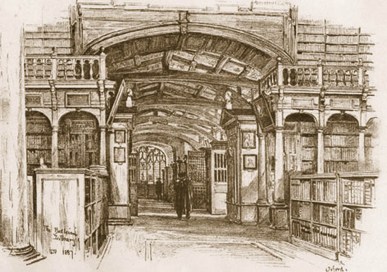
Image result for petrarch library

Victum meum nosti, somnum quoque; his ut addam, nulla michi unquam fortuna suaserit; demo potius aliquid in dies, iamque eo perventum est ut modicum demi possit; denique non si regie opes advenerint, aut e mensa frugalitatem pellere poterunt aut in cubiculum longos somnos arcessere. Nunquam me sanum ac vigilem lectus habet, nunquam nisi eger aut dormiens stratis versor; simul et me somnus et ego lectum desero, et somnum morti et lectulum busto simillimum duco. Cum supremus sopor obrepserit, satis superque satis in cubiculo terreo seu saxeo iacebimus; id meditans lectulum meum odi et ad illum nisi urgente necessitate non redeo, sed ab illo mox ut me nature vinclis explicitum sentio, incuntanter avellor inque bibliothecam illi proximam velut in arcem fugio. Fit hoc inter nos media nocte divortium, quod siquando forte vel nox brevior vel vigilie longiores traxerint, at profecto nunquam simul aurora nos invenit; postremo modis omnibus nitor nequid melioribus curis interveniat, preter id solum quod imperiose necessitas nature exigit, somnum dico et cibum et breve honestumque solatium vegetando corpori refovendoque animo duntaxat ydoneum.  Id enimvero quia pro varietate temporum ac locorum variari oportet, et quale michi nunc sit nisi audias nosse non potes, dicam. Amo solitudinem ut soleo sectorque silentium nisi inter amicos, inter quos nemo me loquacior, hanc reor ob causam quod amicorum presentia solito rarior nunc est; raritas autem desiderium accendit. Sepe igitur annuum silentium diurna loquacitate compenso rursumque amicis abeuntibus mutus fio; importunum negotium cum vulgo loqui aut omnino cum homine quem non amor tibi seu doctrina conciliet.

How Many Angels on the Head of a Pin? How Many Oarsmen on Achilles’ Ships?

Scholia T ad Homer Iliad 16.170

“Achilles, dear to Zeus, had fifty ships which he led to Troy. In each of the ships there were fifty companions at the benches.” How, people ask, is it that the Poet who typically augments Achilles elsewhere, diminishes him in this passage? Is it because there is no excellence in numbers?

Aristarchus, however, says that there are fifty rowers [only] because of the phrase “on the benches”, meaning sailors as support crew. Dionysus, still, claims that the greatest number of rowers possible was 120 and that most ships had between these two numbers, so that the average amount was 86 men.”

πεντήκοντ᾽ ἦσαν νῆες θοαί, ἧισιν ᾽Αχιλλεὺς ἐς Τροίην ἡγεῖτο διίφιλος· ἐν δὲ ἑκάστηι πεντήκοντ᾽ ἔσαν ἄνδρες ἐπὶ κληῖσιν ἑταῖροι] πῶς, φασίν, ἐν ἅπασιν αὔξων ᾽Αχιλλέα τούτωι μειοῖ; τινὲς μὲν οὖν, ὅτι οὐκ ἐν πλήθει ἡ ἀρετή … ᾽Αρίσταρχος δέ φησιν ν̄ ἐρέτας εἶναι διὰ τὸ ῾ἐπὶ κληῖσιν᾽ ἢ ναύτας πρὸς ὑπηρεσίαν. Διονύσιος δὲ τὸν μέγιστον ἀριθμὸν ρ̄κ̄ τιμᾶι, τὸ δὲ λοιπὸν ἐν τῶι μεταξὺ τούτων ἄγεσθαι, ὡς φθάνειν πάσας ἀπὸ π̄ε̄ ἀνδρῶν.

Ah, another case study of that “morbus Graecorum”

Seneca, De Brevitate Vitae 13

“It would be annoying to list all the people who spent their lives pursuing board games, ball games, or sunbathing. Men whose pleasures are so busy are not at leisure. For example, no one will be surprised that those occupied by useless literary studies work strenuously—and there is great band of these in Rome now too.

This sickness used to just afflict the Greeks, to discover the number of oarsmen Odysseus possessed, whether the Iliad was written before the Odyssey, whether the poems belong to the same author, and other matters like this which, if you keep them to yourself, cannot please your private mind; but if you publish them, you seem less learned than annoying.”

Persequi singulos longum est, quorum aut latrunculi aut pila aut excoquendi in sole corporis cura consumpsere vitam. Non sunt otiosi, quorum voluptates multum negotii habent. Nam de illis nemo dubitabit, quin operose nihil agant, qui litterarum inutilium studiis detinentur, quae iam apud Romanos quoque magna manus est. Graecorum iste morbus fuit quaerere, quem numerum Ulixes remigum habuisset, prior scripta esset Ilias an Odyssia, praeterea an eiusdem essent auctoris, alia deinceps huius notae, quae sive contineas, nihil tacitam conscientiam iuvant sive proferas, non doctior videaris sed molestior.

Lenormant Relief, c. 410 BCE

F**k Avarice, Ambition, and Death! [FTS Week]

Seneca, Epistulae ad Lucilium 71:

“Let us make all of our time our own! Yet this cannot happen unless we first begin to belong to ourselves. When will it happen that one can despise either fortune? When will it happen that one could, with all their feelings suppressed and subjected to their will, say ‘I have conquered’? You ask whom I have conquered? Not the Persians, not the farthest boundaries of the Medes, nor any warlike people who lie beyond the Dahae – no, I have conquered avarice, ambition, and the fear of death which has itself defeated the victors of nations.”

Vanitas - Wikipedia

Id agamus ut nostrum omne tempus sit; non erit autem, nisi prius nos nostri esse coeperimus. Quando continget contemnere utramque fortunam, quando continget omnibus oppressis affectibus et sub arbitrium suum adductis hanc vocem emittere ‘vici’? Quem vicerim quaeris? Non Persas nec extrema Medorum nec si quid ultra Dahas bellicosum iacet, sed avaritiam, sed ambitionem, sed metum mortis, qui victores gentium vicit.

Cicero Says F**K Greek Accents [FTS Week]

Cicero to Atticus 31 May 45 (12.6)

“I now turn to Tyrannio. Do you really do this? Was this true? There without me? And this when I so many times did not go without you even though I had the ability. How will you make this up to me? There is one way, clearly, if you send me the book which I ask again that you should send  to me. Even if the book itself will not delight me any more than your admiration of it.

I adore the man who loves every kind of learning and I am truly happy that you cherish so refined a course of study. But this is completely you. For you are passionate to learn, the only thing which feeds the mind. But, I must ask, what impact does this ‘grave’ and ‘acute’ stuff have on the pursuit of the highest good?”

Venio ad Tyrannionem. ain tu? verum hoc fuit? sine me? at ego quotiens, cum essem otiosus, sine te tamen nolui! quo modo ergo hoc lues? uno scilicet, si mihi librum miseris; quod ut facias etiam atque etiam rogo. etsi me non magis ipse liber delectabit quam tua admiratio delectavit. amo enim πάντα φιλειδήμονα teque istam tam tenuem ϑεωρíαν tam valde admiratum esse gaudeo. etsi tua quidem sunt eius modi omnia. scire enim vis; quo uno animus alitur. sed, quaeso, quid ex ista acuta et gravi refertur ad τέλος?

Seneca, Moral Epistle 108

“But some error comes thanks to our teachers who instruct us how to argue but not how to live; some error too comes from students, who bring themselves to teachers not for the nourishing of the soul, but the cultivation of our wit. Thus what was philosophy has been turned into philology.”

Sed aliquid praecipientium vitio peccatur, qui nos docent disputare, non vivere, aliquid discentium, qui propositum adferunt ad praeceptores suos non animum excolendi, sed ingenium. Itaque quae philosophia fuit, facta philologia est.

Petrarch: “F**k Zoology!” [FTS Week]

Petrarch, de sui ipsius et multorum ignorantia:

Literature is, for many people, the instrument of madness, and for all it is an instrument of arrogance unless (a thing exceptionally rare) it happens to fall upon a good and well educated mind. This last mentioned author has written much about beasts and birds and fish. How many hairs a lion’s mane has, how many feathers are in the hawk’s tail, how many spirals the octopus wraps the shipwreck in; how the elephants have sex from behind and how they remain pregnant for two years, and how they are a teachable and vivacious animal approaching human intelligence and living almost two or even three centuries; how the phoenix is consumed in aromatic fire and is reborn after being burned; how the sea urchin reins in a prow driven by any force but can do nothing when taken out of the waves; how the hunter deceives the tiger with a mirror, how the Arimaspean spears a griffin, how whales deceive the sailor with their tails; how ugly is the child of a bear, how rare the child of a mule, and how the viper gives birth but once and unluckily at that; how moles are blind, how bees are deaf, and finally how the crocodile alone of all animals moves only its upper mandible.

Most of these things are false, which was clear enough when similar kinds of animals were brought to our part of the world. Or, if they were not false, at least unknown to the authors themselves, and either believed more readily or more readily invented on account of their author’s absence. Yet, for all of this, even if they were true, they have nothing to do with living a good life. For, I ask, what good will it do to know the natures of beasts, birds, fish, and serpents when we are either ignorant or contemptuous of human nature – for what purpose we are born, from where we come and where we are headed?

Sunt enim litere multis instrumenta dementie, cuntis fere superbie, nisi, quod rarum, in aliquam bonam et bene institutam animam inciderint. Multa ille igitur de beluis deque avibus ac piscibus: quot leo pilos in vertice, quot plumas accipiter in cauda, quot polipus spiris naufragum liget, ut aversi cocunt elephantes biennioque uterum tument, ut docile vivaxque animal et humano proximum ingenio et ad secundi tertiique finem seculi vivendo perveniens; ut phenix aromatico igne consumitur ustusque renascitur; ut echinus quovis actam impetu proram frenat, cum fluctibus erutus nil possit; ut venator speculo tigrem ludit, Arimaspus griphen ferro impetit, cete tergo nautam fallunt; ut informis urse partus, mule rarus, vipere unicus isque infelix, ut ceci talpe, surde apes, ut postremo superiorem mandibulam omnium solus animantium cocodrillus movet. Que quidem vel magna ex parte falsa sunt — quod in multis horum similibus, ubi in nostrum orbem delata sunt, patuit — vel certe ipsis auctoribus incomperta, sed propter absentiam vel credita promptius vel ficta licentius; que denique, quamvis vera essent, nichil penitus ad beatam vitam. Nam quid, oro, naturas beluarum et volucrum et piscium et serpentum nosse profuerit, et naturam hominum, ad quod nati sumus, unde et quo pergimus, vel nescire vel spernere?

F**k Those Vergilian Bees! [FTS Week]

Charles Dickens, Our Mutual Friend (Chapter 8):

So that instruction, too, was taken by Mr Lightwood; and Mr Lightwood, having taken it, was in the act of showing Mr Boffin out, when Mr Eugene Wrayburn almost jostled him in the door-way. Consequently Mr Lightwood said, in his cool manner, ‘Let me make you two known to one another,’ and further signified that Mr Wrayburn was counsel learned in the law, and that, partly in the way of business and partly in the way of pleasure, he had imparted to Mr Wrayburn some of the interesting facts of Mr Boffin’s biography.

‘Delighted,’ said Eugene—though he didn’t look so—‘to know Mr Boffin.’

‘Thankee, sir, thankee,’ returned that gentleman. ‘And how do you like the law?’

‘A—not particularly,’ returned Eugene.

‘Too dry for you, eh? Well, I suppose it wants some years of sticking to, before you master it. But there’s nothing like work. Look at the bees.’

‘I beg your pardon,’ returned Eugene, with a reluctant smile, ‘but will you excuse my mentioning that I always protest against being referred to the bees?’

‘Do you!’ said Mr Boffin.

‘I object on principle,’ said Eugene, ‘as a biped—’

‘As a what?’ asked Mr Boffin.

‘As a two-footed creature;—I object on principle, as a two-footed creature, to being constantly referred to insects and four-footed creatures. I object to being required to model my proceedings according to the proceedings of the bee, or the dog, or the spider, or the camel. I fully admit that the camel, for instance, is an excessively temperate person; but he has several stomachs to entertain himself with, and I have only one. Besides, I am not fitted up with a convenient cool cellar to keep my drink in.’

‘But I said, you know,’ urged Mr Boffin, rather at a loss for an answer, ‘the bee.’

‘Exactly. And may I represent to you that it’s injudicious to say the bee? For the whole case is assumed. Conceding for a moment that there is any analogy between a bee, and a man in a shirt and pantaloons (which I deny), and that it is settled that the man is to learn from the bee (which I also deny), the question still remains, what is he to learn? To imitate? Or to avoid? When your friends the bees worry themselves to that highly fluttered extent about their sovereign, and become perfectly distracted touching the slightest monarchical movement, are we men to learn the greatness of Tuft-hunting, or the littleness of the Court Circular? I am not clear, Mr Boffin, but that the hive may be satirical.’

‘At all events, they work,’ said Mr Boffin.

‘Ye-es,’ returned Eugene, disparagingly, ‘they work; but don’t you think they overdo it? They work so much more than they need—they make so much more than they can eat—they are so incessantly boring and buzzing at their one idea till Death comes upon them—that don’t you think they overdo it? And are human labourers to have no holidays, because of the bees? And am I never to have change of air, because the bees don’t? Mr Boffin, I think honey excellent at breakfast; but, regarded in the light of my conventional schoolmaster and moralist, I protest against the tyrannical humbug of your friend the bee. With the highest respect for you.’

‘Thankee,’ said Mr Boffin. ‘Morning, morning!’

But, the worthy Mr Boffin jogged away with a comfortless impression he could have dispensed with, that there was a deal of unsatisfactoriness in the world, besides what he had recalled as appertaining to the Harmon property.

77ee494ddaef7a8ce34a50e78b49bc91

When I’m Dead, Y’all Can Go Screw [FTS Week]

CW: Profanity.

Anonymous, Greek Anthology, 7.704

“When I’m dead, the earth can be fucked by fire.
It means nothing to me since I’ll be totally fine.”

Ἐμοῦ θανόντος γαῖα μιχθήτω πυρί·
οὐδὲν μέλει μοι· τἀμὰ γὰρ καλῶς ἔχει.

This statement is no less potent or poignant now than 2500 years ago. It signals the vampiric and internally apocalyptic solipsisms of the powerful and the elite. But it also engages with a universal human denial and naive narcissism that allows us to ignore and exacerbate global warming and to throw other people’s children into cages while we cherish our own. This is the voice that says only the now matters, that this quarter’s profits are more important than sustainability and justice, that today’s ends justify any kinds of means.

Unsurprisingly, it is attributed to the Roman Emperors Tiberius and Nero.

Suda tau 552 [cribbing Dio Cassius]

“And Tiberius uttered that ancient phrase, “when I am dead, the earth can be fucked with fire”, and he used to bless Priam because he died with his country and his palace.”

τοῦτο δὲ τὸ ἀρχαῖον ἐφθέγξατο· ἐμοῦ θανόντος γαῖα μιχθήτω πυρί. καὶ τὸν Πρίαμον ἐμακάριζεν, ὅτι μετὰ τῆς πατρίδος καὶ τῆς βασιλείας ἀπώλετο.

Tragicorum Graecorum Fragmenta
From Tragicorum Graecorum Fragmenta

Here’s one explanation:

Appendix Proverbiorum 2.56

“When I am dead, the earth can be fucked by fire.” Note that this [proverb is used] to express that it isn’t necessary to think or worry about the future

᾿Εμοῦ θανόντος γαῖα μιχθήτω πυρί: ὅτι οὐ δεῖ περὶ τῶν μελλόντων φροντίζειν ἢ δεδιέναι.

The saying seems to predate the Roman Emperors, however. Cicero riffs on this sentiment.

Cicero, De Finibus 3.64

“In turn, they believe that the universe is ruled by the will of the gods and that it is like a city or state shared by humans and gods and that everyone of us is a member of this universe. This is the reason that it is natural for us to put shared good before the personal. Truly, just as the laws prefer the safety of the collective over that of individuals, so too a good and wise person, obedient to the laws and not ignorant of his civic duty, pursues the advantage of the collective over that of an individual or himself.

A traitor to a state need not be hated more than one who undermines common advantage or safety on account of his own. This is why the person who faces death for the republic must be praised, because it bestows glory upon us to care more for our country than ourselves. And this is why it seems an inhuman and criminal voice when people say that they don’t care if all of everything burns when they are dead—as it is typically construed with that common Greek verse—and it is also certain true that we must care for those who will live in the future for their own sake.”

Mundum autem censent regi numine deorum eumque esse quasi communem urbem et civitatem hominum et deorum, et unumquemque nostrum eius mundi esse partem; ex quo illud natura consequi ut communem utilitatem nostrae anteponamus. Ut enim leges omnium salutem singulorum saluti anteponunt, sic vir bonus et sapiens et legibus parens et civilis offici non ignarus utilitati omnium plus quam unius alicuius aut suae consulit. Nec magis est vituperandus proditor patriae quam communis utilitatis aut salutis desertor propter suam utilitatem aut salutem. Ex quo fit ut laudandus is sit qui mortem oppetat pro re publica, quod deceat cariorem nobis esse patriam quam nosmet ipsos. Quoniamque illa vox inhumana et scelerata ducitur eorum qui negant se recusare quo minus ipsis mortuis terrarum omnium deflagratio consequatur (quod vulgari quodam versu Graeco pronuntiari solet), certe verum est etiam iis qui aliquando futuri sint esse propter ipsos consulendum.

Here’s a more genteel variation on the sentiment:

A note about the translation: I use the English profane “fuck” for mikhthênai here for two reasons. First, mignumi is often used in periphrases or euphemism for sex. Second, I think the speaker is effecting a dismissive and aggressively narcissistic stance towards the world which will exist after his death. Such narcissism and self-absorption is so perverse and twisted and yet so utterly common as to demand obscenity and plunge us all into the painfully profane. Third, as my students, and unfortunately my children, can attest, I am profane in real life. This is in part a class issue (I lack certain refinements) but it is also part character (my slight discomfort at class mobility and playing the professional role is expressed through this minor, adolescent rebelliousness).

But, there’s also the zeitgeist. There have been  complaints  over the years about profanity coming from this website and twitter account. While I understand that language use can be harmful and seem inapposite, I fear that I am insufficiently sympathetic to complaints about vulgar or profane language. We are living in a perverse and obscene time. Effective language, a man once said, is when the sound is an echo of the sense.

Seneca gets the same sense, but makes it a bit more active in his Medea.

Seneca, Medea 426–428

“…The only rest
Is if I see the whole world uprooted along with my ruin.
Let everything depart with me. It is pleasing to destroy while you die.”

…Sola est quies,
mecum ruina cuncta si video obruta;
mecum omnia abeant. trahere, cum pereas, libet.

Thanks to @mwiik and @ericvonotter for this.

https://twitter.com/ericvonotter/status/1160589899667517442?s=20

F**k Donatus, Shakespeare’s Got Talent [FTS Week]

John Williams, Stoner (Chp. 9): 

“Charles Walker fiddled for a moment with the sheaf of papers on the desk before him and allowed the remoteness to creep back into his face. He tapped the forefinger of his right hand on his manuscript and looked toward the corner of the room away from where Stoner and Katherine Driscoll sat, as if he were waiting for something. Then, glancing every now and then at the sheaf of papers on the desk, he began.

‘Confronted as we are by the mystery of literature, and by its inenarrable power, we are behooved to discover the source of the power and mystery. And yet, finally, what can avail? The work of literature throws before us a profound veil which we cannot plumb. And we are but votaries before it, helpless in its sway. Who would have the temerity to lift that veil aside, to discover the undiscoverable, to reach the unreachable? The strongest of us are but the puniest weaklings, are but tinkling cymbals and sounding brass, before the eternal mystery.’

His voice rose and fell, his right hand went out with its fingers curled supplicatingly upward, and his body swayed to the rhythm of his words; his eyes rolled slightly upward, as if he were making an invocation. There was something grotesquely familiar in what he said and did. And suddenly Stoner knew what it was. This was Hollis Lomax—or, rather, a broad caricature of him, which came unsuspected from the caricaturer, a gesture not of contempt or dislike, but of respect and love.

Walker’s voice dropped to a conversational level, and he addressed the back wall of the room in a tone that was calm and equable with reason. ‘Recently we have heard a paper that, to the mind of academe, must be accounted most excellent. These remarks that follow are remarks that are not personal. I wish to exemplify a point. We have heard, in this paper, an account that purports to be an explanation of the mystery and soaring lyricism of Shakespeare’s art. Well, I say to you’—and he thrust a forefinger at his audience as if he would impale them— ‘I say to you, it is not true.’ He leaned back in his chair and consulted the papers on the desk. ‘We are asked to believe that one Donatus—an obscure Roman grammarian of the fourth century A.D.— we are asked to believe that such a man, a pedant, had sufficient power to determine the work of one of the greatest geniuses in all of the history of art. May we not suspect, on the face of it, such a theory? Must we not suspect it?’

Anger, simple and dull, rose within Stoner, overwhelming the complexity of feeling he had had at the beginning of the paper. His immediate impulse was to rise, to cut short the farce that was developing; he knew that if he did not stop Walker at once he would have to let him go on for as long as he wanted to talk. His head turned slightly so that he could see Katherine Driscoll’s face; it was serene and without any expression, save one of polite and detached interest; the dark eyes regarded Walker with an unconcern that was like boredom. Covertly, Stoner looked at her for several moments; he found himself wondering what she was feeling and what she wished him to do. When he finally shifted his gaze away from her he had to realize that his decision was made. He had waited too long to interrupt, and Walker was rushing impetuously through what he had to say.

‘ … the monumental edifice that is Renaissance literature, that edifice which is the cornerstone of the great poetry of the nineteenth century. The question of proof, endemic to the dull course of scholarship as distinguished from criticism, is also sadly at lack. What proof is offered that Shakespeare even read this obscure Roman grammarian? We must remember it was Ben Jonson’—he hesitated for a brief moment—’it was Ben Jonson himself, Shakespeare’s friend and contemporary, who said he had little Latin and less Greek. And certainly Jonson, who idolized Shakespeare this side of idolatry, did not impute to his great friend any lack. On the contrary, he wished to suggest, as do I, that the soaring lyricism of Shakespeare was not attributable to the burning of the midnight oil, but to a genius natural and supreme to rule and mundane law. Unlike lesser poets, Shakespeare was not born to blush unseen and waste his sweetness on the desert air; partaking of that mysterious source to whence all poets go for their sustenance, what need had the immortal bard of such stultifying rules as are to be found in a mere grammar? What would Donatus be to him, even if he had read him? Genius, unique and a law unto itself, needs not the support of such a ‘tradition’ as has been described to us, whether it be generically Latin or Donatan or whatever. Genius, soaring and free, must …’

After he became used to his anger Stoner found a reluctant and perverse admiration stealing over him. However florid and imprecise, the man’s powers of rhetoric and invention were dismayingly impressive; and however grotesque, his presence was real. There was something cold and calculating and watchful in his eyes, something  needlessly reckless and yet desperately cautious. Stoner became aware that he was in the presence of a bluff so colossal and bold that he had no ready means of dealing with it.”

Related image

F**k Shaving, and F**k the Theater Too! [FTS Week]

Tertullian, de Spectaculis (23):

“Since human memory, even while the charm of pleasure still lingers, considers that those people should be condemned onto the crag of infamy with all of their honors taken away, how much more savagely would divine justice take notice of artificers of that sort? Will God be pleased by that charioteer, the man who stirs up so many souls, that minister of so much madness, crowned like a priest or painted like a pimp, whom the devil decked out to be taken by a chariot against Elijah? Will God be pleased by the man who alters his countenance with the razor, an infidel to his own face, who – not content to make it look like the face of Saturn and Isis and Bacchus – subjects it to the abuse of beating, as if he were making fun of the order of our Lord? To be sure, the devil teaches us to patiently offer our jaw to this abuse. Thus, too, he elevated the tragic actors upon their boots, because ‘no one is able to add a cubit to his height.’ He wishes to make Christ a liar. Indeed, I ask whether the creation of actors’ masks pleases God, who prohibits the making of any likeness – how much more the likeness of his own image? The author of truth does not love falsehood. Every fiction is like adultery to him.”

https://i.pinimg.com/originals/b4/3d/6a/b43d6ab2c4da663c27f89aec349ad65f.jpg
Consider shaving!

cum igitur humana recordatio etiam obstrepente gratia voluptatis damnandos eos censeat ademtis bonis dignitatum in quendam scopulum famositatis, quanto magis divina iustitia in eiusmodi artifices animadvertit? an deo placebit auriga ille tot animarum inquietator, tot furiarum minister, ut sacerdos coronatus vel coloratus ut leno, quem curru rapiendum diabolus adversus Elian exornavit? placebit et ille, qui voltus suos novacula mutat, infidelis erga faciem suam, quam non contentus Saturno et Isidi et Libero proximam facere insuper contumeliis alaparum sic obicit, tamquam de praecepto domini ludat? docet scilicet et diabolus verberandam maxillam patienter offerre. sic et tragoedos cothurnis extulit, quia “nemo potest adicere cubitum unum ad staturam suam”: mendacem facere vult Christum. iam vero ipsum opus personarum quaero an deo placeat, qui omnem similitudinem vetat fieri, quanto magis imaginis suae? non amat falsum auctor veritatis; adulterium est apud illum omne quod fingitur.

F**k Grammar, I’m the King! [FTS Week]

Thomas Carlyle, History of Friedrich II of Prussia:

“He is now (A.D. 1414) holding this Council of Constance, by way of healing the Church, which is sick of Three simultaneous Popes and of much else. He finds the problem difficult; finds he will have to run into Spain, to persuade a refractory Pope there, if eloquence can (as it cannot): all which requires money, money. At opening of the Council, he “officiated as deacon;” actually did some kind of litanying ‘with a surplice over him,’ [25th December, 1414 (Kohler, p. 340).] though Kaiser and King of the Romans. But this passage of his opening speech is what I recollect best of him there: “Right Reverend Fathers, date operam ut illa nefanda schisma eradicetur,” exclaims Sigismund, intent on having the Bohemian Schism well dealt with,—which he reckons to be of the feminine gender. To which a Cardinal mildly remarking, “Domine, schisma est generis neutrius (Schisma is neuter, your Majesty),”—Sigismund loftily replies, “Ego sum Rex Romanus et super grammaticam (I am King of the Romans, and above Grammar)!” [Wolfgang Mentzel, Geschichte der Deutschen, i. 477.] For which reason I call him in my Note-books Sigismund SUPER GRAMMATICAM, to distinguish him in the imbroglio of Kaisers.”

Pisanello 024b.jpg