Sick of Seneca

Aulus Gellius, Attic Nights 12.2

That Annaeus Seneca, when judging Ennius and Cicero, was possessed of light and silly judgment.

Some think of Seneca as a worthless writer, whose books it is not even worth the effort to touch, because his speech seems vulgar and played-out, while his matter and thoughts are characterized either by a bungling and empty force or a light and rather juridical affectation. His learning, however, is common and plebeian, and has neither the grace nor the dignity of the ancient writers. Though others may not deny that he has too little of elegance in his words, they affirm that he is not lacking a knowledge and understanding of the things which he discusses, in addition to a not unpleasing severity in censuring moral lapses. It is not necessary for me to make a judgment or criticism of his talent or writing as a whole; but I would like to consider the nature of the judgment which he made on Cicero, Ennius, and Vergil. In the twenty-second book of his moral epistles, which he wrote to Lucullus, he says that Ennius wrote these ridiculous verses about that ancient man Cethegus:

He was called by the people once,

who lived about that time,

the special flower of the people, and the marrow of Persuasion.

Then he writes about these same verses, ‘I wonder at the fact that the most eloquent and devoted fans of Ennius have praised this claptrap as fine poetry. Cicero, to be sure, mentions these among Ennius’ best lines.’ He then adds about Cicero himself, ‘I am not surprised that there was a man who could write verses like this since there was also a man who would praise them; but perhaps Cicero, that famous orator, was pleading his own case by praising these, in order to make his own awful verses appear good.’ After this, Seneca adds most foolishly, ‘Even in Cicero’s prose you can find some things, from which it is clear that he did not waste his time when he read Ennius.’ Then he includes an example of the sort of thing which he reprehends in Cicero as being  ‘Ennian,’ which he wrote in his book de re publica: ‘Menelaus the Laconian was graced with a sweet-talking charm,’ and in another passage, ‘he cultivates brevity of speech in his oratory.’ Then that clown Seneca has the audacity to make apology for Cicero’s errors by writing, ‘It was not the fault of Cicero himself, but of his times; it was inevitable that one would speak thus, when that sort of thing was commonly read.’ Then he suggests that Cicero included these bits to avoid the charge that his speech was too ornate and polished.

In the same place, he says this of Vergil: ‘Even our own Vergil has, for the same reason, placed certain ugly and unwonted verses which go somewhat beyond the limit, so that his Ennian audience could recognize a little bit of antiquity in his new poem.’

But now I’m sick of Seneca’s words. Nevertheless, I won’t omit to mention these little jokes of that stupid and witless man: ‘There are some verses of Ennius of such great sense that they could, though written among those that smell like goats, could nevertheless please a perfumed audience.’ When he is criticizing the verses about Cethegus which I quoted above, he says, ‘Whoever loves this kind of verse would probably also like the couches of Sotericus.’

Seneca certainly seems worthy for the perusal of adulescents when he compares the dignity and taste of the best ancient poetry to the couches of Sotericus as though they had no grace and were long ago forgotten and condemned. But listen as I remember a few things which Seneca actually said well, such as that which he said about a miser who wanted more money: ‘What does it matter how much money you have? There is always much more which you do not have!’ Was this well-said? Certainly. But good sayings don’t benefit the young as much as bad sayings harm them, and this is especially true when the inferior ones are so much greater in number, and if they are not about some small and simple affair, but a doubtful one which requires serious judgment.

II Quod Annaeus Seneca iudicans de Q. Ennio deque M. Tullio leui futtilique iudicio fuit.

[1] De Annaeo Seneca partim existimant ut de scriptore minime utili, cuius libros adtingere nullum pretium operae sit, quod oratio eius uulgaria uideatur et protrita, res atque sententiae aut inepto inanique impetu sint aut leui et causidicali argutia, eruditio autem uernacula et plebeia nihilque ex ueterum scriptis habens neque gratiae neque dignitatis. Alii uero elegantiae quidem in uerbis parum esse non infitias eunt, sed et rerum, quas dicat, scientiam doctrinamque ei non deesse dicunt et in uitiis morum obiurgandis seueritatem grauitatemque non inuenustam. [2] Mihi de omni eius ingenio deque omni scripto iudicium censuramque facere non necessum est; sed quod de M. Cicerone et Q. Ennio et P. Vergilio iudicauit, ea res cuimodi sit, ad considerandum ponemus. [3] In libro enim uicesimo secundo epistularum moralium, quas ad Lucilium conposuit, deridiculos uersus Q. Ennium de Cetego antiquo uiro fecisse hos dicit:

is dictust ollis popularibus olim, qui tum uiuebant homines atque aeuum agitabant, flos delibatus populi Suada medulla.

[4] Ac deinde scribit de isdem uersibus uerba haec: ‘Admiror eloquentissimos uiros et deditos Ennio pro optimis ridicula laudasse. Cicero certe inter bonos eius uersus et hos refert.’ [5] Atque id etiam de Cicerone dicit: ‘Non miror’ inquit ‘fuisse, qui hos uersus scriberet, cum fuerit, qui laudaret; nisi forte Cicero summus orator agebat causam suam et uolebat suos uersus uideri bonos.’ [6] Postea hoc etiam addidit insulsissime: ‘Aput ipsum quoque’ inquit ‘Ciceronem inuenies etiam in prosa oratione quaedam, ex quibus intellegas illum non perdidisse operam, quod Ennium legit.’ [7] Ponit deinde, quae apud Ciceronem reprehendat quasi Enniana, quod ita scripserit in libris de republica: ‘ut Menelao Laconi quaedam fuit suauiloquens iucunditas’, et quod alio in loco dixerit: ‘breuiloquentiam in dicendo colat.’ [8] Atque ibi homo nugator Ciceronis errores deprecatur et ‘non fuit’ inquit ‘Ciceronis hoc uitium, sed temporis; necesse erat haec dici, cum illa legerentur.’ [9] Deinde adscribit Ciceronem haec ipsa interposuisse ad effugiendam infamiam nimis lasciuae orationis et nitidae. [10] De Vergilio quoque eodem in loco uerba haec ponit: ‘Vergilius quoque noster non ex alia causa duros quosdam uersus et enormes et aliquid supra mensuram trahentis interposuit, quam ut Ennianus populus adgnosceret in nouo carmine aliquid antiquitatis.’ [11] Sed iam uerborum Senecae piget; haec tamen inepti et insubidi hominis ioca non praeteribo: ‘Quidam sunt’ inquit ‘tam magni sensus Q. Ennii, ut, licet scripti sint inter hircosos, possint tamen inter unguentatos placere’; et, cum reprehendisset uersus, quos supra de Cetego posuimus: ‘qui huiuscemodi’ inquit ‘uersus amant, liqueat tibi eosdem admirari et Soterici lectos.’ [12] Dignus sane Seneca uideatur lectione ac studio adulescentium, qui honorem coloremque ueteris orationis Soterici lectis compararit quasi minimae scilicet gratiae et relictis iam contemptisque. [13] Audias tamen commemorari ac referri pauca quaedam, quae idem ipse Seneca bene dixerit, quale est illud, quod in hominem auarum et auidum et pecuniae sitientem dixit: ‘Quid enim refert, quantum habeas? multo illud plus est, quod non habes.’ [14] Benene hoc? sane bene; sed adulescentium indolem non tam iuuant, quae bene dicta sunt, quam inficiunt, quae pessime, multoque tanto magis, si et plura sunt, quae deteriora sunt, et quaedam in his non pro ἐνθυμήματι aliquo rei paruae ac simplicis, sed in re ancipiti pro consilio dicuntur.
Here’s a Plan: Evict the Rich, Feed Everyone

Cicero, Pro Sestio 103

“The people were certain that their freedom was at risk. Their leaders did not agree. As far as a matter concerned the safety of the aristocrats, they were afraid of the rashness of the masses and the liberty in the vote. Tiberius Gracchus was introducing his agrarian law. It was welcomed by the people since it appeared to firm up the fortunes of the lower classes.

The aristocrats were against it because they believed it created unrest and imagined that the State would be disarmed of its greatest protectors once the rich were evicted from their long-term holdings. Gaius Gracchus was introducing a grain law. It was also welcome to the people for it provided plentiful food without labor. The Nobles were aghast because they believed that such a law disincentivized work in favor of laziness and that it would drain the treasury.”

Populus libertatem agi putabat suam. Dissentiebant principes et in salute optimatium temeritatem multitudinis et tabellae licentiam pertimescebant. Agrariam Ti. Gracchus legem ferebat. Grata erat populo; fortunae constitui tenuiorum videbantur. Nitebantur contra optimates, quod et discordiam excitari videbant et, cum locupletes possessionibus diuturnis moverentur, spoliari rem publicam propugnatoribus arbitrabantur. Frumentariam legem C. Gracchus ferebat. Iucunda res plebei; victus enim suppeditabatur large sine labore. Repugnabant boni, quod et ab industria plebem ad desidiam avocari putabant et aerarium exhauriri videbant.

Agrarian Law: Tiberius Gracchus  introduced a law in 133 BCE that no holder of public land (ager publicus populi Romani) should have more than 500 iugera and that land should be re-distributed to the poor.

Not to ruin it, but things did not turn out well for the Gracchi

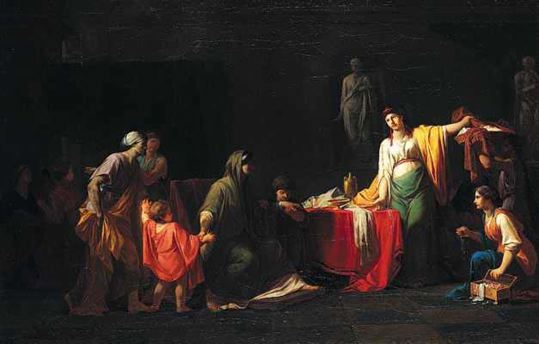
Cornelia, Mother of the Gracchi

Clodius The Monster and the Origin of “Cui Bono”

Cicero, Pro Milone 32

“How, then, is it possible to prove that Clodius conspired against Milo? For such an audacious, nefarious monster it is enough to show that he had a great reason, that great hope resided in the death of Milo, and that there was great purpose to it. And so, let that proverb of Cassius “Who profited from it?” [cui bono fuerit] frame the players on the stage, if truly good men are compelled to deception by no prize while the wicked often are moved by a small one.

Once Milo was killed, Clodius advanced in these ways: not only was he as a praeter under no consul who would do something about his crime, but he was also a praeter serving under consuls with whose plans if not their actually help he hoped that he would be able to get away with his planned insanities. These men, as I am sure we were thinking, would not want to restrain his actions if they could, since they would think about the great benefit they owed him; men who, even if they wanted to, would hardly be capable of squashing the boldness of the most criminal person, an audacity fully strengthened by time.”

Quonam igitur pacto probari potest insidias Miloni fecisse Clodium? Satis est in illa quidem tam audaci, tam nefaria belua docere, magnam ei causam, magnam spem in Milonis morte propositam, magnas utilitates fuisse. Itaque illud Cassianum, “cui bono fuerit,” in his personis valeat, etsi boni nullo emolumento impelluntur in fraudem, improbi saepe parvo. Atqui Milone interfecto Clodius haec adsequebatur, non modo ut praetor esset non eo consule, quo sceleris nihil facere posset, sed etiam ut eis consulibus praetor esset, quibus si non adiuvantibus, at coniventibus certe speraret posse se eludere in illis suis cogitatis furoribus: cuius illi conatus, ut ipse ratiocinabatur, nec cuperent reprimere, si possent, cum tantum beneficium ei se debere arbitrarentur, et, si vellent, fortasse vix possent frangere hominis sceleratissimi conroboratam iam vetustate audaciam.

The Cassius in question is L. Cassius Longinus, Tribune of the Plebs in 127 BCE . We have mentioned the polarizing P. Clodius Pulcher before.

Cicero was a fan of this saying.

Cicero, Pro Sexto Roscio Amerino, 84

The famous Lucius Cassius, whom the Roman people used to consider the most truthful and wisest judge, often used to say in evaluating cases “who stood to profit” [cui bono fuisset]. This is the human way: no one pursues a crime without the hope of some profit.”

Cassius ille, quem populus Romanus verissimum et sapientissimum iudicem putabat, identidem in causis quaerere solebat, “cui bono” fuisset. Sic vita hominum est, ut ad maleficium nemo conetur sine spe atque emolumento accedere.

Roman Coin depicting Vestal Virgin on one side and L. Cassius on the other (he famously prosecuted the Vestal Virgins for not being chaste)


A Rich Man’s Plague from Kisses

Pliny, Natural History, 26 3 (Full text on the Scaife Viewer)

“This plague didn’t exist among our ancestors. It first invaded Italy during the principate of Tiberius Claudius when some Roman knight from Perusia, secretary to a quaestor, brought the infection with him after he had been serving in Asia Minor. Women, enslaved people, and those of the low or humble classes tend not to get this disease, but it spreads quickly through nobles thanks to a brief kiss. Many of those who endured the medicine for the sickness handled the scar more foully than the disease. It was cured by burning treatments and the symptom would return unless the flesh was burned up almost to the bone in that spot.

Many physicians came from Egypt—that parent of these kinds of blights—in order to dedicate themselves to this work only, gaining a considerable profit, since it is true that Manilius Cornutus, a man of praetorian rank and legate in Aquitania, paid two hundred thousand for the treatment of his disease.

It does often happen, however, that new kinds of diseases are experienced en masse. What discovery would be more surprising? Some afflictions appear in a certain part of the world and attack certain body parts or people of specific ages or stations—as if a sickness were selective—one harming children, another adults, this one for the nobles, and that one for the poor.”

III. Non fuerat haec lues apud maiores patresque nostros, et primum Ti. Claudi Caesaris principatu medio inrepsit in Italiam quodam Perusino equite Romano quaestorio scriba, cum in Asia adparuisset, inde contagionem eius inportante. nec sensere id malum feminae aut servitia plebesque humilis aut media, sed proceres veloci transitu osculi maxime, foediore multorum qui perpeti medicinam toleraverant cicatrice quam morbo. causticis namque curabatur, ni usque in ossa corpus exustum esset, rebellante taedio. adveneruntque ex Aegypto genetrice talium vitiorum medici hanc solam operam adferentes magna sua praeda, siquidem certum est Manilium Cornutum e praetoriis legatum Aquitanicae provinciae HS CC elocasse in eo morbo curandum sese. acciditque contra saepius ut nova genera morborum gregatim sentirentur. quo mirabilius quid potest reperiri? aliqua gigni repente vitia terrarum in parte certa membrisque hominum certis vel aetatibus aut etiam fortunis, tamquam malo eligente, haec in pueris grassari, illa in adultis, haec proceres sentire, illa pauperes?

Roman Emperor Trajan making offerings to Egyptian Gods, on the Roman Mammisi at the Dendera Temple complex, Egypt

Shaking Us Down

Latin Trag. Adesp. = Ps-Cicero, Ad. Herenn. 2.26

“I cannot think…or figure out any reason why
I might impeach him. What would let you accuse someone
Who is honorable, if he is good? And if he is not honorable
What would let you impeach him if he thinks it is but a
Minor thing?”

Nequeo . . .
qua causa accusem hunc exputando evolvere.
Nam si veretur quid eum accuses qui est probus?
Sin inverecundum animi ingenium possidet,
quid autem accuses qui id parvi auditum
aestimet? . . .

Aristophanes fr 228 = Suda sigma 290

“Shaking-down”: Blackmail, this is a metaphor from people who shake trees: “I was shaking them down, I demanded money, I was threatening them and was extorting them again and again.”

σεῖσαι· τὸ συκοφαντῆσαι, ἀπὸ τῶν τὰ ἀκρόδρυα σειόντων· ἔσειον, ᾔτουν χρήματ᾿, ἠπείλουν, ἐσυκοφάντουν πάλιν

Mycenaean Goat and Tree Vase at the British Museum

Ignorance & Forgery

Quintilian, Institutio Oratoria 1.8:

“To investigate what everyone, including the most worthless people, ever wrote is an example either of excessive misery or empty ostentation, which both detains and destroys minds which would better be left free for other things. Someone who has shaken off all of the dusty fragments unworthy of reading could just as easily spend their labor upon the tales of old women. The commentaries of grammarians are full of these kinds of pitfalls, and even their authors barely know what is in them. It is said of Didymus, than whom no one ever wrote more, that when he was arguing against some tale as though it were wholly fictitious, his very own book was brought against him, since it contained that very tale. This happens especially in fantastic tales, all the way to the point of absurdity and shame, whence comes the excessive license granted to every knave of inventing things such that they safely lie about entire books and authors as they find it convenient, because those things which never existed cannot naturally be discovered. For, in more generally known matters, the forgers are discovered by curious inquisitors. And so, it seems to me that among the grammarian’s virtues will be numbered not to know some things.”

http://parliamoitaliano.altervista.org/wp-content/uploads/grammaticus.jpg

Persequi quidem quid quis umquam vel contemptissimorum hominum dixerit aut nimiae miseriae aut inanis iactantiae est, et detinet atque obruit ingenia melius aliis vacatura. Nam qui omnis etiam indignas lectione scidas excutit, anilibus quoque fabulis accommodare operam potest: atqui pleni sunt eius modi impedimentis grammaticorum commentarii, vix ipsis qui composuerunt satis noti. Nam Didymo, quo nemo plura scripsit, accidisse compertum est ut, cum historiae cuidam tamquam vanae repugnaret, ipsius proferretur liber qui eam continebat. Quod evenit praecipue in fabulosis usque ad deridicula quaedam, quaedam etiam pudenda, unde improbissimo cuique pleraque fingendi licentia est, adeo ut de libris totis et auctoribus, ut succurrit, mentiantur tuto, quia inveniri qui numquam fuere non possunt: nam in notioribus frequentissime deprenduntur a curiosis. Ex quo mihi inter virtutes grammatici habebitur aliqua nescire.

Cicero: A Liar Will Probably Commit Perjury Too

Cicero, Pro Quinctui Roscio 16

“Still,” he said, “Cluvius told Lucius and Manilius he was not on sworn oath.” If he told them while sworn in, would you believe? What is the difference between a perjurer and a liar? A man who is accustomed to lying, can get used to committing perjury.

I can easily get a man to perjure himself once I am able to persuade him to lie. For once someone has departed from the truth, he is not in the habit of being constrained by greater belief from perjury than from lying. For what man who is not moved by the force of his own conscience is moved by invocation of the gods?

The reason for this is that the gods dispense the same penalty for the perjurer and the liar. The gods become enraged and punish a man not for the institution which frames the swearing of the words but because of the evil and the malice that these traps are set for another person.”

XVI. “Dicit enim,” inquit, “iniuratus Luscio et Manilio.” Si diceret iuratus, crederes? At quid interest inter periurum et mendacem? Qui mentiri solet, peierare consuevit. Quem ego, ut mentiatur, inducere possum, ut peieret, exorare facile potero. Nam qui semel a veritate deflexit, hic non maiore religione ad periurium quam ad mendacium perduci consuevit. Quis enim deprecatione deorum, non conscientiae fide commovetur? Propterea, quae poena ab dis immortalibus periuro, haec eadem mendaci constituta est; non enim ex pactione verborum, quibus ius iurandum comprehenditur, sed ex perfidia et malitia, per quam insidiae tenduntur alicui, di immortales hominibus irasci et suscensere consuerunt.

Image result for medieval manuscript perjury
Sinon. Augustine, La Cit de Dieu, Books I-X. Paris, Ma tre Franois (illuminator); c. 1475-1480.

Happiness is Fleeting: Expect Misery

Boethius, Consolatio Philosophiae 1.1:

“I, who once perfected poems while my zeal was at its height, am now, in tears, compelled to embrace a sadder metre. Behold! The mangled Muses dictate what I should write, and these elegies drench my face with real tears. These, at least, no terror could deter from following my path as my lone companions. Once the glory of my happy, vibrant youth, they now console me for my fate as a sad old man. Unexpected old age has come, hastened by misfortunes, and pain adds yet another age to that. My hair, grey before its time, falls from my head, and my loose skin trembles on my weakened body. It is a happy death, which does not intrude upon our happy years, but comes when called in our sadder days. Alas! Death turns a deaf ear to the wretched, and in her savagery, refuses to close my crying eyes! While Fortune, hardly faithful, favored me with trifling gifts, one sad hour nearly buried me. Now that she, cloud-like, has changed her deceitful countenance, my accursed life draws on these unpleasing delays. Why, my friends, did you boast so often that I was happy? He who has fallen never had a stable step.”

carmina qui quondam studio florente peregi,
flebilis heu maestos cogor inire modos.
ecce mihi lacerae dictant scribenda Camenae
et ueris elegi fletibus ora rigant.
has saltem nullus potuit peruincere terror,
ne nostrum comites prosequerentur iter.
gloria felicis olim uiridisque iuuentae,
solantur maesti nunc mea fata senis.
uenit enim properata malis inopina senectus
et dolor aetatem iussit inesse suam.
intempestiui funduntur uertice cani
et tremit effeto corpore laxa cutis.
mors hominum felix, quae se nec dulcibus annis
inserit et maestis saepe uocata uenit.
eheu, quam surda miseros auertitur aure
et flentes oculos claudere saeua negat!
dum leuibus male fida bonis fortuna faueret
paene caput tristis merserat hora meum;
nunc quia fallacem mutauit nubila uultum
protrahit ingratas impia uita moras.
quid me felicem totiens iactastis, amici?
qui cecidit, stabili non erat ille gradu.

Have You Tried Stabbing the Coronavirus?

Pliny the Elder, Natural History 34.151

“There are other medicinal applications of iron beyond surgery. For when a circle is drawn around both adults and infants—or of they carry a sharp iron weapon with them—it is useful against poisonous drugs. Iron nails which have been taken out of tombs are useful protections against nightmares if they are hammered down before a threshold.

A small penetration with an iron weapon which has wounded a man is effective against sudden side and chest pains. Some afflictions are treated by cauterization, especially true for the bite of a rabid dog, since even when the disease has advanced and those afflicted are starting to exhibit fear of water, they experience relief at cauterization. The drinking of water which has been heated with burning iron is good for many symptoms, but especially for dysentery.”

XLIV. Medicina e ferro est et alia quam secandi. namque et circumscribi circulo terve circumlato mucrone et adultis et infantibus prodest contra noxia medicamenta, et praefixisse in limine evulsos sepulchris clavos adversus nocturnas lymphationes, pungique leviter mucrone, quo percussus homo sit, contra dolores laterum pectorumque subitos, qui punctionem adferant. quaedam ustione sanantur, privatim vero canis rabidi morsus, quippe etiam praevalente morbo expaventesque potum usta plaga ilico liberantur. calfit etiam ferro candente potus in multis vitiis, privatim vero dysentericis.

Bodleian Library, MS. Ashmole 1462, Folio 16r

Legal Strategies When You Can’t Deny Or Defend

Quintilian, Orator’s Education, 5.13 7-9

“Hence, what cannot be denied or put off must eventually be defended, whatever kind of case it is, or else just surrendered. We have demonstrated that there are two types of denial: either to say “this was not done” or to claim “what was done was not this.” Issues that cannot be defended or avoided must ultimately be denied and not only if there is some “redefinition” which might come to our aid, but also if there is nothing else but simple denial.

If there are witnesses, it is permitted to say much against them. If there is written proof, we can discredit the authenticity of the letter. Whatever the matter, there is nothing worse than a confession. The final option, when there is no room for defending or denying, is attacking the legality of the proceeding.”

Ergo quae neque negari neque transferri possunt utique defendenda sunt, qualiacumque sunt, aut causa cedendum. Negandi duplicem ostendimus formam, aut non esse factum aut non hoc esse quod factum sit. Quae neque defendi neque transferri possunt, utique neganda, nec solum si finitio potest esse pro nobis, sed etiam si nuda infitiatio superest. Testes erunt: multa in eos dicere licet; chirographum: de similitudine litterarum disserendum. Utique nihil erit peius quam confessio. Ultima est actionis controversia, cum defendendi negandive non est locus

Emotions in the Courtroom
nitial N: King James I of Aragon Overseeing a Court of Law, unknown illuminator c. 1290 – 1310. Courtesy of Getty Images