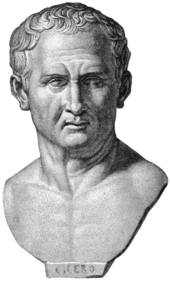
Yesterday and to day I have read loud, Tullius 4 Orations against Cataline. The Sweetness and Grandeur of his sounds, and the Harmony of his Numbers give Pleasure enough to reward the Reading if one understood none of his meaning. Besides I find it, a noble Exercise. It exercises my Lungs, raises my Spirits, opens my Porr[s], quickens the Circulations, and so contributes much to Health.
Peter Harvey, Reminiscences and Anecdotes of Daniel Webster (pp.160-163)
Mr. Webster became Secretary of State under General Harrison, in 1841. They had no interview before he was appointed. It was done by correspondence; by an offer of the place on the part of General Harrison by letter, and acceptance by letter on that of Mr. Webster. They did not meet until eight or ten days previous to the inauguration. General Harrison arrived at Washington, from Cincinnati, about the time Mr. Webster arrived from Massachusetts. Mr. Webster was invited by Mr. Seaton, one of the editors of the “National Intelligencer,” and a very warm personal friend of his, to come to his house, as he would be more quiet there, and less exposed to intrusion than at a hotel; and to stay until he should get a house and move his family into it. He was constantly occupied with General Harrison on matters connected with the formation of the Cabinet, from early morning until the dinner hour, which was six o’clock. It seems that he had prepared an inaugural message for General Harrison. One day, among other arrangements, he suggested to the new President, in as delicate a way as he could, the fact that he had sketched an inaugural, knowing that General Harrison would be overwhelmed with calls and business after his election, and he himself having leisure to write. The General at once replied that it was not necessary; that he had prepared his own inaugural.
“Oh yes,” said he, ” I have got that all ready.”
“Will you allow me to take it home and read it to-night? ” asked Mr. Webster.
“Certainly,” the President replied;” and please to let me take yours.”
So they exchanged the documents; and the next morning, when they met, General Harrison said to Mr. Webster : —
“If I should read your inaugural instead of mine, everybody would know that you wrote it, and that I did not. Now, this is the only official paper which I propose to write, for I do not intend to interfere with my secretaries; but this is a sort of acknowledgment on my part to the American people of the great honor they have conferred upon me in elevating me to this high office; and although, of course, it is not so suitable as yours, still it is mine, and I propose to let the people have it just as I have written it. I must deliver my own instead of yours.”
Mr. Webster told me that he was a good deal annoyed; because the message was, according to his judgment and taste, so inappropriate. It entered largely into Roman history, and had a great deal to say about the States of antiquity and the Roman proconsuls, and various matters of that kind. Indeed, the word “proconsul” was repeated in it a great many times.
When he found that the President was bent upon using his own inaugural, Mr. Webster said that his desire was to modify it, and to get in some things that were not there, and get out some things that were there; for, as it then stood, he said, it had no more to do with the affairs of the American government and people than a chapter in the Koran. Mr. Webster suggested to General Harrison that he should like to put in some things, and General Harrison rather reluctantly consented to let him take it. Mr. Webster spent a portion of the next day in modifying the message. Mrs. Seaton remarked to him, when he came home rather late that day, that he looked fatigued and worried; but he replied that he was sorry that she had waited dinner for him.
“That is of no consequence at all, Mr. Webster,” said she; “but I am sorry to see you looking so worried and tired. I hope nothing has gone wrong. I really hope nothing has happened.”
“You would think that something had happened,” he replied, “if you knew what I have done. I have killed seventeen Roman proconsuls as dead as smelts, every one of them!”
Daniel Webster wants you to take proconsuls down to noconsuls.
“This tale has something to say to the greedy
And those who want to be rich, though born needy.
A dog was digging up human bones when he found
A treasure and, because he offended the gods in the ground,
He was struck by a love of riches he couldn’t forget
To pay sacred religion back this debt.
And so, the dog thought not of food as he guarded his gold
And he died from hunger, and as a vulture took hold
he reportedly said, “Dog, you deserve it—
To lie there when you wanted royal wealth
After you were born in a gutter and raised on shit!”
I.27. Canis et Thesaurus
Haec res avaris esse conveniens potest,
et qui, humiles nati, dici locupletes student.
Humana effodiens ossa thesaurum canis
invenit, et, violarat quia Manes deos,
iniecta est illi divitiarum cupiditas,
poenas ut sanctae religioni penderet.
Itaque, aurum dum custodit oblitus cibi,
fame est consumptus. Quem stans vulturius super
fertur locutus “O canis, merito iaces,
qui concupisti subito regales opes,
trivio conceptus, educatus stercore”.
“But because I have welcomed someone eager for a feast of learning, I shall prepare it so well that there will be some leftovers rather than allow you to leave still hungry for more….”
Sed quoniam avidum hominem ad has discendi epulas recepi, sic accipiam, ut reliquiarum sit potius aliquid quam te hinc patiar non satiatum discedere.
“Who do you think you are?! You agree to come do dinner…but you don’t come? The judgment is passed: You must pay my cost to a penny, and this is not moderate. All was set out: a lettuce for each, three snails, two eggs, wine with honey chilled with snow—for you should include this too among the highest expense since it dissolves on the plate—and there were olives, beets, pickles, onions and countless other things no less neat.
You would have heard a comedy or a reader or a singer of all of them, given my generosity. But you went where I don’t know, preferring oysters, a sow’s belly, sea-urchins, and Spanish dancers. You will suffer for this, somehow, believe me. You did something bad to one of us, certainly to me, but perhaps to yourself too. How much we played, laughed, and studied! You might eat better food at many homes, but nowhere will you eat so enjoyably, simply, and freely. In sum: try me: and if later you don’t excuse yourself from another’s meal, you can always lie to me again. Goodbye!”
Plinius Septicio Claro Suo S.
Heus tu! promittis ad cenam, nec venis? Dicitur ius: ad assem impendium reddes, nec id modicum. Paratae erant lactucae singulae, cochleae ternae, ova bina, halica cum mulso et nive (nam hanc quoque computabis, immo hanc in primis quae perit in ferculo), olivae betacei cucurbitae bulbi, alia mille non minus lauta. Audisses comoedos vel lectorem vel lyristen vel (quae mea liberalitas) omnes. At tu apud nescio quem ostrea vulvas echinos Gaditanas maluisti. Dabis poenas, non dico quas. Dure fecisti: invidisti, nescio an tibi, certe mihi, sed tamen et tibi. Quantum nos lusissemus risissemus studuissemus! Potes adparatius cenare apud multos, nusquam hilarius simplicius incautius. In summa experire, et nisi postea te aliis potius excusaveris, mihi semper excusa. Vale.
Martial’s sayings are such that most of them have a lot of wit and no less of bile and bombast, and in their place they joke and delight, while now and then inciting a blush rather than a laugh. But there are others which aren’t just prurient or titillating, but even offer up petulance and jokes which are on the whole lacking in modesty. On so many occasions, he is so unacquainted with shame that he openly plays the clown, and seems not just to envy the sycophants, but even the parasites and the mimes.
Yet, he has embraced all these types so completely and is so much and so often among them that he wishes to seem to have taken the material for his play from other jokes of this sort. But since we seek a middle road in this matter and since extremity is to be avoided, we should look for other types of sayings and types of jokes which are entirely appropriate. And as in no small part the sayings of this Valerius are so little in keeping with our program, so too are many of Cicero’s to be rejected, especially since they are more appropriate to an orator trying to gain victory in a case than they are to that relaxation of the mind which we seek with honesty and dignity, and for which there is an innate appetite in all humans. And so, we ought not to skip over what and how Cicero thinks about these things.
Eiusmodi sunt igitur Martialis dicta, ut pleraque multum habeant salis nec minus fellis atque ampullosi proque loco et iocentur et delectent, interdum ruborem inducant magis quam risum; alia vero quae non pruritum tantum exciant aut titillatum verum etiam petulantiam prae se ferant lususque parum omnino modestos. Persaepe autem verecundari ita nescit ut vel aperte scurretur, nec solum invidere sicophantis videatur ac parasitis verum etiam mimis. Adeo autem cuncta haec complexus est genera estque in iis ita frequens et multus ut aliis in eiusmodi iocis ludendi praeripuisse videri velit materiam. A nobis autem cum mediocritas parte in hac quaeratur defugianturque extrema, alia dictorum tum genera quaerenda sunt tum species quae facetorum sint omnino propria. Utque Valeri huius dicta, parte quidem non exigua, institutioni huic nostrae parum consentiunt, sic et Marci Ciceronis quaedem etiam explodenda, quippe quae oratori magis conveniant, ad victoriam causae comparandam, quam ad eam animorum relaxationem, quae a nobis cum honestate ac dignitate quaeritur, cuiusque insita est hominibus a natura appetitio. Itaque quid et quomodo Cicero de iis sentiat, a nobis praetereundum non est.
“The race of man, then, labors uselessly and in vain
as we always consume our time in empty concerns
because we don’t understand that there’s a limit to having—
and there’s an end to how far true pleasure can grow.
This has dragged life bit by bit into the deep sea
and has stirred at its bottom great blasts of war.
But the guardian of the earth turns around the great sky
and teaches men truly that the year’s seasons come full circle
and that all must be endured with a sure reason and order.”
Ergo hominum genus in cassum frustraque laborat
semper et [in] curis consumit inanibus aevom,
ni mirum quia non cognovit quae sit habendi
finis et omnino quoad crescat vera voluptas;
idque minutatim vitam provexit in altum
et belli magnos commovit funditus aestus.
at vigiles mundi magnum versatile templum
sol et luna suo lustrantes lumine circum
perdocuere homines annorum tempora verti
et certa ratione geri rem atque ordine certo.
Epicureanism doesn’t do it for you? Here’s something else;
“These statements are illogical: “I am richer than you and therefore better than you. I am more articulate than you and therefore better than you.” But these conclusions are more fitting: “I am wealthier than you, therefore my possessions are greater than yours. I am more articulate than you, therefore my speech is better than yours.” You are neither your property nor your speech.”
“Can something good be bad for anyone, or is it possible for someone not to be good in the abundance of goods? But indeed, we see that all of those things we mentioned are of such a sort that the wicked have them, but the good do not. For that reason, anyone at all may laugh at me if they wish, but true reasoning will possess more power with me than the opinion of the common mob. Nor will I ever say that someone has lost their goods if they should lose their cattle or furniture. I will always praise the wise man Bias who, as I think, is numbered among the seven sages. When the enemy had seized his fatherland of Priene, and the other citizens were fleeing while carrying many of their possessions with them, Bias was advised by another to do them same himself. Bias responded, ‘I am doing just that – I carry everything I own with me.’”
Potestne bonum cuiquam malo esse, aut potest quisquam in abundantia bonorum ipse esse non bonus? Atqui ista omnia talia videmus, ut et inprobi habeant et absint probis. Quam ob rem licet inrideat, si qui vult, plus apud me tamen vera ratio valebit quam vulgi opinio; neque ego umquam bona perdidisse dicam, si quis pecus aut supellectilem amiserit, nec non saepe laudabo sapientem illum, Biantem, ut opinor, qui numeratur in septem; cuius quom patriam Prienam cepisset hostis ceterique ita fugerent, ut multa de suis rebus asportarent, cum esset admonitus a quodam, ut idem ipse faceret, ‘Ego vero’, inquit, ‘facio; nam omnia mecum porto mea.’
Market scene, 15th century, Manuscript, Bibliothèque Municipale, Rouen
“For, just as those who believe it a type of exercise when they dance in the middle of feasts will chase away companions who dare them to footrace or box because it is better exercise, in the same way when at the table a fool is given some space by the alacrity of his companion, it is permitted that one can philosophize at dinner but in the appropriate manner, since you temper the bowl which is mixed for happiness not just with the Nymphs but with the Muses too.”
nam sicut inter illos qui exercitii genus habent in mediis saltare conviviis, si quis ut se amplius exerceat vel ad cursum vel ad pugilatum sodales lacessiverit, quasi ineptus relegabitur ab alacritate consortii, sic apud mensam quando licet aptis philosophandum est, ut crateri liquoris ad laetitiam nati adhibeatur non modo Nympharum sed Musarum quoque admixtione temperies.
peculum humanae salvationis, London, 1485-1509; British Library, Harley MS 2838, f.45r.
Thomas Jefferson, Letter to Mathew Carey (January 12, 1801)
Sir,
I recieved some time ago your favor by Doctr. Carey together with the American Monitor, for which be pleased to accept my thanks. I have no doubt of it’s utility as a school-book as soon as the pupil is so far advanced as to reflect on what he reads, and that I believe is in an earlier stage than is generally imagined. I concur with you in the importance of inculcating into the minds of young people the great moral & political truths, and that it is better to put into their hands books which while they teach them to read, teach them to think also, and to think soundly. I have always believed that Tacitus would be one of the best school books, even while children are learning to read. they could never forget the hatred of vice and tyranny which that author inspires. you often quote a book under the title of the Spirit of despotism. I never before heard of it: but it is written with great strength of feeling & conception. I am with great esteem Sir
“You’ll dine well at my house, Fabullus
In a few days, if the gods favor you, and
If you bring a fine, large meal with you.
And don’t forget: a bright-eyed girl,
Wine, salt, and every kind of cheer.
If you bring these things I ask, fine friend,
You will dine well: for your Catullus’ wallet
Is full of nothing but spider webs.
In exchange, you’ll get unmixed love,
Or something even sweeter and more elegant:
I will give you a perfume which
Venuses and Cupids gave to my girl.
The kind of thing that when you smell it, Fabullus,
You’ll beg the gods to make you all nose.”
Cenabis bene, mi Fabulle, apud me
paucis, si tibi di favent, diebus,
si tecum attuleris bonam atque magnam
cenam, non sine candida puella
et vino et sale et omnibus cachinnis.
haec si, inquam, attuleris, venuste noster,
cenabis bene; nam tui Catulli
plenus sacculus est aranearum.
sed contra accipies meros amores
seu quid suavius elegantiusve est:
nam unguentum dabo, quod meae puellae
donarunt Veneres Cupidinesque,
quod tu cum olfacies, deos rogabis,
totum ut te faciant, Fabulle, nasum.
Ancient memory techniques go back to oratorical training in theory, but in practice probably much further back in human history. Philostratus records the reputation of Dionysius of Miletus and his “memory-men”. But one of the most easily abused and likely misunderstood method from the ancient world is the “memory palace” (or “method of loci“), made famous by Cicero, but credited to the lyric poet Simonides.
“But, so I may return to the matter”, he said, “I am not as smart as Themistocles was as to prefer the art of forgetting to the art of memory. And So I am thankful to that Simonides of Ceos who, as they say, first produced an art of memory. For they say that when Simonides was dining at the home of a wealthy aristocrate named Scopas in Thessaly and had performed that song which he wrote in his honor—in which there were many segments composed for Castor and Pollux elaborated in the way of poets. Then Scopas told him cruelly that he would pay him half as much as he had promised he would give for the song; if it seemed right to him, he could ask Tyndareus’ sons for the other half since he had praised them equally.
A little while later, as they tell the tale, it was announced that Simonides should go outside—there were two young men at the door who had been calling him insistently. He rose, exited, and sAW no one. Meanwhile, in the same space of time, the ceiling under which Scopas was having his feast collapsed: the man was crushed by the ruins and died with his relatives. When people wanted to bury them they could not recognize who was where because they were crushed. Simonides is said to have shown the place in which each man died from his memory for their individual burials.
From this experience, Simonides is said to have learned that it is order most of all that brings light to memory. And thus those who wish to practice this aspect of the skill must select specific places and shape in their mind the matters they wish to hold in their memory and locate these facts in those places. It will so turn out that the order of the places will safeguard the order of the matters, the reflections of the facts will remind of the facts themselves, and we may use the places like wax and the ideas like letters written upon it.”
Sed, ut ad rem redeam, non sum tanto ego, inquit, ingenio quanto Themistocles fuit, ut oblivionis artem quam memoriae malim; gratiamque habeo Simonidi illi Cio quem primum ferunt artem memoriae protulisse. Dicunt enim cum cenaret Crannone in Thessalia Simonides apud Scopam fortunatum hominem et nobilem cecinissetque id carmen quod in eum scripsisset, in quo multa ornandi causa poetarum more in Castorem scripta et Pollucem fuissent, nimis illum sordide Simonidi dixisse se dimidium eius ei quod pactus esset pro illo carmine daturum: reliquum a suis Tyndaridis quos aeque laudasset peteret si ei videretur. Paulo post esse ferunt nuntiatum Simonidi ut prodiret: iuvenes stare ad ianuam duos quosdam qui eum magnopere evocarent; surrexisse illum, prodisse, vidisse neminem; hoc interim spatio conclave illud ubi epularetur Scopas concidisse; ea ruina ipsum cum cognatis oppressum suis interiisse; quos cum humare vellent sui neque possent obtritos internoscere ullo modo, Simonides dicitur ex eo quod meminisset quo eorum loco quisque cubuisset demonstrator uniuscuiusque sepeliendi fuisse; hac tum re admonitus invenisse fertur ordinem esse maxime qui memoriae lumen afferret. Itaque eis qui hanc partem ingeni exercerent locos esse capiendos et ea quae memoria tenere vellent effingenda animo atque in eis locis collocanda: sic fore ut ordinem rerum locorum ordo conservaret, res autem ipsas rerum effigies notaret, atque ut locis pro cera, simulacris pro litteris uteremur.
thanks to S. Raudnitz for reminding me of this passage too!