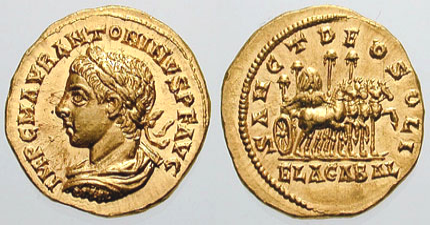
The Destruction of Subjects and Adherents

Edward Gibbon, The Decline and Fall of the Roman Empire Chp. X Part IV

The rapid and perpetual transitions from the cottage to the throne, and from the throne to the grave, might have amused an indifferent philosopher; were it possible for a philosopher to remain indifferent amidst the general calamities of human kind. The election of these precarious emperors, their power and their death, were equally destructive to their subjects and adherents. The price of their fatal elevation was instantly discharged to the troops by an immense donative, drawn from the bowels of the exhausted people. However virtuous was their character, however pure their intentions, they found themselves reduced to the hard necessity of supporting their usurpation by frequent acts of rapine and cruelty. When they fell, they involved armies and provinces in their fall. There is still extant a most savage mandate from Gallienus to one of his ministers, after the suppression of Ingenuus, who had assumed the purple in Illyricum.

“It is not enough,” says that soft but inhuman prince, “that you exterminate such as have appeared in arms; the chance of battle might have served me as effectually. The male sex of every age must be extirpated; provided that, in the execution of the children and old men, you can contrive means to save our reputation. Let every one die who has dropped an expression, who has entertained a thought against me, against me, the son of Valerian, the father and brother of so many princes. Remember that Ingenuus was made emperor: tear, kill, hew in pieces. I write to you with my own hand, and would inspire you with my own feelings.”  Whilst the public forces of the state were dissipated in private quarrels, the defenceless provinces lay exposed to every invader. The bravest usurpers were compelled, by the perplexity of their situation, to conclude ignominious treaties with the common enemy, to purchase with oppressive tributes the neutrality or services of the Barbarians, and to introduce hostile and independent nations into the heart of the Roman monarchy.
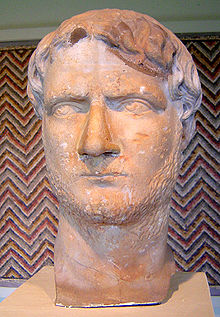
Bust of Gallienus

The Intrepid Soldier, The Cruel Tyrant

Edward Gibbon, The Decline and Fall of the Roman Empire Chp. X Pt. 4

‘The emperor Gallienus, who had long supported with impatience the censorial severity of his father and colleague, received the intelligence of his misfortunes with secret pleasure and avowed indifference. “I knew that my father was a mortal,” said he; “and since he has acted as it becomes a brave man, I am satisfied.” Whilst Rome lamented the fate of her sovereign, the savage coldness of his son was extolled by the servile courtiers as the perfect firmness of a hero and a stoic. It is difficult to paint the light, the various, the inconstant character of Gallienus, which he displayed without constraint, as soon as he became sole possessor of the empire. In every art that he attempted, his lively genius enabled him to succeed; and as his genius was destitute of judgment, he attempted every art, except the important ones of war and government. He was a master of several curious, but useless sciences, a ready orator, an elegant poet, a skilful gardener, an excellent cook, and most contemptible prince. When the great emergencies of the state required his presence and attention, he was engaged in conversation with the philosopher Plotinus, wasting his time in trifling or licentious pleasures, preparing his initiation to the Grecian mysteries, or soliciting a place in the Arcopagus of Athens. His profuse magnificence insulted the general poverty; the solemn ridicule of his triumphs impressed a deeper sense of the public disgrace. The repeated intelligence of invasions, defeats, and rebellions, he received with a careless smile; and singling out, with affected contempt, some particular production of the lost province, he carelessly asked, whether Rome must be ruined, unless it was supplied with linen from Egypt, and arras cloth from Gaul. There were, however, a few short moments in the life of Gallienus, when, exasperated by some recent injury, he suddenly appeared the intrepid soldier and the cruel tyrant; till, satiated with blood, or fatigued by resistance, he insensibly sunk into the natural mildness and indolence of his character. ‘

A Very Liberal Indulgence of Craft and Dissimulation

“In that age, the art of fortification, and the principles of tactics, were well understood by all the Roman generals; and the constant superiority of Severus was that of an artist, who uses the same instruments with more skill and industry than his rivals. I shall not, however, enter into a minute narrative of these military operations; but as the two civil wars against Niger and against Albinus were almost the same in their conduct, event, and consequences, I shall collect into one point of view the most striking circumstances, tending to develop the character of the conqueror and the state of the empire.

Falsehood and insincerity, unsuitable as they seem to the dignity of public transactions, offend us with a less degrading idea of meanness, than when they are found in the intercourse of private life. In the latter, they discover a want of courage; in the other, only a defect of power: and, as it is impossible for the most able statesmen to subdue millions of followers and enemies by their own personal strength, the world, under the name of policy, seems to have granted them a very liberal indulgence of craft and dissimulation. Yet the arts of Severus cannot be justified by the most ample privileges of state reason. He promised only to betray, he flattered only to ruin; and however he might occasionally bind himself by oaths and treaties, his conscience, obsequious to his interest, always released him from the inconvenient obligation.”

-Edward Gibbon, The Decline and Fall of the Roman Empire Chp. V Part II

Detail of Severus’ Triumphal Arch

Edward Gibbon, The Decline and Fall of the Roman Empire, Chp. VIII Part II

Every mode of religion, to make a deep and lasting impression on the human mind, must exercise our obedience, by enjoining practices of devotion, for which we can assign no reason; and must acquire our esteem, by inculcating moral duties analogous to the dictates of our own hearts. The religion of Zoroaster was abundantly provided with the former and possessed a sufficient portion of the latter. At the age of puberty, the faithful Persian was invested with a mysterious girdle, the badge of the divine protection; and from that moment all the actions of his life, even the most indifferent, or the most necessary, were sanctified by their peculiar prayers, ejaculations, or genuflections; the omission of which, under any circumstances, was a grievous sin, not inferior in guilt to the violation of the moral duties. The moral duties, however, of justice, mercy, liberality, &c., were in their turn required of the disciple of Zoroaster, who wished to escape the persecution of Ahriman, and to live with Ormusd in a blissful eternity, where the degree of felicity will be exactly proportioned to the degree of virtue and piety.

Alexander Severus vs. Elagabalus

Edward Gibbon, The Decline and Fall of the Roman Empire, Chp. VI Part III

The most worthless of mankind are not afraid to condemn in others the same disorders which they allow in themselves; and can readily discover some nice difference of age, character, or station, to justify the partial distinction. The licentious soldiers, who had raised to the throne the dissolute son of Caracalla, blushed at their ignominious choice, and turned with disgust from that monster, to contemplate with pleasure the opening virtues of his cousin Alexander, the son of Mamaea. The crafty Maesa, sensible that her grandson Elagabalus must inevitably destroy himself by his own vices, had provided another and surer support of her family. Embracing a favorable moment of fondness and devotion, she had persuaded the young emperor to adopt Alexander, and to invest him with the title of Caesar, that his own divine occupations might be no longer interrupted by the care of the earth. In the second rank that amiable prince soon acquired the affections of the public, and excited the tyrant’s jealousy, who resolved to terminate the dangerous competition, either by corrupting the manners, or by taking away the life, of his rival. His arts proved unsuccessful; his vain designs were constantly discovered by his own loquacious folly, and disappointed by those virtuous and faithful servants whom the prudence of Mamaea had placed about the person of her son. In a hasty sally of passion, Elagabalus resolved to execute by force what he had been unable to compass by fraud, and by a despotic sentence degraded his cousin from the rank and honors of Caesar. The message was received in the senate with silence, and in the camp with fury. The Praetorian guards swore to protect Alexander, and to revenge the dishonored majesty of the throne. The tears and promises of the trembling Elagabalus, who only begged them to spare his life, and to leave him in the possession of his beloved Hierocles, diverted their just indignation; and they contented themselves with empowering their praefects to watch over the safety of Alexander, and the conduct of the emperor.

The Superstition of Severus, the (Un)Chastity of Julia Domna

Edward Gibbon, The Decline and Fall of the Roman Empire, Vol. 1 Chp. 6:

The ascent to greatness, however steep and dangerous, may entertain an active spirit with the consciousness and exercise of its own powers: but the possession of a throne could never yet afford a lasting satisfaction to an ambitious mind. This melancholy truth was felt and acknowledged by Severus. Fortune and merit had, from an humble station, elevated him to the first place among mankind. “He had been all things,” as he said himself, “and all was of little value.”  Distracted with the care, not of acquiring, but of preserving an empire, oppressed with age and infirmities, careless of fame,  and satiated with power, all his prospects of life were closed. The desire of perpetuating the greatness of his family was the only remaining wish of his ambition and paternal tenderness.

Like most of the Africans, Severus was passionately addicted to the vain studies of magic and divination, deeply versed in the interpretation of dreams and omens, and perfectly acquainted with the science of judicial astrology; which, in almost every age except the present, has maintained its dominion over the mind of man. He had lost his first wife, while he was governor of the Lionnese Gaul.  In the choice of a second, he sought only to connect himself with some favorite of fortune; and as soon as he had discovered that the young lady of Emesa in Syria had a royal nativity, he solicited and obtained her hand.  Julia Domna (for that was her name) deserved all that the stars could promise her.

She possessed, even in advanced age, the attractions of beauty, and united to a lively imagination a firmness of mind, and strength of judgment, seldom bestowed on her sex. Her amiable qualities never made any deep impression on the dark and jealous temper of her husband; but in her son’s reign, she administered the principal affairs of the empire, with a prudence that supported his authority, and with a moderation that sometimes corrected his wild extravagancies. Julia applied herself to letters and philosophy, with some success, and with the most splendid reputation. She was the patroness of every art, and the friend of every man of genius. The grateful flattery of the learned has celebrated her virtues; but, if we may credit the scandal of ancient history, chastity was very far from being the most conspicuous virtue of the empress Julia.

The Necessary Tools of Despotism

Edward Gibbon, The Decline and Fall of the Roman Empire, Chp. V:

“The power of the sword is more sensibly felt in an extensive monarchy, than in a small community. It has been calculated by the ablest politicians, that no state, without being soon exhausted, can maintain above the hundredth part of its members in arms and idleness. But although this relative proportion may be uniform, the influence of the army over the rest of the society will vary according to the degree of its positive strength. The advantages of military science and discipline cannot be exerted, unless a proper number of soldiers are united into one body, and actuated by one soul. With a handful of men, such a union would be ineffectual; with an unwieldy host, it would be impracticable; and the powers of the machine would be alike destroyed by the extreme minuteness or the excessive weight of its springs. To illustrate this observation, we need only reflect, that there is no superiority of natural strength, artificial weapons, or acquired skill, which could enable one man to keep in constant subjection one hundred of his fellow-creatures: the tyrant of a single town, or a small district, would soon discover that a hundred armed followers were a weak defence against ten thousand peasants or citizens; but a hundred thousand well-disciplined soldiers will command, with despotic sway, ten millions of subjects; and a body of ten or fifteen thousand guards will strike terror into the most numerous populace that ever crowded the streets of an immense capital. The Praetorian bands, whose licentious fury was the first symptom and cause of the decline of the Roman empire, scarcely amounted to the last-mentioned number. They derived their institution from Augustus. That crafty tyrant, sensible that laws might color, but that arms alone could maintain, his usurped dominion, had gradually formed this powerful body of guards, in constant readiness to protect his person, to awe the senate, and either to prevent or to crush the first motions of rebellion. He distinguished these favored troops by a double pay and superior privileges; but, as their formidable aspect would at once have alarmed and irritated the Roman people, three cohorts only were stationed in the capital, whilst the remainder was dispersed in the adjacent towns of Italy.  But after fifty years of peace and servitude, Tiberius ventured on a decisive measure, which forever rivetted the fetters of his country. Under the fair pretences of relieving Italy from the heavy burden of military quarters, and of introducing a stricter discipline among the guards, he assembled them at Rome, in a permanent camp, which was fortified with skilful care, and placed on a commanding situation. “

A Character Sketch of Commodus

From Gibbon’s Decline and Fall of the Roman Empire, Chp. IV Part I

The monstrous vices of the son have cast a shade on the purity of the father’s virtues. It has been objected to Marcus, that he sacrificed the happiness of millions to a fond partiality for a worthless boy; and that he chose a successor in his own family, rather than in the republic. Nothing however, was neglected by the anxious father, and by the men of virtue and learning whom he summoned to his assistance, to expand the narrow mind of young Commodus, to correct his growing vices, and to render him worthy of the throne for which he was designed. But the power of instruction is seldom of much efficacy, except in those happy dispositions where it is almost superfluous. The distasteful lesson of a grave philosopher was, in a moment, obliterated by the whisper of a profligate favorite; and Marcus himself blasted the fruits of this labored education, by admitting his son, at the age of fourteen or fifteen, to a full participation of the Imperial power. He lived but four years afterwards: but he lived long enough to repent a rash measure, which raised the impetuous youth above the restraint of reason and authority.

Most of the crimes which disturb the internal peace of society, are produced by the restraints which the necessary but unequal laws of property have imposed on the appetites of mankind, by confining to a few the possession of those objects that are coveted by many. Of all our passions and appetites, the love of power is of the most imperious and unsociable nature, since the pride of one man requires the submission of the multitude. In the tumult of civil discord, the laws of society lose their force, and their place is seldom supplied by those of humanity. The ardor of contention, the pride of victory, the despair of success, the memory of past injuries, and the fear of future dangers, all contribute to inflame the mind, and to silence the voice of pity. From such motives almost every page of history has been stained with civil blood; but these motives will not account for the unprovoked cruelties of Commodus, who had nothing to wish and every thing to enjoy. The beloved son of Marcus succeeded to his father, amidst the acclamations of the senate and armies; 6 and when he ascended the throne, the happy youth saw round him neither competitor to remove, nor enemies to punish. In this calm, elevated station, it was surely natural that he should prefer the love of mankind to their detestation, the mild glories of his five predecessors to the ignominious fate of Nero and Domitian.

Yet Commodus was not, as he has been represented, a tiger born with an insatiate thirst of human blood, and capable, from his infancy, of the most inhuman actions. Nature had formed him of a weak rather than a wicked disposition. His simplicity and timidity rendered him the slave of his attendants, who gradually corrupted his mind. His cruelty, which at first obeyed the dictates of others, degenerated into habit, and at length became the ruling passion of his soul.

The Love of Power

From Edward Gibbon’s Decline and Fall of the Roman Empire, Chapter IV:

“Most of the crimes which disturb the internal peace of society, are produced by the restraints which the necessary but unequal laws of property have imposed on the appetites of mankind, by confining to a few the possession of those objects that are coveted by many. Of all our passions and appetites, the love of power is of the most imperious and unsociable nature, since the pride of one man requires the submission of the multitude. In the tumult of civil discord, the laws of society lose their force, and their place is seldom supplied by those of humanity. The ardor of contention, the pride of victory, the despair of success, the memory of past injuries, and the fear of future dangers, all contribute to inflame the mind, and to silence the voice of pity. From such motives almost every page of history has been stained with civil blood; but these motives will not account for the unprovoked cruelties of Commodus, who had nothing to wish and every thing to enjoy. The beloved son of Marcus succeeded to his father, amidst the acclamations of the senate and armies; and when he ascended the throne, the happy youth saw round him neither competitor to remove, nor enemies to punish. In this calm, elevated station, it was surely natural that he should prefer the love of mankind to their detestation, the mild glories of his five predecessors to the ignominious fate of Nero and Domitian.”

Antoninus Pius and Marcus Aurelius: Character Sketches of Virtuous Princes

From The Decline and Fall of the Roman Empire, Vol. 1 Chp. 3 Pt. 2

“Titus Antoninus Pius has been justly denominated a second Numa. The same love of religion, justice, and peace, was the distinguishing characteristic of both princes. But the situation of the latter opened a much larger field for the exercise of those virtues. Numa could only prevent a few neighboring villages from plundering each other’s harvests. Antoninus diffused order and tranquillity over the greatest part of the earth. His reign is marked by the rare advantage of furnishing very few materials for history; which is, indeed, little more than the register of the crimes, follies, and misfortunes of mankind. In private life, he was an amiable, as well as a good man. The native simplicity of his virtue was a stranger to vanity or affectation. He enjoyed with moderation the conveniences of his fortune, and the innocent pleasures of society;  and the benevolence of his soul displayed itself in a cheerful serenity of temper.”

Antoninus Pius

“The virtue of Marcus Aurelius Antoninus was of severer and more laborious kind. It was the well-earned harvest of many a learned conference, of many a patient lecture, and many a midnight lucubration. At the age of twelve years he embraced the rigid system of the Stoics, which taught him to submit his body to his mind, his passions to his reason; to consider virtue as the only good, vice as the only evil, all things external as things indifferent. His meditations, composed in the tumult of the camp, are still extant; and he even condescended to give lessons of philosophy, in a more public manner than was perhaps consistent with the modesty of sage, or the dignity of an emperor. But his life was the noblest commentary on the precepts of Zeno. He was severe to himself, indulgent to the imperfections of others, just and beneficent to all mankind. He regretted that Avidius Cassius, who excited a rebellion in Syria, had disappointed him, by a voluntary death,  of the pleasure of converting an enemy into a friend; and he justified the sincerity of that sentiment, by moderating the zeal of the senate against the adherents of the traitor. War he detested, as the disgrace and calamity of human nature;  but when the necessity of a just defence called upon him to take up arms, he readily exposed his person to eight winter campaigns, on the frozen banks of the Danube, the severity of which was at last fatal to the weakness of his constitution. His memory was revered by a grateful posterity, and above a century after his death, many persons preserved the image of Marcus Antoninus among those of their household gods.”

Marcus Aurelius