Fathers, Children, and a Story’s End

“To remember the past, you tell a story about it. And in recalling the memory, you tell the story again. It is not always the same story, as the person telling it does not always want the same things….As children become better storytellers, they become better rememberers. But their memory system also becomes more susceptible to distortion.”

Charles Fernyhough, Pieces of Light, 98

He was like someone speaking many lies similar to the truth.”

ἴσκε ψεύδεα πολλὰ λέγων ἐτύμοισιν ὁμοῖα· Homer, Odyssey 19.203

When Odysseus returns to Ithaca in the second half of the Odyssey, he spends seven books in disguise. Part of the motivation for this is to give him the ability to test the loyalty of the people in Ithaca and justify the murder of the suitors and the slaughter of the handmaids at the end. But another part is that Odysseus explores who he is by reflecting on others’ stories. He uses his narratives in the second half of the epic to negotiate different parts of identity, to imagine different lives for himself, and to distance himself from the trauma of war and wandering.

In studying memory Martin Conway suggests that there are two forces in human recall: correspondence, which is about equivalence between details of ‘reality’ (or experience) and details of a story and coherence, which means that details make sense together in a narrative. When we tell stories about ourselves, we are not repeating a one-to-one correspondence between what happened and what we say about it. Instead we are engaging in the creation of autobiographical memory to create a coherent sense of ourselves.

The problem with seeing Odysseus as doing this in the second half of the Odyssey, of course, is that his stories are only obliquely about himself. They are mostly lies and they change depending on who he talks to: he shifts in narratives from Eumaios, to the suitors, and to his father at the epic’s end. His lies say something about him, certainly; but they also say something about how he views others.

The stories he tells lets him mirror and then use others. And he uses them to complete the hardest (and most violent) parts of his homecoming.

“I don’t know. No one ever knows his own father himself.”

οὐκ οἶδ’· οὐ γάρ πώ τις ἑὸν γόνον αὐτὸς ἀνέγνω. Homer, Odyssey 1.201

There are a series of days each year when my father’s memory presses upon me: father’s day, his birthday, the day(s) he died, and holidays. I miss him deeply; but I also spend the years pondering the questions I don’t have answers to, wondering how much of what he was shapes me still.

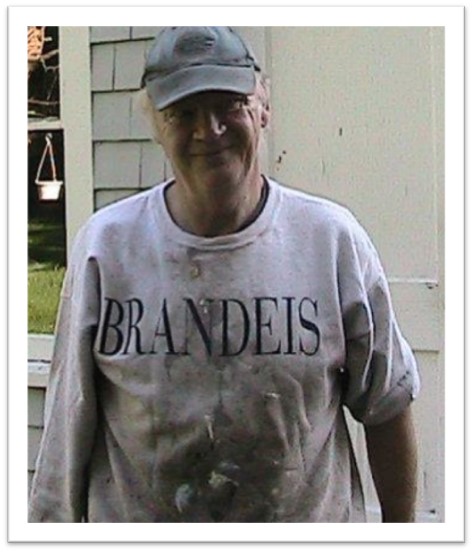
When my father died, it was a shock both for its suddenness and then for the series of minor mysteries that followed. The first was the uncertainty of what happened. He died at 61 after a sudden bout with pneumonia. The autopsy revealed his lungs were filled with sawdust from years of fiddling around with woodworking, mask-less in a garage with no circulation. He also had Lyme disease. And years of smoking and drug use had made his breathing weaker and his sense of his own health attenuated.
Image

We search out he causes of things but often find no clear answer. So, often, we choose a simple answer to help us get by. How and why he died suddenly gave way to a series of mundane, pressing questions: funeral arrangements, financial concerns. Packing up a life is never easy; the secrets left behind are entangled in ways the living didn’t imagine and the dead will never learn.

After my father’s death, I expected some trouble. He was a man who shifted easily between lives. He had a rich fantasy life—always dreaming that he would accomplish something great, that he would end up someone different. As the oldest of three, it fell to me to try to make sense of the mess: years of unpaid taxes; a maze of debt and collection bureaus; accounts tied to strange addresses; unopened summonses and bills.

At one point, I had to log in into my father’s email account, at first to contact some business associates who owed him money, and later to sift through his last few weeks of correspondence to try to figure out whether or not he knew how sick he was. (He did. Forty-eight hours before his death he sent an email to his older sister, writing “This is the sickest I have ever been.” He still waited another 36 hours to go to the doctor.)

There was a strange type of voyeurism in the process. I suspected some of what I would find, but not everything. Infidelity, I knew about. Debt and delinquency? This had been the story of our lives. But during the process of arranging for my father’s funeral, writing a eulogy, and trying to make an initial reckoning of his accounts, I started emailing with one of my father’s business associates, a man I will call Felix.

“There is one universal law among mortals
And one that is right to the gods, I believe truly—
And to all animals as well: to love the children we bear.
In everything else, we follow different laws.”

εἷς γάρ τις ἔστι κοινὸς ἀνθρώποις νόμος
καὶ θεοῖσι τοῦτο δόξαν, ὡς σαφῶς λέγω,
θηρσίν τε πᾶσι, τέκνα τίκτουσιν φιλεῖν·
τὰ δ’ ἄλλα χωρὶς χρώμεθ’ ἀλλήλων νόμοις. Euripides

Upon his return to Ithaca, Odysseus spends a significant amount of time enjoying hospitality of his enslaved swineherd, Eumaios. He tells Eumaios some terrific stories: he was a warrior from Crete who made the wrong decision to go to war and after years of suffering and betrayal he ended up enslaved and sold. Part of that story is true, of course; and the enslavement can function as a metaphor for his pains at sea and how he was subject to cruel fate. But the story also serves to endear Odysseus to Eumaios by anticipating Eumaios’ own story: how he was kidnapped as a child by a devious nurse and sold off to slavers who brought him to Ithaca.

When we meet new people, we eagerly find common ground through personal stories: we grew up in the same/similar place; we went to school in the same city; we worked in similar industries, etc. But as relationships deepen, we share those harder stories. Sometimes, to identify with people, or even to upstage them, we embellish or reshape our stories.

Even false tales can arise from real pain. Life leaves physical markers on us as literal as Odysseus’ scar. But the marks that define us are more often than not unseen. Just as the year’s calendar eventually becomes a catalog of days for the lost and gone, so too can our memories become a latticework of scars and open wounds. The facts of the stories we tell can be less meaningful than the truth they are trying to convey.

Odysseus and his father

My father’s colleague Felix confided in me that my dad had become a close friend, in part because of his empathy regarding Felix’s daughter. His daughter had suffered from an “unknown progressive neuro-muscular disorder causing severe dystonia” and the pain she endured alongside the uncertainty of her diagnosis (which seemed to indicate a shortened life) wracked him and his family with the kind of suffering that only parents can imagine.

Felix made it clear that my father changed his life because he was always there just to listen and because he inspired him with his love of his family and his expressions of religious faith. He also inspired him, he revealed, because he shared with him his own story of loss, the loss of his daughter Rachel.

“There is a good time for lies and god honors it”

ψευδῶν δὲ καιρὸν ἔσθ’ ὅπου τιμᾷ θεός #Aeschylus

I never had a sibling named Rachel. But I didn’t say this to Felix because he had forwarded me an email where my father wrote:

“Every day I wake up thinking of my daughter –Rachel – go to bed thinking of Rachel. We had 4 children – now 3 but the blessings and gifts they have brought blow my mind […] but always Rachel is the background- never goes away- but I have still have joy and overwhelmed with blessings.”

Felix assured me that he had never mentioned this email to anyone. Even as I type this now I can smell the stale smoke in my father’s office where I read this for the first time. I remember calling my wife in to read it. Under the pall of our grief, we couldn’t process this, we couldn’t make sense of what it meant or whether it was possible. Soon, like my father, I was waking up and thinking about Rachel.

“If I tell the truth, I won’t make you happy.
But if I am to make you happy, I will say nothing true.”

εἰς μὲν φράσω τἀληθές, οὐχί σ’ εὐφρανῶ·
εἰ δ’ εὐφρανῶ τί σ’, οὐχὶ τἀληθὲς φράσω. #Agathon

There’s a scholarly tradition of dismissing the end of the Odyssey. Ancient scholars complain that the Odyssey ended properly with the reunion of Odysseus and Penelope, while the Archbishop of Thessaloniki, Eustathius, observed that book 24 is full of really important things, like “the recognition scene between Odysseus and Laertes.” Odysseus’ reunions take him through the major roles he plays in life as part of re-establishing an Ithakan identity. In book 24, he must reconcile with his community and his dad.

Infant and Skull, Medieval, Louvre

When I talk about the Odyssey publicly and I get to its end, I explain that I never really understood the reunion scene until I became a father and lost my father in the same year. Odysseus tests and teases his father cruelly, only to panic and give up the ruse when he makes Laertes cry. Odysseus’ scar is a necessary but insufficient proof of his identity to his father. To confirm their relationship, they rehearse the stories of the groves and trees they used to tend together when Odysseus was young.

My father spent a good deal of the last few decades of his life clearing and planting in the woods of southern Maine. His primary engagement with my brother and me was this land: planting grass, mowing the lawn, developing gardens, planning for the future. The land my mother and brother still live on is also a map of memory: the places where we played games; the trees we climbed; where we fought; where we buried pets. In my father’s absence, there was one fewer person in the world who could attest to the truth of our stories.

So I was left with new stories for this landscape. Eventually, I tried to make ‘Rachel’ cohere with reality. My mother had miscarriages before me and after me and, as family lore goes, was told she wasn’t able to have children. When I was younger and the whole family was more religious, they told me (the oldest) that they hadn’t had a child until they joined a new church and started to pray. I was baptized and confirmed in that church. The minister was my godfather. I have a picture of him holding my daughter.

But when I asked my mother, in a probably less than sensitive way, if there were any other children or if they had planned on naming one of the miscarriages Rachel, she thought it was absurd. It didn’t seem to me likely that my father had spent years brooding in secret over a lost child when he had three healthy children.

But as a recent father, I could imagine the possibility at least. From the moment I knew my wife was pregnant, I would feel a deep, gut-wrenching fear at even imagining the death of a child. In this I have found the ultimate failure of Stoic prior contemplation: I cannot conceive of a world where I knit myself back together after losing a child. Is that what happened with my father?

As we approached his funeral, I daydreamed a future story where I interviewed distant relatives and friends about may father’s past, the type of people who might know about a lost child, or about a baby born out of wedlock whose brief existence had been hidden from my mother. As the long hours past, I thought that maybe this was Rachel: a brief alternative life in the past whose loss had festered in my father as a metonym for all of the other lives he could have lived. Or, as that fourth child, that extra helping of happiness that might have tipped the scales in a middling life.

“I once lived in a house among men, a blessed man in a
wealthy house, and I used to give much to a wanderer”

καὶ γὰρ ἐγώ ποτε οἶκον ἐν ἀνθρώποισιν ἔναιον
ὄλβιος ἀφνειὸν καὶ πολλάκι δόσκον ἀλήτῃ 17.419–20

There is a cold empathy in Odysseus’ stories—he is a kind of predating narrator in echoing Eumaios’ greatest sorrow, his kidnapping and enslavement as a child. When Odysseus tells his lies to manipulate Eumaios or test the suitors, he instrumentalizes narrative. He plays upon their suspicions and experiences to put himself in a better position. But that’s an oversimplification of the story too. He also can be seen tracing out he story of his own life, exploring different ways of thinking about what happened to him. As the fugitive Cretan, he tells Eumaios that his men forced him to go to the Trojan War (14.261), he laments that he cared too much for war, and laments how cruel fate has been to him.

Lovis Corinth “Odysseus Fighting the Beggar” 1903

In my own narrative quest, I emailed a woman my father had an affair with and asked her directly if she knew anything about ‘Rachel’. She, who had known my father quite well for years, said she would have been shocked if there were or had been another child, that my father loved his children so much that it would be inconceivable that he would have never mentioned Rachel. And, then, she added enigmatically, “He did say last summer that he would have named your [daughter] Rachel, if it was up to him.”

After my father’s funeral, things spiraled downhill for my family. We eventually got most of the finances under control by writing off credit debt and paying federal and state taxes; two new grandchildren were born over the next year. I left the issue of Rachel quiet to protect my mother and the rest of us from the uncertainty. But I never really stopped thinking about it

“No other Odysseus will ever come home to you”

οὐ μὲν γάρ τοι ἔτ’ ἄλλος ἐλεύσεται ἐνθάδ’ ᾿Οδυσσεύς Homer, Odyssey 16.204

When Telemachus first sees Odysseus revealed in the Odyssey, he refuses to believe it his father. Odysseus appears suddenly and he looks too good. There’s a slight delay before Odysseus gets angry, but then Telemachus accepts him, even though he has no proof. Penelope, however, delays acknowledging her husband to the point that when she knows who he is remains an interpretive knot of the poem. I like to imagine her suspecting from the beginning, but resisting seeing in this old, broken beggar the man who left her so many years ago. Even after the slaughter of the suitors—or perhaps, especially after it—she makes him wait, testing him first to see how he reacts when she claims to have moved the bed around which their home was built.

I eventually concluded that there were three possibilities: (1) that my father had emotionally connected with a miscarriage, naming it Rachel and keeping the pain to himself; (2) that he had fathered another child who died (or was estranged); or (3) that he had made up the child drawing on his experiences to empathize with Felix. Given the absence of any evidence for the first two options, I decided that the last was most likely.

When Odysseus lies to his father, crafting a tale that echoes the pain they have both gone through, it is a step too far. As his father cries, Odysseus breaks in and says, “I myself, I am the one about whom who you ask / I have come home in this twentieth year to my paternal land” (κεῖνος μὲν δὴ ὅδ’ αὐτὸς ἐγώ, πάτερ, ὃν σὺ μεταλλᾷς, / ἤλυθον εἰκοστῷ ἔτεϊ ἐς πατρίδα γαῖαν, 24.321–22). But this is not enough for Laertes after so many lies: he asks for a clear sign (σῆμά τί μοι νῦν εἰπὲ ἀριφραδές, 329) and Odysseus shows him his scar and tells him the story of the trees his father described to him when he was a child (333–45). Laertes’ limbs give away as he “recognizes the signs” (σήματ’ ἀναγνόντος … ).

What does it mean to believe that your father was the kind of man who would fabricate a dead child in order to make a connection with someone? Is this even possible? What was the name Rachel to him and why did it recur in different contexts?

Sirens and Odysseus by Fracesco Primaticcio, 1560

My father was a man cut off from many people by his deafness and his aloofness (interconnected). He was also capable of long-term deceit (for self-defense) and short-term confabulation (to try to keep others happy). If he did manufacture the memory of a child, I am almost certain he did it with a full range of emotions drawn from the rest of his life and that part of him wanted to believe it. We make up stories all the time. We all bend the truth and introduce new details into old stories. If he invented a Rachel to console Felix, he did it because he wanted to feel with him, to be his friend, and through grief to be more fully human.

But perhaps this conclusion is still just more evidence of me creating the father I wanted to have rather than acknowledging the man he really was. To some, inventing a dead child might sound diabolical. But, given the other options, it speaks to me of someone who wanted to feel, of a man who into his last days was trying to be something real.

And this in turn is a lesson on the complexity of what makes each one of us who we are.

Many of the concepts in this entry come from this book

here is its dedication page


Plutarch’s Advice on Being a Good Father

Plutarch, On the Education of Children 20

“Once I add a few more things, I will complete my proposals. Beyond all other things, it is necessary that fathers, by avoiding transgressions and doing everything that is required, offer themselves as a clear example to their children, so that when looking at their father’s life as if in a mirror they may turn away from shameful deeds and words. Whoever makes the same mistakes as those for which they punish their sons become their own accusers under their sons’ names without realizing it . Men who live life poorly in every way do not possess the right to criticize their slaves, much less their sons. In addition, they could become their sons’ advisors and teachers of crime. For whenever old men behave shamefully, it is by necessity that their young are the most shameless.”

Βραχέα δὲ προσθεὶς ἔτι περιγράψω τὰς ὑποθήκας. πρὸ πάντων γὰρ δεῖ τοὺς πατέρας τῷ μηδὲν ἁμαρτάνειν ἀλλὰ πάνθ’ ἃ δεῖ πράττειν ἐναργὲς αὑτοὺς παράδειγμα τοῖς τέκνοις παρέχειν, ἵνα πρὸς τὸν τούτων βίον ὥσπερ κάτοπτρον ἀποβλέποντες ἀποτρέπωνται τῶν αἰσχρῶν ἔργων καὶ λόγων. ὡς οἵτινες τοῖς ἁμαρτάνουσιν υἱοῖς ἐπιτιμῶντες τοῖς αὐτοῖς ἁμαρτήμασι περιπίπτουσιν, ἐπὶ τῷ ἐκείνων ὀνόματι λανθάνουσιν ἑαυτῶν κατήγοροι γιγνόμενοι• τὸ δ’ ὅλον φαύλως ζῶντες οὐδὲ τοῖς δούλοις παρρησίαν ἄγουσιν ἐπιτιμᾶν, μή τί γε τοῖς υἱοῖς. χωρὶς δὲ τούτων γένοιντ’ ἂν αὐτοῖς τῶν ἀδικημάτων σύμβουλοι καὶ διδάσκαλοι. ὅπου γὰρ γέροντές εἰσιν ἀναίσχυντοι, ἐνταῦθ’ ἀνάγκη καὶ νέους ἀναιδεστάτους εἶναι.


Father

This my fifth father’s day since my father’s passing. His example(s), though fading, remain.

Scoundrels, Fools, and Failing States

Antisthenes, fr. 103 [=Diogenes Laertius 6.11]

“He used to say that states fail when they cannot distinguish fools from serious men.”

τότ’ ἔφη τὰς πόλεις ἀπόλλυσθαι, ὅταν μὴ δύνωνται τοὺς φαύλους ἀπὸ τῶν σπουδαίων διακρίνειν.

Fr.104

“He used to say that it is strange that we sift out the chaff from the wheat and those useless for war, but we do not forbid scoundrels in politics.”

ἄτοπον ἔφη τοῦ μὲν σίτου τὰς αἴρας ἐκλέγειν καὶ ἐν τῷ πολέμῳ τοὺς ἀχρείους, ἐν δὲ πολιτείᾳ τοὺς πονηροὺς μὴ παραιτεῖσθαι.

Hesychius

“Phaulos: evil, tricky, mean; simple, dumb. Ridiculous”

φαῦλος· κακός, δόλιος, χαλεπός. εὐτελής, ἁπλοῦς. καταγέλαστος

Phaulos lsj

Apostolius Paroemiographus, 9.18.12

“Fish start to stink at the top”: [this is a proverb] applied to people who have scoundrels for leaders.”

᾿Ιχθὺς ἐκ τῆς κεφαλῆς ὄζειν ἄρχεται: ἐπὶ τῶν ἐπιστάτας φαύλους ἐχόντων.

Stobaeus, 2.3.4

“When Plato saw that someone was doing evil things, but claiming that he was carrying out justice for other people, he said. “This man carries his mind on his tongue.”

᾿Ιδών τινα Πλάτων φαῦλα μὲν πράττοντα, δίκας δὲ ὑπὲρ ἑτέρων λέγοντα, εἶπεν, Οὗτος νοῦν „ἐπὶ γλώσσῃ φέρει”.

2.14.3 Mousonius

“[He said] that associating with wise people is worth a lot, but that you should avoid scoundrels and the uneducated.”

῞Οτι χρὴ περὶ πολλοῦ ποιεῖσθαι τὰς τῶν σοφῶν συνουσίας, ἐκκλίνειν δὲ τοὺς φαύλους καὶ ἀπαιδεύτους

Menander fr. 274

“It is much better to have learned one thing well,
Than to cast about for many deeds foolishly.”

Πολὺ κρεῖττόν ἐστιν ἓν καλῶς μεμαθηκέναι,
ἢ πολλὰ φαύλως περιβεβλῆσθαι πράγματα.

From Beekes 2010

phaulos Beekes 1Phaulos beekes 2

Democritus fr. 234

“Associating with scoundrels frequently increases the possession of wickedness.”

Φαύλων ὁμιλίη ξυνεχὴς ἕξιν κακίης συναέξει.

Socrates, Stobaeus 2.45.3

“It is the same thing to attach your boat to a weak anchor and your hopes to foolish judgment.”

Ταὐτὸν ἐξ ἀσθενοῦς ἀγκυρίου σκάφος ὁρμίζειν καὶ ἐκ φαύλης γνώμης ἐλπίδα.


Eusebius, fr. 7 [=Stobaeus 3.4.104]

“Foolish people honor and wonder at those who have a lot of money and are scoundrels, and hold serious people in contempt when they see that they are poor.”

Οἱ μάταιοι τῶν ἀνθρώπων τοὺς μὲν μεγάλα χρήματα ἔχοντας καὶ φαύλους ἐόντας τιμῶσί τε καὶ τεθωυμάκασι· τῶν δὲ σπουδαίων, ἐπειδὰν ἀχρηματίην καταγνῶσιν, ὑπερφρονέουσιν.

Image result for dirty rotten scoundrels

What’s the Odyssey About?

Cicero, Brutus 72

“For the Latin Odyssey is just like some creation of Daedalus and the plays of Livius are not worth reading twice.”

nam et Odyssia Latina est sic1 tamquam opus aliquod Daedali et Livianae fabulae non satis dignae quae iterum legantur.

Diogenes Laertius, Lives of the Philosophers 6.27

[Diogenes] was amazed that scholars were studying Odysseus’ sufferings but
remained ignorant of their own.

τούς τε γραμματικοὺς ἐθαύμαζε τὰ μὲν τοῦ Ὀδυσσέως κακὰ ἀναζητοῦντας, τὰ δ᾽ ἴδια ἀγνοοῦντας.

Ovid, Tristia 2.375-6

“What is the Odyssey about except about love,
A woman alone, pursued by many suitors while her husband’s gone.”

aut quid Odyssea est nisi femina propter amorem,
dum vir abest, multis una petita procis?

Aristotle, Rhetoric 1406b

“Alcidamas called the Odyssey a ‘fine mirror of human life’ ”

καλὸν ἀνθρωπίνου βίου κάτοπτρον

Michael Apostolios, Proverbia 14.56

“I will make your house a wooden horse”: this means I will make it disappear. Themistokles’ groom said this. It comes from the Wooden Horse at Troy, the one Odysseus used to take the city.”

Ποιήσω τὴν οἰκίαν σου Δούρειον ἵππον: ἤτοι ἀφανίσω αὐτήν· ἱπποκόμος εἴρηκε τουτὶ Θεμιστοκλέους· εἴληπται δὲ ἀπὸ τοῦ ἐν τῇ Τροίᾳ Δουρείου ἵππου, ᾧ ᾿Οδυσσεὺς τὴν Τροίαν ἐπόρθησεν.

Plato, Laws 658d

“But I think that we old men might listen happily to someone reciting the Iliad and the Odyssey well and quickly declare that they were completely victorious! Who, then, would rightly be the winner—that’s the next issue, right?”

Ῥαψῳδὸν δέ, καλῶς Ἰλιάδα καὶ Ὀδύσσειαν ἤ τι τῶν Ἡσιοδείων διατιθέντα, τάχ᾿ ἂν ἡμεῖς οἱ γέροντες ἥδιστα ἀκούσαντες νικᾷν ἂν φαῖμεν πάμπολυ. τίς οὖν ὀρθῶς ἂν νενικηκὼς εἴη, τοῦτο μετὰ τοῦτο· ἦ γάρ;

Dio Chrysostom, 55 On Homer and Socrates 8

“Homer didn’t think it right to tell where he came from, who his parents were, no even what he should be called. Nope—instead, he’s happy if we don’t know the name of whoever composed the Iliad and the Odyssey.”

Ὅμηρος μὲν γὰρ οὐδὲ ὁπόθεν ἦν εἰπεῖν ἠξίωσεν οὐδὲ ὧντινων γονέων οὐδὲ ὅστις αὐτὸς ἐκαλεῖτο. ἀλλὰ ὅσον ἐπ᾿ ἐκείνῳ καὶ τὸ ὄνομα ἠγνοοῦμεν ἂν τοῦ γράψαντος τὴν Ἰλιάδα καὶ τὴν Ὀδύσσειαν.

Here’s a post On Not Reading Homer. And, conversely, one on Reading Homer.

“L’Odyssée” by Jean-Auguste Dominique Ingres, 1850

F**k the Haters – I Believe in the Liberal Arts!

Aldus Manutius, Preface to Joannes Crastonus’ Greek Dictionary

“I had originally designed not to publish the Greek lexica (which we can call dictionaries in Latin) from our press before I had them sufficiently abundant and correct. But I changed my mind about this when I recognized that it was difficult in the extreme, not just for me – a man burdened by family obligations and my printing business – but even for an unencumbered person thoroughly knowledgeable of both languages, as well as the liberal arts, medicine, and all of the sciences. Indeed it is proper to know all, and to interpret all of the words according to their most proper sense, but I doubt whether anyone of our own time other than a stray person here and there has achieved excellence in this matter, when Greek and Latin literature – though they are thriving more than in many previous years – nevertheless languish in some obscurity.

For, who really knows the liberal arts? Who is thoroughly learned in the most simple things which are necessary in medicine? Alas – it is a shame to say, we hardly recognize lettuce, cabbage, and the herb which shows itself even to the blind. When I think about this, even though I cannot grieve about it too vehemently, I not only refrain from giving way to my pain, but I gird myself night and day to remedy the situation while avoiding no labor, so that I may hope that it will soon come to pass that the people of our age will know all the good arts and even have some fine skill in medicine, and that each scholar will have the strength to contend with antiquity as long as they not fail themselves. If there are any haters, imbeciles, or barbarians, then let them grieve, let them criticize, let them stand in the way as much and as long as they want. But this will turn out beautifully – it will.”


aldus1

Excellent Quality, More Sh*t Aristole Didn’t Say

Here’s a quotation [wrongly] attributed to Aristotle:

“Aristotle on Excellence: Excellence is never an accident; It is the result of high intention; sincere effort, intelligent direction, skillful execution and the vision to see obstacles as opportunities. “

So, if you’re on social media and decorating your virtual life with “ancient quotes” there is a pretty high chance they are nonsense masquerading as something an ancient might say. But there’s nothing remotely Aristotelian about this except for the use of words like “excellence”, “intelligent” and maybe “accident”. If that’s your criteria for making something Aristotelian, you’re better off misattributing the entire dictionary than this absurd b-school pabulum.

If you do a google search for books, this is really popular in the last decade or so, you find this in self help books, business books, etc. But if you search for 20th century, you find a variant that is not attributed to Aristotle:

Quality is never an accident; It is the result of high intention; sincere effort, intelligent and skillful execution; […]. quality represents the wise choice of many alternatives.”

There are several variants that combine various elements of these quotations. This is definitely not Aristotle: it is some bizarre love child of modern business child and the “excellence is a habit” misquotation. This is Rhetorica ad Fictum levels of fake.

Also, if you look carefully at the books data, the quote is attributed to a Willa Foster before it becomes pinterest fodder for the Aristotle hound. Here’s a discussion trying to figure out who Will A. Foster is. Some people identify the quote as coming from this William A. Foster.

The closest Aristotle gets to this is here:

Aristotle, Nicomachean Ethics, 1105b

“It is therefore well said that a person becomes just by doing just things and prudent from practicing wisdom. And, no one could ever approach being good without doing these things. But many who do not practice them flee to argument and believe that they are practicing philosophy and that they will become serious men in this way. They act the way sick people do who listen to their doctors seriously and then do nothing of what they were prescribed. Just as these patients will not end up healthy from treating their body in this way, so most people won’t change their soul with such philosophy.”

εὖ οὖν λέγεται ὅτι ἐκ τοῦ τὰ δίκαια πράττειν ὁ δίκαιος γίνεται καὶ ἐκ τοῦ τὰ σώφρονα ὁ σώφρων· ἐκ δὲ τοῦ μὴ πράττειν ταῦτα οὐδεὶς ἂν οὐδὲ μελλήσειε γίνεσθαι ἀγαθός. ἀλλ’ οἱ πολλοὶ ταῦτα μὲν οὐ πράττουσιν, ἐπὶ δὲ τὸν λόγον καταφεύγοντες οἴονται φιλοσοφεῖν καὶ οὕτως ἔσεσθαι σπουδαῖοι, ὅμοιόν τι ποιοῦντες τοῖς κάμνουσιν, οἳ τῶν ἰατρῶν ἀκούουσι μὲν ἐπιμελῶς, ποιοῦσι δ’ οὐδὲν τῶν προσταττομένων. ὥσπερ οὖν οὐδ’ ἐκεῖνοι εὖ ἕξουσι τὸ σῶμα οὕτω θεραπευόμενοι, οὐδ’ οὗτοι τὴν ψυχὴν οὕτω φιλοσοφοῦντες.


go here for more stuff Aristotle did not say.

What Books have You Read? Give Them Up.

Lucian, On the Ignorant Book-Collector 27

“I’d be happy if I could ask you what kinds of books you like to read the most? Is it the works of Plato or Antisthenes, Archilochus or Hipponax? Or do you look down on these books because you prefer the orators?

Tell me, have you read Aeschines’ speech Against Timarchus? Or, do you know all those things and comprehend each of them but instead dip into Aristophanes and Eupolis? Have you even read The Baptai, the whole play? Did nothing in it change you and were you not embarrassed once you recognized what it was about? Someone might, in fact, be especially amazed at what kind of a spirit you have when you touch your books or what your hands are like when you unroll them.

When do you read? During the daytime? No one has seen you doing that! Is it at night then? Do you do it after you have given out orders to these guys or before? But in the name of Kotuos, don’t dare to do this kind of thing any more. Give up the books and pay attention to only your own affairs”

Ἡδέως δ᾿ ἂν καὶ ἐροίμην σε, τὰ τοσαῦτα βιβλία ἔχων τί μάλιστα ἀναγιγνώσκεις αὐτῶν; τὰ Πλάτωνος; τὰ Ἀντισθένους; τὰ Ἀρχιλόχου; τὰ Ἱππώνακτος; ἢ τούτων μὲν ὑπερφρονεῖς, ῥήτορες δὲ μάλιστά σοι διὰ χειρός; εἰπέ μοι, καὶ Αἰσχίνου τὸν κατὰ Τιμάρχου λόγον ἀναγιγνώσκεις; ἢ ἐκεῖνά γε πάντα οἶσθα καὶ γιγνώσκεις αὐτῶν ἕκαστον, τὸν δὲ Ἀριστοφάνην καὶ τὸν Εὔπολιν ὑποδέδυκας; ἀνέγνως καὶ τοὺς Βάπτας, τὸ δρᾶμα ὅλον; εἶτ᾿ οὐδέν σου τἀκεῖ καθίκετο, οὐδ᾿ ἠρυθρίασας γνωρίσας αὐτά; τοῦτο γοῦν καὶ μάλιστα θαυμάσειεν ἄν τις, τίνα ποτὲ ψυχὴν ἔχων ἅπτῃ τῶν βιβλιων, ὁποίαις αὐτὰ χερσὶν ἀνελίττεις. πότε δὲ ἀναγιγνώσκεις; μεθ᾿ ἡμέραν; ἀλλ᾿ οὐδεὶς ἑώρακε τοῦτο ποιοῦντα. ἀλλὰ νύκτωρ; πότερον ἐπιτεταγμένος ἤδη ἐκείνοις ἢ πρὸ τῶν λόγων; ἀλλὰ πρὸς Κότυος μηκέτι μὴ τολμήσῃς τοιοῦτο μηδέν, ἄφες δὲ τὰ βιβλία καὶ μόνα ἐργάζου τὰ σαυτοῦ.

Merton College Library

Teaching the Mahabharata in a Time of War

When Russia invaded Ukraine—the day after my son’s birthday in Ukraine but on his actual birthday in Seattle (because of the time difference we had time for dinner but before the cake and the candles the news had come)—I was teaching one of my bread and butter classes, the Epic Tradition. I pack too much into the ten weeks of this course: we read the Gilgamesh, the Iliad, Táin Bó Cúailnge, and the Odyssey, all in their entirety, and then, at the end, R.K. Narayan’s very short retellings of the Mahabharata and the Ramayana, supplemented by quotations from academic translations.

When the war started, we had reached the Mahabharata part of the course. Teaching the Mahabharata, in any form, at the beginning of this war is one of those teaching experiences I will not easily forget. The Mahabharata is many (many) things, but the main plot line is about the conflict between two sets of cousins—our heroes, the Pandavas, and our villains, the Kauravas—a conflict that ends in a cosmic and cataclysmic war. It all begins with delightfully complex lines of causality. The older prince is disqualified from ruling because he is blind, so the younger one becomes the king instead.

After a while, he resigns and then dies, so the older one becomes king after all. Whose son should inherit the kingdom? Yudhishthira, the eldest of the Pandavas, is born before Duryodhana, the eldest of the Kauravas—but Duryodhana’s mother becomes pregnant first. And so on. But as the action unfolds, the complexity, though it never disappears, becomes somehow less of a brainteaser and more of a background against which emerges something much starker, more tragic, more black-and-white. With an excessive, thought-experiment-like consistency Yudhishthira tries to avoid the war. What if I never contradict anyone? (Admittedly, he fails in that, but who wouldn’t?) What if I always completely obey my uncle’s orders? What if we accept half of the kingdom, the infertile lands? They do divide the kingdom, but it doesn’t help. At one point, he asks for just five villages, one for each of his brothers (To call Kauravas’ bluff or in earnest? What would he do if they agreed? We don’t get to find out).

But the war is not to be avoided, of course, as we all have known from the beginning. As in the Greek Epic Cycle, the war is caused by powers beyond mere humans, by the fundamental forces of the universe. It has to happen because the Earth is too burdened and she is shrugging off her load. And so Duryodhana says, in essence, “as long as the Pandavas have anything, I cannot live” and the war begins. Our heroes kill not only their cousins, but their grandfather and their teachers. The most brilliant of the Pandava children, Abhimanyu, is killed shortly after his wedding. Draupadi, the wife of the five Pandavas (yes, polyandry) loses all of her sons. In the end, the victory is won, but in the Mahabharata the moment when “the good prevails” feels terribly bitter and empty and full of grief.

And so here I was, trudging to class with my slides summarizing the battle books of the epic. I would wake up in the morning hoping that all that happened the day before was a bad dream, that it couldn’t be, or if it could then at least not to that extent—surely the awful, relentless cruelty of it was only a nightmare? But no, this was our new reality. I would feel as though, by the time I’d showered, my energy was spent. But what can you do? You go to class and pull up your slides. You read:

A loud wail went up in all the houses of the Kurus. The whole city, including the children, was riven with grief. Women whose lords had been killed were now in the gaze of common men—women whom not even the hosts of the Gods had ever seen! Having set their lovely tresses free to fly and taken off their ornaments, those women, clad only in simple shifts, ran to and fro helplessly. They emerged from houses that looked like snow-capped mountains, like does leaving secluded mountain valleys when the leader of their herd has been killed. Several groups of distraught women in the throes of grief ran about as if they were in the girls’ yard; and holding onto each others’ arms, they wept for their sons, brothers, and fathers—it was as if they were acting out the destruction of the world at the end of an Age. (Mahabharata 11.9.8, translated by James L. Fitzgerald)

I vividly remember the extreme fatigue of those first days. Was it just the cognitive effort of taking it in? Remarkable, if so.

I was born and grew up in Moscow, but my mother is from Ukraine. She grew up in Dnipro, a big city on Dnepr river, where, as a child, I spent many summer months with my grandparents. They were long, childhood summers— playing with a few local friends in the neighborhood playground, running around in the streets filled with cottonwood fluff, buying ice cream on the nearby leafy boulevard, staring forever at the swallows feeding chicks in their clay nests under cornices.

I remember using a magnet to gather pins from the carpet in my grandmother’s room, where she sewed elaborate dresses for clients (illegally, naturally, under Soviet law) and watching her bake, whipping egg whites by hand for what seemed like hours in front of the tv. I remember my grandfather repairing the clock, the tv, the sewing machine, tending, daily, his window-boxes of petunias and snapdragons. I remember the upheaval of the canning days (tomatoes, cucumbers, dill, shot glasses of vinegar, strictly following detailed instructions in an old notebook my grandmother called her “Talmud”). I remember reading all there was to read in the house, gorging on cherries and sprawling on the couch, through the afternoons.

The images of war are always shocking, but I have to admit that they are much more shocking when the building, the streets, the people, look and sound so achingly familiar. On the BBC news site a woman, tears and despair and rage in her voice, described how she went into the bathroom in her apartment to help her small child and came out to one of those pictures in which the outer walls are gone and the now naked domestic things—cupboards and couches and children’s cribs—hang askance over the void. I felt as if I’d heard her before, knew her somehow. In another video Ukrainian women howl over their dead son and grandson, their voices both familiar in their inflexions and alien in their beyond-human grief. I would wake up suddenly in the middle of the night, sit up in bed and feel as if my head were an empty echoing cupola reverberating with those voices, those animal howls, and nothing else. The next day I would stand in front of my class and read:

The earth seems to be crammed with fallen heads, hands, and every sort of limb mixed with every other and put into heaps. And thrilling with horror upon seeing headless bodies and bodiless heads, the women, unaccustomed to these things, are bewildered. After joining a head to a body they stare at it blankly, and then they are pained to realize, “This is not his,” but do not see another one in that place. And these over here, joining arms, thighs, feet, and other pieces cut off by arrows, are overwhelmed by the misery of it and faint over and over again. Some of the Bharata women see other decapitated bodies which the birds and beasts have eaten and which they fail to recognize as their husbands. Some beat their heads with their hands when they lay eyes upon their brothers, fathers, sons, and husbands killed by the enemy, swords still in their hands, earrings still on their ears.  (Mahabharata 11.81.16, translated by James L. Fitzgerald)

Well, I didn’t read this, actually—I pointed to the slide, briefly, and left it at that.

The students had to write short responses to the readings of the day. “My perspective on the matter is that Duryodhana and Yudhisthira’s conflict is a personal one and that involving soldiers and going to war over it is pointless. However, I understand that my perspective is warped because in modern times the leader of the government is not an all-ruling monarch, and perhaps it was more important in older days to consider who was in charge of the country” an excellent student wrote in response to a question about the war in the Mahabharata and whether Yudhishthira should have fought it. “In modern times the leader of the government is not an all-ruling monarch”…. “Not so in Russia,” I thought “not so in the country of my birth. Not so in the world you live in, even if you think that you live in a different, better, more reasonable, safer world. You think you live in a “modern” world. You think that you do. But you do not.” This I did say in class, in different words, to a hushed and surprised room.

One of the worst things about the beginning of the war was the expectation that we would all lose hope, a particular kind of hope. The hope that a country can emerge from the warped reality of the Soviet Union and not slide back, not be sucked back, as Russia inevitably is, into the same black hole. That something else is possible. I’ve always been very pessimistic about Russia, even in the early nineties, when many had visions of a different future for it. I just didn’t see it (and still do not). But Ukraine was different, it had a chance. Now, I thought as the war began, Russia would take that chance away. It would never change itself and it wouldn’t let Ukraine do that either: the hope would be lost as the world stood by.

Of course, that did not happen. The Ukrainians stood up and compelled the reluctant West to act. It felt as if, speaking from shelled and threatened Kiev, Zelenski shifted something big in the world. Types of weapons became household words around the dinner table in my family. Russia choked, and the prospect of its swallowing Ukraine whole evaporated.  People started talking about Russia’s defeat. I cheer every Ukrainian success and register, with some surprise, how much I want Russia to lose—not just to stop, but to lose. I listen to the Ukrainian political commentator and presidential advisor Oleksiy Arestovych as he speaks (with admiration) of Western values and envisages Ukraine as a frontline defender of these values, calling on all of us to remember what they are.

Such hope. Western values…. In some ways, in appealing to those values, the Ukrainians remind me of Black people in the US who took the “Declaration of Independence” seriously when their white compatriots would not: “We hold these truths to be self-evident, that all men are created equal” —so let’s act that way. Ukraine too is calling on the West to walk the walk. But there is also a way in which Russia actually embodies, if not Western values exactly, then something else very centrally Western: the colonial worldview.  Also, the concomitant notion of some “destined” way the world has to be. The Russian state is profoundly, quintessentially, colonial and does not have any other ways of being. It is even internally colonial, colonial towards Russians who live in places that have been Russian for as long as this word made sense. The treatment of indigenous peoples amounts to an attempted erasure. And now the worse version of that worldview is used to rationalize the aggression against Ukraine. What a perfect expression of colonialism—to tell a people that they do not exist. The whole world should hope that Russia is defeated, and decisively so. There is no other way of stopping it—or changing it.

But if it is defeated—how much will change? I have my doubts. And in the meanwhile, the Mahabharata is still on my mind, long after my course has ended.  I wonder why that is so. Because of a war between cousins? Perhaps, although in many ways the cousin part actually does not resonate all that much with Ukraine. In the Mahabharata, there are long negotiations and attempts to avert the war, expressions of friendship and affection across the divide, hesitations on everyone’s part—except for Duryodhana, that is. The war begins in a ritual-like way, with mutual respect among most of the opponents. The invasion of Ukraine, by contrast, was a shock not only to the Ukrainians, but also, initially, to the Russian troops who were told that they would do military exercises near the border and then go home—but crossed the border instead. Nor was there any polite and honorable fighting to start with: Russian soldiers seem to have entered this war pre-brutalized, pre-decomposed, ready for genocide.

India, Kangra, circa 1800
Depicting a battle scene with the central figures on horse-drawn chariots with bows and arrows, with numerous figures on horseback and elephants engaging, supported by foot soldiers above and below, the noblemen depicted wearing crowns and with individualized facial features, many identified with inscriptions

And so, no, it is something else, not the superficial similarly of a “war between cousins.” It is the way the war in the Mahabharata is simultaneously completely useless, senseless, and—you would think—easily avoidable, and yet also somehow inevitable. It has to happen because the Earth is burdened—and it isn’t hard to arrange. No matter how many wise and sensible and peace-loving people are involved, one Duryodhana at the right time and in the right place is apparently all it takes, and by the time the war begins the causes are piled up sky-high: disputed lands, mistreatment of Draupadi, the divine machinations. How can you be a Yudhishthira if you share a world with Duryodhanas? Is there any way— apart from fighting a catastrophic war you never wanted? Not in the Mahabharata.

Now, as I write this, new rows of freshly dug graves stand ready in Dnipro at the edge of a growing cemetery filled with flowers and flags and freshly poured earth. It is strange to see it on the BBC website and know that this exists in a city of my childhood, the one with acacia trees along boulevards, and walnut trees whose green fruit stains your fingers brown, and a busy market, and the skins of sunflower seeds always mixed in with the dust.

The city, also, where my great grandparents lie in a mass grave, killed by the Nazis in a mass execution of the Jews of Dnipro on October 13, 1941. I hope for Ukraine’s resounding victory fervently. Will the West really walk the walk? Will there be enough help for a victory? And after this victory, I hope Ukraine gets a chance to play its new role in the world, to live its new life, bereft though it will be of all those already lost and still to be lost in this war.

Except: will Ukraine have the time for this new life? How much CO2 is emitted when a tank battalion is destroyed? Or in the process of transporting hundreds of howitzers? Or when you burn and level an entire city? Or when you rebuild it? Will the Earth’s patience hold long enough for any new order to emerge? Will she hold out a little longer, for Ukraine?

As the war stretches indefinitely, I cannot get the Mahabharata out of my head. This war is so clear, so black and white. Ukraine’s is the just fight. They didn’t ask for it, they didn’t have a choice, this was brought upon them because of one man’s delusion and one country’s murderous system of statehood. What choice do they have but to fight? What choice do we all have but to hope that this war will be “the end of an Age” only in some good sense and not in any terrible one?

Below the hope lies horror at the stark insanity of this war, any war, now, when daily we hear of new climate disasters, droughts and starvation and devastating floods, when you need only to open your eyes to see “the end of an Age”—of our age— rolling our way. The Earth must be burdened with us. So very burdened.


Olga Levaniouk is a Professor of Classics at the University of Washington and the author of Eve of the Festival: Making Myth in Odyssey 19 (2011). Her work has focused on Homer, laments and wedding songs, and the comparative study of myth and culture. Her latest article (“Seeking Agariste,” 2022) is an example of a comparative analysis involving ancient Greece and modern India.

Knowing Other People: A Commencement Address

Editor’s note: As a faculty member, I attend graduation every year and hear a lot of commencement speeches. This one below, from the Humanities Commencement Ceremony of Brandeis’ School of Arts and Sciences on Sunday, May 22nd just stopped me. The author is an English and European Cultural Studies Major who took a few introductory Greek classes with me. Read through to the end. – JPC

The Speech

Dear fellow students, families, friends, and faculty, hello, good morning, and congratulations. In lieu of a conventional speech, I offer a short narrative, and invite you to indulge me:

He was surprised when they asked him to give a speech at the graduation, for he was never the speech-giving kind of student, whether in his own country or abroad elsewhere. Speeches were supposed to be given by other people – by the better, more perfect specimens of scholarship and society: people who can stand on podiums with big confident smiles and talk about the democratic values of a humanistic education. He was not one of those people; he felt satisfied to sit in the audience.

“So, what’re you gonna say?” she asked. It is midnight. He sits on a sofa outside his room. She is somewhere in Liaoning. They met on WeChat. They have never met in person. There is no one else to talk to at this hour.

“I’ve no idea,” he texted. “I’m reading speeches from last year. One of them quotes Shakespeare, another Shelley. I feel like I should do something different, maybe quote Confucius? I’m flipping through a translation of the Analects right now, but I can’t find a good passage.”

“What do you want to say?” she asked. “What is your message?”

He stops. Is it so simple? To say something, to have a message. Outside, a car arrived in the lot, a shadow with a suitcase approached the vehicle – someone is heading home for summer.

“Some speeches from the past touch on politics,” he texted. “North American politics, of course. Nothing unusual. Do you think I should go in that direction?”

“Do you have something to say in that direction?” she replied.

“Well, I can say something like: ‘Today, we live in an age of global nationalism and international mistrust, in which it is all too easy for people to perceive and prejudge each other, perhaps unconsciously, according to the country they come from, or some other group identity, thus enacting a totalizing discourse of group impressions. These are times when the value of the humanities become especially pertinent, because the humanities teach us to behold one another’s differences intimately, to confront each other, to engage the Other, in the words of French philosopher Emmanuel Levinas, “face-to-face”, on an individual basis. The kind of knowledge that the humanities impart us consists in precisely this ability to open up to the Other, and by doing so, ultimately, know ourselves.’”

He sends the text and waits. She does not reply. He feels hypocritical. In his three years at Brandeis, he did not do what he had just preached in that very text he had just produced, neither did he feel like it was possible. In his actual experience, people always hanged out with their own, no matter what they think they believe in, almost as if they could not help it. When he attempts to break into a different territory, its local inhabitants quickly remind him, by confused looks and bored expressions, that he is an outsider who does not really speak their language or share their jokes. It matters little if these people have read Shelley or Shakespeare.

Perhaps, he thinks, true learning is not about believing that you have become a better person, that you are that better person, but in knowing that you are not, and that there is much, still, to be known.

She does not reply. He waits. In the silence of the night, he detects a strange humming sound, as if there is a machine hidden in the darkness. He flips through the Analects. A message appears on his phone. It is from her – it is a quote:

“子曰:不患人之不己知,患不知人也。”

“‘The Master said: Do not worry that other people do not know you. But be concerned that you do not know them.’”

Zhongzhi Chen is a recent graduate of Brandeis University. He plans to attend an MFA program this Fall. He was inspired by J. M. Coetzee’s Nobel lecture for this piece.

Changing Your Mind is the Point of Research

Quintilian, Inst. Orat. 3.6.

“I admit that I now have a bit of a different opinion from what I believed before. Perhaps it would be safest for my reputation to change nothing which I not only believed but also approved for many years. But I cannot endure knowing that I misrepresent myself, especially in this work which I compose as some help for our good students. For even Hippocrates, famous still for his skill in medicine, seems to have conducted himself very honorably when he admitted his own errors so his followers would not make a mistake. Marcus Tullius did not hesitate to condemn some of his own books in subsequent publications, the Catulus and Lucullus, for example.

Prolonged effort in research would certainly be useless if we were not allowed to improve upon previous opinions. Nevertheless, nothing of what I taught then was useless. These things I offer now, in fact, return us to basic principles. Thus it will cause no one grief to have learned from me. I am trying only to collect and lay out the same ideas in a slightly more sensible fashion. I want it made known to all, moreover, that I am showing this to others no later than I have convinced myself.”

Ipse me paulum in alia quam prius habuerim opinione nunc esse confiteor. Et fortasse tutissimum erat famae modo studenti nihil ex eo mutare quod multis annis non sensissem modo verum etiam adprobassem. Sed non sustineo esse conscius mihi dissimulati, in eo praesertim opere quod ad bonorum iuvenum aliquam utilitatem componimus, in ulla parte iudicii mei. Nam et Hippocrates clarus arte medicinae videtur honestissime fecisse quod quosdam errores suos, ne posteri errarent, confessus est, et M. Tullius non dubitavit aliquos iam editos libros aliis postea scriptis ipse damnare, sicut Catulum atque Lucullum et… Etenim supervacuus foret in studiis longior labor si nihil liceret melius invenire praeteritis. Neque tamen quicquam ex iis quae tum praecepi supervacuum fuit; ad easdem enim particulas haec quoque quae nunc praecipiam revertentur. Ita neminem didicisse paeniteat: colligere tantum eadem ac disponere paulo significantius conor. Omnibus autem satis factum volo non me hoc serius demonstrare aliis quam mihi ipse persuaserim.

Mind Change real