Aeneas? I Never Met Him!

Greek Anthology 16.151:

On an Image of Dido

O stranger, you’re looking at a model of wide-famed Dido, an image shining with divine beauty. ‘I was such as you see, but I did not have the mind that you hear about, since I earned by fame for good deeds. I never saw Aeneas, nor did he ever come in the times of Troy’s destruction to Libya. Rather, fleeing from the compulsion of marrying Iarbas, I drove the double-edged sword into my heart. Muses, why did you arm divine Vergil against me to say such things against my self-control!?’

εἰς εἰκόνα Διδοῦς

ἀρχέτυπον Διδοῦς ἐρικυδέος, ὦ ξένε, λεύσσεις,

εἰκόνα θεσπεσίῳ κάλλεϊ λαμπομένην.

τοίη καὶ γενόμην, ἀλλ᾽ οὐ νόον, οἷον ἀκούεις,

ἔσχον, ἐπ᾽ εὐφήμοις δόξαν ἐνεγκαμένη.

οὐδὲ γὰρ Αἰνείαν ποτ᾽ ἐσέδρακον, οὐδὲ χρόνοισι

Τροίης περθομένης ἤλυθον ἐς Λιβύην:

ἀλλὰ βίας φεύγουσα Ἰαρβαίων ὑμεναίων

πῆξα κατὰ κραδίης φάσγανον ἀμφίτομον.

Πιερίδες, τί μοι ἁγνὸν ἐφωπλίσσασθε Μάρωνα

οἷα καθ᾽ ἡμετέρης ψεύσατο σωφροσύνης;

Quintilian’s Reading Recommendations

Quintilian, Institutio Oratoria 1.8.5-6

It was laid down in the best way possible that the student’s reading should begin with Homer and Vergil, although one needs a firmer capacity for judgment to understand their virtues. But there is time remaining for this, since they will not be read only once. For the time being, the mind should rise up from the sublimity of heroic song and draw its breath from the grandeur of the matter and be imbued with the noblest things.

Tragedies are useful: lyric poems will nourish the mind as well, if you carefully select not just the authors but even the parts of the work which are to be read. For the Greeks wrote a lot of things licentiously, and I wouldn’t even want to explain certain parts of Horace. Elegies, especially those about love, and hendecasyllabics, which are parts of Sotadean verse (and one should never teach about these) should be removed from the classroom if they can; if not, they should at least be reserved for a firmer time of life.

File:Quintilian, Institutio oratoria, Florence, Plut. 46.12.jpg - Wikimedia  Commons

Ideoque optime institutum est ut ab Homero atque Vergilio lectio inciperet, quamquam ad intellegendas eorum virtutes firmiore iudicio opus est: sed huic rei superest tempus, neque enim semel legentur. Interim et sublimitate heroi carminis animus adsurgat et ex magnitudine rerum spiritum ducat et optimis inbuatur. Vtiles tragoediae: alunt et lyrici, si tamen in iis non auctores modo sed etiam partes operis elegeris: nam et Graeci licenter multa et Horatium nolim in quibusdam interpretari. Elegia vero, utique qua amat, et hendecasyllabi, qui sunt commata sotadeorum (nam de sotadeis ne praecipiendum quidem est), amoveantur si fieri potest, si minus, certe ad firmius aetatis robur reserventur.

The Old Drink and Slink

Erasmus, Adagia 383

“Like a dog from the Nile…”

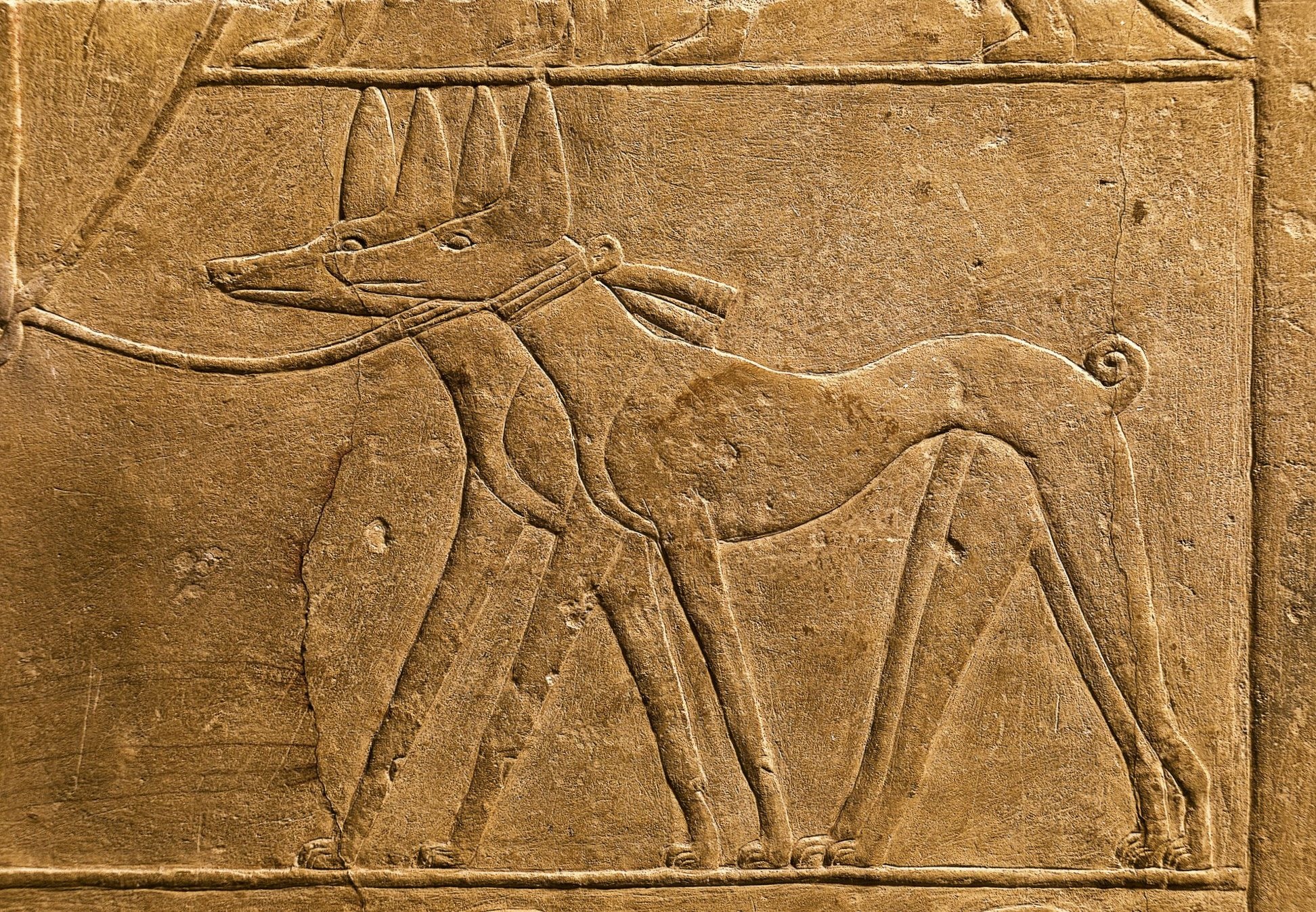
This adage is apparently taken from the apophthegm which Macrobius recalls in the first book of his Saturnalia, and it’s of this sort: after the flight at Mutina, as people asked what Marc Antony was doing, one of his close associates said that he was doing what a dog in Egypt does: drinking and running away. For it’s understood that the dogs in Egypt, being terrified of getting caught by crocodiles, drink and run off. One can use it this way: if we want to indicate that someone has dabbled in poetry by-the-by and in a trifling way, we say that they have at some time drunk from the poets, but in the manner of dogs drinking from the Nile.

Dogs, Mereruka 2C - G. Dagli Orti.jpg

Hoc adagium ex eo apophthegmate• natum apparet, cuius meminit Macrobius in primo Saturnalium, id est huiusmodi: Post fugam Mutinensem quaerentibus, quid ageret Anthonius, quidam familiaris eius respondit ‘quod canis in Aegipto: bibit et fugit’. Nam in illis regionibus constat canes raptu crocodilorum exterritos bibere et fugere. Eo hunc in modum vti licebit, vt si quem poeticam cursim et leuiter attigisse significemus, eum olim e poetis hausisse dicamus, sed ita vt canes e Nilo.

Bacon Bits of Wisdom

Francis Bacon, Novum Organum 1.56:

One can find some minds steeped in admiration for antiquity, and others in an embrace of the new. There are, however, few minds of the sort that can maintain the moderation either to avoid carping at those things which the ancients handled correctly or scorning those things which are rightly handled by the moderns. This happens to the detriment of philosophy and the sciences, since they constitute rather studies of antiquity and modernity rather than real judgments. The truth, however, is to be sought not from some accident of a particular time, which is a fickle thing, but from the light of nature and experience, which is eternal. And so, those studies are to be rejected, and we must see to it that our understanding is not violently driven to assent by them.

Francis Bacon - Simple English Wikipedia, the free encyclopedia

Reperiuntur ingenia alia in admirationem antiquitatis, alia in amorem et amplexum novitatis effusa; pauca vero ejus temperamenti sunt, ut modum tenere possint, quin aut quae recte posita sunt ab antiquis convellant, aut ea contemnant quae recte afferuntur a novis. Hoc vero magno scientiarum et philosophiae detrimento fit, quum studia potius sint antiquitatis et novitatis, quam judicia: veritas autem non a felicitate temporis alicujus, quae res varia est; sed a lumine naturae et experientiae, quod aeternum est, petenda est. Itaque abneganda sunt ista studia; et videndum, ne intellectus ab illis ad consensum abripiatur.

In the Shallows Now

Erasmus, Adagia 45 – In Vado

The proverbial metaphor To be in the shallows is used to mean: in safety, and beyond the point of danger. It’s taken from either swimmers or sailors. Terence has:

The whole affair is in the shallows.

Plautus, in his Aulularia, writes:

This business seems to be pretty much in the shallows of safety now.

The shallows are the lowest part of the water. Anyone who stands in them has already escaped the danger of being submerged.

45 – IN VADO

Metaphora prouerbialis In vado esse pro eo, quod est: in tuto citraque discrimen, sumpta a natantibus aut nauigantibus. Terentius:

Omnis res in vado est.

Plautus in Aulularia:

Haec propemodum iam esse in vado salutis res videtur.

Vadum autem est aquae fundus; in quo quisquis constiterit, is iam effugit periculum ne mergatur

Commonplace vs. Common Sense

Henry Felton, A Dissertation on the Classics (1710):

The first is, that your lordship should never be persuaded into what they call Common-Places, which is a Way of taking an Author to Pieces, and ranging him under proper Heads, that You may readily find what he hath said upon any Point, by consulting an Alphabet. This practice is of no Use but in Circumstantials of Time and Place, Custom, and Antiquity, and in such Instances where Facts are to be remembered, not where the Brain is to be exercised. In these Cases it is of great Use: It Helpeth the Memory, and serveth to keep those Things in a Sort of Order and Succession.

But, my Lord, Common-Placing the Sense of an Author, is such a stupid Undertaking, that, if I may be indulged in saying it they want Common Sense that practice it. What Heaps of this Rubbish have I seen! O the Pains and Labour to record what other People have said, that is taken by those, who have Nothing to say themselves! Your Lordship may depend upon it, the Writings of these Men are never worth the Reading; the Fancy is cramp’d, the Invention spoiled, their Thoughts on every Thing are prevented, if they think at all; but ‘tis the peculiar Happiness of these Collectors of Sense, that they can write without Thinking.

I do most readily agree, that all the bright sparkling Thoughts of the Ancients; their finest Expressions, and noblest Sentiments, are to be met with in these Transcribers: But how wretchedly are they brought in, how miserably put together! Indeed, my Lord, I can compare such Productions to nothing but rich Pieces of Patchwork, sewed together with Packthread.

Writer - Wikipedia


The Age of Achilles

Politian, Miscellanies 1.45:

There is an opinion long disseminated and accepted among everyone that Patroclus was younger than Achilles and was, as it were, loved by him as Hylas was by Hercules. Martial seems to make a nod to this when he says

The young friend was closer to Aeacides.

Therefore a dirty little verse from the Hermaphrodite was commonly applauded. Statius however claims in his Achilleid that they were both of equal age, writing,

There follows, joined then by a great love, Partoclus, and works as a rival to Achilles’ great deeds, equal in his pursuits and age, but much inferior in physical strength, and nevertheless set to see Troy with an equal fate.

Plato, however, argues something far different in the Symposium. For he declares that Achilles was much younger and that he was loved by Patroclus, being still beardless and not only more beautiful than Patroclus, but also than all the other heroes. Indeed, for that cause, he says, the gods loaded him with exceptional honors to send him off to the Blessed Isles, because he made such a big deal of his lover that he not only opted to die for him, but even chose to die for him rather than to grow old in his homeland.

Indeed, Plato criticizes Aeschylus for being a clown because he put forth the claim that Achilles was Patroclus’ lover and cited Homer as the authority for the ages of the two. If anyone would like the words of Homer to be shown to them, they may read them in the eleventh book of the Iliad in the character of Nestor with the orders which Menoetius used to send his son Patroclus to the war.

Shackleton Bailey on LSD

Martin Amis, Experience:

Professor D.R. Shackleton Bailey, a.k.a. Shack – though the former appellation is the more descriptive. Shack is still a world-class authority on Cicero. He was, moreover, I always thought, the diametrical opposite of my father: a laconic, unsmiling, dumpty-shaped tightwad. I used to say to myself: Mum’s had enough of charm. Still, Shack had an interesting head. For twenty years, before he took up the professorship at Michigan, he was the Cambridge University Lecturer in Tibetan. And I was once around the place when he experimented, as they say, with LSD. To me he seemed to be on the verge of total freakout for several hours, but he later pronounced himself pleased with the exercise.

[footnote on p. 152 of the Vintage paperback edition]

Analinguistic Reflections

Politian, Miscellanies 1.2:

Valerius Catullus says in a certain epigram:

With that very tongue of yours, if you ever needed to, you could lick assholes and leather shoes.

Many have asked but no one yet has explained what carpatinae or carbatinae or crepidae are. Each of these are right, but even carbasinae is sometimes found. Certain literary hacks and charlatans remove this word and substitute who knows what: either cercopythas or coprotinas, words which they got from the pigpen and not from school; mere words, hollow names, the sounds of nothing. I will whip out from my Greek tool box (as if drawing from the pantry) authorities not to be despised or distrusted, by which the reading can be laid out unharmed and shaken free of interpretive fog.

First of all, Julius Pollux himself in his ninth book for Commodus says that carbatinas are a kind of rustic shoes whose name was derived from the Carians. Aristotle, in Book II of On the History of Animals, says that camels wear leather shoes so that they aren’t tired out by long military marches. There are four incredibly elegant little books in Greek called the Poemenicon, in the second of which a certain old man is introduced wearing a pouch and leather shoes. Lucian, in his dialogue called Alexander or The False Prophet says that some orators from Paphlagonia wore leather shoes. Xenophon, the follower of Socrates, says in the third book of his Anabasis, “When there old shoes were no longer any good, they had leather shoes (carbatinas) made from fresh hides.” Suidas cites this passage (while ignoring the author). Indeed, some commentator or other on Xenophon says that carbatinae are barbarian shoes.