“There is no man born without some vices; but the best man is he who is motivated by the least”.
vitiis nemo sine nascitur; optimus ille est, qui minimis urgetur
ΕΥΔΟΞΑ ΑΓΝΩΣΤΑ ΚΑΤΑΓΕΛΑΣΤΑ

“There is no man born without some vices; but the best man is he who is motivated by the least”.
vitiis nemo sine nascitur; optimus ille est, qui minimis urgetur
“Everything is subject to chance; so always let our your line; a fish will swim by where you least expect it”
casus ubique valet; semper tibi pendeat hamus:
quo minim credas gurgite, piscis erit
“For I see that we who live are nothing more than ghosts and empty darkness”
ὁρῶ γὰρ ἡμᾶς οὐδὲν ὄντας ἄλλο πλὴν
εἴδωλ᾽ ὅσοιπερ ζῶμεν ἢ κούφην σκιάν.
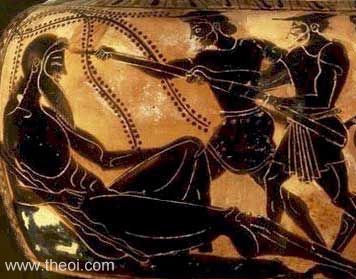
Ajax the son of Telamon was not a happy man.

“If I cannot bend the gods, I will move Acheron”.
flectere si nequeo superos, Acheronta movebo.
“What starts as a joke can produce an excited brawl and anger, and anger savage enmity and deadly war”
ludus enim genuit trepidum certamen et iram,
ira truces inimicitias et funebre bellum
“I don’t fathom the war of the winds
One wave courses from this side
The other from that, and we in the middle
Are tossed about in a black ship”
 ἀσυννέτημμι τὼν ἀνέμων στάσιν,
τὸ μὲν γὰρ ἔνθεν κῦμα κυλίνδεται,
τὸ δ’ ἔνθεν, ἄμμες δ’ ὂν τὸ μέσσον
νᾶϊ φορήμμεθα σὺν μελαίναι
Sea-Faring is scary.
“If someone says he’ll do something ‘later’, that usually means he doesn’t want to do it”.
tarde velle nolentis est