A Typology of Fear for a Spooky Time of Year

Here are some passages to go with Seneca’s ruminations on the fear of death.)

Stobaeus 2.7.10c [=Diogenes Laertius 7.113]

“Hesitation is fear of future action. Agony is fear of failure and otherwise fear of worse outcomes. Shock is fear of an uncustomary surprise. Shame is fear of a bad reputation. A ruckus is fear pressing down with sound. Divine fright is fear of gods or divine power. Terror is fear of a terrible thing. A fright is fear that comes from a story.”

     ῎Οκνος δὲ φόβος μελλούσης ἐνεργείας· ἀγωνία δὲ φόβος διαπτώσεως καὶ ἑτέρως φόβος ἥττης· ἔκπληξις δὲ φόβος ἐξ ἀσυνήθους φαντασίας· αἰσχύνη δὲ φόβος ἀδοξίας· θόρυβος δὲ φόβος μετὰ φωνῆς κατεπείγων· δει-σιδαιμονία δὲ φόβος θεῶν ἢ δαιμόνων· δέος δὲ φόβος δεινοῦ· δεῖμα δὲ φόβος ἐκ λόγου.

Suda

“Fear: flight or cowardice. Fear is expecting evil. These emotions are categorized as fear: terror, hesitation, shame, shock, commotion, anxiety. Terror is fear that brings dread. Hesitation is fear about future action. Shame is fear about a bad reputation. Shock is fear from an unusual thing. Commotion is fear from a striking sound. Anxiety is fear of an uncertain matter.”

Φόβος: φυγή. καὶ ἡ δειλία. Φόβος δέ ἐστι προσδοκία κακοῦ. εἰς δὲ τὸν φόβον ἀνάγεται ταῦτα· δεῖμα, ὄκνος, αἰσχύνη, ἔκπληξις, θόρυβος, ἀγωνία. δεῖμα μὲν οὖν ἐστι φόβος δέος ἐμποιῶν, ὄκνος δὲ φόβος μελλούσης ἐνεργείας, αἰσχύνη δὲ φόβος ἀδοξίας, ἔκπληξις δὲ φόβος ἐκ φαντασίας ἀσυνήθους πράγματος, θόρυβος δὲ φόβος μετὰ κατεπείξεως φωνῆς· ἀγωνία δὲ φόβος ἀδήλου πράγματος.

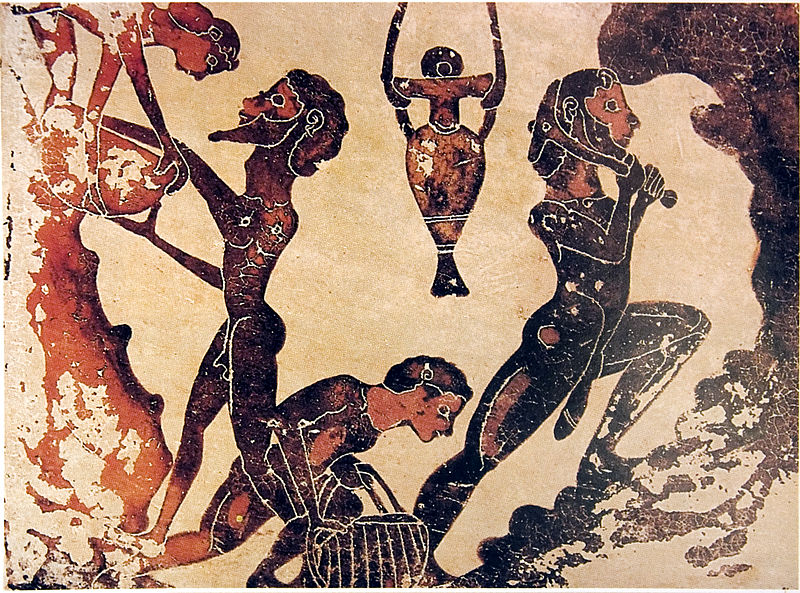
Image result for Ancient Greek monster vase

From “Selling a Man….”

Suda, Alpha 2154

“Andropodizô: takes an accusative object: “The barbarians were dissolving the treaties and clearly enslaving their alliance.” There are also the words andropodismos (“enslavement”) and aikhmalôsia (“captivity”). We also have the form andropodistês, “slave-seller”.

The Thessalians are slandered as being slavers and untrustworthy people. The association clearly comes from Jason who enslaved Medea. Euripides has “There were many present, but the Thessalians were untrustworthy.” The word slave-seller [andrapodistês] comes from “exchanging a man” [apodidosthai andra], this means “to sell”. This is a person who enslaved free people.

᾿Ανδραποδίζω. αἰτιατικῇ. τὰς συνθήκας συνέχεον οἱ βάρβαροι τήν τε ὁμαιχμίαν ἐς τὸ φανερὸν ἀνδραποδίζονται. καὶ ᾿Ανδραποδισμός, αἰχμαλωσία. καὶ ᾿Ανδραποδιστής. διαβάλλονται οἱ Θετταλοὶ ὡς ἀνδραποδισταὶ καὶ ἄπιστοι. δῆλον δὲ καὶ ἀπὸ ᾿Ιάσονος, ὃς ἠνδραπόδισε τὴν Μήδειαν. Εὐριπίδης· πολλοὶ παρῆσαν,  ἄλλ’ ἄπιστοι Θετταλοί. εἴρηται δὲ ἀνδραποδιστὴς παρὰ τὸ ἀποδίδοσθαι ἄνδρα, τουτέστι πωλεῖν· ὁ τοὺς ἐλευθέρους καταδουλούμενος.

File:Mines 1.jpg
Enslaved people working in a mine

A King Implicates Himself

Philostratus, Apollonius of Tyana VII

“The king, swelling up with rage because of what was said, responded, “You think that I am lying about them, when I have discovered that they are the most disgusting of people who are plotting against me?

And you are saying that they are good people, and serious? Well, I suppose if they were asked about you that they wouldn’t say that you’re a wizard, a madman, a braggart who is greedy and breaks the laws? That’s how evil your conspiracy is, you filthy criminals.

The trial will prove everything. I know how much you all swore under other, why you did it, when you did it, and what you sacrificed, as if I were there and joined in with you!”

Ἀνοιδήσας δ᾿ ὁ βασιλεὺς ὑφ᾿ ὧν ἤκουσε “συκοφάντην με οὖν” εἶπεν “ἐπ᾿ αὐτοῖς εἴληφας, ἵν᾿ οὓς ἐγὼ μιαρωτάτους ἀνθρώπων καὶ τοῖς ἐμοῖς ἐπιπηδῶντας εὗρον, σὺ δ᾿, ὡς χρηστοί τέ εἰσι λέγεις καὶ νωθροί; καὶ γὰρ ἂν κἀκείνους ἡγοῦμαι ὑπὲρ σοῦ ἐρωτωμένους μήθ᾿ ὡς γόης εἶ, φάναι, μήθ᾿ ὡς ἴτης, μήθ᾿ ὡς ἀλαζών, μήθ᾿ ὡς φιλοχρήματος, μήθ᾿ ὡς φρονῶν ὑπὲρ τοὺς νόμους, οὕτως, ὦ μιαραὶ κεφαλαί, κακῶς ξυντέταχθε. ἐλέγξει δ᾿ ἡ κατηγορία πάντα· καὶ γὰρ ὁπόσα ὀμώμοται ὑμῖν, καὶ ὑπὲρ ὧν καὶ ὁπότε καὶ τί θύσασιν, οὐδὲν μεῖον οἶδα, ἢ εἰ παρετύγχανόν τε καὶ ἐκοινώνουν.”

The Ant-lion (from bestiary.ca)

Shaking Us Down

Latin Trag. Adesp. = Ps-Cicero, Ad. Herenn. 2.26

“I cannot think…or figure out any reason why
I might impeach him. What would let you accuse someone
Who is honorable, if he is good? And if he is not honorable
What would let you impeach him if he thinks it is but a
Minor thing?”

Nequeo . . .
qua causa accusem hunc exputando evolvere.
Nam si veretur quid eum accuses qui est probus?
Sin inverecundum animi ingenium possidet,
quid autem accuses qui id parvi auditum
aestimet? . . .

Aristophanes fr 228 = Suda sigma 290

“Shaking-down”: Blackmail, this is a metaphor from people who shake trees: “I was shaking them down, I demanded money, I was threatening them and was extorting them again and again.”

σεῖσαι· τὸ συκοφαντῆσαι, ἀπὸ τῶν τὰ ἀκρόδρυα σειόντων· ἔσειον, ᾔτουν χρήματ᾿, ἠπείλουν, ἐσυκοφάντουν πάλιν

Mycenaean Goat and Tree Vase at the British Museum

Named for the Sound of Our Screams

I have been seeing this sign lately. EEE stands for Eastern Equine Encephalitis, which sounds terrifying. The acronym is, coincidentally, the sound I make when I read about it. This, of course, made me think of the Homeric name for Circe’s Island, Aiaia.

Image result for road sign EEE

Schol. PQV ad Hom. Od. 9.32

“Aiaiê: A name from the Tyrrheanian Island, Aiaia, or, a Kolkhian one. For Aiaia is a city in Kolkhis.”

Αἰαίη] ἐξ Αἰαίης νήσου τῆς Τυρρηνίας, ἢ Κολχικῆς. Αἰαία γὰρ πόλις τῆς Κολχίδος

Schol. MS Barnes ad Od. 9.32

“But Aiaia is the name of Kirkê’s island which is near Hades and it comes from the moaning of the people on it, from the lamenting utterance “ai, ai”.

νῦν δὲ Αἰαία ἐστὶν ἡ τῆς Κίρκης νῆσος ἡ πλησίον τοῦ ῞Αιδου οὖσα ἀπὸ τῶν στεναγμάτων τῶν ἐν αὐτῷ, παρὰ τὸ αἲ αἲ θρηνητικὸν ἐπίρρημα.

Schol. E Ad. Od. 9.32

“Aiaiê, a daughter of Aiêtês. Or she is being honored from the Aiaian land. It is a city in Kolkhis.”

Αἰαίη] τοῦ Αἰήτου θυγάτηρ. ἢ ἀπὸ Αἰαίας χώρας τιμωμένη. ἔστι δὲ πόλις Κολχίας.

Hesychius

“Aiaiê: The island which Kirkê inhabits. And Kirkê herself receives the nickname the “tricky Aiaian”. This is probably an ethnic name from the Island. The word is made from the “ai ai” mourners utter, since this was how the men lamented when they were slaughtered by the Laistrygonians. Or the name comes from the rightful mourning of those men who were turned into beasts.”

Αἰαίη· ἡ νῆσος, ἣν κατῴκει ἡ Κίρκη. καὶ αὐτὴ ἡ Κίρκη ὁμώνυμος·  Αἰαίη δολόεσσα (ι 32) ‖ ἢ ἐθνική, ἀπὸ τῆς νήσου. τὸ ὄνομα δὲ πεποιημένον παρὰ τὸ αἲ αἲ τοὺς θρηνοῦντας φθέγγεσθαι, ἤτοι <οὕτως> τοὺς [ὑπὸ τῶν] παρὰ τοῖς Λαιστρυγόσιν ἀναιρεθέντας θρηνεῖσθαι. ἢ διὰ τὸ ἀξίαν εἶναι θρήνου τὴν τῶν μεταμορφουμένων ἀποθηρίωσιν

I have not seen any convincing modern updates, but if one shows up I will add it:

beekes motherbeekes

https://twitter.com/DimitriNakassis/status/1175173332032864257?s=20

Whistleblower in Ancient Greek

For no particular reason. This list may develop….

Arrogance, More Words

Demosthenes, Third Philippic, 1

“We must speak and act to ensure that he relents from his arrogance and is punished.”

…λέγειν δεῖν καὶ πράττειν ὅπως ἐκεῖνος παύσεται τῆς ὕβρεως καὶ δίκην δώσει


Theophrastus, Characters 24

“Arrogance is a kind of contempt for others apart from yourself.”

ἔστι δὲ ἡ ὑπερηφανία καταφρόνησίς τις πλὴν αὑτοῦ τῶν ἄλλων


Cicero, Philippic 5.30

“I know the man’s insanity, his arrogance. I know the ruinous plans of the friends he has entrusted himself to.”

Novi hominis insaniam, adrogantiam; novi perdita consilia amicorum, quibus ille est deditus.


Sophocles, Oedipus Tyrannos 873

“Arrogance grows tyrants”

ὕβρις φυτεύει τύραννον·

Plutarch, Solon 14.2

“Solon says that he at first was hesitating to enter politics because he dreaded the greed of one party and the arrogance of the other.”

ἀλλ᾿ αὐτός φησιν ὁ Σόλων ὀκνῶν τὸ πρῶτον ἅψασθαι τῆς πολιτείας καὶ δεδοικὼς τῶν μὲν τὴν φιλοχρηματίαν, τῶν δὲ τὴν ὑπερηφανίαν.

Lucian, Wisdom of Nigrinus 23

“I believe that ass-kissers are much worse than those they flatter and that they are nearly totally to blame for the arrogance they create in others.”

Ἐγὼ μέντοι γε πολὺ τῶν κολακευομένων ἐξωλεστέρους τοὺς κόλακας ὑπείληφα, καὶ σχεδὸν αὐτοὺς ἐκείνοις καθίστασθαι τῆς ὑπερηφανίας αἰτίους·


Aeschylus, Prometheus Bound, 436-438

“Don’t imagine I am silent because
Of self-regard or arrogance—I having been eating
My own heart with my thoughts
As I see myself abused in this way.”

μήτοι χλιδῇ δοκεῖτε μήτ᾿ αὐθαδίᾳ
σιγᾶν με· συννοίᾳ δὲ δάπτομαι κέαρ
ὁρῶν ἐμαυτὸν ὧδε προυσελούμενον.


Isocrates, On the Peace 119

“If you go through these things and those like them, you will discover that a lack of control and arrogance are the cause of our suffering while careful thought has produced our success.”

ἢν γὰρ ταῦτα καὶ τὰ τοιαῦτα διεξίητε πρὸς ὑμᾶς αὐτούς, εὑρήσετε τὴν μὲν ἀκολασίαν καὶ τὴν ὕβριν τῶν κακῶν αἰτίαν γιγνομένην, τὴν δὲ σωφροσύνην τῶν ἀγαθῶν.


Seneca, De Ira 31

“So, either arrogance or an ignorance of affairs makes people inclined to rage.”

Itaque nos aut insolentia iracundos facit aut ignorantia rerum

Cicero, De Inventione 43

“Hatred emerges from arrogance; arrogance comes from pride.”

Ex arrogantia odium, ex insolentia arrogantia


Seneca the Elder, Suasoriae 6.3

“You will see eyes burning with cruelty and arrogance at the same time. You won’t see the face of a man but one of civil war”

Videbis ardentes crudelitate simul ac superbia oculos; videbis illum non hominis sed belli civilis vultum

Publilius Syrus, 109

“Arrogance’s bragging turns quickly to shame”

Cito ignominia fit superbi gloria.


Marcus Aurelius, Meditations 33

“Accept without being arrogant; give in without reluctance.”

Ἄτύφως μὲν λαβεῖν, εὐλύτως δὲ ἀφεῖναι

arrogant cicero

Ares’ Priests and a Hill in His Name

BNJ 123 F 6 [=P.Oxy., 2.218, col. 2.8]

“If one of Ares’ priests die, he is wrapped well by the local people and taken into some public space after the third die. When his relatives cremate him, the temple acolyte elected by the people places the god’s sword under the body. Once there is total silence, if everything is done lawfully, the priest receives those things which are done.

But if there is some knowledge of an accusation, once the iron is put under the priest’s body, he is called back to like and he offers an accusation of how much he transgressed against the god. Once this is prosecuted—there is a [ of the accounts]…and he bears [the penalty] for the entire responsibility. This is how Arkhelaos and Zenodotus explain it in their works…”

ἐὰν ἱερεὺς ἀποθάνηι τοῦ ῎Αρεως, περιστέλλεται εὐκοσμίως ὑπὸ τῶν ἐγχωρίων καὶ εἴς τινα τόπον φέρεται δημόσιον μετὰ τὴν τρίτην ἡμέραν. καιόντων δὲ τῶν συγγενῶν (?) ὁ χειροτονηθεὶς ὑπὸ τοῦ δήμου ζάκορος ὑποτίθησι τῶι νεκρῶι τὸ τοῦ θεοῦ ξίφος. καὶ σιγῆς γενομένης βαθείας, ἐὰν ἦι νομίμως, λαμβάνει τῶν γινομένων· ἐὰν δὲ ἐγκλήματός τινος ἔχηι συνείδησιν, ἐπὶ τῶι τὸν σίδηρον ὑποβληθῆναι ἀ … εται καὶ αὐτὸς ἑ[αυτ]ο̣ῦ̣ κα[τηγ]ο̣ρεῖ ὅ̣σα παρενόμησεν εἰς τὸν θεόν. διηγούμενος δ̣ .. | εχο̣ν δ[..] ν λόγων τῶν α̣μ [..]| τη κατ[.]..[.] ρονι̣ […]. ω̣[…]ραν ἐ̣[πιφ]έρει ὑπὲρ τ̣[ῆς] ὅλης [αἰτίας. οὕτως] | ᾽Αρχέλ̣[αο]ς καὶ Ζην[όδοτος | ἐν τοῖς] περὶ τύφου (?).


Hellanikos, BNJ 323a F 1

 “Areopagos. A combination of meaningful words. Areios and Pagos. It is court in Athens. It was called the “hill of Ares” because the court is on a hill and is on the top and after Ares because it is where murder cases are adjudicated and Ares is associated with murders. Or, this may be the place where Ares  stuck  [epêkse] his spear in a suit brought against him by Poseidon over the murder of Halirrothios. Ares killed him because he raped his daughter Alkippê from Agraulos, Kekrops’ daughter, as Hellenikos claims in his first book.”

 Anonymus, Συναγωγὴ λέξεων χρησίμων, 1, 422, 22

῎Αρειος πάγος· δικαστήριον ᾽Αθήνησιν …. ἐκλήθη δὲ ῎Αρειος πάγος ἤτοι ὅτι ἐν πάγωι ἐστὶ καὶ ἐν ὕψει τὸ δικαστήριον, ῎Αρειος δέ, ἐπεὶ τὰ φονικὰ δικάζει, ὁ δὲ ῎Αρης ἐπὶ τῶν φόνων· ἢ ὅτι ἔπηξε τὸ δόρυ ἐκεῖ ὁ ῎Αρης ἐν τῆι πρὸς Ποσειδῶνα ὑπὲρ ῾Αλιρροθίου δίκηι, ὅτε ἀπέκτεινεν αὐτὸν βιασάμενον ᾽Αλκίππην, τὴν αὐτοῦ καὶ ᾽Αγραύλου τῆς Κέκροπος θυγατέρα, ὥς φησιν ῾Ελλάνικος ἐν ᾱ.

 This court was largely limited to homicide after the Ephialtic reforms (c. 465 BCE). The second tale pushes the basic etymology (“Hill of Ares”) even further and gives an aetiological narrative for Athenians putting a spear in the grave of murder victims. This narrative also recalls the conflict between Athena and Poseidon over the sponsorship of the city. See Fowler 2013, 454.

Modern Areopagus. By Berthold Werner, CC BY-SA 3.0,

Tawdry Tuesday: Proctological Proverb Edition

Arsenius, 34a1

“May you fall into Hades’ asshole”: [a curse]: may you die.

῞Αιδου πρωκτῷ περιπέσῃς: ἤγουν τελευτήσῃς.

Note: Even though Ancient Greek prôktos can merely mean “rear end” (as in butt), it most often means ‘anus’ in comedy and insults. Also, I wanted to use something profane and given the British/American divide on arse/ass, I decided just to go with “asshole” because it is funnier. In addition, I know that dative + peri for in the first example is not properly fall into, but “fall around, trace around, linger in” does not have the same ‘punch’.

Diogenianus (v.1 e cod. Marz. 2.42)

“I wish you’d fall into Hades’ asshole”: this is clear

῞Αιδου πρωκτῷ περιπέσοις: δῆλον.

Diogenianus (v.2 e cod. Vindob. 133, 1.97 )

“I wish you’d fall into Hades’ asshole”: Used for cursing someone

Αἵδου πρωκτῷ περιπέσοις: ἐπὶ τῶν καταρωμένων τινί.

Diogenianus, 3.58

“The asshole survives the bath” [or, “Ass surpasses the bath”]. Whenever someone is not able to wash himself, but his bowels still assail him. This is a proverb used for things done uselessly.

Πρωκτὸς λουτροῦ περιγίνεται: ὅταν τις μὴ δύνηται ἀπονίψασθαι, ἀλλ’ ἡ κοιλία αὐτῷ ἐπιφέρηται. λέγεται ἡ παροιμία ἐπὶ τῶν ἀνωφελῶς πραττομένων.

Michael Apostolius, 14.78

“The asshole survives the bath”: This proverb is used for things done uselessly and done for show. For people with thick asses and potbellies are not able to wash themselves off easily.”

Πρωκτὸς λουτροῦ περιγίνεται: ἐπὶ τῶν ἀνωφελῶν καὶ εἰκῇ πραττομένων ἐλέγετο· οἱ γὰρ παχύπρωκτοι καὶ προγάστορες οὐ δύνανται ἑαυτοὺς ἀπονίψασθαι εὐπετῶς.

Zenobius, Vulg. 1.52

“It was cured by Akesias”: this is a proverb for when things are healed for the worse. Aristophanes provides the proverb in tetrameters: “Akesias healed his asshole.”

Ἀκεσίας ἰάσατο· ἐπὶ τῶν ἐπὶ τὸ χεῖρον ἰωμένων. ὅλην δὲ Ἀριστοφάνης ἐν τετραμέτροις τὴν παροιμίαν ἐκφέρει, λέγων· Ἀκεσίας τὸν πρωκτὸν ἰάσατο.

Suda, s.v. Ἀφευθεὶς

“Singed around the asshole:” Aristophanes has this instead of being “all burned up”

Ἀφευθεὶς τὸν πρωκτόν: Ἀριστοφάνης ἀντὶ τοῦ φλογισθείς.

Balneum Tripergulae – particolare da miniatura del Codice Angelico del “De Balneis Puteolanis� di Pietro da Eboli.

Bonus: Suda on defecation (And there is more of this)

Apopatêma: this is the same as ‘dung’ Eupolis has in his Golden Age: “What is that man? Shit of a fox.” And Kratinus has in Runaway Slaves: I knocked Kerkyon out at dawn when I found him shitting in the vegetables.” We also find the participle apopatêsomenoi (“they are about to shit”) which means they are going to evacuate the feces from their bodies. But patos also means path.

Aristophanes writes “No one sacrifices the old way any more or even enters the temple except for the more than ten thousand who want to shit. So, apopatos is really the voiding of the bowels. Aristophanes also says about Kleonymous: “He went off to shit after he got he army and shat for ten months in the golden mountains? For how long was he closing his asshole? A whole turn of the moon?”

Ἀποπάτημα: αὐτὸ τὸ σκύβαλον. Εὔπολις Χρυσῷ γένει: τί γάρ ἐστ’ ἐκεῖνος; ἀποπάτημ’ ἀλώπεκος. Κρατῖνος Δραπέτισι: τὸν Κερκύονά τε ἕωθεν ἀποπατοῦντ’ ἐπὶ τοῖς λαχάνοις εὑρὼν ἀπέπνιξα. καὶ Ἀποπατησόμενοι, τὴν κόπρον κενώσοντες. πάτος δὲ ἡ ὁδός. Ἀριστοφάνης: οὐδεὶς θύει τοπαράπαν οὐδ’ εἰσέρχεται, πλὴν ἀποπατησόμενοί γε πλεῖν ἢ μύριοι. Ἀπόπατος γὰρ ἡ κένωσις τῆς γαστρός. καὶ Ἀριστοφάνης περὶ Κλεωνύμου φησίν: εἰς ἀπόπατον ᾤχετο στρατιὰν λαβὼν κἄχεζεν ὀκτὼ μῆνας ἐπὶ χρυσῶν ὄρων. πόσου δὲ τὸν πρωκτὸν χρόνου ξυνήγαγε; τῇ πανσελήνῳ.

From Henderson’s Maculate Muse

proktos

Eubulus, fr. 106

“This is an asshole and you are always full of nonsense.
For the asshole is tongueless and chatty at the same time.

(A.) πρωκτὸς μὲν οὖν οὗτός <γε>· σὺ δὲ ληρεῖς ἔχων.
οὗτος γὰρ αὑτός ἐστιν ἄγλωττος λάλος,

Feeling “Hangry” in Ancient Greek

My daughter  learned a series of neologisms at school this year, including the clever but cloying “hangry”. What is a classically trained pedant to do but look for ancient precedents for a newly coined term?

 Phrynichus, fr. 75

“In the grumpy rages of old men with rotting lives.”

ἐν χαλεπαῖς ὀργαῖς ἀναπηροβίων †γερόντων

Aristophanes, Knights 706-7

“You’re so cranky! Come on, what can I feed you?
What do you munch on most happily? Is it a wallet?”

ὡς ὀξύθυμος. φέρε τί σοι δῶ καταφαγεῖν;
ἐπὶ τῷ φάγοις ἥδιστ᾿ ἄν; ἐπὶ βαλλαντίῳ;

Athenaeus, Deipnosophists 291 c (book 7=Nicomachus, fr. 1)

“Some foods make you gassy or give you indigestion or give
Punishment instead of nourishment. Everyone who eats
Something which is bad for them gets sharp-tempered or crazy.”

…τῶν γὰρ βρωμάτων
πνευματικὰ καὶ δύσπεπτα καὶ τιμωρίαν
ἔχοντ᾿ ἔνι᾿ ἔστιν, οὐ τροφήν, δειπνῶν δὲ πᾶς
τἀλλότρια γίνετ᾿ ὀξύχειρ κοὐκ ἐγκρατής·

Palladas, Greek Anthology 11.371

“Don’t invite me to be a witness for your hunger-bringing plates…”

Μή με κάλει δίσκων ἐπιίστορα λιμοφορήων

Cf. λιμοκτονεῖν,  “to kill by hunger, to starve to death”


Suggested compounds (all new, of course):

λιμοχολοῦσθαι, (limokholousthai): “to feel anger because of hunger”

λιμομηνίειν, (limomêniein): “to feel rage because of hunger” (with implication that the subject is divine

λιμοθυμεῖσθαι: (limothumeisthai): “to be upset because of hunger”

λιμοδυσφορεῖν: (limodusphorein): “to handle hunger badly”

hunger killing