Drink To Rest and Refresh the Weary Mind

The week, the month, and the day have been filled with horrors. Here is some potable coping advice from the ancients. N.B. Quotation is not endorsement. Drink safely and with friends.

Aulus Gellius 15.2

“But Plato in the first and second book of Laws did not—as was opined by a fool—praise that most shameful drunkenness which weakens and diminishes people’s minds; but he did not dismiss that kinder and a bit friendlier embrace of wine which may come under the influence of good judges and masters of banquets. For he believed that minds were renewed by proper and moderate refreshments for the purpose of carrying out the duties of sobriety and, further, that people were bit by bit made happier and rendered better prepared for pursuing their plans again.

At the same time, if there are any deep  mistakes of desire or affection with in them which a proper sense of shame usually concealed, than these could all be revealed without serious danger and in this be made readier for alteration and treatment.”

Sed enim Plato in primo et secundo De Legibus non, ut ille nebulo opinabatur, ebrietatem istam turpissimam quae labefacere et inminuere hominum mentes solet laudavit, sed hanc largiorem paulo iucundioremque vini invitationem, quae fieret sub quibusdam quasi arbitris et magistris conviviorum sobriis, non inprobavit. Nam et modicis honestisque inter bibendum remissionibus refici integrarique animos ad instauranda sobrietatis officia existumavit reddique eos sensim laetiores atque ad intentiones rursum capiendas fieri habiliores, et simul, si qui penitus in his adfectionum cupiditatumque errores inessent, quos aliquis pudor reverens concelaret, ea omnia sine gravi periculo, libertate per vinum data detegi et ad corrigendum medendumque fieri oportuniora.

Macrobius Records the same bit as Gellius above and then adds:

Macrobius 2.8.7

Plato also said this in the same passage, that we ought not to avoid practices of this sort for struggling against the violence of wine and that there is no one who has ever seemed so constant and controlled that his life would not be tested in these very dangers of mistakes and in the illicit traps of pleasure.”

atque hoc etiam Plato ibidem dicit, non defugiendas esse huiusce modi exercitationes adversum propulsandam vini violentiam, neque ullum umquam continentem prorsum aut temperantem satis fideliter visum esse cui vita non inter ipsa errorum pericula et in mediis voluptatum inlecebris explorata sit.

We can get a bit more explicit:

From Athenaeus’ Deipnosophists (1.41.16-36)

“Mnestheus of Athens also insists that the Pythia commanded the Athenians to honor Dionysus as a doctor. So Alcaeus the Mitylenaean poet says:

Wet your lungs with wine, for the dog-star is rising.
The season is rough: everything thirsts in this heat.

And elsewhere he says: “Let’s drink, for the dog star is rising.” Eupolis says that Callias is compelled to drink by Pythagoras so that “he may cleanse his lung before the dog star’s rise.” And it is not only the lung that gets dry, but the heart runs the same risk. That’s why Antiphanes says:

Tell me, why do we live?
I say that it is to drink.*
See how many trees alongside rushing streams
Drink constantly throughout the day and night
And how big and beautiful they grow.
Those that abstain
Wilt from the root up.

*A twitter correspondent has suggested that this really means “what is living, it is drinking”. This is definitely closer to the Greek idea; but I kept mine because I think it is punchier in English. Get it, punchier?

drinking

καὶ Μνησίθεος δ’ ὁ ᾿Αθηναῖος Διόνυσον ἰατρόν φησι τὴν Πυθίαν χρῆσαι τιμᾶν ᾿Αθηναίοις. φησὶ δὲ καὶ ᾿Αλκαῖος ὁ Μιτυληναῖος ποιητής (fr. 39 B4)·

τέγγε πνεύμονα οἴνῳ· τὸ γὰρ ἄστρον περιτέλλεται·
ἡ δ’ ὥρη χαλεπή· πάντα δὲ δίψαισ’ ὑπὸ καύματος.
καὶ ἀλλαχοῦ (fr. 40)·

πίνωμεν, τὸ γὰρ ἄστρον περιτέλλεται.

Εὔπολίς τε τὸν Καλλίαν φησὶν ἀναγκάζεσθαι ὑπὸ Πρωταγόρου πίνειν, ἵνα (I 297 K)·
πρὸ τοῦ κυνὸς τὸν πνεύμον’ ἔκλυτον φορῇ. ἡμῖν δ’ οὐ μόνον ὁ πνεύμων ἀπεξήρανται, κινδυνεύει δὲ καὶ ἡ καρδία. καίτοι ᾿Αντιφάνης λέγει (II 112 K)·

τὸ δὲ ζῆν, εἰπέ μοι,
τί ἐστι; τὸ πίνειν φήμ’ ἐγώ.
ὁρᾷς παρὰ ῥείθροισι χειμάρροις ὅσα
δένδρων ἀεὶ τὴν νύκτα καὶ τὴν ἡμέραν
βρέχεται, μέγεθος καὶ κάλλος οἷα γίνεται,
τὰ δ’ ἀντιτείνοντ’ [οἱονεὶ δίψαν τινὰ
ἢ ξηρασίαν ἔχοντ’] αὐτόπρεμν’ ἀπόλλυται.

And I am a fan of this one too:

Baton, the Comic Poet (fr. 3.1-11, preserved in Athenaeus Deipn. 4.163b)

“I am calling the prudent philosophers here,
Those who never allow themselves anything good,
Those who seek a thoughtful man in every walk
And in their discussions as if he were a fugitive slave.
Wretched person, why are you sober if you have money?
Why do you dishonor the gods this much?
Why do you think money is worth more than you are?
Does it have some intrinsic worth?
If you drink water, you’re useless to the city.
You hurt the farmer and the trader at the same time.
But I make them wealthier by getting drunk.”

τῶν φιλοσόφων τοὺς σώφρονας ἐνταυθοῖ καλῶ,
τοὺς ἀγαθὸν αὑτοῖς οὐ διδόντας οὐδὲ ἕν,
τοὺς τὸν φρόνιμον ζητοῦντας ἐν τοῖς περιπάτοις
καὶ ταῖς διατριβαῖς ὥσπερ ἀποδεδρακότα.
ἄνθρωπ’ ἀλάστωρ, διὰ τί συμβολὰς ἔχων
νήφεις; τί τηλικοῦτον ἀδικεῖς τοὺς θεούς;
τί τἀργύριον, ἄνθρωπε, τιμιώτερον
σαυτοῦ τέθεικας ἢ πέφυκε τῇ φύσει;
ἀλυσιτελὴς εἶ τῇ πόλει πίνων ὕδωρ·
τὸν γὰρ γεωργὸν καὶ τὸν ἔμπορον κακοῖς.
ἐγὼ δὲ τὰς προσόδους μεθύων καλὰς ποιῶ.
 

Thirsty Thursday: Wondrous Waters and Wine

Some more amazing tales for a Summer of Wonder. 

Paradoxagraphus Florentinus: Mirabilia de Aquis

12 “Among the Kleitorians [Isigonos] says there is a spring and whenever anyone drinks its water, he cannot bear the smell of wine.”

Παρὰ Κλειτορίοις ὁ αὐτός φησιν εἶναι κρήνην, ἧς ὅταν τις τοῦ ὕδατος πίῃ, τοῦ οἴνου τὴν ὀσμὴν οὐ φέρει.

14 “Similarly, near Kosê there is a spring which, if you place a container filled with wine in it until it covers the mouth, then it becomes more bitter than vinegar right away according to the same author.”

῾Ομοίως ἐγγὺς Κόσης ἔστι κρήνη, εἰς ἣν ἐὰν θῇς κεράμιον οἴνου γέμον, ὥστε ὑπερχεῖν τὸ στόμα, παντὸς ὄξους εἶναι δριμύτερον παραχρῆμα, ὡς ἱστορεῖ ὁ αὐτός.

20 “Theopompos says that in Lugkêstai there is a spring which tastes like vinegar but when people drink it they get drunk as if from wine.”

Θεόπομπος ἐν Λυγκήσταις φησὶ πηγὴν εἶναι τῇ μὲν γεύσει ὀξίζουσαν, τοὺς δὲ πίνοντας μεθύσκεσθαι ὡς ἀπὸ οἴνου.


Paradoxographus Palatinus: Admiranda

5“There is a spring among the Kleitori which if someone drinks from he will reject and hate drinking wine”

Τῆς ἐν Κλείτορι κρήνης ἄν τις πίῃ τοῦ ὕδατος, ἀποστρέφεται καὶ μισεῖ τὴν τοῦ οἴνου πόσιν.

7 “In Naxos Aglaosthenês says that wine bubbles up on its own for the earth and when it goes into rivers it does not mix with water. The person who tastes it goes crazy”

Εν Νάξῳ φησὶν ᾿Αγλαοσθένης οἶνον ἐκ τῆς γῆς ἀναβλύζειν αὐτόματον καὶ διὰ ποταμοῦ φερόμενον μὴ συμμίσγεσθαι ὕδατι. τὸν δὲ γευσάμενον αὐτοῦ παραφρονεῖν.

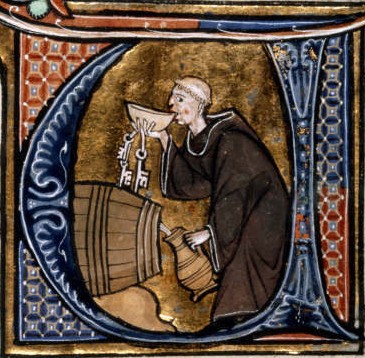
From Li Livres dou Santé by Aldobrandino of Siena (France, late 13th century).

Poets, Fishmongers and Memes

Are memes “viruses of the mind?”

Luke, 5.37

“No one puts new wine into old containers…”

 καὶ οὐδεὶς βάλλει οἶνον νέον εἰς ἀσκοὺς παλαιούς

Xenarchus’ Porphyra fr. 7 (preserved in Athenaeus’ Deipnosophists, 6. 224-225)

“Poets are ridiculous. They never invent
anything new—each one of them simply
remixes the same things again and again.
But there is no race more creative or profane
than the fish-sellers!
Since it is no longer permitted to them to dampen
Their fish, a practice forbidden by the law,
When some man completely hateful to the gods
Saw that his fish were drying, well,
He started a brawl among them quite intentionally
There were punches; he acted as if he were hit hard,
Fell to the ground pretending to pass out lying
Among his fish. Someone shouted “water, water”!
And a different guy grabbed a pitcher and poured it out—
A little on the man, but the rest on the fish!
You would have claimed they’d just been caught!”

Fish Vase
Google “Ancient Greek Fish Vase”

οἱ μὲν ποιηταὶ (φησὶ) λῆρός εἰσιν· οὐδὲ ἓν
καινὸν γὰρ εὑρίσκουσιν, ἀλλὰ μεταφέρει
ἕκαστος αὐτῶν ταὔτ’ ἄνω τε καὶ κάτω.
τῶν δ’ ἰχθυοπωλῶν φιλοσοφώτερον γένος
οὐκ ἔστιν οὐδὲν οὐδὲ μᾶλλον ἀνόσιον.
ἐπεὶ γὰρ αὐτοῖς οὐκέτ’ ἔστ’ ἐξουσία
ῥαίνειν, ἀπείρηται δὲ τοῦτο τῷ νόμῳ,
εἷς τις θεοῖσιν ἐχθρὸς ἄνθρωπος πάνυ
ξηραινομένους ὡς εἶδε τοὺς ἰχθῦς, μάχην
ἐποίησ’ ἐν αὐτοῖς ἐξεπίτηδες εὖ πάνυ.
ἦσαν δὲ πληγαί, καιρίαν δ’ εἰληφέναι
δόξας καταπίπτει καὶ λιποψυχεῖν δοκῶν
ἔκειτο μετὰ τῶν ἰχθύων. βοᾷ δέ τις
‘ὕδωρ <ὕδωρ.>’ ὃ δ’ εὐθὺς ἐξάρας πρόχουν
τῶν ὁμοτέχνων τις τοῦ μὲν ἀκαρῆ παντελῶς
κατέχει, κατὰ δὲ τῶν ἰχθύων ἁπαξάπαν.
εἴποις γ’ ἂν αὐτοὺς ἀρτίως ἡλωκέναι.


From Twitter today:

Media preview

Iliad 1 english

“Tell Me, Why Do We Live?”

From Athenaeus’ Deipnosophists (1.41.16-36)

“Mnestheus of Athens also insists that the Pythia commanded the Athenians to honor Dionysus as a doctor. So Alcaeus the Mitylenaean poet says:

Wet your lungs with wine, for the dog-star is rising.
The season is rough: everything thirsts in this heat.

And elsewhere he says: “Let’s drink, for the dog star is rising.” Eupolis says that Callias is compelled to drink by Pythagoras so that “he may cleanse his lung before the dog star’s rise.” And it is not only the lung that gets dry, but the heart runs the same risk. That’s why Antiphanes says:

Tell me, why do we live?
I say that it is to drink.
See how many trees alongside rushing streams
Drink constantly throughout the day and night
And how big and beautiful they grow.
Those that abstain
Wilt from the root up.

drinking

καὶ Μνησίθεος δ’ ὁ ᾿Αθηναῖος Διόνυσον ἰατρόν φησι τὴν Πυθίαν χρῆσαι τιμᾶν ᾿Αθηναίοις. φησὶ δὲ καὶ ᾿Αλκαῖος ὁ Μιτυληναῖος ποιητής (fr. 39 B4)·

τέγγε πνεύμονα οἴνῳ· τὸ γὰρ ἄστρον περιτέλλεται·
ἡ δ’ ὥρη χαλεπή· πάντα δὲ δίψαισ’ ὑπὸ καύματος.
καὶ ἀλλαχοῦ (fr. 40)·

πίνωμεν, τὸ γὰρ ἄστρον περιτέλλεται.

Εὔπολίς τε τὸν Καλλίαν φησὶν ἀναγκάζεσθαι ὑπὸ Πρωταγόρου πίνειν, ἵνα (I 297 K)·
πρὸ τοῦ κυνὸς τὸν πνεύμον’ ἔκλυτον φορῇ. ἡμῖν δ’ οὐ μόνον ὁ πνεύμων ἀπεξήρανται, κινδυνεύει δὲ καὶ ἡ καρδία. καίτοι ᾿Αντιφάνης λέγει (II 112 K)·

τὸ δὲ ζῆν, εἰπέ μοι,
τί ἐστι; τὸ πίνειν φήμ’ ἐγώ.
ὁρᾷς παρὰ ῥείθροισι χειμάρροις ὅσα
δένδρων ἀεὶ τὴν νύκτα καὶ τὴν ἡμέραν
βρέχεται, μέγεθος καὶ κάλλος οἷα γίνεται,
τὰ δ’ ἀντιτείνοντ’ [οἱονεὶ δίψαν τινὰ
ἢ ξηρασίαν ἔχοντ’] αὐτόπρεμν’ ἀπόλλυται.

οὕτω τούτοις, φησί, κυνολογήσασιν ἐδόθη πιεῖν. εἴρηται δὲ τὸ βρέχειν καὶ ἐπὶ τοῦ πίνειν. ᾿Αντιφάνης

(II 126 K)·

δεῖ γὰρ φαγόντας δαψιλῶς βρέχειν.

Hey Kids, Drinking is For the Middle-Aged

Athenaeus, Deipnosophists 10, 440c

“This is the reason why the most divine Plato rightly legislated in his second book of Laws that boys should not taste wine at all until they are 18 years old. For it is not right to heat fire with fire! It is permissible to taste a limited amount of wine up to thirty, but a young man should completely refrain from being drunk or drinking a lot. When a man is forty years old he can pray to the rest of gods in the common mess and then may appeal to Dionysus and the rites of the elders and the games they have. Wine is the drug which Dionysus granted to humans as a companion for harsher old age, so we might recover ourselves and forget our despair.”

Διόπερ ὁ θειότατος Πλάτων καλῶς νομοθετεῖ ἐν τῷ δευτέρῳ τοὺς παῖδας μέχρι ἐτῶν ὀκτωκαίδεκα τὸ παράπαν οἴνου μὴ γεύεσθαι· οὐ γὰρ χρὴ πῦρ ἐπὶ πῦρ cὀχετεύειν. οἴνου δὲ μετρίου γεύεσθαι. μέχρι τριάκοντα ἐτῶν, μέθης δὲ καὶ πολυοινίας τὸ παράπαν τὸν νέον ἀπέχεσθαι. τετταράκοντα δὲ ἐπιβαίνοντα ἐτῶν ἐν τοῖς συσσιτίοις εὐωχηθέντα καλεῖν τούς τε ἄλλους θεοὺς καὶ δὴ <καὶ> Διόνυσον παρακαλεῖν εἰς τὴν τῶν πρεσβυτῶν τελετὴν ἅμα καὶ παιδιάν, ἣν τοῖς ἀνθρώποις ἐπίκουρον τῆς τοῦ γήρως αὐστηρότητος ἐδωρήσατο τὸν οἶνον φάρμακον, ὥστε ἀνηβᾶν ἡμᾶς καὶ δυσθυμίας λήθην γίγνεσθαι.

Related image
Luttrell Psalter


And, if we believe the news, it just might help us live a little longer…

A Measure of Wine for Madness or Pain

Two fragments from Euenus

Anth. Pal. 11.49 Εὐήνου 

“The best measure of Bacchus is not too much
Nor too little
For this he is the cause of pain or madness.
He is happy to be mixed fourth with three Nymphs—
Then he is most prepared for the bedroom.
But if he puffs too much, he turns away from loves
And dips into sleep, the next-door neighbor of death.”

Βάκχου μέτρον ἄριστον ὃ μὴ πολὺ μηδ᾿
ἐλάχιστον·
ἔστι γὰρ ἢ λύπης αἴτιος ἢ μανίης.
χαίρει κιρνάμενος δὲ τρισὶν Νύμφαισι τέταρτος·
τῆμος καὶ θαλάμοις ἐστὶν ἑτοιμότατος.
εἰ δὲ πολὺς πνεύσειεν, ἀπέστραπται μὲν ἔρωτας,
βαπτίζει δ᾿ ὕπνῳ, γείτονι τοῦ θανάτου.

5 Stob. 3.20.2 Εὐήνου

“Anger often eclipses humans’ hidden mind.
This is much worse than madness.”

πολλάκις ἀνθρώπων ὀργὴ νόον ἐξεκάλυψεν
κρυπτόμενον· μανίης πουλὺ χερειότερον.

Nouvelle acquisition latine 1673, fol. 76v, Marchand de vin. Tacuinum sanitatis, Milano or Pavie (Italy), 1390-1400.

Some Advice for Dinner Conversation

From the fragmentary Anacreonta (imitations of Anacreon once thought to be real), we have another mention of Thebes and Troy together:

Anacreonta, fr. 26

“You narrate the events of Thebes;
he tells Trojan tales;
but I tell my conquests.
No horse has destroyed me,
nor foot soldier, nor ships,
nor will any other new army
hurl me from my eyes.”

Σὺ μὲν λέγεις τὰ Θήβης,
ὃ δ’ αὖ Φρυγῶν ἀυτάς,
ἐγὼ δ’ ἐμὰς ἁλώσεις.
οὐχ ἵππος ὤλεσέν με,
οὐ πεζός, οὐχὶ νῆες,
στρατὸς δὲ καινὸς ἄλλος
ἀπ’ ὀμμάτων με βάλλων.

This complaint is a generic and contextual one: the narrator doesn’t want a mixing of the themes of war with his own, which are love, drinking and the feast. Another fragment of Anacreon makes this clear:

Anacreon fr. 2

“I don’t love the man who while drinking next to a full cup
Talks about conflicts and lamentable war.
But whoever mixes the shining gifts of Aphrodite and the Muses
Let him keep in mind loving, good cheer.”

οὐ φιλέω, ὃς κρητῆρι παρὰ πλέωι οἰνοποτάζων
νείκεα καὶ πόλεμον δακρυόεντα λέγει,
ἀλλ’ ὅστις Μουσέων τε καὶ ἀγλαὰ δῶρ’ ᾿Αφροδίτης
συμμίσγων ἐρατῆς μνήσκεται εὐφροσύνης.

Such prescriptions against certain content in sympotic entertainment can be serious too. Xenophanes makes similar points, but with a less playful tone:

Krater.jpg
This is a krater for mixing wine. it has a war scene on it.

Xenophanes, fr. B1 13-24

“First, it is right for merry men to praise the god
with righteous tales and cleansing words
after they have poured libations and prayed to be able to do
what is right: in fact, these things are easier to do,
instead of sacrilege. It is right as well to drink as much as you can
and still go home without help, unless you are very old.
It is right to praise a man who shares noble ideas when drinking
so that we remember and work towards excellence.
It is not right to narrate the wars of Titans or Giants
nor again of Centaurs, the fantasies of our forebears,
Nor of destructive strife. There is nothing useful in these tales.
It is right always to keep in mind good thoughts of the gods.”

χρὴ δὲ πρῶτον μὲν θεὸν ὑμνεῖν εὔφρονας ἄνδρας
εὐφήμοις μύθοις καὶ καθαροῖσι λόγοις,
σπείσαντάς τε καὶ εὐξαμένους τὰ δίκαια δύνασθαι
πρήσσειν• ταῦτα γὰρ ὦν ἐστι προχειρότερον,
οὐχ ὕβρεις• πίνειν δ’ ὁπόσον κεν ἔχων ἀφίκοιο
οἴκαδ’ ἄνευ προπόλου μὴ πάνυ γηραλέος.
ἀνδρῶν δ’ αἰνεῖν τοῦτον ὃς ἐσθλὰ πιὼν ἀναφαίνει,
ὡς ἦι μνημοσύνη καὶ τόνος ἀμφ’ ἀρετῆς,
οὔ τι μάχας διέπειν Τιτήνων οὐδὲ Γιγάντων
οὐδὲ Κενταύρων, πλάσμα τῶν προτέρων,
ἢ στάσιας σφεδανάς• τοῖς οὐδὲν χρηστὸν ἔνεστιν•
θεῶν προμηθείην αἰὲν ἔχειν ἀγαθήν.


Dinner for a Dog, and Ancient Wine Criticism

Gellius, Attic Nights 13.31

“The words of the passage, in which we find the proverb caninum prandium (a dog’s dinner) are these: ‘Do you not see that Menestheus lists three types of wine, including the black, white, medium (which they call kirron) as well as new, old, and medium? And further, that the dark one produces virility, the white one is a diuretic, and the medium is a digestive aid? Still more, that the new one cools you down, the old one heats you up, and the middle is a dinner for a dog (caninum prandium)?’

We investigated for a long time just what was meant by ‘dinner for a dog.’ An abstemious dinner – that is, one without wine – is called a ‘dinner for a dog’ because dogs do not drink wine. Therefore Menestheus named it ‘medium wine,’ because it is neither new nor old – and many men speak thus, as though every wine were either new or old – and he indicated that the medium wine had none of the power either of the old or the new wine, and was on that account not to be considered wine at all, because it could neither cool one down nor heat one up.”

Eius autem loci, in quo id proverbium est, verba haec sunt: “Non vides apud Mnesitheum scribi tria genera esse vini, nigrum, album, medium, quod vocant kirron, et novum, vetus, medium? et efficere nigrum viris, album urinam, medium pepsin? novum refrigerare, vetus calefacere, medium esse prandium caninum?” XV. Quid significet “prandium caninum”, rem leviculam diu et anxie quaesivimus. XVI. Prandium autem abstemium, in quo nihil vini potatur, caninum dicitur, quoniam canis vino caret. XVII. Cum igitur “medium vinum” appellasset, quod neque novum esset neque vetus, et plerumque homines ita loquantur, ut omne vinum aut novum esse dicant aut vetus, nullam vim habere significavit neque novi neque veteris, quod medium esset, et idcirco pro vino non habendum, quia neque refrigeraret neque calefaceret.


For any readers engaging (engorging) in non-canine dinners tomorrow, I hope that you avoid the fate of the earliest wine drinkers (depicted in this 3rd century mosaic from Cyprus), particularly the guy in the bottom right!

CY24-3-09

A Trick to Kill Any Conversation: Why Women Are Less Prone to Drunkenness than Old Men

This is really, really strange. But, given the conversation, not all that surprising.

Plutarch, Moralia 650: Table-Talk, Book 3 Question 3—Why Women Get the Least Drunk While Old Men Are the Quickest

“Phlôros was amazed that when Aristotle wrote in his On Drunkenness that old men get drunk a lot and women do the least, he did not propose a cause of any sort when he is in the habit of making such proposals. Phlôros then suggested that the group present consider examine this question during the dinner of friends. Sulla said that one thing could illuminate the other. If we can correctly deduce the cause about the women, there would be little need to argue about the old men, since their natures are especially opposed—wet and dry, smooth and rough, soft and hard.

“And,” he said, “I accept this first concerning the women: they have a moist strength which also provides the softness of flesh as well as smoothness and, in addition, menstruation—therefore, whenever wine falls into a great amount of liquid it is overcome and loses its weight, becoming completely harmless and watery. In addition, it is possible to get some sense of this from Aristotle. For those who drink a lot in one drink, what the men of old used to call “chugging it”, he claims fall into drunkenness the least.”

Διὰ τί γυναῖκες ἥκιστα μεθύσκονται τάχιστα δ᾿ οἱ γέροντες

Ἐθαύμαζε Φλῶρος, εἰ γεγραφὼς Ἀριστοτέλης ἐν τῷ Περὶ μέθης, ὅτι μάλιστα μὲν οἱ γέροντες ἥκιστα δ᾿ αἱ γυναῖκες ὑπὸ μέθης ἁλίσκονται, τὴν αἰτίαν οὐκ ἐξειργάσατο μηδὲν εἰωθὼς προΐεσθαι τῶν τοιούτων· εἶτα μέντοι προὔβαλεν ἐν μέσῳ σκοπεῖν τοῖς παροῦσιν. ἦν δὲ τῶν συνήθων τὸ δεῖπνον. ἔφη τοίνυν ὁ Σύλλας θατέρῳ θάτερον ἐμφαίνεσθαι· κἂν εἰ περὶ τῶν γυναικῶν ὀρθῶς τὴν αἰτίαν λάβοιμεν, οὐκ ἔτι πολλοῦ λόγου δεήσεσθαι περὶ τῶν γερόντων· ἐναντίας γὰρ εἶναι μάλιστα τὰς φύσεις τῇ θ᾿ ὑγρότητι καὶ ξηρότητι καὶ λειότητι καὶ τραχύτητι καὶ μαλακότητι καὶ σκληρότητι. “καὶ τοῦτ᾿,” ἔφη, “λαμβάνω κατὰ τῶν γυναικῶν πρῶτον, ὅτι τὴν κρᾶσιν ὑγρὰν ἔχουσιν, ἣ καὶ τὴν ἁπαλότητα τῆς σαρκὸς ἐμμεμιγμένη παρέχει καὶ τὸ στίλβον ἐπὶ λειότητι καὶ τὰς καθάρσεις· ὅταν οὖν ὁ οἶνος εἰς ὑγρότητα πολλὴν ἐμπέσῃ, κρατούμενος ἀποβάλλει τὴν βαφὴν καὶ γίγνεται παντάπασιν ἀναφὴς καὶ ὑδατώδης. ἔστι δέ τι καὶ παρ᾿ αὐτοῦ λαβεῖν Ἀριστοτέλους· τοὺς γὰρ ἄθρουν καὶ ἀπνευστὶ πίνοντας, ὅπερ ‘ἀμυστίζειν’ ὠνόμαζον οἱ παλαιοί, φησὶν ἥκιστα περιπίπτειν μέθαις·

Image result for Ancient Greek drinking party

“If Wine Could Tell A Story”

Plautus, Truculentus 829-833

“This is no good. You are blaming the silent who cannot speak.
If wine could tell a story it would defend itself.
Wine doesn’t control men—men usually control wine!
Well, that’s how it is when men are fit for anything—certain fools
When they drink a little or not at all remain fools by nature.”

Callicles

non placet: in mutum culpam confers quit loqui.
nam uinum si fabulari possit se defenderet.
non uinum moderari, sed uiri uino solent,
qui quidem probi sunt; uerum qui improbust si quasi Bibit
siue adeo caret temeto, tamen ab ingenio improbust.


Image result for Ancient Roman Drinking