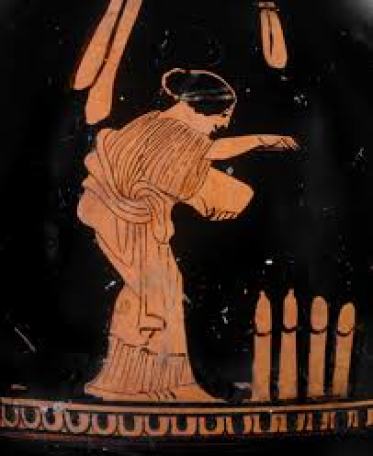
Helen’s Serving Girl Wrote the First Greek Sex Manual


I received the first passage this morning as a gift from one of my students. I am so very proud.

From the Suda

Astuanassa: A handmaid of Helen, Menelaos’ wife. She first discovered positions for intercourse and wrote On Sexual Positions. Philainis and Elephantinê rivaled her in this later—they were women who danced out these sorts of wanton acts.

Ἀστυάνασσα, Ἑλένης τῆς Μενελάου θεράπαινα: ἥτις πρώτη τὰς ἐν τῇ συνουσίᾳ κατακλίσεις εὗρε καὶ ἔγραψε περὶ σχημάτων συνουσιαστικῶν: ἣν ὕστερον παρεζήλωσαν Φιλαινὶς καὶ Ἐλεφαντίνη, αἱ τὰ τοιαῦτα ἐξορχησάμεναι ἀσελγήματα.

Photius Bibl. 190.149a 27-30

We have learned about this embroidered girdle, that Hera took it from Aphrodite and gave it to Helen. Her handmaid Astuanassa stole it but Aphrodite took it back from her again.

Περὶ τοῦ κεστοῦ ἱμάντος ὡς λάβοιμὲν αὐτὸν ῞Ηρα παρὰ ᾿Αφροδίτης, δοίη δ’ ῾Ελένῃ, κλέψοι δ’ αὐτὸν ἡ ῾Ελένης θεράπαινα ᾿Αστυάνασσα, ἀφέλοι δ’ αὐτὸν ἐξ αὐτῆς πάλιν ᾿Αφροδίτη.

Hesychius, sv. Astuanassa

Astuanassa: A handmaiden of Helen and the first to discover Aphrodite and her licentious positions.

᾿Αστυάνασσα· ῾Ελένης θεράπαινα ἥτις πρώτη ἐξεῦρεν ᾿Αφροδίτην καὶ ἀκόλαστα σχήματα
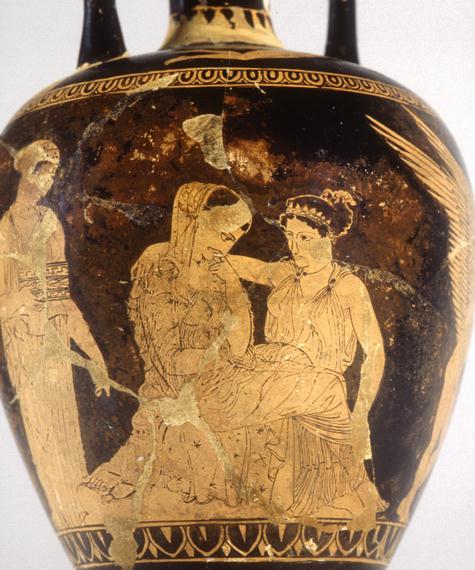
Image result for Ancient Greek Helen vase

As is largely unsurprising from the perspective of Greek misogyny, excessive interest in sexual behavior is projected a female quality. Expertise beyond interest is made the province of female ‘professionals’ (slaves) who may act as scapegoats and marginal figures for the corruption of both men and women. There is a combination of such interest with an excessive emphasis on eating (and eating really well) in Athenaeus where the pleasures of the body are combined.

Athenaeus, Deipnosophists 8.335c

“Dear men, even though I have great admiration for Chrysippus as the leader of the Stoa, I praise him even more because he ranks Arkhestratos, well-known for his Science of Cooking along with Philainis who is credited with a licentious screed about sexual matters—even though the iambic poet of Samos, Aiskhriôn, claims that Polycrates the sophist started this slander of her when she was really quite chaste. The lines go like this:

“I, Philainis, circulated among men
Lie here thanks to great old age.
Don’t laugh, foolish sailor, as your trace the cape
Nor make me a target of mockery or insult
For, by Zeus and his sons in Hell
I was never a slut with men nor a public whore.
Polykrates, Athenian by birth,
A bit clever with words and with a nasty tongue,
Wrote what he wrote. I don’t know anything about it.”

But the most amazing Chrysippus combines in the fifth book of his On Goodness and Pleasure that both “the books of Philianis and the Gastronomiai of Arkhestratos and forces of erotic and sexual nature, and in the same way slave-girls who are expert at these kinds of movements and positions and who are engaged in their practice.” He adds that they learn this type of material completely and then thoroughly possess what has been written on these topics by Philainis and Arkhestratos and those who have written on similar topics. Similarly, in his seventh book, he says ‘As you cannot wholly learn the works of Philianis and Arkhestratos’ Gastronomia because they do have something to offer for living better.’ “

Χρύσιππον δ᾿, ἄνδρες φίλοι, τὸν τῆς στοᾶς ἡγεμόνα κατὰ πολλὰ θαυμάζων ἔτι μᾶλλον ἐπαινῶ τὸν πολυθρύλητον ἐπὶ τῇ Ὀψολογίᾳ Ἀρχέστρατον αἰεί ποτε μετὰ Φιλαινίδος κατατάττοντα, εἰς ἣν ἀναφέρεται τὸ περὶ ἀφροδισίων ἀκόλαστον cσύγγραμμα, ὅπερ φησὶ | ποιῆσαι Αἰσχρίων ὁ Σάμιος ἰαμβοποιὸς Πολυκράτη τὸν σοφιστὴν ἐπὶ διαβολῇ τῆς ἀνθρώπου σωφρονεστάτης γενομένης. ἔχει δὲ οὕτως τὰ ἰαμβεῖα·

ἐγὼ Φιλαινὶς ἡ ᾿πίβωτος ἀνθρώποις
ἐνταῦθα γήρᾳ τῷ μακρῷ κεκοίμημαι.
μή μ᾿, ὦ μάταιε ναῦτα, τὴν ἄκραν κάμπτων
χλεύην τε ποιεῦ καὶ γέλωτα καὶ λάσθην.
ὐ γὰρ μὰ τὸν Ζῆν᾿, οὐ μὰ τοὺς κάτω κούρους, |
dοὐκ ἦν ἐς ἄνδρας μάχλος οὐδὲ δημώδης.
Πολυκράτης δὲ τὴν γενὴν Ἀθηναῖος,
λόγων τι παιπάλημα καὶ κακὴ γλῶσσα,
ἔγραψεν οἷ᾿ ἔγραψ᾿· ἐγὼ γὰρ οὐκ οἶδα.

ἀλλ᾿ οὖν ὅ γε θαυμασιώτατος Χρύσιππος ἐν τῷ πέμπτῳ Περὶ τοῦ Καλοῦ καὶ τῆς Ἡδονῆς φησι· καὶ βιβλία τά τε Φιλαινίδος καὶ τὴν τοῦ Ἀρχεστράτου Γαστρονομίαν καὶ δυνάμεις ἐρωτικὰς καὶ συνουσιαστικάς, ὁμοίως δὲ καὶ τὰς θεραπαίνας ἐμπείρους τοιῶνδε κινήσεών τε καὶ σχημάτων καὶ περὶ τὴν eτούτων μελέτην γινομένας. καὶ πάλιν· ἐκμανθάνειν | τ᾿ αὐτοὺς τὰ τοιαῦτα καὶ κτᾶσθαι τὰ περὶ τούτων γεγραμμένα Φιλαινίδι καὶ Ἀρχεστράτῳ καὶ τοῖς τὰ ὅμοια γράψασιν. κἀν τῷ ἑβδόμῳ δέ φησι· καθάπερ γὰρ οὐκ ἐκμανθάνειν τὰ Φιλαινίδος καὶ τὴν Ἀρχεστράτου Γαστρονομίαν ἔστιν ὡς φέροντά τι πρὸς τὸ ζῆν ἄμεινον.

The Man is Close: Diomedes’ Turn with a Plan

In this passage, Diomedes announces his genealogy as justification for his authority to provide a plan for the other Achaean kings. Note, the women in his family receive no introductions. The scholia to this passage tell another part of his story, first explaining why Tydeus had to leave Calydon, and then why Diomedes had to leave Argos.

Homer, Iliad 14.110-132

“The man is nearby—we will not look long for him. If you are willing
To consent and each of you does not get troubled by anger
Because I am the youngest among you by birth.
I claim to be from a noble father by birth,
Tydeus, whom a heap of earth covers in Thebes.
Three blameless children were born to Portheus
And they used to live in Pleurôn and steep Kalydon:
Agrios, Melas and the third was the horseman Oeneus,
The father of my father. He was exceptional for his excellence.
But while he remained there, my father left, driven out
To Argos. This was, I guess, how Zeus and the other gods wanted it.
He married one of the daughters of Adrastos and lived in a home
Wealthy for life: he had enough wheat-bearing fields,
And there hear many orchards on all sides;
And he had many flocks. He also surpassed all the Achaeans
With a spear. You all have heard these things, if they are true.
Thus, you cannot claim that I come from low birth or I am a coward
And disregard the speech I make well for some reason.
Now, let us go to war by necessity, even though we are wounded.
There, we can keep ourselves out of the strife of the missiles,
Lest someone add a wound to a wound.
But we can go and encourage others, even those who before
Stood apart and did not fight, doing some favor for their hearts.”

ἐγγὺς ἀνήρ· οὐ δηθὰ ματεύσομεν· αἴ κʼ ἐθέλητε
πείθεσθαι, καὶ μή τι κότῳ ἀγάσησθε ἕκαστος
οὕνεκα δὴ γενεῆφι νεώτατός εἰμι μεθʼ ὑμῖν·
πατρὸς δʼ ἐξ ἀγαθοῦ καὶ ἐγὼ γένος εὔχομαι εἶναι
Τυδέος, ὃν Θήβῃσι χυτὴ κατὰ γαῖα καλύπτε
πορθεῖ γὰρ τρεῖς παῖδες ἀμύμονες ἐξεγένοντο,
οἴκεον δʼ ἐν Πλευρῶνι καὶ αἰπεινῇ Καλυδῶνι
Ἄγριος ἠδὲ Μέλας, τρίτατος δʼ ἦν ἱππότα Οἰνεὺς
πατρὸς ἐμοῖο πατήρ· ἀρετῇ δʼ ἦν ἔξοχος αὐτῶν.
ἀλλʼ ὃ μὲν αὐτόθι μεῖνε, πατὴρ δʼ ἐμὸς Ἄργεϊ νάσθη
πλαγχθείς· ὡς γάρ που Ζεὺς ἤθελε καὶ θεοὶ ἄλλοι.
Ἀδρήστοιο δʼ ἔγημε θυγατρῶν, ναῖε δὲ δῶμα
ἀφνειὸν βιότοιο, ἅλις δέ οἱ ἦσαν ἄρουραι
πυροφόροι, πολλοὶ δὲ φυτῶν ἔσαν ὄρχατοι ἀμφίς,
πολλὰ δέ οἱ πρόβατʼ ἔσκε· κέκαστο δὲ πάντας Ἀχαιοὺς
ἐγχείῃ· τὰ δὲ μέλλετʼ ἀκουέμεν, εἰ ἐτεόν περ.
τὼ οὐκ ἄν με γένος γε κακὸν καὶ ἀνάλκιδα φάντες
μῦθον ἀτιμήσαιτε πεφασμένον ὅν κʼ ἐῢ εἴπω.
δεῦτʼ ἴομεν πόλεμον δὲ καὶ οὐτάμενοί περ ἀνάγκῃ.
ἔνθα δʼ ἔπειτʼ αὐτοὶ μὲν ἐχώμεθα δηϊοτῆτος
ἐκ βελέων, μή πού τις ἐφʼ ἕλκεϊ ἕλκος ἄρηται·
ἄλλους δʼ ὀτρύνοντες ἐνήσομεν, οἳ τὸ πάρος περ
θυμῷ ἦρα φέροντες ἀφεστᾶσʼ οὐδὲ μάχονται.

Schol. ad. Il. 14.114b

“Tydeus, the son of Oineus and Periboia the daughter of Hippotos. He killed his cousins who were conspiring against Oieneus, Lykopeus and Alkathoos, accidentally, he also killed with them his uncle Melanas who was dining with them. After he fled the murder, he went to Argos; and once he was purified by Adrastos, he married his daughter Dêipulê.”

b(BCE3E4)T ὁ δὲ Τυδεὺς Οἰνέως καὶ Περιβοίας τῆς ῾Ιππότου· ὃς ἀνεψιοὺς ἐπιβουλεύοντας Οἰνεῖ Λυκωπέα καὶ ᾿Αλκάθουν ἀπέκτεινεν †ἀγρόθι†, σὺν αὐτοῖς δὲ ἄκων καὶ τὸν πατράδελφον Μέλανα (συνεδαίνυτο γὰρ αὐτοῖς) καὶ φεύγων τὸν φόνον ἧκεν ἐς ῎Αργος καὶ καθαρθεὶς ὑπὸ ᾿Αδράστου γαμεῖ Δηϊπύλην τὴν θυγατέρα αὐτοῦ. T

Scholia D ad Il. 5.412

“Aigialeia, was the youngest of the daughters of Adrastos. For Adrastos had three daughters, this one [Aigialeia, who married Diomedes], Argeia, Polyneikos’ wife, and Dêipulê, Tydeus’ wife”

Διομήδους γυνὴ Αἰγιάλεια, ἡ νεωτάτη τῶν ᾿Αδράστου θυγατέρων. Τρεῖς γὰρ ἔσχε θυγατέρας ὁ ῎Αδραστος· ταύτην, καὶ ᾿Αργείαν τὴν Πολυνείκους, καὶ Δηϊπύλην τὴν Τυδέως. Τῆς οὖν μητρὸς αὐτοῦ”

And then the scholion continues….

But he, after he went to Troy, left Sthenelos’ son Komêtês, as an overseer of his position and household. The story goes as follows. Aphrodite, although she was wounded by Diomedes, could not bring up her hatred of him because of the alliance with Athena, so she made his wife crazy about screwing so that she yielded to every age of the young men as she engaged in outrages. [Aphrodite] also filled Komêtês with lust of Agialeia. When Diomedes returned from Troy, he pursued him with spearmen wising to kill him. Diomedes, benefiting from the weakness of his opponents, fled to the altar of Hera. After that, he went to the west and it is said he received some land for a colony from Daunos. And finally, when his companions were impoverished and starving, Athena turned them into herons and then Diomedes ended his life. This story is recorded by Lykophron. The Poet does not mention this account.”

῾Ο δὲ, στρατεύσας ἐς ῎Ιλιον, κατέλιπε τῆς ἀρχῆς καὶ τῆς οἰκίας ἐπίτροπον τὸν Σθενέλου Κομήτην. Κατέχει δὲ ὁ λόγος· τρωθεῖσαν τὴν ᾿Αφροδίτην ὑπὸ Διομήδους, αὐτῷ μὲν μὴ μνησικακῆσαι, διὰ τὴν τῆς ᾿Αθηνᾶς ἐπικουρίαν, τὴν δὲ τούτου γυναῖκα ἐκμῆναι περὶ πορνείαν, ὡς περὶ πᾶσαν τὴν τῶν νέων ἡλικίαν συγχορεύειν ἀσελγαίνουσαν· τῷ δὲ Κομήτῃ καὶ ἔρωτα τῆς Αἰγιαλείας ἐμποιῆσαι. παραγενόμενον δὲ τὸν Διομήδην ἐξ ᾿Ιλίου, διώκειν μετὰ δορυφόρων, ἀποκτεῖναι βουλόμενον· τὸν δὲ λοιπὸν, τοῖς ἀσθενέσι βοηθήμασι χρώμενον, καταφυγεῖν ἐπὶ τὸν ῎Ηρας βωμόν. Μετὰ ταῦτα δὲ ἀπῇρεν εἰς ῾Εσπερίαν, καὶ παραλαβεῖν λέγεται παρὰ Δαύνου [τόπους] τινὰς εἰς κατοικισμόν. Καὶ τέλος, ἀπορούντων αὐτοῦ τῶν ἑταίρων, καὶ λιμωττόντων, τούτους μὲν τὴν ᾿Αθηνᾶν εἰς ἐρωδιοὺς ἀπορνεῶσαι, τὸν Διομήδην δὲ ἐνταῦθα καταστρέψαι τὸν βίον. ῾Η δὲ ἱστορία παρὰ Λυκόφρονι. Ταύτην δὲ τὴν ἱστορίαν ὁ Ποιητὴς οὐ λέγει.


Image result for Diomedes ancient greek

Questions about Drinking and Sex: More Deep Thoughts with Aristotle

From Aristotle’s Problems:

872b

“Why can’t drunk people have sex?”

Διὰ τί οἱ μεθύοντες ἀφροδισιάζειν ἀδύνατοί εἰσιν;

874b

“Why are the drunk more prone to tears?”

Διὰ τί οἱ μεθύοντες ἀριδάκρυοι μᾶλλον;

“Why is it hard to sleep when you’re drunk?”

Διὰ τί τοῖς μεθύουσιν οὐκ ἐγγίνεται ὕπνος

“Why does someone who is buzzed act more inebriated than either the drunk or the sober?”

Διὰ τί ὁ ἀκροθώραξ μᾶλλον παροινεῖ τοῦ μᾶλλον μεθύοντος καὶ τοῦ νήφοντος;


876b

“Why does a drinker’s tongue stumble?”

Διὰ τί τῶν μεθυόντων ἡ γλῶττα πταίει;


877a

“Why is being barefoot not an advantage for sex?”

Διὰ τί ἡ ἀνυποδησία οὐ συμφέρει πρὸς ἀφροδισιασμούς;

“Why does sex wear humans out more than other animals?”

Διὰ τί ἐκλύεται μάλιστα τῶν ζῴων ἀφροδισιάσας ἄνθρωπος;

877b

“Why do people fasting have sex so quickly?”

Διὰ τί νήστεις θᾶττον ἀφροδισιάζουσιν;


878a

“Why is it harder for people for have sex in water?”

Διὰ τί ἐν τῷ ὕδατι ἧττον δύνανται ἀφροδισιάζειν οἱ ἄνθρωποι;


880b

“Why does a person’s eyes weaken if they have sex?”

Διὰ τί, ἐὰν ἀφροδισιάζῃ ὁ ἄνθρωπος, οἱ ὀφθαλμοὶ ἀσθενοῦσι μάλιστα;


Image result for Ancient GReek Aristotle

Tully’s Tuesday: Cicero Talks About Sex

Apart from his pristine Latinity, Cicero was likely popular with church fathers for other reasons….

Letter to Octavian, 10

“Brutus will hear that the very people he himself and his children freed from kings have descended into slavery for the sake of filthy lust. This news will come to him quickly—and I will take it if no one else will. For if I cannot escape such things while alive, I have decided that I will flee them and life at the same time.”

audiet Brutus eum populum, quem ipse primo, post progenies eius a regibus liberavit, pro turpi stupro datum in servitutem. quae quidem, si nullo alio, me tamen internuntio celeriter ad illos deferentur; nam si vivus ista subterfugere non potero, una cum istis vitam simul fugere decrevi.

Tusculan Disputationes, 4.68

“And as those who are carried away with joy when they enjoy Venus’ pleasures are filthy, those who share their desire with a burning spirit are criminal. Indeed, the whole thing which is commonly called ‘love’—and by god it is impossible to name it anything else—is of such meaninglessness that I know of nothing I think is comparable.”

Et ut turpes sunt qui efferunt se laetitia tum, cum fruuntur Veneriis voluptatibus, sic flagitiosi, qui eas inflammato animo concupiscunt. Totus vero iste, qui vulgo appellatur amor—nec hercule invenio quo nomine alio possit appellari—, tantae levitatis est, ut nihil videam quod putem conferendum

Image result for Ancient Roman statue cicero

De Senectute, 39

“The third typical criticism of old age follows this, and that is that people complain that it lacks [sexual] pleasures. Oh! Glorious wealth of age, if it takes that from us, the most criminal part of youth! Take this from me, most noble young men, this is the ancient speech of Archytas of Tarentum, which was repeated to me when I was a young man working for Quintus Maximus there: “Nature has given man no deadlier a curse than sexual desire.”

XII. Sequitur tertia vituperatio senectutis, quod eam carere dicunt voluptatibus. O praeclarum munus aetatis, si quidem id aufert a nobis, quod est in adulescentia vitiosissimum! Accipite enim, optimi adulescentes, veterem orationem Archytae Tarentini, magni in primis et praeclari viri, quae mihi tradita est cum essem adulescens Tarenti cum Q. Maximo. Nullam capitaliorem pestem quam voluptatem corporis hominibus dicebat a natura datam


Can someone please put this into Latin?

Tawdry Tuesday: Archilochus in the Meadow (NSFW)

These are the final lines of the so-called Cologne Epode attributed to Archilochus (fr. 196a West=s478a). Here is a full version of the text with some commentary. Here is another short article about it.

 27-35
“That was all I said. Then I lifted the girl
And laid her down in the blossoming flowers.
I covered her with a soft cloak
And placed my arms around her neck.
As she froze in fear like a fawn,
I lightly held her breasts in my hands
Where her skin exposed the newness of her youth.
And once I felt her fine body all around,
I shot off my white force, messing up her fair hair.

τοσ]αῦτ᾽ ἐφώνεον· παρθένον δ᾽ ἐν ἄνθε[σιν
τηλ]εθάεσσι λαβὼν ἔκλινα
….µαλθακῇ δ[έ µιν
χλαί]νῃ καλύψας, αὐχέν᾽ ἀγκάλῃς ἔχων
δεί]µ̣ατι παυ[σ]αµέ̣ν̣ην τὼς ὥστε νέβρ̣[ον εἱλόµην
µαζ]ῶν τε χ̣ερσὶν ἠπίως ἐφηψάµη̣ν
ᾗπε]ρ̣ ἔφην̣ε νέον ἥβης ἐπήλυ̣σις χρόα̣·
ἅπαν τ]ε̣ σῶµ̣α καλὸν ἀµφαφώµενος
λευκ]ὸν ἀφῆκα µένος, ξανθῆς ἐπιψαύ[ων τριχός.

Image result for ancient greek vase ejaculation

There is some debate about what exactly is going on in the sexual act at the end: is this extra-vaginal ejaculation (with the ξανθῆς…τριχός denoting pubic hair) or is this actually describing the poem’s narrator ejaculating on her hair? See the article mentioned above for a brief discussion.

Here’s another lyric fragment that discusses ejaculation. Note the different vocabulary:

Alcaeus, fr. 117. 27-8 

“Whatever someone gives to a prostitute he might as well spill  into the waves of the dark sea”

[     ]ται· πόρναι δ’ ὄ κέ τις δίδ[ωι
ἴ]σα κἀ[ς] πολίας κῦμ’ ἄλ[ο]ς ἐσβ[ά]λην.

The language of that poem makes me wonder if Sophocles is playing with language in the following lines from Antigone (648-649):

“Son, never lose your mind for the pleasure of a woman.”

μή νύν ποτ᾽, ὦ παῖ, τὰς φρένας ὑφ᾽ ἡδονῆς
γυναικὸς οὕνεκ᾽ ἐκβάλῃς

[More literally: “never shoot off your thoughts….”]

A Terrible, Awful Poem from Martial (NSFW)

Martial, Epigrams 11.21

As usual, these Tuesday entries will seem truly abominable to some. Caveat Lector.

“Lydia is as wide as the ass of a bronze rider’s horse,
Or a fast hoop that sounds its clattering bronze,
Or a wheel crossed untouched by an acrobat,
Or an old shoe wet with muddy water,
Or as the wide nets that wait for wandering birds,
Or the awnings which close Pompey’s theater to the South Wind,
Or as arm-jewelry slipped off a diseased male-hooker,
Or a mattress separated from its Leuconian stuffing,
Or the old trousers of a British pauper,
Or the foul throat of a Revennian Pelican.
I am reputed to have fucked her in a salty fishpond.
I am not sure: I think I fucked the fishpond.”

Lydia tam laxa est equitis quam culus aeni,
quam celer arguto qui sonat aere trochus,
quam rota transmisso totiens inpacta petauro,
quam vetus a crassa calceus udus aqua,
quam quae rara vagos expectant retia turdos,
quam Pompeiano vela negata Noto,
quam quae de pthisico lapsa est armilla cinaedo,
culcita Leuconico quam viduata suo,
quam veteres bracae Brittonis pauperis, et quam
urpe Ravennatis guttur onocrotali.
Hanc in piscina dicor futuisse marina.
Nescio; piscinam me futuisse puto.


Image result for ancient Roman fish


Love Keeps the World Together: Get Philosophical About Valentine’s Day

Empedocles, fr. 17.23-33

“Come, listen to my stories: for learning will certainly improve your thoughts.
As I said before when I declared the outline of my speeches,
I will speak a two-fold tale. Once, first, the one alone grew
Out of many and then in turn it grew apart into many from one.
Fire, and Water, and Earth and the invincible peak of Air,
Ruinous strife as well, separate from these, equal to every one,
And Love was among them, equal as well in length and breadth.
Keep Love central in your mind, don’t sit with eyes in a stupor.
She is known to be innate to mortal bodies,
She causes them to think of love and complete acts of peace,
Whether we call her Happiness or Aphrodite as a nickname….”

ἀλλ’ ἄγε μύθων κλῦθι· μάθη γάρ τοι φρένας αὔξει·
ὡς γὰρ καὶ πρὶν ἔειπα πιφαύσκων πείρατα μύθων,
δίπλ’ ἐρέω· τοτὲ μὲν γὰρ ἓν ηὐξήθη μόνον εἶναι
ἐκ πλεόνων, τοτὲ δ’ αὖ διέφυ πλέον’ ἐξ ἑνὸς εἶναι,
πῦρ καὶ ὕδωρ καὶ γαῖα καὶ ἠέρος ἄπλετον ὕψος,
Νεῖκός τ’ οὐλόμενον δίχα τῶν, ἀτάλαντον ἁπάντηι,
καὶ Φιλότης ἐν τοῖσιν, ἴση μῆκός τε πλάτος τε·
τὴν σὺ νόωι δέρκευ, μηδ’ ὄμμασιν ἧσο τεθηπώς·
ἥτις καὶ θνητοῖσι νομίζεται ἔμφυτος ἄρθροις,
τῆι τε φίλα φρονέουσι καὶ ἄρθμια ἔργα τελοῦσι,
Γηθοσύνην καλέοντες ἐπώνυμον ἠδ’ ᾿Αφροδίτην·

Plato,  Symposium 192d-193a

“Love is the name for the desire and pursuit of that oneness, that ancient nature we shared when we were whole.”

τοῦτο γάρ ἐστι τὸ αἴτιον, ὅτι ἡ ἀρχαία φύσις ἡμῶν ἦν αὕτη καὶ ἦμεν ὅλοι: τοῦ ὅλου οὖν τῇ ἐπιθυμίᾳ καὶ διώξει ἔρως ὄνομα

Euripides, fr. 388

“But mortals truly have a different kind of love,
One of a just, prudent, and good soul.
It would be better if it were the custom among mortals,
of reverent men and all those with reason,
To love this way, and to leave Zeus’ daughter Cypris alone.”

ἀλλ’ ἔστι δή τις ἄλλος ἐν βροτοῖς ἔρως
ψυχῆς δικαίας σώφρονός τε κἀγαθῆς.
καὶ χρῆν δὲ τοῖς βροτοῖσι τόνδ’ εἶναι νόμον
τῶν εὐσεβούντων οἵτινές τε σώφρονες
ἐρᾶν, Κύπριν δὲ τὴν Διὸς χαίρειν ἐᾶν.

Alexis (fr.386k from his Phaedrus; found at Athenaeus 13.13)

“As I was walking from the Peiraios beset
By troubles and despair, philosophy came over me.
And all the painters now seem to me to be ignorant
About love, and, to put it simply, so is everyone else
Who fashions images of him as a god.
For he is neither female nor male, and again,
He is not a god or mortal; nor is he foolish
Or wise, but he is drawn together from everywhere
And carries many shapes in one form.
For he has a man’s boldness with a woman’s restraint;
he has the senselessness of madness
But the reason of a thinker; he has a beast’s ferocity,
The toil of the unbreakable, and the avarice of a god.
Indeed, by Athena and the gods, I do not understand
What love is, but still it is the type of thing
I have said only without this name.”

πορευομένῳ δ᾽ ἐκ Πειραιῶς ὑπὸ τῶν κακῶν
καὶ τῆς ἀπορίας φιλοσοφεῖν ἐπῆλθέ μοι.
καί μοι δοκοῦσιν ἀγνοεῖν οἱ ζωγράφοι
τὸν Ἔρωτα, συντομώτατον δ᾽ εἰπεῖν, ὅσοι
τοῦ δαίμονος τούτου ποιοῦσιν εἰκόνας.
ἐστὶν γὰρ οὔτε θῆλυς οὔτ᾽ ἄρσην, πάλιν
οὔτε θεὸς οὔτ᾽ ἄνθρωπος, οὔτ᾽ ἀβέλτερος
οὔτ᾽ αὖθις ἔμφρων, ἀλλὰ συνενηνεγμένος
πανταχόθεν ἑνὶ τύπῳ <τε> πόλλ᾽ εἴδη φέρων.
ἡ τόλμα μὲν γὰρ ἀνδρός, ἡ <δὲ> δειλία
γυναικός, ἡ δ᾽ ἄνοια μανίας, ὁ δὲ λόγος
φρονοῦντος, ἡ σφοδρότης δὲ θηρός, ὁ δὲ πόνος
ἀδάμαντος, ἡ φιλοτιμία δὲ δαίμονος.
καὶ ταῦτ᾽ ἐγώ, μὰ τὴν Ἀθηνᾶν καὶ θεούς,
οὐκ οἶδ᾽ ὅ τι ἐστίν, ἀλλ᾽ ὅμως ἔχει γέ τι
τοιοῦτον, ἐγγύς τ᾽ εἰμὶ τοὐνόματος.

Demosthenes, Erotic Essay 10-16

“I will begin to praise first what people see first—the way everyone recognizes you, your beauty, the complexion by which your limbs and your whole body shines. When I search for something to compare it to, I see nothing. But it remains my right to ask those who read this speech to look at you and witness this so that I may be forgiven for providing no comparison.

What similarity could someone offer when something mortal fills its witnesses with immortal desire, whose seeing never tires, and when absent stays remembered? How, when this has a nature in human form yet worthy of the gods, so like a flower in its good form, beyond even a whiff of fault? Truly, it is not possible to seek out even those things in your appearance which have marred many others who had their share of beauty. For either they have disturbed their natural form through some tremor of character or because of some bad luck they have undermined their natural beauty to the same end.

No, we couldn’t find your beauty touched by anything like this. Whoever of the gods planned out your appearance guarded so earnestly against every type of chance that you have no feature worthy of critique—he made you entirely exceptional. Moreover, since the face is the most conspicuous of all the parts that are seen, and on that face, the eyes stand out in turn, here the divine showed it had even more good will toward you.

For not only did he provide you with eyes sufficient for seeing—and even though it is not possible to recognize virtue when some men act–he showed the noblest character by signaling through your eyes, making your glance soft and kind to those who see it, dignified and solemn to those you spend time which, and brave and wise to all.

Someone might wonder at this next thing especially. Although other men are taken as harsh because of their docility, or brash because of their solemnity, or arrogant because of their bravery, or they seem rather dull because they are quiet, chance has gathered these opposite qualities together and granted them all in agreement in you, just as if answering a prayer or deciding to make an example for others, but not crafting just a mortal, as she usually does.

If, then, it were possible to approach your beauty in speech  or if these were the only of your traits worthy of praise, we would think it right to pass over  no part of your advantages. But I fear that we might not trust our audience to hear the rest and that we may wear ourselves out about this in vain. How could one exaggerate your appearance when not even works made by the best artists could match them? And it is not wondrous—for artworks have an immovable appearance, so that it is unclear how would they appear if they had a soul. But your character increases the great beauty of your body with everything you do. I can praise your beauty this much, passing over many things.”

῎Αρξομαι δὲ πρῶτον ἐπαινεῖν, ὅπερ πρῶτον ἰδοῦσιν  ἅπασιν ἔστιν γνῶναί σου, τὸ κάλλος, καὶ τούτου τὸ χρῶμα, δι’ οὗ καὶ τὰ μέλη καὶ ὅλον τὸ σῶμα φαίνεται. ᾧ τίν’ ἁρμόττουσαν εἰκόν’ ἐνέγκω σκοπῶν οὐχ ὁρῶ, ἀλλὰ παρίσταταί μοι δεῖσθαι τῶν ἀναγνόντων τόνδε τὸν λόγον σὲ θεωρῆσαι καὶ ἰδεῖν, ἵνα συγγνώμης τύχω μηδὲν ὅμοιον ἔχων εἰπεῖν.

τῷ γὰρ <ἂν> εἰκάσειέ τις, ὃ θνητὸν ὂν ἀθάνατον τοῖς ἰδοῦσιν ἐνεργάζεται πόθον, καὶ ὁρώμενον οὐκ ἀποπληροῖ, καὶ μεταστὰν μνημονεύεται, καὶ τὴν τῶν θεῶν ἀξίαν ἐπ’ ἀνθρώπου φύσιν ἔχει, πρὸς μὲν τὴν εὐπρέπειαν ἀνθηρόν, πρὸς δὲ τὰς αἰτίας ἀνυπονόητον; ἀλλὰ μὴν οὐδὲ ταῦτ’ ἔστιν αἰτιάσασθαι [πρὸς] τὴν σὴν ὄψιν, ἃ πολλοῖς ἄλλοις ἤδη συνέπεσεν τῶν κάλλους μετασχόντων. ἢ γὰρ δι’ἀρρυθμίαν τοῦ σχήματος ἅπασαν συνετάραξαν τὴν ὑπάρχουσαν εὐπρέπειαν, ἢ δι’ ἀτύχημά τι καὶ τὰ καλῶς πεφυκότα συνδιέβαλον αὐτῷ.

ὧν οὐδενὶ τὴν σὴν ὄψιν εὕροιμεν ἂν ἔνοχον γεγενημένην· οὕτω γὰρ σφόδρ’ ἐφυλάξατο πάσας τὰς τοιαύτας κῆρας ὅστις ποτ’ ἦν θεῶν ὁ τῆς σῆς ὄψεως προνοηθείς, ὥστε μηδὲν μέμψεως ἄξιον, τὰ δὲ πλεῖστα περίβλεπτά σου καταστῆσαι. καὶ μὲν δὴ καὶ τῶν ὁρωμένων ἐπιφανεστάτου μὲν ὄντος τοῦ προσώπου, τούτου δ’ αὐτοῦ τῶν ὀμμάτων, ἔτι μᾶλλον ἐν τούτοις ἐπεδείξατο τὴν εὔνοιαν ἣν εἶχεν εἰς σὲ τὸ δαιμόνιον. οὐ γὰρ μόνον πρὸς τὸ τὰ κατεπείγονθ’ ὁρᾶν αὐτάρκη παρέσχηται, ἀλλ’ ἐνίων οὐδ’ ἐκ τῶν πραττομένων γιγνωσκομένης τῆς ἀρετῆς, σοῦ διὰ τῶν τῆς ὄψεως σημείων τὰ κάλλιστα τῶν ἠθῶν ἐνεφάνισεν,  πρᾶον μὲν καὶ φιλάνθρωπον τοῖς ὁρῶσιν, μεγαλοπρεπῆ δὲ καὶ σεμνὸν τοῖς ὁμιλοῦσιν, ἀνδρεῖον δὲ καὶ σώφρονα πᾶσιν ἐπιδείξας.

ὃ καὶ μάλιστ’ ἄν τις θαυμάσειεν· τῶν γὰρ ἄλλων ἐπὶ μὲν τῆς πραότητος ταπεινῶν, ἐπὶ δὲ τῆς σεμνότητος αὐθαδῶν ὑπολαμβανομένων, καὶ διὰ μὲν τὴν ἀνδρείαν θρασυτέρων, διὰ δὲ τὴν ἡσυχίαν ἀβελτέρων εἶναι δοκούντων, τοσαύτας ὑπεναντιώσεις πρὸς ἄλληλα λαβοῦσ’ ἡ τύχη πρὸς τὸ δέον ἅπανθ’ ὁμολογούμεν’ ἀπέδωκεν, ὥσπερ εὐχὴν ἐπιτελοῦσ’ ἢ παράδειγμα τοῖς ἄλλοις ὑποδεῖξαι βουληθεῖσα, ἀλλ’ οὐ θνητήν, ὡς εἴθιστο, φύσιν συνιστᾶσα.

εἰ μὲν οὖν οἷόν τ’ ἦν ἐφικέσθαι τῷ λόγῳ τοῦ κάλλους τοῦ σοῦ, ἢ τοῦτ’ ἦν μόνον τῶν σῶν ἀξιέπαινον, οὐδὲν ἂν παραλιπεῖν ᾠόμεθα δεῖν ἐπαινοῦντες τῶν προσόντων· νῦν δὲ δέδοικα μὴ πρός <τε> τὰ λοίπ’ ἀπειρηκόσι χρησώμεθα τοῖς ἀκροαταῖς, καὶ περὶ τούτου μάτην τερθρευώμεθα. πῶς γὰρ ἄν τις ὑπερβάλοι τῷ λόγῳ τὴν σὴν ὄψιν, ἧς μηδ’ ἃ τέχνῃ πεποίηται τῶν ἔργων τοῖς ἀρίστοις δημιουργοῖς δύναται ὑπερτεῖναι; καὶ θαυμαστὸν οὐδέν· τὰ μὲν γὰρ ἀκίνητον ἔχει τὴν θεωρίαν, ὥστ’ ἄδηλ’ εἶναι τί ποτ’ ἂν ψυχῆς μετασχόντα φανείη, σοῦ δὲ τὸ τῆς γνώμης ἦθος ἐν πᾶσιν οἷς ποιεῖς μεγάλην εὐπρέπειαν ἐπαυξάνει τῷ σώματι. περὶ μὲν οὖν τοῦ κάλλους πολλὰ παραλιπών, τοσαῦτ’ ἐπαινέσαι ἔχω.

Sexual Relativity with Sextus Empiricus: Masturbation! Mothers and Sons!

From Sextus Empiricus Pyrrhonian Hypotyposes, 3.206-207

“Similarly, this seems shameful to one of the sages but not to another. For us it is wrong to marry your own mother or sister. But the Persians, especially those of them who seem to pursue wisdom, the Magi, marry their mothers just as the Egyptians marry their sisters. The poet also says: “Zeus addressed Hera, his wife and sister…”

Zeno of Citium even says that it is not strange to rub your mother’s genitals with your own, just as no one would claim it is wrong to rub any other part of her body with your hand. Chrysippus approves in his Republic of a father getting children from his daughter, a mother from her son, and a brother from his sister. Plato insisted generally that wives should be held in common. Zeno also does not disapprove of masturbation, which is shameful in our culture. We have also learned that others practice this wicked habit as if it were a good thing.”

flirtation

οὕτω καὶ τῶν σοφῶν ᾧ μὲν οὐκ αἰσχρόν, ᾧ δὲ αἰσχρὸν ἐδόκει τοῦτο εἶναι. ἄθεσμον τέ ἐστι παρ’ ἡμῖν μητέρα ἢ ἀδελφὴν ἰδίαν γαμεῖν· Πέρσαι δέ, καὶ μάλιστα αὐτῶν οἱ σοφίαν ἀσκεῖν δοκοῦντες, οἱ Μάγοι, γαμοῦσι τὰς μητέρας, καὶ Αἰγύπτιοι τὰς ἀδελφὰς ἄγονται πρὸς γάμον, καὶ ὡς ὁ ποιητής φησιν,

Ζεὺς ῞Ηρην προσέειπε κασιγνήτην ἄλοχόν τε.

ἀλλὰ καὶ ὁ Κιτιεὺς Ζήνων φησὶ μὴ ἄτοπον εἶναι τὸ μόριον τῆς μητρὸς τῷ ἑαυτοῦ μορίῳ τρῖψαι, καθάπερ οὐδὲ ἄλλο τι μέρος τοῦ σώματος αὐτῆς τῇ χειρὶ τρῖψαι φαῦλον ἂν εἴποι τις εἶναι. καὶ ὁ Χρύσιππος δὲ ἐν τῇ πολιτείᾳ δογματίζει τόν τε πατέρα ἐκ τῆς θυγατρὸς παιδοποιεῖσθαι καὶ τὴν μητέρα ἐκ τοῦ παιδὸς καὶ τὸν ἀδελφὸν ἐκ τῆς ἀδελφῆς. Πλάτων δὲ καὶ καθολικώτερον κοινὰς εἶναι τὰς γυναῖκας δεῖν ἀπεφήνατο. τό τε αἰσχρουργεῖν ἐπάρατον ὂν παρ’ ἡμῖν ὁ Ζήνων οὐκ ἀποδοκιμάζει· καὶ ἄλλους δὲ ὡς ἀγαθῷ τινι τούτῳ χρῆσθαι τῷ κακῷ πυνθανόμεθα.

Pleasing Odysseus: Sex and Sorrow in the Odyssey

Odyssey 6.151-159

“Hermes found him sitting on a cliff. His eyes were never dry
Of tears and his sweet life drained away as he mourned.
Over his homecoming, since the goddess was no longer pleasing to him.
But it was true that he stretched out beside her at night by necessity
In her hollow caves, unwilling when she was more than willing.
Though he sat by day on the rocks and sands
Wracking his heart with tears, groans and grief,
Shedding tears as he gazed upon the barren sea.

τὸν δ’ ἄρ’ ἐπ’ ἀκτῆς εὗρε καθήμενον· οὐδέ ποτ’ ὄσσε
δακρυόφιν τέρσοντο, κατείβετο δὲ γλυκὺς αἰὼν
νόστον ὀδυρομένῳ, ἐπεὶ οὐκέτι ἥνδανε νύμφη.
ἀλλ’ ἦ τοι νύκτας μὲν ἰαύεσκεν καὶ ἀνάγκῃ
ἐν σπέεσι γλαφυροῖσι παρ’ οὐκ ἐθέλων ἐθελούσῃ·
ἤματα δ’ ἂμ πέτρῃσι καὶ ἠϊόνεσσι καθίζων
[δάκρυσι καὶ στοναχῇσι καὶ ἄλγεσι θυμὸν ἐρέχθων]
πόντον ἐπ’ ἀτρύγετον δερκέσκετο δάκρυα λείβων.

Dildogarden

I have always read and taught the line emphasized above as indicating that Odysseus’ displeasure had not lasted seven years–that he took some pleasure in the events described in the following line (having sex with Kalypso) and that his sorrow over his homecoming had increased over time.

Ancient scholarship does not agree with this reading. Instead, it makes a strange distinction in marking Odysseus as having once been pleased by Kalypso:

Schol ad Od. 6.153

“She never was making good by sending him away—first he was pleased because she saved him, but after this, no longer. This ‘longer’ can indicate the following authoritatively: she was pleasing to him before when she plucked him up from the shipwreck, but no longer because she is restraining him.”

ἐπεὶ οὐκέτι ἥνδανε νύμφῃ] κατ’ οὐδὲν ἤρεσκεν ἀποπέμπειν ἔτι αὐτὸν, ἤτοι τὸ μὲν πρῶτον ὡς σώσασαν ἔστερξεν, τὸ δὲ μετὰ ταῦτα οὐκέτι. P.Q.V. δύναται δὲ κυρίως κεῖσθαι τὸ ἔτι, ἤρεσκε γὰρ αὐτῷ πρότερον ἀναλαβοῦσα αὐτὸν ἐκ τοῦ ναυαγίου, κατέχουσα δὲ οὐκέτι. P.Q.

The Lexicographer Hesychius reduces the meaning of this verb as well, though in reference more to the Iliad:

“hêndanen: “it was pleasing to, it gratified” [from aresko]. So “it was pleasing to his thumos” [Il. 1.24] means “it was gratifying to his mind.”

*ἥνδανεν· ἤρεσκεν n, [ηὔξανεν] ὡς τὸ· ἥνδανε θυμῷ (Α 24)  ἤγουν ἤρεσκε τῇ ψυχῇ

The passage he refers to (Il. 1.24, ἀλλ’ οὐκ ᾿Ατρεΐδῃ ᾿Αγαμέμνονι ἥνδανε θυμῷ) might be a less than pleasing parallel, since this is where Agamemnon is shown to be displeased with Chryses’ supplication—which turns out rather poorly for the Achaeans

But the root of the verb ἁνδάνω is certainly related to the same root that gives us “pleasure”(hêdus) in Greek. From Chaintraine’s Dictionarie Etymologique:

Et. Aucun présent du même type hors du grec, mais le skr. a svádati, svádate “plaire, se plaire à” et le latin le factifif suadeo. Le tout appartient évidemment à la familie ἥδομαι.

The adjective ἥδυς and the verb ἥδομαι are also related to the noun ἡδονή–whence English hedonism and the more clinical anhedonia. The English derivative is easier to see from the Latin suadeo and Sanskrit su/vad: sweet!

The story, of course, doesn’t end there. After Kalypso promises to send him home, they retire into those aforementioned caves:

Od. 5.226-227

“Then, after going into the deepest recess of the hollow cave
They took pleasure in sex, staying next to one another.”

ἐλθόντες δ’ ἄρα τώ γε μυχῷ σπείους γλαφυροῖο
τερπέσθην φιλότητι, παρ’ ἀλλήλοισι μένοντες.

It is only fair to contrast this description with Odysseus’ other narrated lovemaking in the epic, when he reunites with Penelope (23.300-301):

“Thus then, after hey each had their pleasure from lovely sex,
They took pleasure in words, telling tales to one another.”

τὼ δ’ ἐπεὶ οὖν φιλότητος ἐταρπήτην ἐρατεινῆς,
τερπέσθην μύθοισι, πρὸς ἀλλήλους ἐνέποντες,

Note the similarity of line 5.227 and 23.201—they are structurally (and nearly syntactically) identical. But where Kalypso and Odysseus merely “are present near one another” (παρ’ ἀλλήλοισι μένοντες), Penelope and Odysseus tell each other their stories (πρὸς ἀλλήλους ἐνέποντες) and take pleasure in words (μύθοισι) not just in sex. And I have posted before about the importance of post-coital conversation in Homeric sex.

Valentine’s Day PSA: Zeus Can Change His Shape; The Rest of Us Pay (For Sex)

LEda

Earlier today I posted some epigrams on Danae. I left this one out because it has Leda and swans in it too!

Bassos, Greek Anthology 5.125

“I will never rain down in gold. Someone else might
Become a bull or a sweet-voiced swan by the shore.
Let Zeus keep these games for himself. I will not fly,
But I will give these two obols to Korinna, my girl.”

Οὐ μέλλω ῥεύσειν χρυσός ποτε• βοῦς δὲ γένοιτο
ἄλλος χὠ μελίθρους κύκνος ἐπῃόνιος.
Ζηνὶ φυλασσέσθω τάδε παίγνια• τῇ δὲ Κορίννῃ
τοὺς ὀβολοὺς δώσω τοὺς δύο κοὐ πέτομαι.