Gender, Smell and Lemnos: More Misogyny from Greek Myth

A proverb from the Suda

“By a Lemnian Hand: [meaning] cruelly and lawlessly. This is from a story: for they say that the women in Lemnos allegedly killed their husbands because they weren’t having sex with them”

Λημνίᾳ χειρί: ὠμῇ καὶ παρανόμῳ. ἀπὸ τῆς ἱστορίας· φασὶ γὰρ τὰς ἐν Λήμνῳ γυναῖκας τοὺς ἄνδρας αὐτῶν ἀνελεῖν αἰτιωμένας, ὅτι αὐταῖς οὐκ ἐμίγνυντο.

A few years ago I was looking up some odd word or another in the work of the lexicographer Hesychius (ok, to be honest, I was looking up words for feces and was looking at κοκκιλόνδις· παιδὸς ἀφόδευμα; kokkilondis: “a child’s excrement”). I found the following words which are pretty much absent from all modern lexica.

Kikkasos: the sweat flowing from between the thighs

κίκκασος· ὁ ἐκ τῶν παραμηρίων ἱδρὼς ῥέων.

Kikkê: Sex. Or the bad smell [that comes] from genitals

κίκκη· συνουσία. ἡ ἀπὸ τῶν αἰδοίων δυσοσμία

Obviously, the specificity of these two lexical items is amusing. But their very existence perplexed me a bit. Where did they come from? How were they used? (They don’t actually appear anywhere but in Hesychius.) After some contemplation and a little restraint, I can only conclude that the words emerge from a generally misogynistic context which also considered sex in some way unclean.

The story that I kept thinking of was that of the Lemnian women—it is one of the few connections I could make between sex and bad smells. It is also one of my least favorite myths because it echoes modern misogynistic taboos which marginalize and alienate female bodies. So, I almost didn’t write this post. But I do think that it is worth making these connections, however uncomfortable they are.

Here are two versions of the Lemnian women tale.

Apollodorus, 1.114

“Jason was the captain of the ship as they disembarked and neared Lemnos. The island then happened to be bereft of men and was ruled by Hypsipyle, Thoas’ daughter, for the following reason. The Lemnian women used not to honor Aphrodite. She cast a terrible smell upon them and, for this reason, their husbands acquired spear-won women from Thrace and slept with them.

Because they were dishonored, the Lemnian women slaughtered their fathers and husbands. Hypsipyle alone spared her father Thoas by hiding him. After they landed on the women-controlled island, they slept with the women. Hypsipyle gave birth to sons after sleeping with Jason: Eunêos and Nebrophonos.”

οὗτοι ναυαρχοῦντος ᾿Ιάσονος ἀναχθέντες προσίσχουσι Λήμνῳ. ἔτυχε δὲ ἡ Λῆμνος ἀνδρῶν τότε οὖσα ἔρημος, βασιλευομένη δὲ ὑπὸ ῾Υψιπύλης τῆς Θόαντος
δι’ αἰτίαν τήνδε. αἱ Λήμνιαι τὴν ᾿Αφροδίτην οὐκ ἐτίμων· ἡ δὲ αὐταῖς ἐμβάλλει δυσοσμίαν, καὶ διὰ τοῦτο οἱ γήμαντες αὐτὰς ἐκ τῆς πλησίον Θρᾴκης λαβόντες
αἰχμαλωτίδας συνευνάζοντο αὐταῖς. ἀτιμαζόμεναι δὲ αἱ Λήμνιαι τούς τε πατέρας καὶ τοὺς ἄνδρας φονεύουσι· μόνη δὲ ἔσωσεν ῾Υψιπύλη τὸν ἑαυτῆς πατέρα κρύψασα
Θόαντα. προσσχόντες οὖν τότε γυναικοκρατουμένῃ τῇ Λήμνῳ μίσγονται ταῖς γυναιξίν. ῾Υψιπύλη δὲ ᾿Ιάσονι συνευνάζεται, καὶ γεννᾷ παῖδας Εὔνηον καὶ Νεβρο-φόνον.

Image result for Jason argonauts greek vase

Schol ad. Pind. P4 88b

“The story goes like this: Because the Lemnian women had carried out the honors for Aphrodite improperly, the goddess inflicted a bad smell upon them: for this reason, men turned them away. They all worked together and killed their husbands in a plot. Then the Argonauts, as they were travelling to Skythia, arrived in in Lemnos; when they found that the island was bereft of men, they slept with the women and then left. The sons who were born from them went to Sparta in search of their fathers and, once they were accepted among the Lakonians, they became citizens there and settled in Sparta.

ἱστορία τοιαύτη· ταῖς Λημνίαις γυναιξὶν ἀσεβῶς διακειμέναις περὶ τὰς τῆς ᾿Αφροδίτης τιμὰς ἡ θεὸς δυσοσμίαν προσέπεμψε, καὶ οὕτως αὐτὰς οἱ ἄνδρες ἀπεστράφησαν· αἱ δὲ συνθέμεναι πρὸς ἑαυτὰς ἐξ ἐπιβουλῆς τοὺς ἄνδρας ἀνεῖλον. τηνικαῦτα δὲ οἱ ᾿Αργοναῦται τὸν εἰς Σκυθίαν στελλόμενοι πλοῦν προσωρμίσθησαν τῇ Λήμνῳ, καὶ εὑρόντες ἔρημον ἀρσένων τὴν νῆσον συνελθόντες ταῖς γυναιξὶν ἀπηλλάγησαν. οἱ δὲ φύντες ἐξ αὐτῶν ἦλθον εἰς Λακεδαίμονα κατὰ ζήτησιν τῶν πατέρων, καὶ προσδεχθέντες παρὰ Λάκωσι καὶ πολιτευσάμενοι συνέθεντο ἐπιθέσθαι τῇ Σπάρτῃ…

This tale seems to combine with a larger treatment of Lemnos as clear from the proverb above and this one:

A proverb from Zenobius (4.91)

“A Lemnian evil”: A proverb which they say comes from the lawless acts committed against husbands by the women of Lemnos. Or it derives from the story of the women who were abducted from Attica by the Pelasgians and settled in Lemnos. Once they gave birth, they taught their sons the ways and the language of the Athenians. They honored each other and ruled over those who descended from Thracians. Then the Pelasgians, because they were angry over this, killed them and their mothers. Or the proverb derives from the bad smell of the Lemnian women.”

Λήμνιον κακόν: παροιμία, ἣν διαδοθῆναι φασὶν ἀπὸ τῶν παρανομηθέντων εἰς τοὺς ἄνδρας ἐν Λήμνῳ ὑπὸ τῶν γυναικῶν. ῍Η διὰ τὸ τὰς ἁρπαγείσας ὑπὸ Πελασγῶν ἐκ τῆς ᾿Αττικῆς γυναῖκας εἰς Λῆμνον ἀπαχθῆναι· ἃς ἀποτεκούσας τρόπους τε τῶν ᾿Αθηναίων διδάξαι τοὺς παῖδας καὶ γλῶτταν· τούτους δὲ τιμωρεῖν ἀλλήλοις καὶ τῶν ἐκ τῶν Θρᾳσσῶν γεγενημένων ἐπικρατεῖν· τοὺς δὲ Πελασγοὺς ἐπὶ τούτῳ ἀχθομένους κτεῖναι αὐτοὺς καὶ τὰς μητέρας αὐτῶν. ῍Η διὰ τὴν δυσωδίαν τῶν Λημνιάδων γυναικῶν τὴν παροιμίαν διαδοθῆναι.

The story of the Lemnian crimes (Lêmnia Erga) is told by Herodotus (6.137-138): the Pelasgians were driven out of Attic and took Lemnos; then they got their revenge by abducting Athenian women during a festival. When the sons of these women grew up, they frightened the native Pelasgians and they were all killed.

In the major tales, it is clear that the women are not completely at fault, but they are the ones who seem to suffer the most. Within the broader narrative of the Argonaut tale, especially, we can see how women are defined by their bodies as loci of sexual interest or disinterest, the ability to produce children, and anxiety that they might not remain subordinate to male desire. The casual detail of the Pelasgian tale is especially harrowing.

Feeling “Hangry” in Ancient Greek

My daughter recently learned a series of neologisms at school, including the clever but cloying “hangry”. What is a classically trained pedant to do but look for ancient precedents for a newly coined term?

 Phrynichus, fr. 75

“In the grumpy rages of old men with rotting lives.”

ἐν χαλεπαῖς ὀργαῖς ἀναπηροβίων †γερόντων

Aristophanes, Knights 706-7

“You’re so cranky! Come on, what can I feed you?
What do you munch on most happily? Is it a wallet?”

ὡς ὀξύθυμος. φέρε τί σοι δῶ καταφαγεῖν;
ἐπὶ τῷ φάγοις ἥδιστ᾿ ἄν; ἐπὶ βαλλαντίῳ;

Athenaeus, Deipnosophists 291 c (book 7=Nicomachus, fr. 1)

“Some foods make you gassy or give you indigestion or give
Punishment instead of nourishment. Everyone who eats
Something which is bad for them gets sharp-tempered or crazy.”

…τῶν γὰρ βρωμάτων
πνευματικὰ καὶ δύσπεπτα καὶ τιμωρίαν
ἔχοντ᾿ ἔνι᾿ ἔστιν, οὐ τροφήν, δειπνῶν δὲ πᾶς
τἀλλότρια γίνετ᾿ ὀξύχειρ κοὐκ ἐγκρατής·

Palladas, Greek Anthology 11.371

“Don’t invite me to be a witness for your hunger-bringing plates…”

Μή με κάλει δίσκων ἐπιίστορα λιμοφορήων

Cf. λιμοκτονεῖν,  “to kill by hunger, to starve to death”


Suggested compounds (all new, of course):

λιμοχολοῦσθαι, (limokholousthai): “to feel anger because of hunger”

λιμομηνίειν, (limomêniein): “to feel range because of hunger” (with implication that the subject is divine

λιμοθυμεῖσθαι: (limothumeisthai): “to be upset because of hunger”

λιμοδυσφορεῖν: (limodusphorein): “to handle hunger badly”

hunger killing

The Consent of the Damned: Homeric Scholia and the Lotus-Eaters

In Odysseus’ tale of his wanderings he recounts how he saved his men from the temptations of the land of the Lotus-Eaters

Odyssey 9.82-97

“From there for nine days I was carried by ruinous winds
over the fish-bearing sea. On the tenth we came to the land
of the Lotus-Eaters where they eat the florid food.
There we disembarked to the shore and we drew water;
soon my companions made dinner around the swift ships.
But after we had shared the food and drink
I sent out companions to go and discover
whatever men there were who ate the fruit of the earth.
I chose two men and sent a herald as a third.
They went and met the Lotus-eating men.
The Lotus-Eaters didn’t bring any harm to my companions,
but they gave them their lotus to share.
Whoever ate the honey-sweet fruit of the lotus
no longer wished to report back or return home,
but just longed to stay there among the Lotus-eating men
to wait and pluck the lotus, forgetting his homecoming.”

ἔνθεν δ’ ἐννῆμαρ φερόμην ὀλοοῖσ’ ἀνέμοισι
πόντον ἐπ’ ἰχθυόεντα• ἀτὰρ δεκάτῃ ἐπέβημεν
γαίης Λωτοφάγων, οἵ τ’ ἄνθινον εἶδαρ ἔδουσιν.
ἔνθα δ’ ἐπ’ ἠπείρου βῆμεν καὶ ἀφυσσάμεθ’ ὕδωρ,
αἶψα δὲ δεῖπνον ἕλοντο θοῇς παρὰ νηυσὶν ἑταῖροι.
αὐτὰρ ἐπεὶ σίτοιό τ’ ἐπασσάμεθ’ ἠδὲ ποτῆτος,
δὴ τότ’ ἐγὼν ἑτάρους προΐην πεύθεσθαι ἰόντας,
οἵ τινες ἀνέρες εἶεν ἐπὶ χθονὶ σῖτον ἔδοντες,
ἄνδρε δύω κρίνας, τρίτατον κήρυχ’ ἅμ’ ὀπάσσας.
οἱ δ’ αἶψ’ οἰχόμενοι μίγεν ἀνδράσι Λωτοφάγοισιν•
οὐδ’ ἄρα Λωτοφάγοι μήδονθ’ ἑτάροισιν ὄλεθρον
ἡμετέροισ’, ἀλλά σφι δόσαν λωτοῖο πάσασθαι.
τῶν δ’ ὅς τις λωτοῖο φάγοι μελιηδέα καρπόν,
οὐκέτ’ ἀπαγγεῖλαι πάλιν ἤθελεν οὐδὲ νέεσθαι,
ἀλλ’ αὐτοῦ βούλοντο μετ’ ἀνδράσι Λωτοφάγοισι
λωτὸν ἐρεπτόμενοι μενέμεν νόστου τε λαθέσθαι.

The scholia present reactions to this passage that are not altogether alien from some arguments in the debate about drug enforcement and addiction.

One scholiast quotes Heraclitus the Paradoxographer with approval, noting that this scene is about how the wise man can resist pleasure.

Schol. T ad. Od. 9 89

“From Herakleitos. If someone wishes to examine Odysseus’ wanderings precisely, he will find an allegorical tale. For he has set up Odysseus as something of a vehicle of every kind of virtue through which has philosophized: and then he resists the vices that corrupt human life: the land of the Lotus-eaters represents pleasure, a land of foreign corruption which Odysseus masterfully passes by, and then he settles the wild heart of each man with either chastisement or persuasion.”

ἐκ τοῦ ῾Ηρακλείτου. καθόλου δὲ τὴν ᾿Οδυσσέως πλάνην εἴ τις ἀκριβῶς ἐθέλει σκοπεῖν, ἠλληγορημένην εὑρήσει. πάσης γὰρ ἀρετῆς καθάπερ ὄργανόν τι τὸν ᾿Οδυσσέα παραστησάμενος ἑαυτῷ διὰ τοῦτο πεφιλοσόφηκεν, ἐπειδήπερ τὰς ἐκνεμομένας τὸν ἀνθρώπινον βίον ἤχθηρε κακίας, ἡδονὴν μέν γε τὸ Λωτοφάγων χωρίον, ξένης γεωργὸν ἀπολαύσεως, ἣν ᾿Οδυσσεὺς ἐγκρατῶς παρέπλευσε, τὸν δ’ ἄγριον ἑκάστου θυμὸν ὡσπερεὶ καυτηρίῳ τῇ παραινέσει τῶν λόγων ἐπήρωσε.

Another commentator actually speaks of the Lotus-eaters as just men. This author implies that Odysseus’ men choose to take the drugs. Therefore, the blame is on them.

Schol. Q ad Od. 9.92

“Because they are righteous men, the [Lotus-eaters] do not restrain anyone by force, but by persuasion. For in the word “they were devising” it is clear that the ruin which attends these men does not happen without their consent. For, because the Lotus-eaters are righteous men, they were detaining no one by force but they were bewitching them with words alone.”

οὐδ’ ἄρα Λωτοφάγοι] δίκαιοι ὄντες ἄνδρες βίᾳ τινι οὐ κατεῖχον, ἀλλὰ πειθοῖ. τὸ δὲ “μήδοντο” δηλοῖ ὅτι οὐχ ἑκούσιος ἦν ἐκείνων ὁ γενόμενος ὄλεθρος. καὶ γὰρ οἱ Λωτοφάγοι δίκαιοι ὄντες βίᾳ οὐδένα κατεῖχον, ἀλλὰ τῷ λόγῳ μόνῳ ἔθελγον. Q.

And another comment explains that the men who partake of the lotus don’t actually forget their homecoming, but they merely stop worrying about it. Because, you know, it is their fault.

Schol. HQ ad Od. 9.97

“They forgot their homecoming” This follows from their nature, as it happens with the irrational animals, that the Lotus brings them forgetfulness and because of pleasure they spurn their homecoming. The sentiment is similar to the Iliad’s “they forgot their rushing valor”—they did not really forget it, but they stopped fostering it.”

νόστου τε λαθέσθαι] ἀκολούθως τῇ φύσει, ὡς ἐπὶ ἀλόγων ζῴων, οὐχ ὡς μέντοι τοῦ λωτοῦ λήθην ἐμποιοῦντος, ἀλλὰ διὰ τὴν ἡδονὴν καταφρονούντων τοῦ νόστου. ὅμοιον δέ ἐστι τῷ “λάθοντο δὲ θούριδος ἀλκῆς” (Il. ο, 322.). οὐ γὰρ ἐπελάθοντο, ἀλλὰ κατημέλησαν.

In these three cases, drug addiction is treated as an individual responsibility and not as either a biological challenge [e.g. addiction as a disease] or a social problem [an act of oblivion in a society with no collective meaning or sense of belonging].

(Maybe they were all on drugs anyway)

Ancient Greek may not have had a word for the concept of addiction.

Sarcasm! Flesh-Tearing With a Counterfeit Grin

Suda (10th Century CE)

Sarcasm: a species of irony

Σαρκασμός: εἶδος εἰρωνείας.

Aristophanes, Frogs 996 (5th Century BCE)

Σαρκασμοπιτυοκάμπται: “Saracastic-pine-benders”

Suda

“Aristophanes uses this instead of “great men” (megaloi) because he is describing those who take and use falsely the means of war, not because they are truly interested in it, but because they care about strength. For this reason he also called Megainetus “Manes”, not because he is barbaric but because he is stupid. [In the Frogs] he appropriately uses a compound word because this is Aeschylus’ habit.”

Σαρκασμοπιτυοκάμπται: Ἀριστοφάνης φησί, ἀντὶ τοῦ μεγάλοι. ὡς ἁρπάζοντας καὶ προσποιουμένους τὰ πολεμικά, οὐκ ἀληθῶς δὲ τοιούτους, ἰσχύος δὲ ἐπιμελομένους. διὸ καὶ τὸν Μεγαίνετον Μάνην εἶπεν, οὐ πάντως βάρβαρον, ἀλλ’ ἀναίσθητον. ἐπιτηδὲς δὲ ἐχρήσατο τοῖς συνθέτοις, διὰ τὸ Αἰσχύλου ἦθος.

Plutarch On Homer 718 (2nd Century CE)

“There is a certain type of irony as well called sarcasm, which is when someone makes a criticism of someone else using opposites and with a fake smile…”

῎Εστι δέ τι εἶδος εἰρωνείας καὶ ὁ σαρκασμός, ἐπειδάν τις διὰ τῶν ἐναντίων ὀνειδίζῃ τινι μετὰ προσποιήτου μειδιάματος…

Homer, Iliad 1.560-562

“Then cloud-gathering Zeus responded to Hera in answer,
‘Friend [daimoniê] you always know my thoughts, and I can never trick you—
Buy you can’t do anything about it….

Τὴν δ’ ἀπαμειβόμενος προσέφη νεφεληγερέτα Ζεύς·
δαιμονίη αἰεὶ μὲν ὀΐεαι οὐδέ σε λήθω·
πρῆξαι δ’ ἔμπης οὔ τι δυνήσεαι…

Schol. bT ad Il. 1.561a

“Divine one”: “blessed”, used sarcastically.

ex. δαιμονίη: μακαρία, ἐν σαρκασμῷ. b(BCE3)T

Phrynichus Atticus, 16.5 (2nd Century CE)

“To steal is best”: the repetitive structure (symploke) is witty. For you also have “to commit adultery is best, and similar things”. It is a kind of sarcasm to praise an evil to excess.”

ἄριστος κλέπτειν (fr. com. ad. 850): ἀστεία ἡ συμπλοκή. καὶ ἄριστος μοιχεύειν, καὶ τὰ ὅμοια. σαρκασμοῦ τρόπῳ ἐπῄνηται εἰς ὑπερβολὴν τοῦ κακοῦ.

Sarcasm

Oxford English Dictionary

sarcasmn.

Etymology: < late Latin sarcasmus, < late Greek σαρκασμός, < σαρκάζειν to tear flesh, gnash the teeth, speak bitterly, < σαρκ-σάρξ flesh.(Show Less)

  A sharp, bitter, or cutting expression or remark; a bitter gibe or taunt. Now usually in generalized sense: Sarcastic language; sarcastic meaning or purpose.

1579   E. K. in Spenser Shepheardes Cal. Oct. Gloss.   Tom piper, an ironicall Sarcasmus, spoken in derision of these rude wits, whych [etc.].
1581   J. Bell tr. W. Haddon & J. Foxe Against Jerome Osorius 324   With this skoffe doth he note them..by a certayne figure called Sarcasmus.
1605   J. Dove Confut. Atheisme 38   He called the other Gods so, by a figure called Ironia, or Sarcasmus.
1621   R. Burton Anat. Melancholy i. ii. iv. iv. 197   Many are of so petulant a spleene, and haue that figure Sarcasmus so often in their mouths,..that they must bite.
1661   O. Felltham Resolves (rev. ed.) 284   Either a Sarcasmus against the voluptuous; or else, ’tis a milder counsel.
Greek comedy was a popular form of theatre performed in ancient Greece from the 6th cent. BCE

“A Man Marries, a Woman Gets Married”

Or, how philology is not apolitical….

An Anonymous Grammarian, De Adfinium Vocabulorum Differentia (“On Similar but different words”) 120

“Marrying [gêmai] is different from ‘getting married’ [gêmasthai] in that a man marries but a woman gets married. Homer has made the difference between them clear when he said of getting married:  “once she [Epikastê] got married to her own son; and he married her / after killing his father.”

And Anakreon [demonstrates the distinction] when he mocks someone for being effeminate: “and the bedroom in which that guy didn’t marry but got married instead.”

Aeschylus too in his Amumône writes: “it is your fate to be married but it is mine to marry.”

γῆμαι τοῦ γήμασθαι διαφέρει, ὅτι γαμεῖ μὲν ὁ ἀνήρ, γαμεῖται δὲ ἡ γυνή. καὶ ῞Ομηρος τὴν διαφορὰν τετήρηκεν αὐτῶν, ἐπὶ τοῦ γήμασθαι εἰπών (λ 273 sq.)

     ‘γημαμένη ᾧ υἱῷ· ὁ δ’ ὃν πατέρ’ ἐξεναρίξας

    γῆμε’,

καὶ ᾿Ανακρέων (P.M.G. 424 Page = fr. 87 D.2) διασύρων τινὰ ἐπὶ θηλύτητι

     ‘καὶ †θαλάμοις† ἐν ᾧ κεῖνος οὐκ ἔγημεν ἀλλ’ ἐγήματο’,

καὶ Αἰσχύλος (fr. 131 Mette = fr. 13 N.2) ἐν ᾿Αμυμώνῃ

     ‘σοὶ μὲν γὰρ γαμεῖσθαι μόρσιμον, γαμεῖν δ᾿ ἐμοί

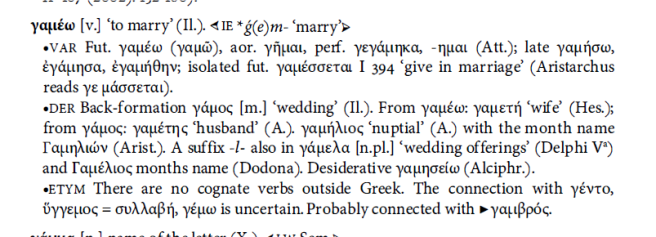
The distinction between gêmai [or gamein] and gêmasthai [gameisthai] is an important example of Greek active versus mediopassive voice. The active here means “to take a spouse”; while the mediopassive form [according to LSJ] means to “offer to have your child made a spouse” or, “to give oneself in marriage”. This is also a good example of how gendered difference in agency and personhood is structured into basic linguistic distinctions.

As I teach my students, the middle voice is often about indirect agency* (when the agent of an action is not the same as the grammatical subject of the sentence). So, with the verb luô, it means in the active “I release” and in the passive “I am released” but in the middle “ransom”, because in the background is the idea that “x arranges for y to release z”. (And this is a pretty ancient meaning: Chryses appears to the Achaeans in book 1 of the Iliad “for the purpose of ransoming his daughter” [λυσόμενός τε θύγατρα]).

In two examples cited by the anonymous grammarian above words are morphologically middle (γημαμένη and ἐγήματο are aorists, one of the two tenses that has distinct middle and passive morphology in Greek), but the semantics of the words seem less middle than passive to me. At the very least, we have Epikaste “[allowing herself] to be married” in the Homeric example. Anacreon’s joke emasculates the target by taking agency away from him and Aeschylus attests to a similar distinction in the fragment. But the point to take away is that it would be striking in ancient Greece to say that a woman marries someone else as an active agent.

*Often, but not always! The middle voice can be causative, alternate with the active for transitive/intransitive meanings, be quasi-reflexive, or just downright weird (‘idiomatic’!).

Here’s part of the LSJ Entry:

gameo lsj

Here’s Beekes on the root:

gameo beekes

Newly Discovered Text: A Late Antique Dialogue on “The Etymology of ‘Mimosa'”

The following late antique text, recently discovered in a restaurant basement, is surmised to be a lost part of Macrobius’ Saturnalia, possibly from discussion, in book 5, of Virgil’s borrowings from Greek authors (e.g., one notes similarities to the etiological mode of Aeneid 7.112-19, where the fulfillment of a prophecy is simultaneously the origin of pizza). It is presented here in the form in which it has been preserved–namely, a loose debate among several scholars, many of them pseudonymous and not a few of them ridiculous, in the tradition of lampoons of intellectual life including Plato’s Symposium and Aristophanes’ Clouds. The accompanying image offers a reconstruction of a painting described by one of the speakers in an ekphrasis.

https://twitter.com/beldonstevens/status/1064673491092467712

https://twitter.com/beldonstevens/status/1064675029689004033

An interjection from a noted linguistic charlatan:

“Ah, I always thought it was the nominative singular present active feminine participle of μιμάω (“I drink in the morning”), accented like this: μιμῶσα But, with your explanation, I get to use it on myself.”

Consider:

Μιμάω: “I brunch”
μιμήσω: “I will brunch”
ἐμίμησα: “I brunched”
μεμίμηκα: “I have brunched”
μεμίμημαι: “I have been brunched”
ἐμιμήθην: “I was brunched”; but contrast with middle ἐμιμησάμην: “I made brunch available for others”

https://twitter.com/beldonstevens/status/1064680083103932417

https://twitter.com/beldonstevens/status/1064677001590640640

https://twitter.com/beldonstevens/status/1064681277754884096

https://twitter.com/beldonstevens/status/1064676562795139072

GreekMimosa


[Dr. Benjamin Eldon Stevens works on classical receptions, especially in contemporary fictionscience fiction, and fantasy (most recently co-editing a volume of essays on Frankenstein, while upcoming is a volume on ‘displacement’); underworlds and afterlives; Latin poetry; and histories of the senses. He has also published translations of Spanish poetry and French fiction. Hailing from Colorado and Nebraska, and having taught in Washington DC, New York, Virginia, and Pennsylvania, Dr. Stevens is currently at Trinity University in San Antonio, Texas.]

Hard To Stomach: Some Needful Words

A proverb

“A fat stomach does not bear a subtle mind”

Γαστὴρ παχεῖα λεπτὸν οὐ τίκτει νόον.  (Arsenius, 5.22a1)

Od. 18.54-56

“Friends, it is in no way good for an old man
In the clutches of sorrow to fight a younger man.
But my no-good stomach compels me, that I might fall beneath his blows.”

“ὦ φίλοι, οὔ πως ἔστι νεωτέρῳ ἀνδρὶ μάχεσθαι
ἄνδρα γέροντα δύῃ ἀρημένον· ἀλλά με γαστὴρ
ὀτρύνει κακοεργός, ἵνα πληγῇσι δαμείω.

γαστήρ, ἡ: “stomach”

γαστραία: A type of turnip

γαστρίδουλος: “slave to one’s stomach”

γαστρίον: “sausage”

γαστρίζω: “to punch someone in the belly”

γραστριμαργία: “gluttony”

γαστροβαρής: “stomach-heavy”, i.e. “heavy with child”

γαστροκνημία: lit. “shin-stomach”, so “calf”

γαστρολογία: An almanac for gourmands, so “foodie-book”

γαστρομαντεύομαι: “to divine by the stomach”

γαστροπίων: “a fat-bellied fellow”

γαστρορραφία: “sewing a stomach wound”

γαστρόρροια: “diarrhea”

γαστροτόμος: “stomach cutting”

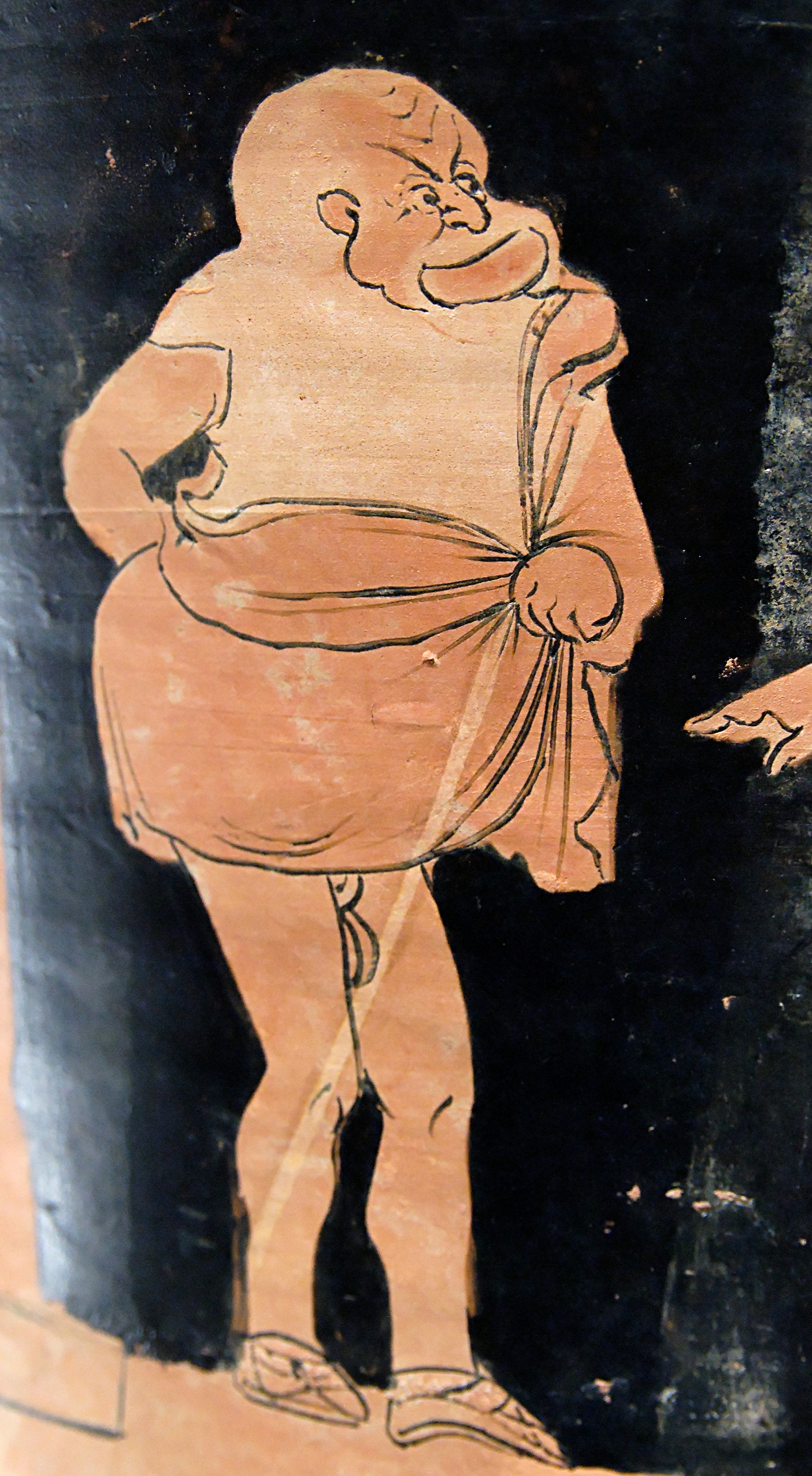
Image result for ancient greek comic vase

γαστροχάρυβδις: “having a gaping maw of a belly”

γαστρόχειρ: lit. “stomach-hand”, so “living by hand” or “hand to mouth”

γαστρώδης: “pot pellied”

A Greek Compound To Save Your Life Today

Suetonius Tranquillus, Peri Blasphemon 11.12

“According to Hipponax [fr. 114c] the “messêgudorpoxéstês” is one who often relieves himself during a meal so that he may fill himself up again”

<Κατὰ δὲ ῾Ιππώνακτα (fr. 114 c Masson), καὶ ὁ> μεσσηγυδορποχέστης, ὁ μεσοῦντος τοῦ δείπνου πολλάκις ἀποπατῶν, ὅπως πάλιν ἐμπίπληται ὁ αὐτός.

For the word-builders: messêgu (“in the middle of”) + dorpos (“dinner, meal”)+ khestês (a nomina agentis—agentive noun—from the Greek verb χέζω, “to shit”).

This is a real vase at the Museum of Fine Arts

Cf.

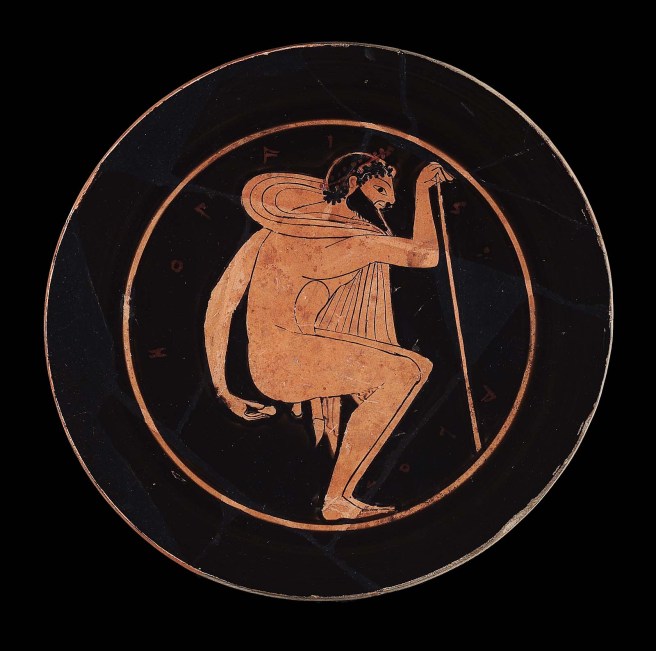
And another from the Walters Art Museum:


pl9_482050_detc_bw_t90

“Like the Full Moon…” Some Greek Proverbs on Gratitude

thanksgiving

Arsenius, 6.38b

“If you are able to give thanks, don’t tarry, but give it—since you know that things are not everlasting.”

Δυνάμενος χαρίζεσθαι, μὴ βράδυνε, ἀλλὰ δίδου, ἐπιστάμενος μὴ εἶναι τὰ πράγματα μόνιμα.

Arsenius, 6.95c

“Humans have greater thanks for the unexpected”

᾿Εκ τῶν ἀέλπτων ἡ χάρις μείζων βροτοῖς

Arsenius 8.42p

“Just like food for the starving, well-timed thanks tunes and heals what the soul is missing.” – Heraclitus

 ῾Η εὔκαιρος χάρις λιμῷ καθάπερ τροφὴ ἁρμόττουσα τὴν τῆς ψυχῆς ἔνδειαν ἰᾶται ῾Ηρακλείτου.

Zenobius, 36.3

“The Graces are naked: [a proverb] indicating that it is right to give unsparingly and in the open.”

Αἱ Χάριτες γυμναί: ἤτοι ὅτι δεῖ ἀφειδῶς καὶ φανερῶς χαρίζεσθαι·

Arsenius 8.77b

“Thanks for the wise never dies”

῾Η χάρις πρὸς εὐγνώμονας οὐδέποτε θνήσκει.

Aresnius 8.77d

“Thanks looks as beautiful as the moon when it is full”

῾Η χάρις ὥσπερ ἡ σελήνη, ὅταν τελεία γένηται, τότε καλὴ φαίνεται.

Aresnius 8.77d

‘Thanks, like nothing else in life, ages quickest among most people”

῾Η χάρις, ὡς οὐδὲν ἄλλο ἐν βίῳ, παρὰ τοῖς πολλοῖς τάχιστα γηράσκει.

Arsenius 18.59f 

“Don’t hesitate to die for the very things for which you want to live.”

῟Ων ἕνεκα ζῆν ἐθέλεις, τούτων χάριν καὶ ἀποθανεῖν μὴ κατόκνει.

Michaelos Apostolios, 5.18

“A field with a clod of dirt”: [a proverb applied to those] who show thanks for great things with small gestures.”

     Βώλοις ἄρουραν: ἐπὶ τῶν τοῖς μικροῖς χαριζομένων τοὺς μεγάλους.

Michaelos Apostolios, 13.37

“It is right neither to seek friendship from a corpse nor thanks from the greedy”

Οὔτε παρὰ νεκροῦ ὁμιλίαν, οὔτε παρὰ φιλαργύρου δεῖ χάριν ἐπιζητεῖν.

Image result for Ancient Greek dedicatory offerings

More on proverbs, go here.

Greek kharis (χάρις, “thanks”) is related to the verb khairô (χαίρω), “to feel joy”

From Beekes 2010:

Kharis 1

Kharis 2

A Typology of Fear For Halloween

Halloween is right today! Here are some passages to go with Seneca’s ruminations on the fear of death.)

Stobaeus 2.7.10c [=Diogenes Laertius 7.113]

“Hesitation is fear of future action. Agony is fear of failure and otherwise fear of worse outcomes. Shock is fear of an uncustomary surprise. Shame is fear of a bad reputation. A ruckus is fear pressing down with sound. Divine fright is fear of gods or divine power. Terror is fear of a terrible thing. A fright is fear that comes from a story.”

     ῎Οκνος δὲ φόβος μελλούσης ἐνεργείας· ἀγωνία δὲ φόβος διαπτώσεως καὶ ἑτέρως φόβος ἥττης· ἔκπληξις δὲ φόβος ἐξ ἀσυνήθους φαντασίας· αἰσχύνη δὲ φόβος ἀδοξίας· θόρυβος δὲ φόβος μετὰ φωνῆς κατεπείγων· δει-σιδαιμονία δὲ φόβος θεῶν ἢ δαιμόνων· δέος δὲ φόβος δεινοῦ· δεῖμα δὲ φόβος ἐκ λόγου.

Suda

“Fear: flight or cowardice. Fear is expecting evil. These emotions are categorized as fear: terror, hesitation, shame, shock, commotion, anxiety. Terror is fear that brings dread. Hesitation is fear about future action. Shame is fear about a bad reputation. Shock is fear from an unusual thing. Commotion is fear from a striking sound. Anxiety is fear of an uncertain matter.”

Φόβος: φυγή. καὶ ἡ δειλία. Φόβος δέ ἐστι προσδοκία κακοῦ. εἰς δὲ τὸν φόβον ἀνάγεται ταῦτα· δεῖμα, ὄκνος, αἰσχύνη, ἔκπληξις, θόρυβος, ἀγωνία. δεῖμα μὲν οὖν ἐστι φόβος δέος ἐμποιῶν, ὄκνος δὲ φόβος μελλούσης ἐνεργείας, αἰσχύνη δὲ φόβος ἀδοξίας, ἔκπληξις δὲ φόβος ἐκ φαντασίας ἀσυνήθους πράγματος, θόρυβος δὲ φόβος μετὰ κατεπείξεως φωνῆς· ἀγωνία δὲ φόβος ἀδήλου πράγματος.

Image result for Ancient Greek monster vase