Etymology and Your Grandfather’s Grandfather

Varro, on the Latin Language (VII. 3)

“It is not surprising [that ancient words have unclear meanings] since not only was Epimenides not recognized by many when he got up from sleep after 50 years, but Teucer as well was unknown by his family after only 15 years, according to Livius Andronicus. But what is this to the age of poetic words? If the source of the words in the Carmen Saliorum is the reign of Numa Pompilius and those words were not taken up from previous composers, they are still 700 years old.

Why, then, would you criticize the labor of an author who has not successfully found the name of a hero’s great-grandfather or that man’s grandfather, when you cannot name the mother of your own great-grandfather’s grandfather? This distance is so much closer to us than the period from now to the beginning of the Salians when people say the Roman’s poetic words were first in Latin.”

Nec mirum, cum non modo Epimenides sopore post annos L experrectus a multis non cognoscatur, sed etiam Teucer Livii post XV annos ab suis qui sit ignoretur. At hoc quid ad verborum poeticorum aetatem? Quorum si Pompili regnum fons in Carminibus Saliorum neque ea ab superioribus accepta, tamen habent DCC annos. Quare cur scriptoris industriam reprehendas qui herois tritavum, atavum non potuerit reperire, cum ipse tui tritavi matrem dicere non possis? Quod intervallum multo tanto propius nos, quam hinc ad initium Saliorum, quo Romanorum prima verba poetica dicunt Latina.

Teucer was a king of Salamis who was absent during the Trojan War.

Epimenides was a poet from Crete who wrote a Theogony. He allegedly went to sleep as a boy and awoke 57 years later. Here’s his strange entry from the Suda.

“Epimenides, son of Phaistos or Dosiados or Agiasarkhos and his mother was Blastos. A Cretan from Knossos and epic poet. As the story goes, his soul could leave his body for however long the time was right and then return again. When he died, after some time his skin was found to be tattooed with words. He lived near the 30th olympiad and he was among the first of the seven sages and those after them. For he cleansed Athens of the plague of Kylôneios at the time of the 44th Olympiad when he was an old man. He wrote many epic poems, including in catalogue form about mysteries, purifications, and other riddling matters. Solon wrote to him asking for the cleansing of the city. He lived 150 years but he slept for 50 of them. “The Epimenidean skin” is a proverb for mysterious writings.”

᾿Επιμενίδης, Φαίστου ἢ Δοσιάδου ἢ ᾿Αγιασάρχου υἱός, καὶ μητρὸς Βλάστας, Κρὴς ἀπὸ Κνωσσοῦ, ἐποποιός· οὗ λόγος, ὡς ἐξίοι ἡ ψυχὴ ὁπόσον ἤθελε καιρόν, καὶ πάλιν εἰσῄει ἐν τῷ σώματι· τελευτήσαντος δὲ αὐτοῦ, πόρρω χρόνων τὸ δέρμα εὑρῆσθαι γράμμασι κατάστικτον. γέγονε δὲ ἐπὶ τῆς λ′ ὀλυμπιάδος, ὡς προτερεύειν καὶ τῶνζ′ κληθέντων σοφῶν ἢ καὶ ἐπ’ αὐτοῖς γενέσθαι. ἐκάθηρε γοῦν τὰς ᾿Αθήνας τοῦ Κυλωνείου ἄγους κατὰ τὴν μδ′ ὀλυμπιάδα, γηραιὸς ὤν. ἔγραψε δὲ πολλὰ ἐπικῶς· καὶ καταλογάδην μυστήριά τινα καὶ καθαρμοὺς καὶ ἄλλα αἰνιγματώδη. πρὸς τοῦτον γράφει Σόλων ὁ νομοθέτης μεμφόμενος τῆς πόλεως κάθαρσιν. οὗτος ἔζησεν ρν′ ἔτη, τὰ δὲ Ϛ′ ἐκαθεύδησεν. καὶ παροιμία τὸ ᾿Επιμενίδειον δέρμα, ἐπὶ τῶνἀποθέτων.

Image result for medieval manuscript old man
British Library Burney 257

Sarcasm! Flesh-Tearing With a Counterfeit Grin

Suda (10th Century CE)

Sarcasm: a species of irony

Σαρκασμός: εἶδος εἰρωνείας.

Aristophanes, Frogs 996 (5th Century BCE)

Σαρκασμοπιτυοκάμπται: “Saracastic-pine-benders”

Suda

“Aristophanes uses this instead of “great men” (megaloi) because he is describing those who take and use falsely the means of war, not because they are truly interested in it, but because they care about strength. For this reason he also called Megainetus “Manes”, not because he is barbaric but because he is stupid. [In the Frogs] he appropriately uses a compound word because this is Aeschylus’ habit.”

Σαρκασμοπιτυοκάμπται: Ἀριστοφάνης φησί, ἀντὶ τοῦ μεγάλοι. ὡς ἁρπάζοντας καὶ προσποιουμένους τὰ πολεμικά, οὐκ ἀληθῶς δὲ τοιούτους, ἰσχύος δὲ ἐπιμελομένους. διὸ καὶ τὸν Μεγαίνετον Μάνην εἶπεν, οὐ πάντως βάρβαρον, ἀλλ’ ἀναίσθητον. ἐπιτηδὲς δὲ ἐχρήσατο τοῖς συνθέτοις, διὰ τὸ Αἰσχύλου ἦθος.

Plutarch On Homer 718 (2nd Century CE)

“There is a certain type of irony as well called sarcasm, which is when someone makes a criticism of someone else using opposites and with a fake smile…”

῎Εστι δέ τι εἶδος εἰρωνείας καὶ ὁ σαρκασμός, ἐπειδάν τις διὰ τῶν ἐναντίων ὀνειδίζῃ τινι μετὰ προσποιήτου μειδιάματος…

Homer, Iliad 1.560-562

“Then cloud-gathering Zeus responded to Hera in answer,
‘Friend [daimoniê] you always know my thoughts, and I can never trick you—
Buy you can’t do anything about it….

Τὴν δ’ ἀπαμειβόμενος προσέφη νεφεληγερέτα Ζεύς·
δαιμονίη αἰεὶ μὲν ὀΐεαι οὐδέ σε λήθω·
πρῆξαι δ’ ἔμπης οὔ τι δυνήσεαι…

Schol. bT ad Il. 1.561a

“Divine one”: “blessed”, used sarcastically.

ex. δαιμονίη: μακαρία, ἐν σαρκασμῷ. b(BCE3)T

Phrynichus Atticus, 16.5 (2nd Century CE)

“To steal is best”: the repetitive structure (symploke) is witty. For you also have “to commit adultery is best, and similar things”. It is a kind of sarcasm to praise an evil to excess.”

ἄριστος κλέπτειν (fr. com. ad. 850): ἀστεία ἡ συμπλοκή. καὶ ἄριστος μοιχεύειν, καὶ τὰ ὅμοια. σαρκασμοῦ τρόπῳ ἐπῄνηται εἰς ὑπερβολὴν τοῦ κακοῦ.

Sarcasm

Oxford English Dictionary

sarcasmn.

Etymology: < late Latin sarcasmus, < late Greek σαρκασμός, < σαρκάζειν to tear flesh, gnash the teeth, speak bitterly, < σαρκ-σάρξ flesh.(Show Less)

  A sharp, bitter, or cutting expression or remark; a bitter gibe or taunt. Now usually in generalized sense: Sarcastic language; sarcastic meaning or purpose.

1579   E. K. in Spenser Shepheardes Cal. Oct. Gloss.   Tom piper, an ironicall Sarcasmus, spoken in derision of these rude wits, whych [etc.].
1581   J. Bell tr. W. Haddon & J. Foxe Against Jerome Osorius 324   With this skoffe doth he note them..by a certayne figure called Sarcasmus.
1605   J. Dove Confut. Atheisme 38   He called the other Gods so, by a figure called Ironia, or Sarcasmus.
1621   R. Burton Anat. Melancholy i. ii. iv. iv. 197   Many are of so petulant a spleene, and haue that figure Sarcasmus so often in their mouths,..that they must bite.
1661   O. Felltham Resolves (rev. ed.) 284   Either a Sarcasmus against the voluptuous; or else, ’tis a milder counsel.
Greek comedy was a popular form of theatre performed in ancient Greece from the 6th cent. BCE

Soul. Cold.

ψυχή, ἡ: soul, life

ψύχωσις: life-giving/generating

ψυχοανάκαλυπτος: soul-baring, revealing

ψυχοκλέπτης: soul-thief

ψυχοκτόνος:soul-killing

ψυχοπλανής: soul-wandering

ψυχοπότης: soul drinker (drinking of life, i.e. blood)


ψῦχος, τό: cold

ψυχρία: cold

ψυχκρασία: growing cold

ψυχολογία: frigid talking

ψυχροποιός: making cold

ψυχροπότης: cold drinker (one who drinks cold water)

ψυχρόσαρκος: with cold flesh

soulCOld1

cold 2

Happy New Year: Hangover Poems and Cures

Crapulous: def. 2: Sick from excessive indulgence in liquor.

kraipale

From the Suda:

Kraipalê: The pounding that comes from drinking too much wine. We also have the participle “carousing” which is when someone acts poorly because of drinking, or just being drunk. It derives from the word “head” (kara) and “pound” (pallein). Or, it could also come from screwing up (sphallesthai) timely matters (kairiôn)

Κραιπάλη: ὁ ἐκ πολλῆς οἰνώσεως παλμός. καὶ Κραιπαλῶν, ἀντὶ τοῦ ἐκ μέθης ἀτακτοῦντα, μεθύοντα. ἀπὸ τοῦ κάρα πάλλειν τοὺς μεθύοντας. ἢ ἀπὸ τοῦ σφάλλεσθαι τῶν καιρίων.

Kraipalôdês: “Prone to drunkenness”: The ancients knew well the weaknesses of the spirit, weather it was a person who was prone to excessive drinking or a love-seeker who has his brain in his genitals.”

Κραιπαλώδης· τῆς ψυχῆς τὰ ἐλαττώματα κατηπίσταντο, εἴτε κραιπαλώδης τις εἴη καὶ μέθυσος εἴτε φιλήδονος καὶ ἐν τοῖς αἰδοίοις ἔχων τὸν ἐγκέφαλον.

Kraipalaikômos“Hangover-revel”: Metonymically, this a song that happens while drunk

Κραιπαλαίκωμος: μετωνυμικῶς ὁ κατὰ μέθην γινόμενος ὕμνος.

Image result for Ancient Greek puking vase

Alexis, fr. 287

“Yesterday you drank too much and now you’re hungover.
Take a nap—this will help it. Then let someone give you
Cabbage, boiled.”

ἐχθὲς ὑπέπινες, εἶτα νυνὶ κραιπαλᾷς.
κατανύστασον· παύσῃ γάρ. εἶτά σοι δότω
ῥάφανόν τις ἑφθήν.

Eubulus, fr. 124

“Woman, it’s because you think I am a cabbage that you’re trying
To give me your hangover. At least, that’s how it seems to me.”

γύναι,
ῥάφανόν με νομίσασ’ εἰς ἐμέ σου τὴν κραιπάλην
μέλλεις ἀφεῖναι πᾶσαν, ὡς ἐμοὶ δοκεῖς.

Nikokharês

“Tomorrow we will boil acorns instead of cabbage
To treat our hangover.”

εἰσαύριον .. ἀντὶ ῥαφάνων ἑψήσομεν
βαλάνιον, ἵνα νῷν ἐξάγῃ τὴν κραιπάλην.

Alexis, fr. 390

“If only we got hangovers before we drank
Then no one would ever drink more
Than is good for them. But now, because
We do not expect to escape drinking’s penalty,
We too eagerly drink unmixed wines”

εἰ τοῦ μεθύσκεσθαι πρότερον τὸ κραιπαλᾶν
παρεγίνεθ’ ἡμῖν, οὐδ’ ἂν εἷς οἶνόν ποτε
προσίετο πλείω τοῦ μετρίου. νυνὶ δὲ τὴν
τιμωρίαν οὐ προσδοκῶντες τῆς μέθης
ἥξειν προχείρως τοὺς ἀκράτους πίνομεν.

Sopater

“It is sweet for men to drink at dawn
Streams of honey when they are struck by thirst
Driven by the last night’s hangover”

νᾶμα μελισσῶν ἡδὺ μὲν ὄρθρου
καταβαυκαλίσαι τοῖς ὑπὸ πολλῆς
κραιπαλοβόσκου δίψης κατόχοις.

How to Cure a Hangover…

Aristotle, Problemata 873a-b

“Wine (being of a wet nature) stretches those who are slow and makes them quick, but it tends to restrain those who are quick already. On that account, some who are melancholic by nature become entirely dissipated in drunken stupors (kraipalais). Just as a bath can make those who are all bound up and stiff more readily able to move, so does it check those who are already movable and loose, so too does wine, which is like a bath for your innards, accomplish this same thing.

Why then does cabbage prevent drunkenness (kraipale)? Either because it has a sweet and purgative juice (and for this reason doctors use it to clean out the intestines), even though it is itself of a cold nature. Here is a proof: doctors use it against exceptionally bad cases of diarrhea, after preparing it by cooking it, removing the fiber, and freezing it. It happens in the case of those suffering from the effects of drunkenness (kraipalonton) that the cabbage juice draws the wet elements, which are full of wine and still undigested, down to their stomachs, while the body chills the rest which remains in the upper part of the stomach. Once it has been chilled, the rest of the moist element can be drawn into the bladder. Thus, when each of the wet elements has been separated through the body and chilled, people are likely to be relieved of their drunkenness (akraipaloi). For wine is wet and warm.”

καὶ ὁ οἶνος (ὑγρὸς γάρ ἐστι τὴν φύσιν) τοὺς μὲν βραδυτέρους ἐπιτείνει καὶ θάττους ποιεῖ, τοὺς δὲ θάττους ἐκλύει. διὸ ἔνιοι τῶν μελαγχολικῶν τῇ φύσει ἐν ταῖς κραιπάλαις ἐκλελυμένοι γίνονται πάμπαν. ὥσπερ γὰρ τὸ λουτρὸν τοὺς μὲν συνδεδεμένους τὸ σῶμα καὶ σκληροὺς εὐκινήτους ποιεῖ, τοὺς δὲ εὐκινήτους καὶ ὑγροὺς ἐκλύει, οὕτως ὁ οἶνος, ὥσπερ λούων τὰ ἐντός, ἀπεργάζεται τοῦτο.

Διὰ τί ἡ κράμβη παύει τὴν κραιπάλην; ἢ ὅτι τὸν  μὲν χυλὸν γλυκὺν καὶ ῥυπτικὸν ἔχει (διὸ καὶ κλύζουσιν αὐτῷ τὴν κοιλίαν οἱ ἰατροί), αὐτὴ δ’ ἐστὶ ψυχρά. σημεῖον δέ· πρὸς γὰρ τὰς σφοδρὰς διαρροίας χρῶνται αὐτῇ οἱ ἰατροί, ἕψοντες σφόδρα καὶ ἀποξυλίζοντες καὶ ψύχοντες. συμβαίνει δὴ τῶν κραιπαλώντων τὸν μὲν χυλὸν αὐτῆς εἰς τὴν κοιλίαν κατασπᾶν τὰ ἐν αὐτοῖς ὑγρά, οἰνηρὰ καὶ ἄπεπτα ὄντα, αὐτὴν δὲ ὑπολειπομένην ἐν τῇ ἄνω κοιλίᾳ ψύχειν τὸ σῶμα. ψυχομένου δὲ ὑγρὰ λεπτὰ συμβαίνει εἰς τὴν κύστιν φέρεσθαι. ὥστε κατ’ ἀμφότερα τῶν ὑγρῶν ἐκκρινομένων διὰ τοῦ σώματος, καὶ καταψυχομένου, εἰκότως ἀκραίπαλοι γίνονται· ὁ γὰρ οἶνος ὑγρὸς καὶ θερμός ἐστιν.

Hippocrates of Cos, Epidemics 2.30

“If someone has head pain from a hangover, have him drink a cup of unmixed wine. For different head pains, have the patient eat bread warm from unmixed wine.”

Ἢν ἐκ κραιπάλης κεφαλὴν ἀλγέῃ, οἴνου ἀκρήτου κοτύλην πιεῖν· ἢν δὲ ἄλλως κεφαλὴν ἀλγέῃ, ἄρτον ὡς θερμότατον ἐξ οἴνου ἀκρήτου ἐσθίειν.

Plutarch, Table-Talk 3 (652F)

“Those who are suffering bodily from drinking and being hungover can find relief from sleeping immediately, warmed with a cover. On the next day, they can be restored with a bath, a massage, and whatever food does not cause agitation but restores the warmth dispelled and lost from the body by wine.”

 ἰῶνταί γε μὴν τὰς περὶ τὸ σῶμα τῶν μεθυσκομένων καὶ κραιπαλώντων κακώσεις εὐθὺς μὲν ὡς ἔοικε περιστολῇ καὶ κατακλίσει συνθάλποντες, μεθ᾿ ἡμέραν δὲ λουτρῷ καὶ ἀλείμματι καὶ σιτίοις, ὅσα μὴ ταράττοντα τὸν ὄγχον ἅμα πράως ἀνακαλεῖται τὸ θερμὸν ὑπὸ τοῦ οἴνου διεσπασμένον καὶ πεφυγαδευμένον ἐκ τοῦ σώματος.

 Latin: crapula, from Grk. Kraipalê

Plautus, Rudens 585-590

“But why am I standing here, a sweating fool?
Maybe I should leave here for Venus’ temple to sleep off this hangover
I got because I drank more than I intended?
Neptune soaked us with the sea as if we were Greek wines
And he hoped to relieve us with salty-beverages.
Shit. What good are words?”

sed quid ego hic asto infelix uuidus?
quin abeo huc in Veneris fanum, ut edormiscam hanc crapulam,
quam potaui praeter animi quam lubuit sententiam?
quasi uinis Graecis Neptunus nobis suffudit mare,
itaque aluom prodi sperauit nobis salsis poculis;
quid opust uerbis?

Image result for Ancient Roman Drinking

Plautus, Stichus 226-230

“I am selling Greek moisturizers
And other ointments, hangover-cures
Little jokes, blandishments
And a sycophant’s confabulations.
I’ve got a rusting strigil, a reddish flask,
And a hollowed out follower to hide your trash in.”

uel unctiones Graecas sudatorias
uendo uel alias malacas, crapularias;
cauillationes, assentatiunculas,
ac periuratiunculas parasiticas;
robiginosam strigilim, ampullam rubidam,
parasitum inanem quo recondas reliquias.


Advice more useful the day before

John of Damascus, Sacra Parallela 96.161:

“When the membranes become full of the vapors which wine produces when it is vaporized, the head is stricken with unbearable pains. No longer can it stay upright upon the shoulders, but it constantly drops this way and that, slipping around upon its joints. But who would say such things to those stricken by wine? Their heads are heavy from drunkenness (kraipale), they nod off, they yawn, they see through a fog, and they feel nauseous. On that account, they do not listen to their teachers yelling out to them all of the time. Don’t get drunk on wine, in which there is profligacy. Therein lie trembling and weakness, the breath is beaten out by immoderate indulgence in wine, the nerves are slackened, and the entire mass of the body is put into disorder. “

῞Οταν γὰρ πλήρεις αἱ μένιγγες γίνωνται τῆς αἰθάλης, ἣν ὁ οἶνος ἐξατμιζόμενος ἀναφέρει, βάλλεται μὲν ὀδύναις ἀφορήτοις ἡ κεφαλή· μένειν δὲ ὀρθὴ ἐπὶ τῶν ὤμων μὴ δυναμένη, ἄλλοτε ἐπ’ ἄλληλα καταπίπτει, τοῖς σπονδύλοις ἐνολισθαίνουσα. ᾿Αλλὰ τίς εἴποι ταῦτα τοῖς οἰνοπλήκτοις; καρηβαροῦσι γὰρ ἐκ τῆς κραιπάλης, νυστάζουσι, χασμῶνται, ἀχλὺν βλέπουσιν, ναυτιῶσιν. Διὰ τοῦτο οὐκ ἀκούουσι τῶν διδασκάλων πολλαχόθεν αὐτοῖς ἐκβοώντων· Μὴ μεθύσκεσθε οἴνῳ, ἐν ᾧ ἐστιν ἀσωτία. ᾿Εντεῦθεν οἱ τρόμοι καὶ αἱ ἀσθένειαι, κοπτομένου αὐτοῖς τοῦ πνεύματος ὑπὸ τῆς ἀμετρίας τοῦ οἴνου, καὶ τῶν νεύρων λυομένων, ὁ κλόνος τῷ σύμπαντι ὄγκῳ τοῦ σώματος ἐπιγίνεται.

Why Insanity is Superior. And Some Etymologies.

Socrates is the speaker of this passage which includes some curious assertions about sanity and madness and some adventurous folk etymologies.

Plato Phaedrus 244b-d

“If it were simply the case that insanity is evil, then this would be said truly. But, in truth, the greatest goods come to us from madness when it is given as a divine gift. For the prophet at Delphi and the priestesses at Dodona have completed many fine things for Greece both in public and private, because they were insane. But when they are in their right minds, they have done little or nothing.

And if we speak about the Sibyl and the rest—however many provide prophecy while inspired and by predicting many things for many people have improved their lives—we should clearly be spending a long time describing it all. This is also worthy of acknowledging, that the ancients who gave things names did not belief that madness was shameful or worthy of reproach. For they would not have interwoven this name—mania—with that finest art by which the future is judged.

No, instead, since it is a divine dispensation and because it is noble, they named it according to their belief. These days people call it the mantic art, callously adding a tau. When they name sane people’s investigation of the future through other means like bird omens and similar signs—since they must provide from their own perspective the mind (nous) and inquiry (historia) by means of human thought (oiêsis)—they call it oionoistic thought and make it more reverent by adding an omega as current people do. How much more complete and honorable prophecy is to augury both in name and in its action the ancients assert it is that much superior because madness is divine in origin and sanity is human.”

εἰ μὲν γὰρ ἦν ἁπλοῦν τὸ μανίαν κακὸν εἶναι, καλῶς ἂν ἐλέγετο· νῦν δὲ τὰ μέγιστα τῶν ἀγαθῶν ἡμῖν γίγνεται διὰ μανίας, θείᾳ μέντοι δόσει διδομένης. ἥ τε γὰρ δὴ ἐν Δελφοῖς προφῆτις αἵ τ᾿ ἐν Δωδώνῃ ἱέρειαι μανεῖσαι μὲν πολλὰ δὴ καὶ καλὰ ἰδίᾳ τε καὶ δημοσίᾳ τὴν Ἑλλάδα εἰργάσαντο, σωφρονοῦσαι δὲ βραχέα ἢ οὐδέν· καὶ ἐὰν δὴ λέγωμεν Σίβυλλάν τε καὶ ἄλλους, ὅσοι μαντικῇ χρώμενοι ἐνθέῳ πολλὰ δὴ πολλοῖς προλέγοντες εἰς τὸ μέλλον ὤρθωσαν, μηκύνοιμεν ἂν δῆλα παντὶ λέγοντες· τόδε μὴν ἄξιον ἐπιμαρτύρασθαι, ὅτι καὶ τῶν παλαιῶν οἱ τὰ ὀνόματα τιθέμενοι οὐκ αἰσχρὸν ἡγοῦντο οὐδὲ ὄνειδος μανίαν.οὐ γὰρ ἂν τῇ καλλίστῃ τέχνῃ, ᾗ τὸ μέλλον κρίνεται, αὐτὸ τοῦτο τοὔνομα ἐμπλέκοντες μανικὴν ἐκάλεσαν· ἀλλ᾿ ὡς καλοῦ ὄντος, ὅταν θείᾳ μοίρᾳ γίγνηται, οὕτω νομίσαντες ἔθεντο, οἱ δὲ νῦν ἀπειροκάλως τὸ ταῦ ἐπεμβάλλοντες μαντικὴν ἐκάλεσαν. ἐπεὶ καὶ τήν γε τῶν ἐμφρόνων ζήτησιν τοῦ μέλλοντος διά τε ὀρνίθων ποιουμένων καὶ τῶν ἄλλων σημείων, ἅτ᾿ ἐκ διανοίας ποριζομένων ἀνθρωπίνῃ οἰήσει νοῦν τε καὶ ἱστορίαν, οἰονοϊστικὴν ἐπωνόμασαν, ἣν νῦν οἰωνιστικὴν τῷ ω σεμνύνοντες οἱ νέοι καλοῦσιν· ὅσῳ δὴ οὖν τελεώτερον καὶ ἐντιμότερον μαντικὴ οἰωνιστικῆς, τό τε ὄνομα τοῦ ὀνόματος ἔργον τ᾿ ἔργου, τόσῳ κάλλιον μαρτυροῦσιν οἱ παλαιοὶ μανίαν σωφροσύνης τὴν ἐκ θεοῦ τῆς παρ᾿ ἀνθρώπων γιγνομένης.

Image result for Ancient Greek prophecy

The logic here might be a little bewildering, but Socrates/Plato seem to be on t something with the first etymology

Beekes Madness

Which Season is Sweetest?

On a decidedly autumnal day in New England, a dialogue about the seasons

Bion, fr. 2 (preserved in Stobaeus 1.8.39)

Kleodamos

Myrsôn, what do you find sweet in the spring,
The winter, fall, or summer? Which do you pray for the most?
Is it summer when everything we have worked for is done,
Or is fall sweeter, when hunger is light for men,
Or is it winter, bad for work, when because of the season
Many warm themselves delighting in laziness and relaxation—
Or, surely, is it noble spring which pleases you more?
Tell me what’s on your mind, since leisure has allowed us to chat.

Myrsos

It is not right for mortals to judge divine deeds—
For all these things are sacred and sweet. But for you, Kleodamos,
I will confess what seems sweeter to me than the rest.
I do not wish for the summer, since the sun cooks me then.
I do not wish for the Fall, since that season brings disease.
The Winter brings ruinous snow—and I have chilling fear.
I long for  Spring three times as much for the whole year,
When neither the cold nor the heat weigh upon me.
Everything is pregnant in the spring, everything grows sweet in springtime
When humans have nights and days as equal, nearly the same.”

ΚΛΕΟΔΑΜΟΣ
Εἴαρος, ὦ Μύρσων, ἢ χείματος ἢ φθινοπώρω
ἢ θέρεος τί τοι ἁδύ; τί δὲ πλέον εὔχεαι ἐλθεῖν;
ἦ θέρος, ἁνίκα πάντα τελείεται ὅσσα μογεῦμες,
ἢ γλυκερὸν φθινόπωρον, ὅκ’ ἀνδράσι λιμὸς ἐλαφρά,
ἢ καὶ χεῖμα δύσεργον—ἐπεὶ καὶ χείματι πολλοί
θαλπόμενοι θέλγονται ἀεργίᾳ τε καὶ ὄκνῳ—
ἤ τοι καλὸν ἔαρ πλέον εὔαδεν; εἰπὲ τί τοι φρήν
αἱρεῖται, λαλέειν γὰρ ἐπέτραπεν ἁ σχολὰ ἄμμιν.

ΜΥΡΣΩΝ
κρίνειν οὐκ ἐπέοικε θεήια ἔργα βροτοῖσι,
πάντα γὰρ ἱερὰ ταῦτα καὶ ἁδέα· σεῦ δὲ ἕκατι
ἐξερέω, Κλεόδαμε, τό μοι πέλεν ἅδιον ἄλλων.
οὐκ ἐθέλω θέρος ἦμεν, ἐπεὶ τόκα μ’ ἅλιος ὀπτῇ·
οὐκ ἐθέλω φθινόπωρον, ἐπεὶ νόσον ὥρια τίκτει.
οὖλον χεῖμα φέρει νιφετόν, κρυμὼς δὲ φοβεῦμαι.
εἶαρ ἐμοὶ τριπόθητον ὅλῳ λυκάβαντι παρείη,
ἁνίκα μήτε κρύος μήθ’ ἅλιος ἄμμε βαρύνει.
εἴαρι πάντα κύει, πάντ’ εἴαρος ἁδέα βλαστεῖ,
χἀ νὺξ ἀνθρώποισιν ἴσα καὶ ὁμοίιος ἀώς.

Season Words

Spring: ἔαρ, τὸ: from IE *ves-r, cf. vernal.

Summer: θέρος, τὸ: from a root meanting “warm, heat”

Winter: χεῖμα, τὸ (ancient word for Winter)

Fall: φθινόπωρον, τό:  from φθιν (φθίω “decay, waste, dwindle”)+ ὀπώρα (“end of summer, harvest”)

Ecclesiastes, 3 Latin Vulgate

omnia tempus habent et suis spatiis transeunt universa sub caelo
tempus nascendi et tempus moriendi tempus plantandi
et tempus evellendi quod plantatum est


London, British Library, MS Sloane 2435, f. 23r.

Tawdry Tuesday: A Poem to a Rear-End and Some Etymologies

My friend–whose name will not be mentioned to protect his/her identity–sent the following poem to me:

Greek Anthology, 12.38, attributed to Rhianos

“The Seasons and the Graces have poured sweet oil on you,
Butt. And you do not allow even old men to nap.
Tell me, whose sweetheart are you and which boy
Do you decorate? The Butt said “Menecrates’ “

Ὧραί σοι Χάριτές τε κατὰ γλυκὺ χεῦαν ἔλαιον,
ὦ πυγά· κνώσσειν δ᾿ οὐδὲ γέροντας ἐᾷς.
λέξον μοι τίνος ἐσσὶ μάκαιρα τύ, καὶ τίνα παίδων
κοσμεῖς; ἁ πυγὰ δ᾿ εἶπε· “Μενεκράτεος.”

Words not to confuse:

πυγαλγίας, ὁ: “having ass-pain”
πύγαργος, ὁ: “white-assed”
πυγή, ἡ: “buttocks, rump, rear-end, ass”
πυγίδιον: “small-rumped”
πυγίζω: “to penetrate anally”

πυγμαχία, ἡ: “fist fight”
πυγμάχος, ὁ: “boxer”
πυγμή: “fist, fist-fight”
πυγοσύνη: “science of boxing”

πυγοστόλος: “ass-adorning”
δωσίπυγος: “ass-giving”
δασύπυγος: “hairy-assed”
καλλίπυγος: “with beautiful buttocks”
λεπτόπυγος: “fine-assed”
λισπόπυγος: “smooth-assed”

πυγή: Beekes writes that this “has no convincing etymology” (Chantraine: “Pas d’étymologie assurée…”)

πυγμή: Cf. Latin pugnare, pugna. *pug-[Beekes is uncertain]. Chantraine presents the interseting suggestion from Van Brock that in the ancient background of πύξ might lurk the combination of πᾶς (“all”) and the numeral πέντε (“five”) to signal “fist”.

Image result for aphrodite kallipygos

Destroyer, Born on the Ground, Pitiable: Etymologies for Helen

In a choral ode from Aeschylus’ Agamemnon, we find a folk etymology implied for Helen’s name. Where I have translated “killer”, the Greek has versions of the aorist of αἵρεω (εἶλον) which, without its augment looks like the beginning of Helen’s name (ἑλ-).

 Aeschylus, Agamemnon 684-696

“Whoever pronounced a name
So thoroughly true?
Wasn’t it someone we’d not see
Guiding the tongue with luck
From a foreknowledge of fate?
Who named the spear-bride,
Struggled-over woman
Helen?
For, appropriately,
That ship-killer [hele-nas], man-killer [hel-andros]
City-killer [hele-ptolis], sailed
From her fine-spun, curtains
On the breath of great Zephyr
and many-manned bands
Of shield-bearers followed
The vanished journey struck
By the oars to the banks
Of leafy Simois
For a bloody strife.”

Χο. τίς ποτ’ ὠνόμαξεν ὧδ’
ἐς τὸ πᾶν ἐτητύμως—
μή τις ὅντιν’ οὐχ ὁρῶ-
μεν προνοί-
αισι τοῦ πεπρωμένου
γλῶσσαν ἐν τύχᾳ νέμων; —τὰν
δορίγαμβρον ἀμφινεικῆ
θ’ ῾Ελέναν; ἐπεὶ πρεπόντως
ἑλένας, ἕλανδρος, ἑλέ-
πτολις, ἐκ τῶν ἁβροπήνων
προκαλυμμάτων ἔπλευσε
Ζεφύρου γίγαντος αὔρᾳ,
πολύανδροί
τε φεράσπιδες κυναγοὶ
κατ’ ἴχνος πλατᾶν ἄφαντον
κελσάντων Σιμόεντος
ἀκτὰς ἐπ’ ἀεξιφύλλους
δι’ ἔριν αἱματόεσσαν.

Ancient etymologies do not follow this Aeschylean play.

Etym. Gudianum

“Helenê. From attracting [helkein] many to her beauty. Or it is from helô, helkuô, she is the one who drags young men to her personal beauty. Or it comes from Hellas [Greece]. Or it comes from being born on the ground [helos].”

     ῾Ελένη· … ἀπὸ τοῦ πολλοὺς ἕλκειν ἐν τῷ κάλλει αὐτῆς· ἢ παρὰ τὸ ἕλω, τὸ ἑλκύω, ἡ πρὸς τὸ ἴδιον κάλλος ἑλκύουσα τοὺς νέους ἀνθρώπους· ἢ παρὰ τὸ ῾Ελλάς· ἢ παρὰ τὸ ἐν ἕλει γεγεννῆσθαι.

Etym.  Magnum

“Helenê: A heroine. From helô, helkuô, she is the one who drags young men to her personal beauty. Or it comes from Hellas [Greece]. Or it comes from being born on the ground [helos]. Or because she was thrown in a marshy [helôdei] place by Tyndareus once she obtained some divine prescience and she was taken back up by Leda. Helenê was named from pity [heleos].”

     ῾Ελένη: ῾Η ἡρωΐς· παρὰ τὸ ἕλω, τὸ ἑλκύω, ἡ πρὸς τὸ ἴδιον κάλλος ἕλκουσα τοὺς ἀνθρώπους· διὰ τὸ πολλοὺς ἑλεῖν τῷ κάλλει· ἢ παρὰ τὸ ῾Ελλάς· ἢ παρὰ τὸ ἐν ἕλει γεγενῆσθαι, ἡ ὑπὸ τοῦ Τυνδάρεω ἐν ἑλώδει τόπῳ ῥιφθεῖσα, θείας δέ τινος προνοίας τυχοῦσα, καὶ ἀναληφθεῖσα ὑπὸ Λήδας. ᾿Εκ τοῦ ἕλους οὖν ῾Ελένη ὠνομάσθη.

Modern linguistics show that Helen’s name is just really hard to figure out.

Some Modern Material

In Lakonia, Helen was original spelled with a digamma. (And this may have extended to Corinth and Chalcidice too Cf. R. Wachter Non-Attic Vase Inscriptions 2001, §251).

74 Von Kamptz 1958, 136 suggests that her name is a “cognate of σέλας” to evoke a sense of “shining”, as in her beauty. Cf. Kanavou 2015, 72

Vedic Saranyu: Skutsch 1987, 189; Puhvel 1987, 141–143 (The initial breathing in Greek often points to a lost initial *s but the digamma in certain dialects confuses this) The Vedic name means swift. The PIE root suggested here is *suel-.

Helen has variously been suggested as coming from a vegetation goddess (see Helena Dendritis, Paus. 3.19.9–10; Herodotus 6.61; cf. Skutsch 1987) or a goddess of light.


Image result for Ancient Greek Helen

Wool, Scar, Wholeness: Oúlos, Oulê, Oulos and Odysseus

In book 19 of the Odyssey, Odysseus (in disguise) confirms for Penelope that he saw Odysseus (in the past) as he was traveling to Troy by describing the woolen cloak and golden brooch he was wearing. Fewer than two hundred lines later, Eurykleia recognizes Odysseus by his scar. In Greek, the words used for the “wool”[oúlê] cloak and the scar [oulé] differ only in accent. Later in the Odyssey, Dolios uses another word that sounds the same but means something else to address Odysseus. How might audiences distinguish between these meanings? How might the epic capitalize upon their similarity? (see below for some answers)

Odyssey 19.225–227

“Glorious Odysseus had a purple wool [oúlên] cloak with a double fold
And the brooch on it was made of gold with double clasps
On the surface it had an intricate design.”

χλαῖναν πορφυρέην ‖ οὔλην ἔχε δῖος ᾿Οδυσσεύς,
διπλῆν· ἐν δ’ ἄρα οἱ περόνη χρυσοῖο τέτυκτο
αὐλοῖσιν διδύμοισι· πάροιθε δὲ δαίδαλον ἦεν·

19.390-394

“Immediately he pondered in his heart how she might not take him
And recognize his scar [oulén] and bring everything out in the open.
But she came near and took him up for bathing. Immediately
She recognized the scar [oulén] which long ago a boar gave him with its white fang
When he went to Parnassus to see Autolykos and his sons.”

αὐτίκα γὰρ κατὰ θυμὸν ὀΐσατο, μή ἑ λαβοῦσα
οὐλὴν ἀμφράσσαιτο καὶ ἀμφαδὰ ἔργα γένοιτο.
νίζε δ’ ἄρ’ ἄσσον ἰοῦσα ἄναχθ’ ἑόν· αὐτίκα δ’ ἔγνω
οὐλήν, τήν ποτέ μιν σῦς ἤλασε λευκῷ ὀδόντι
Παρνησόνδ’ ἐλθόντα μετ’ Αὐτόλυκόν τε καὶ υἷας,

Od. 24.402 (Dolios to Odysseus)

“Be well [oule] and be of great cheer. May the gods give you blessings”

οὖλέ τε καὶ μέγα χαῖρε, θεοὶ δέ τοι ὄλβια δοῖεν.

How might audiences tell the difference between these two words in addition to accent? Usage in the hexameter line indicates some separation. “Scar” tends to come at the beginning of the line:

19.464 οὐλὴν ὅττι πάθοι· ὁ δ’ ἄρα σφίσιν εὖ κατέλεξεν,
19.507 θερσόμενος, οὐλὴν δὲ κατὰ ῥακέεσσι κάλυψε.
21.221      ὣς εἰπὼν ῥάκεα μεγάλης ἀποέργαθεν οὐλῆς.
23.74 οὐλήν, τήν ποτέ μιν σῦς ἤλασε λευκῷ ὀδόντι·
24.331 “οὐλὴν μὲν πρῶτον τήνδε φράσαι ὀφθαλμοῖσι,

“Woolly” tends to come before a caesura:

4.450 ἀμφὶ δ’ ἄρα χλαίνας ‖ οὔλας βάλον ἠδὲ χιτῶνας (=10.451, 17.89)
4.299 χλαίνας τ’ ἐνθέμεναι ‖ οὔλας καθύπερθεν ἕσασθαι. (=7.338)

The one exception to this separation in the Odyssey seems to be when Odysseus is transformed into a better looking version of himself in books 6 and 23. Here, the “woolly hair” begins the line, placing the same sounds in the same position as his defining scar.

“She made the woolly hair come from his head like a hyacinth flower.”

6.230-231 …οὔλας ἧκε κὄμας, ὑακινθίνῳ ἄνθει ὁμοίας. (=23.158).

In this, Dolios’ hapax legomenon greeting to Odysseus seems potentially playful and interesting: οὖλέ τε καὶ μέγα χαῖρε, θεοὶ δέ τοι ὄλβια δοῖεν. Here the imperative could sound like a vocative for “wool”. But, it might also recall another word that sounds the same, οὖλος “destructive”, which appears in the Iliad but not in the Odyssey.

Ancient authors associate this imperative with “wholeness, and healthiness”:

Schol. H ad. Hom. Od. 24.402

“Oule: “be healthy, from “wholeness”. This is only said once.
οὖλε] ὑγίαινε· παρὰ τὸ ὅλην. τῶν ἅπαξ εἰρημένων. H.

Strabo 14.1.6

“The Milesians and Delians call Apollo Oulios, as if he his a bringer of health and healing. For, to oulein is to “to be healthy” [hugiainein], from which we get the word “scar” [oulê] and the [greeting] “be well and be very happy”.

Οὔλιον δ’ ᾿Απόλλωνα καλοῦσί τινα καὶ Μιλήσιοι καὶ Δήλιοι, οἷον ὑγιαστικὸν καὶ παιωνικόν· τὸ γὰρ οὔλειν ὑγιαίνειν, ἀφ’ οὗ καὶ τὸ οὐλὴ καὶ τό „οὖλέ τε „καὶ μέγα χαῖρε.”

The aural similarity between these four terms (“scar”, “wool”, “ruinous”, “whole”) and their potentially intentional juxtapositions and interplay in the Odyssey help to map out different variations on Odysseus’ character and his development in this particular epic. In folk etymology, the name  (whence Roman Ulysses through Doric Olisseus?. cf. Oulikseus below “Alternatives…”) may mark him as the “scarred man”, evoking the tale of his naming and thus an essential aspect of his character.

The “wool” may recall both his physical trait of curly hair (emphasized in his rejuvenations in the Odyssey) and his legendary tale of sneaking out under a ram after the blinding of Polyphemos (depicted in many vase images at an early period and perhaps echoed when Priam describes him as a “ram among the sheep” in the Iliad  3.197–198). But the “wool garment” has intra-textual relevance within our epic (since Odysseus in disguise keeps asking for a cloak) and as the garment that confirms his past identity to Penelope.

Both “scar” and “wool”, then, are intimately connected with the characterization of an Odysseus from a broader mythical perspective and are introduced as positive identification for the hero in this epic.  The echo of a “destructive” hero is mostly up to speculation. The meaning of the final imperative “be whole”, however, might be intentionally jarring and telling: at this moment, Odysseus has finally confirmed his identities with everyone and has become whole, combining and transcending his identities as “woolly haired” and “scarred”.
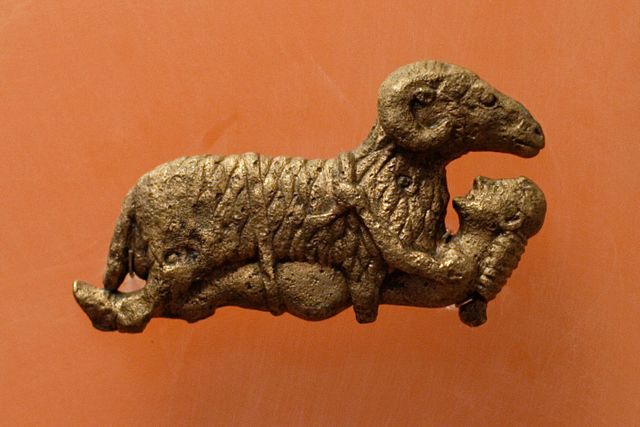
 Image result for Odysseus and Ram

From the Iliad

5.461 Τρῳὰς δὲ στίχας οὖλος ῎Αρης ὄτρυνε μετελθὼν
5.517 εἰ οὕτω μαίνεσθαι ἐάσομεν οὖλον ῎Αρηα.
21.536 δείδια γὰρ μὴ οὖλος ἀνὴρ ἐς τεῖχος ἅληται. [=Achilles]


Some Etymologies

Etymologicum Gudianum

“Scar” (oulê): This is a healed wound which is still apparent. Others call it a “persistent/painful wound” [epiponaion]”

Οὐλὴ, τὸ ὑγιασθὲν τραῦμα καὶ φαινόμενον· ἄλλοι δὲ ἐπιπόναιον ἕλκος.

“Scar and wound [ôteilê] are different. For a ‘scar’ is a strike healed from an earlier wound; whereas a ôteilê is what the wound [trauma] is called. But Homer has obscured the difference when he said “the same mark [oulê] poured out black blood from the wound [ôteilês].”

Οὐλὴ καὶ ὠτειλὴ διαφέρει· οὐλὴ μὲν γάρ ἐστιν, ἡ ἐκ παλαιοῦ τραύματος ὑγιασμένη πλήγη· ὠτειλὴ δὲ τὸ πρόσφατον τραῦμα· καὶ ῞Ομηρος δὲ τετήρηκε τὴν διαφορὰν εἴπων· οὐλὴν δ’ αὐτὴν ἔρεεν αἷμα κελαινεφὲς ἐξ ὠτειλῆς.

οὐλή, ἡ: “scar”

Chantraine s.v. οὐλή, “cicatrice, blessure, cicatrisée. From *ϝολ-. Cf. lat volnus, eris?

Beekes s.v οὐλή, “scarred wound, scar”,< IE *uel- ‘draw, tear’. But “As a common basis for these nouns, the root *uelh3- ‘to strike’ must be assumed…”

οὖλος, “wool”

Chaintraine, s.v. οὖλος 2 “Le sense ancient de οὖλος “bouclé, crépu” [“curled, frizzy”] se tire aisément de 2 εἰλέω “tourner, rouler”…Le sens secondaire de “dense” etc. n’impose pas un rapport avec 1 εἰλέω “serrer, presser”.

Beeks s.v. οὖλος, “frizzy, shaggy, woolly, crinkly’ “can be connected with εἰλέω 2 “to roll, rutnr, wind’…” We may reconstruct *uol(H)-no ‘wool’, either from *uel “to twist’ or *uelH- ‘to pluck’ (Lat. Vello).

Note for 19.225 from Merry, Riddell and Montro 1886: οὔλην ‘thick,’ ‘woolly,’ from the same root as Lat. vellus, also lāna (for vlā-na). Whether it is akin to “εἶρος, ἔρια” (Lat. vervēx) is more than doubtful.”

οὖλος, “ruinous”

Chantraine, s.v. οὖλος 3 “perniceaux, funeste, destructeur”. Epithet of Ares, Achilles and in the hellinist period, Eros… Ety. Famille ὄλλυμι, *ὄλϝος à côte de *ὀλεϝός >ὀλοός…

Beekes, s.v. οὖλος 3 “baneful”…from IE *H3lh3-u– “destructive”

οὖλος, Chantraine s.v. οὖλος 1 “tout entier”, voir ὅλος.

Schol. B ad Od. 19.393

“Scar”: Attic speakers call a wound that has been healed  ôteilê. In Homer, ôteilê is unhealed, and an oulê is healed.”

οὐλὴν] ᾿Αττικοὶ τὸ θεραπευθὲν τραῦμα ὠτειλήν φασι· παρὰ δὲ ῾Ομήρῳ ὠτειλὴ μὲν τὸ ἀθεράπευτον, οὐλὴ δὲ τὸ θεραπευθέν. B.

Alternatives to Odysseus’ name

Eust. Comm. Ad Homeri Il 1.446: ὁ ᾿Οδυσσεύς δέ που ᾿Ολυσσεύς καὶ ἡ ᾿Οδύσσεια ᾿Ολύσσεια

Herodian, de prosodia cath. 3.1.14: Οὐλιξεύς Ulixes, in quo Doris sequimur

From Brill’s New Pauly s.v Odysseus: Attic inscriptions: Ὀλυττεύς/Olytteús; Corinthian: Ὀλισ(σ)εύς/Olis(s)eús;

For other etymologies for Odysseus’ name, see here.

For “whole” elsewhere in the Odyssey see: 17.342-3

“Têlemakhos called the swineherd over to him and addressed him,
Once he took the whole [oûlon] loaf from the fancy basket”

Τηλέμαχος δ’ ἐπὶ οἷ καλέσας προσέειπε συβώτην,
ἄρτον τ’ οὖλον ἑλὼν περικαλλέος ἐκ κανέοιο

Some Truth Behind Odysseus’ Pseudonyms

Odyssey 24.303–307

“Certainly, I will explain everything to you truly.
I am from Alybas where I live in a glorious home,
I am the son of Apheidas, the son of lord Polypêmôn.
My name is Epêritos. But some god struck me
So I came here from Sicily even though I was unwilling.”

“τοιγὰρ ἐγώ τοι πάντα μάλ’ ἀτρεκέως καταλέξω.
εἰμὶ μὲν ἐξ ᾿Αλύβαντος, ὅθι κλυτὰ δώματα ναίω,
υἱὸς ᾿Αφείδαντος Πολυπημονίδαο ἄνακτος·
αὐτὰρ ἐμοί γ’ ὄνομ’ ἐστὶν ᾿Επήριτος· ἀλλά με δαίμων
πλάγξ’ ἀπὸ Σικανίης δεῦρ’ ἐλθέμεν οὐκ ἐθέλοντα·

The names that Odysseus chooses here from his family tree are interesting as a reflection of his persona and his experience. The most obvious, on the surface, is Apheidas which means “unsparing”; the grandfather’s name, Polu-pêmôn, means “of many pains”. The final element, his personal name Epêritos, is the least transparent—Eustathius argues that it derives from the verb erizein, “to engage in strife.” Eustathius also interprets the paternal name, Apheidas, positively, suggesting that it anticipates the projected liberality of the speaker in terms of gift giving. The name could also indicate however, a person taken to risk or unsparing of others: to wit, Odysseus is in this scene rather unsparing of his father who suffers much grief because of him.

Eust. Comm. Ad Hom. Od. II 324

“He says that he is the son of Apheidas [“unsparing”] because he wants to emphasize his own liberality and great gift-giving. This is the very thing Laertes understands and says in a bit that “Odysseus would have responded and sent you away with gifts. He lies in saying his father’s name is Polu-pêmôn as a riddle for the many sufferings which he has suffered.

The name Epêritos is similar to “contentious” [perimakhêtos] and comes from “to engage in strife” [erizô] since Odysseus was this way to all and was “conversant in the ways of men,” or it is because he fostered the good strife. Note that by analogy epêristos ought to be similar to amphêristos, but it has introduced a sigma for the sake of the dactyl. This happens also in the phrase nêrthiton oros and euktiton [well-built] and euktimenên [“well-built”] and others. This is the same type of composition we find in Epêritos.”

(Vers. 305.) ᾿Αφείδαντος δὲ υἱὸς εἶναι λέγει, ἐμφαίνων τὸ ἑαυτοῦ ἐλευθέριον καὶ μεγαλόδωρον· ὃ συνιστῶν καὶ ὁ Λαέρτης ἔφη πρὸ ὀλίγων, ὅτι δώροις ἄν σε ᾿Οδυσσεὺς ἀμειψάμενος ἀπέπεμπε. Πολυπήμων δὲ αὐτῷ καταψεύδεται πάππος πρὸς αἴνιγμα τῶν πολλῶν πημάτων ὧν ἔπαθε. (Vers. 306.)

Τὸ δὲ ᾿Επήριτος ταυτόν πώς ἐστι τῷ περιμάχητος ἀπὸ τοῦ ἐρίζω, ἐπεὶ πᾶσιν ἔμελλε καὶ ἐπίστροφος ἦν ἀνθρώπων ᾿Οδυσσεὺς, ἢ καὶ ὅτι τὴν ἀγαθὴν ὑπέτρεφεν ἔριν. ᾿Ιστέον δὲ ὅτι κατὰ ἀναλογίαν ἐπήριστος ὤφειλεν εἶναι ὁμοίως τῷ ἀμφήριστος ἀπήγαγε δὲ τὸ σίγμα διὰ χρείαν δακτύλου. ὃ γίνεται καὶ ἐν τῷ, νήρθιτον ὄρος, καὶ εὔκτιτον καὶ εὐκτιμένην καὶ ἐν ἄλλοις. καὶ τοιοῦτος μὲν ὁ πλαστὸς οὗτος ᾿Επήριτος.

Image result for Odysseus ancient Greek