From “Selling a Man….”

Suda, Alpha 2154

“Andropodizô: takes an accusative object: “The barbarians were dissolving the treaties and clearly enslaving their alliance.” There are also the words andropodismos (“enslavement”) and aikhmalôsia (“captivity”). We also have the form andropodistês, “slave-seller”.

The Thessalians are slandered as being slavers and untrustworthy people. The association clearly comes from Jason who enslaved Medea. Euripides has “There were many present, but the Thessalians were untrustworthy.” The word slave-seller [andrapodistês] comes from “exchanging a man” [apodidosthai andra], this means “to sell”. This is a person who enslaved free people.

᾿Ανδραποδίζω. αἰτιατικῇ. τὰς συνθήκας συνέχεον οἱ βάρβαροι τήν τε ὁμαιχμίαν ἐς τὸ φανερὸν ἀνδραποδίζονται. καὶ ᾿Ανδραποδισμός, αἰχμαλωσία. καὶ ᾿Ανδραποδιστής. διαβάλλονται οἱ Θετταλοὶ ὡς ἀνδραποδισταὶ καὶ ἄπιστοι. δῆλον δὲ καὶ ἀπὸ ᾿Ιάσονος, ὃς ἠνδραπόδισε τὴν Μήδειαν. Εὐριπίδης· πολλοὶ παρῆσαν,  ἄλλ’ ἄπιστοι Θετταλοί. εἴρηται δὲ ἀνδραποδιστὴς παρὰ τὸ ἀποδίδοσθαι ἄνδρα, τουτέστι πωλεῖν· ὁ τοὺς ἐλευθέρους καταδουλούμενος.

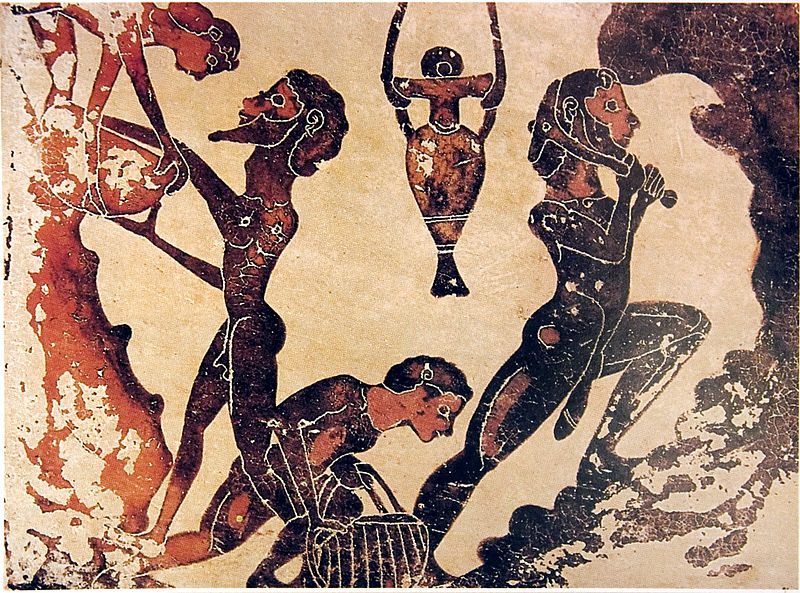
File:Mines 1.jpg
Enslaved people working in a mine

A Lover of Pleasure, A Hater of Toil

Suda entry on Aulus Postumius:

“Aulus Postumius was a man of property and the highest birth, and true to his own birth he was gossipy, loquacious, and notably given to boasting. Having taken an interest from his earliest youth in Greek education and language, he entirely immersed himself in these studies to such a degree that he scandalized the older and more dignified members of the Roman establishment. Finally, he wrote a poem and a history of practical deeds. In the preface to this work, he entreats his chance readers to grant him some pardon, if he as a Roman was not able to fully take command of the Greek language and the judicious use of it. This is a mark of absolute absurdity, and is almost as bad as if someone writing an account of athletic events like boxing or the pancration were to go to the stadium and, when the time to fight arrived, asked the pardon of the spectators in the event that he could not endure the physical exertion or the blows of his opponent. Obviously, this king of man incurs mockery and judgment out of hand. The same thing should happen to other history writers like him, lest they dare things beyond what is good. Aulus Postumius was a lover of pleasure and a hater of toil.”

Wall painting from Room H of the Villa of P. Fannius Synistor at Boscoreale

Αὖλος Ποστόμιος οἰκίας μὲν ἦν καὶ γένους πρώτου, κατὰ τὴν ἰδίαν φύσιν στωμύλος καὶ λάλος καὶ πέρπερος διαφερόντως. ἐπιθυμήσας δ’ εὐθέως ἐκ παίδων τῆς ῾Ελληνικῆς ἀγωγῆς καὶ διαλέκτου πολὺς μὲν ἦν ἐν τούτοις καὶ κατακορής, ὥστε δι’ ἐκεῖνον καὶ τὴν αἵρεσιν τὴν ῾Ελληνικὴν προσκόψαι τοῖς πρεσβυτέροις καὶ τοῖς ἀξιολογωτάτοις τῶν ῾Ρωμαίων, τέλος δὲ καὶ ποίημα γράφων καὶ πραγματικὴν ἱστορίαν ἐνεχείρησεν· ἐν ᾗ διὰ τοῦ προοιμίου παρεκάλει τοὺς ἐντυγχάνοντας συγγνώμην ἔχειν, εἰ ῾Ρωμαῖος ὢν μὴ δύνηται κατακρατεῖν τῆς ῾Ελληνικῆς διαλέκτου καὶ τῆς κατὰ χειρισμὸν οἰκονομίας· ὅπερ ἐστὶ πάσης ἀτοπίας σημεῖον, καὶ παραπλήσιον, ὡς ἂν εἴ τις ἐς τοὺς γυμνικοὺς ἀγῶνας ἀπογραψάμενος πυγμὴν ἢ παγκράτιον, παρελθὼν ἐς τὸ στάδιον, ὅτε δέοι μάχεσθαι, παραιτοῖτο τοὺς θεωμένους συγγνώμην ἔχειν, ἐὰν μὴ δύνηται τὸν πόνον ὑπομένειν μήτε τὰς πληγάς. δῆλον γὰρ ὡς εἰκὸς γέλωτα τὸν τοιοῦτον ὀφλεῖν καὶ τὴν δίκην ἐκ χειρὸς λαμβάνειν· ὅπερ ἔδει καὶ τοὺς τοιούτους ἱστοριογράφους, ἵνα μὴ κατετόλμωντοῦ καλῶς ἔχοντος. ἦν δὲ καὶ φιλήδονος καὶ φυγόπονος.

Biological Warfare in Ancient Greece

Suda, sigma 777

Solon: They [the Amphiktyones] selected this man to be their adviser for war against the Kirrhaians. When they were consulting the oracle about victory, the Pythia said: “you will not capture and raze the tower of this city before the wave of dark-eyed Amphitritê washes onto my precinct as it echoes over the wine-faced sea.”

Solon persuaded them to make Kirrhaia sacred to the god so that the sea would become a neighbor to Apollo’s precinct. And another strategy was devised by Solon against the Kirrhaians. For he turned a river’s water which used to flow in its channel into the city elsewhere.

The Kirrhaians withstood the besiegers by drinking water from wells and from rain. But [Solon] filled the river with hellebore roots and when he believed the water had enough of the drug, he returned it to its course. Then the Kirrhaians took a full portion of this water. And when they went AWOL because of diarrhea, the Amphiktyones who were stationed near the wall took it and then the city.”

Σόλων: τοῦτον εἵλοντο οἱ Κιρραίοις πολεμεῖν ᾑρημένοι σύμβουλον. χρωμένοις δὲ σφίσι περὶ νίκης ἀνεῖπεν ἡ Πυθώ: οὐ πρὶν τῆσδε πόληος ἐρείψετε πύργον ἑλόντες, πρίν κεν ἐμῷ τεμένει κυανώπιδος Ἀμφιτρίτης κῦμα ποτικλύζοι, κελαδοῦν ἐπὶ οἴνοπα πόντον. ἔπεισεν οὖν ὁ Σόλων καθιερῶσαι τῷ θεῷ τὴν Κίρραιαν, ἵνα δὴ τῷ τεμένει τοῦ Ἀπόλλωνος γένηται γείτων ἡ θάλαττα. εὑρέθη δὲ καὶ ἕτερον τῷ Σόλωνι σόφισμα ἐς τοὺς Κιρραίους: τοῦ γὰρ ποταμοῦ τὸ ὕδωρ ῥέον δι’ ὀχετοῦ ἐς τὴν πόλιν ἀπέστρεψεν ἀλλαχόσε. καὶ οἱ μὲν πρὸς τοὺς πολιορκοῦντας ἔτι ἀντεῖχον ἔκ τε φρεάτων καὶ τὸ ὕδωρ τὸ ἐκ θεοῦ πίνοντες. ὁ δὲ τοῦ ἑλλεβόρου τὰς ῥίζας ἐμβαλὼν ἐς τὸν ποταμόν, ἐπειδὴ ἱκανῶς τοῦ φαρμάκου τὸ ὕδωρ ᾔσθετο ἔχον, ἀντέστρεψεν αὖθις ἐς τὸν ὀχετόν, καὶ ἐνεφορήσαντο ἀνέδην οἱ Κιρραῖοι τοῦ ὕδατος. καὶ οἱ μὲν ὑπὸ τῆς διαρροίας ἐξέλιπον, οἱ δὲ ἐπὶ τοῦ τείχους τῆς φρουρᾶς Ἀμφικτύονες εἷλον τὴν φρουρὰν καὶ τὴν πόλιν.

Image result for medieval manuscript diarrhea
Roman d’Alexandre, Tournai 1338-1344.

From Apollonios Paradoxographus

“In his work On Plants, in the last part of the material, Theophrastos says that Eunomos, the Khian and purveyor of drugs, did not [cleanse himself/die] while drinking many draughts of hellebore. Once, even, when together with his fellow craftsmen he took over 22 drinks in one day as he sat in the agora and he did not return from his implements. Then he left to wash and eat, as he was accustomed, and did not vomit. He accomplished this after being in this custom for a long time, because he started from small amounts until he got to so many large ones. The powers of all drugs are less severe for those used to them and for some they are even useless.”

50 Θεόφραστος ἐν τῷ περὶ φυτῶν, ἐν τῇ ἐσχάτῃ τῆς πραγματείας· Εὔνομος, φησίν, ὁ Χῖος, ὁ φαρμακοπώλης, ἐλλεβόρου πίνων πλείονας πόσεις οὐκ ἐκαθαίρετο. καὶ ποτέ, ἔφη, ἐν μιᾷ ἡμέρᾳ συνθέμενος τοῖς ὁμοτέχνοις περὶ δύο καὶ εἴκοσι πόσεις ἔλαβεν ἐν τῇ ἀγορᾷ καθήμενος καὶ οὐκ ἐξανέστη ἀπὸ τῶν σκευῶν <μέχρι δείλης>. τότε δ’ ἀπῆλθεν λούσασθαι καὶ δειπνῆσαι, ὥσπερ εἰώθει, καὶ οὐκ ἐξήμεσεν.

 τοῦτο δὲ ἔπραξεν ἐν πολυχρονίῳ συνηθείᾳ γεγονώς, ἀρξάμενος ἀπὸ ὀλίγων ἕως τοσούτων πόσεων. πάντων δὲ τῶν φαρμάκων αἱ δυνάμεις ἀσθενέστεραι τοῖς συνειθισμένοις, ἐνίοις δὲ καὶ ἄπρακτοί εἰσιν.

Mondays Are Hard: Here’s How to Say “Dildo” in Ancient Greek

From the Suda

Olisbos: Genitals made from leather which the Milesian women used to use as tribades(!) and shameful people do. Widowed women also use them. Aristophanes writes “I did not see an eight-fingered dildo*/ which might be our leathered aid.”** This second part is drawn from the proverb “fig-wood aid” applied to weak people.

῎Ολισβος: αἰδοῖον δερμάτινον, ᾧ ἐχρῶντο αἱ Μιλήσιαι γυναῖκες, ὡς τριβάδες καὶ αἰσχρουργοί· ἐχρῶντο δὲ αὐτοῖς καὶ αἱ χῆραι γυναῖκες. ᾿Αριστοφάνης· οὐκ εἶδον οὐδ’ ὄλισβον ὀκταδάκτυλον, ὃς ἂν ἡμῖν σκυτίνη ‘πικουρία. παρὰ τὴν παροιμίαν, συκίνη ἐπικουρία. ἐπὶ τῶν ἀσθενῶν.

Another proverb from the Suda, s.v. misêtê:

“And Kratinus said somewhere: “hated women use dildos.”

καὶ ὁ Κρατῖνός που τοῦτο ἔφη: μισῆται δὲ γυναῖκες ὀλίσβωσι χρήσονται


Herodas, Mime 6.19 (h/t to David White for this one)

“Dear Koritto, who sewed up this crimson dildo for you?”

φίλη Κοριττοῖ, τίς κοτ᾿ ἦν ὄ σοι ράψας τὸν κόκκινον βαυβῶνα;


Hesychius may give us a clue to this one:

Bauban: To sleep

Baubô: A nurse of Demeter; it also can mean belly

βαυβᾶν· καθεύδειν

Βαυβώ· τιθήνη Δήμητρος. ps σημαίνει δὲ καὶ κοιλίαν


(!) tribades: see the Suda again s.v. Hetairistai:

“Courtesanizers: The women who are called ‘rubbers'” [or ‘grinders’? i.e. Lesbians] Ἑταιρίστριαι: αἱ καλούμεναι τριβάδες. See also Hesychius s.v. dietaristriai: “Women who rub themselves against girls in intercourse the way men do. For example, tribades.” διεταρίστριαι· γυναῖκες αἱ τετραμμέναι πρὸς τὰς ἑταίρας ἐπὶ συνουσίᾳ, ὡς οἱ ἄνδρες. οἷον τριβάδες (Plat. conv. 191 e).

*this is not an eight-shafted instrument but may instead point to the instrument’s length. See the note on the Suda-online.

**Lysistrata 109-110.

Dildogarden


The Lexicographer Photius repeats only the following definition:

Olisboi: Leather dicks

῎Ολισβοι: δερμάτινα αἰδοῖα.


The Scholion to Aristophanes’ Lysistrata 109-110 basically presents the same information:

Olisbon: A leather penis. And that is for the Milesian women. He is joking that they use dildos. The next part, “leathery aid” plays upon the proverb “fig-tree aid”, used for the weak. He has changed it to “leathery” because dildos are made of leather. They are leather-made penises which widowed women use.”

ὄλισβον: Αἰδοῖον δερμάτινον. καὶ τοῦτο εἰς τὰς Μιλησίας. παίζει δὲ ὡς τοῖς ὀλίσβοις χρωμέναις. σκυτίνη ἐπικουρία: Παρὰ τὴν παροιμίαν, συκίνη ἐπικουρία, ἐπὶ τῶν ἀσθενῶν. ὁ δὲ εἰς τὴν σκυτίνην μετέβαλε. σκύτινοι γὰρ οἱ ὄλισβοι. εἰσὶ δὲ δερμάτινα αἰδοῖα, οἷς χρῶνται αἱ χῆραι γυναῖκες.


And, the chaste H. Liddell could do no better than give this a Latin name:

ὄλισβος , ὁ,

A.penis coriaceus, Cratin.316, Ar.Lys.109, Fr.320.13.


Scholarship and Superfluous Detail

Ah, pedantry. I may have had some thoughts about it….

Artemon of Pergamon (New Jacoby: BNJ 569 F 3 [=Schol. on Pind., Pyth. 1, inscr. a])

“Golden Lyre”: The poem has been written for Hieron; Pindar allegedly said this according to the historian Artemon because Hieron promised him a golden lyre. But these kinds of things are full of superfluous detail”

Χρυσέα φόρμιγξ] γέγραπται μὲν ὁ ἐπίνικος ῾Ιέρωνι, λέγεται δὲ ὁ Πίνδαρος οὕτως ἐπιβεβλῆσθαι κατὰ ᾽Αρτέμωνα τὸν ἱστορικόν, ὅτι δὴ αὐτῶι ὁ ῾Ιέρων χρυσῆν ὑπέσχετο κιθάραν . τὰ δὲ τοιαῦτα περιεργίας πεπλήρωται.

From LSJ 1902

περιεργαζόμαι, “to take more pains than enough about a thing, to waste one’s labor” 2. “to be a busybody”

περιεργία: “over-exactness” II. “officiousness” III. “curious arts”

περίεργος: “careful overmuch” II. “done with especial care”; “overwrought, too elaborate, superfluous”

περιεργοπένητες: “poor scholars”

Suda, Kappa 504

Kataglôttismata: “tonguing-down”: all sorts of kisses. Fabrications. All kinds of massages with sweet oils. Also, superfluous words. Or the “tonguing-down” is a rather excessive kiss. Or, it is flattery”

Καταγλωττίσματα: περίεργα φιλήματα. καταπλάσματα, παντοῖαι μυραλοιφίαι, ἢ περιλαλήματα. ἢ εἶδος φιλήματος περιεργότερον τὸ καταγλώττισμα: ἢ κολάκευμα.

Breviary of Renaud de Bar, France, 1302-1303: http://www.lazerhorse.org/2015/05/17/medieval-art-weird-manuscript/

A Kharak-ter from Pergamon

Suda, s.v. Kharaks

Kharaks, from Pergamon, a priest and a philosopher. In an old book I found an epigram that goes like this:

“I am Kharaks, a priest from the ancient citadel of Pergamon
where Telephos, the blameless son of blameless Herakles,
once warred with city-sacking Achilles”.

Kharaks is the most recent of those poets after Augustus by far. Or, at least he makes mention of Augustus, who at that point was already Caesar for a long time in his second book. And in is seventh, he talks about Nero and those who ruled after him. He composed a Hellenika and Histories of forty books.”

Χάραξ Περγαμηνός, ἱερεὺς καὶ φιλόσοφος, ὡς εὗρον ἐν ἀρχαίωι βιβλίωι ἐπίγραμμα οὔτως ἔχον·

εἰμὶ Χάραξ ἱερεὺς γεραρῆς ἀπὸ Περγάμου ἄκρης,
ἔνθα ποτὲ πτολέμιξεν ᾽Αχιλλῆι πτολιπόρθωι Τήλεφος,
῾Ηρακλῆος ἀμύμονος υἱὸς ἀμύμων…

ἔστι δὲ τῶν μετὰ Αὔγουστον πολλῶι νεώτερος· μέμνηται γοῦν ἐν τῶι β̄ τῶν βιβλίων Αὐγούστου ὡς πάλαι γενομένου Καίσαρος, καὶ ἐν τῶι ζ̄ Νέρωνος καὶ τῶν μετ᾽ αὐτὸν βασιλευσάντων. ἔγραψεν ῾Ελληνικῶν τε καὶ ** ῾Ιστοριῶν βιβλία μ̄..

Acropolis - Bergama (Pergamon) - Turkey - 04 (5747168893).jpg
From Wikimedia Commons, Acropolis of Pergamon By Adam Jones from Kelowna, BC, Canada04, CC BY-SA 2.0, 

Prometheus, Philosopher King and the Invention of Marriage

Suda Pi 2506

“Prometheus: Know that during the period of the Judean Judges, Prometheus was known among the Greeks as the one who invented academic philosophy. People say that he crafted human beings because he rendered those who were idiots capable of understanding philosophy.

And there was also Epimetheus, who invented the art of music and, in addition, Atlas, who first interpreted astronomy which is why they claim he “holds up the sky”. There is also Argos of many eyes because he was seen by many people, when he was really the one who first established technical knowledge. Then there was also a prophetess named the Sibyl.

When Pharaoh, who is also called Parakhô, was king in Egypt, then Kekrops was king in Athens among the Greeks. He was called Diphyes [“double-formed”] due to the size or because he established a law that women who were still virgins should be given in marriage to a single man, after he named them brides. Previously women of the land had sex like animals. For a woman was no man’s, but gave herself like a prostitute to anyone.  No one knew whose son or daughter a child was—instead the mother used to claim and give the child to which ever man it seemed best to her to claim.

Kekrops did this because he came from Egypt and was ignorant of the law which Hephaestus had made when he ruled there before. For he claimed that it was because of this sinful intercourse that Athens was destroyed by the flood. After that point, the people who lived in Greece lived more prudently. Kekrops ruled for 40 years.”

Προμηθεύς· ὅτι ἐπὶ τῶν Κριτῶν τῶν ᾿Ιουδαίων παρ’ ῞Ελλησιν ἐγνωρίζετο Προμηθεύς, ὃς εὗρε πρῶτος τὴν γραμματικὴν φιλοσοφίαν. περὶ οὗ λέγουσιν, ὅτι ἀνθρώπους ἔπλασε, καθό τινας ἰδιώτας ὄντας ἐποίησεν ἐπιγινώσκειν σοφίαν. καὶ ᾿Επιμηθεύς, ὃς ἐξεῦρε τὴν μουσικήν· καὶ ῎Ατλας, ὃς τὴν ἀστρονομίαν ἡρμήνευσε· διὸ λέγουσιν, ὅτι τὸν οὐρανὸν βαστάζει. καὶ ὁ πολυόμματος ῎Αργος, διὸ περίβλεπτος ἦν, καθότι τὴν τεχνικὴν ἐπιστήμην αὐτὸς ἐπενόησε πρῶτος. ἦν δὲ τότε

καὶ μάντις Σιβύλλα. βασιλεύοντος παρ’ Αἰγυπτίοις Φαραὼ τοῦ καὶ Παραχώ, παρ’ ῞Ελλησιν ἐν ᾿Αθήναις ἐβασίλευε Κέκροψ, ὃς ἐκλήθη Διφυὴς διὰ τὸ τοῦ σώματος μέγεθος, ἢ ὅτι νόμον ἐξέθετο, ὥστε τὰς γυναῖκας παρθένους ἔτι οὔσας ἑνὶ ἐκδίδοσθαι ἀνδρί, καλέσας αὐτὰς νύμφας· πρότερον γὰρ αἱ τῆς χώρας ἐκείνης γυναῖκες θηριώδη μίξιν ἐμίγνυντο· οὐδενὸς γὰρ ἦν γυνή, ἀλλὰ ἐδίδου ἑαυτὴν εἰς πορνείαν ἑκάστῳ. οὐδεὶς οὖν ᾔδει, τίνος ἦν υἱὸς ἢ θυγάτηρ, ἀλλ’ ὡς ἂν ἔδοξε

τῇ μητρί, ἔλεγε καὶ ἐδίδου τὸ τεχθὲν ᾧ ἐβούλετο ἀνδρί. τοῦτο δὲ ἐποίησεν ὁ Κέκροψ, ὡς ἐξ Αἰγύπτου καταγόμενος καὶ τὴν νομοθεσίαν ῾Ηφαίστου τοῦ βασιλεύσαντος ἐκεῖ οὐκ ἀγνοήσας. ἔλεγε γάρ, ὅτι διὰ τὴν τοιαύτην τῆς ἀσελγείας συνήθειαν κατεκλύσθη ἡ ᾿Αττική. ἀπὸ τότε οὖν ἐσωφρονίσθησαν οἱ κατοικοῦντες τὴν τῶν ῾Ελλήνων χώραν. ἐβασίλευσε δὲ Κέκροψ ἔτη ν′.

Related image
Black Figure vase with Promethus, from Pinterest

Tawdry Tuesday: Proctological Proverb Edition

Arsenius, 34a1

“May you fall into Hades’ asshole”: [a curse]: may you die.

῞Αιδου πρωκτῷ περιπέσῃς: ἤγουν τελευτήσῃς.

Note: Even though Ancient Greek prôktos can merely mean “rear end” (as in butt), it most often means ‘anus’ in comedy and insults. Also, I wanted to use something profane and given the British/American divide on arse/ass, I decided just to go with “asshole” because it is funnier. In addition, I know that dative + peri for in the first example is not properly fall into, but “fall around, trace around, linger in” does not have the same ‘punch’.

Diogenianus (v.1 e cod. Marz. 2.42)

“I wish you’d fall into Hades’ asshole”: this is clear

῞Αιδου πρωκτῷ περιπέσοις: δῆλον.

Diogenianus (v.2 e cod. Vindob. 133, 1.97 )

“I wish you’d fall into Hades’ asshole”: Used for cursing someone

Αἵδου πρωκτῷ περιπέσοις: ἐπὶ τῶν καταρωμένων τινί.

Diogenianus, 3.58

“The asshole survives the bath” [or, “Ass surpasses the bath”]. Whenever someone is not able to wash himself, but his bowels still assail him. This is a proverb used for things done uselessly.

Πρωκτὸς λουτροῦ περιγίνεται: ὅταν τις μὴ δύνηται ἀπονίψασθαι, ἀλλ’ ἡ κοιλία αὐτῷ ἐπιφέρηται. λέγεται ἡ παροιμία ἐπὶ τῶν ἀνωφελῶς πραττομένων.

Michael Apostolius, 14.78

“The asshole survives the bath”: This proverb is used for things done uselessly and done for show. For people with thick asses and potbellies are not able to wash themselves off easily.”

Πρωκτὸς λουτροῦ περιγίνεται: ἐπὶ τῶν ἀνωφελῶν καὶ εἰκῇ πραττομένων ἐλέγετο· οἱ γὰρ παχύπρωκτοι καὶ προγάστορες οὐ δύνανται ἑαυτοὺς ἀπονίψασθαι εὐπετῶς.

Zenobius, Vulg. 1.52

“It was cured by Akesias”: this is a proverb for when things are healed for the worse. Aristophanes provides the proverb in tetrameters: “Akesias healed his asshole.”

Ἀκεσίας ἰάσατο· ἐπὶ τῶν ἐπὶ τὸ χεῖρον ἰωμένων. ὅλην δὲ Ἀριστοφάνης ἐν τετραμέτροις τὴν παροιμίαν ἐκφέρει, λέγων· Ἀκεσίας τὸν πρωκτὸν ἰάσατο.

Suda, s.v. Ἀφευθεὶς

“Singed around the asshole:” Aristophanes has this instead of being “all burned up”

Ἀφευθεὶς τὸν πρωκτόν: Ἀριστοφάνης ἀντὶ τοῦ φλογισθείς.

Balneum Tripergulae – particolare da miniatura del Codice Angelico del “De Balneis Puteolanis� di Pietro da Eboli.

Bonus: Suda on defecation (And there is more of this)

Apopatêma: this is the same as ‘dung’ Eupolis has in his Golden Age: “What is that man? Shit of a fox.” And Kratinus has in Runaway Slaves: I knocked Kerkyon out at dawn when I found him shitting in the vegetables.” We also find the participle apopatêsomenoi (“they are about to shit”) which means they are going to evacuate the feces from their bodies. But patos also means path.

Aristophanes writes “No one sacrifices the old way any more or even enters the temple except for the more than ten thousand who want to shit. So, apopatos is really the voiding of the bowels. Aristophanes also says about Kleonymous: “He went off to shit after he got he army and shat for ten months in the golden mountains? For how long was he closing his asshole? A whole turn of the moon?”

Ἀποπάτημα: αὐτὸ τὸ σκύβαλον. Εὔπολις Χρυσῷ γένει: τί γάρ ἐστ’ ἐκεῖνος; ἀποπάτημ’ ἀλώπεκος. Κρατῖνος Δραπέτισι: τὸν Κερκύονά τε ἕωθεν ἀποπατοῦντ’ ἐπὶ τοῖς λαχάνοις εὑρὼν ἀπέπνιξα. καὶ Ἀποπατησόμενοι, τὴν κόπρον κενώσοντες. πάτος δὲ ἡ ὁδός. Ἀριστοφάνης: οὐδεὶς θύει τοπαράπαν οὐδ’ εἰσέρχεται, πλὴν ἀποπατησόμενοί γε πλεῖν ἢ μύριοι. Ἀπόπατος γὰρ ἡ κένωσις τῆς γαστρός. καὶ Ἀριστοφάνης περὶ Κλεωνύμου φησίν: εἰς ἀπόπατον ᾤχετο στρατιὰν λαβὼν κἄχεζεν ὀκτὼ μῆνας ἐπὶ χρυσῶν ὄρων. πόσου δὲ τὸν πρωκτὸν χρόνου ξυνήγαγε; τῇ πανσελήνῳ.

From Henderson’s Maculate Muse

proktos

Eubulus, fr. 106

“This is an asshole and you are always full of nonsense.
For the asshole is tongueless and chatty at the same time.

(A.) πρωκτὸς μὲν οὖν οὗτός <γε>· σὺ δὲ ληρεῖς ἔχων.
οὗτος γὰρ αὑτός ἐστιν ἄγλωττος λάλος,

Breakfast of Champions (NSFW)?

This is probably not safe for work.

Aristophanes, Wealth 295

“You’re following with your dicks out; and you will eat breakfast [like] goats”

ἕπεσθ’ ἀπεψωλημένοι· τράγοι δ’ ἀκρατιεῖσθε.

From the Suda

“You will breakfast”: Aristophanes in Wealth has “You will breakfast like goats”. This means you will breakfast with an exposed penis: you will do wild things like goats, since after sex, goats lick the penis. [So this means] you will lick the end of a dick like a goat.”

Ἀκρατιεῖσθε: Ἀριστοφάνης Πλούτῳ: τράγοι δ’ ἀκρατιεῖσθε. τουτέστιν ἀπεψωλημένοι ἀκρατιεῖσθε: ἀντὶ τοῦ ὡς τράγοι ἀκρατῆ πράξετε, ἐπεὶ μετὰ τὴν συνουσίαν οἱ τράγοι λείχουσι τὸ αἰδοῖον. τὸ ἄκρον λείξετε ὡς τράγοι.

The scholia to this passage have a few different interpretations:
Scholia ad. Arist. Plut.

“[They used to thing it means] “You are licking your balls like goats”. Clearly, this means: you are licking genitals.”

ἤγουν δίκην τράγων τοὺς ὄρχεις λείχετε. P. λείχετε τὰ αἰδοῖα δηλονότι. Br.

Scholia recentiora Tzetzae

“akratieisthe” stands in for “you would eat”. For akratismos means eating first thing in the morning. Or, “you will do wild things”, since after intercourse, goats lick their own genitals.”

τὸ δ’ “ἀκρατιεῖσθε” ἀντὶ τοῦ “φάγοιτε”· ἀκρατισμὸς γὰρ λέγεται τὸ πρωϊνὸν φαγεῖν. ἢ “ἀκρατῆ πράσσετε”, ἐπειδὴ μετὰ συνουσίαν οἱ τράγοι λείχουσι τὰ αἰδοῖα ἑαυτῶν.

Image result for Ancient Greek goat

Scholarship and Superfluous Detail

Ah, pedantry. I may have had some thoughts about it….

Artemon of Pergamon (New Jacoby: BNJ 569 F 3 [=Schol. on Pind., Pyth. 1, inscr. a])

“Golden Lyre”: The poem has been written for Hieron; Pindar allegedly said this according to the historian Artemon because Hieron promised him a golden lyre. But these kinds of things are full of superfluous detail”

Χρυσέα φόρμιγξ] γέγραπται μὲν ὁ ἐπίνικος ῾Ιέρωνι, λέγεται δὲ ὁ Πίνδαρος οὕτως ἐπιβεβλῆσθαι κατὰ ᾽Αρτέμωνα τὸν ἱστορικόν, ὅτι δὴ αὐτῶι ὁ ῾Ιέρων χρυσῆν ὑπέσχετο κιθάραν . τὰ δὲ τοιαῦτα περιεργίας πεπλήρωται.

From LSJ 1902

περιεργαζόμαι, “to take more pains than enough about a thing, to waste one’s labor” 2. “to be a busybody”

περιεργία: “over-exactness” II. “officiousness” III. “curious arts”

περίεργος: “careful overmuch” II. “done with especial care”; “overwrought, too elaborate, superfluous”

περιεργοπένητες: “poor scholars”

Suda, Kappa 504

Kataglôttismata: “tonguing-down”: all sorts of kisses. Fabrications. All kinds of massages with sweet oils. Also, superfluous words. Or the “tonguing-down” is a rather excessive kiss. Or, it is flattery”

Καταγλωττίσματα: περίεργα φιλήματα. καταπλάσματα, παντοῖαι μυραλοιφίαι, ἢ περιλαλήματα. ἢ εἶδος φιλήματος περιεργότερον τὸ καταγλώττισμα: ἢ κολάκευμα.

Breviary of Renaud de Bar, France, 1302-1303: http://www.lazerhorse.org/2015/05/17/medieval-art-weird-manuscript/