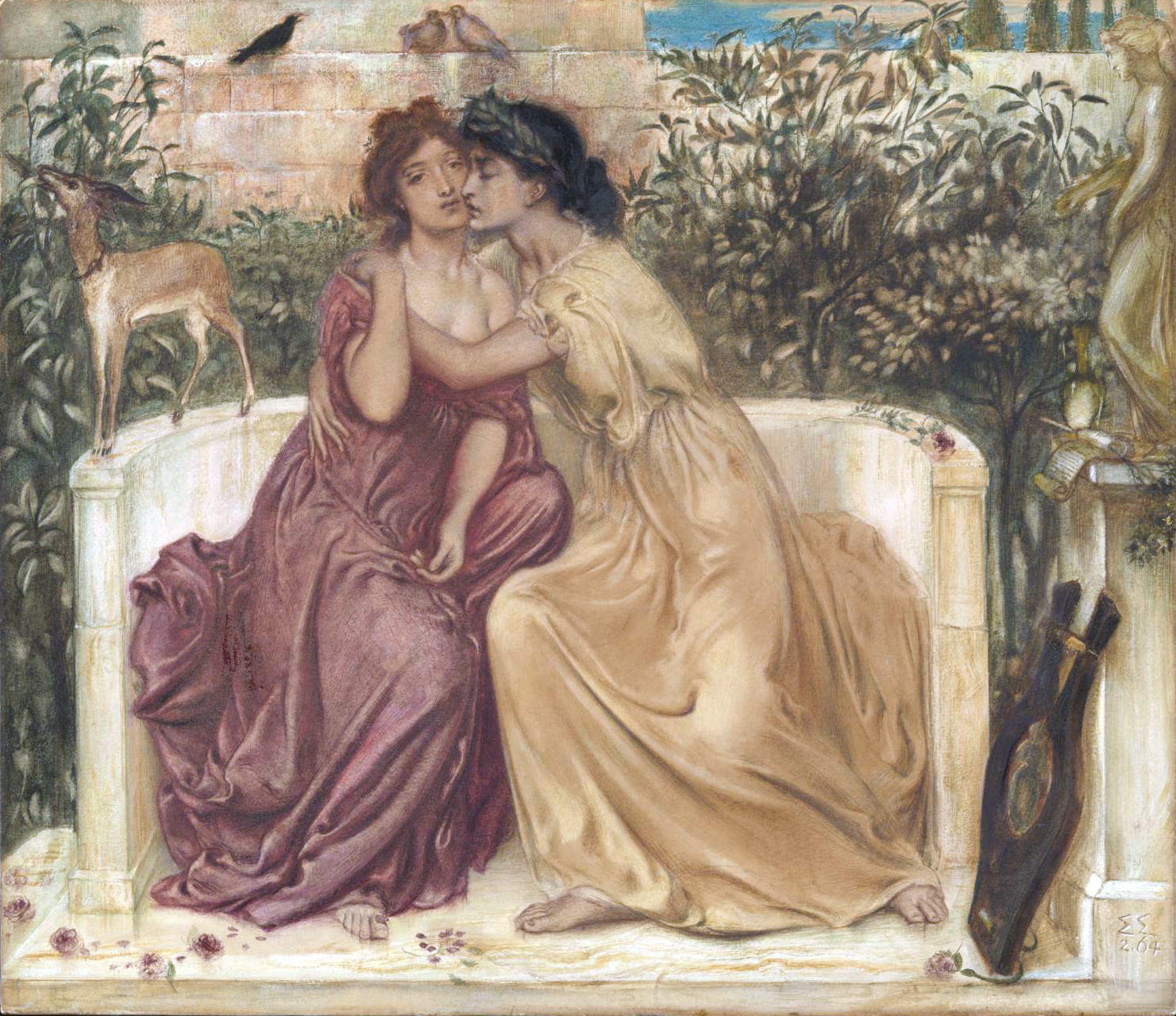
The epick writers have found the proemial part of the poem such an addition to their undertaking, that they have almost unanimously adopted the first lines of Homer, and the reader needs only be informed of the subject, to know in what manner the poem will begin.
But this solemn repetition is hitherto the peculiar distinction of heroick poetry; it has never been legally extended to the lower orders of literature, but seems to be considered as an hereditary privilege, to be enjoyed only by those who claim it from their alliance to the genius of Homer.
The rules which the injudicious use of this prerogative suggested to Horace, may indeed be applied to the direction of candidates for inferior fame; it may be proper for all to remember, that they ought not to raise expectation which it is not in their power to satisfy, and that it is more pleasing to see smoke brightening into flame, than flame sinking into smoke.
This precept has been long received, both from regard to the authority of Horace, and its conformity to the general opinion of the world; yet there have been always some, that thought it no deviation from modesty to recommend their own labours, and imagined themselves entitled by indisputable merit to an exemption from general restraints, and to elevations not allowed in common life. They perhaps believed, that when, like Thucydides, they bequeathed to mankind κτημα ες αει, an estate for ever, it was an additional favour to inform them of its value.
It may, indeed, be no less dangerous to claim, on certain occasions, too little than too much. There is something captivating in spirit and intrepidity, to which we often yield, as to a resistless power; nor can he reasonably expect the confidence of others, who too apparently distrusts himself.
Plutarch, in his enumeration of the various occasions on which a man may without just offence proclaim his own excellencies, has omitted the case of an author entering the world; unless it may be comprehended under his general position, that a man may lawfully praise himself for those qualities which cannot be known but from his own mouth; as when he is among strangers, and can have no opportunity of an actual exertion of his powers. That the case of an author is parallel will scarcely be granted, because he necessarily discovers the degree of his merit to his judges when he appears at his trial. But it should be remembered, that unless his judges are inclined to favour him, they will hardly be persuaded to hear the cause.
I am just returned from one of my long absences, having been at my other home for five weeks past. having more leisure there than here for reading, I amused myself with reading seriously Plato’s republic. I am wrong however in calling it amusement, for it was the heaviest task-work I ever went through. I had occasionally before taken up some of his other works, but scarcely ever had patience to go through a whole dialogue. while wading thro’ the whimsies, the puerilities, & unintelligible jargon of this work, I laid it down often to ask myself how it could have been that the world should have so long consented to give reputation to such nonsense as this? how the soi-disant Christian world indeed should have done it, is a piece of historical curiosity. but how could the Roman good sense do it? and particularly how could Cicero bestow such eulogies on Plato? altho’ Cicero did not wield the dense logic of Demosthenes, yet he was able, learned, laborious, practised in the business of the world, & honest. he could not be the dupe of mere style, of which he was himself the first master in the world.
with the moderns, I think, it is rather a matter of fashion and authority. education is chiefly in the hands of persons who, from their profession, have an interest in the reputation and the dreams of Plato. they give the tone while at school, and few, in their after-years, have occasion to revise their college opinions. but fashion and authority apart, and bringing Plato to the test of reason, take from him his sophisms, futilities, & incomprehensibilities, and what remains? in truth he is one of the race of genuine Sophists, who has escaped the oblivion of his brethren, first by the elegance of his diction, but chiefly by the adoption & incorporation of his whimsies into the body of artificial Christianity. his foggy mind, is for ever presenting the semblances of objects which, half seen thro’ a mist, can be defined neither in form or dimension. yet this which should have consigned him to early oblivion really procured him immortality of fame & reverence. the Christian priesthood, finding the doctrines of Christ levelled to every understanding, and too plain to need explanation, saw, in the mysticisms of Plato, materials with which they might build up an artificial system which might, from it’s indistinctness, admit everlasting controversy, give employment for their order, and introduce it to profit, power & pre-eminence. the doctrines which flowed from the lips of Jesus himself are within the comprehension of a child; but thousands of volumes have not yet explained the Platonisms engrafted on them: and for this obvious reason that nonsense can never be explained. their purposes however are answered.
Plato is canonised: and it is now deemed as impious to question his merits as those of an Apostle of Jesus. he is peculiarly appealed to as an advocate of the immortality of the soul; and yet I will venture to say that were there no better arguments than his in proof of it, not a man in the world would believe it. it is fortunate for us that Platonic republicanism has not obtained the same favor as Platonic Christianity; or we should now have been all living, men, women and children, pell mell together, like the beasts of the field or forest. yet ‘Plato is a great philosopher,’ said La Fontaine. but says Fontenelle ‘do you find his ideas very clear’?—‘oh no! he is of an obscurity impenetrable.’—‘do you not find him full of contradictions?’—‘certainly, replied La Fontaine, he is but a Sophist.’ yet immediately after, he exclaims again, ‘oh Plato was a great philosopher.’—Socrates had reason indeed to complain of the misrepresentations of Plato; for in truth his dialogues are libels on Socrates.
—but why am I dosing you with these Ante-diluvian topics? because I am glad to have some one to whom they are familiar, and who will not recieve them as if dropped from the moon. our post-revolutionary youth are born under happier stars than you and I were. they acquire all learning in their mothers’ womb, and bring it into the world ready-made. the information of books is no longer necessary; and all knolege which is not innate, is in contempt, or neglect at least. every folly must run it’s round; and so, I suppose, must that of self-learning, & self sufficiency; of rejecting the knolege acquired in past ages, and starting on the new ground of intuition. when sobered by experience I hope our successors will turn their attention to the advantages of education. I mean of education on the broad scale, and not that of the petty academies, as they call themselves, which are starting up in every neighborhood, and where one or two men, possessing Latin, & sometimes Greek, a knolege of the globes, and the first six books of Euclid, imagine & communicate this as the sum of science. they commit their pupils to the theatre of the world with just taste enough of learning to be alienated from industrious pursuits, and not enough to do service in the ranks of science.
we have some exceptions indeed. I presented one to you lately, and we have some others. but the terms I use are general truths. I hope the necessity will at length be seen of establishing institutions, here as in Europe, where every branch of science, useful at this day, may be taught in it’s highest degrees. have you ever turned your thoughts to the plan of such an institution? I mean to a specification of the particular sciences of real use in human affairs, and how they might be so grouped as to require so many professors only as might bring them within the views of a just but enlightened economy? I should be happy in a communication of your ideas on this problem, either loose or digested. but to avoid my being run away with by another subject, and adding to the length and ennui of the present letter, I will here present to mrs Adams & yourself the assurance of my constant & sincere friendship and respect.
I am one of the people most exempt from this feeling, and I neither like it nor respect it, although the world has taken up with honoring it with particular favor, as if at a set price. They dress it up in sagacity, virtue, conscience – a stupid and ugly ornament.
The Italians in a more reasonable way have baptized it with the name of malignity. For it is a quality which is always harmful, always mad, always cowardly and base. The Stoics forbid this feeling to their wise people.
But the old story has it that Psammeticus, the king of Egypt, having been defeated and taken by Cambyses, the king of the Persians, and seeing his captive daughter pass before him clothed as a servant and sent to get water, kept himself quiet and said not a word while all of his friends were crying and lamenting around him, and fixed his eyes on the ground. Again, seeing his son led to his death, he held himself in the same manner. But having caught sight of one of his domestic servants led among the captives, he began to beat his head and display great suffering.
This could be compared with what we have recently seen of one of our princes, who, having heard at Trent, where he was, the recent report of the death of his brother, the one in whom the support and the honor of all his house consisted, and soon after that hearing about the death of his younger brother, the second hope, and held up against these two reversals with an exemplary constancy. When, a few days later, one of his people died, he let himself entirely loose at this last accident, and dismissing his resolution, he abandoned himself to grief and regrets in such a manner that some advanced the argument that he was not yet touched to the quick until this last disaster. But in truth, having been otherwise packed full with sadness, the slight overflow broke the barriers of his patience. I say that we could make a similar judgment about our story if it had not been added that Cambyses, enquiring of Psammticus why, having not been moved by the misfortune of his son and his daughter, nevertheless bore the bad luck of one of his friends so badly. He responded, ‘It is because only this last grief could be marked by tears, the first two having far surpassed what could be expressed.’
Perhaps related to this is the conceit of the ancient painter who represented, at the sacrifice of Iphigenia, the grief of the assistants according the the degrees of interest which each one bore to the death of this beautiful, innocent girl. Having expressed the final efforts of his art, when it came to the maiden’s daughter, he portrayed him with a covered face, as though no expression could convey this degree of suffering. There you have the same reason why the poets portray the miserable mother Niobe, overflowing with sadness for having first lost seven sons and then seven daughters, finally transformed into a rock
….stiffened by her misfortunes… [Ovid]
to express the dismal, silent, and unhearing stupidity which comes over us when the accidents of the world overwhelm us and surpass our ability to bear them. In truth, the effect of grief, if it is to be extreme, should shock the entire soul and prevent all of its actions, as when at some hot alarm of a new disaster it comes upon us to feel ourselves seized, numb, and precluded from all movement, in such a way that the soul, relaxing after the tears and the wailing, seems to let go of itself, to untangle itself, and to set itself out in greater space and at its ease.
And the voice’s path was scarcely then cleared by grief… [Vergil]
In the war which King Ferdinand conducted against the widow of King John of Hungary, around Buda, Raisciac, a German captain, took particular notice of a knight for having done exceedingly well in the melee, and lamented him with the common lament; but, curious to know who he was, the body was disarmed and Raisciac saw that it was his own son. In the middle of the public weeping, he alone let out neither cry nor tear, fixed on his feet, his eyes immobile, looking at him fixedly until the impact of the sadness froze his vital spirits and rendered him stone cold dead on the earth.
One who can say how much they burn is not burning much… [Petrarch]
say the lovers who wish to represent an unsustainable passion.
…which takes away all of my senses. For as soon as I saw you, Lesbia, there is nothing left for me to say in my madness. But my tongue goes slack, the slight flame under my limbs fades away, my ears ring with their own sound, and both eyes are covered in night. [Catullus]
Nor is it in the live and more burning heat of feeling that we are set to deploy our plaints and pleadings; the soul is then weighed down with deep thoughts, and the body worn out and languishing with love.
Sometimes this engenders the fortuitous fall which comes over lovers so out of season, and that coldness which seizes them by force from extreme ardor, in the very bosom of joy. All passions which let themselves be tasted and lingered over are just mediocre.
Light cares speak, but huge ones stand stupefied. [Seneca]
The surprise of an unexpected pleasure astonishes us in the same way.
As she saw me coming, and saw, madly, Trojan arms around, she froze in the middle of the sight, terrified by these great portents, the heat left her bones, she collapsed, and finally speaks after a long time with some difficulty. [Vergil]
Other than the Roman woman who died of surprise to see her son come back from the rout at Cannae, Sophocles and Dionysius the tyrant, who passed away from ease, and Talva who died in Corsica reading the news of the honors which the Senate of Rome had decreed for him, we understand in our own time that Pope Leo X, having been informed of the capture of Milan, which he had desperately wished for, was taken with such an excess of joy that he was taken by a fever and died.
And, for a more remarkable testimony of human stupidity, it has been remarked by the ancients that Diodorus the dialectitian died on the spot after being taken by an extreme feeling of shame, in his school and in public not being able to expand upon an argument which someone had made to him. I am not much in the grip of these violent passions. I have naturally hard apprehension; and I encrust and thicken it every day with reasoning.
Adrien Guignet, ‘Meeting Between Cambyses II and Psammetichus III’
Je suis des plus exempts de cette passion, et ne l’ayme ny l’estime, quoy que le monde ayt prins, comme à prix faict, de l’honorer de faveur particuliere. ils en habillent la sagesse, la vertu, la conscience : sot et monstrueux ornement.
Les Italiens ont plus sortablement baptisé de son nom la malignité. Car c’est une qualité tousjours nuisible, tousjours folle, et, comme tousjours couarde et basse, les Stoïciens en défendent le sentiment à leurs sages.
Mais le conte dit, que Psammenitus, Roy d’Égypte, ayant esté deffait et pris par Cambisez, Roy de Perse, voyant passer devant luy sa fille prisonniere habillée en servante, qu’on envoyoit puiser de l’eau, tous ses amis pleurans et lamentans autour de luy, se tint coy sans mot dire, les yeux fichez en terre : et voyant encore tantost qu’on menoit son fils à la mort, se maintint en ceste mesme contenance ; mais qu’ayant apperçeu un de ses domestiques conduit entre les captifs, il se mit à battre sa teste, et mener un dueil extreme.
Cecy se pourroit apparier à ce qu’on vid dernierement d’un Prince des nostres, qui, ayant ouy à Trante, où il estoit, nouvelles de la mort de son frere aisné, mais un frere en qui consistoit l’appuy et l’honneur de toute sa maison, et bien tost apres d’un puisné, sa seconde esperance, et ayant soustenu ces deux charges d’une constance exemplaire, comme quelques jours apres un de ses gens vint à mourir, il se laissa emporter à ce dernier accident, et, quittant sa resolution, s’abandonna au dueil et aux regrets, en maniere qu’aucuns en prindrent argument, qu’il n’avoit esté touché au vif que de cette derniere secousse. Mais à la vérité ce fut, qu’estant d’ailleurs plein et comblé de tristesse, la moindre sur-charge brisa les barrieres de la patience. Il s’en pourroit (di-je) autant juger de nostre histoire, n’estoit qu’elle adjouste que Cambises s’enquerant à Psammenitus, pourquoy ne s’estant esmeu au malheur de son fils et de sa fille, il portoit si impatiemment celuy d’un de ses amis : C’est, respondit-il, que ce seul dernier desplaisir se peut signifier par larmes, les deux premiers surpassans de bien loin tout moyen de se pouvoir exprimer. A l’aventure reviendroit à ce propos l’invention de cet ancien peintre, lequel, ayant à representer au sacrifice de Iphigenia le dueil des assistans, selon les degrez de l’interest que chacun apportoit à la mort de cette belle fille innocente, ayant espuisé les derniers efforts de son art, quand se vint au pere de la fille, il le peignit le visage couvert, comme si nulle contenance ne pouvoit representer ce degré de dueil. Voyla pourquoy les poetes feignent cette misérable mere Niobé, ayant perdu premierement sept fils, et puis de suite autant de filles, sur-chargée de pertes, avoir esté en fin transmuée en rochier,
Diriguisse malis,
pour exprimer cette morne, muette et sourde stupidité qui nous transit, lors que les accidens nous accablent surpassans nostre portée. De vray, l’effort d’un desplaisir, pour estre extreme, doit estonner toute l’ame, et lui empescher la liberté de ses actions : comme il nous advient à la chaude alarme d’une bien mauvaise nouvelle, de nous sentir saisis, transis, et comme perclus de tous mouvemens, de façon que l’ame se relaschant apres aux larmes et aux plaintes, semble se desprendre, se demesler et se mettre plus au large, et à son aise,
Et via vix tandem voci laxata dolore est.
En la guerre que le Roy Ferdinand fit contre la veufve de Jean, Roy de Hongrie, autour de Bude, Raïsciac, capitaine Allemand, voïant raporter le corps d’un homme de cheval, à qui chacun avoit veu excessivement bien faire en la meslée, le plaignoit d’une plainte commune ; mais curieux avec les autres de reconnoistre qui il estoit, apres qu’on l’eut desarmé, trouva que c’estoit son fils. Et, parmi les larmes publicques, luy seul se tint sans espandre ny vois ny pleurs, debout sur ses pieds, ses yeux immobiles, le regardant fixement, jusques à ce que l’effort de la tristesse venant à glacer ses esprits vitaux, le porta en cet estat roide mort par terre.
Chi puo dir com’ egli arde é in picciol fuoco,
disent les amoureux, qui veulent representer une passion insupportable
misero quod omnes
Eripit sensus mihi. Nam simul te,
Lesbia, aspexi, nihil est super mi
Quod loquar amens.
Lingua sed torpet, tenuis sub artus
Flamma demanat, sonitu suopte
Tinniunt aures, gemina teguntur
Lumina nocte.
Aussi n’est ce pas en la vive et plus cuysante chaleur de l’accés que nous sommes propres à desployer nos plaintes et nos persuasions : l’ame est lors aggravée de profondes pensées, et le corps abbatu et languissant d’amour.
Et de là s’engendre par fois la défaillance fortuite, qui surprent les amoureux si hors de saison, et cette glace qui les saisit par la force d’une ardeur extreme, au giron mesme de la jouyssance. Toutes passions qui se laissent gouster et digerer, ne sont que mediocres.
Curae leves loquuntur, ingentes stupent.
La surprise d’un plaisir inespéré nous estonne de mesme,
Ut me conspexit venientem, et Troïa circum
Arma amens vidit, magnis exterrita monstris,
Diriguit visu in medio, calor ossa reliquit,
Labitur, et longo vix tandem tempore fatur.
Outre la femme Romaine, qui mourut surprise d’aise de voir son fils revenu de la route de Cannes, Sophocles et Denis le Tyran, qui trespasserent d’aise, et Talva qui mourut en Corsegue, lisant les nouvelles des honneurs que le Senat de Rome luy avoit decernez, nous tenons en nostre siècle que le Pape Leon dixiesme, ayant esté adverty de la prinse de Milan, qu’il avoit extremement souhaitée, entra en tel excez de joye, que la fievre l’en print et en mourut. Et pour un plus notable tesmoignage de l’imbécilité humaine, il a esté remarqué par les anciens que Diodorus le Dialecticien mourut sur le champ espris d’une extreme passion de honte, pour en son eschose et en public ne se pouvoir desvelopper d’un argument qu’on luy avoit faict. Je suis peu en prise de ces violentes passions. J’ay l’apprehension naturellement dure ; et l’encrouste et espessis tous les jours par discours.
At last Chips had something tangible that he could tackle. “Oh, THAT!” he answered, scornfully. “Well, I—umph—I admit that I don’t agree with the new pronunciation. I never did. Umph—a lot of nonsense, in my opinion. Making boys say ‘Kickero’ at school when— umph—for the rest of their lives they’ll say ‘Cicero’—if they ever—umph—say it at all. And instead of ‘vicissim’— God bless my soul—you’d make them say, ‘We kiss ‘im’! Umph— umph!” And he chuckled momentarily, forgetting that he was in Ralston’s study and not in his own friendly form room.
“Well, there you are, Mr. Chipping—that’s just an example of what I complain of. You hold one opinion and I hold another, and, since you decline to give way, there can’t very well be any alternative. I aim to make Brookfield a thoroughly up-to-date school. I’m a science man myself, but for all that I have no objection to the classics—provided that they are taught efficiently. Because they are dead languages is no reason why they should be dealt with in a dead educational technique. I understand, Mr. Chipping, that your Latin and Greek lessons are exactly the same as they were when I began here ten years ago?”
Chips answered, slowly and with pride: “For that matter—umph —they are the same as when your predecessor—Mr. Meldrum —came here, and that—umph—was thirty-eight years ago. We began here, Mr. Meldrum and I—in—umph—in 1870. And it was—um—Mr. Meldrum’s predecessor, Mr. Wetherby—who first approved my syllabus. ‘You’ll take the Cicero for the fourth,’ he said to me. Cicero, too—not Kickero!”
“And worst of all, he wouldn’t even say my name correctly!”
In our now annual tradition, we are re-posting this list with more names and updated links. Most of the evidence for these authors has been collected only in Wikipedia. I have added new translations and new names over the past few years (especially among the philosophers). Always happy to have new names and links suggested.
I originally received a link to the core list in an email from my undergraduate poetry teacher, the amazing poet and translator Olga Broumas. The post is on tumblr on a page by DiasporaChic, bit the original author is Terpsikeraunos.
Women in ancient Greece and Rome with surviving works or fragments
PHILOSOPHY
Here is a list of Women philosophers with testimonia and fragments (with French translations and commentary).
Aesara of Lucania: “Only a fragment survives of Aesara of Lucania’s Book on Human Nature, but it provides a key to understanding the philosophies of Phintys, Perictione, and Theano II as well. Aesara presents a familiar and intuitive natural law theory. She says that through the activity of introspection into our own nature – specifically the nature of a human soul – we can discover not only the natural philosophic foundation for all of human law, but we can also discern the technical structure of morality, positive law, and, it may be inferred, the laws of moral psychology and of physical medicine. Aesara’s natural law theory concerns laws governing three applications of moral law: individual or private morality, laws governing the moral basis of the institution of the family, and, laws governing the moral foundations of social institutions. By analyzing the nature of the soul, Aesara says, we will understand the nature of law and of justice at the individual, familial, and social levels.” – A History of Women Philosophers: Volume I: Ancient Women Philosophers, 600 B.C.-500 A.D., by M.E. Waith
Melissa: “Melissa (3rd century BC)[1][2] was a Pythagorean philosopher…Nothing is known about her life. She is known only from a letter written to another woman named Cleareta (or Clearete). The letter is written in a Doric Greek dialect dated to around the 3rd century BC.[2] The letter discusses the need for a wife to be modest and virtuous, and stresses that she should obey her husband.[2] The content has led to the suggestion that it was written pseudonymously by a man.[2] On the other hand, the author of the letter does not suggest that a woman is naturally inferior or weak, or that she needs a man’s rule to be virtuous.[1]” –Wikipedia
Perictione (I and II): “Two works attributed to Perictione have survived in fragments: On the Harmony of Women and On Wisdom. Differences in language suggest that they were written by two different people. Allen and Waithe identify them as Perictione I and Perictione II. Plato’s mother was named Perictione, and Waithe argues that she should be identified as the earlier Perictione, suggesting that similarities between Plato’s Republic and On the Harmony of Women may not be the result of Perictione reading Plato, but the opposite–the son learning philosophy from his mother. On the Harmony of Women, however, is written in Ionic prose with occasional Doric forms. This mixed dialect dates the work to the late fourth or third centuries BC. The reference in On the Harmony of Women to women ruling suggests the Hellenistic monarchies of the third century BC or later. On Wisdom is written in Doric and is partly identical with a work by Archytas of the same name. This work should be dated later, to the third or second centuries BC. Both the dates of the works and their dialects mean Perictione as the mother of Plato could not have written them. We then have two Pythagorean texts, attributed to otherwise unknown women named Perictione who should be dated perhaps one hundred years apart.” –Women Writers of Ancient Greece and Rome: An Anthology, by I.M. Plant
*N.B. This account leaves out the the basic narrative from Diogenes Laertius, that Plato’s father Ariston raped his mother Perictione.
Phintys: “Phintys (or Phyntis, Greek: Φίντυς; 4th or 3rd century BC) was a Pythagorean philosopher. Nothing is known about her life, nor where she came from. She wrote a work on the correct behavior of women, two extracts of which are preserved by Stobaeus.” –Wikipedia
*Note, Stobaeus (4.32.61a) calls her the daughter of Kallikrates the Pythagorean (Φιντύος τᾶς Καλλικράτεος θυγατρὸς Πυθαγορείας). Here are some of her fragments on the prudence befitting women: part 1 and part 2.
Ptolemais of Cyrene: “Ptolemais is known to us through reference to her work by Porphyry in his Commentary on the Harmonics of Ptolemy. He tells us that she came from Cyrene and gives the title of her work, The Pythagorean Principles of Music, which he quotes. She is the only known female musical theorist from antiquity. Her dates cannot be known for sure. She clearly preceded Porphyry, who was born about AD 232; Didymus, who is also quoted by Porphyry, knew Ptolemais’ work and may even have been Porphyry’s source for it. This Didymus is probably the one who lived in the time of Nero, giving us a date for Ptolemais of the first century AD or earlier…One of the problems in dealing with this text is that it is in quotation. Porphyry does not clearly distinguish between the text he quotes from Ptolemais and his own discussion of the issues raised…A second issue is the problem of the accuracy of the quotation. Porphyry says in the introduction to fragment 4 that he has altered a few things in the quotation for the sake of brevity. We should not assume that this is the only quotation to have suffered from editing. On the other hand, where he quotes the same passage twice (fragment 3 is repeated almost verbatim in fragment 4) his consistency is encouraging. Ptolemais’ extant work is a catechism, written as a series of questions and answers. She discusses different schools of thought on harmonic theory, distinguishing between the degree to which they gave importance to theory and perception. Her text prefers the approach of Aristoxenus to that of the Pythagoreans, thus she should not be thought a Pythagorean, despite the title of her work.” –Women Writers of Ancient Greece and Rome: An Anthology, by I.M. Plant
It seems when we hear a skylark singing as if sound were running forward into the future, running so fast and utterly without consideration, straight on into futurity. And when we hear a nightingale, we hear the pause and the rich, piercing rhythm of recollection, the perfect past. The lark may sound sad, but with the lovely lapsing sadness that is almost a swoon of hope. The nightingale’s triumph is a pæan, but a death-pæan.
So it is with poetry. Poetry is, as a rule, either the voice of the far future, exquisite and ethereal, or it is the voice of the past, rich, magnificent. When the Greeks heard the Iliad and the Odyssey, they heard their own past calling in their hearts, as men far inland sometimes hear the sea and fall weak with powerful, wonderful regret, nostalgia; or else their own future rippled its time-beats through their blood, as they followed the painful, glamorous progress of the Ithacan. This was Homer to the Greeks: their Past, splendid with battles won and death achieved, and their Future, the magic wandering of Ulysses through the unknown.
With us it is the same. Our birds sing on the horizons. They sing out of the blue, beyond us, or out of the quenched night. They sing at dawn and sunset. Only the poor, shrill, tame canaries whistle while we talk. The wild birds begin before we are awake, or as we drop into dimness, out of waking. Our poets sit by the gateways, some by the east, some by the west. As we arrive and as we go out our hearts surge with response. But whilst we are in the midst of life, we do not hear them.
Simone Weil, The Iliad, or the Poem of Force (trans. Mary McCarthy):
Nevertheless, the soul that is enslaved to war cries out for deliverance, but deliverance
itself appears to it in an extreme and tragic aspect, the aspect of destruction. Any other
solution, more moderate, more reasonable in character, would expose the mind to
suffering so naked, so violent that it could not be borne, even as memory. Terror,
grief, exhaustion, slaughter, the annihilation of comrades - is it credible that these
things should not continually tear at the soul, if the intoxication of force had not
intervened to drown them? The idea that an unlimited effort should bring in only a
limited profit or no profit at all is terribly painful.

What? Will we let Priam and the Trojans boast
Of Argive Helen, she for whom so many Greeks
Died before Troy, far from their native land?
What? Do you want us to leave the city, wide-streeted Troy,
Standing, when we have suffered so much for it?

But actually what is Helen to Ulysses? What indeed is Troy, full of riches that will not
compensate him for Ithaca's ruin? For the Greeks, Troy and Helen are in reality mere
sources of blood and tears; to master them is to master frightful memories. If the
existence of an enemy has made a soul destroy in itself the thing nature put there, then
the only remedy the soul can imagine is the destruction of the enemy. At the same
time the death of dearly loved comrades arouses a spirit of somber emulation, a
rivalry in death.
Simone Weil, The Iliad, or the Poem of Force (trans. Mary McCarthy):
Force is as pitiless to the man who possesses it, or thinks he does, as it is to its victims; the second it crushes, the first it intoxicates. The truth is, nobody really possesses it. The human race is not divided up, in the Iliad, into conquered persons, slaves, suppliants, on the one hand, and conquerors and chiefs on the other. In this poem there is not a single man who does not at one time or another have to bow his neck to force. The common soldier in the Iliad is free and has the right to bear arms; nevertheless he is subject to the indignity of orders and abuse:
But whenever he came upon a commoner shouting out,
he struck him with his scepter and spoke sharply:
“Good for nothing! Be still and listen to your betters.
You are weak and cowardly and unwarlike,
You count for nothing, neither in battle nor in council.”
Thersites pays dear for the perfectly reasonable comments he makes, comments not at all different, moreover, from those made by Achilles:
He hit him with his scepter on back and shoulders,
so that he doubled over, and a great tear welled up,
And a bloody welt appeared on his back
Under the golden scepter. Frightened, he sat down,
Wiping away his tears, bewildered and in pain.
Troubled though they were, the others laughed long at him.
Achilles himself, that proud hero, the undefeated, is shown us at the outset of the poem, weeping with humiliation and helpless grief – the woman he wanted for his bride has been taken from under his nose, and he has not dared to oppose it:
. . . But Achilles
Weeping, sat apart from his companions,
By the white-capped waves, staring over the boundless ocean.
What has happened is that Agamemnon has deliberately humiliated Achilles, to show that he himself is the master:
… So you will learn
That I am greater than you, and anyone else will hesitate
To treat me as an equal and set himself against me.
But a few days pass and now the supreme commander is weeping in his turn. He must humble himself, he must plead, and have, moreover, the added misery of doing it all in vain.
In the same way, there is not a single one of the combatants who is spared the shameful experience of fear. The heroes quake like everybody else. It only needs a challenge from Hector to throw the whole Greek force into consternation – except for Achilles and his men, and they did not happen to be present.
Susan Sontag, Regarding the Pain of Others (Chp. 5):
Indeed, the very first acknowledgment (as far as I am aware) of the attraction of mutilated bodies occurs in a founding description of mental conflict. It is a passage in The Republic, Book IV, where Plato’s Socrates describes how our reason may be overwhelmed by an unworthy desire, which drives the self to become angry with a part of its nature. Plato has been developing a tripartite theory of mental function, consisting of reason, anger or indignation, and appetite or desire – anticipating the Freudian scheme of superego, ego, and id (with the difference that Plato puts reason on top and conscience, represented by indignation, in the middle). In the course of this argument, to illustrate how one may yield, even if reluctantly, to repulsive attractions, Socrates relates a story he heard about Leontius, son of Aglaion:
On his way up from the Piraeus outside the north wall, he noticed the bodies of some criminals lying on the ground, with the executioner standing by them. He wanted to go and look at them, but at the same time he was disgusted and tried to turn away. He struggled for some time and covered his eyes, but at last the desire was too much for him. Opening his eyes wide, he ran up to the bodies and cried, “There you are, curse you, feast yourselves on this lovely sight.”
Declining to choose the more common example of an inappropriate or unlawful sexual passion as his illustration of the struggle between reason and desire, Plato appears to take for granted that we also have an appetite for sights of degradation and pain and mutilation.
Surely the undertow of this despised impulse must also be taken into account when discussing the effect of atrocity in pictures.
“There was a gorgeous talk on Sunday evening, when the conversation drifted again to love.
‘Blest be the tie that binds Our hearts in kindred something-or-other’
— said Tommy Dukes. ‘I’d like to know what the tie is…The tie that binds us just now is mental friction on one another. And, apart from that, there’s damned little tie between us. We bust apart, and say spiteful things about one another, like all the other damned intellectuals in the world. Damned everybodies, as far as that goes, for they all do it. Else we bust apart, and cover up the spiteful things we feel against one another by saying false sugaries. It’s a curious thing that the mental life seems to flourish with its roots in spite, ineffable and fathomless spite. Always has been so! Look at Socrates, in Plato, and his bunch round him! The sheer spite of it all, just sheer joy in pulling somebody else to bits…Protagoras, or whoever it was! And Alcibiades, and all the other little disciple dogs joining in the fray! I must say it makes one prefer Buddha, quietly sitting under a bo-tree, or Jesus, telling his disciples little Sunday stories, peacefully, and without any mental fireworks. No, there’s something wrong with the mental life, radically. It’s rooted in spite and envy, envy and spite. Ye shall know the tree by its fruit.'”