Platonic Despotism

John Addington Symonds,

Renaissance in Italy: The Age of the Despots (Chp. 3)

What I have said about Italian despotism is no mere fancy picture. The actual details of Milanese history, the innumerable tragedies of Lombardy, Romagna, and the Marches of Ancona, during the ascendency of despotic families, are far more terrible than any fiction; nor would it be easy for the imagination to invent so perplexing a mixture of savage barbarism with modern refinement. Savonarola’s denunciations and Villani’s descriptions of a despot read like passages from Plato’s Republic, like the most pregnant of Aristotle’s criticisms upon tyranny. The prologue to the sixth book of Matteo Villani’s Chronicle may be cited as a fair specimen of the judgment passed by contemporary Italian thinkers upon their princes (Libro Sesto, cap. i.): ‘The crimes of despots always hinder and often neutralize the virtues of good men. Their pleasures are at variance with morality. By them the riches of their subjects are swallowed up. They are foes to men who grow in wisdom and in greatness of soul in their dominions. They diminish by their imposts the wealth of the peoples ruled by them. Their unbridled lust is never satiated, but their subjects have to suffer such outrages and insults as their fancy may from time to time suggest. But inasmuch as the violence of tyranny is manifested to all eyes by these and many other atrocities, we need not enumerate them afresh. It is enough to select one feature, strange in appearance but familiar in fact; for what can be more extraordinary than to see princes of ancient and illustrious lineage bowing to the service of despots, men of high descent and time-honored nobility frequenting their tables and accepting their bounties? Yet if we consider the end of all this, the glory of tyrants often turns to misery and ruin. Who can exaggerate their wretchedness? They know not where to place their confidence; and their courtiers are always on the lookout for the despot’s fall, gladly lending their influence and best endeavors to undo him in spite of previous servility. This does not happen to hereditary kings, because their conduct toward their subjects, as well as their good qualities and all their circumstances, are of a nature contrary to that of tyrants. Therefore the very causes which produce and fortify and augment tyrannies, conceal and nourish in themselves the sources of their overthrow and ruin. This indeed is the greatest wretchedness of tyrants.’

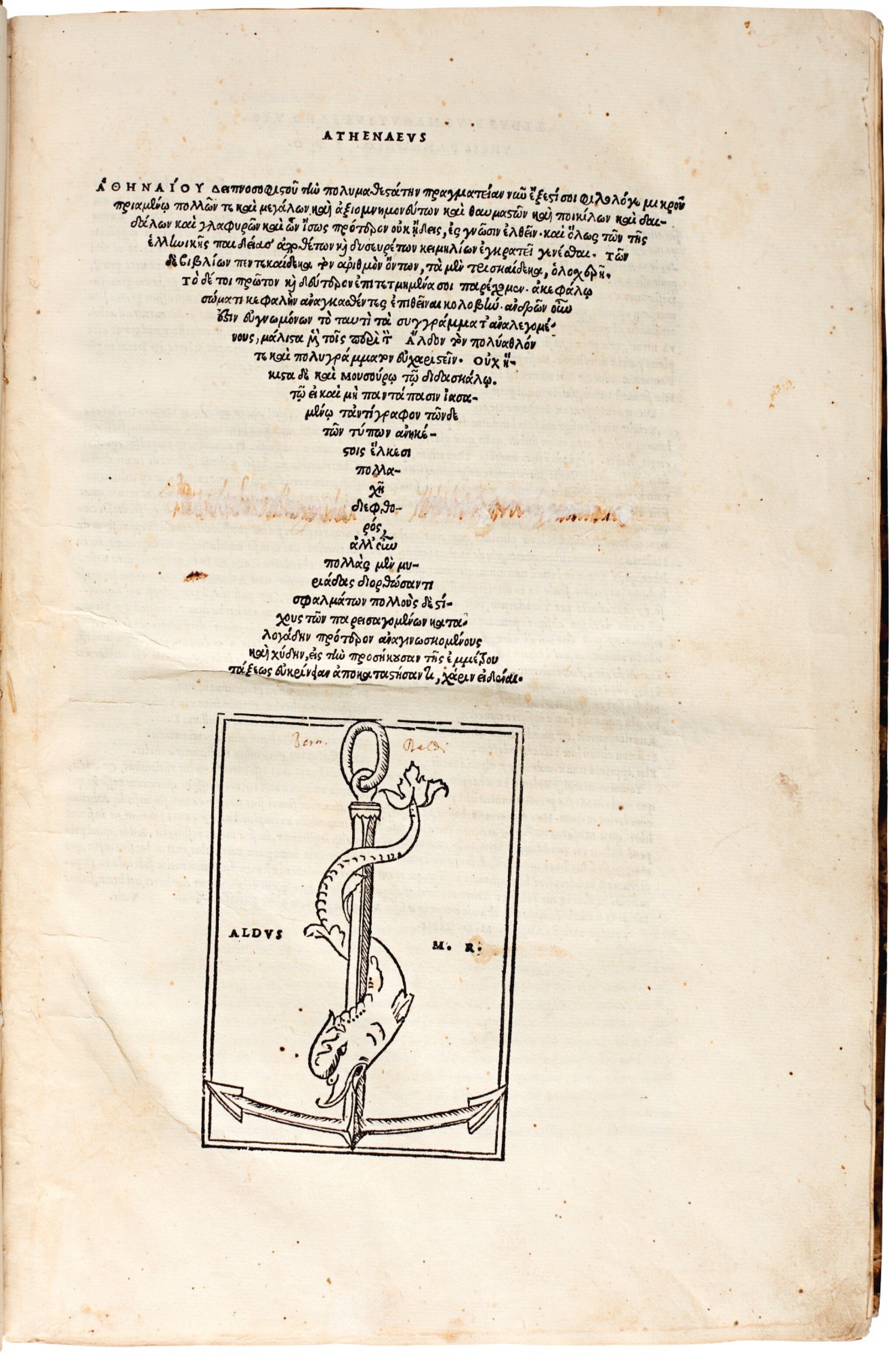
A Giant’s Strength for Editing Athenaeus

Mark Pattison, Diary of Casaubon:

“Those who suppose that to edit a classic is among the easiest of literary toils, and only a fit occupation for laborious dulness, can form no conception of what Casaubon accomplished. Those only who know that a perfectly good edition of a classic is among the rarest of triumphs which the literary Fasti have to record; that for the last three centuries we have been incessantly labouring at the Greek and Latin remains, and yet that the number which have been satisfactorily edited is fewer than some of the most popular of ancient authors who have been attempted the oftenest, as e.g. Horace, still awaits a competent expositor – those only can measure what a giant’s strength was required to cope with Athenaeus, in the state in which his remains existed in the time of Casaubon.”

Did We Become Stoics or Assholes?

Giovanni Pico, Letter to Angelo Poliziano:

But what should I say about the humor of your Epictetus? A delightful thing, and worthy of Catonian laughter! He was hardly in the threshold, when he opened his cloak and said ‘Behold these obeloi, behold these arrows if you do not know Greek! Behold me ready to strike if any of you is feeling bold.’ Who could have held back their laughter to hear a Stoic joke so pleasantly? We abstained from our weapons, to be sure, both because he had threatened that he would repay the injury and because his skin had grown so hard that it would not be affected by such light blows. We thus received the old man with the veneration which was appropriate.

As soon as he sat down next to us, he began to philosophize about character, and did so in Latin not so much because he was among Latins (because there were in that conference those who knew Greek), but more because he could make his wisdom shine more clearly in Latin thanks to you. He did not waste his labor, because he no sooner ceased to speak than he converted us from Peripatetics to Stoics, and we all approved his apathy. Now it is possible to see people who were a little earlier of the most delicate constitutions and are now the most tolerant of suffering; we who used to be harmed by others are now only harmed by ourselves; now we never fight against fate, and we wish those things which are not ours to turn out as the gods would have them, and we never blame or accuse the gods for anything; we feel no pain, we complain about nothing, we know neither to be slaves nor to be conquered; we philosophize not in word but in deed.

poliziano2

Reading to No Purpose

Robert Burton, The Anatomy of Melancholy:

Yet thus much I will say of myself, and that I hope without all suspicion of pride, or self-conceit, I have lived a silent, sedentary, solitary, private life, mihi et musis in the University, as long almost as Xenocrates in Athens, ad senectam fere to learn wisdom as he did, penned up most part in my study. For I have been brought up a student in the most flourishing college of Europe, augustissimo collegio, and can brag with Jovius, almost, in ea luce domicilii Vacicani, totius orbis celeberrimi, per 37 annos multa opportunaque didici; for thirty years I have continued (having the use of as good libraries as ever he had) a scholar, and would be therefore loath, either by living as a drone, to be an unprofitable or unworthy member of so learned and noble a society, or to write that which should be any way dishonourable to such a royal and ample foundation.

Something I have done, though by my profession a divine, yet turbine raptus ingenii, as he said, out of a running wit, an unconstant, unsettled mind, I had a great desire (not able to attain to a superficial skill in any) to have some smattering in all, to be aliquis in omnibus, nullus in singulis, which Plato commends, out of him Lipsius approves and furthers, “as fit to be imprinted in all curious wits, not to be a slave of one science, or dwell altogether in one subject, as most do, but to rove abroad, centum puer artium, to have an oar in every man’s boat, to taste of every dish, and sip of every cup,” which, saith Montaigne, was well performed by Aristotle, and his learned countryman Adrian Turnebus.

This roving humour (though not with like success) I have ever had, and like a ranging spaniel, that barks at every bird he sees, leaving his game, I have followed all, saving that which I should, and may justly complain, and truly, qui ubique est, nusquam est, which Gesner did in modesty, that I have read many books, but to little purpose, for want of good method; I have confusedly tumbled over divers authors in our libraries, with small profit, for want of art, order, memory, judgment.

I never travelled but in map or card, in which mine unconfined thoughts have freely expatiated, as having ever been especially delighted with the study of Cosmography. Saturn was lord of my geniture, culminating, &c., and Mars principal significator of manners, in partile conjunction with my ascendant; both fortunate in their houses, &c. I am not poor, I am not rich; nihil est, nihil deest, I have little, I want nothing: all my treasure is in Minerva’s tower.

Poop90X

Pius II, Commentaries 1.8:

When Aeneas set out for Milan, he found a nobleman from the great house of the Landriani had, by the order of the duke, been called through that chapter to the directorship and been led to its possession. Aeneas compelled this man to yield to him – so much did both the prince and the curia favor him. But, having obtained the directorship, he fell to the sick bed after being taken by a great fever. The duke Filippo sent his own doctor, a learned and cheerful man named Filippo of Bologna (who later served Pope Nicholas) to him every day.

When in the course of this illness Aeneas had taken a medicine and it had no effect, the doctor prepared a second medicine to be taken the next night. At the very hour when the second medicine was to be administered, his bowels began to move and so irritated him that he had to get up ninety times. Out of his mind because of this he rushed almost to death’s door, as they say. If he had taken the second medicine, he would have been weakened and consumed, and would have finally given up the ghost. Recognizing this as a sure sign from God, although he was disturbed by the continuous burning of the fever for 75 days, he could nevertheless not be prevailed upon to listen to the quacks even when a man was brought in who was said to have recently cured two thousand men in Niccolo Piccinino’s camp. Instead, trusting to God, by whose help he had been preserved in life, he took to the road though still afflicted with fever, and, liberated from it through bouts of horse riding, he returned to Basel.

Can we get a toilet put in here?

At Aeneas Mediolanum profectus nobilem quendam ex magna domo Landrianorum iussu ducis per capitulum ad eam preposituram vocatum et in possessionem adductum invenit, quem sibi mox cedere compulit: tantum Aenee et princeps et curia favit. Sed obtenta prepositura lectum egritudinis incidit ingenti febre correptus; ad quem Philippus suum medicum, doctum et laetum virum, Philippum Bononiensem – qui postea Nicolao papae servivit – singulis diebus mittebat. In hac aegritudine cum farmacum accepisset, neque id quicquam operatum esset, potionemque alteram sequenti nocte sumendam medicus preparasset, ipsa hora, qua ministrari secundum farmacum debuit, moveri venter cepit atque adeo vexavit hominem, ut nonaginta vicibus assurgere cogeretur. Ob quam rem mente alienatus ad portas – ut aiunt – mortis usque cucurrit. Quod si potionem alteram ebibisset, animam procul dubio extenuatus atque consumptus exalasset. Quod certissimum Dei beneficium intelligens, quamvis quinque et septuaginta dies continuo febris ardore quateretur, nunquam tamen adduci potuit, ut incantatoribus auscultaret, quamvis homo ad se duceretur, quem novissime in castris Nicolai Picinini duo millia virorum ex febribus liberasse dicebant. Sed Deo fidens, cuius ope servatus in vita fuerat, adhuc febricitans iter accipiens inter equitandum liberatus Basileam reversus est.

Pius II Hates Scotland

Pius II, Commentaries 1.7:

After much of the night had passed, a great uproar was made by barking dogs and honking geese. Then all the women went forth in different directions, and even the guide of the journey took flight, and everything was a full-blown uproar as if enemies were at the gates. But to Aeneas, it seemed far better counsel to wait inside the bedroom (which was a stable) and expect the outcome there, fearing that if he were to run outside uncertain of the way, he would simply be giving himself up to be despoiled by whomever he came across first. Without delay, the women came back with the interpreter and said that there was nothing wrong, that it was friends and not enemies who had arrived. Aeneas reckoned that this was the reward of his firm resolve, and when day shone again, he commited himself to the road and arrived at Newcastle, which they say was founded by Caesar. There he saw once again the figure of the world and the habitable portion of the earth, for Scotland and the part of England closest to it have nothing at all like the land where we live – it is horrid, uncultivated, and not exposed to the winter sun.


The Effect of the Classics on Young and Old

John Henry Newman, An Essay in Aid of a Grammar of Assent:

“Let us consider, too, how differently young and old are affected by the words of some classic author, such as Homer or Horace. Passages, which to a boy are but rhetorical common-places, neither better nor worse than a hundred others which any clever writer might supply, which he gets by heart and thinks very fine, and imitates, as he thinks, successfully, in his own flowing versification, at length come home to him, when long years have passed, and he has had experience of life, and pierce him, as if he had never before known them, with their sad earnestness and vivid exactness. Then he comes to understand how it is that lines, the birth of some chance morning or evening at an Ionian festival, or among the Sabine hills, have lasted generation after generation, for thousands of years, with a power over the mind, and a charm, which the current literature of his own day, with all its obvious advantages, is utterly unable to rival.”

Image result for j.h. newman

Spiritual Exercise: Consider How Much You Suck

Ignatius of Loyola, Spiritual Exercises (Week 1, Second Exercise)

“Third, I should consider who I am by diminishing myself with examples. First, how small I am in comparison with all people; second, what people are in comparison with all of the Angels and Saints of Paradise; third, to consider what are all created things in comparison with God: now, what could I alone amount to? In the fourth place, to consider all of my corruption and bodily hideousness; fifth, to consider that I am like an ulcer or an abscess, from which shoot forth so many sins, so much vileness, and such disgusting poison.”

ignatius

“Tertium, inspicere [considerare] quis sim ego, minuendo me ipsum per exempla: primo, quantus sim ego in comparatione omnium hominum: secundo quid sint homines in comparatione omnium Angelorum et Sanctorum Paradisi: tertio, inspicere [considerare] quid sint omnia creata, in comparatione Dei: jam ego solus quid esse possim? Quarto inspicere [considerare] omnem meam corruptionem et foeditatem corpoream: quinto, inspicere [considerare] me quasi ulcus quoddam et apostema, unde pullularunt tot peccata et tot nequitiae, ac venenum tam turpissimum.”

Quintilian’s Advice: Give it the Old College Try

Quintilian, Institutio Oratoria 1.1:

It is a specious complaint that the power of understanding lessons is granted to only a few people while many waste their labor and their time through the slowness of their intellect. For you will find, much to the contrary, many people who are quick in thought and prompt to learn. Indeed, learning is natural to humans. Just as birds are born to fly, horses to run, and beasts to be savage, so is mental action and adroitness natural to us. It is for this reason that the origin of the mind is thought to lie in the heavens.

Dullness and an inability to be taught are no more aligned with human nature than colossal bodies and signs of monstrosity at birth, though these are comparatively few anyway. The proof is that hope of more shines forth in children. When it dies away over time, it is clear that it is due to a lack of care, not a fault of nature. ‘Some people are more talented than others.’ Sure, I grant that much. But that will achieve more or less: yet no one can be found who has accomplished nothing with effort.

Falsa enim est querela, paucissimis hominibus vim percipiendi quae tradantur esse concessam, plerosque vero laborem ac tempora tarditate ingenii perdere. Nam contra plures reperias et faciles in excogitando et ad discendum promptos. Quippe id est homini naturale, ac sicut aves ad volatum, equi ad cursum, ad saevitiam ferae gignuntur, ita nobis propria est mentis agitatio atque sollertia: unde origo animi caelestis creditur.

Hebetes vero et indociles non magis secundum naturam hominis eduntur quam prodigiosa corpora et monstris insignia, sed hi pauci admodum fuerunt. Argumentum, quod in pueris elucet spes plurimorum: quae cum emoritur aetate, manifestum est non naturam defecisse sed curam. “Praestat tamen ingenio alius alium.” Concedo; sed plus efficiet aut minus: nemo reperitur qui sit studio nihil consecutus.

Love as Classroom Management

Quintilian, Institutio Oratoria 2.9:

Having said much about the duties of teachers I have this one bit of advice for students in the meantime. Students should love their teachers no less than their studies, and should consider them as parents not of their bodies, but of their minds. This devotion can add a lot to their pursuit of knowledge. For thus they will listen happily, believe the precepts they receive, and wish to be similar to their teachers; they will come quickly and happily to their classes, they will not become angry when corrected, they will rejoice when praised, they will become worthy of being most esteemed through their study. For as the duty of teachers is to teach, so is it the duty of students to make themselves teachable. Otherwise, neither is sufficient without the other, and as human offspring come forth from both parents, and you scatter your seed for nothing unless the furrow is softened beforehand to nourish it, so too eloquence is unable to grow unless a sociable concord is achieved between the bestower and the receiver of lessons.

Plura de officiis docentium locutus discipulos id unum interim moneo, ut praeceptores suos non minus quam ipsa studia ament et parentes esse non quidem corporum, sed mentium credant. Multum haec pietas conferet studio; nam ita et libenter audient et dictis credent et esse similes concupiscent, in ipsos denique coetus scholarum laeti alacres conuenient, emendati non irascentur, laudati gaudebunt, ut sint carissimi studio merebuntur. Nam ut illorum officium est docere, sic horum praebere se dociles: alioqui neutrum sine altero sufficit; et sicut hominis ortus ex utroque gignentium confertur, et frustra sparseris semina nisi illa praemollitus fouerit sulcus, ita eloquentia coalescere nequit nisi sociata tradentis accipientisque concordia.