The Universality of Human Misery

Petrarch, Invective Against a Man of High Rank (33-34):

The human race lives for a few. Nay, and these few for whom the whole human race is said to live are not more frightening to the people than the people are to them. Thus, almost no one is free. Everywhere there is servitude, the prison, the noose, unless some rare person somehow dissolves the knots of the world with the aid of some heavenly virtue.

Just turn your attention wherever you’d like: no place is free of tyranny. Wherever there are no tyrants, the people tyrannize. When you seem to have escaped the iron fist of one, you fall into the tyranny of the many, unless you can show me some place ruled by a just and merciful king. If you can do that, I will move my home there and migrate with all of my luggage. Neither my love of my country, nor the charm and nobility of Italy will keep me here. I will go to India, to China, to the remotest reaches of Africa just to find this place and this king.

But the search is in vain – these things exist nowhere. Thanks to our age. Since it has made everything almost equal, it has spared us the work of trying to find somewhere better. To merchants examining grain, it is enough to take up a fistful, examine it, and judge the whole heap from that. One needn’t go skim the farthest coasts or pentrate to the remotest lands. Languages, clothing, and appearances are all different, but desires, minds, and customs are so similar wherever you go that those lines from Juvenal never seem more truly spoken:

To one who wishes to know the ways of all the human race

One house alone should do the trick.

Even when there were no people, you could still find tyrants.

Humanum paucis vivit genus; quin et hi pauci quibus humanum genus vivere dicitur, non formidolosiores populis quam populi illis sunt. Ita fere nullus est liber; undique servitus et carcer et laquei, nisi fortasse rarus aliquis rerum nodos adiuta celitus animi virtute discusserit.

Verte te quocunque terrarum libet: nullus tyrannide locus vacat; ubi enim tyranni desunt, tyrannizant populi; atque ita ubi unum evasisse videare, in multos incideris, nisi forsan iusto mitique rege regnatum locum aliquem michi ostenderis. Quod cum feceris, eo larem illico transferam, cumque omnibus sarcinulis commigrabo. Non me amor patrie, non decor ac nobilitas Italie retinebit; ibo ad Indos ac Seres et ultimos hominum Garamantes, ut hunc locum inveniam et hunc regem.

Sed frustra queritur quod nusquam est. Gratias etati nostre, que cum cunta pene paria fecerit, hunc nobis eripuit laborem. Frumenta mercantibus satis modicum pugno excipere, illud examinant, inde notitiam totius capiunt acervi. Non est opus oras ultimas rimari et terrarum abdita penetrare: lingue, habitus, vultusque alii, vota, animi, moresque adeo similes, quocunque perveneris, ut nunquam verius fuisse videatur illud Satyrici ubi ait:

Humani generis mores tibi nosse volenti,

sufficit una domus.

Learning vs. Damnation

John Addington Symonds, The Revival of Learning:

All through the Middle Ages uneasy and imperfect memories of Greece and Rome had haunted Europe. Alexander, the great conqueror; Hector, the noble knight and lover; Helen, who set Troy town on fire; Virgil, the magician; Dame Venus lingering about the hill of Hörsel—these phantoms, whereof the positive historic truth was lost, remained to sway the soul and stimulate desire in myth and saga. Deprived of actual knowledge, imagination transformed what it remembered of the classic age into romance.


The fascination exercised by these dreams of a half-forgotten past over the mediæval fancy expressed itself in the legend of Doctor Faustus. That legend tells us what the men upon the eve of the Revival longed for, and what they dreaded, when they turned their minds towards the past. The secret of enjoyment and the source of strength possessed by the ancients, allured them; but they believed that they could only recover this lost treasure by the suicide of their soul. So great was the temptation that Faustus paid the price. After imbibing all the knowledge of his age, he sold himself to the Devil, in order that his thirst for experience might be quenched, his grasp upon the world be strengthened, and the ennui of his inactivity be soothed. His first use of this dearly-bought power was to make blind Homer sing to him. Amphion tunes his harp in concert with Mephistopheles. Alexander rises from the dead at his behest, with all his legionaries; and Helen is given to him for a bride. Faustus is therefore a parable of the impotent yearnings of the spirit in the Middle Ages—its passionate aspiration, its conscience-stricken desire, its fettered curiosity amid the cramping limits of imperfect knowledge and irrational dogmatism. That for which Faustus sold his soul, the freedom he acquired by magic, the sense of beauty he gratified through visions, the knowledge he gained by interrogation of demons, was yielded to the world without price at the time of the Renaissance.


Homer, no longer by the intervention of a fiend, but by the labour of the scholar, sang to the new age. The pomp of the empires of the old world was restored in the pages of historians. The indestructible beauty of Greek art, whereof Helen was an emblem, became, through the discovery of classic poetry and sculpture, the possession of the modern world. Mediævalism took this Helen to wife, and their offspring, the Euphorion of Goethe’s drama, is the spirit of the modern world. But how was this effected? By long and toilsome study, by the accumulation of MSS., by the acquisition of dead languages, by the solitary labour of grammarians, by the lectures of itinerant professors, by the scribe, by the printing press, by the self-devotion of magnificent Italy to erudition. In this way the Renaissance realised the dream of the Middle Ages, and the genius of the Italians wrought by solid toil what the myth-making imagination of the Germans had projected in a poem.

The Envy and Spite of Intellectual Life

D.H. Lawrence, Lady Chatterley’s Lover

“There was a gorgeous talk on Sunday evening, when the conversation drifted again to love.

‘Blest be the tie that binds Our hearts in kindred something-or-other’

— said Tommy Dukes. ‘I’d like to know what the tie is…The tie that binds us just now is mental friction on one another. And, apart from that, there’s damned little tie between us. We bust apart, and say spiteful things about one another, like all the other damned intellectuals in the world. Damned everybodies, as far as that goes, for they all do it. Else we bust apart, and cover up the spiteful things we feel against one another by saying false sugaries. It’s a curious thing that the mental life seems to flourish with its roots in spite, ineffable and fathomless spite. Always has been so! Look at Socrates, in Plato, and his bunch round him! The sheer spite of it all, just sheer joy in pulling somebody else to bits…Protagoras, or whoever it was! And Alcibiades, and all the other little disciple dogs joining in the fray! I must say it makes one prefer Buddha, quietly sitting under a bo-tree, or Jesus, telling his disciples little Sunday stories, peacefully, and without any mental fireworks. No, there’s something wrong with the mental life, radically. It’s rooted in spite and envy, envy and spite. Ye shall know the tree by its fruit.'”

Image result for d.h. lawrence

Tommy A, the Polonius of Medieval Churchmen

Thomas Aquinas, Letter on a Method of Study

Because you have asked me, Ioannes, my dearest companion in Christ, in what manner it is proper for you to study in acquiring a treasury of knowledge, such a plan is handed on from me to you: that you should choose to enter through little streams, and not suddenly into the sea, because it is proper that one come gradually through the easier things to the more difficult ones.

This is, therefore, my advice and your instruction. I order you to be slow in speech and slow in acceding to the mouthpiece. Embrace purity of conscience. Do not allow yourself to be free for speech. You should frequently esteem the wine cellar if you wish to be brought into it. Present yourself as lovable to everyone. Don’t look at all deeply into the deeds of others. Don’t show yourself as very familiar with anyone, because excessive familiarity breeds contempt and offers material for subtraction from study. Don’t in any way get yourself embroiled in secular words or deeds. Don’t forget to follow the footsteps of the holy and the good. Don’t consider from whom you are hearing something, but commend to memory whatever good is spoken.

Make sure that you understand what you read and hear. Make yourself certain about doubtful things. Try to store up whatever you can in the wardrobe of your mind as if you wanted to fill up a jar. Don’t seek things higher than your station. Following these steps, you will profer and lead forth the useful blooms and fruits on the vine of the God of Heavenly Hosts as long as you live. If you will have followed all of this eagerly, you will be able to attain what you affect.

St-thomas-aquinas.jpg

Quia quaesisti a me, in Christo mihi carissime Ioannes, qualiter te studere oporteat in thesauro scientiae acquirendo, tale a me tibi traditur consilium: ut per rivulos, non statim in mare, eligas introire, quia per faciliora ad difficiliora oportet devenire. Haec est ergo monitio mea et instructio tua. Tardiloquum te esse iubeo et tarde ad locutorium accedentem; conscientiae puritatem amplectere. Orationi vacare non desinas; cellam frequenter diligas si vis in cellam vinariam introduci. Omnibus te amabilem exhibe; nihil quaere penitus de factis aliorum; nemini te multum familiarem ostendas, quia nimia familiaritas parit contemptum et subtractionis a studio materiam subministrat; de verbis et factis saecularium nullatenus te intromittas; discursus super omnia fugias; sanctorum et bonorum imitari vestigia non omittas; non respicias a quo audias, sed quidquid boni dicatur, memoriae recommenda; ea quae legis et audis, fac ut intelligas; de dubiis te certifica; et quidquid poteris in armariolo mentis reponere satage, sicut cupiens vas implere; altiora te ne quaesieris. Illa sequens vestigia, frondes et fructus in vinea Domini Sabaoth utiles, quandiu vitam habueris, proferes et produces. Haec si sectatus fueris, ad id attingere poteris, quod affectas

“You’re Too Keen On Dead Stuff”

Richard West to Thomas Gray, May 11, 1742:

Your fragment is in Aulus Gellius; and both it and your Greek delicious. But why are you thus melancholy? I am so sorry for it, that you see I cannot forbear writing again the very first opportunity; though I have little to say except to expostulate with you about it. I find you converse much with the dead, and I do not blame you for that; I converse with them too, though not indeed with the Greek. But I must condemn you for your longing to be with them. What, are there no joys among the living? I could almost cry out with Catullus, “Alphene immemor, atque unanimis false sodalibus!” But to turn an accusation thus upon another, is ungenerous; so I will take my leave of you for the present with a “Vale et vive paulisper cum vivis.”

Renaissance Stagecoach Verse

Coleridge, Biographia Literaria  (XVI):

Not otherwise is it with the more polished poets of the fifteenth and sixteenth centuries, especially those of Italy. The imagery is almost always general: sun, moon, flowers, breezes, murmuring streams, warbling songsters, delicious shades, lovely damsels cruel as fair, nymphs, naiads, and goddesses, are the materials which are common to all, and which each shaped and arranged according to his judgment or fancy, little solicitous to add or to particularize. If we make an honourable exception in favour of some English poets, the thoughts too are as little novel as the images; and the fable of their narrative poems, for the most part drawn from mythology, or sources of equal notoriety, derive their chief attractions from the manner of treating them; from impassioned flow, or picturesque arrangement.

In opposition to the present age, and perhaps in as faulty an extreme, they placed the essence of poetry in the art. The excellence, at which they aimed, consisted in the exquisite polish of the diction, combined with perfect simplicity. This their prime object they attained by the avoidance of every word, which a gentleman would not use in dignified conversation, and of every word and phrase, which none but a learned man would use; by the studied position of words and phrases, so that not only each part should be melodious in itself, but contribute to the harmony of the whole, each note referring and conducting to the melody of all the foregoing and following words of the same period or stanza; and lastly with equal labour, the greater because unbetrayed, by the variation and various harmonies of their metrical movement.

Their measures, however, were not indebted for their variety to the introduction of new metres, such as have been attempted of late in the Alonzo and Imogen, and others borrowed from the German, having in their very mechanism a specific overpowering tune, to which the generous reader humours his voice and emphasis, with more indulgence to the author than attention to the meaning or quantity of the words; but which, to an ear familiar with the numerous sounds of the Greek and Roman poets, has an effect not unlike that of galloping over a paved road in a German stage-waggon without springs. On the contrary, the elder bards both of Italy and England produced a far greater as well as more charming variety by countless modifications, and subtle balances of sound in the common metres of their country. A lasting and enviable reputation awaits that man of genius, who should attempt and realize a union;—who should recall the high finish, the appropriateness, the facility, the delicate proportion, and above all, the perfusive and omnipresent grace, which have preserved, as in a shrine of precious amber, the Sparrow of Catullus, the Swallow, the Grasshopper, and all the other little loves of Anacreon; and which, with bright, though diminished glories, revisited the youth and early manhood of Christian Europe, in the vales of Arno, and the groves of Isis and of Cam; and who with these should combine the keener interest, deeper pathos, manlier reflection, and the fresher and more various imagery, which give a value and a name that will not pass away to the poets who have done honour to our own times, and to those of our immediate predecessors.

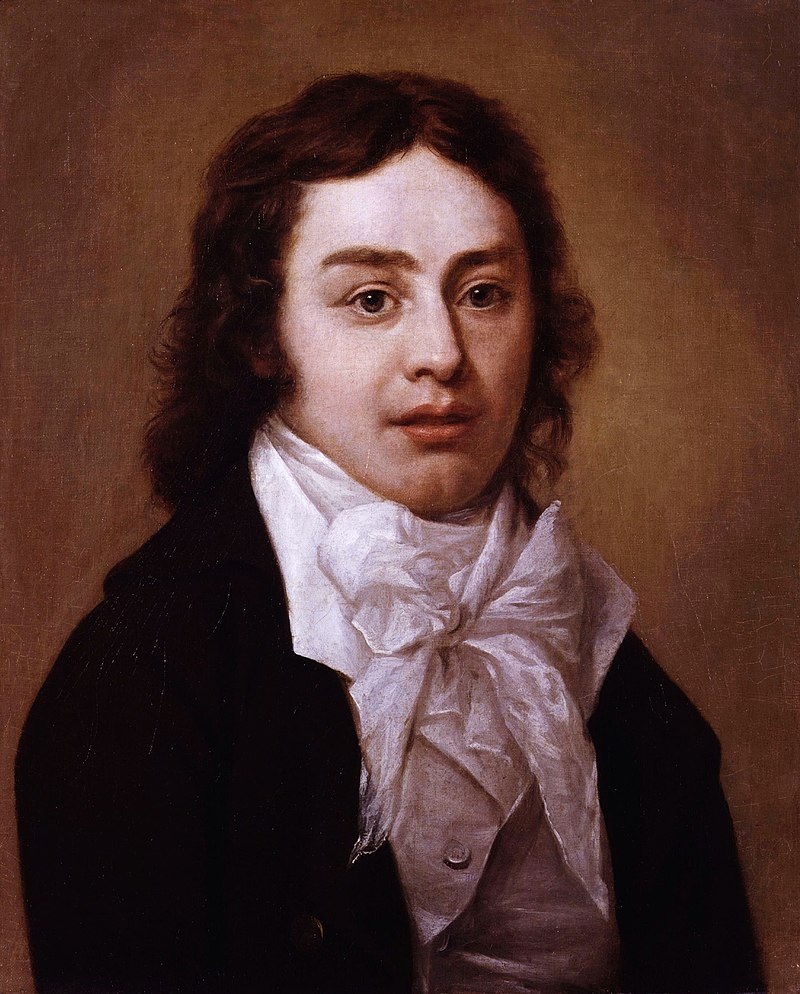
Coleridge in 1795

Sophomore Sophistry

Boswell, Life of Samuel Johnson:

The truth, however, is, that he loved to display his ingenuity in argument; and therefore would sometimes in conversation maintain opinions which he was sensible were wrong, but in supporting which, his reasoning and wit would be most conspicuous. He would begin thus: ‘Why, Sir, as to the good or evil of card-playing—’ ‘Now, (said Garrick,) he is thinking which side he shall take.’ He appeared to have a pleasure in contradiction, especially when any opinion whatever was delivered with an air of confidence; so that there was hardly any topick, if not one of the great truths of Religion and Morality, that he might not have been incited to argue, either for or against.

Flavio Biondo, On the Words of Roman Speech, (I):

There is a great dispute among the learned people of our time, and a contention in which I have often been involved, whether it is the maternal and as it were, among the rude and unlettered mass in our age vulgar idiom, or by the use of grammatical art, which we call Latin, that the Romans were accustomed to employ as their established mode of speaking.

Arguments are not lacking to those who either impugn or defend one side or the other of this debate. If I were to draw them into the fray, it would become apparent on what foundations each side rests, and there will be material for this dispute so tossed before the eyes of all that any fool ignorant of the laws of speaking, or, as the Florentines are in the habit of calling him, a market-stall judge, would not hesitate to bring forth his opinion easily and ex tempore.

Which I would yet maintain must be born by the judgment of the learned and most knowledgeable in Roman things if for no other reason than so that, when you and many others, the ornaments of the age in judgment, seem to dissent in turn, I alone, in a situation where such great men either entertain contradictions or feel uncertainly, would dare to affirm it for sure.

Magna est apud doctos aetatis nostrae homines altercatio, et cui saepenumero interfuerim contentio, maternone et passim apud rudem indoctamque multitudinem aetate nostra vulgato idiomate, an grammaticae artis usu, quod latinum appellamus, instituto loquendi more Romani orare fuerint soliti.

Nec desunt argumenta utramque vel impugnantibus vel defendentibus partem; quae si in medium adduxero, qualibus utrique nitantur fundamentis apparebit; eritque omnium oculis adeo subiecta huiusce disceptationis materies, ut quilibet iurisdicundi ignarus, sive, ut dicere Florentini solent, iudex emporinus, faciliter et ex tempore sententiam ferre non dubitet.

Quam tamen et docti et rerum romanarum callentissimi iudicio vel ea ratione servaverim ferendam, ne, cum tu pluresque alii, omnium iudicio saeculi ornamenta, invicem dissentire videamini, ego unus, in quo tales viri vel contraria sentiant vel addubitent, id ausim affirmare.

Career Choice: War Criminal or Man of Letters?

Quintilian, Institutio Oratoria 10.105:

Not undeservedly was Cicero said by his contemporaries to be king in the courts, and he maintained that among his posterity such that ‘Cicero’ seems like a word for eloquence, and not the name of a man. Let us then look at him, and let it be placed as an example before us that one may know that they have achieved knowledge when they find much pleasure in Cicero.

There is a lot of invention in Asinius Pollio, and even so much attention to detail that some think it seems excessive; there is also enough of consideration and mind in him. He is so far from the resplendence and pleasantness of Cicero that he could seem to be from a previous generation. But Messala is resplendent and shining and in a certain way making a pretense of his nobility in speaking, though possessed of lesser powers.

If only Gaius Caesar had stayed away from the forum, there would have been no one else whose name could be set against Cicero’s. There was such great force in him, such acumen, such quickness, that he appears to have spoken with the same vigor with which he waged war. Yet he decorated all of what he wrote with a marvelous elegance of speech, of to which he was rightly devoted.

“Should have stuck to your books!”

Quare non inmerito ab hominibus aetatis suae regnare in iudiciis dictus est, apud posteros vero id consecutus ut Cicero iam non hominis nomen sed eloquentiae habeatur. hunc igitur spectemus, hoc propositum nobis sit exemplum, ille se profecisse sciat cui Cicero valde placebit. Multa in Asinio Pollione inventio, summa diligentia, adeo ut quibusdam etiam nimia videatur, et consilii et animi satis: a nitore et iucunditate Ciceronis ita longe abest ut videri possit saeculo prior. At Messala nitidus et candidus et quodam modo praeferens in dicendo nobilitatem suam, viribus minor. C. vero Caesar si foro tantum vacasset, non alius ex nostris contra Ciceronem nominaretur: tanta in eo vis est, id acumen, ea concitatio, ut illum eodem animo dixisse quo bellavit appareat; exornat tamen haec omnia mira sermonis, cuius proprie studiosus fuit, elegantia.

Forget Latin and Get Some Greek!

Lord Chesterfield, Letters to His Son (122):

You cannot study much in the Academy; but you may study usefully there, if you are an economist of your time, and bestow only upon good books those quarters and halves of hours, which occur to everybody in the course of almost every day; and which, at the year’s end, amount to a very considerable sum of time. Let Greek, without fail, share some part of every day; I do not mean the Greek poets, the catches of Anacreon, or the tender complaints of Theocritus, or even the porter-like language of Homer’s heroes; of whom all smatterers in Greek know a little, quote often, and talk of always; but I mean Plato, Aristoteles, Demosthenes, and Thucydides, whom none but adepts know. It is Greek that must distinguish you in the learned world, Latin alone will not: and Greek must be sought to be retained, for it never occurs like Latin. When you read history or other books of amusement, let every language you are master of have its turn, so that you may not only retain, but improve in everyone.

Whacking Off Wards Off War

Dio Chrysostom, Discourse VI: Diogenes (17-20):

Diogenes said that the wealthy were like newly-born babies because they always needed swaddling clothes. The thing over which people had the greatest hassles and spent the most money, for which many cities were ruined and for the sake of which many of their peoples have been miserably wasted – to him, it was the least troublesome of all things, and certainly the cheapest. For he did not need to go anywhere for the sake venereal delights. Jokingly, he said that Aphrodite attended upon him straightaway in all placed, and that the poets slandered the goddess through their own licentiousness when they called her ‘golden’. Since a lot of people did not believe this, he jerked off in the open with everyone watching.

And he said that if all men did this, Troy would never have been taken, nor would Priam, king of the Phrygians and a descendant of Zeus, had been slain at that god’s altar. He added that the Achaeans were so stupid that they thought that even dead men still lusted for women, and killed Polyxena at the tomb of Achilles. He said that fish seemed a hell of a lot smarter than people: when they needed to blow a wad of sperm, they went out and rubbed themselves on something rough.

Indeed, he wondered that people wouldn’t pay a piece of silver to have their foot, or their hand, or any other part of their body rubbed, and even the very rich wouldn’t lose a drachma in this way. But that one part often cost whole talents of silver, and some people even wagered their lives for it. He joked that masturbation was the discovery of Pan. When he lusted after Echo but could not have her and wandered night and day through the mountains, Hermes took pity on his predicament and, since Pan was his son, taught him how to do it. When Pan had learned this, he was spared a lot of suffering, and shepherds learned how to do it from him.

“Wanna see a trick?”

ἔφη δὲ τοὺς πλουσίους ὁμοίους εἶναι τοῖς νεογνοῖς βρέφεσι· δεῖσθαι γὰρ ἀεί ποτε σπαργάνων. ὑπὲρ οὗ δὲ πλεῖστα μὲν πράγματα ἔχουσιν ἄνθρωποι, πλεῖστα δὲ χρήματα ἀναλίσκουσι, πολλαὶ δὲ ἀνάστατοι πόλεις διὰ ταῦτα γεγόνασι, πολλὰ δὲ ἔθνη τούτων ἕνεκεν οἰκτρῶς ἀπόλωλεν, ἁπάντων ἐκείνῳ χρημάτων ἀπονώτατον ἦν καὶ ἀδαπανώτατον. οὐ γὰρ ἔδει αὐτὸν οὐδαμόσε ἐλθεῖν ἀφροδισίων ἕνεκεν, ἀλλὰ παίζων ἔλεγεν ἁπανταχοῦ παρεῖναι αὐτῷ τὴν᾿Αφροδίτην προῖκα· τοὺς δὲ ποιητὰς καταψεύδεσθαι τῆς θεοῦ διὰ τὴν αὑτῶν ἀκρασίαν, πολύχρυσον καλοῦντας. ἐπεὶ δὲ πολλοὶ τοῦτο ἠπίστουν, ἐν τῷ φανερῷ ἐχρῆτο καὶ πάντων ὁρώντων· καὶ ἔλεγεν ὡς εἴπερ οἱ ἄνθρωποι οὕτως εἶχον, οὐκ ἂν ἑάλω ποτὲ ἡΤροία, οὐδ’ ἂν ὁ Πρίαμος ὁ Φρυγῶν βασιλεύς, ἀπὸ Διὸς γεγονώς, ἐπὶ τῷ βωμῷ τοῦ Διὸς ἐσφάγη. τοὺς δὲ ᾿Αχαιοὺς οὕτως εἶναι ἄφρονας ὥστε καὶ τοὺς νεκροὺς νομίζειν προσδεῖσθαι γυναικῶνκαὶ τὴν Πολυξένην σφάττειν ἐπὶ τῷ τάφῳ τοῦ ᾿Αχιλλέως. ἔφη δὲ τοὺς ἰχθύας σχεδόν τι φρονιμωτέρους φαίνεσθαι τῶν ἀνθρώπων· ὅταν γὰρ δέωνται τὸ σπέρμα ἀποβαλεῖν, ἰόντας ἔξω προσκνᾶσθαι πρὸς τὸ τραχύ. θαυμάζειν δὲ τῶν ἀνθρώπων τὸ τὸν μὲν πόδα μὴ θέλειν ἀργυρίου κνᾶσθαι μηδὲ τὴν χεῖρα μηδὲ ἄλλο μηδὲν τοῦ σώματος, μηδὲ τοὺς πάνυ πλουσίους ἀναλῶσαι ἂν μηδεμίαν ὑπὲρ τούτου δραχμήν· ἓν δὲ ἐκεῖνο τὸ μέρος πολλάκις πολλῶν ταλάντων, τοὺς δέ τινας ἤδη καὶ τῇ ψυχῇ παραβαλλομένους.ἔλεγε δὲ παίζων τὴν συνουσίαν ταύτην εὕρεμα εἶναι τοῦ Πανός, ὅτε τῆς ᾿Ηχοῦς ἐρασθεὶς οὐκ ἐδύνατο λαβεῖν, ἀλλ’ ἐπλανᾶτο ἐν τοῖς ὄρεσι νύκτα καὶ ἡμέραν, τότε οὖν τὸν ῾Ερμῆν διδάξαι αὐτόν, οἰκτείραντα τῆς ἀπορίας, ἅτε υἱὸν αὐτοῦ. καὶ τόν, ἐπεὶ ἔμαθε, παύσασθαι τῆς πολλῆς ταλαιπωρίας· ἀπ’ ἐκείνου δὲ τοὺς ποιμένας χρῆσθαι μαθόντας.