Euripides on How Wealth Affects Virtue

Fragment 462

“I both know and have experienced the hard way
that all people are the friends of men who have.
No one slinks about where there is no food,
But they go where there is wealth and a gathering.
To be ‘well-born’ is also the property of the rich;
But the poor man does well if he dies.”

᾿Επίσταμαι δὲ καὶ πεπείραμαι λίαν,
ὡς τῶν ἐχόντων πάντες ἄνθρωποι φίλοι.
οὐδεὶς γὰρ ἕρπει πρὸς τὸ μὴ τροφὴν ἔχον,
ἀλλ᾿ εἰς τὸ πλοῦτον καὶ συνουσίαν ἔχον.
καὶ τῶν ἐχόντων ηὑγένεια κρίνεται.
ἀνὴρ δ᾿ ἀχρήμων εἰ θάνοι πράσσει καλῶς.

Euripides, obviously, might disagree with Tibullus (1.1-6):

“Let someone else pile up gleaming gold
And hold as many lots of well-plowed land,
Let constant labor frighten him when an enemy’s near
As war’s clarion blasts send his sleep to flight.
But may my poverty guide me through a settled life
as long as my hearth shines with a tireless light.”

Divitias alius fulvo sibi congerat auro
Et teneat culti iugera multa soli,
Quem labor adsiduus vicino terreat hoste,
Martia cui somnos classica pulsa fugent:
Me mea paupertas vita traducat inerti, 5
Dum meus adsiduo luceat igne focus.

Although, in a different fragment, Euripides notes the corrupting force of wealth:

Euripides, fr. 54 (Alexander): On the Educational Merits of Poverty?

“Wealth and too much luxury
Are the wrong lessons for manly men.
Poverty is wretched but at least it raises up
Children better at working and getting things done.”

κακόν τι παίδευμ’ ἦν ἄρ’ εἰς εὐανδρίαν
ὁ πλοῦτος ἀνθρώποισιν αἵ τ’ ἄγαν τρυφαί·
πενία δὲ δύστηνον μέν, ἀλλ’ ὅμως τρέφει
μοχθεῖν τ’ ἀμείνω τέκνα καὶ δραστήρια.

The fabulously wealthy Seneca might agree:

Seneca, Epistulae ad Lucilium 17.3

“For many, riches have stood in the way of philosophizing; poverty is unimpeded, free from care.”

multis ad philosophandum obstitere divitiae; paupertas expedita est, secura est.

Image result for Ancient Greek riches

Resisting Tyranny

Herodotus, Histories 7.102.1-7

“After he heard these things, Dêmarêtos was saying the following: “King, since you order me to tell the truth completely and to say things that someone might not be caught in a lie by you later, poverty has always been Greece’s companion, but virtue is acquired, nurtured by wisdom and strong custom. By cultivating this excellence, Greece has warded off both poverty and tyranny.”

῾Ως δὲ ταῦτα ἤκουσε Δημάρητος, ἔλεγε τάδε· «Βασιλεῦ, ἐπειδὴ ἀληθείῃ διαχρήσασθαι πάντως κελεύεις ταῦτα λέγοντα τὰ μὴ ψευδόμενός τις ὕστερον ὑπὸ σέο ἁλώσεται, τῇ ῾Ελλάδι πενίη μὲν αἰεί κοτε σύντροφός ἐστι, ἀρετὴ δὲ ἔπακτός ἐστι, ἀπό τε σοφίης κατεργασμένη καὶ νόμου ἰσχυροῦ· τῇ διαχρεωμένη ἡ ῾Ελλὰς τήν τε πενίην ἀπαμύνεται καὶ τὴν δεσποσύνην.

8.144.1-3

“To the Spartan representatives, the Athenians answered as follows: “It was a very human response that the Spartans feared we might make an agreement with the Barbarian. But because we believe it shameful that the Athenian spirit should shudder so, know that there is no amount of gold anywhere or land so exceeding in beauty and location which we would ever wish to take to align with the Persians and enslave Greece.

“There are many, serious reasons which would prevent us from doing these things, even if we were willing: first and greatest are the temples and dedications to the gods which were burned and destroyed. This compels us to seek extreme vengeance rather than making agreements with the man who contrived it. Second, is our common Hellenic blood, our shared language, the shrines of the gods and the sacrifices, customs and ways of living we keep in common—never would it be right for the Athenians to betray these things.

Know this too if you did not happen to know it before, as long as a single Athenian survives there will never be a treaty with Xerxes. Still, we give you thanks for your concern about us, that you have worried for out destroyed home enough that you are willing to supply and feed our people.”

πρὸς δὲ τοὺς ἀπὸ Σπάρτης ἀγγέλους τάδε. ‘τὸ μὲν δεῖσαι Λακεδαιμονίους μὴ ὁμολογήσωμεν τῷ βαρβάρῳ, κάρτα ἀνθρωπήιον ἦν: ἀτὰρ αἰσχρῶς γε οἴκατε ἐξεπιστάμενοι τὸ Ἀθηναίων φρόνημα ἀρρωδῆσαι, ὅτι οὔτε χρυσός ἐστι γῆς οὐδαμόθι τοσοῦτος οὔτε χώρη κάλλεϊ καὶ ἀρετῇ μέγα ὑπερφέρουσα, τὰ ἡμεῖς δεξάμενοι ἐθέλοιμεν ἂν μηδίσαντες καταδουλῶσαι τὴν Ἑλλάδα. ’

‘ [2] πολλά τε γὰρ καὶ μεγάλα ἐστι τὰ διακωλύοντα ταῦτα μὴ ποιέειν μηδ᾽ ἢν ἐθέλωμεν, πρῶτα μὲν καὶ μέγιστα τῶν θεῶν τὰ ἀγάλματα καὶ τὰ οἰκήματα ἐμπεπρησμένα τε καὶ συγκεχωσμένα, τοῖσι ἡμέας ἀναγκαίως ἔχει τιμωρέειν ἐς τὰ μέγιστα μᾶλλον ἤ περ ὁμολογέειν τῷ ταῦτα ἐργασαμένῳ, αὖτις δὲ τὸ Ἑλληνικὸν ἐὸν ὅμαιμόν τε καὶ ὁμόγλωσσον καὶ θεῶν ἱδρύματά τε κοινὰ καὶ θυσίαι ἤθεά τε ὁμότροπα, τῶν προδότας γενέσθαι Ἀθηναίους οὐκ ἂν εὖ ἔχοι. ’

‘ [3] ἐπίστασθέ τε οὕτω, εἰ μὴ πρότερον ἐτυγχάνετε ἐπιστάμενοι, ἔστ᾽ ἂν καὶ εἷς περιῇ Ἀθηναίων, μηδαμὰ ὁμολογήσοντας ἡμέας Ξέρξῃ. ὑμέων μέντοι ἀγάμεθα τὴν προνοίην τὴν πρὸς ἡμέας ἐοῦσαν, ὅτι προείδετε ἡμέων οἰκοφθορημένων οὕτω ὥστε ἐπιθρέψαι ἐθέλειν ἡμέων τοὺς οἰκέτας. ’

Peloponnesus, Presently the Kingdom of Morea, Clearly Divided into All Its Provinces, Both Contemporary and Ancient, and to which is Added the Islands of Cefalonia, Zante, Cerigo, and St. Maura

Making the Rich Do Right and Helping the Poor

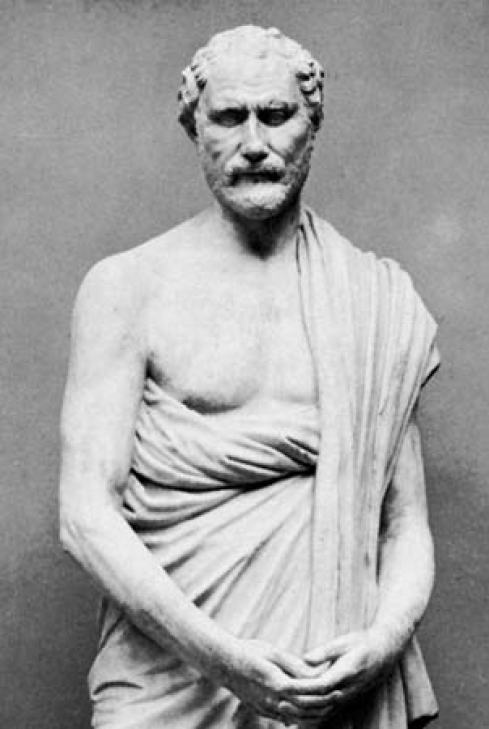
In this beautiful periodic sentence from Demosthenes,  he articulates the importance of leveling off income inequality.

De Corona, 103

“Right now, I want to take you back through the things I did when in power in order. And you, examine them again, anew, for what was best for the state. When I saw, Athenian men, that your navy was in disarray, and that some of the wealthy citizens were essentially untaxed because of the limited expenditures while other citizens of moderate or little wealth were losing what they had, and that the city was falling behind its opportunities because of these circumstances, I made a law through which I forced the wealthy to do what was right and I prevented the poor from suffering injustice—and this was most useful to the city: I ensured that her preparations happened at the necessary time.”


Βούλομαι τοίνυν ἐπανελθεῖν ἐφ’ ἃ τούτων ἑξῆς ἐπολιτευόμην· καὶ σκοπεῖτ’ ἐν τούτοις πάλιν αὖ, τί τὸ τῇ πόλει βέλτιστον ἦν. ὁρῶν γάρ, ὦ ἄνδρες ᾿Αθηναῖοι, τὸ ναυτικὸν ὑμῶν καταλυόμενον καὶ τοὺς μὲν πλουσίους ἀτελεῖς ἀπὸ μικρῶν ἀναλωμάτων γιγνομένους, τοὺς δὲ μέτρι’ ἢ μικρὰ κεκτημένους τῶν πολιτῶν τὰ ὄντ’ ἀπολλύοντας, ἔτι δ’ ὑστερίζουσαν ἐκ τούτων τὴν πόλιν τῶν καιρῶν, ἔθηκα νόμον καθ’ ὃν τοὺς μὲν τὰ δίκαια ποιεῖν ἠνάγκασα, τοὺς πλουσίους, τοὺς δὲ πένητας ἔπαυσ’ ἀδικουμένους, τῇ πόλει δ’ ὅπερ ἦν χρησιμώτατον, ἐν καιρῷ γίγνεσθαι τὰς παρασκευὰς ἐποίησα.


demosthenes

The Dog and His Treasure: A Fable about Priorities

Phaedrus, 1.27

“This tale has something to say to the greedy
And  those who want to be called rich, though born needy.
A dog was digging up human bones when he found
A treasure and, because he offended the gods in the ground,
He was struck by a love of riches he couldn’t forget
To pay sacred religion back this debt.
And so, the dog thought not of food as he guarded his gold
And he died from hunger, and a vulture took hold
And reportedly said, “Dog, you deserve it—
To lie there when you wanted royal wealth
After you were born in a gutter and raised on shit!”

dog


I.27. Canis et Thesaurus

Haec res avaris esse conveniens potest,
et qui, humiles nati, dici locupletes student.
Humana effodiens ossa thesaurum canis
invenit, et, violarat quia Manes deos,
iniecta est illi divitiarum cupiditas,
poenas ut sanctae religioni penderet.
Itaque, aurum dum custodit oblitus cibi,
fame est consumptus. Quem stans vulturius super
fertur locutus “O canis, merito iaces,
qui concupisti subito regales opes,
trivio conceptus, educatus stercore”.

Heaping Up Riches with the Ancients

Euripides, fr. 462

“I both know and have experienced the hard way
that all people are the friends of men who have.
No one slinks about where there is no food,
But they go where there is wealth and a gathering.
To be ‘well-born’ is also the property of the rich;
But the poor man does well if he dies.”

᾿Επίσταμαι δὲ καὶ πεπείραμαι λίαν,
ὡς τῶν ἐχόντων πάντες ἄνθρωποι φίλοι.
οὐδεὶς γὰρ ἕρπει πρὸς τὸ μὴ τροφὴν ἔχον,
ἀλλ᾿ εἰς τὸ πλοῦτον καὶ συνουσίαν ἔχον.
καὶ τῶν ἐχόντων ηὑγένεια κρίνεται.
ἀνὴρ δ᾿ ἀχρήμων εἰ θάνοι πράσσει καλῶς.

Euripides, obviously, might disagree with Tibullus (1.1-6):

“Let someone else pile up gleaming gold
And hold as many lots of well-plowed land,
Let constant labor frighten him when an enemy’s near
As war’s clarion blasts send his sleep to flight.
But may my poverty guide me through a settled life
as long as my hearth shines with a tireless light.”

Divitias alius fulvo sibi congerat auro
Et teneat culti iugera multa soli,
Quem labor adsiduus vicino terreat hoste,
Martia cui somnos classica pulsa fugent:
Me mea paupertas vita traducat inerti, 5
Dum meus adsiduo luceat igne focus.

Although, in a different fragment, Euripides notes the corrupting force of wealth:

Euripides, fr. 54 (Alexander): On the Educational Merits of Poverty?

“Wealth and too much luxury
Are the wrong lessons for manly men.
Poverty is wretched but at least it raises up
Children better at working and getting things done.”

κακόν τι παίδευμ’ ἦν ἄρ’ εἰς εὐανδρίαν
ὁ πλοῦτος ἀνθρώποισιν αἵ τ’ ἄγαν τρυφαί·
πενία δὲ δύστηνον μέν, ἀλλ’ ὅμως τρέφει
μοχθεῖν τ’ ἀμείνω τέκνα καὶ δραστήρια.

The fabulously wealthy Seneca might agree:

Seneca, Epistulae ad Lucilium 17.3

“For many, riches have stood in the way of philosophizing; poverty is unimpeded, free from care.”

multis ad philosophandum obstitere divitiae; paupertas expedita est, secura est.

Money’s No Good Unless You Use It for Good: The Life of Herodes the Sophist

On the Wealth of Herodes the Athenian (Philostratus, Lives of the Sophists, 547)

“[Herodes] used his wealth in the best way of all men. We do not, however, believe that this was the easiest thing to do, but instead that it was wholly difficult and unpleasant.  For men who are drunk with wealth usually afflict other people with insults. In addition, they make the specious claim that wealth is blind—but even if wealth appears rightly blind at other times, it looked upon Herodes: it gazed upon his friends, his cities, and whole nations since the man was able to keep a watch over them all and make a storehouse of his riches in the opinions of the men with whom he shared them.

For he used to say indeed that it was necessary for the man who would use wealth correctly to provide it to those who need it so that they may not be in need and also to those who didn’t need it, so that they might not become impoverished. He used to call wealth that was not used and was hoarded up by envy “corpse wealth” and the storehouses of those who hoarded their riches “prisons of wealth. He mocked those who believed it was right to sacrifice to their accumulated riches “Aloadae” because [Otos and Ephialtes] had sacrificed to Ares after they imprisoned him.”*

῎Αριστα δὲ ἀνθρώπων πλούτῳ ἐχρήσατο. τουτὶ δὲ μὴ τῶν εὐμεταχειρίστων ἡγώμεθα, ἀλλὰ τῶν παγχαλέπων τε καὶ δυσκόλων, οἱ γὰρ πλούτῳ μεθύοντες  ὕβριν τοῖς ἀνθρώποις ἐπαντλοῦσιν. προσδιαβάλλουσι δὲ ὡς καὶ τυφλὸν τὸν πλοῦτον, ὃς εἰ καὶ τὸν ἄλλον χρόνον ἐδόκει τυφλός, ἀλλ’ ἐπὶ ῾Ηρώδου ἀνέβλεψεν, ἔβλεψε μὲν γὰρ ἐς φίλους, ἔβλεψε δὲ ἐς πόλεις, ἔβλεψε δὲ ἐς ἔθνη, πάντων περιωπὴν ἔχοντος τοῦ ἀνδρὸς καὶ θησαυρίζοντος τὸν πλοῦτον ἐν ταῖς τῶν μετεχόντων αὐτοῦ γνώμαις. ἔλεγε γὰρ δή, ὡς προσήκοι τὸν ὀρθῶς πλούτῳ χρώμενον τοῖς μὲν δεομένοις ἐπαρκεῖν, ἵνα μὴ δέωνται, τοῖς δὲ μὴ δεομένοις, ἵνα μὴ δεηθῶσιν, ἐκάλει τε τὸν μὲν ἀσύμβολον πλοῦτον καὶ φειδοῖ κεκολασμένον νεκρὸν πλοῦτον, τοὺς δὲ θησαυρούς, ἐς οὓς ἀποτίθενται τὰ χρήματαἔνιοι, πλούτου δεσμωτήρια, τοὺς δὲ καὶ θύειν ἀξιοῦντας ἀποθέτοις χρήμασιν ᾿Αλωάδας ἐπωνόμαζε θύοντας ῎Αρει μετὰ τὸ δῆσαι αὐτόν.

*This story is told in the Iliad 5.385 as part of Dione’s catalogue of mortals who caused the gods harm.  Otus and Ephialtes captured Ares and put him in a bronze jar.

The More You Have, The More You Want

Attic Nights, IX, 7

“On the fact that it is necessary that a man who has much requires much and a brief, elegant saying on the subject from the philosopher Favorinus.

Absolutely true is the fact which wise men have recited from both observation and experience, namely that a man who has much has great needs and that these needs come not from an overwhelming poverty but from great abundance—many things are required to maintain the many things you have. Whoever, then, has much and wishes to be on guard or to plan that he may not lose or lack anything, must not acquire more, but must instead possess less so that he may lose less. I remember this line from Favorinus, obscured among a great applause and expressed in these fewest words:

“It is impossible for someone who has fifteen thousand cloaks not to want more. Should I desire more in addition to what I have, once I have lost some of it, I will be satisfied with what I retain.” [Favorinus fr. 104]

Necessum esse, qui multa habeat, multis indigere; deque ea re Favorini philosophi cum brevitate eleganti sententia.

1 Verum est profecto, quod observato rerum usu sapientes viri dixere, multis egere, qui multa habeat, magnamque indigentiam nasci non ex inopia magna, sed ex magna copia: multa enim desiderari ad multa, quae habeas, tuenda. 2 Quisquis igitur multa habens cavere atque prospicere velit, ne quid egeat neve quid desit, iactura opus esse, non quaestu, et minus habendum esse, ut minus desit. 3 Hanc sententiam memini a Favorino inter ingentes omnium clamores detornatam inclusamque verbis his paucissimis: τὸν γὰρ μυρίων καὶ πεντακισχιλίων χλαμύδων δεόμενον οὐκ ἔστι μὴ πλειόνων δεῖσθαι· οἷς γὰρ ἔχω προσδεόμενος, ἀφελὼν ὧν ἔχω, ἀρκοῦμαι οἷς ἔχω.

The sentiment is not identical, but it is not altogether that different either:

Wealth or Wisdom? You Can Lose Possessions…(More Seasonal Advice)

From the fragments of Theognetus, another poet so forgotten that he has no home on Wikipedia. But Athenaeus preserves a fragment (3.63)

“Theognetus is responding to these kinds of people when he writes in the Phantom or the Money-Lover:

‘Man, you’re killing me! You are packed full of little speeches
From the Stoa Poikile and you’re sick.
“Wealth is not any man’s possession, it is frost.
Wisdom is truly yours, it is ice, No one ever
Lost wisdom once he found it.” Fuck me!
What kind of a philosopher has god housed me with?
You learned your letters in reverse, wretch.
Your books have turned your life upside down.
You have philosophized nonsense to heaven and earth.
They don’t give a shit about your words.’

πρὸς οὓς καὶ Θεόγνητος ἐν Φάσματι ἢ Φιλαργύρῳ φησὶν ἐκ τούτων (IV 549 M)·

ἄνθρωπ’, ἀπολεῖς με. τῶν γὰρ ἐκ τῆς ποικίλης
στοᾶς λογαρίων ἀναπεπλησμένος νοσεῖς·
‘ἀλλότριόν ἐσθ’ ὁ πλοῦτος ἀνθρώπῳ, πάχνη·
σοφία δ’ ἴδιον, κρύσταλλος. οὐθεὶς πώποτε
ταύτην λαβὼν ἀπώλεσ’.’ ὦ τάλας ἐγώ,
οἵῳ μ’ ὁ δαίμων φιλοσόφῳ συνῴκισεν.
ἐπαρίστερ’ ἔμαθες, ὦ πόνηρε, γράμματα·
ἀντέστροφέν σου τὸν βίον τὰ βιβλία·
πεφιλοσόφηκας γῇ τε κοὐρανῷ λαλῶν,
οἷς οὐθέν ἐστιν ἐπιμελὲς τῶν λόγων.’

Before You Shop for Christmas, Read Some More Lucretius

Lucretius, De Rerum Natura 5.1430-1439

“The race of man, then, labors uselessly and in vain
as we always consume our time in empty concerns
because we don’t understand that there’s a limit to having—
and there’s an end to how far true pleasure can grow.
This has dragged life bit by bit into the deep sea
and has stirred at its bottom great blasts of war.
But the guardian of the earth turns around the great sky
and teaches men truly that the year’s seasons come full circle
and that all must be endured with a sure reason and order.”

Ergo hominum genus in cassum frustraque laborat
semper et [in] curis consumit inanibus aevom,
ni mirum quia non cognovit quae sit habendi
finis et omnino quoad crescat vera voluptas;
idque minutatim vitam provexit in altum
et belli magnos commovit funditus aestus.
at vigiles mundi magnum versatile templum
sol et luna suo lustrantes lumine circum
perdocuere homines annorum tempora verti
et certa ratione geri rem atque ordine certo.

Happy Fragmentary Friday: the Dirges of Simonides

Fragment 15


“Human strength is meager
Our plains incomplete
Toil follows toil in our short lives.
Death looms inescapable for all—
Men who are good and bad draw
of that an equal portion.”


ἀνθρώπων ὀλίγον μὲν
κάρτος, ἄπρακτοι δὲ μεληδόνες,
αἰῶνι δ’ ἐν παύρωι πόνος ἀμφὶ πόνωι·
ὁ δ’ ἄφυκτος ὁμῶς ἐπικρέμαται θάνατος·
κείνου γὰρ ἴσον λάχον μέρος οἵ τ’ ἀγαθοὶ
ὅστις τε κακός.


Fragment 16


“Since you are human, never say what will come tomorrow.
Nor, if you see a fortunate man, how long it will last.
For not even the time of a tender-winged fly
Is not as fast.”


ἄνθρωπος ἐὼν μή ποτε φάσηις ὅ τι γίνεται 〚αὔριον〛,
μηδ’ ἄνδρα ἰδὼν ὄλβιον ὅσσον χρόνον ἔσσεται·
ὠκεῖα γὰρ οὐδὲ τανυπτερύγου μυίας
οὕτως ἁ μετάστασις.


Fragment 17


“All things come to a single, blasted Charybdis—
Great virtues and wealth all the same.”


πάντα γὰρ μίαν ἱκνεῖται δασπλῆτα Χάρυβδιν,
αἱ μεγάλαι τ’ ἀρεταὶ καὶ ὁ πλοῦτος.


Fragment 18


“Not even those who were long ago,
The half-divine sons of our lord gods,
Came to old age without finishing
A life of toil, pain and danger.”


†οὐδὲ γὰρ οἳ πρότερόν ποτ’ ἐπέλοντο,
θεῶν δ’ ἐξ ἀνάκτων ἐγένονθ’ υἷες ἡμίθεοι,
ἄπονον οὐδ’ ἄφθιτον οὐδ’ ἀκίνδυνον βίον
ἐς γῆρας ἐξίκοντο τελέσαντες.†