Clodius The Monster and the Origin of “Cui Bono”

Cicero, Pro Milone 32

“How, then, is it possible to prove that Clodius conspired against Milo? For such an audacious, nefarious monster it is enough to show that he had a great reason, that great hope resided in the death of Milo, and that there was great purpose to it. And so, let that proverb of Cassius “Who profited from it?” [cui bono fuerit] frame the players on the stage, if truly good men are compelled to deception by no prize while the wicked often are moved by a small one.

Once Milo was killed, Clodius advanced in these ways: not only was he as a praeter under no consul who would do something about his crime, but he was also a praeter serving under consuls with whose plans if not their actually help he hoped that he would be able to get away with his planned insanities. These men, as I am sure we were thinking, would not want to restrain his actions if they could, since they would think about the great benefit they owed him; men who, even if they wanted to, would hardly be capable of squashing the boldness of the most criminal person, an audacity fully strengthened by time.”

Quonam igitur pacto probari potest insidias Miloni fecisse Clodium? Satis est in illa quidem tam audaci, tam nefaria belua docere, magnam ei causam, magnam spem in Milonis morte propositam, magnas utilitates fuisse. Itaque illud Cassianum, “cui bono fuerit,” in his personis valeat, etsi boni nullo emolumento impelluntur in fraudem, improbi saepe parvo. Atqui Milone interfecto Clodius haec adsequebatur, non modo ut praetor esset non eo consule, quo sceleris nihil facere posset, sed etiam ut eis consulibus praetor esset, quibus si non adiuvantibus, at coniventibus certe speraret posse se eludere in illis suis cogitatis furoribus: cuius illi conatus, ut ipse ratiocinabatur, nec cuperent reprimere, si possent, cum tantum beneficium ei se debere arbitrarentur, et, si vellent, fortasse vix possent frangere hominis sceleratissimi conroboratam iam vetustate audaciam.

The Cassius in question is L. Cassius Longinus, Tribune of the Plebs in 127 BCE . We have mentioned the polarizing P. Clodius Pulcher before.

Cicero was a fan of this saying.

Cicero, Pro Sexto Roscio Amerino, 84

The famous Lucius Cassius, whom the Roman people used to consider the most truthful and wisest judge, often used to say in evaluating cases “who stood to profit” [cui bono fuisset]. This is the human way: no one pursues a crime without the hope of some profit.”

Cassius ille, quem populus Romanus verissimum et sapientissimum iudicem putabat, identidem in causis quaerere solebat, “cui bono” fuisset. Sic vita hominum est, ut ad maleficium nemo conetur sine spe atque emolumento accedere.

Roman Coin depicting Vestal Virgin on one side and L. Cassius on the other (he famously prosecuted the Vestal Virgins for not being chaste)


Happy Monday! Some Proverbs for Bad Things

Arsenius 3.64c

“All these evils are the responsibility of nature.”

ἅπαντα ταῦτ’ ἐπίθετα τῇ φύσει κακά


Appendix Proverbium 2.22

“You’re burning incense over bullshit”: a proverb for those who are trying to change evil things”

Εἰς κόπρον θυμιᾷς: ἐπὶ τῶν τὰ κακὰ μεταβαλεῖν ἐπιχειρούντων.


Arsenius 7.7a

“People suffer less because of their enemies than their friends. For they guard against their enemies because they fear them while they remain open to their friends. They too are slippery and likely to conspire.”

᾿Ελάσσω κακὰ πάσχουσιν οἱ ἄνθρωποι ὑπὸ τῶν ἐχθρῶν ἢ ὑπὸ τῶν φίλων· τοὺς μὲν γὰρ ἐχθροὺς δεδιότες φυλάσσονται, τοῖς δὲ φίλοις ἀνεῳγμένοι εἰσί. καὶ γίνονται σφαλεροὶ καὶ εὐεπιβούλευτοι


Zenobius 4.43

“An Iliad of Evils”: this proverb is uses for great evils. This is because there were myriad evils in Ilium”

᾿Ιλιὰς κακῶν: ἀπὸ παροιμίας τοῦτο ἐλέγετο ἐπὶ τῶν μεγάλων κακῶν· παρόσον ἐν ᾿Ιλίῳ μυρία κακὰ συνέβη γενέσθαι.

Image result for medieval manuscript evils
Mouth of Hell: MS Tanner 184

Don’t Be Half-Assed This Weekend: Three Donkey Proverbs from Photius

While perusing some comic fragments and testimonia I came upon one which attributed a strange proverb to Cratinus.  I had to investigate the source, the work of the lexicographer Photius.  What I found was exhilarating: a group of donkey proverbs.

Here is a short excerpt (yes, there’s more):

“A Donkey’s death”: A saying for those who tell stories about strange things

“A Tipping Donkey”: When a donkey leans in suddenly, hens are frightened and bust out of their pen. The owner of the birds brings a suit against the owner of the donkey. This is where the proverb comes from.

“Donkey Shearings”: A saying applied by Attic writers to endless and impossible things. These following sayings are similar: “washing a brick”; “plucking a wineskin”; “decorating a pot” and “fumigating an outhouse”. Aristarchus says that this saying developed because Cratinus imagined a man braiding a rope in Hades and a donkey eating it as he did so.”

῎Ονου θάνατος: ἐπὶ τῶν ἀλλόκοτα διηγουμένων

῎Ονου παρακύψεως: ὄνου παρακύψαντος, ὄρνιθες πτοηθεῖσαι ἱστὸν ἀνέρρηξαν· ὁ δὲ δεσπότης τοῦ ἱστοῦ τοῦ ὄνου δεσπότηι ἐνεκάλεσεν· ὅθεν ἡ παροιμία.

῎Ονου πόκαι: ἐπὶ τῶν ἀνηνύτων καὶ τῶν μὴ ὄντων λέγεται ἡ παροιμία ὑπὸ τῶν ᾿Αττικῶν· ὥσπερ αἱ τοιαῦται· πλίνθον πλύνειν· ἀσκὸν τίλλειν· χύτραν ποικίλλειν· εἰς κοπρῶνα θυμιᾶν· ᾿Αρίσταρχος δὲ διὰ τὸ Κρατῖνον ὑποθέσθαι ἐν Αἵδου σχοινίον πλέκοντα· ὄνον δὲ τὸ πλεκόμενον ἀπεσθίοντα·

Image result for Hindu goddess on a donkey

“Ability, Practice, and Time”: Some Ancient Sayings about Education

These sayings [‘Apophthegmata’] are drawn from the Gnomologium Vaticanum. Most are apocryphal.


24: “Aristippos used to say the he took money from students not in order to straighten their lives but how so they might learn to spend their money on fine things.”

῾Ο αὐτὸς παρὰ τῶν μαθητῶν λαμβάνειν ἔφασκε μισθόν, οὐχ ὅπως τὸν βίον ἐπανορθώσῃ, ἀλλ’ ὅπως ἐκεῖνοι μάθωσιν εἰς τὰ καλὰ δαπανᾶν.


50: “Aristotle said that education is a decoration for the lucky but a refuge for the unfortunate.”

῾Ο αὐτὸς ἔφη τὴν παιδείαν εὐτυχοῦσι μὲν εἶναι κόσμον, ἀτυχοῦσι δὲ καταφύγιον.


87: “When he was asked whom he loved more, Phillip or Aristotle, Alexander said “both the same—for the first gave me the gift of life and the second taught me to live well.”

῾Ο αὐτὸς ἐρωτηθεὶς τίνα μᾶλλον ἀγαπᾷ, Φίλιππον ἢ ᾿Αριστοτέλην, εἶπεν· „ὁμοίως ἀμφοτέρους· ὁ μὲν γάρ μοι τὸ ζῆν ἐχαρίσατο, ὁ δὲ τὸ καλῶς ζῆν ἐπαίδευσεν.”


164: “Glukôn the philosopher called education a sacred refuge.”

Γλύκων ὁ φιλόσοφος τὴν παιδείαν ἔλεγεν ἱερὸν ἄσυλον εἶναι.


259: “When Demetrios [of Phalerus] was asked what was the noblest of animals he said “A human adorned by education.”

῾Ο αὐτὸς ἐρωτηθεὶς τί τῶν ζώων κάλλιστόν ἐστιν εἶπεν· „ἄνθρωπος παιδείᾳ κεκοσμημένος”.


302: “[Zeno the Stoic] used to say that education was sufficient for happiness”

῾Ο αὐτὸς ἔφη τὴν παιδείαν πρὸς εὐδαιμονίαν αὐτάρκη.


314: “Heraclitus used to say that learning is a second sun for the educated”

῾Ηράκλειτος τὴν παιδείαν ἕτερον ἥλιον εἶναι τοῖς πεπαιδευμένοις ἔλεγεν.


439: [Plato] used to say that someone being educated needs three things: ability, practice and time.”

῾Ο αὐτὸς ἔλεγεν ὅτι ὁ παιδευόμενος τριῶν τούτων χρῄζει· φύσεως, μελέτης, χρόνου.


469: “[Protagoras] used to say “knowing a lot helps a lot and hurts a lot.”

῾Ο αὐτὸς ἔφη· „πολυμαθίη κάρτα μὲν ὠφελέει, κάρτα δὲ βλάπτει”.


Democritus and Protagoras by Salvator Rosa

When I’m Dead, Y’all Can Go Screw [FTS Week]

CW: Profanity.

Anonymous, Greek Anthology, 7.704

“When I’m dead, the earth can be fucked by fire.
It means nothing to me since I’ll be totally fine.”

Ἐμοῦ θανόντος γαῖα μιχθήτω πυρί·
οὐδὲν μέλει μοι· τἀμὰ γὰρ καλῶς ἔχει.

This statement is no less potent or poignant now than 2500 years ago. It signals the vampiric and internally apocalyptic solipsisms of the powerful and the elite. But it also engages with a universal human denial and naive narcissism that allows us to ignore and exacerbate global warming and to throw other people’s children into cages while we cherish our own. This is the voice that says only the now matters, that this quarter’s profits are more important than sustainability and justice, that today’s ends justify any kinds of means.

Unsurprisingly, it is attributed to the Roman Emperors Tiberius and Nero.

Suda tau 552 [cribbing Dio Cassius]

“And Tiberius uttered that ancient phrase, “when I am dead, the earth can be fucked with fire”, and he used to bless Priam because he died with his country and his palace.”

τοῦτο δὲ τὸ ἀρχαῖον ἐφθέγξατο· ἐμοῦ θανόντος γαῖα μιχθήτω πυρί. καὶ τὸν Πρίαμον ἐμακάριζεν, ὅτι μετὰ τῆς πατρίδος καὶ τῆς βασιλείας ἀπώλετο.

Tragicorum Graecorum Fragmenta
From Tragicorum Graecorum Fragmenta

Here’s one explanation:

Appendix Proverbiorum 2.56

“When I am dead, the earth can be fucked by fire.” Note that this [proverb is used] to express that it isn’t necessary to think or worry about the future

᾿Εμοῦ θανόντος γαῖα μιχθήτω πυρί: ὅτι οὐ δεῖ περὶ τῶν μελλόντων φροντίζειν ἢ δεδιέναι.

The saying seems to predate the Roman Emperors, however. Cicero riffs on this sentiment.

Cicero, De Finibus 3.64

“In turn, they believe that the universe is ruled by the will of the gods and that it is like a city or state shared by humans and gods and that everyone of us is a member of this universe. This is the reason that it is natural for us to put shared good before the personal. Truly, just as the laws prefer the safety of the collective over that of individuals, so too a good and wise person, obedient to the laws and not ignorant of his civic duty, pursues the advantage of the collective over that of an individual or himself.

A traitor to a state need not be hated more than one who undermines common advantage or safety on account of his own. This is why the person who faces death for the republic must be praised, because it bestows glory upon us to care more for our country than ourselves. And this is why it seems an inhuman and criminal voice when people say that they don’t care if all of everything burns when they are dead—as it is typically construed with that common Greek verse—and it is also certain true that we must care for those who will live in the future for their own sake.”

Mundum autem censent regi numine deorum eumque esse quasi communem urbem et civitatem hominum et deorum, et unumquemque nostrum eius mundi esse partem; ex quo illud natura consequi ut communem utilitatem nostrae anteponamus. Ut enim leges omnium salutem singulorum saluti anteponunt, sic vir bonus et sapiens et legibus parens et civilis offici non ignarus utilitati omnium plus quam unius alicuius aut suae consulit. Nec magis est vituperandus proditor patriae quam communis utilitatis aut salutis desertor propter suam utilitatem aut salutem. Ex quo fit ut laudandus is sit qui mortem oppetat pro re publica, quod deceat cariorem nobis esse patriam quam nosmet ipsos. Quoniamque illa vox inhumana et scelerata ducitur eorum qui negant se recusare quo minus ipsis mortuis terrarum omnium deflagratio consequatur (quod vulgari quodam versu Graeco pronuntiari solet), certe verum est etiam iis qui aliquando futuri sint esse propter ipsos consulendum.

Here’s a more genteel variation on the sentiment:

A note about the translation: I use the English profane “fuck” for mikhthênai here for two reasons. First, mignumi is often used in periphrases or euphemism for sex. Second, I think the speaker is effecting a dismissive and aggressively narcissistic stance towards the world which will exist after his death. Such narcissism and self-absorption is so perverse and twisted and yet so utterly common as to demand obscenity and plunge us all into the painfully profane. Third, as my students, and unfortunately my children, can attest, I am profane in real life. This is in part a class issue (I lack certain refinements) but it is also part character (my slight discomfort at class mobility and playing the professional role is expressed through this minor, adolescent rebelliousness).

But, there’s also the zeitgeist. There have been  complaints  over the years about profanity coming from this website and twitter account. While I understand that language use can be harmful and seem inapposite, I fear that I am insufficiently sympathetic to complaints about vulgar or profane language. We are living in a perverse and obscene time. Effective language, a man once said, is when the sound is an echo of the sense.

Seneca gets the same sense, but makes it a bit more active in his Medea.

Seneca, Medea 426–428

“…The only rest
Is if I see the whole world uprooted along with my ruin.
Let everything depart with me. It is pleasing to destroy while you die.”

…Sola est quies,
mecum ruina cuncta si video obruta;
mecum omnia abeant. trahere, cum pereas, libet.

Thanks to @mwiik and @ericvonotter for this.

https://twitter.com/ericvonotter/status/1160589899667517442?s=20

Screwing Up, Some Proverbs for FTS Week

Euripides, Hippolyus 916

“Oh humanity! You pointlessly fuck up so often!”

ὦ πόλλ᾽ ἁμαρτάνοντες ἄνθρωποι μάτην


Arsenius, Proverbs 68a

“If one must screw up, it is more righteous to die unjustly than to kill unjustly”

Εἰ δέοι τι ἁμαρτεῖν, τὸ ἀδίκως ἀπολῦσαι ὁσιώτερον τοῦ
ἀδίκως ἀπολέσαι.

12 97a

“A person who does the most messes up the most.”

῾Ο πλεῖστα πράσσων πλεῖστ’ ἁμαρτάνει βροτῶν.

13 39 h

“You can’t fuck-up twice in a war

Οὐκ ἔστιν ἐν πολέμῳ δὶς ἁμαρτάνειν


Lysias, fr. 267 [=Stobaeus 3.12.20]

“Lying the easiest thing for those who mess up frequently.”

Ψεύδεσθαι προχειρότατον τοῖς πολλάκις ἁμαρτάνουσιν.


Michael Apostolios, Proverbs

1.70

“A citizen’s screw-up is the state’s shame”

Αἰσχύνη πόλεως πολίτου ἁμαρτία: ἐξ ἀποφθέγματος.


8.52

“A nail for a nail. Also, to hammer a nail with a nail. This is for those who try to fix a mistake with another one.

῟Ηλος τὸν ἧλον: καί· Πάτταλος τὸν πάτταλον
ἐξέκρουσεν: ἐπὶ τῶν ἰωμένων δι’ ἁμαρτήματος ἁμάρτημα.

File:Northern France or Flanders, St. Omer or Thèrouanne, 14th century - Leaf from a Psalter- Initial D- A Fool Rebuked by God - 2011.55 - Cleveland Museum of Art.tif
God rebukes a fool


Bad Customs and Pretend Wisdom, Some Sayings of Epicurus

Extracts from Hermann Usener’s Epicurea [“Vatican Sayings“]

7. “It’s not hard to get away with an injustice; but it is impossible to be certain that you did.”

ἀδικοῦντα λαθεῖν μὲν δύσκολον, πίστιν δὲ λαβεῖν ὑπὲρ τοῦ λαθεῖν ἀδύνατον.

11. “Being at rest makes most people feel dead, but action makes them crazy.”

τῶν πλείστων ἀνθρώπων τὸ μὲν ἡσυχάζον ναρκᾷ, τὸ δὲ κινούμενον λυττᾷ.

16. “No one chooses evil when they recognize it, but they are deceived into believing it is good compared to a greater evil and get trapped.”

οὐδεὶς βλέπων τὸ κακὸν αἱρεῖται αὐτό, ἀλλὰ δελεασθεὶς ὡς ἀγαθῷ πρὸς τὸ μεῖζον αὐτοῦ κακὸν ἐθηρεύθη.

19. “Whoever disregards yesterday’s good has grown old today.”

τοῦ γεγονότος ἀμνήμων ἀγαθοῦ γέρων τήμερον γεγένηται.

23. “Each friendship is a virtue on its own, although it began from seeking advantage.”

πᾶσα φιλία διʼ ἑαυτὴν ἀρετή· ἀρχὴν δὲ εἴληφεν ἀπὸ τῆς ὠφελείας.

33. “Our body begs not to be hungry, not to be thirsty, not to be cold. Someone who receives these things and expects to keep them could challenge god in happiness.”

σαρκὸς φωνὴ τὸ μὴ πεινῆν, τὸ μὴ διψῆν, τὸ μὴ ῥιγοῦν· ταῦτα γὰρ ἔχων τις καὶ ἐλπίζων ἕξειν κἂν <διὶ> ὑπὲρ εὐδαιμονίας μαχέσαιτο.

34. “Our benefit from friends is not how useful they are but that we can rely on them to be useful.”

οὐκ οὕτως χρείαν ἔχομεν τῆς χρείας <τῆς> παρὰ τῶν φίλων ὡς τῆς πίστεως τῆς περὶ τῆς χρείας.

35. “We must not sully what we have with longing for what we don’t: remember that we prayed for these things too”

οὐ δεῖ λυμαίνεσθαι τὰ παρόντα τῶν ἀπόντων ἐπιθυμίᾳ, ἀλλʼ ἐπιλογίζεσθαι ὅτι καὶ ταῦτα τῶν εὐκταίων ἦν.

37. “Nature is weak when faced with evil not good: for we are preserved by pleasures and ruined by pains.”

ἀσθενὴς ἡ φύσις ἐστὶ πρὸς τὸ κακὸν οὐ πρὸς τὸ ἀγαθόν· ἡδοναῖς μὲν γὰρ σῴζεται, ἀλγηδόσι δὲ διαλύεται.

46. “Let’s get rid of bad customs just as we should wicked men who have been harming us for a long time.”

τὰς φαύλας συνηθείας ὥσπερ ἄνδρας πονηροὺς πολὺν χρόνον μέγα βλάψαντες τελείως ἐκδιώκομεν.

52. “Friendship dances all over the inhabited world, telling everyone that we need to wake up to happiness.”

ἡ φιλία περιχορεύει τὴν οἰκουμένην κηρύττουσα δὴ πᾶσιν ἡμῖν ἐγείρεσθαι ἐπὶ τὸν μακαρισμόν.

54. “Do not pretend to pursue wisdom, but do it for real! We don’t need to merely seem to be healthy, but we need to get healthy in truth.”

οὐ προσποιεῖσθαι δεῖ φιλοσοφεῖν, ἀλλʼ ὄντως φιλοσοφεῖν· οὐ γὰρ προσδεόμεθα τοῦ δοκεῖν ὑγιαίνειν, ἀλλὰ τοῦ κατʼ ἀλήθειαν ὑγιαίνειν.

Chance and Virtue: Epictetus Says some Things

᾿Επικτήτου (fr. 1 III p. 65 ed. Schweigh.).

Fr. 2

“A life interwoven with chance is like a stormy river: it is troubled, mixed up with filth, hard to cross, tyrannical, noisy, and brief.”

῾Ο τύχῃ βίος συμπεπλεγμένος ἔοικε χειμάρρῳ ποταμῷ· καὶ γὰρ ταραχώδης καὶ ἰλύος ἀνάμεστος καὶ δυσέμβατος καὶ τυραννικὸς καὶ πολύηχος καὶ ὀλιγοχρόνιος.

Fr. 3

“A life commingled with virtue is like an eternal spring: it is clean, untroubled, drinkable and sweet, communal and wealthy, without harm and indestructible”

Ψυχὴ ὁμιλοῦσα ἀρετῇ ἔοικεν ἀενάῳ πηγῇ· καὶ γὰρ καθαρὸν καὶ ἀτάραχον καὶ πότιμον καὶ νόστιμον καὶ κοινωνικὸν καὶ πλούσιον καὶ ἀβλαβὲς καὶ ἀνώλεθρον.

Fr. 4

“If you want to be good, first believe that you are evil.”

Εἰ βούλει ἀγαθὸς εἶναι, πρῶτον πίστευσον ὅτι κακὸς εἶ.

Fr. 20

“Examine in yourself whether you desire to be wealthy or lucky. If you want wealth, know that it is neither good nor wholly yours. If you desire to be happy understand that it is good and under your power. One is the timely gift of chance, the other is a choice.”

᾿Εξέταζε σαυτὸν πότερον πλουτεῖν θέλεις ἢ εὐδαιμονεῖν. καὶ εἰ μὲν πλουτεῖν, ἴσθι ὅτι οὔτε ἀγαθὸν οὔτε ἐπὶ σοὶ πάντῃ, εἰ δὲ εὐδαιμονεῖν, ὅτι καὶ ἀγαθὸν καὶ ἐπὶ
σοί. ἐπεὶ τὸ μὲν τύχης ἐπίκαιρον δάνειον, τὸ δὲ [τῆς εὐδαιμονίας] προαιρέσεως.

File:Discourses - Epictetus (illustration 1) (9021700938).jpg
‘Frontispiece depicting Epictetus from A selection from the Discourses of Epictetus with the Encheiridion


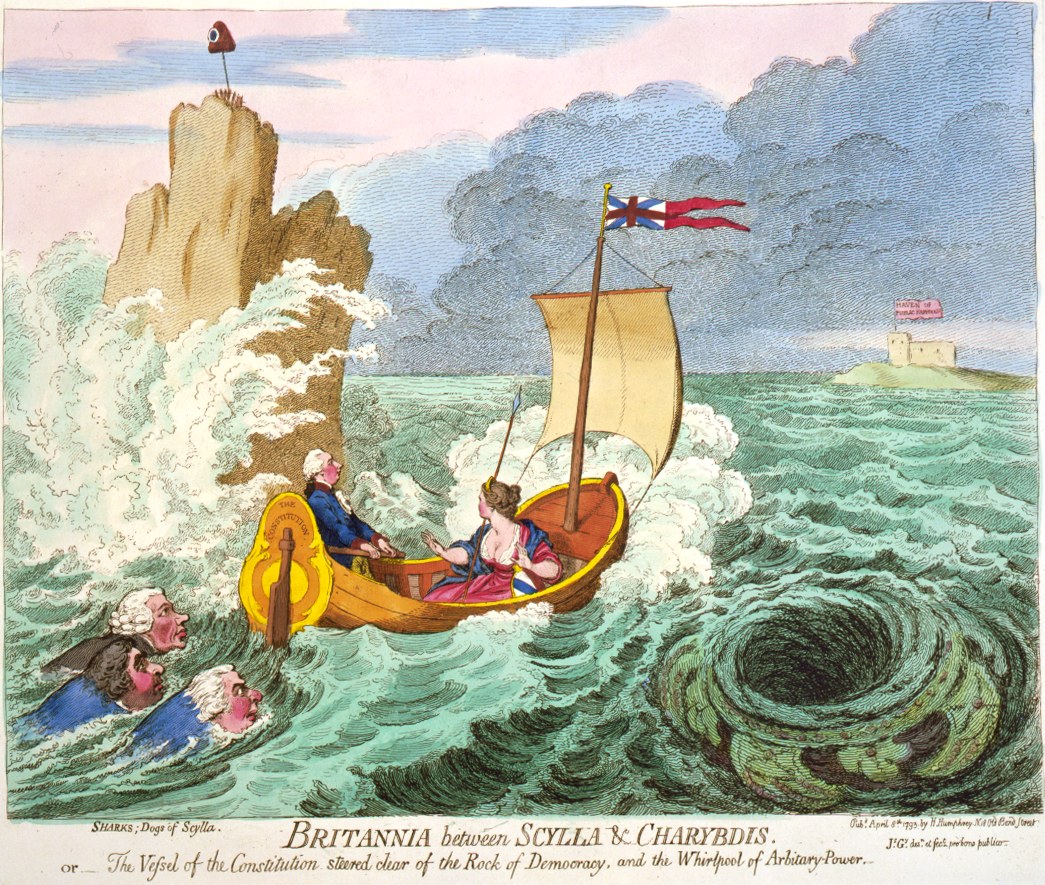
Skylla and Charybdis? An Easy Choice

A few months back I ran the following poll. The results surprised me.

I had imagined that Simonides made things clear:

Simonides, fr. 356

“Everything comes to a single, dreadful Charybdis—
The great virtues and wealth the same.”

πάντα γὰρ μίαν ἱκνεῖται δασπλῆτα Χάρυβδιν,
αἱ μεγάλαι τ’ ἀρεταὶ καὶ ὁ πλοῦτος.

No? Ok. Here’s a proverb and an explanation

Michael Apostolios, Collectio Paroemiarum 16.49

“Avoid Kharybdis and come close to Skyla.” This is similar to the saying, “I avoided it by finding a better evil”

They say about Skyla that she was a Tyrrhenian woman, something if a beast, who was a woman down to the navel but she grew dog heads beneath that point. The rest of her body was a serpent. This kind of a cerature is very silly to imagine. But here is the truth. There were the islands of the Tyrrenians, which used to raid the coasts of Sicily and the Ionian bay. There was a trirereme which had the named Skyla. That trireme used to overtake other ships often and use their food and there was many a story about it. Odysseus fled that ship. trusting a strong and favorable wind and he told this story in Corcyra to Alkinoos, how he was pursued and how he fled and what the shape of the ship was. From these stories, the myth was formed.”

Τὴν Χάρυβδιν ἐκφυγὼν, τῇ Σκύλῃ περιέπεσον:
ὁμοία τῇ· ῎Εφυγον κακὸν εὗρον ἄμεινον

Λέγουσι περὶ Σκύλης ὡς ἦν Τυῤῥηνία, θηρίον τι, γυνὴ  μὲν μέχρι τοῦ ὀμφαλοῦ, κυνῶν δὲ ἐντεῦθεν αὐτῇ προσπεφύκασι κεφαλαί· τὸ δ’ ἄλλο σῶμα ὄφεως. τοιαύτην δὲ φύσιν ἐννοεῖν πολὺ εὔηθες· ἡ δὲ ἀλήθεια αὕτη· Τυῤῥηνίων νῆσοι ἦσαν, αἳ ἐληΐζοντο τὰ περίχωρα τῆς Σικελίας καὶ τὸν ᾿Ιόνιον κόλπον· ἦν δὲ ναῦς τριήρης ταχεῖα τό τε ὄνομα Σκύλα· αὕτη ἡ τριήρης τὰ λοιπὰ τῶν πλοίων συλλαμβάνουσα πολλάκις εἰργάζετο βρῶμα, καὶ λόγος ἦν περὶ αὐτῆς πολύς· ταύτην τὴν ναῦν ᾿Οδυσσεὺς σφοδρῷ καὶ λαύρῳ πνεύματι χρησάμενος διέφυγε, διηγήσατο δὲ ἐν Κερκύρᾳ τῷ ᾿Αλκινόῳ, πῶς ἐδιώχθη καὶ πῶς ἐξέφυγε, καὶ τὴν ἰδέαν τοῦ πλοίου· ἀφ’ ὧν προσανεπλάσθη ὁ μῦθος.

Ok. Maybe that wasn’t clear.

Heraclitus, Homeric Problems 70

“Charybdis is an obvious name for luxury and endless drinking. Homer has allegorized manifold shamelessness in Skylla, which is why she would logically have a belt of dogs, guardians for her rapacity, daring, and pugnacity. “

Καὶ Χάρυβδις μὲν ἡ δάπανος ἀσωτία καὶ περὶ πότους ἄπληστος  εὐλόγως ὠνόμασται·  Σκύλλαν δὲ τὴν πολύμορφον ἀναίδειαν ἠλληγόρησε, διὸ δὴ κύνας οὐκ ἀλόγως ὑπέζωσται προτομαῖς ἁρπαγῇ, τόλμῃ καὶ πλεονεξίᾳ πεφραγμέναις·

Yeah, that doesn’t help matters. How about this?

Philo, On Dreams, 70

“But you, go away from “the smoke and the wave” and depart the ridiculous concerns of mortal life as from that fearsome Charybdis without touching it at all, don’t even, as the people say, brush it with your littlest toe.”

ἀλλὰ σύ γε τοῦ μὲν “καπνοῦ καὶ κύματος ἐκτὸς” βαῖνε καὶ τὰς καταγελάστους τοῦ θνητοῦ βίου σπουδὰς ὡς τὴν φοβερὰν ἐκείνην χάρυβδιν ἀποδίδρασκε καὶ μηδὲ ἄκρῳ, τὸ τοῦ λόγου τοῦτο, ποδὸς δακτύλῳ ψαύσῃς.

Plutarch, with an assist

Plutarch, Fr. 178, Stobaeus 4.52 from his On the Soul [Plutarch uses the same image elsewhere]

“For satiety seems to be becoming worn out in pleasures from the soul suffering in some way with the body, since the soul does not shirk from its pleasures. But when it is interwoven, as it is said, with the body, it suffers the same things as Odysseus, just as he was held, clinging to the fig tree, not because he desired it or delighted in it, but because he feared Charybdis lurking below him. The soul clings to the body and embraces it in this way not because of goodwill or gratitude but because it fears the uncertainty of death.

As wise Hesiod says, “the gods keep life concealed from human beings.” They have not tied the soul to the body with fleshly bonds, but they have devised and bound around the mind one cell and one guard, our uncertainty and distrust about our end. If a soul had faith in these things—“however so many await men when they die”, to quote Heraclitus—nothing would restrain it at all.”

 καὶ γὰρ ὁ κόρος κόπος ἐν ἡδοναῖς ἔοικεν εἶναι τῷ μετὰ σώματός τι τὴν ψυχὴν πάσχειν, ἐπεὶ πρός γε τὰς αὑτῆς ἡδονὰς οὐκ ἀπαγορεύει. συμπεπλεγμένη δέ, ὥσπερ εἴρηται, τῷ σώματι ταὐτὰ τῷ Ὀδυσσεῖ πέπονθεν· ὡς γὰρ ἐκεῖνος τῷ ἐρινεῷ προσφὺς εἴχετο καὶ περιέπτυσσεν οὐ ποθῶν οὐδ᾿ ἀγαπῶν ἐκεῖνον, ἀλλὰ δεδιὼς ὑποκειμένην τὴν Χάρυβδιν, οὕτως ἔοικεν ἡ ψυχὴ τοῦ σώματος ἔχεσθαι καὶ περιπεπλέχθαι δι᾿ εὔνοιαν οὐδεμίαν αὐτοῦ καὶ χάριν, ἀλλ᾿ ὀρρωδοῦσα τοῦ θανάτου τὴν ἀδηλότητα.

κρύψαντες γὰρ ἔχουσι θεοὶ βίον ἀνθρώποισι

κατὰ τὸν σοφὸν Ἡσίοδον, οὐ σαρκίνοις τισὶ δεσμοῖς πρὸς τὸ σῶμα τὴν ψυχὴν κατατείναντες, ἀλλ᾿ ἕνα δεσμὸν αὐτῇ καὶ μίαν φυλακὴν μηχανησάμενοι καὶ περιβαλόντες, τὴν ἀδηλότητα καὶ ἀπιστίαν τῶν μετὰ τὴν τελευτήν· ἐπεὶ τήν γε πεισθεῖσαν, ὅσα ἀνθρώπους περιμένει τελευτήσαντας καθ᾿ Ἡράκλειτον, οὐδὲν ἂν κατάσχοι.”

So, to be clear:  Charybdis=death. 


Britannia between Scylla & Charybdis. or— The Vessel of the Constitution steered clear of the Rock of Democracy, and the Whirlpool of Arbitrary-Power. James Gilray, 1793


Milking the He-Goat: The Only Proverb You Need Today

Polybius, Book 33 16a fragmenta incertae sedis (Full text on the Scaife viewer)

“20. As soon as the masses are compelled to love or hate people excessively, every excuse is sufficient for them to complete their plans.

21 But I worry that I might overlook the fact that the oft-cited saying applies to me: “who is the greater fool, the one who milks a male-goat or the one who holds the bucket* to catch it?”

For, I also seem, in reporting what is agreed upon as a lie and in dragging out the process to do something very similar. For this reason, it is pointless to talk about these things, unless someone also wants to write down dreams and examine the fantasies of someone who is awake.”

*koskinos here actually means “sieve”, which makes the whole process even more futile. I simplified to “bucket” to make it easier to understand…

20. Ὅτι ὅταν ἅπαξ οἱ πολλοὶ σχῶσιν ὁρμὴν πρὸς τὸ φιλεῖν ἢ μισεῖν τινας ὑπερβαλλόντως, πᾶσα πρόφασις ἱκανὴ γίνεται πρὸς τὸ συντελεῖν τὰς αὑτῶν προθέσεις.

21. Ἀλλὰ γὰρ ὀκνῶ μή ποτ᾿ εἰς τὸ περιφερόμενον ἐμπεσὼν λάθω, πότερον ὁ τὸν τράγον ἀμέλγων ἀφρονέστερος ἢ ὁ τὸ κόσκινον ὑπέχων· δοκῶ γὰρ δὴ κἀγὼ πρὸς ὁμολογουμένην ψευδολογίαν ἀκριβολογούμενος καὶ τὸν ἐπιμετροῦντα λόγον εἰσφέρων παραπλήσιόν τι ποιεῖν. διὸ καὶ μάτην τελέως περὶ τούτων λέγειν, εἰ μή τις καὶ γράφειν ἐνύπνια βούλεται καὶ θεωρεῖν ἐγρηγορότος ἐνύπνια.

Diogenianus writes on this proverb (Centuria 95.3; Cf. Mantissa Proverb., 2.68)

“Who is the greater fool, the one who milks a male-goat or the one who holds the bucket to catch it? You should say the [one who milks] the male-goat”

Πότερον ὁ τὸν τράγον ἀμέλγων ἀφρονέστερος, ἢ ὁ τὸ κόσκινον ὑποτιθείς; εἴποις, ὁ τὸν τράγον:

Arsenius, Centuria 17 41a7

“To milk a he-goat”: this is applied to those who do something incongruous and ignorant. From this we also get the saying from Diogenianus: “Who is the greater fool, the one who milks a male-goat or the one who holds the bucket to catch it?”

“Τράγον ἀμέλγειν: ἐπὶ τῶν ἀνάρμοστόν τι ποιούντων καὶ ἀνόητον. ὅθεν καὶ Διογενιανός· πότερον ὁ τὸν τράγον ἀμέλγων ἢ ὁ τὸ κόσκινον ὑποτιθεὶς ἀφρονέστερος;

From Medieval Bestiary: Bibliothèque Nationale de France, lat. 6838B, Folio 15r