Evict the Rich, Feed Everyone?

Cicero, Pro Sestio 103

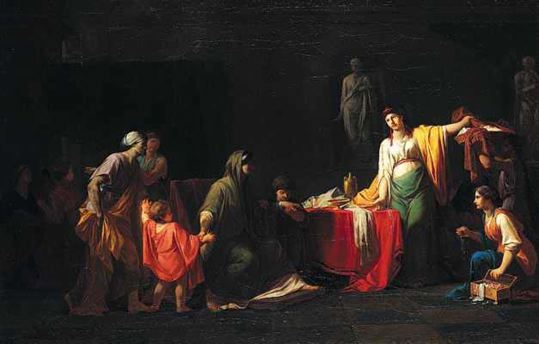
“The people were certain that their freedom was at risk. Their leaders did not agree. As far as a matter concerned the safety of the aristocrats, they were afraid of the rashness of the masses and the liberty in the vote. Tiberius Gracchus was introducing his agrarian law. It was welcomed by the people since it appeared to firm up the fortunes of the lower classes. The aristocrats were against it because they believed it created unrest and imagined that the State would be disarmed of its greatest protectors once the rich were evicted from their long-term holdings. Gaius Gracchus was introducing a grain law. It was also welcome to the people for it provided plentiful food without labor. The Nobles were aghast because they believed that such a law disincentivized work in favor of laziness and that it would drain the treasury.”

Populus libertatem agi putabat suam. Dissentiebant principes et in salute optimatium temeritatem multitudinis et tabellae licentiam pertimescebant. Agrariam Ti. Gracchus legem ferebat. Grata erat populo; fortunae constitui tenuiorum videbantur. Nitebantur contra optimates, quod et discordiam excitari videbant et, cum locupletes possessionibus diuturnis moverentur, spoliari rem publicam propugnatoribus arbitrabantur. Frumentariam legem C. Gracchus ferebat. Iucunda res plebei; victus enim suppeditabatur large sine labore. Repugnabant boni, quod et ab industria plebem ad desidiam avocari putabant et aerarium exhauriri videbant.

Agrarian Law: Tiberius Gracchus  introduced a law in 133 BCE that no holder of public land (ager publicus populi Romani) should have more than 500 iugera and that land should be re-distributed to the poor.

Not to ruin it, but things did not turn out well for the Gracchi

Cornelia, Mother of the Gracchi

It Is Impossible to Speak Worthily of the Dead

Epitaphios: A speech performed annually in honor of those who have died in war. See this  piece in The Conversation on Greek memorials or listen to a conversation with Arnie Arnesen.

The most famous that remains is Thucydides’ version of Perikles’ funeral oration (2.35-46).

Thucydides, 2.35

“Many of those who have spoken here already praised the one who made this speech law, that it is a noble thing to speak over the burials of those who died in war.  But honors paid in deeds for deeds performed by good men would seem to be sufficient to me—the acts which you see performed now by the public at this burial. The virtues of many should not be risked by entrusting them to the good or poor speaking of one man alone. “

‘Οἱ μὲν πολλοὶ τῶν ἐνθάδε ἤδη εἰρηκότων ἐπαινοῦσι τὸν προσθέντα τῷ νόμῳ τὸν λόγον τόνδε, ὡς καλὸν ἐπὶ τοῖς ἐκ τῶν πολέμων θαπτομένοις ἀγορεύεσθαι αὐτόν. ἐμοὶ δὲ ἀρκοῦν ἂν ἐδόκει εἶναι ἀνδρῶν ἀγαθῶν ἔργῳ γενομένων ἔργῳ καὶ δηλοῦσθαι τὰς τιμάς, οἷα καὶ νῦν περὶ τὸν τάφον τόνδε δημοσίᾳ παρασκευασθέντα ὁρᾶτε, καὶ μὴ ἐν ἑνὶ ἀνδρὶ πολλῶν ἀρετὰς κινδυνεύεσθαι εὖ τε καὶ χεῖρον εἰπόντι πιστευθῆναι.

For more….

Lysias, Epitaphios 1-3

“If I believed it were possible, men in attendance, to make clear in this speech the virtue of the men who lie here, I would complain to those who summoned me to speak after only a few days.

Εἰ μὲν ἡγούμην οἷόν τε εἶναι, ὦ ἄνδρες οἱ παρόντες ἐπὶ τῷδε τῷ τάφῳ, λόγῳ δηλῶσαι τὴν τῶν ἐνθάδε κειμένων [ἀνδρῶν] ἀρετήν, ἐμεμψάμην ἂν τοῖς ἐπαγγείλασιν ἐπ’ αὐτοῖς ἐξ ὀλίγων ἡμερῶν λέγειν·

For more…

Plato’s Menexenus (236dff), Socrates recites an epitaphios given by Aspasia:

“In deed, these men have what is required for them materially—now that they have obtained it, they proceed along the fated path: they have been carried out in common by the city and in private by their families.  But in speech it is necessary to pay out the remaining rite which custom assigns us.

῎Εργῳ μὲν ἡμῖν οἵδε ἔχουσιν τὰ προσήκοντα σφίσιν αὐτοῖς, ὧν τυχόντες πορεύονται τὴν εἱμαρμένην πορείαν, προπεμφθέντες κοινῇ μὲν ὑπὸ τῆς πόλεως, ἰδίᾳ δὲ ὑπὸ τῶν οἰκείων· λόγῳ δὲ δὴ τὸν λειπόμενον κόσμον ὅ τε νόμος προστάττει ἀποδοῦναι τοῖς ἀνδράσιν καὶ χρή.

For more…

Demosthenes, Epitaphios (speech 60)

“Since it seems right to the state to bury those lying in this grave publicly because they proved themselves noble in war and it has been assigned to me to deliver the customary speech on their behalf, I immediately began to examine how others have crafted the appropriate praise. But while I was considering and examining this, I realized that speaking worthily of the dead is one of those things that is impossible for men.”

᾿Επειδὴ τοὺς ἐν τῷδε τῷ τάφῳ κειμένους, ἄνδρας ἀγαθοὺς ἐν τῷ πολέμῳ γεγονότας, ἔδοξεν τῇ πόλει δημοσίᾳ θάπτειν καὶ προσέταξεν ἐμοὶ τὸν νομιζόμενον λόγον εἰπεῖν ἐπ’ αὐτοῖς, ἐσκόπουν μὲν εὐθὺς ὅπως τοῦ προσήκοντος ἐπαίνου τεύξονται, ἐξετάζων δὲ καὶ σκοπῶνἀξίως εἰπεῖν τῶν τετελευτηκότων ἕν τι τῶν ἀδυνάτων ηὕρισκον ὄν.

For more….

Image result for ancient greek epitaph
An epitaph

No One Uses Thucydides As A Model

Cicero, Orat. 9.30-32

“Thucydides, however, tells of history, wars and battles, in a noble and strong way, but nothing he writes can be transferred to forensic or political use. Those well-known speeches have so many unclear and odd phrases that they barely make sense, something which is probably the worst offense in public address.

Do humans possess so much perversity that we will eat acorns after grains have been discovered? Is it possible that the human diet could be changed thanks to Athenian invention but not oratory? Who of the Greek orators, moreover, ever used Thucydides’ work as a model? Surely, he’s praised by everyone. I concede this. But he is praised as a wise explainer of events, a no-nonsense, serious man of the kind who did not pursue cases in court but described battles in history. For this reason, he has never been counted as an orator and would not, indeed, have gained any fame if he had not written history, even though he was noble and elected to office.

Still, no one can really imitate the weight of his words and ideas—but when some people articulate a few broken and unrelated statements, which they could have done even without a teacher, they imagine themselves to be a new-born Thucydides.”

Thucydides autem res gestas et bella narrat et proelia, graviter sane et probe, sed nihil ab eo transferri potest ad forensem usum et publicum. Ipsae illae contiones ita multas habent obscuras abditasque sententias vix ut intellegantur; quod est in oratione civili vitium vel maximum. Quae est autem in hominibus tanta perversitas, ut inventis frugibus glande vescantur? An victus hominum Atheniensium beneficio excoli potuit, oratio non potuit? Quis porro unquam Graecorum rhetorum a Thucydide quicquam duxit? At laudatus est ab omnibus. Fateor; sed ita ut rerum explicator prudens, severus, gravis, non ut in iudiciis versaret causas, sed ut in historiis bella narraret. Itaque nunquam est numeratus orator, nec vero, si historiam non scripsisset, nomen eius exstaret, cum praesertim fuisset honoratus et nobilis. Huius tamen nemo neque verborum neque sententiarum gravitatem imitatur, sed cum mutila quaedam et hiantia locuti sunt, quae vel sine magistro facere potuerunt, germanos se putant esse Thucydidas.

Fragment of the Athenian Tribute List, 425-424 BCE

Suspicious Speech and the Pleasure Principle

Quintilian Inst Orat. 5.14

“In addition, the harsher something is by nature, the more it must be peppered with pleasures. A speech’s content is less suspicious thanks to disguise; and the audience’s pleasure aids much the speech’s credibility. Unless, of course, we believe that Cicero put it badly in his suggestion that ‘laws keep quiet among arms’ or ‘sometimes a sword is handed to us by the laws themselves.’ In these cases, the devices must be consideration as an ornament, not an impediment.”

quoque quid est natura magis asperum, hoc pluribus condiendum est voluptatibus, et minus suspecta argumentatio dissimulatione, et multum ad fidem adiuvat audientis voluptas: nisi forte existimamus Ciceronem haec ipsa male in argumentatione dixisse, ‘silere leges inter arma’, et ‘gladium nobis interim ab ipsis porrigi legibus’. In his tamen habendus is est modus ut sint ornamento, non impedimento.

Image result for medieval manuscript pleasure
Roman de la Rose. Bruges c. 1490-150

Really, We Have To Go to War

Thucydides, Peloponnesian War 1.144

“I have many other reasons to hope for the outcome if you are willing not to grow your empire by warring more and not to add dangers of your own choosing. For I am much more afraid of our own mistakes than our enemies’ plans.

But these are topics which will be explained in another speech on those matters. For now, let use send them away with these answers, that we will allow the Megarians to use our marketplace and harbors provided that the Spartans do not continue their foreign actions against us or our allies—for nothing stops this action or that one in the treaties we have. In addition, we will leave cities independent if they were independent when we came into contact with them and when those cities did not give in to them, they should be independent too, as each of them desires.

Add as well that we are willing to submit to judgments according to the treaties and we will not begin the war, although we will defend against those who do start it. These answers are just and proper answers for the city. You need to understand that we must go to war—but if we welcome it willingly, we will have less enthusiastic opponents.

Remember also that the greatest honors come both in private and public from the greatest dangers. Didn’t our fathers stand up against the Medes even though they started from so unequal a position? And when they left everything they had behind, they fought off the barbarian with greater intelligence than luck and greater daring than power and raised our state to what it is today. For this reason, we must not fall back, but we must defend against our enemies in every way and strive to give to our descendants a state no weaker at all.”

‘Πολλὰ δὲ καὶ ἄλλα ἔχω ἐς ἐλπίδα τοῦ περιέσεσθαι, ἢν ἐθέλητε ἀρχήν τε μὴ ἐπικτᾶσθαι ἅμα πολεμοῦντες καὶ κινδύνους αὐθαιρέτους μὴ προστίθεσθαι· μᾶλλον γὰρ πεφόβημαι τὰς οἰκείας ἡμῶν ἁμαρτίας ἢ τὰς τῶν ἐναντίων διανοίας. ἀλλ’ ἐκεῖνα μὲν καὶ ἐν ἄλλῳ λόγῳ ἅμα τοῖς ἔργοις δηλωθήσεται· νῦν δὲ τούτοις ἀποκρινάμενοι ἀποπέμψωμεν, Μεγαρέας μὲν ὅτι ἐάσομεν ἀγορᾷ καὶ λιμέσι χρῆσθαι, ἢν καὶ Λακεδαιμόνιοι ξενηλασίας μὴ ποιῶσι μήτε ἡμῶν μήτε τῶν ἡμετέρων ξυμμάχων (οὔτε γὰρ ἐκεῖνο κωλύει ἐν ταῖς σπονδαῖς οὔτε τόδε), τὰς δὲ πόλεις ὅτι αὐτονόμους ἀφήσομεν, εἰ καὶ αὐτονόμους ἔχοντες ἐσπεισάμεθα, καὶ ὅταν κἀκεῖνοι ταῖς ἑαυτῶν ἀποδῶσι πόλεσι μὴ σφίσι [τοῖς Λακεδαιμονίοις] ἐπιτηδείως αὐτονομεῖσθαι, ἀλλ’ αὐτοῖς ἑκάστοις ὡς βούλονται· δίκας τε ὅτι ἐθέλομεν δοῦναι κατὰ τὰς ξυνθήκας, πολέμου δὲ οὐκ ἄρξομεν, ἀρχομένους δὲ ἀμυνούμεθα. ταῦτα γὰρ δίκαια καὶ πρέποντα ἅμα τῇδε τῇ πόλει ἀποκρίνασθαι. εἰδέναι δὲ χρὴ ὅτι ἀνάγκη πολεμεῖν, ἢν δὲ ἑκούσιοι μᾶλλον δεχώμεθα, ἧσσον ἐγκεισομένους τοὺς ἐναντίους ἕξομεν, ἔκ τε τῶν μεγίστων κινδύνων ὅτι καὶ πόλει καὶ ἰδιώτῃ μέγισται τιμαὶ περιγίγνονται. οἱ γοῦν πατέρες ἡμῶν ὑποστάντες Μήδους καὶ οὐκ ἀπὸ τοσῶνδε ὁρμώμενοι, ἀλλὰ καὶ τὰ ὑπάρχοντα ἐκλιπόντες, γνώμῃ τε πλέονι ἢ τύχῃ καὶ τόλμῃ μείζονι ἢ δυνάμει τόν τε βάρβαρον ἀπεώσαντο καὶ ἐς τάδε προήγαγον αὐτά. ὧν οὐ χρὴ λείπεσθαι, ἀλλὰ τούς τε ἐχθροὺς παντὶ τρόπῳ ἀμύνεσθαι καὶ τοῖς ἐπιγιγνομένοις πειρᾶσθαι αὐτὰ μὴ ἐλάσσω παραδοῦναι.’

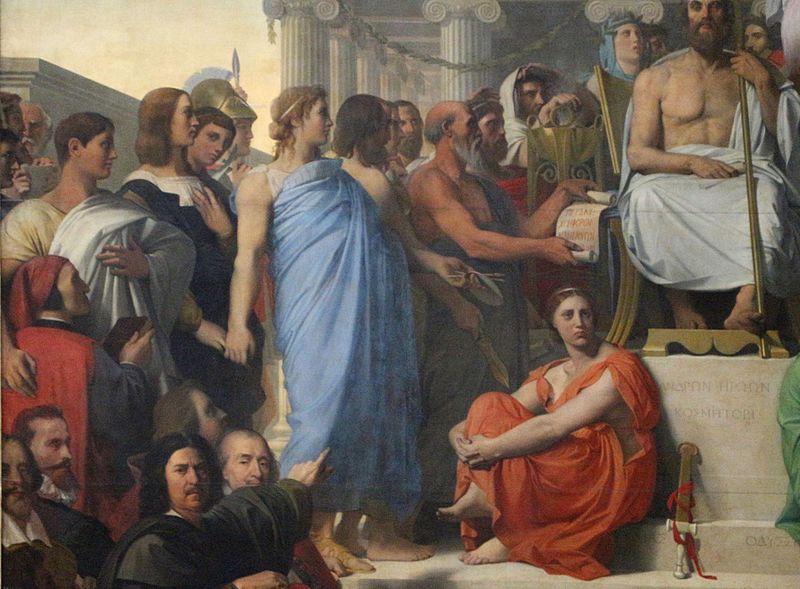
File:Jean-auguste-dominique ingres, uomo deificato, detto l'apoteosi di omero, 1827, 02.jpg
Detail of J.A.D Ingres’  “Apotheosis of Homer”


Worse Through Words: National Emergencies and War

Cicero, Philippic 8.2

“But what is the substance of the controversy? Some people were thinking that the title “war” should not be given in the statement; they were preferring to use the term “national emergency” because they are ignorant not only of the matter but of words too. For a war is possible without a “national emergency”, but a “national emergency”, however, cannot exist without a war. What thing could be a “national emergency” but a trouble so great that a serious fear arises?

This is where the terminology itself for “national emergency” [tumultus] comes from. For our ancestors used to say that there was a “national emergency” in Italy  which was domestic or a “national emergency” in Gaul, which is on our border, but they used to call nothing else that. And that a “national emergency” is, moreover, more serious than a war can be understood from the fact that exemptions from service are valid in war but they are not in “national emergency”.

Therefore, as I was just saying, a war can exist without a “national emergency” but a “national emergency” cannot exist without a war. And since there can be no middle-ground between war and peace, it is true that a “national emergency”, if it is not part of a war, must be part of a peace. And what could be a crazier to say or imagine? But I have gone on too long about a word. Let’s look at the matter itself, Senators, which I do think often can become worse through language.”

At in quo fuit controversia? Belli nomen ponendum quidam in sententia non putabant: tumultum appellare malebant, ignari non modo rerum sed etiam verborum: potest enim esse bellum ut tumultus non sit, tumultus autem esse sine bello non potest. Quid est enim aliud tumultus nisi perturbatio tanta ut maior timor oriatur? Unde etiam nomen ductum est tumultus. Itaque maiores nostri tumultum Italicum quod erat domesticus, tumultum Gallicum quod erat Italiae finitimus, praeterea nullum nominabant. Gravius autem tumultum esse quam bellum hinc intellegi potest quod bello [Italico] vacationes valent, tumultu non valent. Ita fit, quem ad modum dixi, ut bellum sine tumultu possit, tumultus sine bello esse non possit.4Etenim cum inter bellum et pacem medium nihil sit, necesse est tumultum, si belli non sit, pacis esse: quo quid absurdius dici aut existimari potest? Sed nimis multa de verbo. Rem potius videamus, patres conscripti, quam quidem intellego verbo fieri interdum deteriorem solere.

Frank Schoonover. The scene depicts the bravery of Alvin C. York in 1918.

The Reason for Empire’s Fall

Isocrates, On the Peace 116-119

“If you listen to me, and you stop taking just any kind of advice at all and pay attention to yourselves and the city, you will gain some wisdom and examine what happened to these two cities, ours and Sparta. How did their empires over Greece rise up from pretty basic affairs and then, once they each took unrivaled power, how did they risk enslavement? What was the reason that the Thessalians, who have the most wealth, and the best and most abundant land, fell into poverty, but the Megarians, whose starting point was small and ragged, and even though they did not have land or harbors, or silver minds but were just farming stones, developed the richest economy of the Greeks?

Why do other people frequently control the Thessalians’ fortresses when they have a cavalry over three thousand and countless peltasts beyond that while the Megarians, who have only a small force, control their city as they want? In addition to this, why are the Thessalians always at war against one another while the Megarians who live near the Peloponnesians, the Thebans, and our city manage to survive at peace?

If you work through these questions, you will find that a lack of self-control and arrogance are the cause of our problems, while prudence is responsible for all of our advantages.”

Ἢν οὖν ἐμοὶ πεισθῆτε, παυσάμενοι τοῦ παντάπασιν εἰκῇ βουλεύεσθαι προσέξετε τὸν νοῦν ὑμῖν αὐτοῖς καὶ τῇ πόλει, καὶ φιλοσοφήσετε καὶ σκέψεσθε τί τὸ ποιῆσάν ἐστι τὼ πόλη τούτω, λέγω δὲ τὴν ἡμετέραν καὶ τὴν Λακεδαιμονίων, ἐκ ταπεινῶν μὲν πραγμάτων ἑκατέραν ὁρμηθεῖσαν ἄρξαι τῶν Ἑλλήνων, ἐπεὶ δ᾿ ἀνυπέρβλητον τὴν δύναμιν ἔλαβον, περὶ ἀνδραποδισμοῦ κινδυνεῦσαι· καὶ διὰ τίνας αἰτίας Θετταλοὶ μέν, μεγίστους πλούτους παραλαβόντες καὶ χώραν ἀρίστην καὶ πλείστην ἔχοντες, εἰς ἀπορίαν καθεστήκασι, Μεγαρεῖς δέ, μικρῶν αὐτοῖς καὶ φαύλων τῶν ἐξ ἀρχῆς ὑπαρξάντων, καὶ γῆν μὲν οὐκ ἔχοντες οὐδὲ λιμένας οὐδ᾿ ἀργυρεῖα, πέτρας δὲ γεωργοῦντες, μεγίστους οἴκους τῶν Ἑλλήνων κέκτηνται· κἀκείνων μὲν τὰς ἀκροπόλεις ἄλλοι τινὲς ἀεὶ κατέχουσιν, ὄντων αὐτοῖς πλέον τρισχιλίων ἱππέων καὶ πελταστῶν ἀναριθμήτων, οὗτοι δὲ μικρὰν δύναμιν ἔχοντες τὴν αὑτῶν ὅπως βούλονται διοικοῦσιν· καὶ πρὸς τούτοις οἱ μὲν σφίσιν αὐτοῖς πολεμοῦσιν, οὗτοι δὲ μεταξὺ Πελοποννησίων καὶ Θηβαίων καὶ τῆς ἡμετέρας πόλεως οἰκοῦντες εἰρήνην ἄγοντες διατελοῦσιν. ἢν γὰρ ταῦτα καὶ τὰ τοιαῦτα διεξίητε πρὸς ὑμᾶς αὐτούς, εὑρήσετε τὴν μὲν ἀκολασίαν καὶ τὴν ὕβριν τῶν κακῶν αἰτίαν γιγνομένην, τὴν δὲ σωφροσύνην τῶν ἀγαθῶν.

Image result for you see what god did to us man gif

Image result for god didn't do that fear and loathing

“Do Not Acquit this Man”

Publilius Syrus, 296

“Acquitting the guilty convicts the judge.”

Iudex damnatur cum nocens absolvitur.

Dinarchus, Against Aristogiton 107; 105

“Will you really acquit this damned man who never did you anything good from his first public act but instead has done every evil he could?”

τὸν δὲ κατάρατον τοῦτον, ὃς ἀγαθὸν μὲν ὑμᾶς οὐδεπώποτε πεποίηκεν ἐξ οὗ πρὸς τὴν πόλιν προσελήλυθε, κακὸν δ᾿ ὅ τι δυνατός ἐστιν, ἀφήσετε;

“You have to believe, by god, that he will be no better in the future after getting this judgment from you and will never stop taking bribes against you if you acquit him.”

οὐ γὰρ δὴ μὰ τὸν Ἡρακλέα βελτίω γενήσεσθαι αὐτὸν προσδοκᾶτε συγγνώμης νυνὶ τυγχάνοντα παρ᾿ ὑμῶν, οὐδὲ τὸ λοιπὸν ἀφέξεσθαι τοῦ λαμβάνειν χρήματα καθ᾿ ὑμῶν, ἐὰν νῦν ἀφῆτε αὐτόν.

Seneca, Moral Epistles 97.3

“The crime was less offensive than the acquittal.”

Minus crimine quam absolutione peccatum est

Demosthenes, On the False Legation

“For your reputation, for your religion, for your safety, for every advantage you have, do not acquit this man—no, exact vengeance upon him to make him an example to everyone, to our citizens and to the rest of the world.”

οὔτε γὰρ πρὸς δόξαν οὔτε πρὸς εὐσέβειαν οὔτε πρὸς ἀσφάλειαν οὔτε πρὸς ἄλλ᾿ οὐδὲν ὑμῖν συμφέρει τοῦτον ἀφεῖναι, ἀλλὰ τιμωρησαμένους παράδειγμα ποιῆσαι πᾶσι, καὶ τοῖς πολίταις καὶ τοῖς ἄλλοις Ἕλλησιν.

Quintilian, 7.4

“This is a domestic problem, in which sometimes it is enough to claim that there was only one crime, or it was just a mistake, or less severe than is claim for an acquittal”

Est enim domestica disceptatio, in qua et semel peccasse et per errorem et levius quam obiciatur absolutioni nonnumquam sufficit.

Dinarchus, Against Demosthenes 29

“Do not acquit this man, citizens, do not acquit and leave unpunished someone who has signed off on the misfortunes of this state and the world, a man who has been caught in corruption against the state….”

μὴ ἀφῆτε, ἄνδρες Ἀθηναῖοι, μὴ ἀφῆτε τὸν ἐπὶ τοῖς τῆς πόλεως καὶ τῶν ἄλλων Ἑλλήνων ἀτυχήμασιν ἐπιγεγραμμένον ἀτιμώρητον, εἰλημμένον ἐπ᾿ αὐτοφώρῳ δῶρα ἔχοντα κατὰ τῆς πόλεως

Lysias, Against Nicomachus 30

“Today you need to change your minds about what you have done. You need to refuse to keep being abused by these people. Don’t reproach those who have done wrong in private! Do not acquit the guilty when it is in your power to punish them.”

νῦν τοίνυν ὑμῖν μεταμελησάτω τῶν πεπραγμένων, καὶ μὴ ὑπὸ τούτων ἀεὶ κακῶς πάσχοντες ἀνέχεσθε, μηδὲ ἰδίᾳ μὲν ὀνειδίζετε τοῖς ἀδικοῦσιν, ἐπειδὰν δ᾿ ἐξῇ δίκην παρ᾿ αὐτῶν λαμβάνειν, ἀποψηφίζεσθε.

Andocides, Against Alcibiades 25

“I will show from the very facts he uses that he is more fit for death than acquittal. I will explain it to you.”

ἐξ αὐτῶν δὲ τούτων ἐπιδείξω αὐτὸν ἐπιτηδειότερον τεθνάναι μᾶλλον ἢ σῴζεσθαι. διηγήσομαι δ᾿ ὑμῖν.

Lysias, Against the Corn-Dealers 17

“You need to understand that it is impossible for you to acquit. If you ignore the charge when they admit that they are conspiring against the traders, then you will seem to make a judgment against the importers. If they were making up any other kind of defense, no one would criticize a vote to acquit since you can choose to believe whatever side you want. But, as things are now, you can’t imagine you are doing something amazing if you acquit unpunished those who admit that they broke the law!”

Ἐνθυμεῖσθαι δὲ χρὴ ὅτι ἀδύνατον ὑμῖν ἐστιν ἀποψηφίσασθαι. εἰ γὰρ ἀπογνώσεσθε ὁμολογούντων αὐτῶν ἐπὶ τοὺς ἐμπόρους συνίστασθαι, δόξεθ᾿ ὑμεῖς ἐπιβουλεύειν τοῖς εἰσπλέουσιν. εἰ μὲν γὰρ ἄλλην τινὰ ἀπολογίαν ἐποιοῦντο, οὐδεὶς ἂν εἶχε τοῖς ἀποψηφισαμένοις ἐπιτιμᾶν· ἐφ᾿ ὑμῖν γὰρ ὁποτέροις βούλεσθε πιστεύειν· νῦν δὲ πῶς οὐ δεινὰ ἂν δόξαιτε ποιεῖν, εἰ τοὺς ὁμολογοῦντας παρανομεῖν ἀζημίους ἀφήσετε;

acquit

Solon Says: Sue Bad Leaders of State

Aeschines, Against Timarchus

“[Solon] believed that someone who managed their own personal affairs badly would manage matters of state similarly. It did not seem likely to the lawgiver that that the same person who was a scoundrel in private would be a useful citizen in public. He also did not think right that a person should come to speak in public before being prepared for it, not just for words but in life.

And he also thought that advice from a good and noble person, however poorly and simply it was framed, is beneficial to those who hear it, while the words of a person who has no shame, who has made a mockery of his own body and who has shamefully managed his inheritance—well, these words he believed would never help the people who heard them, not even if they were delivered well.

This is why he keeps these kinds of people from the platform, why he forbids them from addressing the public. If someone speaks, then, not merely against these precepts but also for the sack of bribery and criminality, and if the state can no longer endure such a person, he adds “Let any citizens who desires it, and who is able, sue him…”

τὸν γὰρ τὴν ἰδίαν οἰκίαν κακῶς οἰκήσαντα, καὶ τὰ κοινὰ τῆς πόλεως παραπλησίως ἡγήσατο διαθήσειν, καὶ οὐκ ἐδόκει οἷόν τ᾿ εἶναι τῷ νομοθέτῃ τὸν αὐτὸν ἄνθρωπον ἰδίᾳ μὲν εἶναι πονηρόν, δημοσίᾳ δὲ χρηστόν, οὐδ᾿ ᾤετο δεῖν τὸν ῥήτορα ἥκειν ἐπὶ τὸ βῆμα τῶν λόγων ἐπιμεληθέντα πρότερον, ἀλλ᾿ οὐ τοῦ βίου. καὶ παρὰ μὲν ἀνδρὸς καλοῦ καὶ ἀγαθοῦ, κἂν πάνυ κακῶς καὶ ἁπλῶς ῥηθῇ, χρήσιμα τὰ λεγόμενα ἡγήσατο εἶναι τοῖς ἀκούουσι· παρὰ δὲ ἀνθρώπου βδελυροῦ, καὶ καταγελάστως μὲν κεχρημένου τῷ ἑαυτοῦ σώματι, αἰσχρῶς δὲ τὴν πατρῴαν οὐσίαν κατεδηδοκότος, οὐδ᾿ ἂν εὖ πάνυ λεχθῇ συνοίσειν ἡγήσατο τοῖς ἀκούουσι. τούτους οὖν ἐξείργει ἀπὸ τοῦ βήματος, τούτους ἀπαγορεύει μὴ δημηγορεῖν. ἐὰν δέ τις παρὰ ταῦτα μὴ μόνον λέγῃ, ἀλλὰ καὶ συκοφαντῇ καὶ ἀσελγαίνῃ, καὶ μηκέτι τὸν τοιοῦτον ἄνθρωπον δύνηται φέρειν ἡ πόλις, “Δοκιμασίαν μέν,” φησίν, “ἐπαγγειλάτω Ἀθηναίων ὁ βουλόμενος, οἷς ἔξεστιν,” ὑμᾶς δ᾿ ἤδη κελεύει

File:Portrait bust of Sophocles on Herm (known as Solon)-Uffizi.jpg
Bust Labeled “Solon” but Probably actually Sophocles. Sue Me.

Senators, Do Not Fail the Republic!

Cicero Philippic 3.14

“For this reason, Senators—by the gods almighty—take this opportunity offered to you and finally remember that you are the leaders of the most powerful council in the world. Give a sign to the Roman people that your response will not fail the Republic since they do insist that their own dedication will not fail you. You don’t need my warning!

No person is so foolish that they don’t understand that if we remain asleep at this moment we will have to live through a rule that is not only cruel and arrogant but ignoble and disgraceful too. You know this man’s arrogance, his friends, and his whole household. To serve shameful lusts, bullies, disgusting and irreverent thieves, those drunkards—well, that is the worst suffering married to the greatest dishonor.

But if—and the gods forbid this—if the final story of our Republic is being told, may we face it like noble gladiators when they fall with honor. Let us who were the leaders of the whole world and model for every people act so that we die with dignity rather than serve in disgrace. Nothing is more hateful than dishonor; nothing is more despicable than servitude. We were born into honor and freedom: let us keep them or die with dignity.

For too long we have hidden our thoughts. Now it is out in the open. Everyone is making what they think, what they want for each side clear. There are traitorous citizens—too many given the value of our Republic—but they are a mere few in comparison to those who know what’s right…”

14] Hanc igitur occasionem oblatam tenete, per deos immortalis, patres conscripti, et amplissimi orbis terrae consili principes vos esse aliquando recordamini! Signum date populo Romano consilium vestrum non deesse rei publicae, quoniam ille virtutem suam non defuturam esse profitetur. Nihil est quod moneam vos.

Nemo est tam stultus qui non intellegat, si indormierimus huic tempori, non modo crudelem superbamque dominationem nobis sed ignominiosam etiam et flagitiosam ferendam. Nostis insolentiam Antoni, nostis amicos, nostis totam domum. Libidinosis, petulantibus, impuris, impudicis, aleatoribus, ebriis servire, ea summa miseria est summo dedecore coniuncta.

Quod si iam—quod di omen avertant!—fatum extremum rei publicae venit, quod gladiatores nobiles faciunt, ut honeste decumbant, faciamus nos, principes orbis terrarum gentiumque omnium, ut cum dignitate potius cadamus quam cum ignominia serviamus. Nihil est detestabilius dedecore, nihil foedius servitute. Ad decus et ad libertatem nati sumus: aut haec teneamus aut cum dignitate moriamur.

Nimium diu teximus quid sentiremus; nunc iam apertum est. Omnes patefaciunt in utramque partem quid sentiant, quid velint. Sunt impii cives—pro caritate rei publicae nimium multi, sed contra multitudinem bene sentientium admodum pauci…

Oil painting on canvas, An Ideal Classical Landscape with Cicero and Friends, by Jacob More (Edinburgh 1740 ? Rome 1793), signed and dated: Rome, 1780.