

This post is a continuation of Painful Signs, a series of posts on the Iliad. The full list of posts is here. New posts will be added on various books, with an emphasis on new projects and highlighting scholarship in general.
πῶς ἂν ἔπειτ’ ᾿Οδυσῆος ἐγὼ θείοιο λαθοίμην…τούτου γ’ ἑσπομένοιο καὶ ἐκ πυρὸς αἰθομένοιο / ἄμφω νοστήσαιμεν, ἐπεὶ περίοιδε νοῆσαι.
“…How could I ever overlook godlike Odysseus?….When he is by my side, the two of us could comeback from burning fire, since he surpasses everyone in thinking!” (Il. 10.242-7 adapted)
This fall marks the 20th anniversary of my first published article, “Flight Club: The New Archilochus Fragment and Its Resonance with Homeric Epic” MD 57 (2006) 9–41. Elton Barker and I wrote it together over 2005 after an exhilarating few years together at the Venice International University Advanced Seminar on the Humanities for its inaugural program. The sheen on the article is darkened a little by the journey that the publisher of the fragment took in later years, but I have been thinking about it a lot lately. This piece changed the course of my career and set the tone for the work Elton and I have done together, and both in content and form has offered a different model for how to do the work we do in the academy.
Twenty years is oddly both a long and a short time. Oh, there are the clear Odyssean echoes, but in higher education, the past 20 years have been transformative (in mostly bad ways). In the history of classical scholarship? Well, two decades are almost nothing. Yet, at the same time, this period took me from being (relatively young) to (solidly) middle aged. We went from graduate students to full professors. We went from bachelors to fathers.
What do I think of it now?
First, I don’t know that I would be where I am today if not for this piece. I remember Paul T. Alessi, the classicist who hired me for my first job at UT San Antonio mentioning how much he liked it during my on campus interview. It was my only article in print at the time (to join a few book reviews) and I am certain I would not have made any short lists without it.


Second, I see in the piece some of the central methodological concerns that have framed my (and our) work for twenty years. We emphasize non-hierarchical approaches to interpretating the poetry of the Archaic period. This means, that instead of imagining that Archilochus is responding to Homer, we insist instead that because of the oral-formulaic performance environment and the unknown process of fixity and textualization, that it is actually more appropriate to imagine a dynamic interpretive environment wherein lyric and epic (and other genres) were in conversation with one another. Our “Homer’ is a product of a competitive song culture that appropriates and ‘remixes’.
Two other elements essential here, then, is our focus on understanding the orality of early Greek poetry and rivalrous nature of its performance culture. Add to this a consistent emphasis on decentering authorship and recentering audiences, and you find the foundations of years of work. While the details of this article’s presentation of flight from battle amidst an elegiac retelling of a different kind of Trojan War narrative are significant from a scholarly perspective, our concern was almost always about how to reconstruct how ancient audiences made meaning of poetic performances over time.
Third—and perhaps the most significant—the decentering of authorship in our work is, I think, connected as well to our deauthorizing of the solitary scholar model. Even while working on my dissertation, I had the benefit of a circle of peers I met who shared their work and read mine and changed it for the better. In researching and writing with someone, I found that our developing polyphony was far more conducive to recuperating the polysemy of ancient poetry.
Apart from such aspirational claims, there has also been the practical advantage. When I left graduate school, I barely knew how to write an article and I certainly did not know how to write a book. Much to his chagrin when he reads this, Elton was the Odysseus to my younger and brasher Diomedes from the epigraph to this post. I learned alongside him and from him, a few steps ahead of me. (Score a win for Vygostky’s zone of proximal development). There is so much more we can accomplish working together than individually. Yet, until recently, we have had people wonder if co-authored work matters, if it is worth as much as single authored work. My friends, it is worth more.
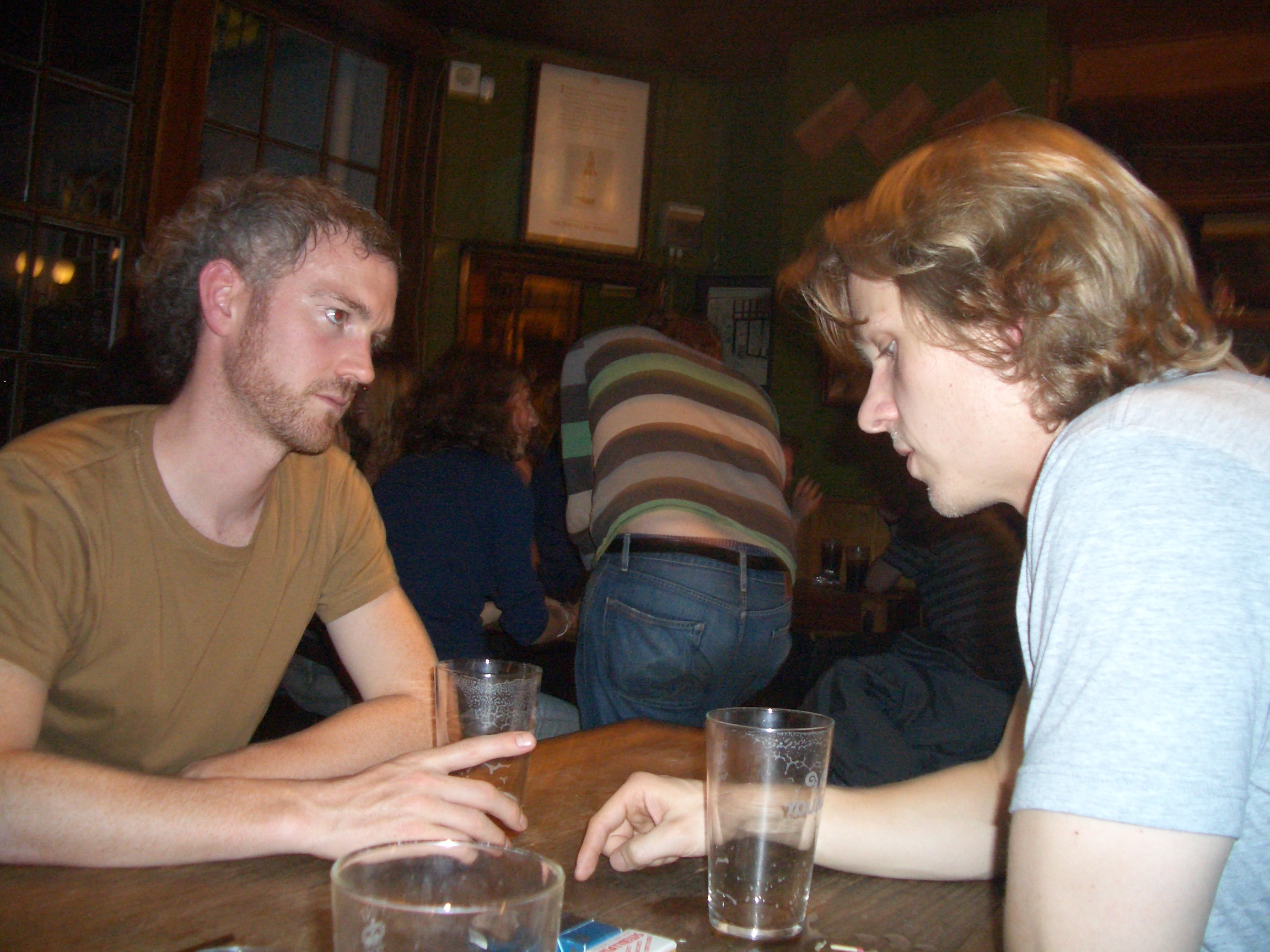
Over the years Elton and I have written seven articles/chapters together and three books. This is in many cases an entire academic career. This work in turn has shaped and encouraged the work we have done separately. And the experiences shaping it have been wild: from Elton showing up in 2007 to give a talk at Columbia that we wrote together in a flooded basement apartment, to him holding my first child awkwardly while we outlined what would be our second book to our weekly zoom conversations, we have lived and written alongside each other. We have lost loved ones. We have welcomed five children into the world. And we have returned again and again to Homer.
The technology has changed (we used to swap drafts chaotically over email and meet over skype; now we have dropbox and zoom); our stances have softened (we now integrate textuality in our work); we’ve lost that bloom of youth; but I can say that our friendship and collaboration has been a great comfort and strength, something I might not have anticipated at the time when I boldly asked if he wanted to write about this new fragment with me, but for which I remain deeply grateful.
We recently submitted that third book together, an introduction to the Iliad. In writing it we spent several months talking through ideas and making outlines (some of them based on posts on this blog). I turned the outline into a first draft. Elton turned it back into an outline then into prose again and then we edited and wrote and honestly, apart from the phrase “Troy Story”—which Elton will not quit—I do not know who wrote what when. And we found new meaning in the Iliad that neither of us found before. Each of these things is a gift. We write about this process in the preface:
While similar to the process that we’ve followed over the course of twenty years working together, our collaboration is in continual evolution. What we’ve noticed this time around is how we’ve used what each other has written as a springboard for thinking deeper with, and deeper into, the text. We’re more conscious this time of riffing off what the other has put down, sometimes keeping only one or two sentences in an entire paragraph, or even simply the kernel of the idea. And yet it remains a thing that we’ve both made, since neither of us individually would have come up with what we’ve found to say had it not been for the way that the other had already put things. The way that we continually invite each other to take up and spin off those views. A space in which to experiment and to play. The space to think. The most exciting experience of writing for us is in that space. When we have the structure, when both of us think we know what we want to say, and then another way of saying it comes to us. Or even another thing to say that comes to us, when we come to the text with guardrails in place guiding us. A kind of scaffolded inspiration. In its microscopically trivial, very limited way, it’s kind of how we think that the poet of the Iliad went about things.
I will return to regular Iliad posting again over the next few weeks. In this wildly unpredictable world, if you have a friend who made your life better, take the time this weekend to let them know.

Barker and Christensen, a bibliography
Books
2027 (Est) The Iliad: The Basics. Routledge
2020 Homer’s Thebes: Epic Rivalries and the Appropriation of Mythical Pasts (with E. T. E. Barker), CHS
2013 Beginner’s Guide to Homer, One World Publications


Articles and Chapters
(Forthcoming) “The Homeric Epics and the Reception of Thebes,” in Homeric Reception in Archaic and Classical Greek Poetry, Edited by Gazis and Doherty
“Heracles in Epic.” The Oxford Handbook to Heracles, edited by Daniel Ogden. 2021
“Odysseus’ Nostos and the Odyssey’s Nostoi.” G. Scafoglio (ed.). Studies on the Greek Epic Cycle. Philologia Antiqua, 2015: 87–112.
“Even Herakles Had to Die: Epic Rivalry and the Poetics of the Past in Homer’s Iliad.” Christos Tsagalis, (ed.) Special Issue Trends in Classics: Homer and the Theban Tradition, 6.2S (2014) 249–277.
“On Not Remembering Tydeus: Agamemnon, Diomedes and the Contest for Thebes.” Materiali e Discussioni per l’Analisi dei Testi Classici 66 (2011): 9–44.
“Oedipus of Many Pains: Strategies of Contest in the Homeric Poems.” Leeds International Classical Studies 7.2. 2008.
“Flight Club: The New Archilochus Fragment and its Resonance with Homeric Epic.” Materiali e Discussioni per l’Analisi dei Testi Classici 57 (2006): 19–43.


