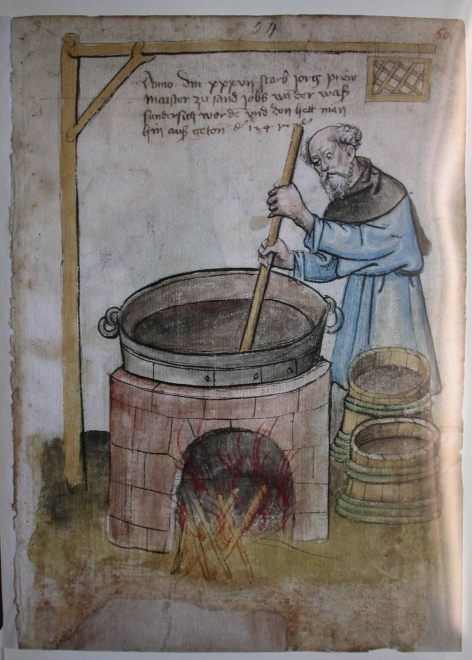
Ancient Peoples Liked Beer

Pliny the Elder, Natural History 14.29

“The people of the west have their own alcohol made from soaked grain in many different ways in Gaul and Spain with many different names but with the same idea. The people of Spain have already taught us that these kinds of beverages will last even a long amount of time.

Egypt, too, has worked out a similar drink made from grain and in no corner of the world does intoxication ever take a break. They even drink this type of beverage without diluting them as one does with wine. But, by Hercules, that land used to seem to offer grains alone. Alas, the miraculous inventiveness of vice! A way has also been found to make water intoxicating!”

. Est et occidentis populis sua ebrietas e fruge madida, pluribus modis per Gallias Hispaniasque, nominibus aliis sed ratione eadem. Hispaniae iam et vetustatem ferre ea genera docuerunt. Aegyptus quoque e fruge sibi potus similis excogitavit, nullaque in parte mundi cessat ebrietas; meros quippe hauriunt tales sucos nec diluendo ut vina mitigant; at, Hercules, illic tellus fruges parare videbatur. heu, mira vitiorum sollertia! inventum est quemadmodum aquae quoque inebriarent.


Julian the Apostate, Epigrams 1

“Who are you and where are you from Dionysus? By the Bakhos true
I know only the son of Zeus and I do not know you.
He smells like nektar, but you smell like goat.
Did the Celts make you from grain because of their lack of grapes?
Ah, we should call you not Dionysus, but Demetrios instead.
And Bromos*** not Bromios since you are born of wheat**.”

Τίς πόθεν εἶς Διόνυσε; μὰ γὰρ τὸν ἀληθέα Βάκχον,
οὔ σ᾿ ἐπιγιγνώσκω· τὸν Διὸς οἶδα μόνον.
κεῖνος νέκταρ ὄδωδε· σὺ δὲ τράγου. ἦ ῥά σε Κελτοὶ
τῇ πενίῃ βοτρύων τεῦξαν ἀπ᾿ ἀσταχύων.
τῷ σε χρὴ καλέειν Δημήτριον, οὐ Διόνυσον,
πυρογενῆ μᾶλλον καὶ Βρόμον, οὐ Βρόμιον.


Aeschylus fr. 124 from Lykourgos (from Athenaeus 10.447c)

“He used to drink beer from these [heads] once he dried them
And then boast proudly about it in his man-cave.”

κἀκ τῶνδ᾿ ἔπινε βρῦτον ἰσχναίνων χρόνῳ
κἀσεμνοκόμπει τοῦτ᾿ ἐν ἀνδρείᾳ στέγῃ

The note from the Loeb attributes an understanding of this fragment to Hermann who compares it to Nonnos, Dionysiaca, 20.149–153, 166–181

Nonnos, Dion. 20.149-153

“The was a certain murderous man living there, of Ares’s line
Who was a mimic of his father’s wretched customs.
The criminal would drag faultless strangers to their doom,
That dread maniac Lykourgos, and then when he cut off
Their mortal heads with steel he hung them in his doorway…”

ἔνθα τις, ῎Αρεος αἷμα, μιαιφόνος ᾤκεεν ἀνήρ,
ἤθεσι ῥιγεδανοῖσιν ἔχων μίμημα τοκῆος,
ὀθνείους ἀθέμιστος ἀμεμφέας εἰς μόρον ἕλκων,
αἰνομανὴς Λυκόοργος· ἀποκταμένων δὲ σιδήρῳ
ἔστεφεν ἀνδρομέοισιν ἑὸν πυλεῶνα καρήνοις

Abb. 8: Jorg Prewmaister, Mendel Band I (1437), Seite 60 

Corpses and Prisons: Uses and Metaphors for Wealth

On the Wealth of Herodes the Athenian (Philostratus, Lives of the Sophists, 547)

“[Herodes] used his wealth in the best way of all men. We do not, however, believe that this was the easiest thing to do, but instead that it was wholly difficult and unpleasant.  For men who are drunk with wealth usually afflict other people with insults. In addition, they make the specious claim that wealth is blind—but even if wealth appears rightly blind at other times, it looked upon Herodes: it gazed upon his friends, his cities, and whole nations since the man was able to keep a watch over them all and make a storehouse of his riches in the opinions of the men with whom he shared them.

For he used to say indeed that it was necessary for the man who would use wealth correctly to provide it to those who need it so that they may not be in need and also to those who didn’t need it, so that they might not become impoverished. He used to call wealth that was not used and was hoarded up by envy ‘corpse wealth’ and the storehouses of those who hoarded their riches ‘prisons of wealth’.

He mocked those who believed it was right to sacrifice to their accumulated riches “Aloadae” because [Otos and Ephialtes] had sacrificed to Ares after they imprisoned him.”*

῎Αριστα δὲ ἀνθρώπων πλούτῳ ἐχρήσατο. τουτὶ δὲ μὴ τῶν εὐμεταχειρίστων ἡγώμεθα, ἀλλὰ τῶν παγχαλέπων τε καὶ δυσκόλων, οἱ γὰρ πλούτῳ μεθύοντες  ὕβριν τοῖς ἀνθρώποις ἐπαντλοῦσιν. προσδιαβάλλουσι δὲ ὡς καὶ τυφλὸν τὸν πλοῦτον, ὃς εἰ καὶ τὸν ἄλλον χρόνον ἐδόκει τυφλός, ἀλλ’ ἐπὶ ῾Ηρώδου ἀνέβλεψεν, ἔβλεψε μὲν γὰρ ἐς φίλους, ἔβλεψε δὲ ἐς πόλεις, ἔβλεψε δὲ ἐς ἔθνη, πάντων περιωπὴν ἔχοντος τοῦ ἀνδρὸς καὶ θησαυρίζοντος τὸν πλοῦτον ἐν ταῖς τῶν μετεχόντων αὐτοῦ γνώμαις. ἔλεγε γὰρ δή, ὡς προσήκοι τὸν ὀρθῶς πλούτῳ χρώμενον τοῖς μὲν δεομένοις ἐπαρκεῖν, ἵνα μὴ δέωνται, τοῖς δὲ μὴ δεομένοις, ἵνα μὴ δεηθῶσιν, ἐκάλει τε τὸν μὲν ἀσύμβολον πλοῦτον καὶ φειδοῖ κεκολασμένον νεκρὸν πλοῦτον, τοὺς δὲ θησαυρούς, ἐς οὓς ἀποτίθενται τὰ χρήματαἔνιοι, πλούτου δεσμωτήρια, τοὺς δὲ καὶ θύειν ἀξιοῦντας ἀποθέτοις χρήμασιν ᾿Αλωάδας ἐπωνόμαζε θύοντας ῎Αρει μετὰ τὸ δῆσαι αὐτόν.

*This story is told in the Iliad 5.385 as part of Dione’s catalogue of mortals who caused the gods harm.  Otus and Ephialtes captured Ares and put him in a bronze jar.

Image result for ancient greek corpses

Some Magic Charms for Pregnancy and Sex

Pliny, Natural History 28.98-99

“A woman is guaranteed to carry a pregnancy to term if she wears around her neck the white flesh from a hyena’s chest with seven of its hairs and a stag’s genitals tied up in leather made from a gazelle,

A hyena’s genitals, consumed with honey, increases desire for sex even if men typically despise sex with women. Really, the peace of the whole home relies upon keeping these genitals and a spine with the skin still on it at hand.”

 mulieri candida a pectore hyaenae caro et pili septem et genitale cervi, si inligentur dorcadis pelle, e collo suspensa continere partus promittuntur; venerem stimulare genitalia ad sexus suos in melle sumpta, etiamsi viri mulierum coitus oderint; quin immo totius domus concordiam eodem genitali et articulo spinae cum adhaerente corio adservatis constare

Detail of the historiated initial 'P'(our) with a standing physician and pregnant woman. British Library
Image taken from here

On Using Humor in Public Speaking

Cicero, De inventione

“If the matter allows, it is not useless to begin from some different angle or with a joke or something which you think up on the spot, the sort of thing which gets applause and shouts. You might also use something which is prepared for you, an anecdote, fable, or something else which has something funny in it.

If the gravity of the affair prohibits a sense of humor, it is not inappropriate to include something sad, unknown, or pretty dreadful right from the beginning. For, just as weariness for good can be treated with some small bite or lightened by something sweet, a mind tired of listening is reinvigorated by amazement or a laugh.”

Sin res dabit, non inutile est ab aliqua re nova aut ridicula incipere aut ex tempore quae nata sit, quod genus strepitu acclamatione; aut iam parata, quae vel apologum vel fabulam vel aliquam contineat irrisionem; aut si rei dignitas adimet iocandi facultatem, aliquid triste, novum, horribile statim non incommodum est inicere. Nam, ut cibi satietas et fastidium aut subamara aliqua re relevatur aut dulci mitigatur, sic animus defessus audiendo aut admiratione integratur aut risu novatur.

Some Examples of Ciceronian jokes:

Macrobius, Saturnalia 2.1:

“Who is there, that has taken care to read those those books of his jokes which his freedman composed, who does not know how much Cicero excelled in humor?   (Though, some suspect that the freedman was the author.) Who is there, who doesn’t know that he was often called the ‘consular clown’ by his enemies? Vatinius mentioned this in his own speech. I would, if it wouldn’t take too long, recall those cases in which he represented guilty clients, which he won by joking.”

Cicero autem quantum in ea re valuerit quis ignorat qui vel liberti eius libros quos is de iocis patroni conposuit, quos quidam ipsius putant esse, legere curavit? Quis item nescit consularem eum scurram ab inimicis appellari solitum? quod in oratione etiam sua Vatinius posuit. Atque ego, ni longum esset, referrem, in quibus causis, cum nocentissimos reos tueretur, victoriam iocis adeptus sit.

Aulus Gellius, Attic Nights 12.12

12 The clever response of Marcus Cicero as he defends himself against a claim of obvious lying

“This is a part of rhetorical training too—to admit criminal matters not subject to danger cleverly and with charm so that, if something foul is alleged which cannot be denied, you may defuse it with a humorous response and make the whole matter more dignified with a joke rather than an allegation, just as it is recorded that Cicero did when he tempered what could not be denied with a clever and amusing comment.

For when Cicero wanted to purchase a house on the Palatine hill and he did not have the money at hand, he accepted in private as much as two million sesterces [$100,000?] from Publius Sulla* who was then a defendant in a case. But the whole matter was made public before he bought the house and he was charged with receiving money for buying a house from an accused defendant. So then, troubled by the unanticipated criticism, Cicero denied that he had received the money and denied that he would have bought the house, saying “Indeed, If I buy the house, it is true that I took the money”.

But later, when he had bought the house and was charged with being a liar in the senate by his enemies, he laughed plenty and said while chuckling: “You are senseless men if you don’t know that it is a mark of a wise and cautious head of a family, when he wants to buy something, to deny that he wants to buy it to scare off competitors!”

*He was charged for participating in the conspiracy with Cataline.

XII Faceta responsio M. Ciceronis amolientis a se crimen manifesti mendacii.

[1] Haec quoque disciplina rhetorica est callide et cum astu res criminosas citra periculum confiteri, ut, si obiectum sit turpe aliquid, quod negari non queat, responsione ioculari eludas et rem facias risu magis dignam quam crimine, sicut fecisse Ciceronem scriptum est, cum id, quod infitiari non poterat, urbano facetoque dicto diluit. [2] Nam cum emere uellet in Palatio domum et pecuniam in praesens non haberet, a P. Sulla, qui tum reus erat, mutua sestertium uiciens tacita accepit. [3] Ea res tamen, priusquam emeret, prodita est et in uulgus exiuit, obiectumque ei est, quod pecuniam domus emendae causa a reo accepisset. [4] Tum Cicero inopinata obprobratione permotus accepisse se negauit ac domum quoque se empturum negauit atque ‘adeo’ inquit ‘uerum sit accepisse me pecuniam, si domum emero’. Sed cum postea emisset et hoc mendacium in senatu ei ab inimicis obiceretur, risit satis atque inter ridendum: ‘ἀκοινονόητοι’ inquit ‘homines estis, cum ignoratis prudentis et cauti patrisfamilias esse, quod emere uelit, empturum sese negare propter competitores emptionis.’

Macrobius, Saturnalia (II.2.3.1-4) 

“I am surprised that you all have been quiet about Cicero’s jokes which prove him as eloquent as in everything else he said. If it seems right, I am prepared—like the guardian of a temple about to announce the oracles of a god—to repeat the Ciceronian jests I remember.

When everyone appeared ready to listen to him, he began: “When Marcus Cicero dined with Damasippus and his host offered him a rather middling wine and said “Drink this forty-year old Falernian,” Cicero replied “It carries its age well.” At another time when he saw his own son-in-law Lentulus, a man of short stature, girded up with a long sword, he asked “Who has attached my son-in-law to a sword?” Nor did he keep a similar bite from his brother Quintus Cicero. For, when visiting the province Quintus that was administering, he saw his brother’s portrait armed with a circular shield sculpted with much greater size near the chest in the manner of pictures (his brother was also a bit on the shorter side), he said “Half of my brother is bigger than the whole!”

Sed miror omnes vos ioca tacuisse Ciceronis, in quibus facundissimus, ut in omnibus, fuit: et, si videtur, ut aedituus responsa numinis sui praedicat ita ego quae memoria suggesserit refero dicta Ciceronis. Tum omnibus ad audiendum erectis ille sic incipit: 2 M. Cicero, cum apud Damasippum coenaret et ille mediocri vino posito diceret: Bibite Falernum hoc, annorum quadraginta est: Bene, inquit, aetatem fert. 3 Idem cum Lentulum generum suum, exiguae naturae hominem, longo gladio adcinctum vidisset: Quis, inquit, generum meum ad gladium alligavit? 4 Nec Q. Ciceroni fratri circa similem mordacitatem pepercit. Nam cum in ea provincia quam ille rexerat vidisset clypeatam imaginem eius ingentibus lineamentis usque ad pectus ex more pictam (erat autem Quintus ipse staturae parvae), ait: Frater meus dimidius maior est quam totus.

Image result for Cicero

The Illegal, Murderous Rapist: Herodotus Subtweets a Tyrant

I covered a class for a colleague today and read this bit from Herodotus for the first time in many years. It was, well, just a little eerie.

Herodotus 3.80

“Otanês was first urging the Persians to entrust governing to the people, saying these things: “it seems right to me that we no longer have a monarchy. For it is neither pleasing nor good. For you all know about the arrogance of Kambyses and you were a party to the insanity of the Magus. How could monarchy be a fitting thing when it permits an unaccountable person to do whatever he pleases? Even if you put the best of all men into this position he might go outside of customary thoughts. For hubris is nurtured by the fine things present around him, and envy is native to a person from the beginning.

The one who has these two qualities possesses every kind of malice. For one who is overfilled does many reckless things, some because of arrogance and some because of envy. Certainly, it would be right for a man who is a tyrant at least to have no envy at all, since he has all the good things. Yet he becomes the opposite of this towards his citizens: for he envies those who are best around him and live, and he takes pleasure in the worst of the citizens—he is the best at welcoming slanders.

He becomes the most disharmonious of all people—for if you admire him only moderately, then he is upset because you do not support him ardently. But if someone supports him excessively, he is angry at him for being a toady. The worst things are still to be said: he overturns traditional laws, he rapes women, and kills people without reason.”

᾿Οτάνης μὲν ἐκέλευε ἐς μέσον Πέρσῃσι καταθεῖναι τὰ πρήγματα, λέγων τάδε· «᾿Εμοὶ δοκέει ἕνα μὲν ἡμέων μούναρχον μηκέτι γενέσθαι· οὔτε γὰρ ἡδὺ οὔτε ἀγαθόν. Εἴδετε μὲν γὰρ τὴν Καμβύσεω ὕβριν ἐπ’ ὅσον ἐπεξῆλθε, μετεσχήκατε δὲ καὶ τῆς τοῦ μάγου ὕβριος. Κῶς δ’ ἂν εἴη χρῆμα κατηρτημένον μουναρχίη, τῇ ἔξεστι ἀνευθύνῳ ποιέειν τὰ βούλεται; Καὶ γὰρ ἂν τὸν ἄριστον ἀνδρῶν πάντων στάντα ἐς ταύτην τὴν ἀρχὴν ἐκτὸς τῶν ἐωθότων νοημάτων στήσειε. ᾿Εγγίνεται μὲν γάρ οἱ ὕβρις ὑπὸ τῶν παρεόντων ἀγαθῶν, φθόνος δὲ ἀρχῆθεν ἐμφύεται ἀνθρώπῳ. Δύο δ’ ἔχων ταῦτα ἔχει πᾶσαν κακότητα· τὰ μὲν γὰρ ὕβρι κεκορημένος ἔρδει πολλὰ καὶ ἀτάσθαλα, τὰ δὲ φθόνῳ. Καίτοι ἄνδρα γε τύραννον ἄφθονον ἔδει εἶναι, ἔχοντά γε πάντα τὰ ἀγαθά· τὸ δὲ ὑπεναντίον τούτου ἐς τοὺς πολιήτας πέφυκε· φθονέει γὰρ τοῖσι ἀρίστοισι περιεοῦσί τε καὶ ζώουσι, χαίρει δὲ τοῖσι κακίστοισι τῶν ἀστῶν, διαβολὰς δὲ ἄριστος ἐνδέκεσθαι.

᾿Αναρμοστότατον δὲ πάντων· ἤν τε γὰρ αὐτὸν μετρίως θωμάζῃς, ἄχθεται ὅτι οὐ κάρτα θεραπεύεται, ἤν τε θεραπεύῃ τις κάρτα, ἄχθεται ἅτε θωπί. Τὰ δὲ δὴ μέγιστα ἔρχομαι ἐρέων· νόμαιά τε κινέει πάτρια καὶ βιᾶται γυναῖκας κτείνει τε ἀκρίτους.


Image result for medieval manuscript manuscript
Image from here

The Difference between Dialogues and Letters

Demetrius, On Style 223-224

“Then we will talk about the style of a letter which also needs to be simple. Artemôn who edited the letters of Aristotle, says that we ought to write letters the same way as dialogues since a letter is similar to one side of a dialogue.

Perhaps he speaks the truth in this, but not all of it. For a letter ought to be a little more formalized than a dialogue. For a dialogue imitates speaking extemporaneously while a letter is written and sent as a gift in some way.”

(223) Ἐπεὶ δὲ καὶ ὁ ἐπιστολικὸς χαρακτὴρ δεῖται ἰσχνότητος, καὶ περὶ αὐτοῦ λέξομεν. Ἀρτέμων μὲν οὖν ὁ τὰς Ἀριστοτέλους ἀναγράψας ἐπιστολάς φησιν, ὅτι δεῖ ἐν τῷ αὐτῷ τρόπῳ διάλογόν τε γράφειν καὶ ἐπιστολάς· εἶναι γὰρ τὴν ἐπιστολὴν οἷον τὸ ἕτερον μέρος τοῦ διαλόγου.

(224) καὶ λέγει μέν τι ἴσως, οὐ μὴν ἅπαν· δεῖ γὰρ ὑποκατεσκευάσθαι πως μᾶλλον τοῦ διαλόγου τὴν ἐπιστολήν· ὁ μὲν γὰρ μιμεῖται αὐτοσχεδιάζοντα, ἡ δὲ γράφεται καὶ δῶρον πέμπεται τρόπον τινά.


Image result for medieval manuscript epistle writing
Enter a caption

Writing Advice from Demetrius: Leave Some Details Out!

Demetrius, On Style  222

“Believability resides in these things, then, as in what Theophrastus says, that you should not go through everything in precise detail, but instead leave some things out for your audience to imagine and to figure out for themselves. This is because when someone imagines what you have left out, they turn out to be not only your audience but your witness too and becomes more favorably disposed for this reason.

For, thanks to you, he seems to be intelligent through your action, since you have provided him the chance to show his intelligence. Telling an audience everything as if they are stupid makes it seem like you think they are.”

(222) ἐν τούτοις τε οὖν τὸ πιθανόν, καὶ ἐν ᾧ Θεόφραστός φησιν, ὅτι οὐ πάντα ἐπ᾿ ἀκριβείας δεῖ μακρηγορεῖν, ἀλλ᾿ ἔνια καταλιπεῖν καὶ τῷ ἀκροατῇ συνιέναι καὶ λογίζεσθαι ἐξ αὑτοῦ· συνεὶς γὰρ τὸ ἐλλειφθὲν ὑπὸ σοῦ οὐκ ἀκροατὴς μόνον ἀλλὰ καὶ μάρτυς σου γίνεται, καὶ ἅμα εὐμενέστερος. συνετὸς γὰρ ἑαυτῷ δοκεῖ διὰ σὲ τὸν ἀφορμὴν παρεσχηκότα αὐτῷ τοῦ συνιέναι, τὸ δὲ πάντα ὡς ἀνοήτῳ λέγειν καταγινώσκοντι ἔοικεν τοῦ ἀκροατοῦ.

Image result for medieval manuscript reading aloud
Image from Here

A Reminder: A Friendly Philosopher is Useless

Plutarch, Fr. 203, recorded in Themistios’ On the Soul (From Stobaeus, iii.13. 68)

“Others will decide whether Diogenes spoke rightly about Plato “What good is a man who has practiced philosophy for a long time and pissed off no one? Perhaps it is right that the philosopher’s speech has a sweetness that wounds like honey.”

Θεμιστίου περὶ ψυχῆς·

Εἰ μὲν οὖν ὀρθῶς ἐπὶ Πλάτωνος εἶπε Διογένης, “τί δαὶ ὄφελος ἡμῖν ἀνδρὸς ὃς πολὺν ἤδη χρόνον φιλοσοφῶν οὐδένα λελύπηκεν;” ἕτεροι κρινοῦσιν. ἴσως γὰρ ὡς τὸ μέλι δεῖ καὶ τὸν λόγον τοῦ φιλοσόφου τὸ γλυκὺ δηκτικὸν ἔχειν τῶν ἡλκωμένων.

Diogenes Laertius, 10.8

“[Epicurus] used to call Nausiphanes an illiterate jellyfish, a cheat and a whore. He used to refer to Plato’s followers as the Dionysus-flatters; he called Aristotle a waste who, after he spent his interitance, fought as a mercenary and sold drugs. He maligned Protagoras as a bellboy, and called Protagoras Democritus’ secretary and a teacher from the sticks. He called Heraclitus mudman, Democritus  Lerocritus [nonsense lord].

Antidorus he called Sannidôros [servile-gifter]. He named the Cynics “Greece’s enemies”; he called the dialecticians Destructionists and, according to him, Pyrrho was unlearned and unteachable.”

πλεύμονά τε αὐτὸν ἐκάλει καὶ ἀγράμματον καὶ ἀπατεῶνα καὶ πόρνην: τούς τε περὶ Πλάτωνα Διονυσοκόλακας καὶ αὐτὸν Πλάτωνα χρυσοῦν, καὶ Ἀριστοτέλη ἄσωτον, <ὃν> καταφαγόντα τὴν πατρῴαν οὐσίαν στρατεύεσθαι καὶ φαρμακοπωλεῖν: φορμοφόρον τε Πρωταγόραν καὶ γραφέα Δημοκρίτου καὶ ἐν κώμαις γράμματα διδάσκειν: Ἡράκλειτόν τε κυκητὴν καὶ Δημόκριτον Ληρόκριτον καὶ Ἀντίδωρον Σαννίδωρον: τούς τε Κυνικοὺς ἐχθροὺς τῆς Ἑλλάδος: καὶ τοὺς διαλεκτικοὺς πολυφθόρους, Πύρρωνα δ᾽ ἀμαθῆ καὶ ἀπαίδευτον.

Cicero, Letter Fragments. Nepos to Cicero IIa

Nepos Cornelius also writes to the same Cicero thus: it is so far away from me thinking that philosophy is a teacher of life and the guardian of a happy life, that I do not believe that anyone needs teachers of living more than the many men who are dedicated to philosophical debate. I certainly see that a great number of those who rush into speeches about restraint and discipline in the classroom live amidst the desire for every kind of vice.”

Nepos quoque Cornelius ad eundem Ciceronem ita scribit: tantum abest ut ego magistram putem esse vitae philosophiam beataeque vitae perfectricem ut nullis magis existimem opus esse magistros vivendi quam plerisque qui in ea disputanda versantur. video enim magnam partem eorum qui in schola de pudore <et> continentia praecipiant argutissime eosdem in omnium libidinum cupiditatibus vivere. (Lactant. Div. inst. 3.5.10)

Image result for Cornelius Nepos

On Timon, D. L. 9.12

“Antigonos says that Timon was fond of drinking; and, whenever he had free time from philosophizing, he wrote poems”

Ἦν δέ, φησὶν ὁ Ἀντίγονος, καὶ φιλοπότης καὶ ἀπὸ τῶν φιλοσόφων εἰ σχολάζοι ποιήματα συνέγραφε

Seneca, Moral Epistle 3.3

“For this is most shameful (and often brought up against us as a reproach), to deal in the words, and not the actual work, of philosophy.”

hoc enim turpissimum est, quod nobis obici solet, verba nos philosophiae, non opera tractare.

Generosity and Charity: Some Seasonal Reminders from Greece and Rome

Cicero, De Legibus 1.18

What about generosity? Is it for free or with a view towards some benefit? If someone is kind without payment, then it is freely done. If it is for payment, it is contractual. There is no doubt that a person who is called generous or kind responds to duty not to benefit. Therefore, equity seeks no reward or purchase price but it is pursued for its own worth. This is the same cause and claim for every virtue.”

quid? liberalitas gratuitane est an mercennaria? si sine praemio benignus est, gratuita, si cum mercede, conducta; nec est dubium, quin is, qui liberalis benignusve dicitur, officium, non fructum sequatur; ergo item iustitia nihil expetit praemii, nihil pretii; per se igitur expetitur. eademque omnium virtutum causa atque sententia est.

Clement, Letter 16.4

“Giving to charity is therefore noble as repentance from sin. Fasting is stronger than prayer, but charity surpasses both. Love overcomes a mass of sins, and prayer from a noble conscience provides rescue from death. Everyone who is discovered to abound in these things is blessed. For charity lightens the weight of sin.”

καλὸν οὖν ἐλεημοσύνη ὡς μετάνοια ἁμαρτίας· κρείσσων νηστεία προσευχῆς, ἐλεημοσύνη δὲ ἀμφοτέρων· ἀγάπη δὲ καλύπτει πλῆθος ἁμαρτιῶν, προσευχὴ δὲ ἐκ καλῆς συνειδήσεως ἐκ θανάτου ῥύεται. μακάριος πᾶς ὁ εὑρεθεὶς ἐν τούτοις πλήρης· ἐλεημοσύνη γὰρ κούφισμα ἁμαρτίας γίνεται.

gift giving middle ages - Cutting from a choir book, 1470s - Photo courtesy
From medievalists.net

Ancient Peoples Liked Beer

Pliny the Elder, Natural History 14.29

“The people of the west have their own alcohol made from soaked grain in many different ways in Gaul and Spain with many different names but with the same idea. The people of Spain have already taught us that these kinds of beverages will last even a long amount of time.

Egypt, too, has worked out a similar drink made from grain and in no corner of the world does intoxication ever take a break. They even drink this type of beverage without diluting them as one does with wine. But, by Hercules, that land used to seem to offer grains alone. Alas, the miraculous inventiveness of vice! A way has also been found to make water intoxicating!”

. Est et occidentis populis sua ebrietas e fruge madida, pluribus modis per Gallias Hispaniasque, nominibus aliis sed ratione eadem. Hispaniae iam et vetustatem ferre ea genera docuerunt. Aegyptus quoque e fruge sibi potus similis excogitavit, nullaque in parte mundi cessat ebrietas; meros quippe hauriunt tales sucos nec diluendo ut vina mitigant; at, Hercules, illic tellus fruges parare videbatur. heu, mira vitiorum sollertia! inventum est quemadmodum aquae quoque inebriarent.


Julian the Apostate, Epigrams 1

“Who are you and where are you from Dionysus? By the Bakhos true
I know only the son of Zeus and I do not know you.
He smells like nektar, but you smell like goat.
Did the Celts make you from grain because of their lack of grapes?
Ah, we should call you not Dionysus, but Demetrios instead.
And Bromos*** not Bromios since you are born of wheat**.”

Τίς πόθεν εἶς Διόνυσε; μὰ γὰρ τὸν ἀληθέα Βάκχον,
οὔ σ᾿ ἐπιγιγνώσκω· τὸν Διὸς οἶδα μόνον.
κεῖνος νέκταρ ὄδωδε· σὺ δὲ τράγου. ἦ ῥά σε Κελτοὶ
τῇ πενίῃ βοτρύων τεῦξαν ἀπ᾿ ἀσταχύων.
τῷ σε χρὴ καλέειν Δημήτριον, οὐ Διόνυσον,
πυρογενῆ μᾶλλον καὶ Βρόμον, οὐ Βρόμιον.


Aeschylus fr. 124 from Lykourgos (from Athenaeus 10.447c)

“He used to drink beer from these [heads] once he dried them
And then boast proudly about it in his man-cave.”

κἀκ τῶνδ᾿ ἔπινε βρῦτον ἰσχναίνων χρόνῳ
κἀσεμνοκόμπει τοῦτ᾿ ἐν ἀνδρείᾳ στέγῃ

The note from the Loeb attributes an understanding of this fragment to Hermann who compares it to Nonnos, Dionysiaca, 20.149–153, 166–181

Nonnos, Dion. 20.149-153

“The was a certain murderous man living there, of Ares’s line
Who was a mimic of his father’s wretched customs.
The criminal would drag faultless strangers to their doom,
That dread maniac Lykourgos, and then when he cut off
Their mortal heads with steel he hung them in his doorway…”

ἔνθα τις, ῎Αρεος αἷμα, μιαιφόνος ᾤκεεν ἀνήρ,
ἤθεσι ῥιγεδανοῖσιν ἔχων μίμημα τοκῆος,
ὀθνείους ἀθέμιστος ἀμεμφέας εἰς μόρον ἕλκων,
αἰνομανὴς Λυκόοργος· ἀποκταμένων δὲ σιδήρῳ
ἔστεφεν ἀνδρομέοισιν ἑὸν πυλεῶνα καρήνοις

Abb. 8: Jorg Prewmaister, Mendel Band I (1437), Seite 60