Water Words

Pindar, Ol. 1 1–7

“Water is best, yet gold shining as a fire
Clear in the night is beyond all noble wealth—
But if you desire,
Dear heart, to sing of contests,
Don’t look farther than the sun
For any bright star warmer by day, alone in the sky.
And let us sing no contest greater than Olympia.”

Α′ ῎Αριστον μὲν ὕδωρ, ὁ δὲ χρυσὸς αἰθόμενον πῦρ
ἅτε διαπρέπει νυκτὶ μεγάνορος ἔξοχα πλούτου·
εἰ δ’ ἄεθλα γαρύεν
ἔλδεαι, φίλον ἦτορ,
μηκέτ’ ἀελίου σκόπει
ἄλλο θαλπνότερον ἐν ἁμέρᾳ φαεν-
νὸν ἄστρον ἐρήμας δι’ αἰθέρος,
μηδ’ ᾿Ολυμπίας ἀγῶνα φέρτερον αὐδάσομεν·

As many current parents likely are, I am generally befuddled by obsession with child hydration. Our children take water bottles with them to school; we cannot take even a short trip without water in the car. Although I have no memory of every carrying a water bottle before 2005, I fret over how much water my children are not drinking. Where did this water-worry come from? Here are some water compounds as a tonic.

ὑδατόλουτος: “washed in water”

ὑδατοπλήξ: “water-beaten”

ὑδατοπότης: “water drinker”

ὑδατόχλοος: “pale as water”

ὑδραλέτης: “water-mill”

ὑδράλμη: “salt-water”

ὑδράρπαξ: “water clock”

ϋδραυλις: “hydraulic organ”

ὑδρέλαιον: “oil mixed with water”

ὑδρημερία: “water distribution”

ὑδρόγαστωρ: “water on the belly”

ὑδρόδρομος: “water-running”

ὑδροειδής: “like water”

ὑδρόεις: “fond of the water”

ὑδροθηρία: “hunting in water” (i.e. “fishing”)

ὑδροκέφαλον: “water in the head” (hydrocephalic)

ὑδροκήλη: “water in the scrotum”

ὑδροκιρσοκήλη: “an aneurysm of the vessels of the testicles” !

ὑδρομανία = ὑδροφοβία

ὑδρομέλαθρος: “living in water”

ὑδρόμελι: a type of mead (lit. “water-honey”)

ὑδρόμφαλος: “water in the umbilical region” (prefered translation: “water-button”)

ὑδροπαραστάται: those who serve water instead of wine during Holy Communion

ὑδροπέπερι: “water pepper”

ὑδροποσία: “water drinking”

ὑδρορόδινον: “rose oil mixed with water”

ὑδροσκόπος: “water seeker”

ὑδροσφράντης: “water-smeller”

ὑδροφοβία: “fear of water”

ὑδροφόρος: “water-bearer”

ὑδροφύλαξ: “water guard”

Image result for Ancient Greek water bearers
North Cornice of Parthenon

Vomax, Not a Roman Hero

Earlier in the year we posted some Greek words for vomitingThat post and this were inspired by real life events. 

Vomax, “given to vomiting”

Vomer, “ploughshare”; “membrum virile

Vomica: “sore, boil”; “an evil”

Vomicosus: “full of sores or tumors”

Vomicus: “ulcerous”

Vomificus: “that which causes vomiting”

Vomifluus: “flowing with pus”

Vomitio: “a spewing”

Vomitor: “one who vomits”

Vomitorious: “that produces vomiting, emetic”

Vomitus: “a vomiting”

Vomo: “to puke”, cf. Greek ἐμέω, *ϝεμ-


Image result for Ancient Roman Vomiting

Half-Words, Latin Edition

Last month we posted some Greek hemi-compounds. There was a request for a Latin version. Here we go: these are all printed in Lewis & Short.

Semianimus, “half-alive”

Semibos, “half-ox”

Semicanis, “half-dog”; cf. semideus, “half-god”

Semicanus, “half-gray”; cf. Semisenex, “half-old”

Semicaper, “half-goat”

Semicoctus, “half-cooked”

Semicrudus, “half-raw”

Semidoctus, “half-taught”

Semifactus, “half-done”

Semifumans, “half-smoking”

Semihiuclus, “half-opened”

Semiinteger, “half-whole”

Semimortuus, “half-dead”

Seminecis, “half-dead”

Seminudus, “Half-naked”’

Semipuella, “half-girl”

Semirosus, “half-gnawed”

Semitactus, “half-touched”; cf. semitectus, “half-covered”

Semisermo, “half-speech” (i.e. “jargon”)

Semisomnus, “Half-asleep”; cf. semivigil , “half-awake”; semisoporus, “half-asleep” and semipsopitus, “half asleep”

Semivietus, “half-shriveled”

Semivir, “half-man”

Semivivus, “half-alive”


Centaur & Cupid | Greco-Roman statue

Love-Words, Volume 4: Pickaxes, Orgies, and Filth

Earlier posts have presented other compounds for ‘love-words’.


φιλοκατάσκευος: “love of proper diction”

φιλολήιος: “love of booty”

φιλολοιδορία: “love of abuse”

φιλομάκελλος: “love of pickaxes”

φιλοποίκιλος: “love of variety”

φιλοπευθής: “love of inquiry, curious”

φιλοπόντιος: “sea-lover”

φιλοπόρφυρος: “fond of purple”

φιλοπροεδρία: “fond of first-place”

φιλόργιος: “orgy-lover”

φιλορρύπαρος: “fond of filth”

φιλορώμαιος: “Roman-lover”

φιλοσκώμμων: “fond of jesting”

φιλοσπῆλυγξ: “cave-lover”

φιλοστρατιώτης: “love of soldiers”

φιλοσυνουσιαστής: “love of sexual intercourse”

φιλοστασιαστής: “love of sedition”

φιλοταλαίπωρος: “love of wretchedness”

φιλοτάριχος: “love of salt-fish”

φιλοτιβέριος: “loving-Tiberius

φιλότμητος: “loving-cutting”

φιλοτραγῳδος: “tragedy-loving”

φιλοφάρμακος: “medicine-loving”

φιλοφθονία: “envy-loving”

φίλοχλος: “mob-loving”

φιλόχρηστος: “love of goodness”

φιλοψευδολόγος: “love of telling lies”

φίλοψος: “love of delicacies

φιλόψυχρος: “love of the cold”

φιλωρείτης: “mountain-lover”

Image result for Ancient Greek love

Soul-Words: Psukhe Compounds in Ancient Greek

As always these are attested Greek compounds

ψυχοανακάλυπτος: “soul revealing”

ψυχοβλαβής: “soul-harming”

ψυχογονία: “soul creating”

ψυχοδάμεια: “soul-subduer”

ψυχοκλέπτης: “soul-thief”

ψυχοκτόνος: “soul-killing”

ψυχολέτης: “soul-destroyer

ψυχόμαντις: “one who conjures the dead”

ψυχομαχία: “fight for life”

ψυχονοσέω: “to be sick in spirit”

ψυχοπλανής: “soul wandering”

ψυχοπότης: “drinking life”

ψυχοστασία: “weighing souls”

ψυχοτερπής: “soul-delighting”

ψυχοτρόφος: “soul nourshing”

ψυχοφάγος: “soul-eating”


Vat. Gnom. 229 “Demosthenes used to say that the laws are the soul of the state. “just as the body dies when bereft of the soul, so too the city perishes when there are no laws.”

῾Ο αὐτὸς ἔφη πόλεως εἶναι ψυχὴν τοὺς νόμους· „ὥσπερ δὲ σῷμα στερηθὲν ψυχῆς πίπτει, οὕτω καὶ πόλις μὴ ὄντων νόμων καταλύεται”.


Arsenius, Proverbs

“Conversation [ or ‘reason’] is the doctor for suffering in the soul”

Λόγος ἰατρὸς τοῦ κατὰ ψυχὴν πάθους.


Proclus, Commentary on Plato’s Parmenides 1025.29-37

“Our soul experiences many wanderings and turns—one comes from the imagination, another emerges in the beliefs before these, and other occurs in understanding. But the life governed by the mind is free from vagrancy and this is the mystical harbor of the soul into which the poem leads Odysseus after the great wandering of his life and where we too, if we want to be saved, may find our mooring.”

Πολλαὶ οὖν αἱ πλάναι καὶ αἱ δινεύσεις τῆς ψυχῆς· ἄλλη γὰρ ἡ ἐν ταῖς φαντασίαις, ἄλλη πρὸ τούτων ἡ ἐν δόξαις, ἄλλη ἡ ἐν αὐτῇ τῇ διανοίᾳ· μόνη δὲ ἡ κατὰ νοῦν ζωὴ τὸ ἀπλανὲς ἔχει, καὶ οὗτος ὁ μυστικὸς ὅρμος τῆς ψυχῆς, εἰς ὃν καὶ ἡ ποίησις ἄγει τὸν ᾿Οδυσσέα μετὰ τὴν πολλὴν πλάνην τῆς ζωῆς, καὶ ἡμεῖς, ἐὰν ἄρα σώζεσθαι θέλωμεν, μᾶλλον ἑαυτοὺς ἀνάξομεν.

Diodorus Siculus, 1.49

“Right next to this we find the sacred library [of Alexandria] on which is inscribed “The Healer of the Soul”; and next-door to it are the statues of the gods of Egypt….”

ἑξῆς δ’ ὑπάρχειν τὴν ἱερὰν βιβλιοθήκην, ἐφ’ ἧς ἐπιγεγράφθαι Ψυχῆς ἰατρεῖον, συνεχεῖς δὲ ταύτῃ τῶν κατ’ Αἴγυπτον θεῶν ἁπάντων εἰκόνας

Image result for Ancient Greek soul

Love Words, Volume 3

A year ago I posted some love-compounds.  Later I repeated the trick. Some of the accents were wrong, but the words were popular. Here is another list. All of these words are extant in ancient Greek. This is not a complete list.

φιλαγαθία: “lover of goodness”

φίλαγνος: “lover of chastity”

φιλάγρυπνος: “love of being awake”

φιλάγων: “lover of games”

φιλάδικος: “lover of wrong”

φιλαίθριος: “lover of clear air”

φιλακριβέω: “love of exactness”

φιλαλυστής: “lover of self-torment”

φιλαμπελόω: “love of wine”

φιλάοιδος: “lover of a singer/song”

φιλάμπλοος: “lover of simplicity”

φιλαριστοτοτέλης: “Aristotle lover”

φιλάρχαιος: “love of ancient things”

φιλάσωτος: “love of profligacy”

φιλαύστηρος: “love of austerity”

φιλαυτοκράτωρ: “emperor lover”

φιλαχιλλεύς: “Achilles-lover”

φιλακλήμων: “love of accusation”

φιλέβδεμος: “love of the number seven”

φιλέννυχος: “night-lover”

φιλέξοδος: “lover of going out”

φιλέριθος: “lover of wool spinning”

φιλευκτικός: “lover of the optative mood”

φιλευώδης: “lover of good smells”

φίληβος: “lover of youth”

φιλήκοος: “lover of listening”

φιλήνεμος: “lover of the wind”

φιλόγελως: “lover of laughter”

φιλόδυρτος: “lover of mourning”

φιλόδωρος: “lover of giving”

φιλόζωος: “life-loving”

φιλόθακος: “lover of sitting

φιλοκάθολος: “lover of generalizations”

φιλόλαλος: “lover of talking”

φιλόκομος: “hair-lover”

φιλόκομπος: “lover of boasting”


DFW love

Idiot Words: Private, Peculiar, Alone

Inspired by this tweet, I opened the LSJ 1912 and got distracted.

https://twitter.com/opietasanimi/status/892451105749303298

ἰδιάζω: “to live as a private person”

ἰδιασμός: “peculiarity”

ἰδιόβιος: “living by or for oneself”

ἰδιόγλωσσος: “of distinct, peculiar tongue”

ἰδιογνώμων: “private opinion”

ἰδιοθανέω: “to die in a peculiar way”

ἰδιολογία: “private conversation”

ἰδιοξενία: “private friendship”

ἰδιοπάθεια: “feeling for oneself alone”

ἰδιοποιέω: “to make separately” in the middle: “to appropriate to oneself”

ἰδιόσημος: “peculiar in signification”

ἰδιόστολος: “equipt at private expense”

ἰδιοσύγκριτος: “Peculiarly composed”

ἰδιόφωνος: “with one’s own voice”

ἰδιοφυής: “of peculiar nature”

ἰδιόχειρος: “written by one’s own hand”

ἰδίωμα: “a peculiarity”

ἰδιωματικός: “characteristic”

ἰδίωσις: “distinction between things”

ἰδιωτεία: “private life or business”

ἰδιωτεύω: “to be a private person”

ἰδιώτης: “a private person, an individual” 2cL “unpracticed, unskilled, ignoant, ill-informed”

ἰδιωτίζω, “to put into a common language”

ἰδιωτικός: “of or for a private person”; 2: “unprofessional, rude”

ἰδιώτις: “inconsiderable”

ἰδιωτισμός: “the way or fashion of a common person”

ἰδιωφελής: “privately profitable”

 mrw boss tells task priority GIF

Wool, Scar, Wholeness: Oúlos, Oulê, Oulos and Odysseus

In book 19 of the Odyssey, Odysseus (in disguise) confirms for Penelope that he saw Odysseus (in the past) as he was traveling to Troy by describing the woolen cloak and golden brooch he was wearing. Fewer than two hundred lines later, Eurykleia recognizes Odysseus by his scar. In Greek, the words used for the “wool”[oúlê] cloak and the scar [oulé] differ only in accent. Later in the Odyssey, Dolios uses another word that sounds the same but means something else to address Odysseus. How might audiences distinguish between these meanings? How might the epic capitalize upon their similarity? (see below for some answers)

Odyssey 19.225–227

“Glorious Odysseus had a purple wool [oúlên] cloak with a double fold
And the brooch on it was made of gold with double clasps
On the surface it had an intricate design.”

χλαῖναν πορφυρέην ‖ οὔλην ἔχε δῖος ᾿Οδυσσεύς,
διπλῆν· ἐν δ’ ἄρα οἱ περόνη χρυσοῖο τέτυκτο
αὐλοῖσιν διδύμοισι· πάροιθε δὲ δαίδαλον ἦεν·

19.390-394

“Immediately he pondered in his heart how she might not take him
And recognize his scar [oulén] and bring everything out in the open.
But she came near and took him up for bathing. Immediately
She recognized the scar [oulén] which long ago a boar gave him with its white fang
When he went to Parnassus to see Autolykos and his sons.”

αὐτίκα γὰρ κατὰ θυμὸν ὀΐσατο, μή ἑ λαβοῦσα
οὐλὴν ἀμφράσσαιτο καὶ ἀμφαδὰ ἔργα γένοιτο.
νίζε δ’ ἄρ’ ἄσσον ἰοῦσα ἄναχθ’ ἑόν· αὐτίκα δ’ ἔγνω
οὐλήν, τήν ποτέ μιν σῦς ἤλασε λευκῷ ὀδόντι
Παρνησόνδ’ ἐλθόντα μετ’ Αὐτόλυκόν τε καὶ υἷας,

Od. 24.402 (Dolios to Odysseus)

“Be well [oule] and be of great cheer. May the gods give you blessings”

οὖλέ τε καὶ μέγα χαῖρε, θεοὶ δέ τοι ὄλβια δοῖεν.

How might audiences tell the difference between these two words in addition to accent? Usage in the hexameter line indicates some separation. “Scar” tends to come at the beginning of the line:

19.464 οὐλὴν ὅττι πάθοι· ὁ δ’ ἄρα σφίσιν εὖ κατέλεξεν,
19.507 θερσόμενος, οὐλὴν δὲ κατὰ ῥακέεσσι κάλυψε.
21.221      ὣς εἰπὼν ῥάκεα μεγάλης ἀποέργαθεν οὐλῆς.
23.74 οὐλήν, τήν ποτέ μιν σῦς ἤλασε λευκῷ ὀδόντι·
24.331 “οὐλὴν μὲν πρῶτον τήνδε φράσαι ὀφθαλμοῖσι,

“Woolly” tends to come before a caesura:

4.450 ἀμφὶ δ’ ἄρα χλαίνας ‖ οὔλας βάλον ἠδὲ χιτῶνας (=10.451, 17.89)
4.299 χλαίνας τ’ ἐνθέμεναι ‖ οὔλας καθύπερθεν ἕσασθαι. (=7.338)

The one exception to this separation in the Odyssey seems to be when Odysseus is transformed into a better looking version of himself in books 6 and 23. Here, the “woolly hair” begins the line, placing the same sounds in the same position as his defining scar.

“She made the woolly hair come from his head like a hyacinth flower.”

6.230-231 …οὔλας ἧκε κὄμας, ὑακινθίνῳ ἄνθει ὁμοίας. (=23.158).

In this, Dolios’ hapax legomenon greeting to Odysseus seems potentially playful and interesting: οὖλέ τε καὶ μέγα χαῖρε, θεοὶ δέ τοι ὄλβια δοῖεν. Here the imperative could sound like a vocative for “wool”. But, it might also recall another word that sounds the same, οὖλος “destructive”, which appears in the Iliad but not in the Odyssey.

Ancient authors associate this imperative with “wholeness, and healthiness”:

Schol. H ad. Hom. Od. 24.402

“Oule: “be healthy, from “wholeness”. This is only said once.
οὖλε] ὑγίαινε· παρὰ τὸ ὅλην. τῶν ἅπαξ εἰρημένων. H.

Strabo 14.1.6

“The Milesians and Delians call Apollo Oulios, as if he his a bringer of health and healing. For, to oulein is to “to be healthy” [hugiainein], from which we get the word “scar” [oulê] and the [greeting] “be well and be very happy”.

Οὔλιον δ’ ᾿Απόλλωνα καλοῦσί τινα καὶ Μιλήσιοι καὶ Δήλιοι, οἷον ὑγιαστικὸν καὶ παιωνικόν· τὸ γὰρ οὔλειν ὑγιαίνειν, ἀφ’ οὗ καὶ τὸ οὐλὴ καὶ τό „οὖλέ τε „καὶ μέγα χαῖρε.”

The aural similarity between these four terms (“scar”, “wool”, “ruinous”, “whole”) and their potentially intentional juxtapositions and interplay in the Odyssey help to map out different variations on Odysseus’ character and his development in this particular epic. In folk etymology, the name  (whence Roman Ulysses through Doric Olisseus?. cf. Oulikseus below “Alternatives…”) may mark him as the “scarred man”, evoking the tale of his naming and thus an essential aspect of his character.

The “wool” may recall both his physical trait of curly hair (emphasized in his rejuvenations in the Odyssey) and his legendary tale of sneaking out under a ram after the blinding of Polyphemos (depicted in many vase images at an early period and perhaps echoed when Priam describes him as a “ram among the sheep” in the Iliad  3.197–198). But the “wool garment” has intra-textual relevance within our epic (since Odysseus in disguise keeps asking for a cloak) and as the garment that confirms his past identity to Penelope.

Both “scar” and “wool”, then, are intimately connected with the characterization of an Odysseus from a broader mythical perspective and are introduced as positive identification for the hero in this epic.  The echo of a “destructive” hero is mostly up to speculation. The meaning of the final imperative “be whole”, however, might be intentionally jarring and telling: at this moment, Odysseus has finally confirmed his identities with everyone and has become whole, combining and transcending his identities as “woolly haired” and “scarred”.
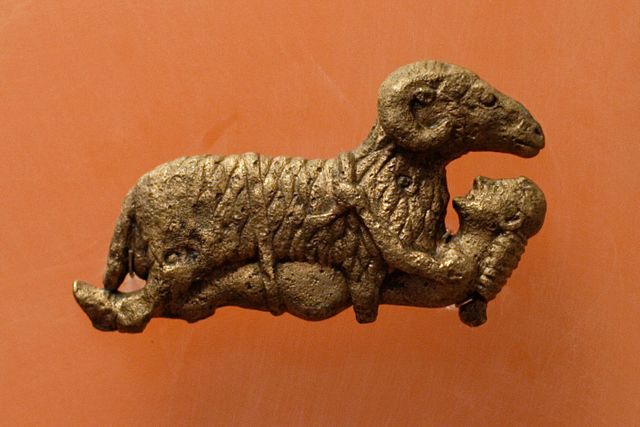
 Image result for Odysseus and Ram

From the Iliad

5.461 Τρῳὰς δὲ στίχας οὖλος ῎Αρης ὄτρυνε μετελθὼν
5.517 εἰ οὕτω μαίνεσθαι ἐάσομεν οὖλον ῎Αρηα.
21.536 δείδια γὰρ μὴ οὖλος ἀνὴρ ἐς τεῖχος ἅληται. [=Achilles]


Some Etymologies

Etymologicum Gudianum

“Scar” (oulê): This is a healed wound which is still apparent. Others call it a “persistent/painful wound” [epiponaion]”

Οὐλὴ, τὸ ὑγιασθὲν τραῦμα καὶ φαινόμενον· ἄλλοι δὲ ἐπιπόναιον ἕλκος.

“Scar and wound [ôteilê] are different. For a ‘scar’ is a strike healed from an earlier wound; whereas a ôteilê is what the wound [trauma] is called. But Homer has obscured the difference when he said “the same mark [oulê] poured out black blood from the wound [ôteilês].”

Οὐλὴ καὶ ὠτειλὴ διαφέρει· οὐλὴ μὲν γάρ ἐστιν, ἡ ἐκ παλαιοῦ τραύματος ὑγιασμένη πλήγη· ὠτειλὴ δὲ τὸ πρόσφατον τραῦμα· καὶ ῞Ομηρος δὲ τετήρηκε τὴν διαφορὰν εἴπων· οὐλὴν δ’ αὐτὴν ἔρεεν αἷμα κελαινεφὲς ἐξ ὠτειλῆς.

οὐλή, ἡ: “scar”

Chantraine s.v. οὐλή, “cicatrice, blessure, cicatrisée. From *ϝολ-. Cf. lat volnus, eris?

Beekes s.v οὐλή, “scarred wound, scar”,< IE *uel- ‘draw, tear’. But “As a common basis for these nouns, the root *uelh3- ‘to strike’ must be assumed…”

οὖλος, “wool”

Chaintraine, s.v. οὖλος 2 “Le sense ancient de οὖλος “bouclé, crépu” [“curled, frizzy”] se tire aisément de 2 εἰλέω “tourner, rouler”…Le sens secondaire de “dense” etc. n’impose pas un rapport avec 1 εἰλέω “serrer, presser”.

Beeks s.v. οὖλος, “frizzy, shaggy, woolly, crinkly’ “can be connected with εἰλέω 2 “to roll, rutnr, wind’…” We may reconstruct *uol(H)-no ‘wool’, either from *uel “to twist’ or *uelH- ‘to pluck’ (Lat. Vello).

Note for 19.225 from Merry, Riddell and Montro 1886: οὔλην ‘thick,’ ‘woolly,’ from the same root as Lat. vellus, also lāna (for vlā-na). Whether it is akin to “εἶρος, ἔρια” (Lat. vervēx) is more than doubtful.”

οὖλος, “ruinous”

Chantraine, s.v. οὖλος 3 “perniceaux, funeste, destructeur”. Epithet of Ares, Achilles and in the hellinist period, Eros… Ety. Famille ὄλλυμι, *ὄλϝος à côte de *ὀλεϝός >ὀλοός…

Beekes, s.v. οὖλος 3 “baneful”…from IE *H3lh3-u– “destructive”

οὖλος, Chantraine s.v. οὖλος 1 “tout entier”, voir ὅλος.

Schol. B ad Od. 19.393

“Scar”: Attic speakers call a wound that has been healed  ôteilê. In Homer, ôteilê is unhealed, and an oulê is healed.”

οὐλὴν] ᾿Αττικοὶ τὸ θεραπευθὲν τραῦμα ὠτειλήν φασι· παρὰ δὲ ῾Ομήρῳ ὠτειλὴ μὲν τὸ ἀθεράπευτον, οὐλὴ δὲ τὸ θεραπευθέν. B.

Alternatives to Odysseus’ name

Eust. Comm. Ad Homeri Il 1.446: ὁ ᾿Οδυσσεύς δέ που ᾿Ολυσσεύς καὶ ἡ ᾿Οδύσσεια ᾿Ολύσσεια

Herodian, de prosodia cath. 3.1.14: Οὐλιξεύς Ulixes, in quo Doris sequimur

From Brill’s New Pauly s.v Odysseus: Attic inscriptions: Ὀλυττεύς/Olytteús; Corinthian: Ὀλισ(σ)εύς/Olis(s)eús;

For other etymologies for Odysseus’ name, see here.

For “whole” elsewhere in the Odyssey see: 17.342-3

“Têlemakhos called the swineherd over to him and addressed him,
Once he took the whole [oûlon] loaf from the fancy basket”

Τηλέμαχος δ’ ἐπὶ οἷ καλέσας προσέειπε συβώτην,
ἄρτον τ’ οὖλον ἑλὼν περικαλλέος ἐκ κανέοιο

Some Truth Behind Odysseus’ Pseudonyms

Odyssey 24.303–307

“Certainly, I will explain everything to you truly.
I am from Alybas where I live in a glorious home,
I am the son of Apheidas, the son of lord Polypêmôn.
My name is Epêritos. But some god struck me
So I came here from Sicily even though I was unwilling.”

“τοιγὰρ ἐγώ τοι πάντα μάλ’ ἀτρεκέως καταλέξω.
εἰμὶ μὲν ἐξ ᾿Αλύβαντος, ὅθι κλυτὰ δώματα ναίω,
υἱὸς ᾿Αφείδαντος Πολυπημονίδαο ἄνακτος·
αὐτὰρ ἐμοί γ’ ὄνομ’ ἐστὶν ᾿Επήριτος· ἀλλά με δαίμων
πλάγξ’ ἀπὸ Σικανίης δεῦρ’ ἐλθέμεν οὐκ ἐθέλοντα·

The names that Odysseus chooses here from his family tree are interesting as a reflection of his persona and his experience. The most obvious, on the surface, is Apheidas which means “unsparing”; the grandfather’s name, Polu-pêmôn, means “of many pains”. The final element, his personal name Epêritos, is the least transparent—Eustathius argues that it derives from the verb erizein, “to engage in strife.” Eustathius also interprets the paternal name, Apheidas, positively, suggesting that it anticipates the projected liberality of the speaker in terms of gift giving. The name could also indicate however, a person taken to risk or unsparing of others: to wit, Odysseus is in this scene rather unsparing of his father who suffers much grief because of him.

Eust. Comm. Ad Hom. Od. II 324

“He says that he is the son of Apheidas [“unsparing”] because he wants to emphasize his own liberality and great gift-giving. This is the very thing Laertes understands and says in a bit that “Odysseus would have responded and sent you away with gifts. He lies in saying his father’s name is Polu-pêmôn as a riddle for the many sufferings which he has suffered.

The name Epêritos is similar to “contentious” [perimakhêtos] and comes from “to engage in strife” [erizô] since Odysseus was this way to all and was “conversant in the ways of men,” or it is because he fostered the good strife. Note that by analogy epêristos ought to be similar to amphêristos, but it has introduced a sigma for the sake of the dactyl. This happens also in the phrase nêrthiton oros and euktiton [well-built] and euktimenên [“well-built”] and others. This is the same type of composition we find in Epêritos.”

(Vers. 305.) ᾿Αφείδαντος δὲ υἱὸς εἶναι λέγει, ἐμφαίνων τὸ ἑαυτοῦ ἐλευθέριον καὶ μεγαλόδωρον· ὃ συνιστῶν καὶ ὁ Λαέρτης ἔφη πρὸ ὀλίγων, ὅτι δώροις ἄν σε ᾿Οδυσσεὺς ἀμειψάμενος ἀπέπεμπε. Πολυπήμων δὲ αὐτῷ καταψεύδεται πάππος πρὸς αἴνιγμα τῶν πολλῶν πημάτων ὧν ἔπαθε. (Vers. 306.)

Τὸ δὲ ᾿Επήριτος ταυτόν πώς ἐστι τῷ περιμάχητος ἀπὸ τοῦ ἐρίζω, ἐπεὶ πᾶσιν ἔμελλε καὶ ἐπίστροφος ἦν ἀνθρώπων ᾿Οδυσσεὺς, ἢ καὶ ὅτι τὴν ἀγαθὴν ὑπέτρεφεν ἔριν. ᾿Ιστέον δὲ ὅτι κατὰ ἀναλογίαν ἐπήριστος ὤφειλεν εἶναι ὁμοίως τῷ ἀμφήριστος ἀπήγαγε δὲ τὸ σίγμα διὰ χρείαν δακτύλου. ὃ γίνεται καὶ ἐν τῷ, νήρθιτον ὄρος, καὶ εὔκτιτον καὶ εὐκτιμένην καὶ ἐν ἄλλοις. καὶ τοιοῦτος μὲν ὁ πλαστὸς οὗτος ᾿Επήριτος.

Image result for Odysseus ancient Greek

Can You Stomach This? Gaster-Compounds in Ancient Greek

A proverb

“A fat stomach does not bear a subtle mind”

Γαστὴρ παχεῖα λεπτὸν οὐ τίκτει νόον.  (Arsenius, 5.22a1)

Od. 18.54-56

“Friends, it is in no way good for an old man
In the clutches of sorrow to fight a younger man.
But my no-good stomach compels me, that I might fall beneath his blows.”

“ὦ φίλοι, οὔ πως ἔστι νεωτέρῳ ἀνδρὶ μάχεσθαι
ἄνδρα γέροντα δύῃ ἀρημένον· ἀλλά με γαστὴρ
ὀτρύνει κακοεργός, ἵνα πληγῇσι δαμείω.

γαστήρ, ἡ: “stomach”

γαστραία: A type of turnip

γαστρίδουλος: “slave to one’s stomach”

γαστρίον: “sausage”

γαστρίζω: “to punch someone in the belly”

γραστριμαργία: “gluttony”

γαστροβαρής: “stomach-heavy”, i.e. “heavy with child”

γαστροκνημία: lit. “shin-stomach”, so “calf”

γαστρολογία: An almanac for gourmands, so “foodie-book”

γαστρομαντεύομαι: “to divine by the stomach”

γαστροπίων: “a fat-bellied fellow”

γαστρορραφία: “sewing a stomach wound”

γαστρόρροια: “diarrhea”

γαστροτόμος: “stomach cutting”

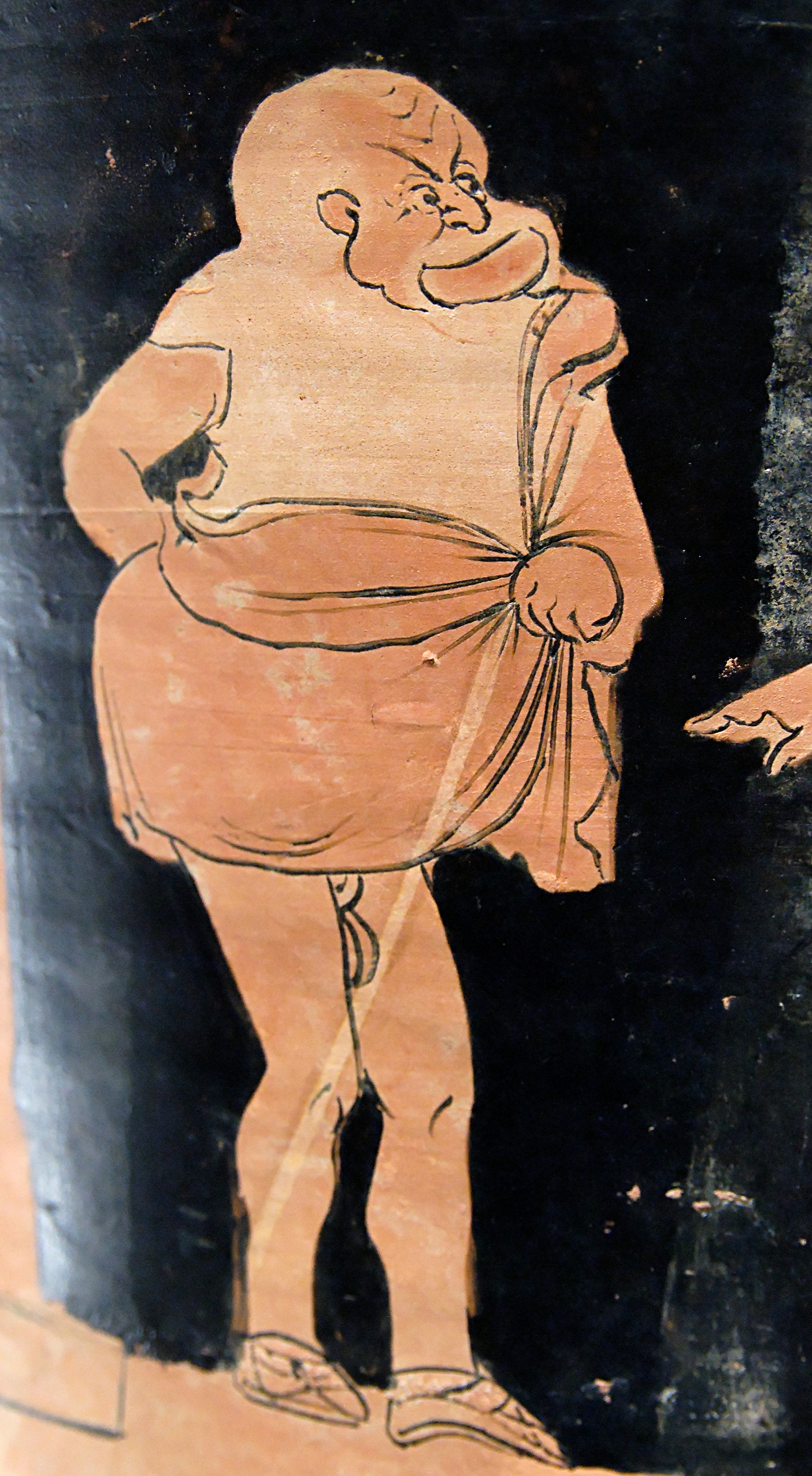
Image result for ancient greek comic vase

γαστροχάρυβδις: “having a gaping maw of a belly”

γαστρόχειρ: lit. “stomach-hand”, so “living by hand” or “hand to mouth”

γαστρώδης: “pot pellied”