Enslaving the Children: Populist Politics and the Recipe for Savage Consensus

During the Peloponnesian War, the Athenian Democracy deliberated on and voted for the killing of men and the enslavement of women and children. To ask why is not an idle historical musing.

Thucydides, 5.116.4

“The [Athenians] killed however many of the Melian men were adults, and made the women and children slaves. Then they settled the land themselves and later on sent five hundred colonists.”

οἱ δὲ ἀπέκτειναν Μηλίων ὅσους ἡβῶντας ἔλαβον, παῖδας δὲ καὶ γυναῖκας ἠνδραπόδισαν. τὸ δὲ χωρίον αὐτοὶ ᾤκισαν, ἀποίκους ὕστερον πεντακοσίους πέμψαντες.

5.32

“Around the same period of time in that summer, the Athenians set siege to the Scionaeans and after killing all the adult men, made the women and childen into slaves and gave the land to the Plataeans.”

Περὶ δὲ τοὺς αὐτοὺς χρόνους τοῦ θέρους τούτου Σκιωναίους μὲν Ἀθηναῖοι ἐκπολιορκήσαντες ἀπέκτειναν τοὺς ἡβῶντας, παῖδας δὲ καὶ γυναῖκας ἠνδραπόδισαν καὶ τὴν γῆν Πλαταιεῦσιν ἔδοσαν νέμεσθαι·

This was done by vote of the Athenian democracy led by Cleon: Thucydides 4.122.6. A similar solution was proposed during the Mytilenean debate. Cleon is described by Thucydides as “in addition the most violent of the citizens who also was the most persuasive at that time by far to the people.” (ὢν καὶ ἐς τὰ ἄλλα βιαιότατος τῶν πολιτῶν τῷ τε δήμῳ παρὰ πολὺ ἐν τῷ τότε πιθανώτατος, 3.36.6)

3.36

“They were making a judgment about the men there and in their anger it seemed right to them not only to kill those who were present but to slay all the Mytileneans who were adults and to enslave the children and women.”

περὶ δὲ τῶν ἀνδρῶν γνώμας ἐποιοῦντο, καὶ ὑπὸ ὀργῆς ἔδοξεν αὐτοῖς οὐ τοὺς παρόντας μόνον ἀποκτεῖναι, ἀλλὰ καὶ τοὺς ἅπαντας Μυτιληναίους ὅσοι ἡβῶσι, παῖδας δὲ καὶ γυναῖκας ἀνδραποδίσαι.

In his speech in defense of this policy, Cleon reflects on the nature of imperialism and obedience. Although he eventually failed to gain approval for this vote which was overturned, his arguments seem to have worked on later occasions.

Thucydides, 3.37

“The truth is that because you live without fear day-to-day and there is no conspiring against one another, you think imagine your ‘allies’ to live the same way. Because you are deluded by whatever is presented in speeches you are mistaken in these matters or because you yield to pity, you do not not realize you are being dangerously weak for yourselves and for some favor to your allies.

You do not examine the fact that the power you hold is a tyranny and that those who are dominated by you are conspiring against you and are ruled unwillingly and that these people obey you not because they might please you by being harmed but because you are superior to them by strength rather than because of their goodwill.

The most terrible thing of all is  if nothing which seems right to us is established firmly—if we will not acknowledge that a state which has worse laws which are unbendable is stronger than a state with noble laws which are weakly administered, that ignorance accompanied by discipline is more effective than cleverness with liberality, and that lesser people can inhabit states much more efficiently than intelligent ones.

Smart people always want to show they are wiser than the laws and to be preeminent in discussions about the public good, as if there are no more important things where they could clarify their opinions—and because of this they most often ruin their states. The other group of people, on the other hand, because they distrust their own intelligence, think that it is acceptable to be less learned than the laws and less capable to criticize an argument than the one who speaks well. But because they are more fair and balanced judges, instead of prosecutors, they do well in most cases. For this reason, then, it is right that we too, when we are not carried away by the cleverness and the contest of intelligence, do not act to advise our majority against our own opinion.”

διὰ γὰρ τὸ καθ᾿ ἡμέραν ἀδεὲς καὶ ἀνεπιβούλευτον πρὸς ἀλλήλους καὶ ἐς τοὺς ξυμμάχους τὸ αὐτὸ ἔχετε, καὶ ὅ τι ἂν ἢ λόγῳ πεισθέντες ὑπ᾿ αὐτῶν ἁμάρτητε ἢ οἴκτῳ ἐνδῶτε, οὐκ ἐπικινδύνως ἡγεῖσθε ἐς ὑμᾶς καὶ οὐκ ἐς τὴν τῶν ξυμμάχων χάριν μαλακίζεσθαι, οὐ σκοποῦντες ὅτι τυραννίδα ἔχετε τὴν ἀρχὴν καὶ πρὸς ἐπιβουλεύοντας αὐτοὺς καὶ ἄκοντας ἀρχομένους, οἳ οὐκ ἐξ ὧν ἂν χαρίζησθε βλαπτόμενοι αὐτοὶ ἀκροῶνται ὑμῶν, ἀλλ᾿ ἐξ ὧν ἂν ἰσχύι μᾶλλον ἢ τῇ ἐκείνων εὐνοίᾳ περιγένησθε.

πάντων δὲ δεινότατον εἰ βέβαιον ἡμῖν μηδὲν καθεστήξει ὧν ἂν δόξῃ πέρι, μηδὲ γνωσόμεθα ὅτι χείροσι νόμοις ἀκινήτοις χρωμένη πόλις κρείσσων ἐστὶν ἢ καλῶς ἔχουσιν ἀκύροις, ἀμαθία τε μετὰ σωφροσύνης ὠφελιμώτερον ἢ δεξιότης μετὰ ἀκολασίας, οἵ τε φαυλότεροι τῶν ἀνθρώπων πρὸς τοὺς ξυνετωτέρους ὡς ἐπὶ τὸ πλέον ἄμεινον οἰκοῦσι τὰς πόλεις.

οἱ μὲν γὰρ τῶν τε νόμων σοφώτεροι βούλονται φαίνεσθαι τῶν τε αἰεὶ λεγομένων ἐς τὸ κοινὸν περιγίγνεσθαι, ὡς ἐν ἄλλοις μείζοσιν οὐκ ἂν δηλώσαντες τὴν γνώμην, καὶ ἐκ τοῦ τοιούτου τὰ πολλὰ σφάλλουσι τὰς πόλεις· οἱ δ᾿ ἀπιστοῦντες τῇ ἐξ ἑαυτῶν ξυνέσει ἀμαθέστεροι μὲν τῶν νόμων ἀξιοῦσιν εἶναι, ἀδυνατώτεροι δὲ τὸν1 τοῦ καλῶς εἰπόντος μέμψασθαι λόγον, κριταὶ δὲ ὄντες ἀπὸ τοῦ ἴσου μάλλον ἢ ἀγωνισταὶ ὀρθοῦνται τὰ πλείω. ὣς οὖν χρὴ καὶ ἡμᾶς ποιοῦντας μὴ δεινότητι καὶ ξυνέσεως ἀγῶνι ἐπαιρομένους παρὰ δόξαν τῷ ὑμετέρῳ πλήθει παραινεῖν.

Image result for ancient greek slavery

All in the Head: The Cyclops is Part of Odysseus

From Porphyry’s essay, On the Cave of the Nymphs 35

“In Plato, the water, the sea and the storm are material matter. For this reason, I think, Homer named the harbor “Phorkus’” (“and this is the harbor of Phorkus”) after the sea-god whose daughter, Thoôsa, he genealogized in the first book of the Odyssey. The Kyklôps is her son whose eye Odysseus blinded. [Homer named the harbor thus] so that right before his home [Odysseus] would receive a reminder of his mistakes. For this reason, the location under the olive tree is also fitting for Odysseus as a suppliant of the god who might win over his native deity through suppliancy.

For it would not be easy for one who has blinded [the spirit] and rushed to quell his energy to escape this life of the senses; no, the rage of the sea and the material gods pursues anyone who has dared these things. It is right first to appease these gods with sacrifices, the labors of a beggar, and endurance followed by battling through sufferings, deploying spells and enchantments and changing oneself through them in every way in order that, once he has been stripped of the rags he might restore everything. And thus one may not escape from his toils, but when he has emerged from the sea altogether that his thoughts are so untouched of the sea and material matters, that he believes that an oar is a winnowing fan because of his total inexperience of the tools and affairs of the sea.”

πόντος δὲ καὶ θάλασσα καὶ κλύδων καὶ παρὰ Πλάτωνι ἡ ὑλικὴ σύστασις. διὰ τοῦτ’, οἶμαι, καὶ τοῦ Φόρκυνος ἐπωνόμασε τὸν λιμένα·

                    ‘Φόρκυνος δέ τίς ἐστι λιμήν,’

ἐναλίου θεοῦ, οὗ δὴ καὶ θυγατέρα ἐν ἀρχῇ τῆς ᾿Οδυσσείας τὴν Θόωσαν ἐγενεαλόγησεν, ἀφ’ ἧς ὁ Κύκλωψ, ὃν ὀφθαλμοῦ ᾿Οδυσσεὺς ἀλάωσεν, ἵνα καὶ ἄχρι τῆς πατρίδος ὑπῇ τι τῶν ἁμαρτημάτων μνημόσυνον. ἔνθεν αὐτῷ καὶ ἡ ὑπὸ τὴν ἐλαίαν καθέδρα οἰκεία ὡς ἱκέτῃ τοῦ θεοῦ καὶ ὑπὸ τὴν ἱκετηρίαν ἀπομειλισσομένῳ τὸν γενέθλιον δαίμονα. οὐ γὰρ ἦν ἁπλῶς τῆς αἰσθητικῆς ταύτης ἀπαλλαγῆναι ζωῆς τυφλώσαντα αὐτὴν καὶ καταργῆσαι συντόμως σπουδάσαντα, ἀλλ’ εἵπετο τῷ

ταῦτα τολμήσαντι μῆνις ἁλίων καὶ ὑλικῶν θεῶν, οὓς χρὴ πρότερον ἀπομειλίξασθαι θυσίαις τε καὶ πτωχοῦ πόνοις καὶ καρτερίαις, ποτὲ μὲν διαμαχόμενον τοῖς πάθεσι, ποτὲ δὲ γοητεύοντα καὶ ἀπατῶντα καὶ παντοίως πρὸς αὐτὰ μεταβαλλόμενον, ἵνα γυμνωθεὶς τῶν ῥακέων καθέλῃ πάντα καὶ οὐδ’ οὕτως ἀπαλλαγῇ τῶν πόνων, ἀλλ’ ὅταν παντελῶς ἔξαλος γένηται καὶ ἐν ψυχαῖς ἀπείροις θαλασσίων καὶ ἐνύλων ἔργων, ὡς πτύον εἶναι ἡγεῖσθαι τὴν κώπην διὰ τὴν τῶν ἐναλίων ὀργάνων καὶ ἔργων παντελῆ ἀπειρίαν.

Robert Lamberton 1986, 131 [Homer the Theologian]: “The bungling, dimwitted, sensual giant of book 9 is, then, a projection into the myth of the life of the senses—specifically Odysseus’ own life in this physical universe. The blinding of Polyphemus is a metaphor for suicide…The cyclops becomes a part of Odysseus—a part he wants desperately to escape—but his ineptitude in handling his escape at that early point in his career involves him in an arduous spiritual journey.”

Image result for odysseus and the cyclops ancient greek

Don’t. Betray. Sappho.

Sappho, fr. 55

“When you die you will lie there and no one will remember you.
And there will no longing for you later on. You will not receive
Any roses from Pieria. But you will wander unseen through Hades’ home
Flitting away from the dirty corpses.”

κατθάνοισα δὲ κείσηι οὐδέ ποτα μναμοσύνα σέθεν
ἔσσετ’ οὐδὲ πόθα εἰς ὔστερον· οὐ γὰρ πεδέχηις βρόδων
τὼν ἐκ Πιερίας· ἀλλ’ ἀφάνης κἀν ᾿Αίδα δόμωι
φοιτάσηις πεδ’ ἀμαύρων νεκύων ἐκπεποταμένα.

Image result for ancient greek underworld scene sarcophagus
Roman Sarcophagus, Abduction of Persephone

Serious People Don’t Get Drunk

Diogenes Laertius, Zeno 7.1. 118-119

“Serious people are truly dedicated and on guard to make themselves better by preparing both to keep corrupting things away from them and trying to ensure that good things are near at hand. But they are also unaffected: they have peeled away adornments from their voice and their face.

They also have no concern for business since they abstain from doing anything which transgresses their duty. They do drink, but they do not get drunk. Indeed, they will also not go mad—even though the sometimes the same fantasies will still occur to them because of depression or delirium, but because of the logic of what they have selected but against nature.

And a wise person will never grieve because they understand that grief is an illogical closure of the soul, as Apollodorus says in his Ethics. These people are also godlike because they have some divine aspect in them; the scoundrel is godless.”

Ἀκιβδήλους τοὺς σπουδαίους φυλακτικούς τ᾿ εἶναι τοῦ ἐπὶ τὸ βέλτιον αὑτοὺς παριστάναι, διὰ παρασκευῆς τῆς τὰ φαῦλα μὲν ἀποκρυπτούσης, τὰ δ᾿ ὑπάρχοντα ἀγαθὰ φαίνεσθαι ποιούσης. ἀπλάστους τε· περιῃρηκέναι γὰρ ἐν τῇ φωνῇ τὸ πλάσμα καὶ τῷ εἴδει. ἀπράγμονάς τ᾿ εἶναι· ἐκκλίνειν γὰρ τὸ πράττειν τι παρὰ τὸ καθῆκον. καὶ οἰνωθήσεσθαι μέν, οὐ μεθυσθήσεσθαι δέ. ἔτι δ᾿ οὐδὲ μανήσεσθαι· προσπεσεῖσθαι μέντοι ποτὲ αὐτῷ φαντασίας ἀλλοκότους διὰ μελαγχολίαν ἢ λήρησιν, οὐ κατὰ τὸν τῶν αἱρετῶν λόγον, ἀλλὰ παρὰ φύσιν. οὐδὲ μὴν λυπηθήσεσθαι τὸν σοφόν, διὰ τὸ τὴν λύπην ἄλογον εἶναι συστολὴν τῆς ψυχῆς, ὡς Ἀπολλόδωρός φησιν ἐν τῇ Ἠθικῇ.

Θείους τ᾿ εἶναι· ἔχειν γὰρ ἐν ἑαυτοῖς οἱονεὶ θεόν. τὸν δ᾿ φαῦλον ἄθεον.


Stobaeus, 2.7.11.41

“It is not possible to think when you’re drunk. For drunkenness is extremely prone to error and people are really talkative over wine…”

Οὐχ οἷον δὲ μεθυσθήσεσθαι τὸν νοῦν ἔχοντα· τὴν γὰρ μέθην ἁμαρτητικὸν περιέχειν, λήρησιν εἶναι <γὰρ> παρὰ τὸν οἶνον,

Attic Lamb’s head Rhyton, MET

Four Proverbs for Fools

Go here for more information about Ancient Greek collections of proverbs.

Arsenius, 5.29b

“A fool laughs even when nothing is funny.”

Γελᾷ δ’ ὁ μωρός, κἄν τι μὴ γέλοιον ᾖ.


Michael Apostolios 3.87

“You are considering ancient history.” A proverb applied to fools and simpletons.

᾿Αρχαϊκὰ φρονεῖς: ἐπὶ τῶν μωρῶν καὶ εὐηθῶν.


Michaelos Apostolios 11.92

“A fool can’t keep quiet”

Μωρὸς σιωπᾷν οὐ δύναται.

11.93

“He will blame instead of imitate”: a proverb applied to the uneducable and because it is easier to criticize than emulate.”

Μωμήσεται μᾶλλον ἢ μιμήσεται: ἐπὶ τῶν ἀπαιδεύτων, καὶ ὅτι τὸ ψέγειν τοῦ μιμεῖσθαι ῥᾳότερον.


Roman comments on fools.

Also: μωρολογία: properly, “stupid-talking” or “the talk of fools”. But why not: “the science of stupidity”?

Related image
Miniature from the Bute Psalter; c. 1270-80

A bonus anecdote for this evening;

Stobaeus 3.34.15

“Solon, after he was asked by Periander over drink—when the former happened to be quiet—whether he was silent because of a loss of words or foolishness, said “No fool could ever be quiet at a drinking party.”

Σόλων ἐρωτηθεὶς ὑπὸ Περιάνδρου παρὰ πότον, ἐπεὶ σιωπῶν ἐτύγχανε, πότερα διὰ λόγων σπάνιν ἢ διὰ μωρίαν σιωπᾷ, ‘ἀλλ’ οὐδεὶς ἄν’ εἶπε ‘μωρὸς σιωπᾶν ἐν συμποσίῳ δύναιτο’.

Half-Assing It: A Love Story

Aristokles, BNJ 831 F 3b (=Stobaios, Florides 4.20 b74)

“In the second book of his Wonders, Aristokles has this: A young man named Aristonymos, an Ephesian of a noble family, was Demostratos’ son, but in reality he was Ares’ son.

In the middle of the night, because he hated all women, he went to his father’s herd and had sex with a female donkey. She got pregnant and gave birth to the most beautiful girl, named Onoskelia, a nickname borrowed from the way she was born.”

᾽Αριστοκλέους ἐν β̄ Παραδόξων. <᾽Αριστώνυμος> ᾽Εφέσιος τῶι γένει, νεανίας τῶν ἐπισήμων, υἱὸς Δημοστράτου, ταῖς δ᾽ ἀληθείαις ῎Αρεως. οὗτος τὸ θῆλυ μισῶν γένος νυκτὸς βαθείας εἰς τοὺς πατρώιας ἔτρεχεν ἀγέλας, καὶ ὄνωι συνεγένετο θηλείαι· ἡ δὲ ἔγκυος γενομένη ἔτεκε κόρην εὐειδεστάτην ᾽Ονοσκελίαν τοὐνομα, τὴν προσηγορίαν λαβοῦσαν ἀπὸ τοῦ συμπτώματος.

Bodleian Library, MS. Bodley 764, Folio 44r

Romulus Says: “F**k the Senate!”

Dio Cassius, Roman History (Book 1):

Romulus became more harshly disposed toward the senate, and was inclined to act rather tyrannically toward it. He returned the hostages to the people of Veii of his own accord, and not with common consent, as was the common practice. When he perceived that they were irritated by this, he said a lot of harsh things, and finally told them, ‘O fathers, I did not select you so that you could rule over me, but so that I could command you.’

Plate 11, having given the laws, Romulus choses twelve bodyguards and a hundred men who wil become the senators, recorded by a scribe in the centre, from a series of 27 prints relating the story of Romulus and Remus. 1573-75  Etching

ὅτι ὁ ῾Ρωμύλος πρὸς τὴν γερουσίαν τραχύτερον διέκειτο καὶ τυραννικώτερον αὐτῇ προσεφέρετο, καὶ τοὺς ὁμήρους τοῖς Οὐηιένταις…… καθ’ ἑαυτὸν καὶ οὐκ ἀπὸ κοινῆς γνώμης, ὥσπερ τὰ πολλὰ ἐγίγνετο· ἀγανακτοῦντάς τε ἐπὶ τούτῳ αἰσθόμενος ἄλλα τε ἐπαχθῆ διελέχθη καὶ τέλος εἶπεν ὅτι “ἐγὼ ὑμᾶς, ὦ πατέρες, ἐξελεξάμην οὐχ ἵνα ὑμεῖς ἐμοῦ ἄρχητε, ἀλλ’ ἵνα ἐγὼ ὑμῖν ἐπιτάττοιμι.”

Where Do Snakes Come From? A Spine-Tingling Explanation

Past mid-October, it is about time things start to get a bit creepy…

Aelian, On the Nature of Animals 1.51

“People say that the spine of a human corpse turns into a snake as the marrow decomposes. As the beast slips out, so the most savage creature is born from the mildest. In this way the remains of men who were once fine and noble rest and they have peace as their prize just as the soul too does of these kinds of men according to what is sung and hymned by the wise.

But the spines of evil men bring forth these kinds of things after life too. Well, the truth is that the story is either completely a myth or if these things prove trustworthy, then it seems to me that the evil man’s corpse has earned this reward of becoming the serpent’s father.”

Ῥάχις ἀνθρώπου νεκροῦ φασιν ὑποσηπόμενον τὸν μυελὸν ἤδη τρέπει ἐς ὄφιν· καὶ ἐκπίπτει τὸ θηρίον, καὶ ἕρπει τὸἀγριώτατον ἐκ τοῦ ἡμερωτάτου· καὶ τῶν μὲν καλῶν καὶ ἀγαθῶν τὰ λείψανα ἀναπαύεται, καὶ ἔχει ἆθλον ἡσυχίαν, ὥσπερ οὖν καὶ ἡ ψυχὴ τῶν τοιούτων τὰ ᾀδόμενά τε καὶ ὑμνούμενα ἐκ τῶν σοφῶν· πονηρῶν δὲ ἀνθρώπων ῥάχεις τοιαῦτα τίκτουσι καὶ μετὰ τὸν βίον. ἢ τοίνυν τὸ πᾶν μῦθός ἐστιν, ἤ, εἰ ταῦτα οὑτωσὶπεπίστευται, πονηροῦ νεκρός, ὡς κρίνειν ἐμέ, ὄφεως γενέσθαι πατὴρ τοῦ τρόπου μισθὸν ἠνέγκατο.

Kongelige Bibliotek, Gl. kgl. S. 1633 4º, Folio 57r


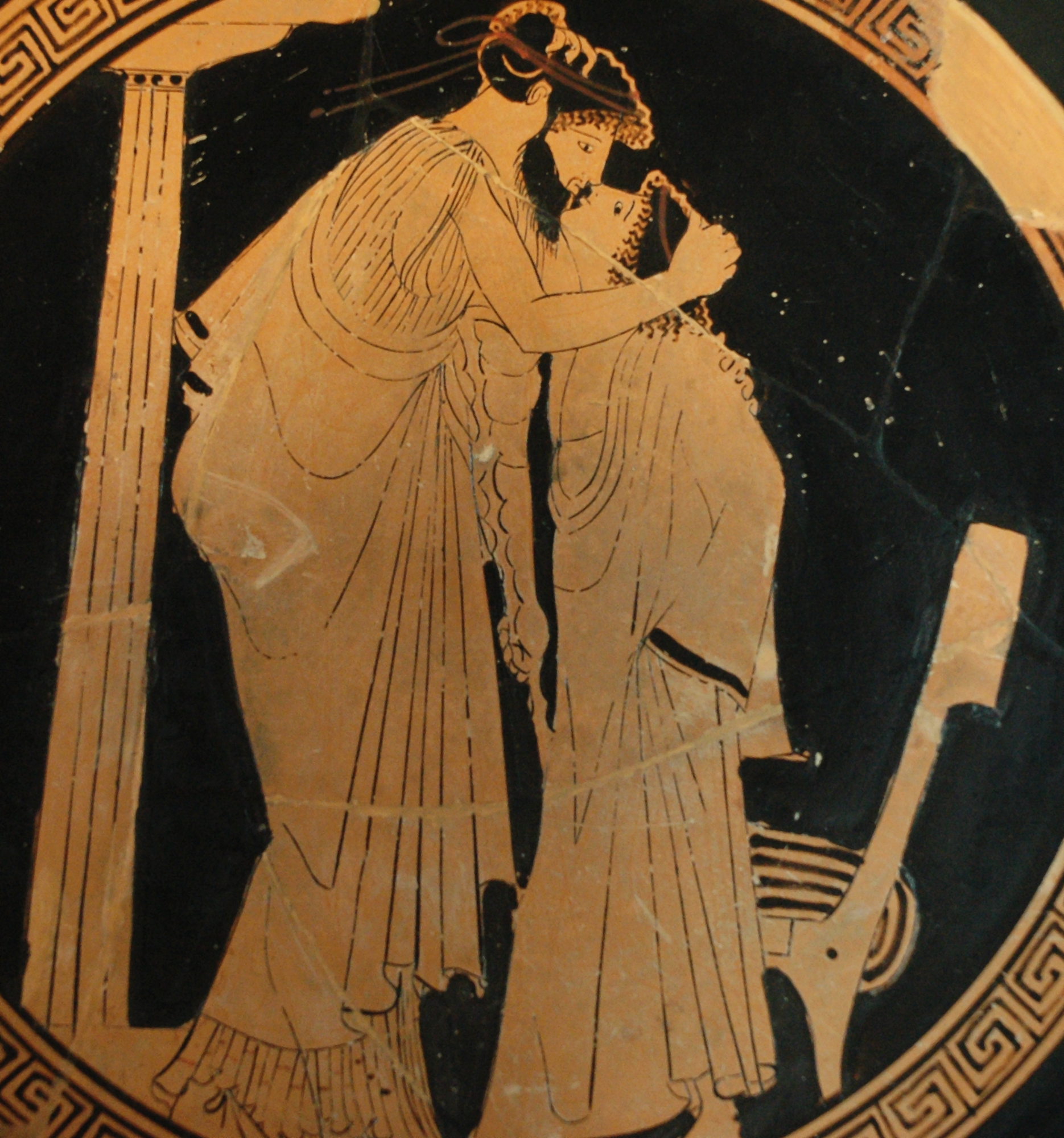
“My Soul Tried to Cross Our Lips”: Platonic Love

Two love poems attributed to Plato

Diogenes Laertius Vita Phil 1.3 [Plato 31] and Athenaeus 589e

“I have a lover from Kolophôn named Arkheanassa—
Potent lust rests even on her wrinkles
Poor wretches who met her during the first sailing
Of her youth—what a conflagration you passed through!”

Ἀρχεάνασσαν ἔχω τὴν ἐκ Κολοφῶνος ἑταίραν,
ἧς καὶ ἐπὶ ῥυτίδων ἕζετο δριμὺς ἔρως.
ἆ δειλοὶ νεότητος ἀπαντήσαντες ἐκείνης
πρωτοπλόου, δι᾿ ὅσης ἤλθετε πυρκαϊῆς.

The Greek Anth. 7.217 attributes a slightly different version to Asclepiades

“I have Arkheanassa, a lover from Kolophôn—
Sweet lust rests even on her wrinkles
Oh lovers who harvested the fruit of her youth
At first bloom—what a conflagration you passed through!”

Ἀρχεάνασσαν ἔχω, τὰν ἐκ Κολοφῶνος ἑταίραν,
ἇς καὶ ἐπὶ ῥυτίδων ὁ γλυκὺς ἕζετ᾿ Ἔρως.
ἆ νέον ἥβης ἄνθος ἀποδρέψαντες ἐρασταὶ
πρωτοβόλου, δι᾿ ὅσης ἤλθετε πυρκαϊῆς.

D. L = Gr. Anth. 7.78

“When kissing Agathon I felt my soul at my lips.
The wretch—for she was trying to cross between us.”

τὴν ψυχὴν Ἀγάθωνα φιλῶν ἐπὶ χείλεσιν εἶχον·
ἦλθε γὰρ ἡ τλήμων ὡς διαβησομένη.

According to Aelian, Plato’s career as a poet was cut short (Varia Historia 2.30); but note, though there is mention of epic and tragedy, the anecdote makes no claims for lyric and elegy:

“Plato, the son of Ariston, at first pursued poetry and used to write heroic verse. But he soon burned it all because he despised it, since he reckoned that his poetry was far inferior when compared to Homer’s. He then tried tragedy and even completed a tetralogy, and he was about to enter the competition, even to the point of giving the verses to actors. But right before the Dionysia, he went and heard Socrates; and once he was seized by that Siren, he not only withdrew from the competition, but he also gave up the writing of tragedy for good to immerse himself in philosophy.”

Πλάτων ὁ ᾿Αρίστωνος τὰ πρῶτα ἐπὶ ποιητικὴν ὥρμησε, καὶ ἡρωϊκὰ ἔγραφε μέτρα• εἶτα αὐτὰ κατέπρησεν ὑπεριδὼν αὐτῶν, ἐπεὶ τοῖς ῾Ομήρου αὐτὰ ἀντικρίνων ἑώρα κατὰ πολὺ ἡττώμενα. ἐπέθετο οὖν τραγῳδίᾳ, καὶ δὴ καὶ τετραλογίαν εἰργάσατο, καὶ ἔμελλεν ἀγωνιεῖσθαι, δοὺς ἤδη τοῖς ὑποκριταῖς τὰ ποιήματα. πρὸ τῶν Διονυσίων δὲ παρελθὼν ἤκουσε Σωκράτους, καὶ ἅπαξ αἱρεθεὶς ὑπὸ τῆς ἐκείνου σειρῆνος, τοῦ ἀγωνίσματος οὐ μόνον ἀπέστη τότε, ἀλλὰ καὶ τελέως τὸ γράφειν τραγῳδίαν ἀπέρριψε, καὶ ἀπεδύσατο ἐπὶ φιλοσοφίαν.

Image result for ancient greek kissing vase
Louvre G 278 Attributed to Briseis Painter

Tawdry Tuesday: Raising the Dead

Greek Anthology 5.129 Automedon

“I praise the dancer from Asia, the one who moves
From the tips of her fingernails with devious positions,
Not because she shows every passion or because she throws
Her delicate hands delicately this way and that,
But because she knows how to dance around a worn out stump
And doesn’t try to flee its aging wrinkles.
She tongues it, kneads it, throws her hands around it–
And if she throws her leg over me, she raises my staff back from hell.”

129 ΑΥΤΟΜΕΔΟΝΤΟΣ
εἰς πόρνην ὀρχηστρίδα

Τὴν ἀπὸ τῆς Ἀσίης ὀρχηστρίδα, τὴν κακοτέχνοις
σχήμασιν ἐξ ἁπαλῶν κινυμένην ὀνύχων,
αἰνέω, οὐχ ὅτι πάντα παθαίνεται οὐδ᾽ ὅτι βάλλει
τὰς ἁπαλὰς ἁπαλῶς ὧδε καὶ ὧδε χέρας,
ἀλλ᾽ ὅτι καὶ τρίβακον περὶ πάσσαλον ὀρχήσασθαι
οἶδε καὶ οὐ φεύγει γηραλέας ῥυτίδας·
γλωττίζει, κνίζει, περιλαμβάνει· ἢν δ᾽ ἐπιρίψῃ
τὸ σκέλος, ἐξ ᾅδου τὴν κορύνην ἀνάγει.

 Detail from a Paestan red-figure skyphos, ca. 330-320 BC.